
In this guide
What is Pregnenolone?
Pregnenolone is synthesized from cholesterol and sits upstream of progesterone, glucocorticoids, mineralocorticoids, androgens and estrogens. It also has neuroactive metabolites. A blood concentration, a retail capsule and an investigator-prepared adjunctive drug exposure answer different questions. [1], [4]
Typical Pregnenolone Protocols
| Source and question | Preparation | Amount each administration | Daily total | Frequency and duration | Main interpretation |
|---|---|---|---|---|---|
| Brown 2014 · bipolar-depression RCT · 80 randomized | 99% pure pregnenolone capsules added to existing treatment | 50 mg twice daily, then 150 mg twice daily, then 250 mg twice daily | 100, 300, then 500 mg/day | 12 weeks; increases at weeks 2 and 4 with blinded adjustment allowed | 73 analyzed; HRSD time interaction positive, IDS-SR continuous result null, and remission significance differed by scale |
| Naylor 2020 · veteran low-back-pain RCT · 94 analyzed | Pregnenolone versus matched placebo added to stable care | 50 mg twice daily, then 150 mg twice daily, then 250 mg twice daily | 100 mg for 1 week, 300 mg for 1 week, then 500 mg for 2 weeks | Twice daily for 4 weeks, followed by 4-day taper | Final pain-diary difference −0.56 on 0–10 scale; narrow veteran population, short exposure and baseline imbalances |
| Meieran 2004 · healthy crossover study · 17 | Oral pregnenolone versus placebo | 15 mg once daily, then 30 mg once daily | 15 mg/day for 2 weeks, then 30 mg/day for 2 weeks | Once daily in each 4-week arm with 4-week washout | No standalone effect on mood, memory, sleep quality or well-being |
- Exact product
- Record species, form, lot and co-ingredients.
- Each administration
- Keep amount, timing and context.
- Real endpoint
- Separate biomarker, symptom and clinical outcome.
What is it commonly used for?
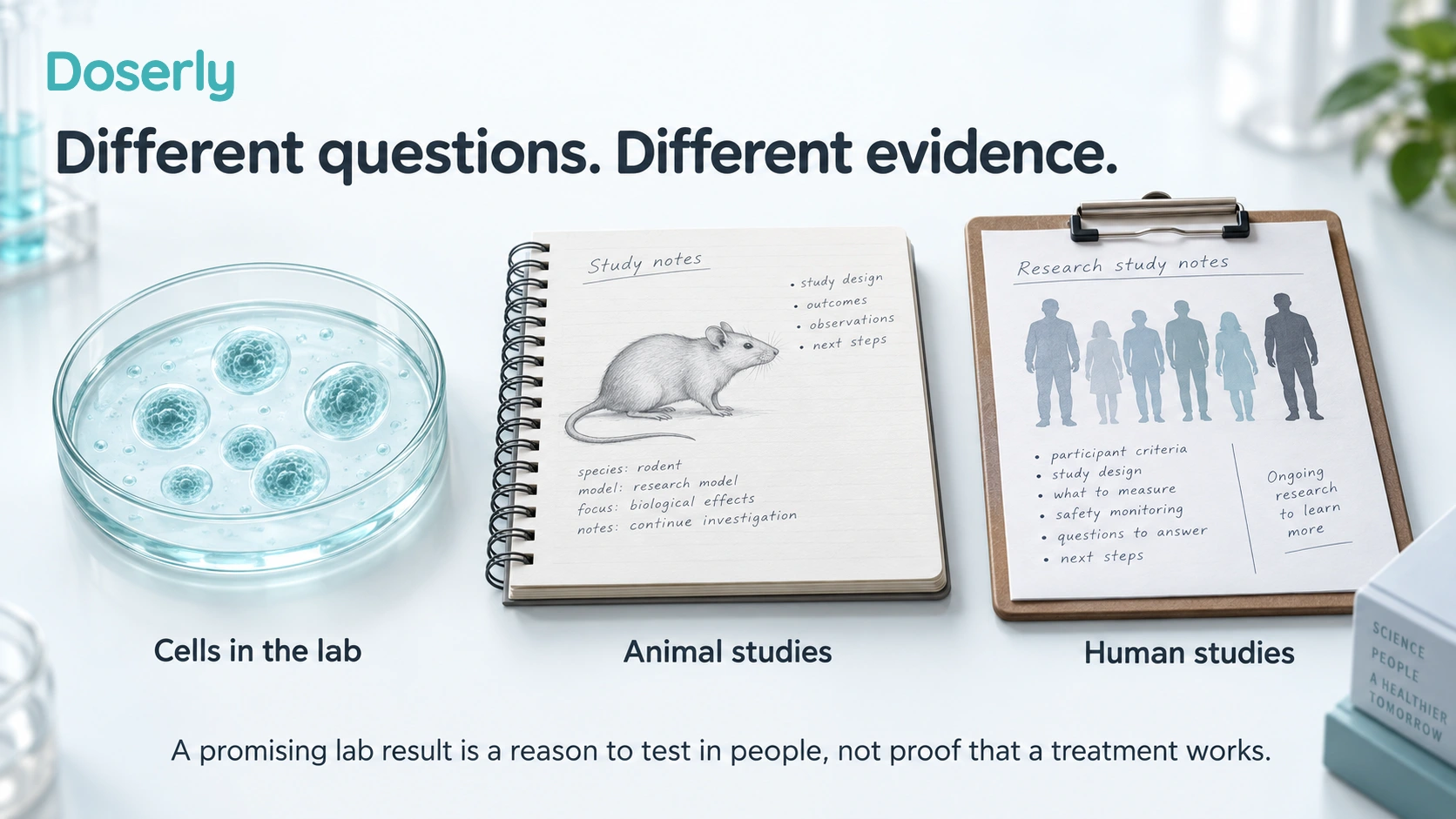
Small and mid-sized trials have studied pregnenolone as add-on treatment for bipolar depression, chronic low-back pain, schizophrenia and substance-use disorder. In bipolar depression, 80 adults were randomized and 73 contributed postbaseline data; clinician-rated depression changed over time, but the self-report continuous outcome did not, and remission significance depended on the scale. In 94 veterans with back pain, an escalating four-week regimen produced a modest between-group pain difference. Healthy-volunteer work found no standalone mood, memory, sleep or well-being benefit at 15 then 30 mg/day. [1], [2], [4]
One result answers one question
How do forms and labels differ?
Retail capsules are not automatically equivalent to the greater-than-99%-purity study material or to pharmacy-prepared blinded capsules. Record purity evidence, manufacturer, lot, amount per administration, daily total, titration, co-medications and clinical population. A trial titration is not a self-starting schedule. [4], [5]
How should the product be stored?
Follow the finished product’s label, keep it dry in its original container and away from children. Discard an expired, heat-damaged, broken-seal or untraceable product.
What does human research show?
| Question | Best direct evidence | Finding | Boundary |
|---|---|---|---|
| Efficacy | Brown 2014 · bipolar-depression RCT · 80 randomized | 73 analyzed; HRSD time interaction positive, IDS-SR continuous result null, and remission significance differed by scale | Specific product and population |
| Replication | Limited evidence | No universal effect established | Variable formulations |
| Universal dose? | None | Not established | Rows cannot be combined |
Keep the finished product reviewable
What are the risks and interactions?
Pregnenolone can alter neurosteroid and downstream hormone exposure. Mood activation, anxiety, sleep change, sedation interactions, acne, hair changes and endocrine symptoms deserve attention. Bipolar disorder, psychosis, pregnancy, breastfeeding, hormone-sensitive disease and concurrent psychiatric, sedating or hormone-active medicines require clinician oversight. Product legality and supplement status vary by jurisdiction. [2], [3], [5], [6]
Seek prompt help for suicidal or manic symptoms, hallucinations, severe agitation, chest pain, fainting, jaundice, severe allergy or pregnancy during exposure.
What is the legal and regulatory status?
In the United States, pregnenolone has no FDA-approved oral wellness or nootropic indication, and its treatment as a supplement or compounded ingredient has been disputed in enforcement. In Canada, verify the exact authorization rather than assuming a U.S. retail product is permitted. [6]
When should use stop?
Stop for any allergic reaction, persistent symptom worsening, unexpected laboratory result or doubt about product identity.
What should be monitored?
Track the exact product, each administration, daily total, titration, mood, sleep, pain or other prespecified endpoint, co-medications and adverse effects. For psychiatric or pain use, the published trials were clinician-run adjunctive studies with exclusion criteria and monitoring; app records support review but cannot reproduce that care.
What can community experience add?
Reports can reveal sleep, mood, energy or product-quality concerns. They cannot distinguish expectancy, neurosteroid conversion or interaction effects. No systematic current community sample was assembled, so no consensus cognitive cycle or hormone target is reported.
How do related options compare?
| Option | Main distinction |
|---|---|
| Retail capsule | Variable quality; no approved wellness indication |
| Investigator-prepared capsule | Purity, placebo and titration defined in one trial |
| Pregnenolone blood level | Exposure marker, not a validated wellness target |
Common questions
Is pregnenolone proven for anti-aging?
No. The cited trials studied narrow clinical populations and did not test longevity.
Did the bipolar trial clearly work on every measure?
No. The clinician and self-report outcomes did not agree uniformly.
How large was the back-pain difference?
The adjusted final diary difference was −0.56 on a 0–10 scale after four weeks.
Did healthy volunteers improve?
No standalone benefit appeared for mood, memory, sleep or well-being in the small crossover study.
Can the trial titration be copied?
No. It was a monitored research schedule with exclusions, co-medications and a taper.
What should be tracked?
Product, purity evidence, each dose, total, titration, co-medications and one defined endpoint.
Glossary
Terms for reading the evidence.
- Endpoint
- A defined result measured in a study.
- Anaphylaxis
- A potentially life-threatening systemic allergic reaction.
- Biomarker
- A biological measure that does not guarantee clinical benefit.
- Standardization
- A measured specification for a product component.
- Cross-reactivity
- Immune recognition of related proteins from different sources.
How this guide was researched
NCBI identities, publication notices, indexed abstracts and available open methods were checked. Null outcomes, mixed products, surrogate endpoints and missing details remain visible.
Research record · checked October 9, 2026
Identity: NCBI EFetch verified each indexed record and descendant notice. No linked correction, retraction or expression of concern appeared.
Methods: PMC4200497 and PMC7052727 were read directly. Exact twice-daily titration, analysis population, mixed depression outcomes and pain effect were taken from methods and results.
Boundary: monitored adjunctive psychiatric and pain trials are not converted into a consumer protocol. No systematic current community sample was assembled.
Explore the sources
Primary human evidence and official context.
Showing 6 sources
- 01
A randomized, double-blind, placebo-controlled trial of pregnenolone for bipolar depression. ↗
Randomized controlled trial
Eighty randomized and 73 analyzed after baseline; exact twice-daily titration reached 500 mg/day, with mixed results across depression measures.
- 02
Effect of Pregnenolone vs Placebo on Self-reported Chronic Low Back Pain Among US Military Veterans: A Randomized Clinical Trial. ↗
Randomized controlled trial
Ninety-four veterans were analyzed; twice-daily titration reached 500 mg/day and the final diary difference was −0.56 on a 0–10 scale.
- 03
Chronic pregnenolone effects in normal humans: attenuation of benzodiazepine-induced sedation. ↗
Double-blind crossover studies
Seventeen healthy volunteers received 15 then 30 mg/day; standalone mood, memory, sleep and well-being outcomes were null.
- 04
Pregnenolone treatment reduces severity of negative symptoms in recent-onset schizophrenia: an 8-week, double-blind, randomized add-on two-center trial. ↗
Randomized add-on trial
Sixty patients were randomized to 50 mg/day or placebo for eight weeks; 52 contributed to analysis in a narrow psychiatric population.
- 05
Pregnenolone Reduces Stress-Induced Craving, Anxiety, and Autonomic Arousal in Individuals with Cocaine Use Disorder. ↗
Randomized mechanistic trial
Thirty treatment-seeking participants received placebo, 300 or 500 mg/day for eight weeks; cue-provocation outcomes do not establish routine treatment efficacy.
- 06
Pregnenolone: What You Need to Know ↗
Official product-status guidance
Pregnenolone is not currently on the WADA prohibited list, but USADA highlights uncertain supplement legality, quality and hormone-product risk.
No matching sources
Try a different term or show the full list.
Editorial note
This guide separates composition, biomarker, symptom and clinical outcome. It does not turn a narrow signal into a general promise.