
In this guide
What is vitamin B6?
Vitamin B6 names six related compounds, or vitamers. Pyridoxal 5′-phosphate (PLP) and pyridoxamine 5′-phosphate are active coenzyme forms involved in amino-acid, carbohydrate and lipid metabolism. Vitamin B6 also contributes to neurotransmitter synthesis, hemoglobin formation and homocysteine metabolism. [1]
Deficiency can matter, but more is not automatically better. Supplemental B6 appears in many overlapping products, and long-term excess can injure sensory nerves. The practical first step is to total the amount from every label.
Typical Vitamin B6 Protocols
| Population or authority | Form and amount each time | Frequency | Total per day | Duration |
|---|---|---|---|---|
| U.S. RDA, adults 19–50 | Vitamin B6 from all sources | Daily | 1.3 mg | Ongoing reference intake |
| U.S. RDA, men 51+ | Vitamin B6 from all sources | Daily | 1.7 mg | Ongoing reference intake |
| U.S. RDA, women 51+ | Vitamin B6 from all sources | Daily | 1.5 mg | Ongoing reference intake |
| U.S. adult UL | Vitamin B6 from all sources | Daily | 100 mg | Chronic safety boundary |
| 2023 EFSA adult UL | Vitamin B6 from all sources | Daily | 12 mg | Chronic safety boundary |
Pregnancy and lactation U.S. RDAs are 1.9 and 2.0 mg/day. The U.S. 100 mg UL and 2023 EFSA 12 mg UL reflect different reviews and policy contexts. Both are total-intake ceilings, not targets, and neither means a lower amount is risk-free for every person and duration. [1], [2]
Where these values come from
The current NIH ODS monograph supplies U.S. RDAs, the U.S. UL, forms, status measures and risk context. The 2023 EFSA scientific opinion supplies the European adult UL and identifies peripheral neuropathy as the critical adverse effect. [1], [2]
We did not collapse two jurisdictions into one global limit or turn either UL into a routine dose.
Requirement and safety are different
All values count total B6, but they answer different questions.
Keep the authority and date attached. An upper limit is not a recommended dose.
Does vitamin B6 need to be cycled?
No nutrition authority defines a general B6 cycle. Cycling does not erase cumulative exposure or reliably prevent neuropathy. A diagnosed deficiency or medicine-related need follows a condition-specific plan rather than an improvised on/off schedule.
What happens when vitamin B6 is stopped?
B6 does not cause a recognized withdrawal syndrome. Stopping a nonessential high-dose product removes that exposure, but sensory symptoms can take time to improve and may not always fully resolve. New neurologic symptoms warrant prompt clinical assessment rather than a self-directed rechallenge. [1], [2]
Which foods provide vitamin B6?
Fish, poultry, organ meats, chickpeas, potatoes and other starchy vegetables, fortified cereals and noncitrus fruit contribute vitamin B6. Food sources count toward the RDA and UL, although excessive intake is much more likely from supplements. [1]
Which vitamin B6 form should be compared?
- Pyridoxine hydrochloride: the most common supplement form. [1]
- Pyridoxal 5′-phosphate (PLP or P5P): an active coenzyme form, but its phosphate is removed before absorption. Current ODS guidance does not show a substantial absorption advantage or a neuropathy exemption. [1]
- Multiple B6 sources: a multivitamin, B complex, pre-workout or energy product may each add B6. Compare the vitamin B6 line and total milligrams, regardless of the marketing name.
How should vitamin B6 be stored?
Follow the label for temperature, light, moisture and expiry. Keep products closed and away from children. Record the Supplement Facts panel before discarding an old container so cumulative exposure can still be reconstructed.
What is vitamin B6 commonly used for?
Vitamin B6 is used to meet nutritional needs and in clinician-directed care for specific deficiencies or conditions. It is also marketed for energy, mood, premenstrual symptoms, homocysteine reduction and nerve health. A biochemical role does not establish benefit from high-dose use in people whose intake is already adequate. [1]
Reducing homocysteine is an intermediate outcome and does not by itself prove fewer cardiovascular events. “Nerve support” claims also require caution because chronic excess B6 can itself injure sensory nerves.
What does human evidence show?
ODS concludes that B6 supplements do not appear to prevent cardiovascular disease or improve cognition in people without a relevant deficiency, despite effects on homocysteine in some settings. Evidence for broad mood or energy claims is also insufficient. [1]
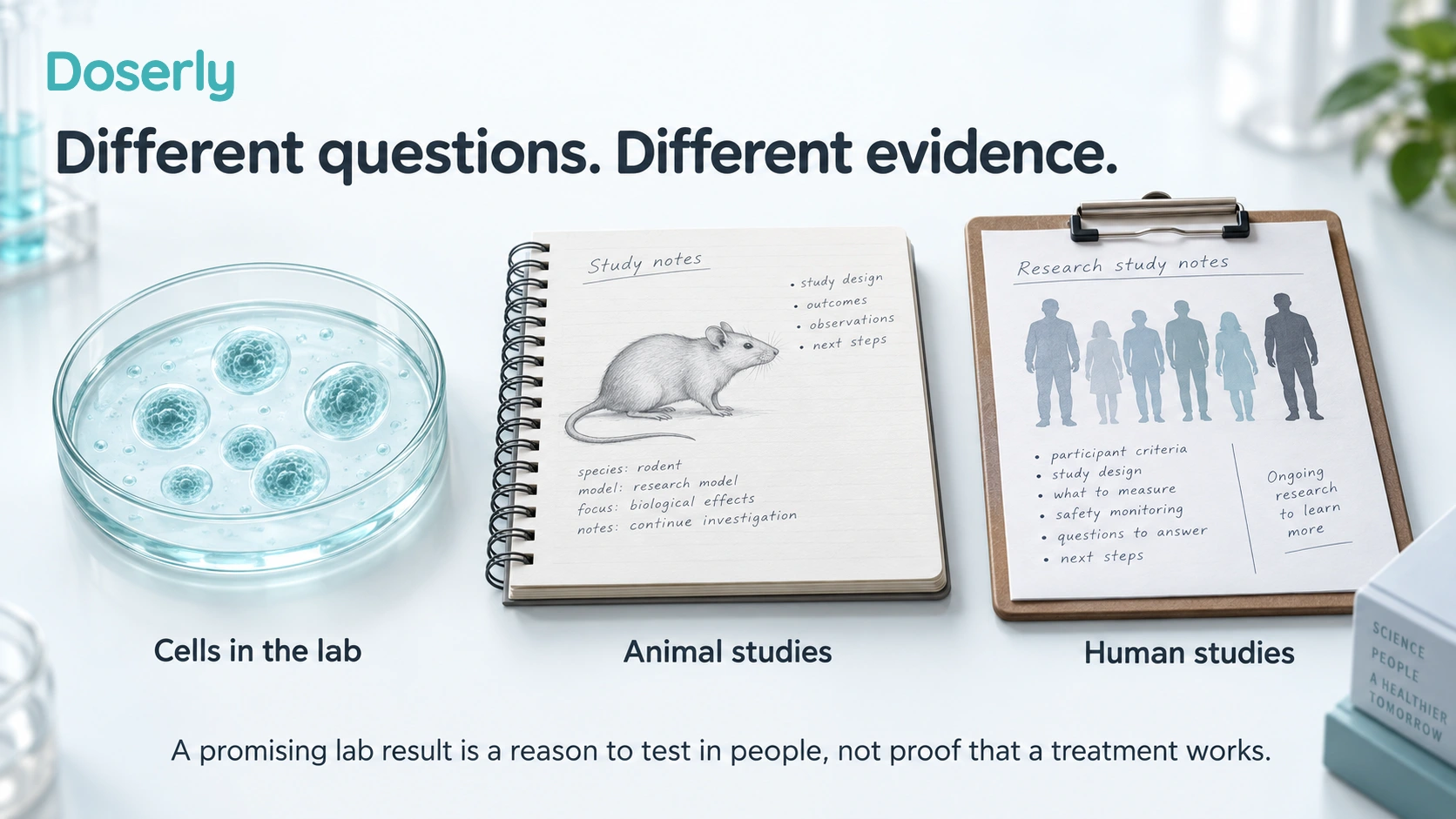
The hierarchy graphic below is a general evidence-reading aid. A plausible pathway or changed biomarker sits below direct evidence of symptoms, function or clinical events.
How does vitamin B6 work?
PLP serves as a coenzyme in more than 100 enzyme reactions, especially amino-acid metabolism. It participates in neurotransmitter, hemoglobin and glucose-related pathways. The liver converts absorbed vitamers into circulating PLP, the usual status marker. [1]
This broad biology explains why both deficiency and excess can affect the nervous system. It does not justify increasing intake above need.
What are the risks and interactions?
In the United States, supplements generally do not receive FDA premarket approval for safety or effectiveness. In Canada, natural health products require a licence and authorized labels carry an NPN or DIN-HM. Product authorization does not establish long-term neurologic safety for every intake. [3], [4]
Chronic excessive B6 can cause severe sensory neuropathy and loss of movement control. Warning symptoms include new numbness, burning, tingling, balance problems, gait change or poor coordination. Risk depends on amount and duration, and total exposure can be hidden across products. [1], [2]
Which medicines interact with vitamin B6?
Cycloserine, some antiepileptic medicines and theophylline can affect vitamin B6 status or interact with supplemental exposure. Medicine-specific management belongs with the prescriber or pharmacist. Do not use high-dose B6 to manage a medicine effect without a defined plan. [1]
What should be monitored?
Plasma PLP is the most common status measure. Values above 30 nmol/L have traditionally indicated adequacy, while the U.S. RDA used 20 nmol/L as its principal adult adequacy indicator. A laboratory value must be interpreted with symptoms, diet, supplements, inflammation and kidney function. [1]
New sensory symptoms during nonessential supplemental use warrant stopping the high-dose exposure and prompt clinical review for neuropathy and other causes. Record every product, form, amount and start date.
What do public communities report?
Public discussions often compare pyridoxine with P5P or attribute tingling to a specific product. Reports can surface safety signals, but cannot establish a safe form or threshold because cumulative amount, duration, other products and competing causes vary.
The previous Doserly dossier reviewed community material, but this overhaul did not independently recrawl or quantify it. No community consensus is treated as evidence.
How does vitamin B6 compare with nearby options?
| Guide | What it is | Key difference |
|---|---|---|
| Pyridoxal 5′-phosphate | Active B6 coenzyme form | Still contributes to total B6; no established neuropathy exemption |
| Vitamin B12 | Cobalamin family | Different deficiency tests, neurologic risks and no U.S. UL |
| Folate | One-carbon metabolism vitamin | High folic acid can mask hematologic signs of B12 deficiency |
| Multivitamin | Multi-nutrient product category | Can be one of several hidden B6 sources |
Common questions about vitamin B6
Is 100 mg/day safe for everyone?
No. It is the U.S. adult UL, not a target or guarantee. EFSA set a 12 mg/day adult UL in 2023 after a newer neuropathy review. [1], [2]
Is P5P safer than pyridoxine?
Current official evidence does not establish a neuropathy exemption. P5P contributes to total B6 exposure and is dephosphorylated before absorption. [1]
Can vitamin B6 cause tingling?
Yes. Chronic excessive exposure can cause sensory neuropathy with tingling, numbness, burning, gait change or poor coordination. Other causes also require assessment. [1], [2]
How much B6 do adults need?
The U.S. RDA is 1.3 mg/day at ages 19–50, 1.7 mg/day for men 51+, and 1.5 mg/day for women 51+, counting all sources. [1]
Does B6 improve energy?
B6 supports energy metabolism, but that mechanism does not show that high-dose supplementation boosts energy when status is adequate. [1]
What test measures B6 status?
Plasma PLP is used most often, but interpretation depends on clinical context and is not a stand-alone supplement target. [1]
Should multiple B6 products be added together?
Yes. Add the milligrams from multivitamins, B complexes, energy products and stand-alone supplements to estimate daily exposure.
Glossary
Plain explanations of the vitamin B6 and safety terms used in this guide.
- Vitamer
- One of several related compounds with activity of the same vitamin.
- Pyridoxal 5′-phosphate (PLP)
- Active B6 coenzyme form and the most common blood status measure.
- Sensory neuropathy
- Injury to sensory nerves that can cause numbness, burning, tingling, balance or coordination problems.
- Recommended Dietary Allowance (RDA)
- Total daily intake expected to meet the needs of nearly all healthy people in a group.
- Tolerable Upper Intake Level (UL)
- Highest chronic total intake unlikely to pose risk for most people; it is jurisdiction-specific and not a target.
- Homocysteine
- An amino-acid-related blood marker; lowering it does not automatically prove fewer cardiovascular events.
How this guide was researched
This draft uses the current NIH ODS vitamin B6 professional monograph, the 2023 EFSA scientific risk assessment, and current FDA and Health Canada regulatory pages. Relevant source text was retrieved and read on October 9, 2026. The older Doserly draft identified claims to recheck but was not treated as proof.
The protocol table preserves jurisdiction and source scope. It does not present an upper limit as a dose or claim that P5P avoids neuropathy.
How this guide was made
Research and drafting were AI-assisted. This manuscript is a draft for Doserly editorial review and has not been independently clinically reviewed. Doserly makes a health-tracking app and operates Doserly Academy, both promoted in this guide. Read the editorial policy for corrections and updates.
Explore the sources
Official nutrient and risk reviews answer different questions. Source notes preserve jurisdiction and reviewed scope.
Showing 4 sources
- 01
Vitamin B6 - Health Professional Fact Sheet ↗
Official nutrient monograph
Current relevant full-page sections reviewed.
Detail: Vitamers, foods, RDAs, U.S. UL, PLP status, supplement forms, neuropathy, health outcomes and medicine interactions.
- 02
Scientific opinion on the tolerable upper intake level for vitamin B6 ↗
Regulatory risk assessment
Official abstract and full-text highlights reviewed.
Detail: Peripheral neuropathy as critical endpoint, dose-time relationship, uncertainty and 12 mg/day adult total-intake UL.
- 03
Questions and Answers on Dietary Supplements ↗
Regulatory overview
Current official page reviewed.
Detail: U.S. premarket and postmarket framework for dietary supplements.
- 04
Product Licensing ↗
Regulatory overview
Current official page reviewed.
Detail: Canadian product licence requirement and NPN or DIN-HM identifier.
No matching sources
Try a different term or show the full list.