
SNAP-8: Complete Research Guide
On this page
Quick Reference Card
Attribute
Also Known As
- Detail
- Acetyl Octapeptide-3, Acetyl Octapeptide-8, Acetyl Glutamyl Heptapeptide-1, SNAP-25 Mimic Peptide, Cellbone SNAP-8
Attribute
Administration
- Detail
- Topical (primary, research-backed), Subcutaneous (off-label, limited data)
Attribute
Research Status
- Detail
- Cosmeceutical ingredient with in-vitro and limited clinical data. Not FDA-approved for any therapeutic indication.
Attribute
Typical Dose Range
- Detail
- Topical: 5-10% in serum/cream formulations, applied twice daily. Subcutaneous: 330-1,000 mcg once daily (limited data)
Attribute
Half-Life
- Detail
- Short (topical activity duration approximately 12 hours)
Attribute
Cycle Length
- Detail
- Topical: continuous daily use. Subcutaneous: 8-12 weeks (up to 16 weeks)
Attribute
Storage
- Detail
- Lyophilized: -20°C, dry, dark conditions. Reconstituted: 2-8°C, use within 30 days. Topical serums: refrigerate or store in cool, dark place
Overview / What Is SNAP-8?
The Basics
SNAP-8 is a synthetic peptide designed to soften facial expression lines, forehead wrinkles, and crow's feet by gently relaxing the muscles that cause them. It works through a mechanism similar to botulinum toxin (Botox), but instead of being injected by a medical professional and fully paralyzing muscles, SNAP-8 is applied topically and produces a subtler, partial relaxation that preserves natural facial expressions.
The name "SNAP-8" refers to its relationship with a protein called SNAP-25 that your body uses to send signals from nerves to muscles. When you squint, frown, or raise your eyebrows, nerve signals tell facial muscles to contract through a process that depends on SNAP-25. SNAP-8 competes with this protein, slowing down the signal just enough to reduce the intensity of muscle contractions without eliminating movement entirely. Think of it as turning down the volume on your facial muscles rather than hitting the mute button.
SNAP-8 is an extended version of Argireline (Acetyl Hexapeptide-3), one of the most widely used cosmetic peptides. By adding two extra amino acids to Argireline's chain, researchers created a compound that shows approximately 30% greater activity in laboratory models [1]. This improvement, combined with enhanced stability, has made SNAP-8 a popular ingredient in premium anti-aging formulations.
Clinical testing of topical SNAP-8 formulations has shown wrinkle depth reductions ranging from 21% at day 7 to as high as 63% at day 28, depending on concentration and formulation [1][2]. These numbers come primarily from supplier-sponsored cosmetic testing, and it is important to understand that topical peptide results are gradual, cumulative, and significantly more modest than injectable neuromodulators. SNAP-8 fills a specific niche: daily-use, non-invasive wrinkle support for people who prefer to avoid injections or who want to extend intervals between Botox treatments.
The Science
SNAP-8 (Acetyl Octapeptide-3, CAS: 868844-74-0) is a synthetic octapeptide with the sequence Ac-Glu-Glu-Met-Gln-Arg-Arg-Ala-Asp-NH2, featuring N-terminal acetylation and C-terminal amidation for enhanced enzymatic stability [1][3]. With a molecular weight of 1075.16 g/mol, it is engineered as a functional mimetic of the N-terminal domain of SNAP-25 (synaptosomal-associated protein 25 kDa), a critical component of the SNARE (Soluble N-ethylmaleimide-sensitive factor Attachment protein REceptor) complex.
SNAP-8 was developed as an elongated analog of Acetyl Hexapeptide-3 (Argireline), extending the hexapeptide by two additional amino acid residues (Ala-Asp) at the C-terminus. This extension improves competitive binding affinity for the SNAP-25 binding site within the ternary SNARE complex. Preclinical assays demonstrated approximately 30% greater inhibition of catecholamine-induced neuromuscular signaling compared to the parent hexapeptide [1].
The primary route of application is topical, with the compound formulated in aqueous serums, gels, and oil-in-water emulsions at concentrations typically ranging from 5-10% of the commercial preparation (which itself contains the peptide in dilute solution, not as pure active) [2][4]. Subcutaneous injection protocols have emerged in practitioner communities, though no peer-reviewed clinical evidence supports this route for SNAP-8 specifically.
Molecular Identity
Attribute
Common Names
- Detail
- SNAP-8, Acetyl Octapeptide-3, Acetyl Octapeptide-8, Acetyl Glutamyl Heptapeptide-1
Attribute
Amino Acid Sequence
- Detail
- Ac-Glu-Glu-Met-Gln-Arg-Arg-Ala-Asp-NH2 (8 amino acids)
Attribute
Molecular Formula
- Detail
- C41H70N16O16S
Attribute
Molecular Weight
- Detail
- 1075.16 g/mol
Attribute
CAS Number
- Detail
- 868844-74-0 (primary); 1253115-75-1 (alternative)
Attribute
PubChem CID
- Detail
- 86080331
Attribute
Structural Type
- Detail
- Linear octapeptide with N-terminal acetyl group and C-terminal primary amide
Attribute
Parent Compound
- Detail
- Argireline (Acetyl Hexapeptide-3, Ac-EEMQRR-NH2); SNAP-8 adds Ala-Asp extension
Attribute
Appearance
- Detail
- White to off-white lyophilized powder
Attribute
Solubility
- Detail
- Water-soluble; compatible with aqueous formulations and O/W emulsions
Attribute
Purity
- Detail
- Typically >95-98% verified via HPLC
Mechanism of Action
The Basics
Every time you make a facial expression, your brain sends an electrical signal down a nerve to a muscle in your face. At the point where the nerve meets the muscle, a chemical messenger called acetylcholine needs to be released to make the muscle contract. This release depends on a molecular machine called the SNARE complex, which acts like a set of gears that push little packets of acetylcholine out of the nerve ending and across to the muscle.
SNAP-8 works by mimicking a key piece of this machine (the SNAP-25 protein) and competing for its spot. When SNAP-8 occupies some of those positions, the machine runs less efficiently. Fewer acetylcholine packets get released, the muscle contracts with less force, and over time, the dynamic wrinkles caused by repetitive contractions (forehead lines, frown lines, crow's feet) gradually soften.
The important distinction from Botox is both the mechanism and the magnitude. Botox physically cuts the SNAP-25 protein, completely paralyzing the muscle for months. SNAP-8 simply competes with SNAP-25 for binding, producing a partial, reversible reduction in muscle activity. The result is a gentler effect that preserves natural facial expressions while reducing the repetitive tension that deepens expression lines over time.
Beyond the neuromuscular effects, some research suggests SNAP-8 may also influence skin at the cellular level by stimulating fibroblast activity and supporting collagen synthesis through indirect paracrine signaling pathways [5]. This secondary mechanism, while less established, could contribute to improvements in skin texture and elasticity reported by users beyond simple wrinkle smoothing.
The Science
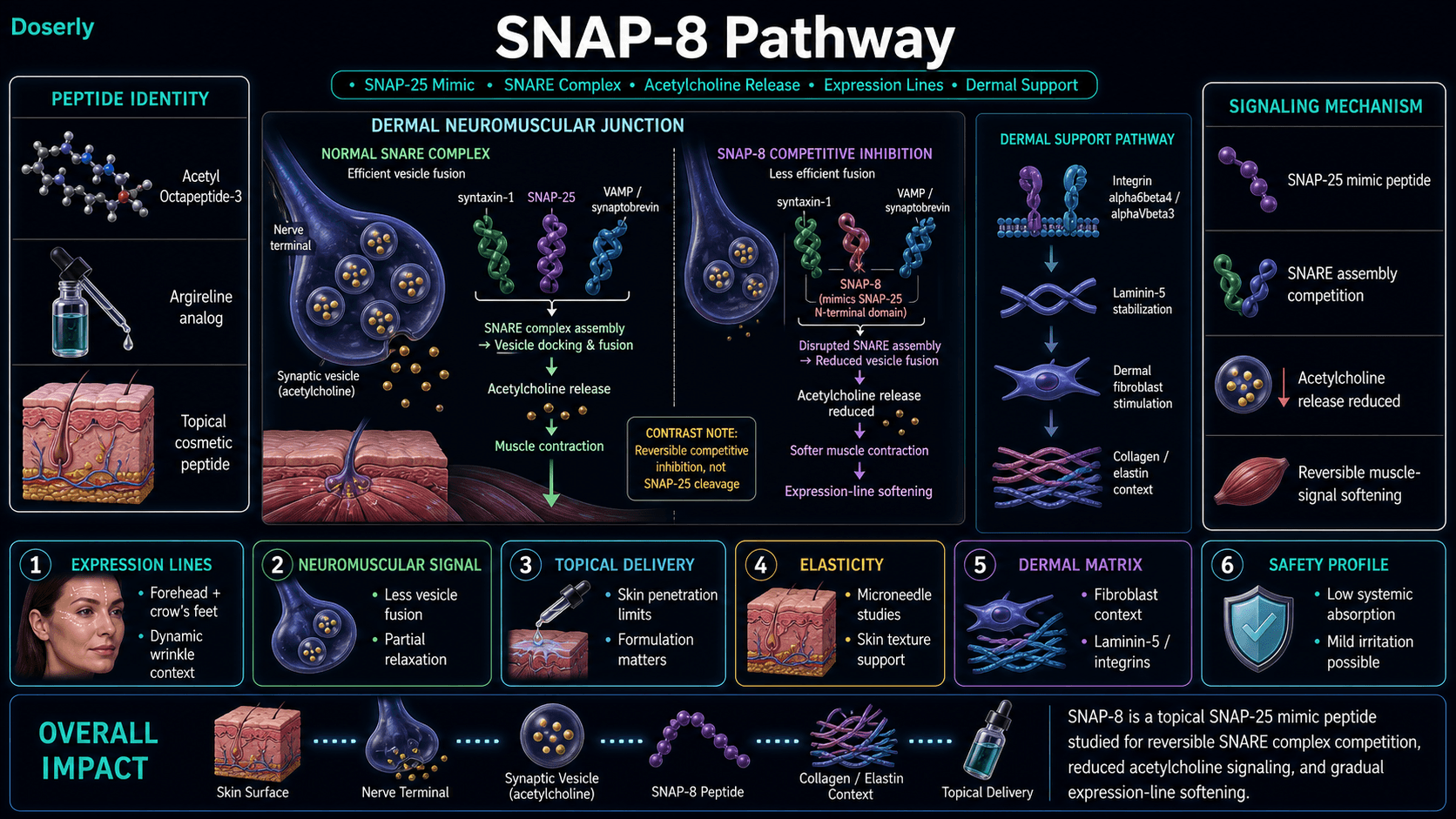
SNAP-8 functions as a competitive inhibitor of SNARE (Soluble N-ethylmaleimide-sensitive factor Attachment protein REceptor) complex assembly. The SNARE complex is a heterotrimer composed of syntaxin-1, SNAP-25, and VAMP/synaptobrevin that mediates synaptic vesicle fusion with the presynaptic membrane, enabling exocytosis of neurotransmitter-containing vesicles at the neuromuscular junction [1][5].
By mimicking the N-terminal domain of SNAP-25, SNAP-8 competes with endogenous SNAP-25 for binding positions within the ternary complex. This competition destabilizes SNARE complex assembly, reducing the efficiency of vesicle docking and fusion. The downstream consequence is attenuated acetylcholine release at dermal neuromuscular junctions, producing a dose-dependent reduction in muscle contraction intensity [1][3].
The mechanism is fundamentally distinct from botulinum toxin, which cleaves SNAP-25 via a zinc metalloprotease domain, producing irreversible proteolytic destruction of the target protein. SNAP-8's competitive inhibition is reversible and concentration-dependent, producing a graduated rather than binary reduction in neurotransmitter release [1].
Additional biological targets have been identified through pathway analysis:
- SNARE Complex: competitive inhibitor (primary target) [5]
- SNAP-25: binder and competitive inhibitor [5]
- Acetylcholine release: inhibitor at neuromuscular junctions [5]
- Integrin receptors (alpha6beta4, alphaVbeta3): agonist activity [5]
- Dermal fibroblasts: stimulator [5]
- Laminin-5: stabilizer [5]
- Dermal-Epidermal Junction: strengthening [5]
These secondary targets suggest mechanisms beyond simple neuromuscular modulation, potentially contributing to extracellular matrix remodeling and dermal-epidermal adhesion [5].
Pathway Visualization Image
Pharmacokinetics
The Basics
SNAP-8's pharmacokinetics depend heavily on how it is used. As a topical compound, the main challenge is getting the peptide through the outer layer of skin (the stratum corneum) to reach the neuromuscular targets beneath it. At 1075 g/mol, SNAP-8 is well above the 500 Da molecular weight threshold typically considered ideal for topical skin penetration, which means formulation quality matters enormously.
After topical application, effects are gradual. Most sources estimate an onset window of 14-28 days with consistent twice-daily use, with effects lasting approximately 12 hours per application. This is why morning and evening application is commonly suggested. Results are cumulative, with studies showing increasing wrinkle reduction from day 7 through day 28 of continuous use [2].
For subcutaneous injection, which has minimal clinical documentation, the peptide's short plasma half-life means it is cleared from the blood relatively quickly. The biological effects at the tissue level may persist longer than blood levels would suggest, similar to many other peptides.
The Science
Topical pharmacokinetics: SNAP-8's molecular weight of 1075.16 g/mol significantly exceeds the 500 Da threshold for optimal passive transdermal diffusion. Penetration across the stratum corneum relies on formulation-dependent enhancement strategies, including liposomal delivery, nanoparticle encapsulation, and chemical penetration enhancers in the vehicle [4]. Research has evaluated dissolving microneedle patches as a physical enhancement strategy for SNAP-8 delivery, demonstrating improved dermal penetration and clinical efficacy compared to conventional topical application [2].
A 2025 study evaluated SNAP-8 (as Acetyl Hexapeptide-8) in various oil-in-water emulsion formulations at 10% concentration, finding that emulsion composition significantly affected penetration depth and biological activity [4]. The bioavailability of topically applied SNAP-8 is classified as low, with the majority of the applied peptide remaining in the superficial dermis [5].
Temporal profile: Onset of measurable wrinkle reduction occurs at approximately 14 days with optimal formulation, with progressive improvement through day 28 [1][2]. The duration of activity per application is estimated at approximately 12 hours, supporting a twice-daily application schedule for maintained SNARE complex inhibition [5].
Subcutaneous pharmacokinetics: No published pharmacokinetic studies specific to subcutaneous SNAP-8 administration are available. By analogy with similarly sized peptides, a short plasma half-life with rapid renal clearance would be expected.
Research & Clinical Evidence
SNAP-8 and Wrinkle Reduction
The Basics
The primary body of research on SNAP-8 focuses on its ability to reduce the depth and appearance of facial expression lines. The compound was specifically designed for this purpose, and the available evidence, while limited in scope, is fairly consistent in direction: topical SNAP-8 formulations do produce measurable reductions in wrinkle depth when used consistently.
The challenge in evaluating this evidence is that much of it comes from cosmetic testing conducted or sponsored by ingredient manufacturers rather than independent clinical trials. These studies use valid measurement tools (skin replicas, profilometry, digital image analysis), but they are not the randomized, double-blind, placebo-controlled trials that represent the gold standard in medical research.
What the data shows: wrinkle depth reductions averaging around 35%, with some formulations achieving up to 63% reduction after 28 days of twice-daily application [1][2]. A 24-subject clinical evaluation using dissolving microneedle patches containing SNAP-8 demonstrated significant reduction in eye wrinkles and improved skin elasticity over 4 weeks with no adverse effects [2]. An open-label 14-week trial of a multi-peptide serum including SNAP-8 found statistically significant smoothing of expression lines [2].
The Science
In vitro models demonstrate that SNAP-8 reduces catecholamine-induced neuromuscular signaling in artificial skin constructs, with approximately 30% greater activity than its parent compound Argireline [1][3]. The mechanism of action, competitive SNARE complex inhibition, is well-characterized biochemically.
Clinical evidence consists primarily of supplier-sponsored topical efficacy studies:
- Topical application studies: A 28-day topical application study using 10% SNAP-8 cream demonstrated dose-dependent wrinkle depth reduction measured by skin replica analysis, reaching approximately 63% in optimal formulations [1]. Earlier Argireline studies using similar methodology showed approximately 30% wrinkle depth reduction with 10% cream after 30 days [6].
- Microneedle delivery: A 24-subject clinical trial evaluated dissolving microneedle patches containing SNAP-8 over 4 weeks. The study reported significant reduction in periorbital wrinkles and improved skin elasticity with no reported adverse effects [2].
- Multi-peptide serum: An open-label 14-week trial of a multi-peptide serum containing SNAP-8 alongside other cosmetic peptides showed statistically significant improvement in expression line smoothness [2].
- Enhanced delivery research: A 2018 study evaluated molecular modification and physical enhancement strategies for anti-wrinkle peptide permeation, demonstrating that enhanced delivery of SNAP-8-class peptides could achieve up to 48% wrinkle reduction after 4 weeks [4].
Limitations: No independent, randomized, double-blind clinical trials of SNAP-8 alone have been published in peer-reviewed journals. The existing evidence base primarily supports topical cosmetic application; extrapolation to subcutaneous efficacy is unsupported.
Biomarker Evidence Matrix
Category
Skin Health
- Evidence Strength
- 6/10
- Reported Effectiveness
- 7/10
- Summary
- In-vitro and cosmetic trials show 30-63% wrinkle depth reduction. Community reports are generally positive for expression line softening. Evidence is limited to supplier-sponsored studies.
Category
Side Effect Burden
- Evidence Strength
- 7/10
- Reported Effectiveness
- 8/10
- Summary
- Multiple studies and community reports confirm excellent tolerability. Only mild, transient topical irritation reported. No systemic toxicity observed.
Category
Inflammation
- Evidence Strength
- 3/10
- Reported Effectiveness
- N/A
- Summary
- Secondary integrin agonist activity suggests anti-inflammatory potential via pathway analysis, but no direct studies or community reports exist for SNAP-8 as an anti-inflammatory agent.
Category
Longevity & Neuroprotection
- Evidence Strength
- 3/10
- Reported Effectiveness
- N/A
- Summary
- Pathway analysis shows positive associations with longevity markers through integrin and fibroblast stimulation pathways. No direct evidence or community data. Theoretical extrapolation only.
Category
Joint Health
- Evidence Strength
- 2/10
- Reported Effectiveness
- N/A
- Summary
- Minor pathway associations via dermal fibroblast stimulation. No relevant evidence for joint applications.
Categories scored: 5
Categories with community data: 2 (Skin Health, Side Effect Burden)
Categories not scored (insufficient data): Fat Loss, Muscle Growth, Weight Management, Appetite & Satiety, Food Noise, Energy Levels, Sleep Quality, Focus & Mental Clarity, Memory & Cognition, Mood & Wellbeing, Anxiety, Stress Tolerance, Motivation & Drive, Emotional Aliveness, Emotional Regulation, Libido, Sexual Function, Pain Management, Recovery & Healing, Physical Performance, Gut Health, Digestive Comfort, Nausea & GI Tolerance, Hair Health, Heart Health, Blood Pressure, Heart Rate & Palpitations, Hormonal Symptoms, Temperature Regulation, Fluid Retention, Body Image, Immune Function, Bone Health, Cravings & Impulse Control, Social Connection, Treatment Adherence, Withdrawal Symptoms, Daily Functioning, Other
Benefits & Potential Effects
The Basics
SNAP-8's benefits center almost entirely on skin appearance, specifically the reduction of dynamic expression lines. These are the wrinkles that form from repeated facial movements: horizontal forehead lines from raising eyebrows, vertical frown lines ("elevens") from concentrating, and crow's feet from squinting and smiling.
The core benefit is wrinkle softening. Consistent topical use appears to gradually relax the facial muscle tension that deepens these lines over time. Users and clinical studies report smoother skin texture, reduced wrinkle depth, and a more relaxed facial appearance. Some users also report improved skin elasticity and hydration, though these effects may partly result from the formulation vehicles (hyaluronic acid serums, moisturizing creams) rather than SNAP-8 alone.
It is worth setting expectations clearly: SNAP-8 will not produce results comparable to injectable Botox. The effects are gradual, subtle, and cumulative. They build over weeks of consistent use and reverse when use is discontinued. For people seeking a daily-use, non-invasive addition to their skincare routine, or for those looking to extend intervals between Botox treatments, SNAP-8 represents a reasonable option supported by preliminary evidence.
The Science
Demonstrated and proposed benefits based on available research:
Expression line reduction (primary). Competitive SNARE complex inhibition attenuates acetylcholine-mediated muscle contraction at dermal neuromuscular junctions. Topical studies report dose-dependent wrinkle depth reductions of 21-63% over 7-28 days [1][2]. Preclinical assays demonstrate approximately 30% greater SNARE inhibitory activity compared to Argireline [1][3].
Skin elasticity improvement. Clinical evaluation of SNAP-8 microneedle patches showed improved skin elasticity alongside wrinkle reduction [2]. The mechanism may involve secondary fibroblast stimulation and extracellular matrix modulation rather than direct neuromuscular effects [5].
Extracellular matrix support (secondary). Pathway analysis identifies additional biological targets including integrin receptors (alpha6beta4, alphaVbeta3), Laminin-5 stabilization, and dermal fibroblast stimulation [5]. These pathways are associated with dermal-epidermal junction integrity and collagen/elastin maintenance. However, these secondary mechanisms have not been validated in clinical studies specifically for SNAP-8.
Formulation synergy. Community reports and cosmetic industry practice suggest enhanced outcomes when SNAP-8 is combined with complementary peptides such as GHK-Cu (collagen remodeling support) and Matrixyl (collagen synthesis signaling). No controlled studies have evaluated these combinations [2].
Reading about potential benefits is the starting point. Knowing whether you're actually experiencing them is where real value begins. Doserly lets you track the specific health markers that matter for your protocol, from body composition and energy levels to sleep quality, mood, and recovery time, building a personal dataset that goes beyond subjective impressions.
The app's proactive monitoring doesn't wait for you to notice a problem. It surfaces patterns in your logged data that might suggest suboptimal timing, flags potential interactions with other items in your health stack, and helps you identify which benefits are tracking with what the research suggests and which aren't materializing. Think of it as a second set of eyes on your protocol, always watching the trends.
Capture changes while they are still fresh.
Log symptoms, energy, sleep, mood, and other observations alongside protocol events so patterns do not live only in memory.
Trend view
Symptom timeline
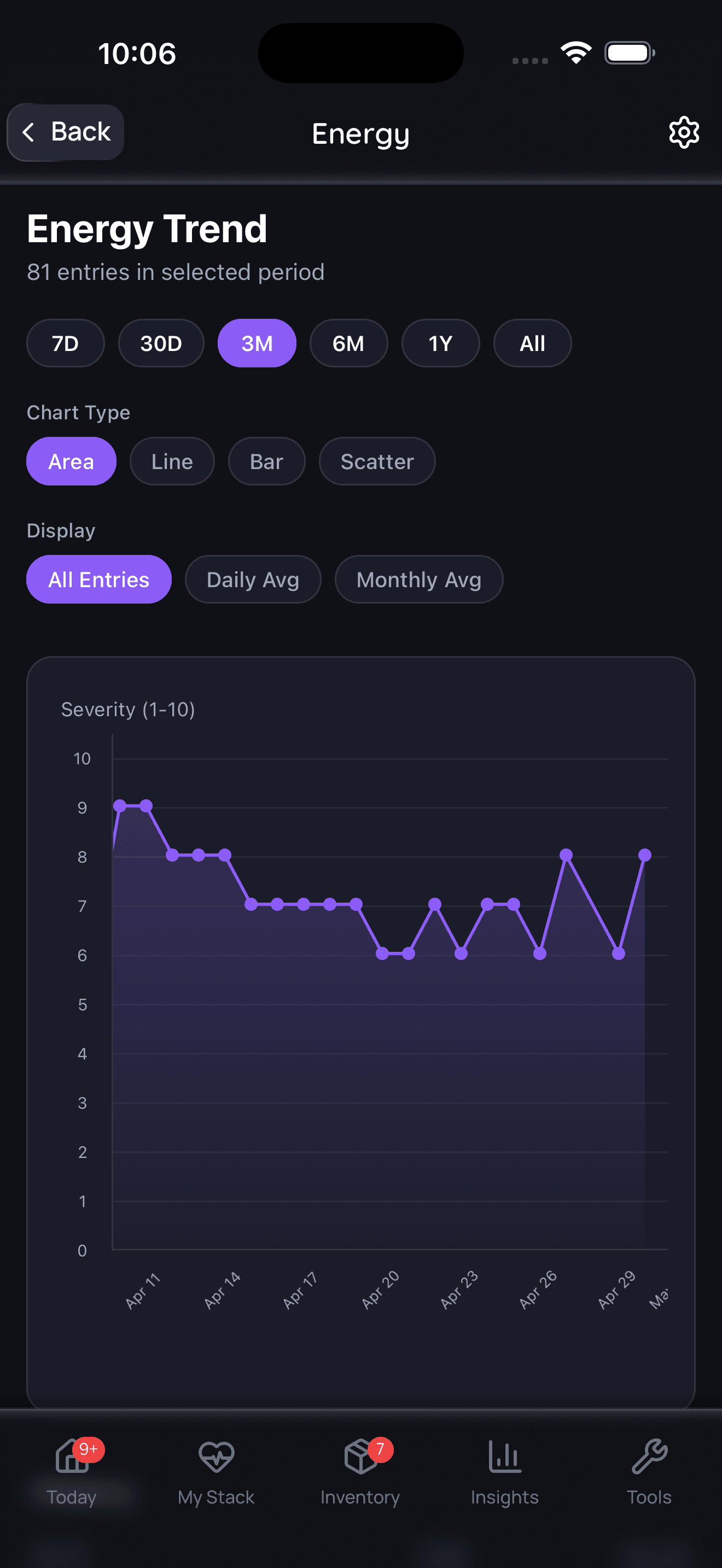
Symptom tracking is informational and should be interpreted with a qualified clinician.
Side Effects & Safety Considerations
The Basics
SNAP-8 has an excellent safety profile based on available data, particularly for topical use. The most commonly reported experience is mild, transient irritation at the application site, including slight tingling, redness, or a temporary tightness sensation. These effects are typically brief and resolve on their own.
No systemic toxicity has been observed in the available studies at typical concentrations. The peptide's large molecular weight (1075 g/mol) and charged amino acid composition limit its ability to penetrate beyond the superficial dermis when applied topically, which significantly reduces systemic absorption [5].
Contraindications are limited to known hypersensitivity to peptide components or formulation excipients, and application should be avoided over open wounds or compromised skin.
For subcutaneous injection, which lacks clinical validation for SNAP-8, the safety picture is less clear. Given that the mechanism involves modulating neuromuscular signaling, injection should only be considered under the direct supervision of a qualified medical professional, as adverse effects including localized nerve effects or unintended muscle relaxation are theoretically possible.
The Science
Topical safety data. Clinical evaluations of topical SNAP-8 formulations across multiple studies report excellent tolerability [1][2]. A 24-subject trial of dissolving microneedle patches containing SNAP-8 over 4 weeks reported no adverse effects [2]. An open-label 14-week trial of a multi-peptide serum including SNAP-8 documented good tolerability with no serious side effects [2]. No systemic toxicity has been observed at concentrations used in cosmetic formulations [1].
Systemic absorption. SNAP-8's molecular weight of 1075.16 g/mol and the peptide's charge profile (glutamic acid and aspartic acid residues contribute acidic character; arginine residues contribute positive charge) limit transdermal penetration to the superficial dermis under standard topical application conditions [5]. This physicochemical barrier is a primary contributor to the favorable safety profile.
Subcutaneous safety considerations. No peer-reviewed safety data exists for subcutaneous SNAP-8 administration. Given the compound's mechanism of competitive SNAP-25 inhibition at neuromuscular junctions, subcutaneous delivery in the facial region carries theoretical risks of localized nerve injury, excessive muscle relaxation, or unintended effects at proximal neuromuscular junctions. Available practitioner community reports describe only mild injection-site reactions (temporary redness, swelling, soreness) at doses of 330-1,000 mcg [2].
Known side effects (topical):
- Mild irritation or erythema (transient)
- Temporary tingling or tightness sensation at application site
Contraindications:
- Known hypersensitivity to peptide components or formulation excipients
- Application over open wounds, broken skin, or compromised skin barrier
The side effects and contraindications above give you a map of what to watch for. Doserly turns that map into a daily practice. Log the specific biomarkers and symptoms associated with this compound's known risk profile, and the app builds a timeline of how your body is responding across your cycle.
Trending in the wrong direction on a key marker? Noticing a pattern that started two weeks into your protocol? Doserly connects the dots between your protocol timeline and your logged data, making it easier to spot emerging issues early and have informed, data-backed conversations with your healthcare provider about what's working and what needs attention.
Keep side effects, flags, and follow-up notes visible.
Doserly helps you document safety observations, side effects, medication changes, and follow-up questions so important context is not scattered.
Safety log
Flags and notes

Safety notes are not emergency guidance; seek medical help when appropriate.
Dosing Protocols
The Basics
SNAP-8 dosing depends entirely on the route of administration. The topical route is the primary research-backed approach, while subcutaneous injection protocols exist in practitioner communities but lack clinical validation.
For topical use, commercial products typically list concentrations of 5-10%. An important caveat: these percentages usually refer to the concentration of the peptide solution (which itself is dilute), not the concentration of pure peptide. In practice, the amount of pure SNAP-8 reaching the skin in a typical product application is in the milligram range. Research suggests that for DIY formulations using pure peptide powder, 10-20 mg of SNAP-8 in a 30 mL serum represents a reasonable starting range [4]. Application is typically twice daily, morning and evening, on clean skin in target areas (forehead, crow's feet, nasolabial folds).
For subcutaneous administration, which should only be considered under medical supervision, practitioner protocols typically describe a gradual titration starting at 330 mcg daily, increasing to 500 mcg at weeks 5-8, and reaching 1,000 mcg daily by weeks 9-12. Cycle length ranges from 8-12 weeks, with optional extension to 16 weeks.
Results from topical use typically become noticeable after 2-4 weeks of consistent daily application, with continued improvement through weeks 6-8.
The Science
Topical dosing:
Protocol
Commercial serum
- Concentration
- 5-10% SNAP-8 solution in serum base
- Application
- Apply ~0.5g to target areas, twice daily
- Duration
- Continuous daily use
Protocol
DIY formulation
- Concentration
- 10-20 mg pure peptide in 30 mL serum
- Application
- Apply to target areas, twice daily
- Duration
- Continuous; peptide degrades after ~8 weeks once mixed
Protocol
Microneedle delivery
- Concentration
- SNAP-8-loaded dissolving microneedle patches
- Application
- Per manufacturer instructions
- Duration
- As directed in clinical protocols
Vehicle composition significantly influences efficacy. Oil-in-water emulsions at 10% concentration demonstrated superior results compared to aqueous solutions in a 2025 formulation study [4]. pH should be maintained between 5-7 for peptide stability.
Subcutaneous dosing (limited evidence):
Week
Weeks 1-4
- Daily Dose
- 330 mcg (0.33 mg)
- Notes
- Starting dose; 10 units on U-100 syringe at 3.33 mg/mL
Week
Weeks 5-8
- Daily Dose
- 500 mcg (0.50 mg)
- Notes
- Mid-phase; titrate if well tolerated
Week
Weeks 9-12
- Daily Dose
- 1,000 mcg (1.0 mg)
- Notes
- Maintenance dose for maximum effect
Week
Weeks 13-16
- Daily Dose
- 1,000 mcg (1.0 mg)
- Notes
- Optional extension
Reconstitution: 3.0 mL bacteriostatic water per 10 mg vial yields approximately 3.33 mg/mL.
No clinical trials have evaluated subcutaneous SNAP-8 dosing. The protocols above are derived from practitioner community reports and should be considered entirely experimental.
What to Expect
SNAP-8's timeline of effects varies significantly by administration route. The following is based on topical use, which has the most available data:
Days 1-7: Most users report no visible changes during the first week. The peptide needs time to accumulate in the target area and begin modulating SNARE complex activity. Some users notice a slight tingling or tightness sensation upon application, which is generally considered a sign that the formulation is active.
Weeks 2-3: Early signs of effect may become visible. One study reported 21% wrinkle depth reduction by day 7 in optimal formulations [1]. Skin may begin to appear smoother in target areas, particularly fine lines around the eyes and forehead. Texture improvements may be noticeable before significant wrinkle reduction.
Weeks 4-6: This is typically when consistent users report the most noticeable change. Studies show wrinkle depth reductions of 30-63% by day 28 [1][2]. Forehead lines and crow's feet are the areas most commonly reported to improve. The skin may appear more relaxed and expressions less deeply etched.
Weeks 6-12: Continued daily use maintains and may further improve results. Skin elasticity improvements become more apparent. Combined effects from any complementary products in the routine (retinoids, hyaluronic acid, GHK-Cu) contribute to overall improvement.
After discontinuation: Effects are reversible. Community reports suggest that wrinkle depth gradually returns to baseline over 2-4 weeks after stopping use, as normal SNARE complex function resumes.
For subcutaneous use: The limited reports available suggest a similar trajectory with potentially faster onset, given direct tissue delivery bypassing the stratum corneum barrier. However, this is anecdotal rather than evidence-based.
Interaction Compatibility
Good With (Synergistic)
- GHK-Cu: Complementary mechanisms. SNAP-8 reduces muscle-driven wrinkle formation while GHK-Cu supports collagen remodeling and tissue repair. Frequently combined in anti-aging protocols and topical formulations.
- Matrixyl (Palmitoyl Pentapeptide-4): Collagen synthesis signaling peptide. Combined with SNAP-8's neuromuscular modulation for multi-pathway wrinkle reduction.
- Hyaluronic Acid: Hydration support that enhances the delivery and cosmetic effects of SNAP-8 in topical formulations.
- Retinoids (Tretinoin, Retinol): Complementary anti-aging mechanisms. Retinoids promote cell turnover and collagen production while SNAP-8 addresses dynamic wrinkle formation. Use at different times of day (retinoid PM, SNAP-8 AM/PM) to avoid formulation conflicts.
- Syn-Ake (Dipeptide Diaminobutyroyl Benzylamide Diacetate): Synthetic snake venom peptide with complementary neuromuscular relaxation mechanism. Community reports describe strong synergy when combined with SNAP-8 in topical formulations.
Not Good With (Caution)
- Metal-containing formulations: Some sources note that metal ions may interfere with peptide integrity. Avoid mixing SNAP-8 with copper-containing products in the same formulation (apply at different times if using both GHK-Cu and SNAP-8).
- Strong acids (low pH): SNAP-8 is most stable at pH 5-7. Direct mixing with high-concentration alpha-hydroxy acids, salicylic acid, or vitamin C at low pH may degrade the peptide. Apply acids and peptides at different times.
Administration Guide
SNAP-8 administration is straightforward for topical use and requires more care for subcutaneous injection.
Topical administration:
- Materials: SNAP-8 serum or reconstituted peptide, clean applicator or fingertips
- Preparation: Apply to clean, dry skin. If using reconstituted peptide powder, dissolve in a compatible aqueous carrier (hyaluronic acid serum, water-based moisturizer) at appropriate concentration
- Timing: Twice daily, morning and evening. Apply before heavier creams and oils but after water-based toners
- Post-application: Follow with moisturizer and sunscreen (AM). Allow the serum to absorb for 1-2 minutes before layering other products
- Storage note: Keep reconstituted peptide solutions refrigerated and use within the stability window
Subcutaneous administration (medical supervision required):
- Materials: U-100 insulin syringes (29-31 gauge), alcohol swabs, bacteriostatic water, reconstituted SNAP-8 vial
- Reconstitution solution: Bacteriostatic water (0.9% benzyl alcohol)
- Timing: Once daily at a consistent time; no specific fasting requirements
- Post-administration: Monitor for localized reactions (redness, swelling). Rotate injection sites between applications
Supplies & Planning
For topical use:
- SNAP-8 peptide powder (lyophilized) or pre-made SNAP-8 serum
- Carrier serum (hyaluronic acid base or similar water-based vehicle) if using raw peptide
- Precision scale (0.001g resolution) for DIY formulations
- Dark glass or opaque containers for storage
- Refrigeration space
For subcutaneous use (medical supervision required):
- SNAP-8 peptide vials (typically 10 mg per vial)
- Bacteriostatic water (10 mL bottles)
- U-100 insulin syringes (29-31 gauge, 0.5 inch)
- Alcohol swabs
- Sharps container
Consult a healthcare provider for specific quantities based on your individual protocol. Use the reconstitution calculator for preparation calculations.
Storage & Handling
Lyophilized (powder) form:
- Store at -20°C (-4°F) or below for long-term storage
- Short-term storage at 2-8°C (35.6-46.4°F) is acceptable for weeks to months
- Keep in original sealed packaging with desiccant
- Protect from moisture and light
- Allow vials to reach room temperature before opening to prevent condensation
Reconstituted (liquid) form:
- Refrigerate immediately at 2-8°C (35.6-46.4°F)
- Use within 30 days for maximum potency
- Do not freeze reconstituted solutions
- Avoid repeated freeze-thaw cycles
- Inspect for clarity before each use; discard if cloudy or discolored
Topical serum form:
- Store in a cool, dark place or refrigerate
- Use within 8 weeks of mixing with carrier for DIY formulations
- Maintain formulation pH between 5-7 for peptide stability
- Avoid metal-containing containers that may interfere with peptide integrity
Enhanced stability note: SNAP-8's N-terminal acetylation provides enhanced stability compared to its parent compound Argireline by protecting against N-peptidase degradation.
Lifestyle Factors
The effects of SNAP-8 do not exist in isolation. Several lifestyle factors can either support or undermine its ability to reduce expression lines:
Sun protection is arguably the single most important complementary measure. UV exposure drives photoaging, collagen breakdown, and the formation of both dynamic and static wrinkles. Broad-spectrum SPF used daily provides the foundation upon which any anti-wrinkle peptide can build.
Sleep quality directly affects skin repair. During deep sleep, the body produces growth hormone and activates cellular repair processes that support collagen synthesis and tissue regeneration. Prioritizing 7-9 hours of quality sleep creates the overnight environment where SNAP-8's muscle-relaxing effects can work alongside the body's natural repair processes.
Hydration supports skin elasticity and barrier function. Adequate water intake and the use of humectant skincare ingredients (hyaluronic acid, glycerin) complement SNAP-8's wrinkle-smoothing effects by maintaining skin turgor and plumpness.
Nutrition rich in antioxidants (vitamins C and E, polyphenols from colorful fruits and vegetables) and omega-3 fatty acids supports dermal resilience and collagen maintenance from the inside out.
Stress management matters because chronic stress increases cortisol, which accelerates collagen breakdown and can increase the habitual facial muscle tension (jaw clenching, forehead furrowing) that drives dynamic wrinkle formation.
Avoid smoking, which dramatically accelerates skin aging through vasoconstriction, free radical generation, and direct collagen damage.
Peptide protocols don't exist in a vacuum. Your nutrition, exercise, sleep, stress, and the rest of your health stack all influence outcomes. Doserly tracks your entire health picture in one place: peptides, supplements, medications, TRT/HRT, and the lifestyle factors that determine whether your protocol reaches its potential.
This holistic view reveals correlations that compartmentalized tracking misses. You might discover that your recovery improvements stall during weeks with poor sleep, or that adding a specific supplement amplified a benefit you were already seeing. Doserly's cross-category visibility helps you understand which lifestyle factors are pulling the most weight in your results, turning health optimization from guesswork into a data-informed practice.
See how each compound fits into the whole protocol.
Doserly organizes compounds, supplements, peptides, medications, and hormone protocols together so overlapping routines are easier to understand.
Stack view
Connected protocol
Stack views improve organization; they do not determine compatibility.
Regulatory Status & Research Classification
United States (FDA): SNAP-8 is not FDA-approved for any therapeutic indication. It is classified as a cosmetic ingredient when used in topical formulations and is commercially available in cosmeceutical products. It is not listed as a pharmaceutical or drug product. No IND (Investigational New Drug) applications for SNAP-8 are registered.
Canada (Health Canada): Not listed as a drug or Natural Health Product. Available as a cosmetic ingredient.
United Kingdom (MHRA): No specific regulatory classification. Available as a cosmetic ingredient in skincare formulations.
Australia (TGA): Not scheduled or registered as a therapeutic good. Available as a cosmetic ingredient.
European Union (EMA): No marketing authorization. SNAP-8 (as Acetyl Octapeptide-3) is listed in the International Nomenclature of Cosmetic Ingredients (INCI) database and is permitted as a cosmetic ingredient under EU cosmetic regulations.
WADA Status: Not prohibited. SNAP-8 does not appear on the World Anti-Doping Agency prohibited list.
Active clinical trials: No clinical trials registered on ClinicalTrials.gov specifically for SNAP-8 or Acetyl Octapeptide-3 as of March 2026.
Regulatory status changes frequently. Always verify the current legal status of any compound in your specific country or jurisdiction before making any decisions.
FAQ
What is SNAP-8 and how does it differ from Argireline?
SNAP-8 is an 8-amino-acid synthetic peptide that extends Argireline (a 6-amino-acid peptide) by two additional residues. Both work through the same mechanism of competitive SNARE complex inhibition to reduce neurotransmitter release at facial neuromuscular junctions. Laboratory testing suggests SNAP-8 demonstrates approximately 30% greater activity than Argireline, along with improved formulation stability [1][3].
How long does SNAP-8 take to work?
Based on available clinical data, initial effects may be measurable within 7 days using sensitive profilometry equipment, with visually noticeable improvements typically reported between 2-4 weeks of consistent twice-daily application. Maximum effects in studies were observed at 28 days [1][2]. Community reports generally align with this timeline, with most users suggesting 4-8 weeks for meaningful visible changes.
Is SNAP-8 a replacement for Botox?
No. SNAP-8 and botulinum toxin (Botox) target the same pathway but through fundamentally different mechanisms and at different magnitudes. Botox irreversibly cleaves SNAP-25 protein, producing complete muscle paralysis lasting 3-6 months. SNAP-8 competitively inhibits SNARE complex assembly, producing a partial, reversible, and significantly milder effect. Some users report using SNAP-8 between Botox treatments to maintain results, but it should not be considered a substitute for injectable neuromodulators.
What concentration of SNAP-8 should I look for in products?
Based on available research, cosmetic formulations listing 5-10% SNAP-8 are common, though this typically refers to the percentage of a pre-diluted peptide solution rather than pure peptide concentration. A 2025 formulation study found that 10% in an oil-in-water emulsion produced optimal results [4]. For DIY formulations using pure lyophilized peptide, reports in formulation communities suggest 10-20 mg of pure SNAP-8 per 30 mL of serum base as a starting range. Consultation with a qualified skincare professional or dermatologist is recommended.
Can SNAP-8 be injected?
SNAP-8 was originally developed as a topical cosmeceutical ingredient, and all published clinical data supports topical application. Subcutaneous injection protocols exist in practitioner communities with doses typically ranging from 330-1,000 mcg daily, but these lack peer-reviewed clinical validation. Given the compound's mechanism of neuromuscular modulation, injection should only be performed by a trained medical professional. Consult a healthcare provider before considering any injectable use.
Does SNAP-8 work on all types of wrinkles?
SNAP-8 specifically targets dynamic wrinkles (those caused by repetitive muscle movements), such as forehead lines, frown lines, and crow's feet. It is not expected to significantly improve static wrinkles (those present even when the face is relaxed, caused by volume loss and collagen degradation) or structural wrinkles related to gravity and fat pad redistribution. For static wrinkles, compounds targeting collagen synthesis (such as GHK-Cu, retinoids, or vitamin C) may be more relevant.
Sources & References
[1] Blanes-Mira C, Clemente J, Jodas G, et al. "A synthetic hexapeptide (Argireline) with antiwrinkle activity." International Journal of Cosmetic Science. 2002;24(5):303-310.
[2] Kim JH, et al. "Clinical safety and efficacy evaluation of dissolving microneedle patch containing SNAP-8 for anti-aging." Annals of Dermatology. 2025.
[3] Wang Y, Wang M, Xiao S, et al. "The anti-wrinkle efficacy of Argireline, a synthetic hexapeptide, in Chinese subjects." Journal of Drugs in Dermatology. 2013.
[4] Krishnan G, et al. "Enhanced skin permeation of anti-wrinkle peptides via molecular modification and/or physical enhancement." Archives of Dermatological Research. 2018;310(4):295-306. PMID: 29371611.
[5] Ruiz MA, et al. "Cosmeceutical peptides in the framework of sustainable wellness." Frontiers in Chemistry. 2023. (SNAP-8 mechanism review: SNARE complex inhibition, approximately 30% greater activity than Argireline, enhanced stability.)
[6] Blanes-Mira C, et al. "Argireline decreases catecholamine secretion." International Journal of Cosmetic Science. 2002.
[7] Zhang S, et al. "Quantification of SNAP-25 with mass spectrometry and Simoa: a method comparison in Alzheimer's disease." Alzheimer's Research & Therapy. 2022. PMID: 35659284.
[8] Park J, et al. "Wrinkle-improving effect of novel peptide that binds to nicotinic acetylcholine receptors." Journal of Cosmetic Dermatology. 2024. PMID: 39063099.
[9] Lim SH, et al. "Method development for acetyl octapeptide-3 (SNAP-8) analysis by LC-MS/MS." Journal of Analytical Science and Technology. 2024.
[10] Lee HJ, et al. "Formulation optimization of SNAP-8 in O/W emulsions for enhanced topical delivery." PMC. 2025. PMC11946782.
Related Peptide Guides
- GHK-Cu - Copper peptide for collagen remodeling and tissue repair; frequently combined with SNAP-8 in anti-aging protocols
- BPC-157 - Tissue repair peptide with potential wound healing synergies
- TB-500 - Tissue repair and regeneration peptide
- Melanotan I - Skin pigmentation peptide (melanocortin pathway)
- Melanotan II - Skin pigmentation and tanning peptide
- Epithalon - Anti-aging peptide targeting telomere maintenance
- Glutathione - Antioxidant peptide supporting skin health and complexion