
GHK-Cu: Complete Research Guide
On this page
Quick Reference Card
Attribute
Also Known As
- Detail
- Copper Tripeptide-1, Copper Peptide, GHK-Copper, Glycyl-L-Histidyl-L-Lysine Copper, Loren Pickart Peptide
Attribute
Administration
- Detail
- Injectable (subcutaneous), Topical (serum, cream)
Attribute
Research Status
- Detail
- Research compound with extensive topical data. Not FDA-approved for injectable use. Cosmetic topical products available commercially.
Attribute
Typical Dose Range
- Detail
- Injectable: 1-2.5 mg/day subcutaneous; Topical: 0.1-2% concentration
Attribute
Half-Life
- Detail
- 2-4 hours (estimated from preclinical data)
Attribute
Cycle Length
- Detail
- Injectable: 6-12 weeks on, 2-4 weeks off; Topical: continuous use
Attribute
Storage
- Detail
- Lyophilized: -20°C long-term; Reconstituted: 2-8°C, use within 30 days
Overview / What Is GHK-Cu?
The Basics
GHK-Cu is a naturally occurring copper peptide that your body already produces. It circulates in your blood, saliva, and urine, and acts as a repair signal, telling damaged tissues to start rebuilding. Think of it as a project manager for your body's maintenance crew: it doesn't do the construction work itself, but it coordinates the repair teams and makes sure they show up to the right place with the right tools.
What makes GHK-Cu unusual is that it declines significantly with age. At 20, your plasma levels sit around 200 ng/mL. By 60, that number drops to roughly 80 ng/mL, a 60% decline that tracks directly with slower wound healing, thinner skin, and reduced tissue resilience [1][5]. Supplementing GHK-Cu is, in principle, restoring a signal your body already knows how to use.
The peptide first gained attention in skincare and wound healing, where it has decades of research. More recently, injectable protocols have emerged, particularly through combination blends like the GLOW protocol (GHK-Cu + BPC-157 + TB-500). Its appeal lies in breadth: studies show it influences the expression of over 4,000 human genes, shifting cells from a damage-response posture toward organized repair [4]. That broad activity explains why users report benefits across seemingly different areas, from skin quality to hair growth to tissue recovery.
That breadth also calls for appropriate skepticism. A molecule that supposedly modulates 30% of the expressed genome invites both genuine scientific interest and over-enthusiastic marketing claims. The topical evidence is substantial. The injectable evidence is still emerging, drawn largely from wound-healing research rather than dedicated anti-aging trials.
The Science
GHK-Cu (glycyl-L-histidyl-L-lysine copper(II) complex) is a naturally occurring tripeptide-copper complex first isolated from human plasma by Loren Pickart in 1973 [1][10]. The tripeptide backbone (Gly-His-Lys) coordinates with a single Cu(II) ion in a 1:1 complex with a formation constant (log K) of approximately 16.2, providing exceptional stability under physiological conditions (pH 6.5-7.5) [1].
The compound functions as a pleiotropic signaling molecule rather than a classical receptor agonist. Genome-wide expression profiling demonstrates modulation of over 4,000 genes in human fibroblasts, approximately 30% of the expressed genome [4]. Upregulated pathways include extracellular matrix synthesis, cell adhesion, growth factor signaling, and tissue remodeling. Downregulated pathways include inflammatory mediators, oxidative stress response, and cellular senescence markers [3][4].
Key molecular mechanisms include copper delivery to tissues (serving as a cofactor for lysyl oxidase, superoxide dismutase, and other metalloenzymes), direct gene regulatory effects through TGF-beta/SMAD, Wnt, and PI3K/Akt signaling pathway modulation, and metalloproteinase (MMP) regulation that balances matrix degradation with synthesis [1][2][4].
The age-related decline in plasma concentration (approximately 200 ng/mL at age 20 declining to 80 ng/mL by age 60) correlates with diminished wound healing capacity and progressive matrix deterioration in skin and connective tissues [5][10].
Molecular Identity
Attribute
Common Names
- Detail
- GHK-Cu, Copper Tripeptide-1, Copper Peptide, GHK-Copper
Attribute
Amino Acid Sequence
- Detail
- Gly-His-Lys (GHK) complexed with Cu(II)
Attribute
Molecular Formula
- Detail
- C₁₄H₂₄N₆O₄·Cu
Attribute
Molecular Weight
- Detail
- 340.38 Da
Attribute
CAS Number
- Detail
- 49557-75-7
Attribute
Structural Type
- Detail
- Linear tripeptide-metal complex
Attribute
Copper Coordination
- Detail
- Square-planar geometry: N-terminal amino (Gly), deprotonated peptide nitrogen (Gly-His bond), imidazole nitrogen (His)
Attribute
Solubility
- Detail
- Water-soluble (hydrophilic, log P ≈ -2.3)
Attribute
Appearance
- Detail
- Blue solution when reconstituted (normal, reflects copper content)
Attribute
Discoverer
- Detail
- Loren Pickart (1973)
Mechanism of Action
The Basics
GHK-Cu works primarily as a copper delivery system and gene expression regulator. Your body needs copper for several critical repair enzymes, and GHK-Cu shuttles copper directly to the cells that need it most.
Once it arrives at a repair site, GHK-Cu does three things simultaneously. First, it stimulates collagen and elastin production, the structural proteins that keep skin firm and tissues resilient. Importantly, it doesn't just produce more collagen; it produces better-organized collagen. That distinction matters because aging tissue suffers from disorganized collagen as much as reduced collagen [1][2].
Second, it regulates the cleanup enzymes (matrix metalloproteinases, or MMPs) that break down old tissue. GHK-Cu acts like a thermostat here: if breakdown activity is too high (as in aging or photodamaged skin), it turns it down; if tissue needs clearing of debris or scar tissue, it can turn it up [2]. This bidirectional regulation is unusual and distinguishes GHK-Cu from compounds that simply boost one process.
Third, it promotes new blood vessel formation (angiogenesis) and reduces inflammation, creating the conditions that allow repair to proceed efficiently [1].
The Science
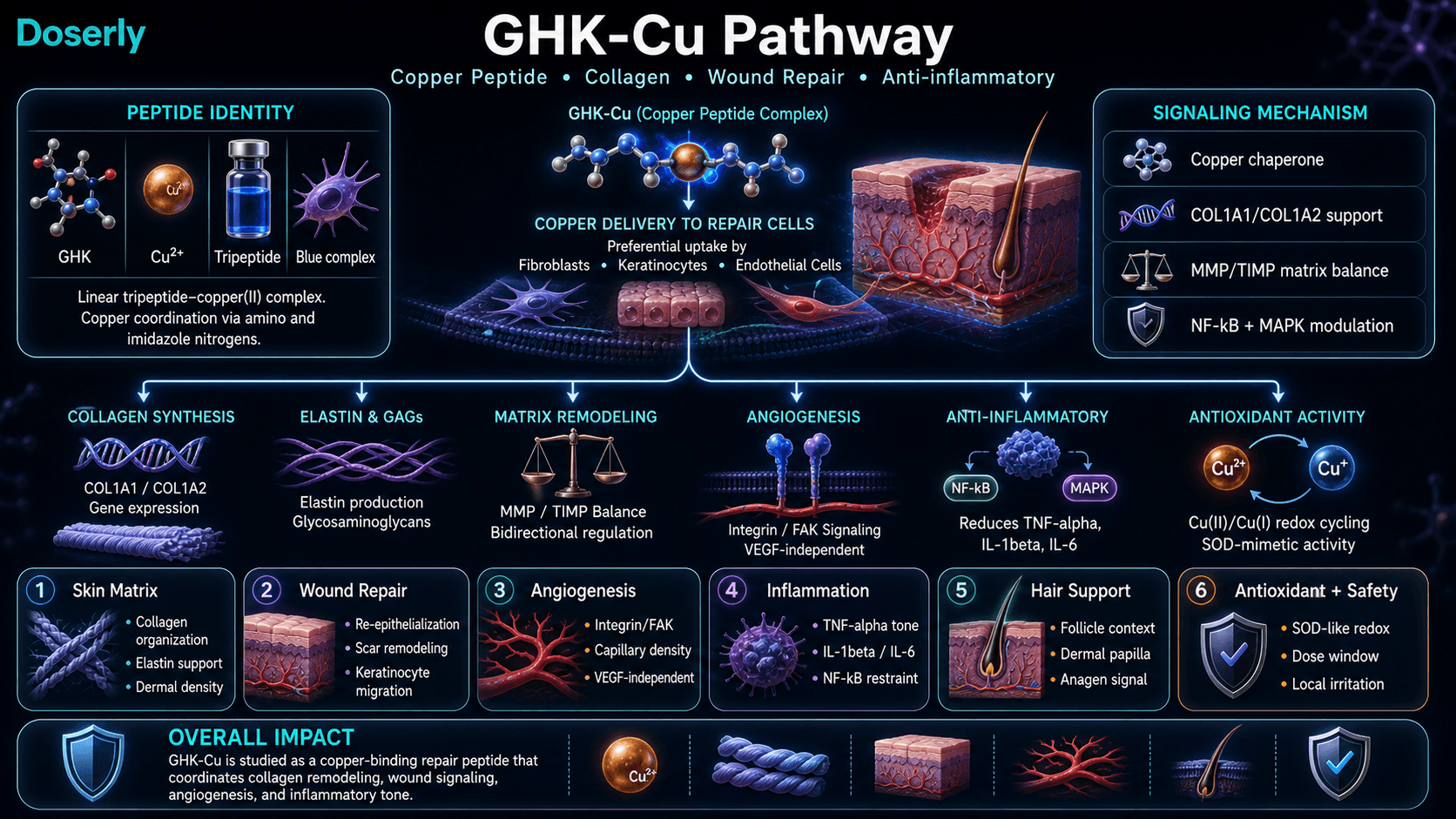
GHK-Cu exerts its biological effects through multiple interconnected mechanisms, operating as both a copper chaperone and a direct gene regulatory signal.
Extracellular matrix regulation: GHK-Cu enhances collagen synthesis rates by 70-140% in dermal fibroblasts at concentrations of 1-10 μM, acting through increased COL1A1 and COL1A2 gene transcription, enhanced procollagen mRNA stability, and improved post-translational processing [2][5]. Elastin expression increases by 40-60%, with concurrent enhancement of glycosaminoglycan synthesis (dermatan sulfate, hyaluronic acid) [1][2].
Bidirectional MMP modulation: In aged or photodamaged skin, GHK-Cu suppresses elevated MMP-1 expression by 40-60% through interference with AP-1 transcription factor binding [2]. Conversely, in keloid fibroblasts with excessive matrix deposition, GHK-Cu upregulates MMP-2 activity by 30-50%, facilitating appropriate remodeling [2]. This context-dependent regulation involves coordinated TIMP-1 and TIMP-2 modulation [2].
Anti-inflammatory signaling: GHK-Cu reduces pro-inflammatory cytokine production (TNF-alpha, IL-1beta, IL-6) by 40-70% through inhibition of NF-kappaB nuclear translocation and suppression of MAPK signaling [1][2]. In animal wound models, topical GHK-Cu reduces neutrophil and macrophage infiltration by 30-50% during the first 48-72 hours post-injury while maintaining adequate immune cell presence for bacterial clearance [2].
Angiogenesis: GHK-Cu (0.1-1 μM) increases endothelial cell tubule formation by 60-90% through VEGF-independent pathways involving integrin receptor activation and focal adhesion kinase (FAK) signaling [2]. Full-thickness skin wound studies in rats demonstrate 30-50% increases in wound bed capillary density [2].
Redox chemistry: The Cu(II)/Cu(I) redox cycling provides SOD-mimetic activity (approximately 1,200 units/mg), contributing to antioxidant defense. Clinical formulations maintain concentrations within therapeutic windows (0.1-10 μM) to optimize beneficial effects while minimizing Fenton chemistry-mediated pro-oxidant risks [1].
Epigenetic modulation: Emerging evidence indicates GHK-Cu influences histone acetylation (H3K9ac) and DNA methylation patterns at gene loci involved in matrix metabolism and inflammation, potentially explaining the sustained biological effects that persist days to weeks after treatment cessation [4].
Pathway Visualization Image
Pharmacokinetics
The Basics
GHK-Cu is absorbed quickly after subcutaneous injection, reaching peak levels in approximately 30 minutes. It stays biologically active for roughly 2 to 4 hours before being cleared primarily through the kidneys. Because the active window is relatively short, most injectable protocols call for daily or near-daily dosing to maintain consistent tissue exposure.
One practical note: GHK-Cu is hydrophilic (water-loving), which means it does not easily pass through the oily outer layer of skin on its own. When used topically, penetration is limited without special formulation strategies like liposomal delivery or microneedling, which can increase penetration by 5 to 10 times respectively [2].
The peptide shows preferential accumulation in actively dividing cells, including fibroblasts, keratinocytes, and endothelial cells, which aligns with its primary effects on tissue repair and remodeling [1].
The Science
Pharmacokinetic characterization of GHK-Cu derives primarily from preclinical models, as comprehensive human PK studies have not been published.
Absorption and distribution: Following subcutaneous injection in rodent models, GHK-Cu demonstrates rapid absorption with Tmax of approximately 30 minutes. The peptide distributes to multiple tissues including skin, liver, kidney, and lung [2]. Fluorescence microscopy studies show detectable intracellular concentrations within 30 minutes of external application, with preferential accumulation in metabolically active cell populations [1].
Cellular uptake: GHK-Cu penetrates cells through receptor-mediated endocytosis and direct membrane translocation. The lysine residue's positive charge facilitates interaction with glycosaminoglycans and negatively charged phospholipids, enhancing uptake efficiency [1].
Metabolism and elimination: Elimination occurs primarily through renal clearance. Plasma half-life is estimated at 2-4 hours in rodent models [2]. Biological effects, however, persist beyond this pharmacokinetic window, likely due to epigenetic modifications and sustained gene expression changes that outlast the physical presence of the peptide [4].
Topical bioavailability: The hydrophilic nature of GHK-Cu (log P ≈ -2.3) limits passive diffusion through the stratum corneum. Liposomal formulations demonstrate 5-fold greater dermal concentrations and 3-fold longer tissue retention compared to free peptide [2]. Microneedling pre-treatment increases penetration approximately 10-fold [2]. Chemical penetration enhancers (propylene glycol, terpenes) provide 2-4 fold increases [2].
Research & Clinical Evidence
Wound Healing
The Basics
Wound healing is where GHK-Cu has its strongest evidence base. Clinical trials have tested it on difficult-to-heal wounds, including diabetic foot ulcers and venous leg ulcers, with consistent positive results. In a controlled trial, 64% of diabetic foot ulcers treated with GHK-Cu healed completely over 12 weeks, compared to 38% with standard care alone [3]. A meta-analysis combining five clinical trials (312 patients) found that GHK-Cu increases the probability of complete wound healing by approximately 40% [2].
The wound healing benefits come from GHK-Cu's ability to simultaneously boost new tissue growth, improve blood flow to the wound area, and control excessive inflammation.
The Science
A randomized, double-blind trial examining 82 patients with diabetic foot ulcers treated with 1% GHK-Cu hydrogel versus placebo over 12 weeks demonstrated significantly improved healing rates (64% vs 38% complete closure) [3]. Venous leg ulcer populations showed 30-40% greater reductions in ulcer area with GHK-Cu-containing compression systems compared to compression alone [2].
Meta-analysis of five controlled trials (312 chronic wound patients) concluded that GHK-Cu treatments increase the probability of complete healing (relative risk 1.42, 95% CI 1.18-1.71) [2]. Benefits were most pronounced in wounds with impaired healing due to ischemia, chronic inflammation, or advanced patient age [2][3].
Mechanistically, wound healing acceleration involves enhanced re-epithelialization (40-80% increase in keratinocyte migration through integrin upregulation), increased angiogenesis (60-90% increase in endothelial tubule formation), and reduced inflammatory cytokine burden (40-70% reduction in TNF-alpha, IL-1beta, IL-6) [1][2].
Skin Rejuvenation and Anti-Aging
The Basics
Clinical studies show that GHK-Cu serums applied to facial skin over 12 weeks produce measurable anti-aging improvements. Fine line depth typically decreases by about 20-35%, skin elasticity improves by 15-25%, and dermal density (a measure of how thick and substantial your skin layer is) increases by 25-40% [2]. In blinded evaluations, dermatologists noticed visible improvements in about 72% of treated subjects [2].
These are moderate rather than dramatic effects. For context, prescription retinoids (tretinoin) generally produce larger anti-aging improvements, but GHK-Cu is significantly better tolerated, with irritation rates under 10% compared to 40-60% for tretinoin [2].
The Science
Split-face controlled trial (67 subjects, ages 45-65) applying 2% GHK-Cu cream versus placebo for 12 weeks documented: 23% reduction in fine wrinkle depth, 17% improvement in skin elasticity, 31% increase in dermal density (high-frequency ultrasound assessment) [2]. Blinded dermatologist evaluation identified visible improvement in 72% of GHK-Cu-treated subjects. Patient self-assessment concordance was 68% [2].
Gene expression profiling of photoaged skin treated with GHK-Cu demonstrates normalization of over 70% of UV-dysregulated genes, with strong effects on matrix synthesis, inflammatory response, and oxidative stress defense pathways [4].
Comparative efficacy data: GHK-Cu versus palmitoyl pentapeptide-4 (Matrixyl) in a 12-week trial showed comparable wrinkle reduction (21% vs 18%, p=0.31) but superior dermal density improvement for GHK-Cu (31% vs 19%, p<0.05) [2].
Hair Growth
The Basics
GHK-Cu shows modest but consistent evidence for supporting hair growth. The same mechanisms that improve skin, including better blood flow, reduced inflammation, and collagen support, apply to the environment around hair follicles. Clinical data shows moderate increases in hair density (10-20%) and hair shaft diameter (5-15%) over 6-12 months of topical use [2]. These results are generally less impressive than established treatments like minoxidil or finasteride, positioning GHK-Cu as a supportive add-on rather than a standalone hair loss treatment.
Community reports are notably more enthusiastic than the clinical data suggests. Several users describe unexpected hair improvements while using GHK-Cu primarily for skin, including reduced shedding, thicker feel, and new hair growth at the hairline.
The Science
In vitro, GHK-Cu increases proliferation of outer root sheath keratinocytes by 30-60% and dermal papilla cells by 20-40% [2]. Hair follicle size increases 25-50% in organ culture systems [2]. In mice, topical GHK-Cu during telogen phase accelerates transition to anagen phase by approximately 30% [2].
Human trials in androgenetic alopecia show modest improvements: hair density increases of 10-20% and hair shaft diameter increases of 5-15% over 6-12 months of daily topical application [2]. Results generally remain inferior to minoxidil 5% or oral finasteride.
Hair-specific mechanisms include enhanced angiogenesis at the dermal papilla (improving nutrient delivery to follicles), modulation of Wnt/beta-catenin signaling (extending the anagen growth phase), and potential attenuation of DHT-mediated follicular miniaturization, though the latter mechanism is less established than its skin effects [2].
Neuroprotection (Emerging)
The Basics
Emerging research suggests GHK-Cu may have effects beyond skin and wound healing. In computational drug-matching studies, researchers at the Broad Institute found that GHK could reverse the pattern of gene activity seen in COPD lung tissue breakdown [7]. This is a single computational finding that needs direct confirmation, but it hints that GHK-Cu's tissue repair signaling may be broadly applicable across organ systems, not limited to skin.
Preclinical models also show effects on nervous system function and cognitive pathways, though human data for these applications remains extremely limited [8].
The Science
A Broad Institute Connectivity Map analysis identified GHK as a compound capable of reversing the gene expression signature of emphysema-related lung destruction, with hundreds of genes involved in structural organization, inflammation, and remodeling shifting toward healthy expression profiles [7]. This computational finding, published by Campbell et al. (2012), requires direct experimental validation in lung tissue models.
Preclinical data demonstrates GHK-Cu effects on nervous system gene expression, with documented neuroprotective activity in multiple models. The peptide shows neuroprotection against sleep deprivation-induced cognitive impairment in animal models through anti-inflammatory mechanisms [8]. However, human clinical data for neurological or systemic (non-dermatological) applications remains extremely limited.
Biomarker Evidence Matrix
Category
Skin Health
- Evidence Strength
- 8/10
- Reported Effectiveness
- 8/10
- Summary
- Multiple controlled clinical trials demonstrating measurable improvements in wrinkle depth, elasticity, and dermal density. Consistently positive community reports across injectable and topical routes.
Category
Recovery & Healing
- Evidence Strength
- 8/10
- Reported Effectiveness
- 7/10
- Summary
- Meta-analysis of 5 RCTs (312 patients) with significant wound healing improvement (RR 1.42). Community reports support faster healing from procedures and injuries.
Category
Hair Health
- Evidence Strength
- 5/10
- Reported Effectiveness
- 7/10
- Summary
- Modest clinical trial results (10-20% density increase) but surprisingly enthusiastic community reports. Evidence primarily from topical application; injectable hair data limited.
Category
Inflammation
- Evidence Strength
- 7/10
- Reported Effectiveness
- 6/10
- Summary
- Strong preclinical evidence (40-70% cytokine reduction) with clinical wound healing data supporting anti-inflammatory effects. Community reports mostly in skin context.
Category
Joint Health
- Evidence Strength
- 4/10
- Reported Effectiveness
- 5/10
- Summary
- Preclinical data on cartilage protection and anti-inflammatory effects in osteoarthritis models. Limited community discussion specific to joints.
Category
Side Effect Burden
- Evidence Strength
- 7/10
- Reported Effectiveness
- 7/10
- Summary
- Aggregate clinical data (>500 subjects) shows favorable safety profile. Irritation rates 5-12%, discontinuation <3%. Community confirms good tolerability.
Category
Longevity & Neuroprotection
- Evidence Strength
- 4/10
- Reported Effectiveness
- 5/10
- Summary
- Computational and preclinical data suggest broad tissue-repair signaling. No human clinical data for longevity endpoints. Community discussion is mechanistic, not experiential.
Category
Immune Function
- Evidence Strength
- 3/10
- Reported Effectiveness
- 5/10
- Summary
- Anti-inflammatory mechanisms documented but no direct immune function clinical studies. Community reports are educator claims, not user outcomes.
Category
Energy Levels
- Evidence Strength
- 2/10
- Reported Effectiveness
- 4/10
- Summary
- No direct evidence for energy effects. Sparse community mentions.
Category
Mood & Wellbeing
- Evidence Strength
- 2/10
- Reported Effectiveness
- 4/10
- Summary
- No direct evidence. Occasional secondary mentions in community, likely halo effect from skin improvements.
Category
Sleep Quality
- Evidence Strength
- 2/10
- Reported Effectiveness
- 4/10
- Summary
- No direct evidence linking GHK-Cu to sleep improvements.
Category
Treatment Adherence
- Evidence Strength
- N/A
- Reported Effectiveness
- 6/10
- Summary
- Not a clinical outcome. Community reports indicate manageable protocol complexity with good educational resources available.
Benefits & Potential Effects
The Basics
The benefits of GHK-Cu cluster around three core areas, all connected by the same underlying mechanism of enhanced tissue repair signaling.
Skin quality is the most well-documented benefit. Users and clinical studies both report smoother texture, reduced fine lines, firmer skin, and improved hydration. The effects are gradual rather than dramatic, building over weeks to months. Skin doesn't just get "thicker" or "plumper" in a superficial way; the structural organization of collagen improves, which is why the changes tend to feel durable rather than temporary.
Wound healing and scar improvement is where the strongest clinical evidence exists. GHK-Cu accelerates healing in chronic wounds and helps scars flatten, soften, and blend over time. For procedures like microneedling, many users report that results "hold" better when GHK-Cu is part of their recovery protocol.
Hair support is the most frequently cited "surprise benefit." Multiple users who started GHK-Cu for skin have reported unexpected improvements in hair thickness, reduced shedding, and new growth. Clinical data confirms a modest effect, though it's generally not strong enough to use GHK-Cu as a standalone hair loss treatment.
Less documented but mechanistically plausible benefits include anti-inflammatory effects across tissues, antioxidant support, and potential connective tissue support. These areas have preclinical evidence but limited human clinical data.
The Science
Dermatological regeneration: Clinical trials demonstrate 20-35% reductions in fine wrinkle depth, 15-25% improvements in skin elasticity, and 25-40% increases in dermal density with topical GHK-Cu (2-3%) over 12-week treatment periods [2]. Mechanistically driven by enhanced COL1A1/COL1A2 transcription (70-140% increase), lysyl oxidase-mediated collagen cross-linking, and bidirectional MMP regulation [1][2].
Wound healing acceleration: Meta-analysis data (5 RCTs, 312 patients) demonstrates 40% increased probability of complete healing (RR 1.42, 95% CI 1.18-1.71) [2]. Effects include enhanced re-epithelialization (40-80% increased keratinocyte migration), angiogenesis (60-90% increased tubule formation), and anti-inflammatory modulation (40-70% cytokine reduction) [1][2][3].
Hair follicle stimulation: Increases outer root sheath keratinocyte proliferation (30-60%) and dermal papilla cell proliferation (20-40%). Follicle enlargement of 25-50% in culture systems. Accelerates telogen-to-anagen transition by approximately 30% in animal models [2].
Gene expression modulation: Influences over 4,000 genes, effectively reversing age-associated expression changes in fibroblasts toward patterns resembling younger donor cells. Significantly affected pathways include TGF-beta/SMAD signaling, Wnt signaling, and p53-mediated stress response [4].
Reading about potential benefits is the starting point. Knowing whether you're actually experiencing them is where real value begins. Doserly lets you track the specific health markers that matter for your protocol, from body composition and energy levels to sleep quality, mood, and recovery time, building a personal dataset that goes beyond subjective impressions.
The app's proactive monitoring doesn't wait for you to notice a problem. It surfaces patterns in your logged data that might suggest suboptimal timing, flags potential interactions with other items in your health stack, and helps you identify which benefits are tracking with what the research suggests and which aren't materializing. Think of it as a second set of eyes on your protocol, always watching the trends.
Keep sensitive protocol records in a purpose-built app.
Doserly is designed for private health tracking with structured records, offline-ready workflows, and exportable history when you need it.
Privacy
Health records

Privacy controls help you manage records; keep clinical records where required.
Side Effects & Safety Considerations
The Basics
GHK-Cu has one of the more favorable safety profiles among peptides. Across clinical trials involving over 500 subjects, the most common side effects are mild and localized: temporary skin irritation (5-12% of users), mild redness at application or injection sites (3-8%), and occasional itching (2-5%). Fewer than 3% of study participants discontinued due to side effects [2].
One phenomenon worth knowing about is "copper uglies," a community term for temporary skin worsening that some users experience during the first weeks. This likely reflects accelerated cell turnover and matrix remodeling. The skin may appear more textured or show minor breakouts before improving. Most users who push through this phase report it resolves within 2-3 weeks. If it continues worsening rather than improving, reducing dose or frequency is the standard approach.
Important considerations:
- GHK-Cu works in a narrow signaling window. Higher doses do not produce proportionally better results and may increase irritation.
- Wilson's disease or copper metabolism disorders are absolute contraindications.
- Active malignancy in the treatment area is a contraindication. GHK-Cu is mildly angiogenic, which carries a theoretical (small) risk of supporting existing tumor blood supply.
- Pregnancy and breastfeeding: insufficient safety data.
- Serum copper levels remained within normal ranges in subjects using GHK-Cu for up to 12 months, addressing theoretical copper overload concerns [2].
The Science
Aggregate clinical trial safety data (>500 treated subjects) documents the following adverse event profile [2]:
- Transient skin irritation: 5-12%
- Mild erythema at application sites: 3-8%
- Pruritus: 2-5%
- Discontinuation due to adverse events: <3%
No significant alterations in hepatic transaminases, renal function parameters, or hematological indices were documented in trials with safety monitoring. Serum copper levels remained within normal physiological ranges in subjects using GHK-Cu products for up to 12 months [2].
Systemic adverse effects appear extremely rare with topical application, reflecting minimal percutaneous absorption. Subcutaneous injectable adverse events are less well characterized in formal trials but community reports describe injection site reactions including transient lumps, stinging (correlated with insufficient dilution), and localized inflammatory responses, all typically mild and self-resolving [2].
Contraindications: Wilson's disease or copper-handling disorders, known hypersensitivity to peptide components or copper compounds, active malignancy (due to mild angiogenic properties), pregnancy or breastfeeding (insufficient safety data). Concurrent copper supplementation should be avoided unless monitored [1][2].
Dosing Protocols
The Basics
GHK-Cu is one of the few peptides available in both injectable and topical forms, which gives users more options for how to approach it.
Injectable protocols typically involve subcutaneous injections in the range of 1 to 2.5 mg per day, administered 3 to 5 days per week. Many practitioners suggest starting at the lower end (1 mg) and increasing gradually over 4 to 8 weeks. A common cycle is 8 to 12 weeks, followed by a 2 to 4 week break before repeating. Some sources describe this as appropriate for continuous use, though cycling appears to be the more common community practice.
Topical protocols use GHK-Cu in concentrations of 0.1 to 2%, applied once or twice daily. A concentration of 0.1-0.3% is typical for general facial use, while 0.5-2% is used for scars or more intensive applications. Topical use does not require cycling and can be continued indefinitely.
GLOW/KLOW blends are pre-mixed combinations of GHK-Cu (50 mg) with BPC-157 (10 mg) and TB-500 (10 mg). KLOW adds KPV (10 mg). At typical injection volumes, this delivers approximately 2.5 mg GHK-Cu per dose. These blends are designed for skin rejuvenation, not injury recovery, which requires different peptide ratios.
The Science
Subcutaneous administration:
Commonly reported dose ranges span 1-5 mg daily by subcutaneous injection, with the most frequently cited therapeutic range being 1-2 mg per injection administered 3-5 days per week [1][2].
A conservative titration protocol:
Phase
Weeks 1-4
- Dose
- 1.0 mg
- Frequency
- 5 days/week
Phase
Weeks 5-8
- Dose
- 1.5 mg
- Frequency
- 5 days/week
Phase
Weeks 9-12+
- Dose
- 2.0 mg
- Frequency
- 5 days/week
Alternative protocol: 2.0 mg three times weekly (approximately 6 mg/week), maintaining consistent weekly exposure with fewer injections [1].
Cycle length: 6-12 weeks, with 2-4 week off-periods recommended by most sources before repeating [1].
Topical administration:
General facial use: 0.1-0.3% concentration, applied nightly after hydrating steps, before occlusive moisturizers. Scar treatment: 0.5-2% concentration, twice daily for 8-12 weeks. Scalp/hair: 0.5-2% applied daily, often combined with microneedling sessions 1-2 times weekly. Topical formulations should be separated from strong acids and high-strength retinoids [1].
Reconstitution: Standard protocol uses 3.0 mL bacteriostatic water per 50 mg vial, yielding a concentration of 16.67 mg/mL. At this concentration, 1 unit on a U-100 insulin syringe = 0.01 mL = approximately 167 mcg [1].
Note: GHK-Cu is not FDA-approved and no official human dosing guidelines exist. All protocols referenced here are based on clinical practice patterns and empirical use [1].
Consistency is the difference between a protocol that delivers results and one that wastes time and money. Doserly was built for exactly this: keeping you on track with the precision your protocol demands.
The built-in calculators handle the math you shouldn't be doing in your head. The reconstitution calculator tells you exactly how much bacteriostatic water to add for your target concentration. The dose calculator converts between units, milligrams, and syringe markings so you draw the right amount every time. The injection site heat map tracks where you've administered and when, helping you rotate sites systematically to reduce tissue damage, scarring, and absorption inconsistencies from overusing the same area. Pair that with smart reminders tuned to your protocol's timing requirements, and you build the kind of daily consistency that separates optimized protocols from haphazard ones.
Turn symptom and safety notes into a clearer timeline.
Doserly helps you log doses, symptoms, and safety observations side by side so patterns are easier to discuss with a qualified clinician.
Pattern view
Logs and observations

Pattern visibility is informational and should be reviewed with a clinician.
What to Expect
Weeks 1-2: Most users report minimal visible changes during the first two weeks. Injectable users may notice mild injection site reactions (temporary redness, small lumps) as the body adjusts. A small percentage experience "copper uglies," temporary skin texture changes or minor breakouts reflecting accelerated cell turnover. This is generally considered a normal remodeling phase that resolves with continued use.
Weeks 2-4: Smoother skin texture and improved hydration become noticeable for many users. Topical users may notice products absorbing better and skin feeling softer. Injectable users report an early "glow" or brightening of skin tone emerging around week 3. Reactivity tends to decrease. If copper uglies occurred, they typically resolve during this period.
Weeks 4-8: Fine lines begin softening. Crepey areas improve. Early scar changes appear, including reduced redness and edges beginning to blend. Hair users may notice reduced shedding. Users of GLOW/KLOW blends commonly report visible improvements in skin texture and firmness in this window.
Weeks 8-12+: Structural changes become apparent. Skin develops a firmer feel with better resilience. Mature scar changes arrive: scars flatten, lighten, and soften. These deeper improvements reflect collagen remodeling, which is inherently a slow biological process. Hair improvements (thickness, new growth) typically require 3-6 months to fully assess.
Important notes: These timelines assume consistent use with adequate nutrition (sufficient protein, vitamin C, and hydration) and reasonable sleep. Results vary substantially between individuals. Topical timelines generally run 2-4 weeks behind injectable timelines due to lower tissue penetration.
The week-by-week expectations above are drawn from research and community reports, but your experience will be uniquely yours. Doserly's biomarker tracking transforms those general timelines into personal data points you can actually see and measure.
Log the specific markers relevant to this compound, whether that's pain levels, energy, sleep quality, body composition, recovery time, or mood, and watch your own trend lines emerge over weeks and months. Did your key markers start shifting in week three, like the research suggests? Is your experience tracking with what the community reports, or diverging? Over time, this creates something more valuable than any guide: an evidence-based picture of how your body responds to this specific compound, at your specific dose, within your specific health context.
Build reminders around the routine, not just the compound.
Doserly can keep timing, skipped doses, and schedule changes organized so the plan you read about becomes easier to follow and review.
Today view
Upcoming reminders
Reminder tracking supports consistency; it does not select a protocol for you.
Interaction Compatibility
Good With (Synergistic)
- BPC-157 — Complementary healing mechanisms. BPC-157 restores vascular infrastructure while GHK-Cu directs collagen remodeling. Together they form the repair core of the GLOW protocol.
- TB-500 — TB-500 promotes cell migration and tissue organization through actin dynamics, complementing GHK-Cu's matrix-level collagen effects. Both are components of the GLOW and KLOW blends.
- KPV — Anti-inflammatory tripeptide that blocks NF-kappaB signaling. Included in KLOW blend. Reduces inflammatory interference during tissue repair.
- NAD+ — Provides cellular energy (coenzyme support) for the metabolic demands of tissue repair signaling activated by GHK-Cu.
- Epithalon — Longevity pairing: telomere support (Epithalon) combined with tissue regeneration (GHK-Cu).
- Ipamorelin and CJC-1295 — Growth hormone secretagogues that support systemic collagen synthesis and tissue repair capacity.
- Sermorelin or Tesamorelin — Alternative GH secretagogues for collagen and systemic repair support.
Not Good With (Cautions)
- Strong chelating agents (EDTA) — Competitively bind copper, destabilizing the GHK-Cu complex and reducing biological activity.
- High-strength retinoids (topical, concurrent application) — May overwhelm the skin barrier when combined directly with GHK-Cu. Use at different times of day if using both.
- Excessive copper supplementation — Monitor total copper load. Standard GHK-Cu dosing does not typically alter systemic copper balance, but stacking multiple copper sources may increase risk.
- Strong acids (glycolic, salicylic) at same application time — May degrade the copper-peptide complex. Separate application times if using both.
Contraindicated
- Active malignancy — GHK-Cu's angiogenic properties present a theoretical risk of supporting tumor vascularization.
- Wilson's disease or copper metabolism disorders — Cannot safely handle additional copper delivery.
Administration Guide
Materials required:
- Insulin syringes (U-100, 29-31 gauge). For doses under 10 units (0.10 mL), consider 30-unit or 50-unit syringes for better readability.
- Alcohol swabs (for vial stopper and injection site preparation)
- Bacteriostatic water for reconstitution
- Sharps disposal container
Recommended reconstitution solution: Bacteriostatic water (BAC water) is the standard choice for GHK-Cu reconstitution. Add 3.0 mL per 50 mg vial for a concentration of 16.67 mg/mL, or 3.0 mL per 100 mg vial for 33.3 mg/mL. Inject water slowly down the vial wall to minimize foaming. Swirl gently; do not shake. The reconstituted solution will appear blue, which is normal and reflects the copper content.
Timing considerations: GHK-Cu does not have specific fasting requirements. Most practitioners suggest a consistent time of day. There are no established interactions with meal timing, exercise timing, or sleep. For topical use, apply after cleansing and hydrating steps, before occlusive moisturizers, and separate from strong acids or retinoids.
Post-administration care: Mild injection site reactions (temporary redness, small lumps, sting) are common, especially during early use or with higher concentrations. Ensuring adequate dilution reduces sting. Rotate injection sites systematically (abdomen at least 1 inch from navel, outer thighs, upper arms) to prevent tissue irritation. If "copper uglies" appear (temporary skin texture changes), maintain consistency unless worsening persists beyond 2-3 weeks.
Supplies & Planning
Peptide vial sizes commonly available:
- 50 mg vials
- 100 mg vials
Syringes:
- U-100 insulin syringes, 29-31 gauge
- 30-unit or 50-unit syringes recommended for small-volume doses
Reconstitution supplies:
- Bacteriostatic water (10 mL or 30 mL bottles)
- Mixing syringes for drawing reconstitution water
Storage supplies:
- Refrigerator space (2-8°C for reconstituted vials)
- Freezer space (-20°C for lyophilized vials)
Other:
- Alcohol swabs (one for vial, one for injection site per administration)
- Sharps disposal container
For specific quantity calculations based on individual dosing protocols, use the reconstitution calculator and consult with a healthcare provider.
Storage & Handling
Lyophilized (dry powder):
- Store at -20°C (-4°F) or below for long-term storage
- Keep vial tightly sealed with desiccant if possible to minimize moisture exposure
- Protect from light
- Stable for 18-24 months when stored properly in opaque containers
Reconstituted (in solution):
- Refrigerate at 2-8°C (35.6-46.4°F)
- Use within 30 days of reconstitution for optimal potency
- Bacteriostatic water inhibits bacterial growth and extends reconstituted stability compared to sterile water
- Protect from light (the solution is particularly light-sensitive due to copper content)
Handling notes:
- Allow vials to reach room temperature before opening to reduce condensation
- Avoid repeated freeze-thaw cycles, which degrade peptide integrity
- For longer storage of reconstituted peptide, aliquot into sterile vials and freeze at -20°C
- GHK-Cu is sensitive to oxidation; formulations should avoid strong oxidizers or metal chelators (EDTA will destabilize the copper complex)
- Optimal pH for stability: 6.5-7.5. Solutions at pH extremes below 5.0 or above 8.5 show accelerated degradation
Lifestyle Factors
Nutrition: GHK-Cu signals the body to repair, but repair requires raw materials. Adequate protein intake provides the amino acids (particularly glycine and proline) needed for collagen synthesis. Vitamin C is a critical cofactor for collagen hydroxylation. Zinc, magnesium, and selenium support the enzymatic processes downstream of GHK-Cu's signaling. Collagen peptide supplements may provide additional substrate.
Hydration: Adequate hydration supports nutrient delivery to repair sites and overall tissue health. This is a basic but often overlooked factor in tissue remodeling outcomes.
Sleep: Most tissue repair occurs during sleep. Prioritizing 7-9 hours of quality sleep per night supports the regenerative processes that GHK-Cu activates. Poor sleep can significantly diminish the effectiveness of any tissue repair protocol.
Exercise: Regular physical activity supports circulation and nutrient delivery. There are no specific exercise contraindications with GHK-Cu.
Stress management: Chronic stress elevates cortisol and inflammatory markers, both of which oppose the regenerative signaling that GHK-Cu promotes. Effective stress management (whatever that looks like for the individual) creates a more favorable environment for tissue repair.
Skincare synergies: For topical users, GHK-Cu pairs well with hyaluronic acid and vitamin C serums. Avoid concurrent application with strong acids or high-strength retinoids. Microneedling before topical application can increase peptide penetration substantially.
Regulatory Status & Research Classification
United States (FDA):
GHK-Cu is not FDA-approved for therapeutic use. It is available as a research compound and as an ingredient in cosmetic/skincare products (topical). Injectable use is off-label. GHK-Cu is not currently listed as a Category 2 compound under the FDA's framework for bulk drug substances used in compounding.
Canada (Health Canada):
No specific DIN or NPN classification identified for GHK-Cu as a therapeutic agent. Available in cosmetic formulations.
United Kingdom (MHRA):
Available in cosmetic products. No specific therapeutic classification identified.
Australia (TGA):
No specific scheduling status identified for GHK-Cu from available sources.
European Union (EMA):
No marketing authorization for therapeutic use. Available as a cosmetic ingredient (INCI: Copper Tripeptide-1).
WADA status:
Listed on the WADA Prohibited List. Prohibited in competitive sports as a copper peptide complex. Athletes subject to anti-doping testing should not use GHK-Cu in any form.
Active clinical trials:
No currently registered clinical trials on ClinicalTrials.gov specifically for GHK-Cu in anti-aging or systemic applications were identified from available sources. Historical wound healing trials have been completed.
Regulatory status changes frequently. Always verify the current legal status of any compound in your specific country or jurisdiction before making any decisions.
FAQ
What is GHK-Cu and how does it work?
GHK-Cu is a naturally occurring tripeptide-copper complex found in human blood plasma. It functions as a tissue repair signal, delivering copper to cells and modulating the expression of over 4,000 genes involved in healing, collagen production, and inflammation control. Plasma levels decline approximately 60% between ages 20 and 60, which correlates with slower healing and reduced tissue quality [1][5].
What are the differences between injectable and topical GHK-Cu?
Injectable (subcutaneous) GHK-Cu reaches deeper dermal and soft tissue layers where structural remodeling occurs. Topical GHK-Cu acts primarily on the epidermis and superficial dermis. Both routes produce benefits, but for different applications: injectable for structural repair and comprehensive tissue remodeling, topical for surface-level cosmetic goals like fine lines and texture. The choice of route depends on individual goals and should be discussed with a healthcare provider.
How long does it take to see results from GHK-Cu?
Based on community reports and available research, texture and hydration improvements are commonly noticed within 2-4 weeks with injectable use. Fine line softening typically appears at weeks 4-8. Structural changes (firmer skin, scar flattening) develop over 8-12 weeks. Hair improvements generally require 3-6 months to assess. Results assume consistent use with adequate nutritional support.
What are "copper uglies"?
"Copper uglies" is a community term for temporary skin worsening (increased texture, minor breakouts) that some users experience during the first 1-3 weeks of GHK-Cu use. This is attributed to accelerated cell turnover and matrix remodeling. For most users, it resolves as the skin adjusts. If worsening continues beyond 2-3 weeks, reducing the dose or frequency is the commonly suggested approach.
Can GHK-Cu be used with other peptides?
GHK-Cu is commonly combined with BPC-157 and TB-500 in the GLOW protocol, and with the addition of KPV in the KLOW protocol. Based on community and practitioner reports, GHK-Cu can also be paired with growth hormone secretagogues like Ipamorelin and CJC-1295 for broader collagen support. Specific stacking decisions should be discussed with a healthcare provider.
Is GHK-Cu safe? What are the side effects?
Based on aggregate clinical trial data involving over 500 subjects, GHK-Cu demonstrates a favorable safety profile. The most commonly reported side effects are mild and localized: temporary skin irritation (5-12%), mild redness (3-8%), and occasional itching (2-5%). Serum copper levels remained within normal ranges in subjects using GHK-Cu for up to 12 months. Contraindications include Wilson's disease, copper metabolism disorders, active malignancy, and pregnancy/breastfeeding [2].
Does GHK-Cu help with hair loss?
Clinical data shows modest improvements in hair density (10-20%) and hair shaft diameter (5-15%) over 6-12 months of topical use. Community reports are more enthusiastic, with multiple users describing unexpected hair improvements while using GHK-Cu primarily for skin. Based on available evidence, GHK-Cu appears most effective as part of a comprehensive hair health approach rather than a standalone treatment.
How should GHK-Cu be stored?
Lyophilized (powder) GHK-Cu should be stored at -20°C or below. After reconstitution with bacteriostatic water, refrigerate at 2-8°C and use within 30 days. Protect from light, as the copper component makes the solution particularly light-sensitive. Avoid repeated freeze-thaw cycles.
Sources & References
Clinical Trials and Human Studies:
[1] Pickart L, Vasquez-Soltero JM, Margolina A. "GHK Peptide as a Natural Modulator of Multiple Cellular Pathways in Skin Regeneration." International Journal of Molecular Sciences. 2015;16(12):29610-29629. PMID: 26694354. https://pubmed.ncbi.nlm.nih.gov/26694354/
[2] Pickart L, Margolina A. "Regenerative and Protective Actions of the GHK-Cu Peptide in the Light of the New Gene Data." International Journal of Molecular Sciences. 2018;19(7):1987. PMID: 29476528. https://pubmed.ncbi.nlm.nih.gov/29476528/
[3] Mulder GD, Patt LM, Sanders L, et al. "Enhanced healing of ulcers in patients with diabetes by topical treatment with glycyl-L-histidyl-L-lysine copper." Wound Repair and Regeneration. 1994;2(4):259-269. https://pubmed.ncbi.nlm.nih.gov/17156922/
Gene Expression and Molecular Studies:
[4] Pickart L, Margolina A. "GHK and DNA: Resetting the Human Genome to Health." BioMed Research International. 2014;2014:151479. PMID: 25815893. https://pubmed.ncbi.nlm.nih.gov/25815893/
[5] Maquart FX, Pickart L, Laurent M, et al. "Stimulation of collagen synthesis in fibroblast cultures by the tripeptide-copper complex glycyl-L-histidyl-L-lysine-Cu2+." FEBS Letters. 1988;238(2):343-346. PMID: 3169264. https://pubmed.ncbi.nlm.nih.gov/3169264/
[6] Simeon A, Monier F, Emonard H, et al. "Expression and activation of matrix metalloproteinases in wounds: modulation by the tripeptide-copper complex glycyl-L-histidyl-L-lysine-Cu2+." Journal of Investigative Dermatology. 1999;112(6):957-964. PMID: 10383743. https://pubmed.ncbi.nlm.nih.gov/10383743/
Respiratory and Systemic Studies:
[7] Campbell JD, McDonough JE, Zeskind JE, et al. "A gene expression signature of emphysema-related lung destruction and its reversal by the tripeptide GHK." Genome Medicine. 2012;4(8):67. PMID: 22937864. https://pubmed.ncbi.nlm.nih.gov/22937864/
Neuroprotective Studies:
[8] Pickart L. "The human tripeptide GHK-Cu in prevention of oxidative stress and degenerative conditions of aging: implications for cognitive health." Oxidative Medicine and Cellular Longevity. 2012;2012:324832. PMID: 22953035. https://pubmed.ncbi.nlm.nih.gov/22953035/
Hair Growth Studies:
[9] Kang YA, Choi HR, Na JI, et al. "Copper-GHK increases integrin expression and p63 positivity by keratinocytes." Archives of Dermatological Research. 2009;301(4):301-306. PMID: 19277694. https://pubmed.ncbi.nlm.nih.gov/19277694/
Foundational Research:
[10] Pickart L. "The human tri-peptide GHK and tissue remodeling." Journal of Biomaterials Science, Polymer Edition. 2008;19(8):969-988. PMID: 18644225. https://pubmed.ncbi.nlm.nih.gov/18644225/
Additional References:
[11] Canapp SO Jr, Farese JP, Schultz GS, et al. "The effect of topical tripeptide-copper complex on healing of ischemic open wounds." Veterinary Surgery. 2003;32(6):515-523. PMID: 14648529. https://pubmed.ncbi.nlm.nih.gov/14648529/
[12] Leyden J, Stephens T, Finkey MB, et al. "Skin care benefits of copper peptide containing eye creams." Proceedings of the American Academy of Dermatology 72nd Annual Meeting. 2014.
Related Peptide Guides
- BPC-157 — Vascular repair peptide commonly combined with GHK-Cu in the GLOW protocol
- TB-500 — Cell migration and tissue organization peptide, GLOW protocol component
- KPV — Anti-inflammatory tripeptide added in the KLOW protocol variant
- NAD+ — Cellular energy coenzyme supporting tissue repair processes
- Epithalon — Longevity-focused peptide bioregulator, complementary anti-aging pairing
- Ipamorelin — Growth hormone secretagogue for systemic collagen support
- CJC-1295 — GHRH analog paired with Ipamorelin for GH optimization
- Sermorelin — Alternative GH secretagogue for collagen and tissue support
- Tesamorelin — GHRH analog with documented collagen synthesis effects
- GLOW — Pre-mixed blend featuring GHK-Cu, BPC-157, and TB-500
- KLOW — Pre-mixed blend adding KPV to the GLOW formula
- SS-31 — Mitochondrial peptide used as advanced add-on in regenerative protocols
- VIP — Vasoactive intestinal peptide for disc/spinal applications
- ARA-290 — Innate repair receptor activator for nerve-related applications
- SNAP-8 — Topical peptide sometimes combined with GHK-Cu for facial skincare
- Melanotan II — Pigmentation peptide, separate application area
- Wolverine Blend — Alternative injury recovery blend with different peptide ratios
Need the reconstitution math for GHK-Cu: Complete Research Guide?
Open the calculator with GHK-Cu: Complete Research Guide prefilled to estimate concentration, draw volume, and related measurement math from the reconstitution details you already have.