
In this guide
What is alpha-GPC?
Alpha-GPC is L-alpha-glycerylphosphorylcholine, also called choline alfoscerate. It is a choline-containing phosphodiester and a precursor in phosphatidylcholine metabolism. It has been studied as a therapeutic product for cognitive disorders and is sold in nootropic and sports supplements. [1], [3]
Calling it a “choline source” is chemically reasonable but clinically incomplete. An alpha-GPC dose, the amount of choline it contributes and the outcome studied are separate facts. Alpha-GPC also should not inherit every claim made for dietary choline.
Typical Alpha-GPC Protocols
| Purpose or population | Form and amount each time | Frequency | Total per day | Duration |
|---|---|---|---|---|
| Acute cognitive and exercise study, 20 resistance-trained men | Alpha-GPC 315 mg or 630 mg | One dose; tests began 60 minutes later | Single acute exposure | Cognitive testing, then exercise and post-exercise follow-up |
| Mild-to-moderate Alzheimer disease trial, 261 adults age 60–80 | Choline alfoscerate 400 mg capsule | Three times daily | 1,200 mg | 180 days |
| Stroke cohort exposure definition, adults age 50+ without prior stroke or Alzheimer disease | Prescribed alpha-GPC; amount varied in claims data | Prescriptions during 2006–2008 | Not a standardized daily trial dose | Stroke follow-up from 2009 through January 2018 |
These are different designs. The first is one-dose performance testing, the second is treatment research in Alzheimer disease and the third is a prescription-record cohort. Only the first two assigned an intervention; the cohort cannot prove that alpha-GPC caused stroke. [2]–[4]
Where these schedules come from
Kerksick supplies the complete acute 315 mg and 630 mg crossover schedule and all measured outcome domains. [2] De Jesus Moreno Moreno supplies the 400 mg three-times-daily Alzheimer schedule. [3] Lee and colleagues supply the prescription exposure windows, total and matched cohort sizes and adjusted stroke associations. [4]
No nutrition authority supplies a general alpha-GPC requirement.
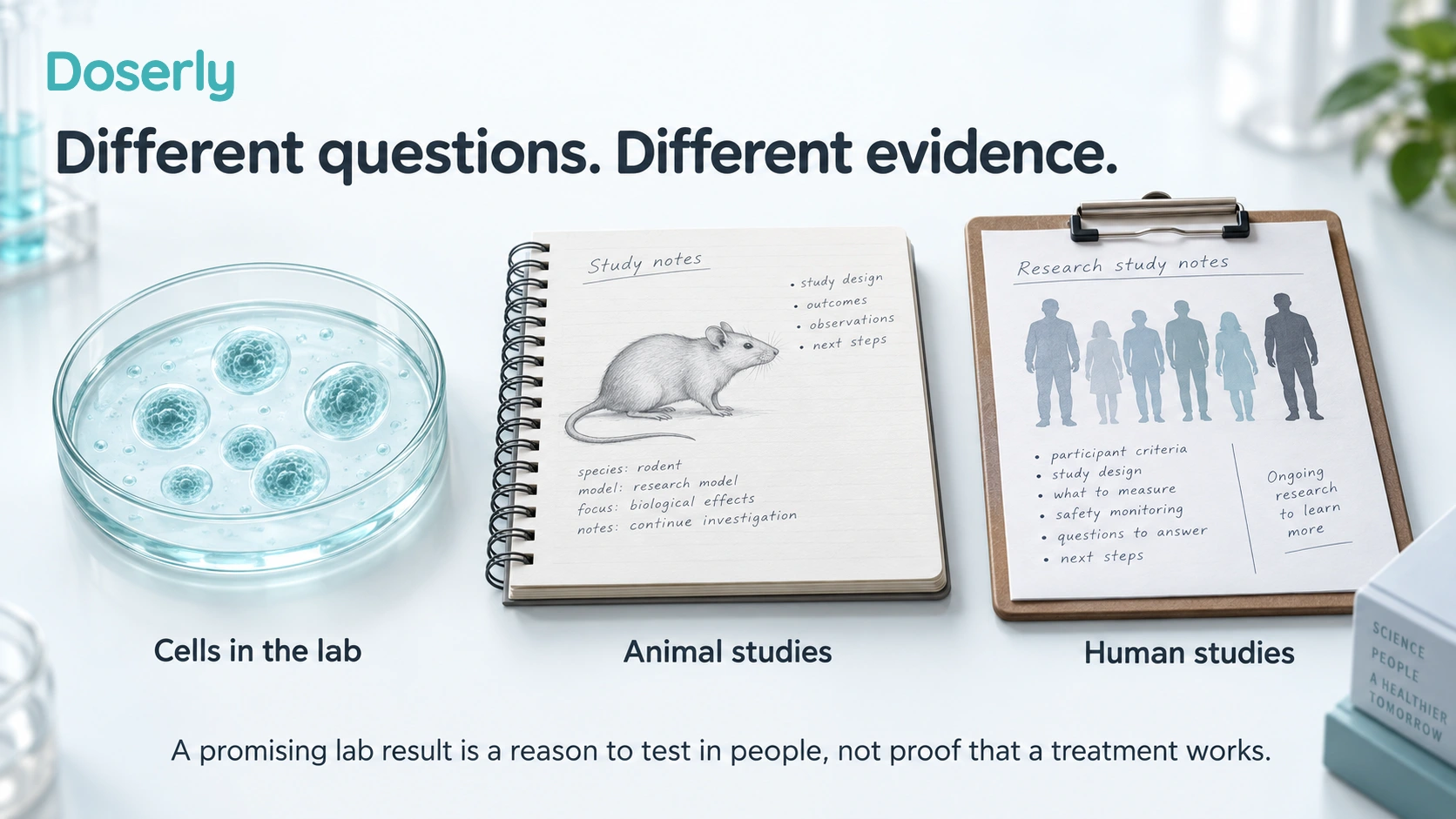
Three questions, three designs
Population and endpoint determine what each result can support.
Do not generalize a disease trial to healthy nootropic use or a cohort association to proven harm.
Does alpha-GPC need to be cycled?
No evidence-based cycling standard exists. A single dose, 180-day disease trial and prescription exposure categories are study designs, not proof that alternating “on” and “off” periods improves efficacy or safety.
What happens when alpha-GPC is stopped?
A specific withdrawal syndrome is not established. Stopping removes the exposure; symptoms that prompted use may persist or return. Prescribed cognitive treatment should be changed with the treating clinician.
Is alpha-GPC found in food?
Foods provide choline in several free and esterified forms. Alpha-GPC itself is not assigned a food requirement. Eggs, meat, fish, dairy and soy contribute to total choline intake, which uses separate Adequate Intake and UL references. [1]
Which forms and labels should be compared?
Alpha-GPC, L-alpha-glycerylphosphorylcholine and choline alfoscerate name the same active moiety. A raw-material label can state a powder mass and a percentage of alpha-GPC; the delivered active ingredient can therefore differ from the scoop mass.
Do not equate alpha-GPC milligrams with pure choline milligrams. Choline bitartrate, phosphatidylcholine and citicoline are different ingredients. Product purity, co-ingredients and legal status also differ.
How should alpha-GPC be stored?
Follow the product label for heat, humidity, light and expiry. Alpha-GPC powders can be hygroscopic; keep the original container tightly closed and away from children.
What is alpha-GPC commonly used for?
Alpha-GPC is marketed for focus, memory, dementia support, power output and growth hormone. The human evidence is uneven: one older disease trial was positive across several scales, while a recent small healthy-men study found selected Stroop improvements without broad cognitive, exercise or hormone effects. [2], [3]
What does human research show?
In 2024, 20 resistance-trained men completed randomized, double-blind crossover conditions with placebo, 315 mg or 630 mg alpha-GPC. Cognitive testing began 60 minutes later, followed by exercise. Both alpha-GPC amounts improved change in total Stroop score versus placebo, and 630 mg improved Stroop time per score. N-back, most Flanker measures, subjective scales, physical performance and growth hormone did not differ. The study was small, acute, industry funded and retrospectively registered. [2]
In the 2003 Alzheimer trial, 261 adults age 60–80 with mild-to-moderate disease received 400 mg choline alfoscerate three times daily or placebo for 180 days. ADAS-Cog and several global or behavioral scales favored treatment at scheduled assessments. This is evidence in a defined disease population from an older trial; it does not show that healthy adults gain the same effect or that alpha-GPC should replace current dementia care. [3]
The Korean stroke analysis included 12,008,977 adults age 50+ in the total cohort, of whom 108,877 were alpha-GPC users. A separate 1:10 matched cohort included 108,216 users and 1,082,160 nonusers, totaling 1,190,376. The adjusted hazard ratio for total stroke was 1.46 in the total cohort and 1.43 in the matched cohort. Prescription duration also showed a graded association. Because users received a prescription for reasons that may themselves predict stroke, this is a signal requiring follow-up, not causal proof. [4]
How does alpha-GPC work?
Alpha-GPC can be cleaved to glycerol-1-phosphate and choline. Choline participates in acetylcholine synthesis and phospholipid metabolism. This mechanism makes the ingredient biologically plausible, but acetylcholine precursor status does not predict the size or durability of a cognitive effect. [1]
What are the risks and interactions?
Short trials report gastrointestinal symptoms, headache, dizziness or insomnia in some users, but small samples cannot characterize uncommon or long-term harms. There is no established alpha-GPC UL.
The stroke cohort deserves explicit discussion. In the matched population, prescription exposure was associated with total stroke (aHR 1.43; 95% CI 1.41–1.46), ischemic stroke (1.34; 1.31–1.37) and hemorrhagic stroke (1.37; 1.29–1.46). The study cannot establish causality and did not test retail supplement use, yet a long-term user should not dismiss the signal simply because acute studies appear tolerable. [4]
In the United States, alpha-GPC may be sold as a dietary supplement without FDA premarket approval for efficacy. In Canada, a natural health product requires a licence and authorized label; product-specific status and claims should be checked. [5], [6]
Which medicines interact with alpha-GPC?
Additive cholinergic effects are plausible with cholinergic medicines, while anticholinergic drugs act in the opposite direction. Exact interaction magnitude is not well defined. Cognitive symptoms, blood-pressure changes or neurologic events should not be managed by changing medicines or alpha-GPC without a clinician.
What should be monitored?
There is no validated alpha-GPC blood target. Preserve the exact product, active dose, time, reason, co-ingredients and concurrent cognitive or neurologic medicines. For a disease-treatment plan, use validated clinical assessments. Sudden weakness, speech trouble, facial droop or severe new neurologic symptoms require emergency care, not tracking alone.
What do public communities report?
People report focus, motivation, headaches, low mood, insomnia or tolerance, often while combining alpha-GPC with caffeine or racetams. These reports cannot isolate the ingredient, dose or long-term safety. This overhaul did not independently recrawl or quantify community posts.
How does alpha-GPC compare with nearby options?
| Guide | What it is | Key difference |
|---|---|---|
| Choline | Essential nutrient | Has total-intake AIs and UL; not interchangeable with alpha-GPC mass |
| Vitamin B9 | Folate-family nutrient | Participates in one-carbon metabolism with separate intake references |
| Phosphatidylcholine | Membrane phospholipid | Often derived from lecithin and has variable choline fraction |
| Huperzine A | Acetylcholinesterase inhibitor | Changes acetylcholine breakdown rather than supplying a choline-containing precursor |
Common questions about alpha-GPC
Is there an official daily requirement?
No. Alpha-GPC has no RDA, AI or UL. Dietary choline references apply to total choline, not directly to alpha-GPC ingredient mass. [1]
Did 630 mg improve everything in the acute trial?
No. Selected Stroop outcomes improved; N-back, most Flanker measures, physical performance and growth hormone did not differ. [2]
Does the Alzheimer trial prove a nootropic effect in healthy adults?
No. It studied 261 patients with diagnosed mild-to-moderate Alzheimer disease for 180 days. [3]
Did the stroke study match all 12 million people?
No. The total cohort was 12,008,977; the separate matched cohort was 1,190,376. [4]
Does the stroke association prove alpha-GPC causes stroke?
No. It is an important observational signal with possible confounding by indication and residual confounding. [4]
Is alpha-GPC the same as choline bitartrate?
No. They are different ingredients and their masses cannot be treated as equal choline amounts.
Should alpha-GPC replace dementia medicines?
No. One older placebo-controlled trial does not establish comparative effectiveness against current care. Changes belong with the treating clinician.
Glossary
Plain explanations of alpha-GPC evidence terms.
- Alpha-GPC
- L-alpha-glycerylphosphorylcholine, also called choline alfoscerate, a choline-containing phosphodiester.
- Stroop test
- A task measuring aspects of selective attention, response inhibition and processing speed.
- ADAS-Cog
- A standardized cognitive scale used in Alzheimer disease research.
- Hazard ratio
- A relative event-rate estimate over follow-up; it does not by itself prove causation.
- Confounding by indication
- Bias when the reason a treatment is prescribed also relates to the outcome.
- Crossover trial
- A trial in which each participant receives multiple conditions in a randomized sequence.
How this guide was researched
This draft uses the current NIH ODS choline monograph, the primary 2024 acute crossover trial, the primary 2003 Alzheimer randomized trial, the primary 2021 stroke cohort and current U.S. and Canadian regulatory pages. Relevant source text was retrieved and read on October 9, 2026.
How this guide was made
Research and drafting were AI-assisted. This draft awaits Doserly editorial and independent clinical review. Doserly makes a tracking app and operates Doserly Academy, both promoted here. Read the editorial policy.
Explore the sources
Randomized cognition trials, a large observational safety study and official regulatory pages answer different alpha-GPC questions.
Showing 6 sources
- 01
Choline - Health Professional Fact Sheet ↗
Official nutrient monograph
Current relevant sections reviewed.
Detail: Choline functions, total-intake references and limits of applying nutrition values to alpha-GPC ingredient mass.
- 02
Acute Alpha-Glycerylphosphorylcholine Supplementation Enhances Cognitive Performance in Healthy Men. ↗
Randomized crossover trial
Primary full article and bibliographic record read.
Detail: 20 resistance-trained men; placebo, 315 mg and 630 mg conditions; exact test timing; positive and null outcomes.
- 03
Cognitive improvement in mild to moderate Alzheimer's dementia after treatment with the acetylcholine precursor choline alfoscerate: a multicenter, double-blind, randomized, placebo-controlled trial. ↗
Randomized placebo-controlled trial
Primary abstract and bibliographic record read.
Detail: 261 adults with mild-to-moderate Alzheimer disease; 400 mg three times daily for 180 days; cognitive and global scales.
- 04
Association of L-α Glycerylphosphorylcholine With Subsequent Stroke Risk After 10 Years ↗
Retrospective cohort study
Primary full article and tables read.
Detail: Total and matched denominators, prescription exposure windows, stroke associations and causal limitations.
- 05
Questions and Answers on Dietary Supplements ↗
Regulatory overview
Current official page reviewed.
Detail: General U.S. supplement framework.
- 06
Product Licensing ↗
Regulatory overview
Current official page reviewed.
Detail: Canadian licensing and NPN or DIN-HM.
No matching sources
Try a different term or show the full list.