
In this guide
What is Beef Organ Blends?
Beef Organ Blends refers to dried or otherwise concentrated animal material sold as a supplement. The front label may not disclose the tissues, ratios, dry mass or measured nutrient content.
The most useful primary study is a composition analysis of raw bovine tissues performed in USDA-ARS-approved laboratories. It characterizes source food, not a particular capsule, its bioavailability or a clinical effect. [1]
Typical Beef Organ Blends Protocols
| Source and question | Material | Amount each administration | Daily total | Frequency and duration | Interpretation |
|---|---|---|---|---|---|
| Fuerniss 2024 · food analysis | Composite raw bovine tissue | 100 g analytical basis; no administration | Not applicable | One-time laboratory analysis | Food composition, not supplement dose |
| NIH ODS · vitamin A limit | Preformed vitamin A from all sources | Not applicable | 3,000 mcg RAE/day for adults | Chronic total exposure | Ceiling, not a target or product dose |
| NIH ODS · copper limit | Copper from all sources | Not applicable | 10,000 mcg/day for adults | Chronic total exposure | Ceiling, not a target or product dose |
- Exact product
- Record species, every tissue, proportion and process.
- Measured amount
- Separate powder mass, raw equivalent and assayed nutrients.
- Total exposure
- Add relevant foods, multivitamins, supplements and medicines.
What is Beef Organ Blends commonly used for?
The 2024 study measured heart, liver, kidney, tongue, tripe, oxtail, bone marrow, testicles and blood. Protein ranged from 1.25% in marrow to 19.91% in oxtail, while fat ranged from 1.15% in blood to 77.09% in marrow. Liver was uniquely high in retinol and copper. A blend’s total weight does not reveal any of those component amounts.
A blend may provide protein and micronutrients, but the finished product needs organ-by-organ weights or nutrient assays to make that useful. Claims that eating a named organ selectively supports the corresponding human organ are not established by tissue matching. Someone seeking to correct a deficiency needs a diagnosis and a quantifiable intake; a proprietary powder weight is neither a nutrient concentration nor an established treatment.
Evidence boundary
Food composition is the starting point, not the outcome
How do forms and labels differ?
Compare the ingredient list, serving size, weight of each tissue, raw-to-dry equivalence, declared vitamin A, copper and iron, species, country of origin and lot. Grass-fed, ancestral and freeze-dried describe marketing or processing; they are not nutrient assays.
How should the product be stored?
Follow the manufacturer’s label, keep the product dry in its original container and away from children and pets. Discard it if the seal is broken, appearance or odor changes, the lot cannot be identified or transport conditions are unknown.
What does human research show?
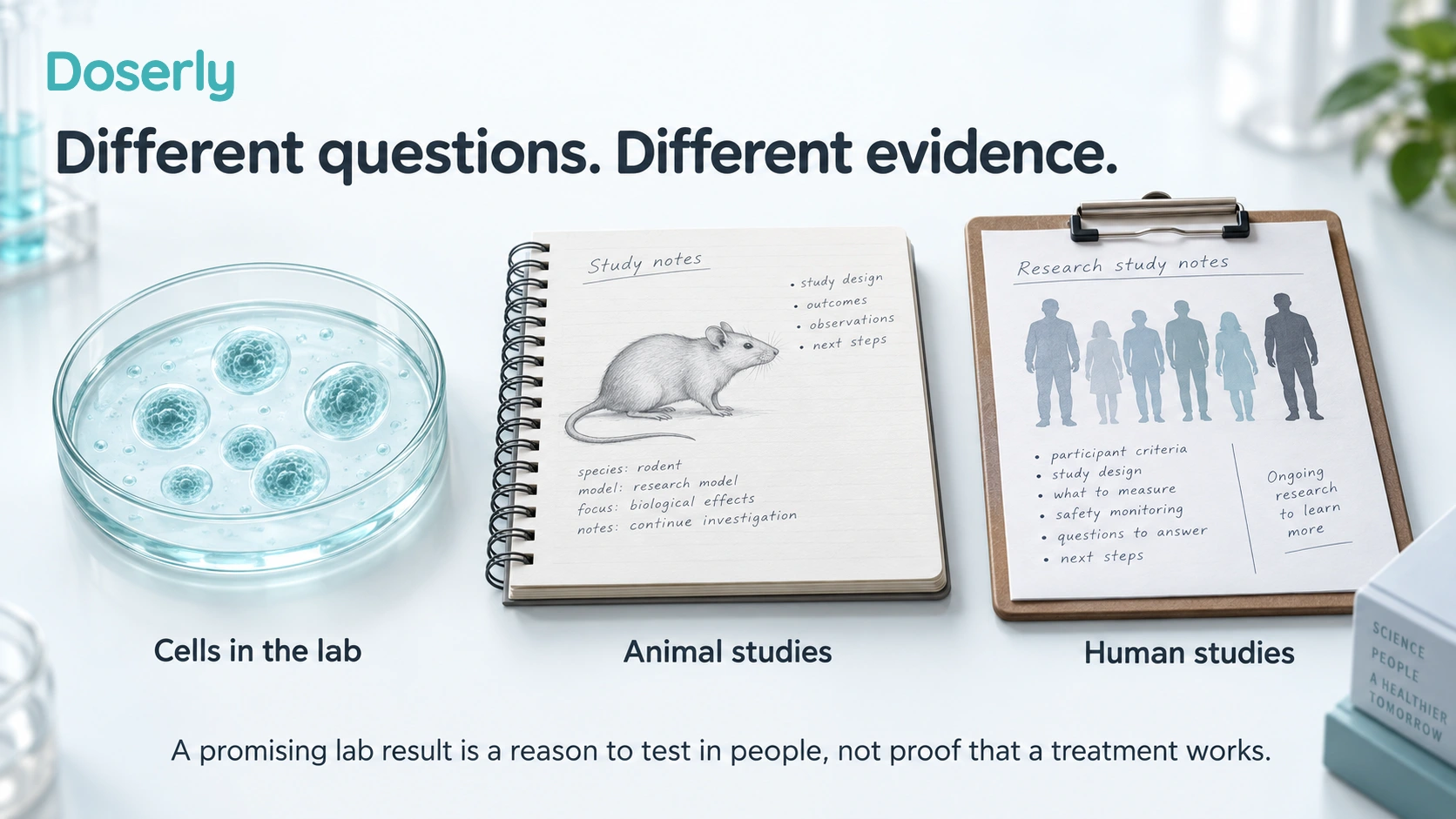
| Question | Best direct evidence | Finding | Boundary |
|---|---|---|---|
| What is in the raw tissue? | 2024 laboratory analysis | The 2024 study measured heart, liver, kidney, tongue, tripe, oxtail, bone marrow, testicles and blood. Protein ranged from 1.25% in marrow to 19.91% in oxtail, while fat ranged from 1.15% in blood to 77.09% in marrow. Liver was uniquely high in retinol and copper. A blend’s total weight does not reveal any of those component amounts. | Not a capsule |
| What is in the finished product? | Finished-lot assay | Product-specific | Not supplied by food tables |
| Does it improve a clinical outcome? | No direct trial identified | Unknown | Composition does not establish efficacy |
Product audit
A reviewable label answers three separate questions
What are the risks and interactions?
The liver fraction can drive preformed vitamin A and copper exposure; a blood or spleen fraction may change iron exposure; allergy, gastrointestinal symptoms and animal-source quality remain relevant. Without disclosed ratios and assays, a consumer cannot calculate totals reliably. Pregnancy, liver disease, Wilson disease and iron-overload disorders deserve clinician review. Anticoagulants, vitamin K products, prescribed iron and multivitamins can change the total assessment. A product assay does not automatically make the product appropriate for a particular person. [2], [3]
Seek urgent care for a severe allergic reaction, fainting, repeated vomiting, confusion or suspected poisoning. Keep the container available for a poison centre or clinician.
What is the legal and regulatory status?
In the United States, FDA does not approve dietary supplements for safety and effectiveness before sale. Manufacturers remain responsible for labeling and current good manufacturing practice. Specified prohibited cattle materials may not be used in human food or supplements. [4], [5]
In Canada, verify the exact finished product and NPN in the Licensed Natural Health Products Database. A U.S. listing or a quality claim does not establish a Canadian licence. [6]
When should use stop?
Stop and seek prompt advice for jaundice, persistent abdominal pain, repeated vomiting, allergic reaction, neurologic symptoms or an unexplained change in liver or iron tests. Urgent symptoms require urgent care.
What should be monitored?
Record brand, lot, serving, tissues, amounts, declared nutrients, other supplements and actual frequency. Add preformed vitamin A, copper and iron across products when disclosed. For a clinical goal, agree on the relevant symptom or laboratory marker and review date; perceived energy is not a diagnostic test for deficiency correction.
What can community experience add?
Reports can raise questions about odor, burping, tolerance, capsule burden, cost and manufacturer transparency. They cannot verify tissue identity, nutrient content or a selective effect on an organ. No systematic current community sample was assembled, so this guide reports no consensus dose.
How do related options compare?
| Option | Main distinction |
|---|---|
| Single-organ product | One tissue is named, but the nutrient amount still needs an assay |
| Multi-organ blend | Total powder weight can hide every component ratio |
| Whole foods | A weighed portion can be compared with food-composition tables more directly |
Common questions
Does one capsule equal a serving of the food?
Not without a validated equivalence between raw tissue, dried powder and finished product. Milligrams alone do not answer it.
Can it treat anemia or fatigue?
Deficiency needs diagnosis and a measurable treatment. These symptoms have many causes; an unquantified organ product is not an established therapy.
Does freeze-drying preserve every nutrient?
It removes water, but retention varies by nutrient and process. Use a finished-product assay rather than assumption.
Does grass-fed prove quality?
No. It does not replace identity, traceability, manufacturing controls, contaminant testing or nutrient amounts.
Is it safe during pregnancy?
Extra caution applies to liver and liver-containing blends because of preformed vitamin A. Have the exact product and all other intakes reviewed.
How should a product be selected?
Prefer a complete label, tissue-by-tissue amounts, a traceable lot and relevant certificate of analysis. Avoid treatment and organ-repair claims.
Glossary
Terms for interpreting animal-source products.
- Raw-to-dry equivalence
- A declared relationship between tissue mass before and after water removal.
- RAE
- Retinol activity equivalent, a unit used for vitamin A.
- UL
- Tolerable Upper Intake Level; a total-intake ceiling, not a target.
- Lot assay
- A measurement performed on a specific batch of the finished product.
- Specified risk material
- Cattle tissue defined by regulation and excluded from human food to reduce BSE risk.
- Target-organ inference
- The unsupported assumption that an animal tissue benefits the matching human organ.
How this guide was researched
Two PubMed identities were checked live. The full composition paper was read, and official nutrient limits and bovine-material rules were verified at NIH and FDA.
Research record · checked October 9, 2026
Identity: PMIDs 39339704 and 29367482 were checked through NCBI EFetch for title, authors, journal, DOI and publication notices. No linked correction, retraction or expression of concern appeared.
Full methods: PMC11435426 was read for sampling, analytical methods, tables and Beef Checkoff funding.
Boundary: no direct human study of the finished oral supplement was identified; raw values are not converted into a capsule dose.
Community: no systematic current sample was assembled.
Explore the sources
Primary composition evidence and official safety and regulatory references.
Showing 6 sources
- 01
Nutrient Analysis of Raw United States Beef Offal Items. ↗
Primary laboratory composition study
USDA-ARS-approved laboratories analyzed raw U.S. offal composites; Beef Checkoff funded the work. It is not a supplement trial.
- 02
Vitamin A and Carotenoids: Health Professional Fact Sheet ↗
Official nutrient reference
Defines the adult 3,000 mcg RAE UL for preformed vitamin A and pregnancy toxicity context.
- 03
Copper: Health Professional Fact Sheet ↗
Official nutrient reference
Defines the adult 10,000 mcg copper UL and the special risk from Wilson disease.
- 04
FDA Announces Final Rule on Bovine Spongiform Encephalopathy ↗
Official cattle-material rule
Lists specified cattle materials prohibited in human food and dietary supplements.
- 05
FDA 101: Dietary Supplements ↗
Official supplement-regulation overview
Explains that FDA does not approve supplements for safety and effectiveness before sale.
- 06
Licensed Natural Health Products Database ↗
Official product database
Use the exact product name or NPN to verify the Canadian licence and authorized label.
No matching sources
Try a different term or show the full list.
Editorial note
This guide separates raw-tissue composition, finished-product content and human clinical outcomes. It does not turn a food table into a capsule dose.