
In this guide
What is biotin?
Biotin, or vitamin B7, is a water-soluble cofactor for carboxylase enzymes involved in fatty-acid, glucose and amino-acid metabolism. Deficiency is rare outside inherited biotinidase or carboxylase disorders, prolonged raw-egg-white exposure and selected clinical contexts. [1]
High absorption and water solubility do not make large doses clinically neutral. Biotin is built into many laboratory assay systems, so supplemental biotin in a blood sample can imitate or hide disease.
Typical Biotin Protocols
| Purpose or source | Form and amount each time | Frequency | Total per day | Duration |
|---|---|---|---|---|
| U.S. AI, adults 19+ including pregnancy | Biotin from all sources | Daily | 30 mcg | Ongoing reference intake |
| U.S. AI, lactation | Biotin from all sources | Daily | 35 mcg | Ongoing reference intake |
| Documented thyroid-assay interference example | Free biotin 10 mg | Single dose | 10 mg (10000 mcg) | Interference observed within 24 hours |
The AI is a population reference, not a treatment amount. The 10 mg row is a safety example from the current ODS review. It does not define a universal washout because assay design, dose, repeated use, kidney function and clinical urgency change the interval. [1]
Where these amounts come from
The current NIH ODS biotin monograph supplies the AIs, deficiency context, beauty-evidence limits and assay-interference evidence. [1]
We did not treat no UL as proof of unlimited safety or convert one 10 mg interference example into a fixed pause for every laboratory.
Keep biotin units visible
A milligram label can hide a large multiple of the microgram AI.
This comparison describes units and assay risk. It is not a beauty regimen.
Does biotin need to be cycled?
No nutrition authority defines a general biotin cycle. Cycling does not establish hair benefit or guarantee that an assay is clear. Before testing, the laboratory and ordering clinician should set instructions for the actual product, amount, assay and urgency.
What happens when biotin is stopped?
Biotin does not cause a recognized withdrawal syndrome. Stopping removes the supplemental exposure, but clearance and assay effects vary. Do not delay an urgent blood test or emergency evaluation while trying to complete a self-selected washout.
Which foods provide biotin?
Organ meats, cooked eggs, fish, meat, seeds, nuts and sweet potatoes contain biotin. Raw egg-white avidin binds biotin and can impair absorption when exposure is prolonged; cooking denatures avidin. [1]
Which biotin form should be compared?
Free biotin is the common oral supplement form and is readily absorbed. That does not establish better hair, skin or nail outcomes in people without deficiency. Compare micrograms or milligrams per serving and check multivitamins, B complexes and beauty blends for duplicate sources. [1]
How should biotin be stored?
Follow the product label for temperature, moisture and expiry. Keep the container closed and away from children. Preserve the label or a photo because clinicians need the exact amount and last-use time when interpreting laboratory tests.
What is biotin commonly used for?
Biotin treats true deficiency and inherited disorders under medical care. It is widely marketed for hair, skin and nails, but the evidence in healthy users consists largely of small uncontrolled reports and cases involving unusual conditions. [1]
What does human research show?
ODS found little evidence that biotin improves hair, skin or nails in people without deficiency. Apparent improvements in case reports cannot be separated reliably from underlying disease, co-treatments or natural recovery. A biological role in keratin-producing tissues is not an efficacy trial. [1]
For laboratory safety, evidence is direct: supplemental biotin can distort assays that use biotin-streptavidin chemistry. Direction depends on assay format, so the same exposure can create a falsely low result in one test and falsely high result in another. [1]
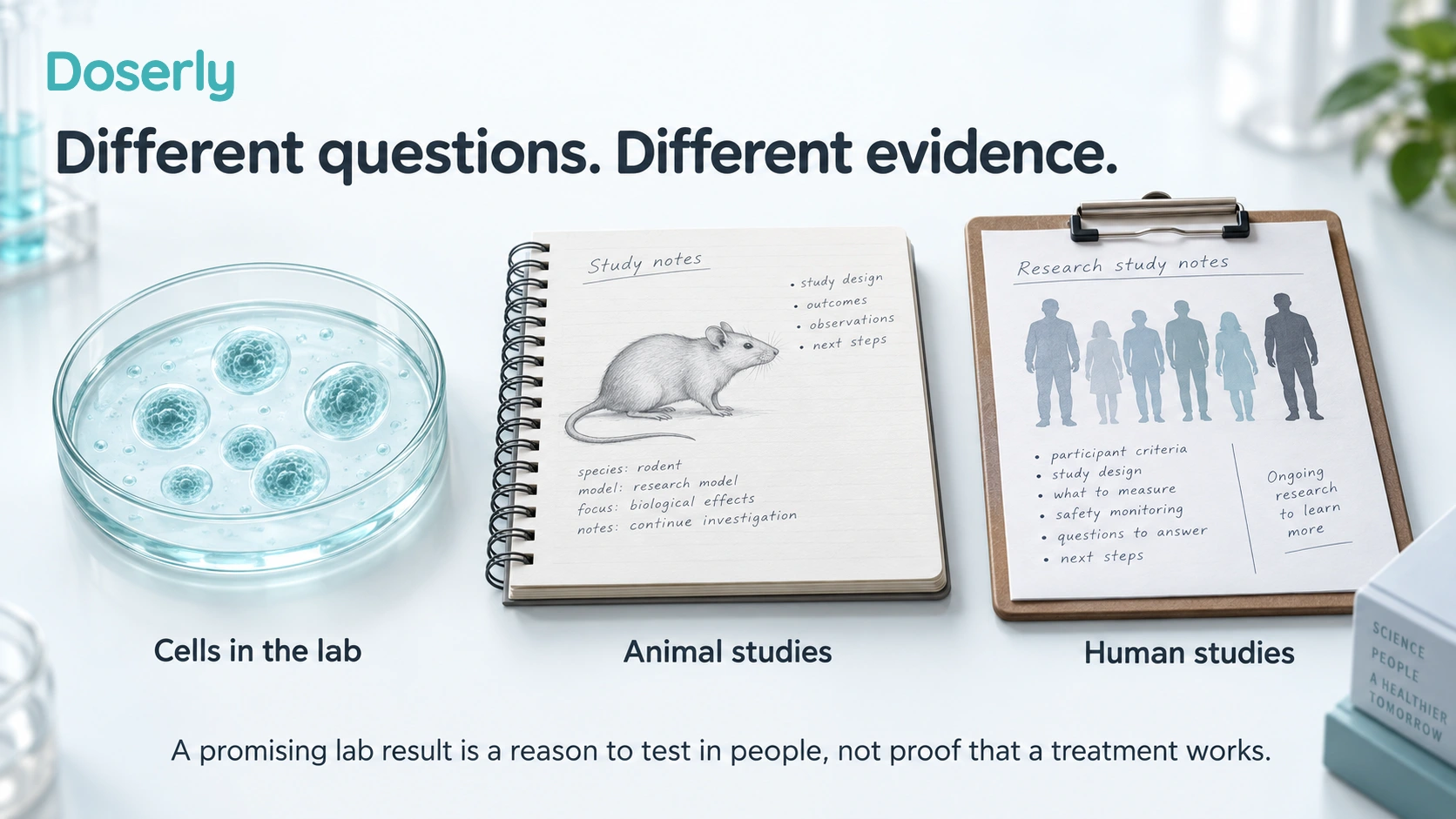
How does biotin work?
Biotin binds covalently to carboxylases that support fatty-acid synthesis, gluconeogenesis and amino-acid catabolism. It is recycled by biotinidase. Laboratory platforms also exploit the exceptionally strong biotin-streptavidin bond, which creates the interference problem when circulating biotin from supplements competes in the assay. [1]
What are the risks and interactions?
In the United States, supplements generally do not receive FDA premarket approval for safety or effectiveness. In Canada, natural health products require a licence and authorized labels carry an NPN or DIN-HM. Neither status guarantees that a product will not interfere with a local assay. [2], [3]
A falsely low troponin during suspected myocardial infarction can delay urgent care. Thyroid, vitamin D, NT-proBNP and hormone assays can also be affected. Disclose every biotin-containing product before blood collection. [1]
Which medicines interact with biotin?
Long-term anticonvulsant use has been associated with lower biotin concentrations, but this does not establish a universal supplement schedule. The more important operational interaction is with diagnostic testing rather than a direct drug-drug interaction. [1]
What should be monitored?
Tell the ordering clinician and laboratory the product, amount, frequency and last dose. A single 10 mg dose has affected thyroid tests within 24 hours, but no single 24- or 48-hour pause is safe for every assay. Urgent tests should proceed with laboratory consultation rather than waiting. [1]
What do public communities report?
Public discussions often focus on hair growth, acne or how long to stop before tests. Reports cannot establish efficacy or a universal washout because products, doses, assays and underlying conditions differ.
The previous Doserly dossier reviewed community material, but this overhaul did not independently recrawl or quantify it. No community consensus is treated as evidence.
How does biotin compare with nearby options?
| Guide | What it is | Key difference |
|---|---|---|
| Vitamin B7 | Alternate name for biotin | Same nutrient and assay-interference risk |
| Vitamin B6 | Water-soluble B vitamin | High chronic exposure can cause sensory neuropathy |
| Vitamin B12 | Cobalamin family | Different deficiency tests and neurologic context |
| Multivitamin | Multi-nutrient product | Can hide an additional biotin source |
Common questions about biotin
Does biotin reliably improve hair growth?
Not in healthy users based on current evidence. Benefit reports often involve deficiency or unusual disorders. [1]
Why can biotin alter a troponin test?
Some assays use biotin-streptavidin binding. Circulating supplemental biotin can disrupt the signal and, in some troponin methods, produce a falsely low result. [1]
Is 10 mg a small amount?
No relative to the AI. Ten milligrams equals 10000 mcg, while the adult AI is 30 mcg/day. [1]
How long should biotin be stopped before testing?
There is no universal interval. Ask the ordering clinician or laboratory because dose, repeated use, kidney function, assay and urgency matter. [1]
Does no upper limit mean unlimited safety?
No. A U.S. UL was not set because toxicity data were insufficient, and that framework does not erase diagnostic interference. [1]
Is biotin deficiency common?
No. It is rare outside inherited disorders, prolonged raw-egg-white exposure and selected clinical settings. [1]
Should an emergency test wait for biotin to clear?
No. Seek urgent care and disclose biotin. The clinical team and laboratory can select or interpret testing appropriately.
Glossary
Plain explanations of biotin, laboratory and evidence terms used in this guide.
- Adequate Intake (AI)
- Population reference used when evidence is insufficient to establish an RDA; it counts total intake.
- Assay interference
- A substance affects the measurement method and produces a result that does not reflect the patient’s true concentration.
- Streptavidin
- A protein that binds biotin tightly and is used in many laboratory assay platforms.
- Cardiac troponin
- A blood marker used when heart-muscle injury is suspected; some methods are vulnerable to biotin interference.
- Biotinidase
- An enzyme that releases and recycles biotin; inherited deficiency can cause serious illness.
- Tolerable Upper Intake Level (UL)
- A chronic intake boundary; no U.S. UL is established for biotin, which is not proof of unlimited safety.
How this guide was researched
This draft uses the current NIH ODS biotin professional monograph and current FDA and Health Canada regulatory pages. Relevant source text was retrieved and read on October 9, 2026. The older Doserly draft identified claims to recheck but was not treated as evidence.
The table keeps the AI and an assay-interference exposure separate. It does not invent a cosmetic regimen or universal laboratory washout.
How this guide was made
Research and drafting were AI-assisted. This manuscript is a draft for Doserly editorial review and has not been independently clinically reviewed. Doserly makes a health-tracking app and operates Doserly Academy, both promoted here. Read the editorial policy.
Explore the sources
Official nutrient and regulatory pages answer different questions. Source notes preserve the reviewed scope.
Showing 3 sources
- 01
Biotin - Health Professional Fact Sheet ↗
Official nutrient monograph
Current relevant sections reviewed.
Detail: Identity, foods, AI, deficiency, cosmetic evidence, no-UL context, assay interference and anticonvulsant association.
- 02
Questions and Answers on Dietary Supplements ↗
Regulatory overview
Current official page reviewed.
Detail: U.S. premarket and postmarket supplement framework.
- 03
Product Licensing ↗
Regulatory overview
Current official page reviewed.
Detail: Canadian product licensing and NPN or DIN-HM identifier.
No matching sources
Try a different term or show the full list.