
In this guide
What is Ceylon Cinnamon?
Ceylon cinnamon is Cinnamomum verum, also called C. zeylanicum. It differs from cassia species in chemistry and usually has less coumarin, but bark source, extraction and finished-product verification still matter. [1], [4]
Typical Ceylon Cinnamon Protocols
| Source and question | Preparation | Amount each administration | Daily total | Frequency and duration | Main interpretation |
|---|---|---|---|---|---|
| Ranasinghe 2025 · Ceylon-cinnamon RCT · 210 randomized/186 completed | C. zeylanicum extract versus placebo | Administration count not reported in abstract | 250 mg/day or 500 mg/day | Four months | Glucose signals reported; complete between-group effect sizes unavailable in abstract and replication needed |
| Moridpour 2024 · meta-analysis · 24 RCTs | Cinnamon products of varied species/forms | Varied | Varied | Varied | Fasting glucose, HOMA-IR and HbA1c signals; formulations and heterogeneity limit transfer to Ceylon |
| Deyno 2019 · meta-analysis · 16 RCTs | Cinnamon versus placebo | Varied | Varied | Varied | Fasting glucose and HOMA-IR favored cinnamon; HbA1c and lipids were null, with I² above 83% |
- Exact product
- Record species, form, lot and co-ingredients.
- Each administration
- Keep amount, timing and context.
- Real endpoint
- Separate biomarker, symptom and clinical outcome.
What is it commonly used for?
A 2025 double-blind trial randomized 210 adults with type 2 diabetes to a Ceylon-cinnamon extract at 250 mg/day, 500 mg/day or placebo; 186 completed four months. The abstract reports within-group glucose decreases and regression results favoring treatment, but does not provide all between-group effect sizes. Broader meta-analyses of 16 and 24 trials reported inconsistent HbA1c findings and high heterogeneity, and often did not isolate Ceylon cinnamon. [1], [2], [4]
One result answers one question
How do forms and labels differ?
A label should state C. verum or C. zeylanicum, bark, extract ratio, each amount, daily total and coumarin testing when available. Ground culinary bark, aqueous extract and mixed-species cinnamon are not equivalent. [4], [5]
How should the product be stored?
Follow the finished product’s label, keep it dry in its original container and away from children. Discard an expired, heat-damaged, broken-seal or untraceable product.
What does human research show?
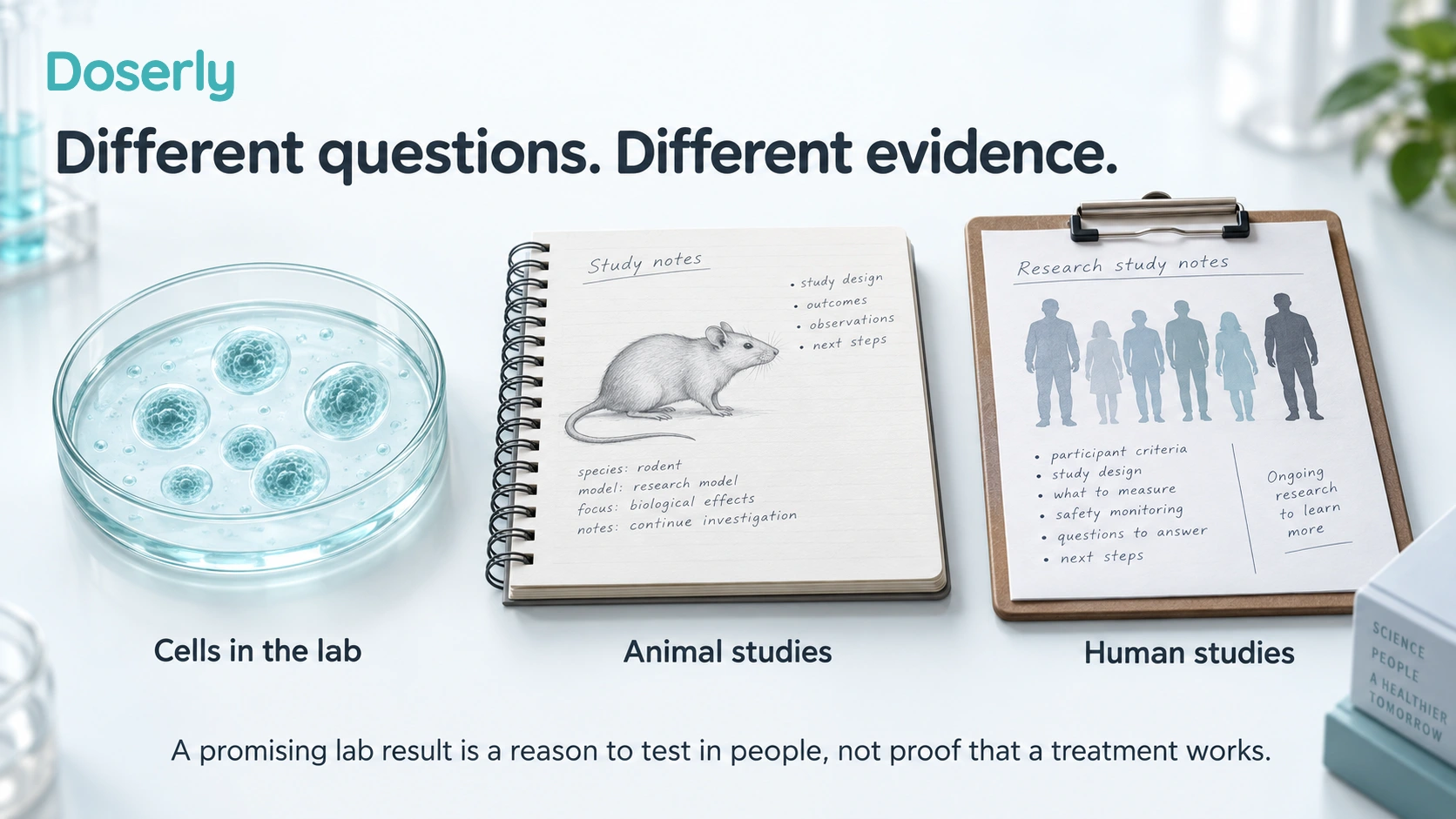
| Question | Best direct evidence | Finding | Boundary |
|---|---|---|---|
| Efficacy | Ranasinghe 2025 · Ceylon-cinnamon RCT · 210 randomized/186 completed | Glucose signals reported; complete between-group effect sizes unavailable in abstract and replication needed | Specific product and population |
| Replication | Limited evidence | No universal effect established | Variable formulations |
| Universal dose? | None | Not established | Rows cannot be combined |
Keep the finished product reviewable
What are the risks and interactions?
Ceylon cinnamon generally contains less coumarin than cassia, but trace content and adulteration are possible. Concentrated use may add to diabetes medicines or anticoagulants and can cause allergy or gastrointestinal symptoms. Liver disease, pregnancy, planned surgery and unexplained low glucose warrant review. [2], [3], [5], [6]
Seek urgent care for breathing difficulty, throat or tongue swelling, faintness, widespread hives, repeated vomiting or suspected overdose.
What is the legal and regulatory status?
In the United States, it is sold as a dietary supplement; FDA does not approve it for safety and effectiveness before sale. In Canada, verify the exact product, NPN and authorized label. Legal sale does not prove efficacy or sport suitability. [6]
When should use stop?
Stop for any allergic reaction, persistent symptom worsening, unexpected laboratory result or doubt about product identity.
What should be monitored?
Record verified species, bark or extract, lot, dose, medicines, meals, glucose and liver-related symptoms. Keep fasting glucose and HbA1c separate, and do not transfer mixed-cinnamon meta-analysis results directly to a Ceylon product.
What can community experience add?
Reports can compare flavor, capsule tolerance and readings. They cannot verify species, coumarin content or isolate medicine and diet changes. No systematic current community sample was assembled.
How do related options compare?
| Option | Main distinction |
|---|---|
| Ceylon cinnamon | Usually lower coumarin; verify species |
| Cassia cinnamon | Different chemistry and often more coumarin |
| Mixed or unspecified cinnamon | Cannot assign species-specific evidence |
Common questions
Is Ceylon cinnamon proven for diabetes?
One current RCT is promising but does not establish replacement therapy.
Were 250 and 500 mg single doses?
The abstract reports daily totals but not administration count.
Can mixed-cinnamon meta-analyses prove a Ceylon effect?
No.
Does Ceylon contain no coumarin?
No. It is generally lower, not guaranteed zero.
Can it replace prescribed treatment?
No.
What belongs in the record?
Species, extract, dose, lot, medicines, meals and glucose.
Glossary
Terms for reading the evidence.
- Endpoint
- A defined result measured in a study.
- Anaphylaxis
- A potentially life-threatening systemic allergic reaction.
- Biomarker
- A biological measure that does not guarantee clinical benefit.
- Standardization
- A measured specification for a product component.
- Cross-reactivity
- Immune recognition of related proteins from different sources.
How this guide was researched
NCBI identities, publication notices, indexed abstracts and available open methods were checked. Null outcomes, mixed products, surrogate endpoints and missing details remain visible.
Research record · checked October 9, 2026
Identity: NCBI EFetch verified PMIDs 41412108, 37818728, 31425768 and 41256917, including authors, journals, volume/pages and DOI. No linked correction or retraction appeared.
Dose: the 2025 abstract reports 250 and 500 mg daily totals but not administration count; no frequency was inferred.
Attribution: mixed-species syntheses are explicitly separated from the Ceylon-specific trial.
Explore the sources
Primary human evidence and official context.
Showing 6 sources
- 01
Efficacy and Safety of Cinnamomum zeylanicum (Ceylon cinnamon) for diabetes mellitus: a randomized, double blind, placebo-controlled clinical trial. ↗
Randomized double-blind placebo-controlled trial
Two hundred ten randomized to 250 mg/day, 500 mg/day or placebo; 186 completed four months. The abstract does not report administration count or every between-group effect size.
- 02
The effect of cinnamon supplementation on glycemic control in patients with type 2 diabetes mellitus: An updated systematic review and dose-response meta-analysis of randomized controlled trials. ↗
Systematic review and dose-response meta-analysis
Twenty-four trials showed pooled signals, but species and formulations varied and cannot define a Ceylon-specific protocol.
- 03
Efficacy and safety of cinnamon in type 2 diabetes mellitus and pre-diabetes patients: A meta-analysis and meta-regression. ↗
Meta-analysis and meta-regression
Sixteen trials; fasting glucose and HOMA-IR favored cinnamon, HbA1c and lipids were null, and heterogeneity exceeded 83%.
- 04
The effects of cinnamon on patients with metabolic diseases: an umbrella review of meta-analyses of randomized controlled trials. ↗
Umbrella review of meta-analyses
Twenty-one meta-analyses; signals varied by endpoint and the review does not make mixed cinnamon species equivalent to Ceylon.
- 05
Cinnamon: Usefulness and Safety ↗
Official evidence and safety overview
Notes species uncertainty in studies and coumarin concerns, especially for cassia and liver disease.
- 06
FDA 101: Dietary Supplements ↗
Official supplement overview
FDA does not approve dietary supplements for safety and effectiveness before sale.
No matching sources
Try a different term or show the full list.
Editorial note
This guide separates composition, biomarker, symptom and clinical outcome. It does not turn a narrow signal into a general promise.