
In this guide
What is Gymnema Sylvestre?
Gymnema sylvestre is a climbing plant used in Ayurvedic traditions. Leaf powder, tea, aqueous extract and products standardized to gymnemic acids are different exposures. A percent gymnemic-acid claim does not establish the identity or bioavailability of every constituent. [1], [3], [4]
Typical Gymnema Sylvestre Protocols
| Source and question | Preparation | Amount each administration | Daily total | Frequency and duration | Main interpretation |
|---|---|---|---|---|---|
| Zuñiga 2017 · double-blind RCT · 24 untreated adults with metabolic syndrome | Gymnema sylvestre 300 mg capsules versus placebo | 300 mg | 600 mg/day | Twice daily before breakfast and dinner for 12 weeks | Weight, BMI and VLDL decreased within the Gymnema group; metabolic-syndrome components, insulin secretion and insulin sensitivity did not change |
| Baskaran 1990 · open adjunct study · 22 adults with type 2 diabetes | GS4 Gymnema leaf extract added to oral medicines | Administration count not reported in abstract | 400 mg/day | Daily for 18–20 months; administration count unreported | Glucose markers and medicine doses changed, but the study was nonrandomized and cannot support medicine withdrawal |
| Devangan 2021 · systematic review · 10 studies/419 participants | Gymnema leaf powders and extracts | Varied | Varied | Study durations and schedules varied | Pooled signals with I² 80–99% and predominantly post-versus-baseline analysis |
- Exact product
- Record species, form, lot and co-ingredients.
- Each administration
- Keep amount, timing and context.
- Real endpoint
- Separate biomarker, symptom and clinical outcome.
What is it commonly used for?
A 2021 meta-analysis included 10 studies and 419 people with type 2 diabetes, but pooled mainly post-treatment versus baseline data and reported I² of 80–99%. A more interpretable randomized trial assigned 24 untreated adults with metabolic syndrome to 300 mg Gymnema or placebo twice daily before breakfast and dinner for 12 weeks. Weight, BMI and VLDL changed within the Gymnema group, while metabolic-syndrome components, insulin secretion and insulin sensitivity did not. An older 22-person open adjunct study used GS4 400 mg/day for 18–20 months without randomization. [1], [2], [1], [2], [3]
One result answers one question
How do forms and labels differ?
Record botanical name, leaf versus mixed plant parts, extraction solvent or ratio, declared gymnemic acids, amount per administration and co-ingredients. Whole-leaf powder cannot be converted directly into milligrams of a proprietary extract. [4], [3], [4]
How should the product be stored?
Follow the finished product’s label, keep it dry in its original container and away from children. Discard an expired, heat-damaged, broken-seal or untraceable product.
What does human research show?
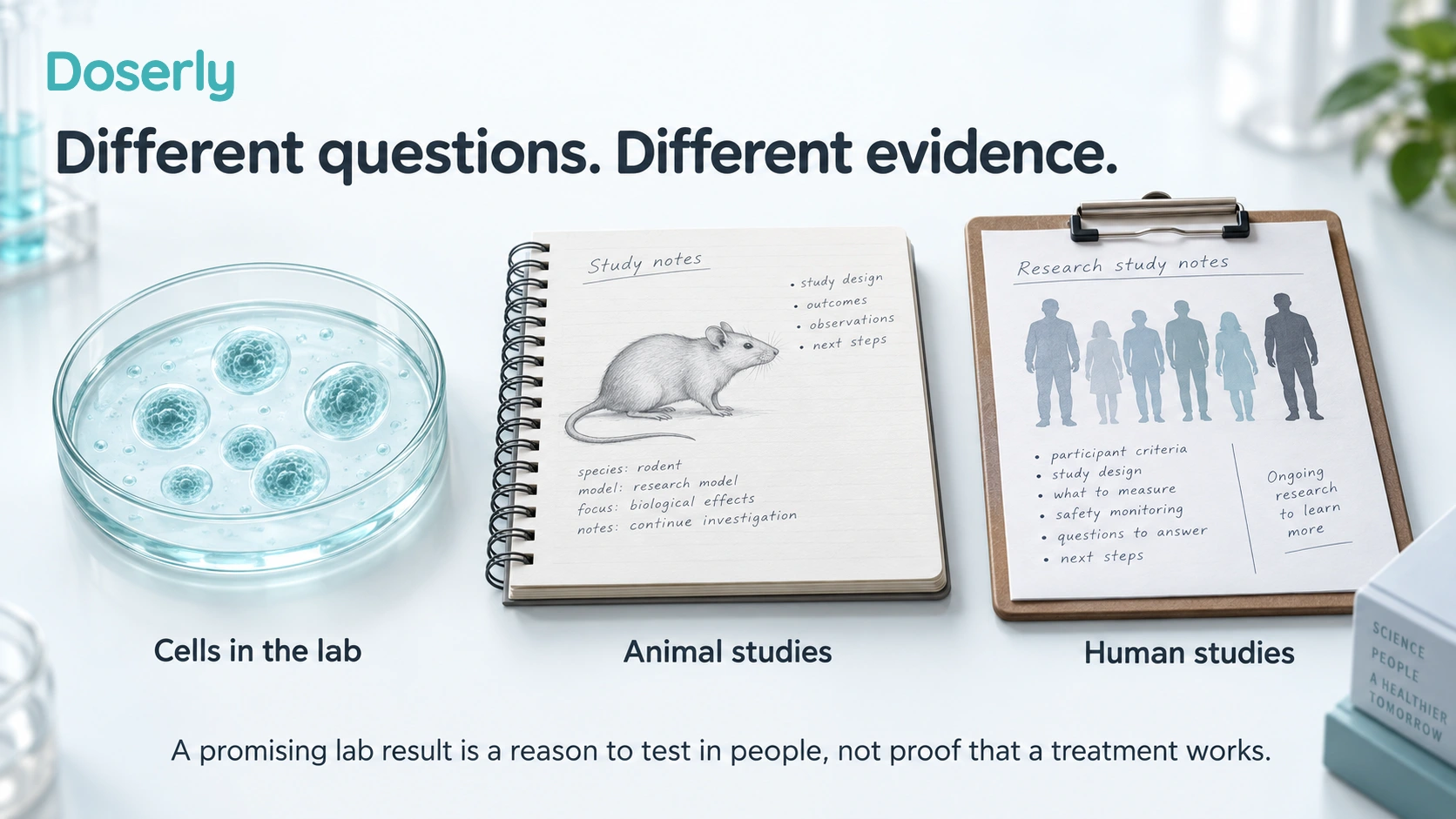
| Question | Best direct evidence | Finding | Boundary |
|---|---|---|---|
| Efficacy | Zuñiga 2017 · double-blind RCT · 24 untreated adults with metabolic syndrome | Weight, BMI and VLDL decreased within the Gymnema group; metabolic-syndrome components, insulin secretion and insulin sensitivity did not change | Specific product and population |
| Replication | Limited evidence | No universal effect established | Variable formulations |
| Universal dose? | None | Not established | Rows cannot be combined |
Keep the finished product reviewable
What are the risks and interactions?
The practical concern is additive glucose lowering with insulin, sulfonylureas or other diabetes medicines. Gastrointestinal symptoms and allergy are possible. Pregnancy, breastfeeding, liver disease, planned surgery and unexplained glucose changes warrant clinician review. Do not reduce prescribed treatment because a supplement is started. [2], [3], [5], [3], [4], [5]
Use the established hypoglycemia plan and seek urgent care for confusion, seizure, loss of consciousness or inability to take oral carbohydrate. Severe persistent hyperglycemia or ketoacidosis symptoms also need urgent care.
What is the legal and regulatory status?
In the United States, it is sold as a dietary supplement; FDA does not approve it for safety and effectiveness before sale. In Canada, verify the exact product, NPN and authorized label. Legal sale does not prove efficacy or sport suitability. [6]
When should use stop?
Stop for any allergic reaction, persistent symptom worsening, unexpected laboratory result or doubt about product identity.
What should be monitored?
Define the goal before exposure and keep the exact product beside medication changes, meals, activity, symptoms and glucose measurements. HbA1c, fasting glucose, post-meal glucose and medication dose are separate outcomes. Review repeated lows promptly with the diabetes team.
What can community experience add?
Reports can describe sweetness perception, capsule tolerance and personal glucose readings. They cannot separate regression to the mean, diet, medicine changes or meter variation from a supplement effect. No systematic current community sample was assembled.
How do related options compare?
| Option | Main distinction |
|---|---|
| Leaf powder | Variable plant matrix and constituent exposure |
| Standardized extract | Declared marker belongs to that finished product |
| Multi-herb glucose blend | Co-ingredients prevent attribution to Gymnema |
Common questions
Does Gymnema treat diabetes?
No. The evidence is too heterogeneous to replace proven treatment.
What does the meta-analysis show?
Signals after supplementation, with extreme heterogeneity and mostly within-group pooling.
What dose is established?
No universal dose; studied products were not interchangeable.
Can it be combined with insulin?
Only with clinical review and active glucose monitoring because additive lowering is possible.
Do gymnemic acids make products equivalent?
No. A marker percentage does not establish identical extraction or exposure.
What should be tracked?
Exact product, every administration, meals, medicines, symptoms and glucose values.
Glossary
Terms for reading the evidence.
- Endpoint
- A defined result measured in a study.
- Anaphylaxis
- A potentially life-threatening systemic allergic reaction.
- Biomarker
- A biological measure that does not guarantee clinical benefit.
- Standardization
- A measured specification for a product component.
- Cross-reactivity
- Immune recognition of related proteins from different sources.
How this guide was researched
NCBI identities, publication notices, indexed abstracts and available open methods were checked. Null outcomes, mixed products, surrogate endpoints and missing details remain visible.
Research record · checked October 9, 2026
Identity: NCBI EFetch verified PMIDs 28459647, 2259217 and 34467577 by title, first author, journal, pages and DOI; no linked correction or retraction appeared.
Methods: the randomized protocol separates each 300 mg administration from the 600 mg daily total. The older GS4 study is explicitly nonrandomized.
Synthesis: I² of 80–99% and predominantly post-versus-baseline pooling remain prominent.
Explore the sources
Primary human evidence and official context.
Showing 6 sources
- 01
Effect of Gymnema sylvestre Administration on Metabolic Syndrome, Insulin Sensitivity, and Insulin Secretion. ↗
Randomized double-blind placebo-controlled trial
Twenty-four untreated adults received 300 mg twice daily before breakfast and dinner for 12 weeks; metabolic-syndrome components and insulin outcomes did not change.
- 02
Antidiabetic effect of a leaf extract from Gymnema sylvestre in non-insulin-dependent diabetes mellitus patients. ↗
Nonrandomized open adjunct study
Twenty-two adults used GS4 400 mg/day with oral medicines for 18–20 months; lack of randomization prevents treatment-withdrawal conclusions.
- 03
The effect of Gymnema sylvestre supplementation on glycemic control in type 2 diabetes patients: A systematic review and meta-analysis. ↗
Systematic review and meta-analysis
Ten studies and 419 participants; glucose and lipid signals were accompanied by I² of 80–99% and primarily post-versus-baseline pooling.
- 04
Diabetes and Dietary Supplements: What You Need To Know ↗
Official evidence and safety overview
Evidence for most diabetes supplements is limited; combining them with glucose-lowering treatment can cause unwanted effects.
- 05
Low Blood Glucose (Hypoglycemia) ↗
Official patient guidance
Defines hypoglycemia symptoms, treatment and emergency boundaries for people using glucose-lowering medicines.
- 06
FDA 101: Dietary Supplements ↗
Official supplement overview
FDA does not approve dietary supplements for safety and effectiveness before sale.
No matching sources
Try a different term or show the full list.
Editorial note
This guide separates composition, biomarker, symptom and clinical outcome. It does not turn a narrow signal into a general promise.