
In this guide
What is Chlorella?
Chlorella is a genus of single-cell green microalgae. C. vulgaris and C. pyrenoidosa, whole-cell and broken-cell-wall products, tablets, powders and extracts are different exposures. [1], [1], [5]
Typical Chlorella Protocols
| Source and question | Preparation | Amount each administration | Daily total | Frequency and duration | Main interpretation |
|---|---|---|---|---|---|
| Ryu 2014 · double-blind RCT · 63 randomized | Daesang C. vulgaris tablets versus lactose placebo | 4 tablets after each meal, supplying about 1.67 g Chlorella | 12 tablets supplying 5 g/day | Four tablets immediately after each of 3 daily meals for 4 weeks, after a 2-week lead-in | Triglycerides and total cholesterol favored Chlorella; short study with a manufacturer-supplied product |
| Ryu 2014 · double-blind RCT · 63 randomized | Daesang C. vulgaris tablets versus lactose placebo | 4 tablets after each meal, supplying about 1.67 g Chlorella | 12 tablets supplying 5 g/day | Four tablets immediately after each of 3 daily meals for 4 weeks, after a 2-week lead-in | Triglycerides and total cholesterol favored Chlorella; short study with a manufacturer-supplied product |
| Sherafati 2022 · meta-analysis · 10 RCTs/539 adults | C. vulgaris products versus controls | Varied | Varied | Varied | Total and LDL cholesterol signals; only four trials low risk across domains and two verified product quality |
- Exact product
- Record species, form, lot and co-ingredients.
- Each administration
- Keep amount, timing and context.
- Real endpoint
- Separate biomarker, symptom and clinical outcome.
What is it commonly used for?
A 2022 meta-analysis included 10 randomized trials and 539 adults but found only four trials at low risk across domains and only two with documented product quality. One direct double-blind trial randomized 63 mildly hypercholesterolemic adults to twelve tablets supplying 5 g Chlorella vulgaris powder or placebo daily for four weeks after a two-week lead-in. Participants took four tablets immediately after each meal; triglycerides and total cholesterol favored Chlorella, while the short duration and manufacturer-supplied product limit transfer. [1], [2], [1], [2]
One result answers one question
How do forms and labels differ?
Record species, cell-wall processing, each amount, daily total, batch testing and nutrients such as vitamin K and iodine when declared. Algae can biosorb contaminants, so organic labeling is not a substitute for analytical results. [4], [5]
How should the product be stored?
Follow the finished product’s label, keep it dry in its original container and away from children. Discard an expired, heat-damaged, broken-seal or untraceable product.
What does human research show?
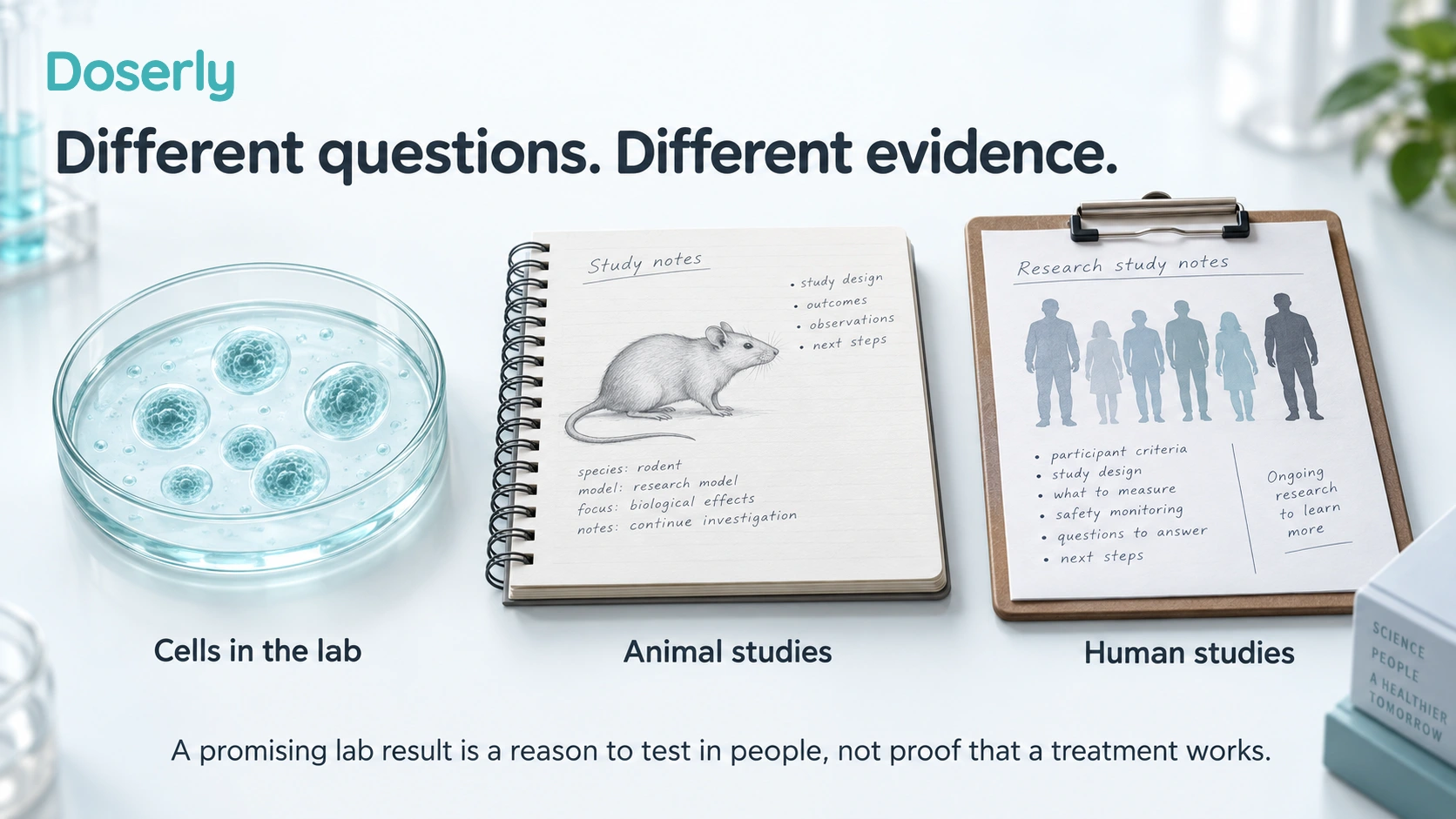
| Question | Best direct evidence | Finding | Boundary |
|---|---|---|---|
| Efficacy | Ryu 2014 · double-blind RCT · 63 randomized | Triglycerides and total cholesterol favored Chlorella; short study with a manufacturer-supplied product | Specific product and population |
| Replication | Limited evidence | No universal effect established | Variable formulations |
| Universal dose? | None | Not established | Rows cannot be combined |
Keep the finished product reviewable
What are the risks and interactions?
Gastrointestinal symptoms, green stool and allergy can occur. Vitamin K may interfere with warfarin. Iodine, immune effects, pregnancy, breastfeeding, immunosuppressants and algae allergy require review. Suspected metal or chemical toxicity needs validated testing and source control, not self-directed chlorella. [2], [3], [5], [3], [4], [5], [6]
Seek poison-control or urgent clinical guidance for suspected toxic exposure, severe vomiting, neurologic symptoms, breathing difficulty or major bleeding. Do not delay validated testing for a supplement trial.
What is the legal and regulatory status?
In the United States, FDA states that no over-the-counter chelation product is approved and warns that unapproved products can delay effective care. In Canada, verify the exact chlorella product, its NPN and authorized label; legal sale does not establish detoxification efficacy. [6]
When should use stop?
Stop for any allergic reaction, persistent symptom worsening, unexpected laboratory result or doubt about product identity.
What should be monitored?
Keep species, lot, certificate of analysis, administrations, medicines and the exact clinical endpoint together. Cholesterol, breast-milk biomarkers and measured toxicant burden are different questions.
What can community experience add?
Reports can compare taste, stool color and tolerance. They cannot verify purity or demonstrate removal of stored toxicants. No systematic current community sample was assembled.
How do related options compare?
| Option | Main distinction |
|---|---|
| C. vulgaris | Species in the lipid synthesis |
| C. pyrenoidosa | Species in small pregnancy cohorts |
| Spirulina/Arthrospira | Cyanobacterium, not Chlorella |
Common questions
Does chlorella chelate heavy metals?
No validated consumer chelation protocol is established.
What did the lipid review find?
Signals for total and LDL cholesterol with quality and product limits.
Do pregnancy studies prove safety?
No; they were small nonrandomized biomarker studies.
Why does the batch matter?
Microalgae biosorb environmental contaminants.
Can it interact with warfarin?
Vitamin K content can matter.
What should be tracked?
Species, processing, lot tests, dose, medicines and the exact endpoint.
Glossary
Terms for reading the evidence.
- Endpoint
- A defined result measured in a study.
- Anaphylaxis
- A potentially life-threatening systemic allergic reaction.
- Biomarker
- A biological measure that does not guarantee clinical benefit.
- Standardization
- A measured specification for a product component.
- Cross-reactivity
- Immune recognition of related proteins from different sources.
How this guide was researched
NCBI identities, publication notices, indexed abstracts and available open methods were checked. Null outcomes, mixed products, surrogate endpoints and missing details remain visible.
Research record · checked October 9, 2026
Identity: NCBI EFetch verified PMIDs 24920270, 35331862, 15985279, 17472477 and 41226507; no linked correction or retraction appeared.
Methods: PMC4066283 was read for the 416 mg powder content per tablet, four tablets after each meal, 12 tablets and 5 g daily total.
Boundary: short lipid, nonrandomized pregnancy-biomarker and analytical product studies remain separate.
Explore the sources
Primary human evidence and official context.
Showing 6 sources
- 01
Impact of daily Chlorella consumption on serum lipid and carotenoid profiles in mildly hypercholesterolemic adults: a double-blinded, randomized, placebo-controlled study. ↗
Randomized double-blind placebo-controlled trial
Sixty-three randomized; four tablets immediately after each meal supplied 12 tablets and 5 g C. vulgaris powder daily for four weeks. Lipid signals were short-term and product-specific.
- 02
Effect of supplementation with Chlorella vulgaris on lipid profile in adults: A systematic review and dose-response meta-analysis of randomized controlled trials. ↗
Systematic review and dose-response meta-analysis
Ten RCTs and 539 adults; only four were low risk across domains and only two documented supplement content, purity, potency and contamination.
- 03
Maternal-fetal distribution and transfer of dioxins in pregnant women in Japan, and attempts to reduce maternal transfer with Chlorella (Chlorella pyrenoidosa) supplements. ↗
Nonrandomized pregnancy study
Forty-four women were assessed and 23 were instructed to use Chlorella; biomarker design does not establish general chelation.
- 04
Chlorella (Chlorella pyrenoidosa) supplementation decreases dioxin and increases immunoglobulin a concentrations in breast milk. ↗
Nonrandomized pregnancy cohort
Thirty-five women were assessed and 18 used Chlorella; small observational comparisons cannot establish routine prenatal use.
- 05
Spirulina and Chlorella Dietary Supplements-Are They a Source Solely of Valuable Nutrients? ↗
Analytical study of commercial products
Fifty-two products were tested for metals and pharmaceutical residues; analytical contamination results are not clinical detox evidence.
- 06
Questions and Answers on Unapproved Chelation Products ↗
Official safety warning
FDA states that no over-the-counter chelation product is approved and warns that unapproved products can delay effective care.
No matching sources
Try a different term or show the full list.
Editorial note
This guide separates composition, biomarker, symptom and clinical outcome. It does not turn a narrow signal into a general promise.