
In this guide
What is lithium orotate?
Lithium orotate is the lithium salt of orotic acid. Retail products may state the total compound mass or the elemental lithium supplied by that compound. Those numbers are not interchangeable: an overdose report calculated 3.83 mg elemental lithium per 100 mg lithium orotate for the product described. [7]
No major dietary reference establishes lithium as an essential human nutrient, and no RDA, AI or UL exists. Prescription lithium carbonate is an evidence-based medicine for specific psychiatric indications with serum, kidney and thyroid monitoring. Lithium orotate has not inherited that efficacy evidence merely because both compounds deliver lithium ions.
Typical Lithium Orotate Protocols
| Study or status | Form and amount each time | Frequency | Total per day | Duration |
|---|---|---|---|---|
| Sartori record review · 42 selected alcohol-rehabilitation continuers | 150 mg lithium orotate; elemental amount not reported in the paper | Daily; reduced to 4–5 days/week in 8 participants with symptoms | 150 mg lithium-orotate compound/day | At least 6 months; retrospective follow-up varied |
| Schrauzer randomized study · 24 former drug users; not orotate | Lithium-rich brewer's yeast providing 400 mcg lithium | Daily; administration count not reported | 400 mcg elemental lithium/day | 4 weeks |
| MixLi registry · open-label feasibility; results not posted | Commercial lithium orotate labeled 20 mg; registry does not clearly resolve compound versus elemental in the public summary | Once daily | 20 mg/day, with permitted reductions to 15, 10 or 5 mg | Up to 26 weeks |
| LiO-AD registry · not yet recruiting on 9 Oct 2026 | 240, 480 then 720 mg lithium orotate, declared as 10, 20 then 30 mg elemental lithium | Daily; administration count not specified in public record | Week 1: 10 mg; week 2: 20 mg; week 3 onward: up to 30 mg elemental lithium/day | Planned 9 weeks |
The old alcohol-use report was not randomized, did not use a concurrent control, selected 42 people from 105 who began treatment, and combined lithium orotate with a diet, optional mineral orotates, bromelain, phospholipids and supportive care. Its 150 mg compound amount is not a validated routine dose. [2]
The two modern registries show that investigators still treat formulation, tolerability, serum exposure, kidney function and thyroid function as open questions. Neither supplies completed efficacy results as of the review date. [10], [11]
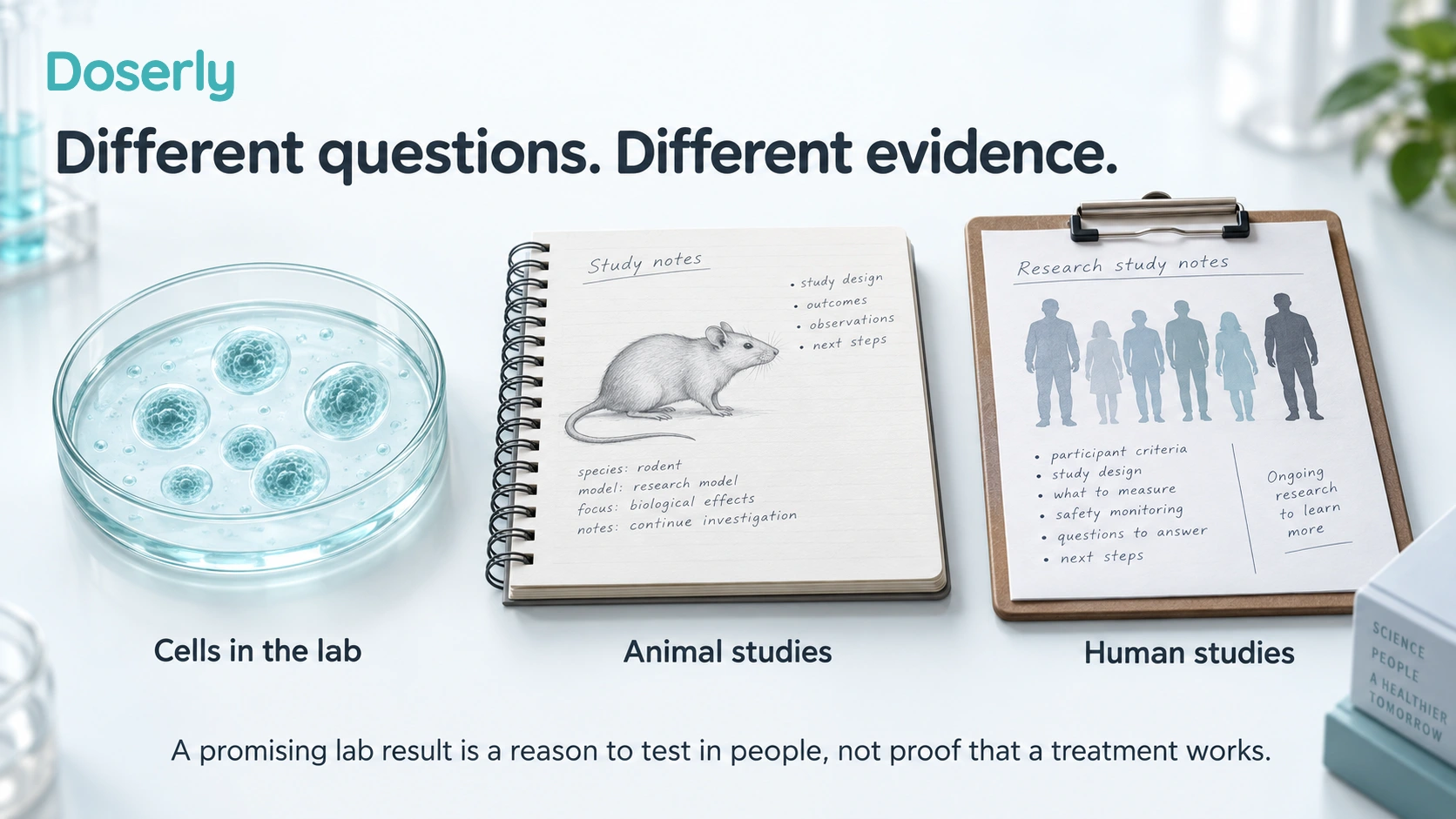
Association, model, trial
Each evidence layer answers a different question.
Lower cortical lithium was observed in MCI and Alzheimer disease.
Lithium orotate altered pathology and memory in animal models.
No completed modern controlled orotate trial establishes benefit.
Registered feasibility studies are protocols until results are reported.
Should lithium orotate be cycled?
No cycling schedule has been validated. Intermittent use does not erase renal handling, interaction or cumulative-exposure questions.
What happens when it is stopped?
There is no characterized lithium-orotate withdrawal syndrome. Stopping prescribed lithium can carry relapse risk and belongs with the prescriber; supplement guidance must not be substituted for psychiatric medication management.
Which foods contain lithium?
Trace lithium occurs in water and foods, with geography-dependent exposure. Population correlations and food-water measurements do not establish an individual deficiency diagnosis, a target intake or a lithium-orotate dose.
Which forms and labels matter?
Lithium orotate compound mass includes lithium plus the orotate portion. Elemental lithium is the lithium ion amount. A label saying “Lithium 5 mg (as lithium orotate)” generally declares 5 mg elemental lithium; a label saying “lithium orotate 5 mg” may describe only 5 mg of the whole salt. The Supplement Facts syntax and manufacturer specification are necessary to tell which.
Lithium carbonate, lithium citrate, lithium-rich brewer's yeast and lithium orotate are distinct preparations. Human efficacy from prescription lithium or nutritional yeast cannot be reassigned to lithium orotate.
How should it be stored?
Keep the container sealed, dry and out of children's reach. Retain the full label and lot number; the front-panel phrase “low dose” does not identify elemental lithium.
What is lithium orotate commonly used for?
Marketing commonly targets mood, stress, alcohol cravings, sleep and cognitive ageing. Completed human evidence specific to lithium orotate does not establish any of those uses. The 1994 randomized mood study used lithium-rich brewer's yeast, not orotate. [3]
What does human research show?
Human lithium-orotate evidence
The 1986 Sartori paper reviewed private-practice records for 42 alcohol-rehabilitation patients who remained on a combined program for at least six months. They came from 105 people who began treatment. There was no randomized comparator, cointerventions varied, follow-up was retrospective, and eight reported muscle weakness, appetite loss or mild apathy. The report cannot isolate lithium orotate or prove relapse prevention. [2]
A separate randomized study enrolled 24 former drug users and supplied 400 mcg/day of lithium through lithium-rich brewer's yeast for four weeks. It reported questionnaire improvement, but it did not test lithium orotate, was small and used a narrow selected population. [3]
MixLi is an ongoing single-arm feasibility study, and LiO-AD was not yet recruiting on October 9, 2026. Registered protocols are useful for showing planned exposure and monitoring; they are not results. [10], [11]
Alzheimer research
Aron and colleagues measured metals in postmortem human brain and found lower prefrontal-cortex lithium in mild cognitive impairment and Alzheimer disease. Treatment experiments then occurred in mice: dietary depletion worsened Alzheimer-like pathology, while low-dose lithium orotate in drinking water reduced pathology and memory loss in mouse models. The paper supports a human hypothesis and animal mechanism, not prevention or treatment efficacy in people. [1]
Pharmacokinetics and toxicology
The animal literature is internally inconsistent. A 1976 rat study found no meaningful uptake, distribution or excretion difference among orotate, carbonate and chloride after matched lithium exposures. [4] A 1978 injection study reported higher serum and brain lithium with orotate. [5] A 1979 replication linked higher tissue concentrations to impaired kidney function after a high intraperitoneal exposure. [6]
A 2021 test battery found no genotoxic signal and no identified target-organ toxicity in rats given 100, 200 or 400 mg/kg/day lithium orotate by gavage for 28 days. That study supplies a short-term animal toxicology boundary. It cannot establish a chronic human no-effect dose, kidney safety in susceptible people or a conversion for self-treatment. [8]
How might lithium work?
Lithium ions affect enzymes and signaling pathways including GSK3. These mechanisms are shared across lithium salts after lithium becomes bioavailable. Claims that the orotate carrier selectively delivers lithium to the brain remain unresolved in humans; older rat studies produced conflicting distribution and renal findings. [4]–[6]
What are the risks and interactions?
An 18-year-old who intentionally took 18 tablets labeled as 120 mg lithium orotate each developed nausea, vomiting and tremor. Serum lithium rose from 0.31 to 0.40 mEq/L during observation before symptoms resolved with supportive care. The report demonstrates bioavailable lithium and acute toxicity potential, even though it does not define risk from ordinary use. [7]
Prescription labeling is not a lithium-orotate trial, but it establishes how lithium ions can become hazardous. Reduced kidney function, dehydration, fever, heavy sweating, diarrhea and changes in sodium intake can reduce tolerance or raise lithium exposure. Lithium can affect kidney concentrating ability and thyroid function. Pregnancy and breastfeeding require specialist management. [9]
Legal and regulatory status: In the United States, FDA has issued warning letters when lithium-orotate products were promoted to treat diseases; supplement sale does not authorize bipolar, depression or Alzheimer treatment claims. [13] In Canada, the current Natural Health Products Ingredients Database classifies lithium orotate as Non-NHP; Health Canada has also warned about unauthorized products containing it. [12], [14]
Which medicines interact with lithium exposure?
Review NSAIDs such as ibuprofen or naproxen, thiazide and other diuretics, ACE inhibitors, ARBs, metronidazole and other kidney-active medicines. Serotonergic medicines raise a separate serotonin-syndrome concern with prescription lithium, and concurrent prescribed lithium would duplicate exposure. Do not change medicines, salt intake or hydration to accommodate a supplement. [9]
What should be monitored?
No validated test diagnoses “low nutritional lithium.” In supervised lithium treatment, clinicians use symptoms, medication and hydration review, serum lithium timed to the dosing context, kidney function, electrolytes, thyroid function and sometimes calcium. A consumer supplement dose does not make those safety domains irrelevant, while a single low serum result cannot by itself prove safety. [9]
Seek urgent poison-control or emergency guidance after an overdose or with worsening tremor, repeated vomiting or diarrhea, marked drowsiness, confusion, poor coordination, muscle twitching, seizure or collapse.
What do public communities report?
People discuss mood, calmness, sleep and microdosing. Posts often blur compound mass with elemental lithium and rarely include kidney function, sodium balance or interacting medicines. This overhaul did not independently recrawl or quantify community posts.
How does lithium orotate compare with nearby guides?
| Guide | Main question | Key difference |
|---|---|---|
| Inositol | PCOS and mood-adjacent evidence | Different compound without lithium's renal handling |
| Magnesium | Established adequacy and supplement forms | Essential nutrient with an RDA and supplement UL |
| Omega-3 | EPA/DHA cardiovascular and mood evidence | Fatty-acid exposure measured as EPA and DHA |
| Vitamin B12 | Deficiency and absorption | Established vitamin status markers and intake reference |
Common questions about lithium orotate
Is lithium an essential nutrient?
Human essentiality and a dietary requirement are not established. There is no RDA, AI or UL.
Is lithium orotate the same as prescription lithium?
No. It is a different salt and is sold in different amounts and regulatory contexts. Both can deliver lithium ions, so interaction and toxicity concerns cannot be dismissed.
Does 5 mg on a label mean 5 mg elemental lithium?
Only if the Supplement Facts panel declares “Lithium 5 mg” and identifies orotate as the source. “Lithium orotate 5 mg” may mean 5 mg of the entire compound.
Did the 2025 Nature study treat people with lithium orotate?
No. Human brain tissue was observational; lithium-orotate treatment experiments were in mice. [1]
Is there a proven mood dose?
No lithium-orotate dose has established mood efficacy in a modern controlled trial. The randomized 400 mcg study used lithium-rich yeast, not orotate. [3]
Does short-term rat toxicology prove long-term safety?
No. A 28-day rat study cannot establish chronic human safety or a safe self-treatment dose. [8]
Can lithium orotate replace prescribed lithium?
No. Substitution could destabilize psychiatric treatment and remove the monitoring used with prescription lithium.
Is lithium orotate a licensed natural health product in Canada?
Health Canada's ingredient database classifies it as Non-NHP. [12]
Glossary
Plain explanations of lithium-orotate terms.
- Elemental lithium
- The amount of lithium ion, separate from the mass of its salt or carrier.
- Lithium orotate
- A salt formed from lithium and orotic acid.
- Compound or salt mass
- The total weight of lithium plus the orotate portion.
- Serum lithium
- Lithium concentration in blood, interpreted with timing, symptoms and clinical context.
- GSK3
- A signaling enzyme affected by lithium and studied in mood and neurodegeneration research.
- Non-NHP
- A Health Canada ingredient role indicating the substance is not accepted as a natural-health-product ingredient.
- Feasibility study
- A study testing whether a larger trial can be run; it does not by itself establish efficacy.
How this guide was researched
This draft uses the 2025 Nature paper, the two published human low-dose reports, three primary rat comparisons, a rat toxicology study, a human overdose report, current trial registries, official prescription labeling and regulator records. Live NCBI metadata and CommentsCorrections fields were checked on October 9, 2026; none of the nine PubMed records used here contained a correction relation.
How this guide was made
Research and drafting were AI-assisted. This draft awaits Doserly editorial and independent clinical review. Read the editorial policy.
Explore the sources
Primary papers, registries and regulator records define what is known and what remains untested.
Showing 14 sources
- 01
Lithium deficiency and the onset of Alzheimer's disease. ↗
Human tissue study plus mouse experiments
NCBI metadata and open full text checked; human observations and mouse treatment experiments kept separate.
Detail: Human postmortem association; lithium-orotate intervention and memory outcomes occurred in mouse models.
- 02
Lithium orotate in the treatment of alcoholism and related conditions. ↗
Uncontrolled record review
NCBI metadata and abstract checked for cohort selection, schedule, cointerventions, follow-up and adverse effects.
Detail: 42 of 105 initiators remained at least 6 months; 150 mg compound daily; no concurrent control.
- 03
Effects of nutritional lithium supplementation on mood. A placebo-controlled study with former drug users. ↗
Small randomized trial, not lithium orotate
NCBI metadata and abstract checked for preparation, amount, population and duration.
Detail: 24 former drug users; brewer's yeast supplied 400 mcg lithium/day for 4 weeks.
- 04
Lithium orotate, carbonate and chloride: pharmacokinetics, polyuria in rats. ↗
Rat comparative study
NCBI metadata and PMC full text checked for routes, matched lithium exposures and results.
Detail: No distribution or excretion advantage for orotate in this rat experiment.
- 05
Rat brain and serum lithium concentrations after acute injections of lithium carbonate and orotate. ↗
Rat injection study
NCBI metadata and abstract checked for routes, lithium-equivalent exposures and tissue findings.
Detail: Higher brain and serum lithium followed injected orotate; oral human inference is unsupported.
- 06
Kidney function and lithium concentrations of rats given an injection of lithium orotate or lithium carbonate. ↗
Rat injection replication
NCBI metadata and abstract checked for dose, renal measures and interpretation.
Detail: Orotate reduced filtration and lithium clearance at high injected exposure, explaining higher tissue levels.
- 07
Lithium toxicity from an Internet dietary supplement. ↗
Overdose case report
NCBI metadata and PMC full text checked for label amount, timing, symptoms and serum concentrations.
Detail: 18 tablets; nausea, vomiting and tremor; serum lithium rose from 0.31 to 0.40 mEq/L.
- 08
A toxicological evaluation of lithium orotate. ↗
Preclinical toxicology battery
NCBI metadata and primary abstract checked for species, gavage amounts, duration and NOAEL scope.
Detail: 28-day rat study up to 400 mg/kg/day; not a chronic human safe-dose determination.
- 09
Lithium carbonate extended-release tablets: official label ↗
Official prescription labeling
Current label reviewed for renal elimination, sodium and hydration, toxicity, thyroid effects and medicine interactions.
Detail: Prescription evidence informs lithium-ion hazards; it is not an orotate efficacy trial.
- 10
A proof-of-concept study of an accessible lithium supplement ↗
Ongoing open-label feasibility registry
Registry checked for status, design, population, schedule, monitoring and absence of posted results.
Detail: Planned 40 adults; 20 mg once daily up to 26 weeks; no comparator.
- 11
LiO-AD: Lithium Orotate in Alzheimer's Disease ↗
Not-yet-recruiting randomized feasibility trial
Official registry checked for status, titration, population, outcomes and monitoring.
Detail: Planned 40 adults; 10 to 30 mg elemental lithium/day over 9 weeks; no results.
- 12
Natural Health Products Ingredients Database: lithium orotate role ↗
Canadian ingredient classification
Official database record reviewed for the lithium-orotate role.
Detail: Lithium orotate is classified as Non-NHP.
- 13
Ambaya Gold Health Products, LLC warning letter ↗
Disease-claim enforcement record
Official warning letter reviewed for lithium-orotate mental-health treatment claims.
Detail: FDA treated disease-treatment promotion as unapproved-drug claims.
- 14
Unauthorized health products containing lithium orotate ↗
Safety and authorization notice
Official notice reviewed for unauthorized lithium-orotate products and stated health risk.
Detail: Historical notice supports checking authorization rather than assuming Canadian NHP status.
No matching sources
Try a different term or show the full list.