
In this guide
What is Lutein?
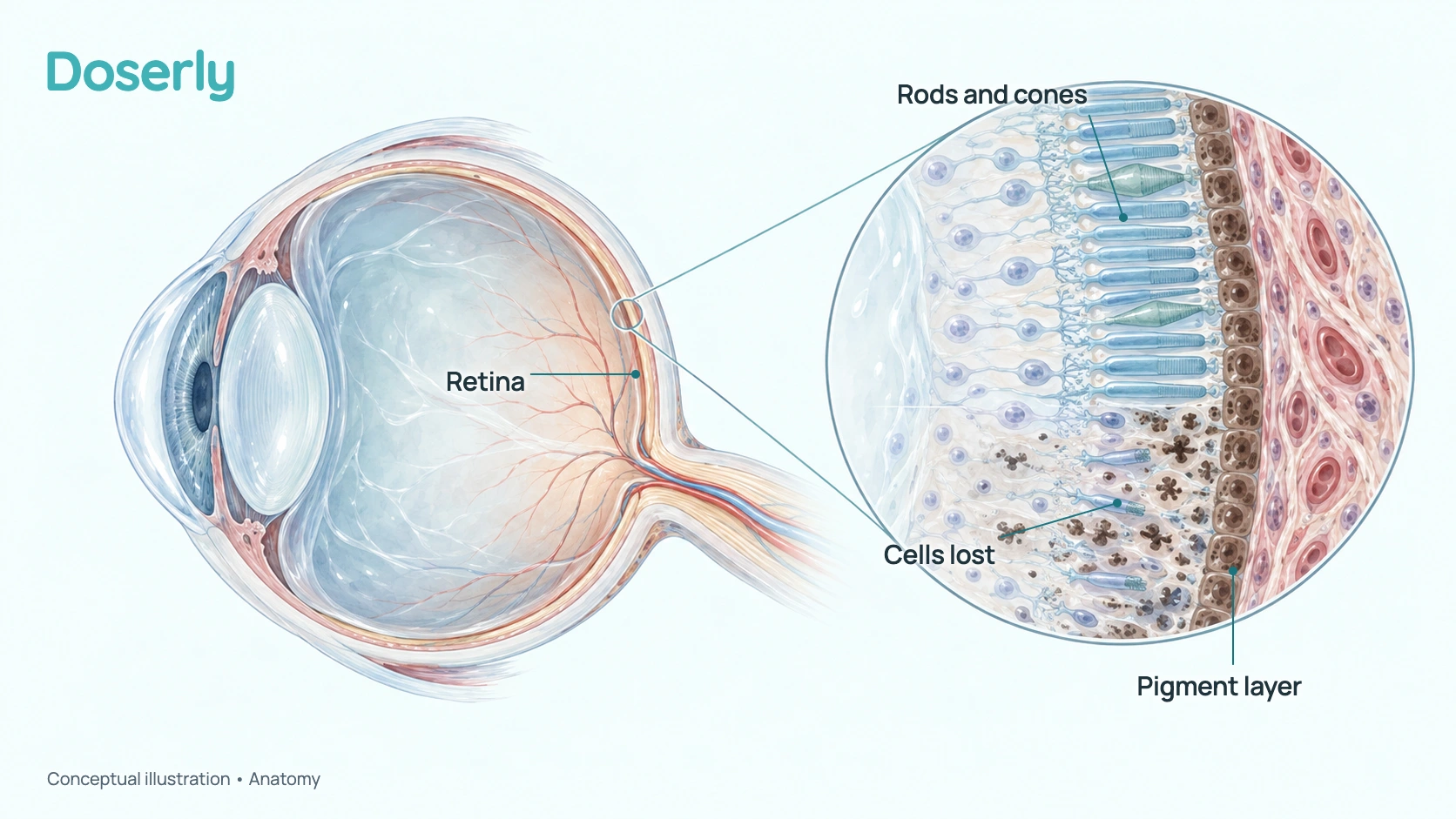
Lutein is a dietary xanthophyll carotenoid concentrated with zeaxanthin in macular pigment. Food lutein, isolated lutein, lutein plus zeaxanthin and the full AREDS2 formula are different exposures. Macular pigment density is a biomarker, not proof that lost retinal cells are restored. [1], [4]
Typical Lutein Protocols
| Source and question | Preparation | Amount each administration | Daily total | Frequency and duration | Main interpretation |
|---|---|---|---|---|---|
| AREDS2 2013 · phase 3 RCT · 4,203 | Lutein plus zeaxanthin added to background AREDS formula | 10 mg lutein plus 2 mg zeaxanthin | Same once-daily study total | Once daily; median follow-up 5 years | Primary addition analysis null for advanced AMD; correction affected two tables, so no unverified table estimate is used |
| Hammond 2014 · healthy visual-performance RCT · 115 | Lutein plus zeaxanthin versus placebo | 10 mg lutein plus 2 mg zeaxanthin | Same daily total | Once daily for 1 year | Photostress recovery and chromatic contrast improved; glare disability did not significantly improve |
| AREDS2 cataract analysis · 4,203 | Lutein plus zeaxanthin versus no lutein/zeaxanthin | 10 mg plus 2 mg | 12 mg carotenoids/day | Once daily; median follow-up about 5 years | No significant overall reduction in cataract surgery or vision loss |
- Exact product
- Record species, form, lot and co-ingredients.
- Each administration
- Keep amount, timing and context.
- Real endpoint
- Separate biomarker, symptom and clinical outcome.
What is it commonly used for?
AREDS2 randomized 4,203 people already at high risk of advanced AMD. Adding lutein 10 mg plus zeaxanthin 2 mg to a background AREDS formula did not significantly improve the primary comparison. NEI nevertheless uses lutein and zeaxanthin to replace beta-carotene in the current formula, with benefit signals in secondary comparisons and no beta-carotene lung-cancer concern for former smokers. In healthy young adults, the same carotenoid pair improved photostress recovery and chromatic contrast after one year, but glare disability was null. AREDS2 cataract and cognition analyses were also null. [1], [2], [4]
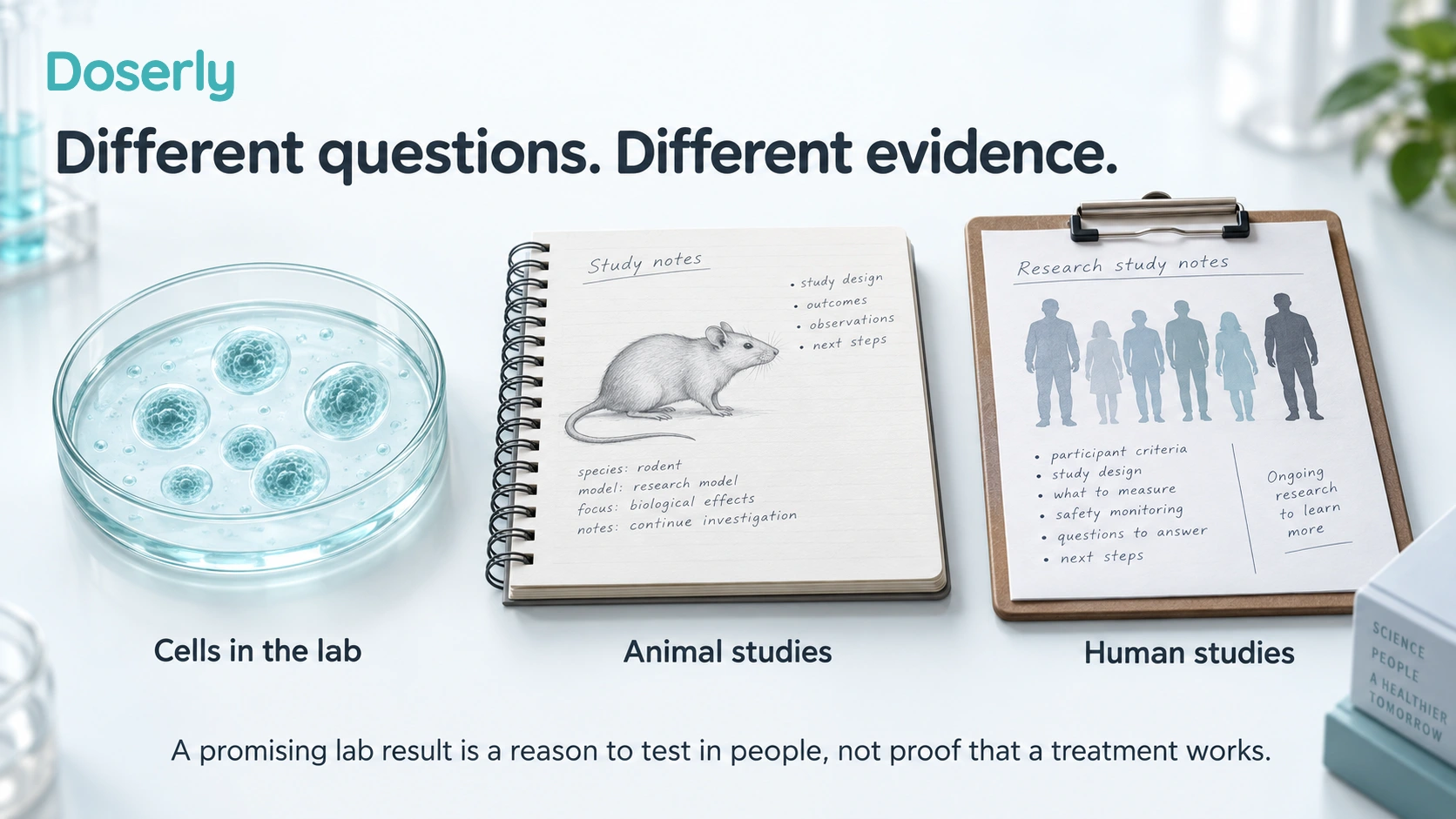
One result answers one question
How do forms and labels differ?
Free lutein, lutein esters, mixed carotenoids and AREDS2 products differ. A front label saying eye health does not show the zeaxanthin amount, zinc, copper, vitamins or beta-carotene. Record each ingredient and do not treat a lutein-only capsule as AREDS2. [4], [5]
How should the product be stored?
Follow the finished product’s label, keep it dry in its original container and away from children. Discard an expired, heat-damaged, broken-seal or untraceable product.
What does human research show?
| Question | Best direct evidence | Finding | Boundary |
|---|---|---|---|
| Efficacy | AREDS2 2013 · phase 3 RCT · 4,203 | Primary addition analysis null for advanced AMD; correction affected two tables, so no unverified table estimate is used | Specific product and population |
| Replication | Limited evidence | No universal effect established | Variable formulations |
| Universal dose? | None | Not established | Rows cannot be combined |
Keep the finished product reviewable
What are the risks and interactions?
Lutein is generally well tolerated in trials, but high-dose multi-ingredient eye formulas can interact with health conditions and medicines. Beta-carotene-containing legacy products are not recommended for current or former smokers. New distortion, a dark central patch, flashes, a curtain, sudden floaters or sudden vision loss needs urgent eye assessment rather than supplement adjustment. [2], [3], [5], [6]
Seek urgent eye care for sudden vision loss, a curtain or shadow, new flashes or many floaters, severe eye pain, new central distortion or a rapidly enlarging dark spot.
What is the legal and regulatory status?
In the United States, it is sold as a dietary supplement; FDA does not approve it for safety and effectiveness before sale. In Canada, verify the exact product, NPN and authorized label. Legal sale does not prove efficacy or sport suitability. [6]
When should use stop?
Stop for any allergic reaction, persistent symptom worsening, unexpected laboratory result or doubt about product identity.
What should be monitored?
Start with the retinal diagnosis and stage documented by an eye professional. Track the exact product, lutein and zeaxanthin amounts, full formula, smoking history, adherence and scheduled retinal findings. Color, contrast or glare impressions cannot replace acuity, imaging or a dilated examination.
What can community experience add?
Reports can compare capsule size, cost, stomach tolerance and label confusion. They cannot stage AMD or show slowed progression. No systematic current community sample was assembled, so no universal lutein-only routine is reported.
How do related options compare?
| Option | Main distinction |
|---|---|
| Lutein-only | Single carotenoid; not the AREDS2 formula |
| Lutein + zeaxanthin | Carotenoid pair tested in AREDS2 and visual-performance trials |
| Full AREDS2 formula | Six-ingredient regimen for defined AMD stages |
Common questions
Does lutein prevent AMD in everyone?
No. NEI does not recommend AREDS2 as primary prevention for people without the qualifying retinal findings.
Was AREDS2 positive in its primary comparison?
No. Adding lutein and zeaxanthin to background AREDS did not significantly lower advanced AMD overall.
Why are they in the current formula?
Secondary comparisons supported replacing beta-carotene, especially because beta-carotene raises lung-cancer concern in current or former smokers.
Does more macular pigment prove better vision?
No. It is a biomarker and must be paired with clinical outcomes.
Does lutein treat sudden vision change?
No. Sudden loss, flashes, a curtain or new distortion needs urgent assessment.
What should be tracked?
Diagnosis and stage, full formula, exact amounts, smoking history and eye-exam outcomes.
Glossary
Terms for reading the evidence.
- Endpoint
- A defined result measured in a study.
- Anaphylaxis
- A potentially life-threatening systemic allergic reaction.
- Biomarker
- A biological measure that does not guarantee clinical benefit.
- Standardization
- A measured specification for a product component.
- Cross-reactivity
- Immune recognition of related proteins from different sources.
How this guide was researched
NCBI identities, publication notices, indexed abstracts and available open methods were checked. Null outcomes, mixed products, surrogate endpoints and missing details remain visible.
Research record · checked October 9, 2026
Identity: NCBI EFetch verified all indexed records, journal fields, DOI and descendant notices. PMID 23644932 links the JAMA correction DOI 10.1001/jama.2013.6403 for two tables.
Correction: the notice removed the MedDRA qualifier from the Table 3 incident-lung-neoplasm label and replaced all six values in the Table 4 incident-lung-neoplasm row. No affected lung-neoplasm count is used; the primary AMD conclusion and protocol were not the corrected fields.
Methods: open cataract and cognition reports were read. Primary, post hoc and biomarker outcomes remain separated.
Explore the sources
Primary human evidence and official context.
Showing 6 sources
- 01
Lutein + zeaxanthin and omega-3 fatty acids for age-related macular degeneration: the Age-Related Eye Disease Study 2 (AREDS2) randomized clinical trial. ↗
Phase 3 randomized controlled trial
In 4,203 high-risk participants, adding 10 mg lutein plus 2 mg zeaxanthin to the background AREDS formulation did not significantly reduce advanced AMD in the primary analysis.
- 02
A double-blind, placebo-controlled study on the effects of lutein and zeaxanthin on photostress recovery, glare disability, and chromatic contrast. ↗
Randomized controlled trial
One hundred fifteen healthy young adults were randomized to 10 mg lutein plus 2 mg zeaxanthin or placebo daily for one year; photostress and chromatic contrast improved, while glare disability did not significantly improve.
- 03
Lutein/zeaxanthin for the treatment of age-related cataract: AREDS2 randomized trial report no. 4. ↗
Randomized cataract analysis
In 4,203 AREDS2 participants, lutein plus zeaxanthin did not significantly reduce cataract surgery or vision loss in the primary analysis.
- 04
Effect of Omega-3 Fatty Acids, Lutein/Zeaxanthin, or Other Nutrient Supplementation on Cognitive Function: The AREDS2 Randomized Clinical Trial. ↗
Randomized cognitive analysis
Among older AREDS2 participants, 10 mg lutein plus 2 mg zeaxanthin did not significantly change the yearly cognitive composite versus no lutein/zeaxanthin.
- 05
Oral Antioxidant and Lutein/Zeaxanthin Supplements Slow Geographic Atrophy Progression to the Fovea in Age-Related Macular Degeneration. ↗
Post hoc trial analysis
A post hoc AREDS/AREDS2 analysis found slower movement of geographic atrophy toward the fovea without a significant change in total atrophy area; this was not a prespecified primary trial outcome.
- 06
AREDS/AREDS2 Frequently Asked Questions ↗
Official clinical guidance
NEI limits AREDS2 use to people with defined AMD stages, gives the exact formula and advises eye-care-professional review; it is not for preventing AMD in people without those findings.
No matching sources
Try a different term or show the full list.
Editorial note
This guide separates composition, biomarker, symptom and clinical outcome. It does not turn a narrow signal into a general promise.