
Zeaxanthin: The Complete Supplement Guide
On this page
Quick Reference Card
Attribute
Common Name
- Detail
- Zeaxanthin
Attribute
Other Names / Aliases
- Detail
- (3R,3'R)-zeaxanthin, xanthophyll carotenoid, dihydroxy-beta-carotene
Attribute
Category
- Detail
- Carotenoid (xanthophyll), eye-health nutrient
Attribute
Primary Forms & Variants
- Detail
- Synthetic trans-zeaxanthin, marigold-derived zeaxanthin, zeaxanthin esters, oil suspensions, beadlets, and combination formulas with lutein or full AREDS2-style ingredients
Attribute
Typical Dose Range
- Detail
- 1-8 mg per day in supplements, with 2 mg per day common in AREDS2 and 8 mg per day used in standalone research
Attribute
RDA / AI / UL
- Detail
- No established RDA, AI, or UL. Safety reviews cited in the FDA GRAS dossier and mainstream eye-health use commonly anchor around low-milligram daily dosing rather than a formal daily requirement.
Attribute
Common Delivery Forms
- Detail
- Softgel, capsule, oil suspension, beadlet, eye-health combination formula
Attribute
Best Taken With / Without Food
- Detail
- Best taken with a meal that contains fat
Attribute
Key Cofactors
- Detail
- Lutein, dietary fat, and when clinically indicated the other AREDS2 components such as zinc and vitamins C and E
Attribute
Storage Notes
- Detail
- Store in a cool, dry place away from heat, light, and humidity. Oxidation-sensitive carotenoids generally do better in well-designed oil or protected delivery systems.
Overview
The Basics
Zeaxanthin is one of the yellow-orange pigments that make up the eye's natural macular pigment. Think of it as part of the retina's built-in light filter. It helps absorb some of the high-energy blue light hitting the eye and also acts as an antioxidant in tissue that is under constant light and metabolic stress [3][5].
Most people encounter zeaxanthin in one of three ways. The first is through food, especially corn, egg yolks, peppers, and some leafy or brightly colored plant foods. The second is through general eye-health supplements that combine zeaxanthin with lutein. The third is through the evidence-backed AREDS2 formula, where zeaxanthin appears at 2 mg/day alongside lutein and other nutrients for specific AMD populations [1][5][7].
That context matters because zeaxanthin is often marketed as a broad vision booster, but the cleanest evidence is more focused. It is strongest around macular pigment, glare handling, visual performance under demanding conditions, and retinal-support strategies in older adults or people at higher eye-disease risk [1][2][4].
The Science
Zeaxanthin is a dietary xanthophyll carotenoid with chemical formula C40H56O2 that accumulates in the human retina as part of the macular pigment system [7][8]. Along with lutein and meso-zeaxanthin, it contributes to blue-light filtration, reactive-oxygen-species quenching, and stabilization of retinal membranes exposed to chronic photo-oxidative stress [3][5].
The evidence base for zeaxanthin is narrower than the evidence base for eye-health marketing in general. The most reproducible findings involve increased macular pigment optical density, retinal deposition after oral supplementation, and selected improvements in visual-function endpoints such as glare, contrast behavior, or photostress-related performance in some populations [2][3][4]. Outside ophthalmic use, the public evidence is much thinner and should be treated as exploratory rather than established [5][11].
Chemical & Nutritional Identity
Property
Classification
- Value
- Xanthophyll carotenoid
Property
Chemical formula
- Value
- C40H56O2
Property
CAS number
- Value
- 144-68-3
Property
Ingredient definition
- Value
- (3R, 3'R)-dihydroxy-beta-carotene
Property
Typical commercial sources
- Value
- Marigold-derived extracts, synthetic trans-zeaxanthin
Property
Common supplement forms
- Value
- Oil suspensions, beadlets, softgels, mixed carotenoid formulas
Property
Established daily value
- Value
- None established
Zeaxanthin is not an essential vitamin in the way vitamin C or zinc are, so there is no formal RDA or AI. It is better understood as a conditionally helpful dietary carotenoid that becomes especially relevant in eye-health contexts where macular pigment or retinal stress is the main concern [1][7][8].
Commercial zeaxanthin can come from marigold-based extraction or chemical synthesis, and regulators pay close attention to purity, isomer profile, residual solvents, heavy metals, and oxidation markers rather than to dose alone [7][8]. In practice, that means the same milligram number can represent very different product quality depending on how the ingredient is made and delivered.
Mechanism of Action
The Basics
The easiest way to think about zeaxanthin is as part internal sunglasses, part antioxidant shield. It helps soak up some blue light before that light can do as much damage, and it also helps calm the oxidative wear-and-tear that builds up in the retina over time [3][5].
It does not work like a drug that instantly sharpens eyesight. Zeaxanthin is more like infrastructure. Over time, better retinal carotenoid status may make the eye more resilient in situations involving glare, light sensitivity, or visual strain, especially if someone's diet was low in these pigments to begin with [2][4][14].
The Science
Zeaxanthin's main biological actions include blue-light filtration, quenching of reactive oxygen species, membrane stabilization in photoreceptor-rich tissue, and support of macular pigment optical density [3][5]. The 2024 review emphasizes that its long conjugated structure and hydroxyl groups make it well-suited to localize within retinal membranes and help limit photobleaching and lipid peroxidation [5].
Human supplementation studies support that zeaxanthin is not only absorbed into blood but deposited in retinal tissue. In the LUXEA study, supplementation raised plasma xanthophyll concentrations sharply and increased retinal pigment, while the ZVF trial showed that 8 mg/day zeaxanthin could raise foveal MPOD and influence selected visual-function measures in AMD patients [3][4]. These pathways help explain why zeaxanthin research is strongest on retinal biomarkers and glare-related performance rather than on generalized wellness claims.
Absorption & Bioavailability
The Basics
Zeaxanthin is fat-soluble, so the first practical rule is simple: take it with food, especially a meal that contains some fat. A softgel swallowed with eggs, yogurt, nuts, olive oil, or a regular meal makes more sense than taking a dry carotenoid capsule on an empty stomach [5][6].
The second rule is that delivery system matters. Zeaxanthin is not easy for the body to absorb efficiently on its own. Oil-based suspensions, emulsified formulas, and well-designed softgels are more believable than vague dry powders or proprietary blends that tell you almost nothing about how the ingredient is protected and delivered [5][6][7].
A third nuance is that carotenoids may not always behave like perfect teammates. Combination formulas are common and often useful, but at least one zeaxanthin trial suggested that equal-dose lutein-plus-zeaxanthin pairing may not always raise macular pigment as efficiently as expected, possibly because of competition during absorption or transport [4].
The Science
Zeaxanthin depends on micelle formation with dietary lipids and bile salts for intestinal uptake, then travels through circulating lipoproteins before being deposited into retinal tissue [5]. The 2025 cross-over study showed that a self-emulsifying delivery system increased zeaxanthin plasma exposure by roughly 110% to 132.8% compared with a reference supplement, reinforcing that formulation quality can materially change what reaches the bloodstream [6].
The LUXEA study demonstrated that oral zeaxanthin supplementation can substantially raise plasma levels and retinal pigment over 6 to 12 months, while the meta-analysis of lutein/zeaxanthin intake shows that higher total xanthophyll intake is more consistently associated with MPOD gains than very low-dose exposure [2][3]. Together, these sources support a practical hierarchy: fat-containing meals help, high-quality delivery systems help more, and consistent use over months matters most.
Managing absorption timing across multiple supplements gets complicated fast. Some need to be taken with food, others on an empty stomach. Some compete for the same absorption pathways, others enhance each other. Doserly organizes all of this into a single schedule that accounts for the interactions between everything in your stack.
Instead of juggling mental notes about which supplements to separate and which to pair, the app handles the coordination for you. It flags timing conflicts, suggests optimal windows based on the forms you're using, and builds a daily routine that gives each supplement its best chance of being absorbed effectively. One place for all the details that are easy to forget.
Track injection timing, draw notes, and site rotation.
Doserly helps keep syringe-related notes, injection site history, reminders, and reconstitution context together for easier review.
Injection log
Site rotation
Injection logs support record-keeping; follow clinician instructions for administration.
Research & Clinical Evidence
Zeaxanthin in AREDS2 and AMD Risk Management
The Basics
This is the most defensible mainstream use case. Zeaxanthin is part of the full AREDS2 formula used for people with intermediate AMD in one or both eyes, or late AMD in one eye. In that setting, zeaxanthin is not doing the job alone, but it is part of the modern evidence-backed replacement for the older beta-carotene approach [1].
That distinction matters. The evidence does not say isolated zeaxanthin prevents AMD in everyone. It says that the specific AREDS2 formulation, which includes 2 mg zeaxanthin and 10 mg lutein along with vitamins and minerals, can help slow progression in specific at-risk populations [1].
The Science
NEI identifies zeaxanthin 2 mg/day as one of the fixed AREDS2 ingredients and frames the formula as beneficial for slowing progression from intermediate to advanced AMD in qualifying patients [1]. The AREDS2 context also matters for safety and compatibility because the clinically established use case is a multi-ingredient formula rather than zeaxanthin monotherapy.
The standalone ZVF trial adds that zeaxanthin may have distinct visual relevance beyond merely being a passenger in combination formulas. In mild-to-moderate atrophic AMD, 8 mg/day zeaxanthin increased foveal MPOD and improved selected high-contrast, cone-weighted visual outcomes over one year with high adherence and no adverse-effect signal in the abstract summary [4].
Macular Pigment, Glare, and Visual Performance
The Basics
Outside diagnosed AMD, zeaxanthin is most convincing when the goal is better retinal pigment status and possibly better handling of glare or visual stress. The likely user-visible benefits are modest rather than dramatic: less sensitivity to bright light, better comfort during screen-heavy days, or slightly better resilience under difficult lighting conditions [2][12][14].
This is why public discussion sounds less impressive than supplement marketing. People do not usually describe zeaxanthin as giving them superhuman vision. They describe lower glare, less fatigue, and more comfortable day-to-day visual function.
The Science
The meta-analysis of 46 studies found a clear dose-response relationship between higher lutein/zeaxanthin intake and MPOD increase, especially over 3 to 12 months [2]. The LUXEA study supports that zeaxanthin alone can increase retinal pigment and may distribute more broadly across foveal and parafoveal regions than lutein in supplementation conditions [3].
The ZVF trial found that zeaxanthin-driven foveal MPOD elevation corresponded with distinct visual benefits, while older supplementation literature and registry-tracked work continue to examine visual performance in glare, contrast, albinism, and glaucoma settings [4][11]. The practical takeaway is that zeaxanthin's evidence is strongest when the endpoint is retinal pigment or visual performance under stress rather than standard high-contrast visual acuity alone.
Formulation Quality and Delivery-Sensitive Outcomes
The Basics
Zeaxanthin is one of those supplements where the label dose can be less informative than the delivery system. A weakly designed dry capsule and a high-quality oil or emulsified product may not behave the same way in the body, even if the front label makes them look interchangeable [5][6].
This matters because some disappointing supplement experiences may reflect poor delivery, not a biologically inactive ingredient. It also explains why users often notice more consistency with well-formulated softgels than with cheaper catch-all eye blends.
The Science
The 2025 cross-over trial directly showed that a self-emulsifying formula significantly increased zeaxanthin plasma exposure compared with a reference supplement, with gains above 100% across multiple pharmacokinetic windows [6]. The TGA guideline and FDA GRAS materials also emphasize impurity control, isomeric purity, peroxide value, residual solvents, and protected formulations, reinforcing that zeaxanthin quality is inseparable from manufacturing quality [7][8].
Evidence & Effectiveness Matrix
Category
Daily Functioning
- Evidence Strength
- 7/10
- Reported Effectiveness
- 6/10
- Summary
- Human evidence supports macular pigment and some glare or visual-performance benefit, while community reports most often describe less eye fatigue, less bright-light sensitivity, and better screen comfort.
Category
Side Effect Burden
- Evidence Strength
- 7/10
- Reported Effectiveness
- 6/10
- Summary
- Formal safety signals are reassuring at common doses and community discussion surfaces few negatives, but the real-world dataset is small and often confounded by combo formulas.
Category
Treatment Adherence
- Evidence Strength
- 6/10
- Reported Effectiveness
- 7/10
- Summary
- Zeaxanthin is usually easy to dose once daily and commonly packaged in softgels. Community users who perceive benefit tend to stay on it because they understand it as a long-game eye-support supplement.
Categories scored: 3
Categories with community data: 3
Categories not scored (insufficient data): Fat Loss, Muscle Growth, Weight Management, Appetite & Satiety, Food Noise, Energy Levels, Sleep Quality, Focus & Mental Clarity, Memory & Cognition, Mood & Wellbeing, Anxiety, Stress Tolerance, Motivation & Drive, Emotional Aliveness, Emotional Regulation, Libido, Sexual Function, Joint Health, Inflammation, Pain Management, Recovery & Healing, Physical Performance, Gut Health, Digestive Comfort, Nausea & GI Tolerance, Skin Health, Hair Health, Heart Health, Blood Pressure, Heart Rate & Palpitations, Hormonal Symptoms, Temperature Regulation, Fluid Retention, Body Image, Immune Function, Bone Health, Longevity & Neuroprotection, Cravings & Impulse Control, Social Connection, Withdrawal Symptoms, Other
Benefits & Potential Effects
The Basics
Zeaxanthin's most believable benefits are visual, not magical. The strongest themes are support for macular pigment, better management of glare or bright-light discomfort, and a role inside evidence-backed retinal-support formulas. Some users also report less screen fatigue or better day-to-day eye comfort, which fits the mechanism and the community pattern better than flashy promises of perfect vision [1][2][12][14].
In the right context, zeaxanthin may also help preserve aspects of visual function under stress, especially if someone's baseline carotenoid intake is low or if they are using it as part of a longer-term retinal-support strategy. That is a useful goal, but it is not the same as saying zeaxanthin restores lost vision.
The Science
The best-supported benefit layers are:
- increased macular pigment optical density over months of consistent intake [2][3][4]
- selected improvements in glare-sensitive or detailed foveal visual outcomes in some trial settings [3][4]
- contribution to the evidence-backed AREDS2 formulation used to slow AMD progression in qualifying populations [1]
The weaker or more speculative layers include broader claims about cognition, cardiovascular health, or generalized anti-aging. The review literature mentions these possibilities, but the public zeaxanthin dossier remains much stronger for eye-specific use than for systemic claims [5].
When you're taking multiple supplements, it's hard to know which one is doing the heavy lifting. The benefits described above may overlap with effects from other items in your stack, lifestyle changes, or seasonal variation. Doserly helps you untangle that by keeping everything in one place, with timestamps, doses, and outcomes logged together.
Over time, this builds something more valuable than any product review: your personal evidence record. You can see exactly when you started this supplement, what else was in your routine at the time, and how your tracked health markers responded. That clarity makes the difference between guessing and knowing, whether you're talking to a healthcare provider or simply deciding if it's worth reordering.
Connect protocol changes to labs and health markers.
Doserly can keep lab results, biomarkers, symptoms, and dose history close together so follow-up conversations have better context.
Insights
Labs and trends
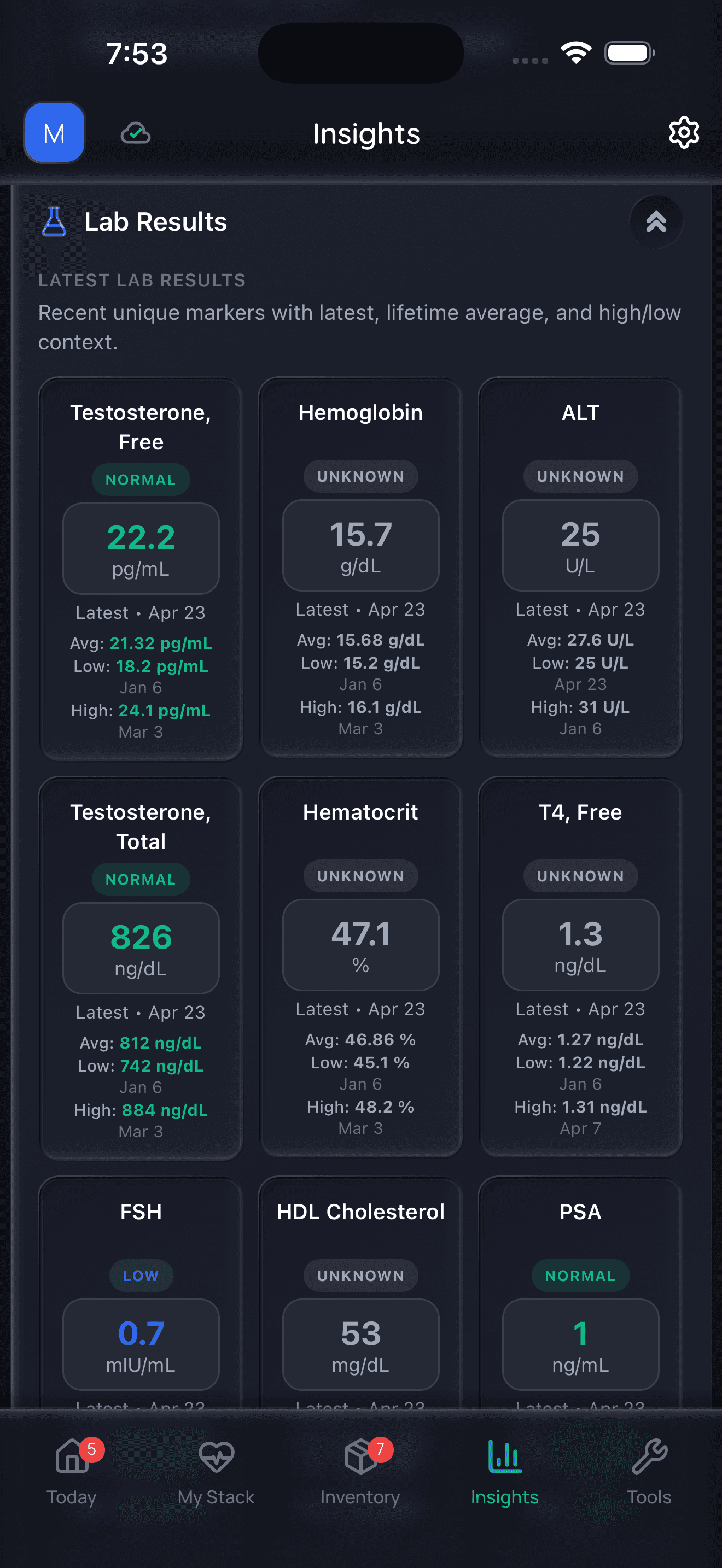
Doserly organizes data; it does not diagnose or interpret labs for you.
Side Effects & Safety
The Basics
Zeaxanthin looks broadly well tolerated in the public literature at common supplement doses. The standalone AMD trial did not report an adverse-effect signal in its abstract summary, and community discussion is more notable for thin volume than for a cluster of complaints [4][12].
That said, a clean safety reputation is not a free pass to ignore context. Many real-world products bundle zeaxanthin with lutein, vitamins, minerals, or botanicals, so the risk conversation may come from the full formula rather than from zeaxanthin itself. Pregnancy, breastfeeding, complex medication lists, and multi-supplement stacks are all reasons to favor individualized guidance rather than casual high-dose experimentation [1][7].
The Science
Formal safety framing comes more from regulatory reviews than from massive zeaxanthin-specific side-effect trials. The FDA GRAS dossier summarizes prior safety evaluations and product specifications, while NEI's AREDS2 guidance notes that high-dose eye formulas can affect digestion and medication handling because of the full nutrient package [1][7]. TGA specifications also show how regulators approach zeaxanthin safety through purity, impurity, oxidation, and solvent limits rather than just dose statements [8].
There is no established RDA or UL for zeaxanthin, and direct zeaxanthin-drug interaction evidence is limited. The most practical caution is not a known dramatic interaction but the possibility that multi-carotenoid stacks and complex formulas change absorption behavior or bring in other ingredients that deserve a medication review [1][4][7].
Dosing & Usage Protocols
The Basics
Zeaxanthin dosing is less standardized than lutein dosing, but there are still a few clear anchors. 2 mg/day is the evidence-backed zeaxanthin dose inside AREDS2. In general eye-health retail products, zeaxanthin often shows up in the 1-4 mg/day range, usually paired with lutein. In dedicated research, standalone zeaxanthin has reached 8 mg/day over longer study windows [1][4][13].
The practical mistake is expecting fast results from a high dose. Zeaxanthin behaves like a gradual tissue-support supplement, not an acute effect supplement. A sensible dose, taken consistently with food for months, is a better match for the evidence than impulsive dose escalation [2][3].
Goal
General eye-health combo support
- Commonly Used Range
- 1-4 mg/day
- Practical Note
- Common in retail formulas, usually paired with lutein
Goal
AREDS2-style use
- Commonly Used Range
- 2 mg/day inside full formula
- Practical Note
- Relevant for specific AMD populations under clinician guidance
Goal
Standalone research use
- Commonly Used Range
- 8 mg/day
- Practical Note
- Used in the ZVF AMD trial over one year
Goal
High-xanthophyll retinal-pigment strategies
- Commonly Used Range
- Variable combined intake
- Practical Note
- Often driven by total lutein/zeaxanthin exposure rather than zeaxanthin alone
The Science
The AREDS2 page provides the cleanest clinically anchored zeaxanthin dose at 2 mg/day [1]. The ZVF trial supports 8 mg/day zeaxanthin in an AMD population with high compliance and measurable retinal-pigment and visual-function effects [4]. The broader meta-analysis indicates that total lutein/zeaxanthin intake below 5 mg/day is less likely to move MPOD, while higher combined intakes are more consistently associated with retinal-pigment change over months [2].
Because zeaxanthin commonly appears in mixtures, dosing interpretation should focus on the actual zeaxanthin milligrams, not just the front-of-label phrase "eye health blend." Cycling is not a standard part of zeaxanthin use. Consistency, meal timing, and realistic expectations matter much more than complicated protocols [5][6].
What to Expect (Timeline)
The first 1 to 2 weeks are usually quiet. Most people do not notice an immediate shift unless they are highly sensitive to glare or eye fatigue and are starting from a low baseline. Community reports of early improvement exist, but they are not the most reliable pattern [12][14].
By roughly 4 to 8 weeks, some users may notice less sensitivity to bright light, slightly easier screen tolerance, or more general visual comfort. This is the stage where subjective changes become plausible, especially if the product is well-formulated and taken consistently with food [6][12].
From about 3 to 6 months, the literature becomes more about retinal tissue status than obvious sensation. This is when macular pigment changes are more likely to show up and when slow-building visual-performance benefits make more sense mechanistically [2][3].
At 6 to 12 months, longer trials such as LUXEA and ZVF are the more relevant comparison point. If zeaxanthin is going to contribute meaningfully to a retinal-support strategy, this is the timeframe where you would expect the evidence-backed pattern to look most recognizable [3][4].
One of the hardest parts of any supplement routine is knowing whether it's working when results unfold gradually over weeks or months. Without a record, it's easy to abandon something too early or keep taking something that isn't delivering. Doserly solves that by giving you a visual timeline of your entire supplementation history mapped against the outcomes you care about.
When everything is in one view, you can compare how different supplements in your stack are performing over the same period. You can see whether adding this supplement coincided with the improvement you've noticed, or whether the timing points to something else entirely. That kind of clarity turns patience into a strategy rather than a gamble.
Capture changes while they are still fresh.
Log symptoms, energy, sleep, mood, and other observations alongside protocol events so patterns do not live only in memory.
Trend view
Symptom timeline
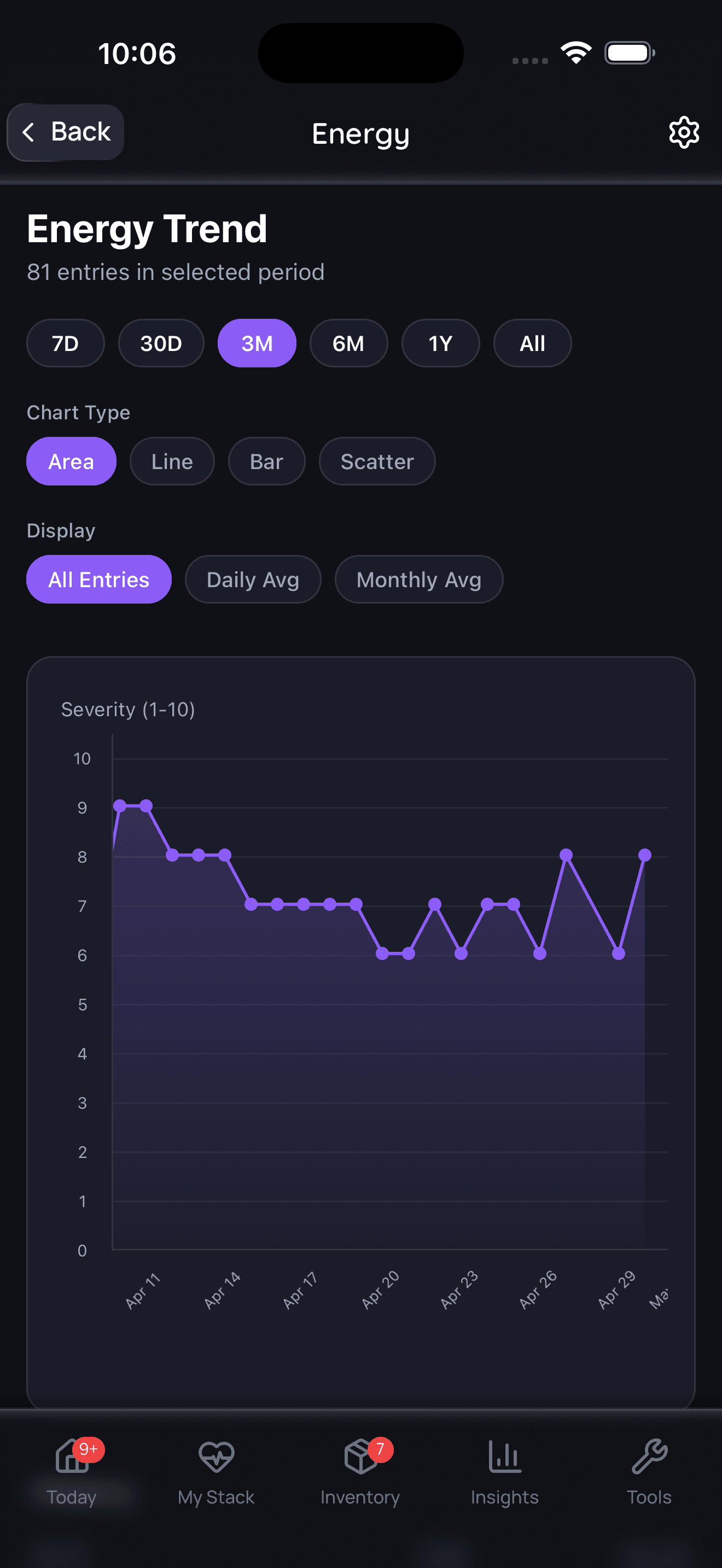
Symptom tracking is informational and should be interpreted with a qualified clinician.
Interactions & Compatibility
Synergistic
- Lutein: Zeaxanthin and lutein naturally co-exist in macular pigment and are commonly paired in eye-health formulas.
- AREDS2 Formula: This is the clearest evidence-backed clinical context for zeaxanthin use in AMD risk management.
- Fish Oil: A fat-containing meal or omega-3-rich meal is a practical way to support carotenoid absorption.
- Vitamin C: Common antioxidant partner in retinal-support formulas.
- Vitamin E: Another standard partner in multi-ingredient eye-health products.
- Zinc: Included alongside zeaxanthin in the AREDS2 formulation.
Caution / Avoid
- Equal-dose multi-carotenoid mega-stacks: One zeaxanthin trial suggested that carotenoid competition may reduce the expected pigment response when lutein and zeaxanthin are paired aggressively at equal doses [4].
- Legacy beta-carotene-heavy eye formulas for smokers: Modern NEI guidance favors AREDS2 without beta-carotene in current or former smokers [1].
- Proprietary blends with vague carotenoid disclosure: It becomes hard to know whether you are adjusting zeaxanthin, lutein, or something else entirely.
- Pregnancy or breastfeeding: Food-based intake is the least controversial route. Supplement use above ordinary dietary levels should be individualized.
- Medication-heavy regimens: Review the whole formula, not just zeaxanthin, because interaction burden often comes from the combination product.
How to Take / Administration Guide
Take zeaxanthin with a meal, ideally one that contains some fat. Breakfast or dinner can both work as long as the supplement is not being taken dry on an empty stomach [5][6].
If you are using a combo product, read the label carefully so you know the actual zeaxanthin content. Many "eye support" products emphasize the category more than the dose, and real-world formulas vary widely in whether they include 1 mg, 2 mg, or more of zeaxanthin.
If you are testing whether zeaxanthin helps you personally, keep the rest of the eye-health routine stable for a while. Constantly changing lutein dose, omega-3s, eye drops, and screen habits at the same time makes it much harder to interpret any outcome.
Choosing a Quality Product
Zeaxanthin is not a supplement where the cheapest generic label deserves automatic trust. Look for products that clearly disclose:
- exact zeaxanthin milligrams,
- whether the ingredient is free zeaxanthin or esterified,
- whether the delivery system is oil-based, softgel-based, or otherwise designed for carotenoid absorption,
- whether lutein or other carotenoids are also included and at what dose,
- whether athlete-sensitive users can verify third-party testing.
The strongest quality clues in this dossier are formulation quality and purity control. The 2025 bioavailability study favored a better-designed delivery system [6], while FDA and TGA materials emphasize purity, residual solvent limits, oxidation control, and contaminant testing [7][8]. For competitive athletes, third-party certification such as NSF Certified for Sport or Informed Sport is still worth prioritizing even though zeaxanthin itself is not a prohibited ingredient [10].
Storage & Handling
Zeaxanthin is an oxidation-sensitive carotenoid, so heat, light, and humidity all work against it. Keep it in the original container, tightly closed, away from a hot car, sunny windowsill, or damp bathroom cabinet [7][8].
Oil-based and protected-delivery products are often more believable not only for absorption but also for stability. If a product develops unusual odor, discoloration, or obvious damage to the capsule matrix, treat that as a quality problem rather than assuming the ingredient is still intact.
Lifestyle & Supporting Factors
Zeaxanthin works best as part of an eye-supportive pattern, not as a substitute for one. Diet still matters, especially foods that naturally contain carotenoids and meals that improve fat-soluble nutrient absorption [5][7].
Screen habits also matter. People who spend long hours on computers or under harsh artificial light may be more motivated to use zeaxanthin, but supplements work better when paired with basic visual hygiene: glare management, screen breaks, treatment of dry-eye contributors, good sleep, and regular eye exams [5][12][14].
Smoking status matters too. Not because zeaxanthin itself is the problem, but because the broader AMD and carotenoid conversation has historically been shaped by beta-carotene risk in smokers and by the general retinal burden imposed by smoking [1].
Regulatory Status & Standards
In the United States, zeaxanthin products are sold under the dietary-supplement framework created by DSHEA, which means FDA does not pre-approve supplement products for efficacy before sale [7]. At the ingredient level, FDA GRAS materials for marigold-derived zeaxanthin provide chemical identity, safety-review context, and quality specifications, but that is not the same thing as endorsing every finished product on the market [7].
In Canada, zeaxanthin appears within the Licensed Natural Health Products Database framework, where finished products can be actively licensed and marketed under the natural-health-product system [9]. In Australia, TGA has a specific compositional guideline for zeaxanthin, including purity and impurity standards for listed-medicine use [8].
For Europe, the FDA GRAS dossier notes prior JECFA and EFSA safety evaluations of zeaxanthin, which supports the idea that zeaxanthin has been reviewed as a regulated food-ingredient or supplement-safety matter rather than as a novel performance compound [7]. Regulatory status still depends on the jurisdiction and the finished-product presentation.
For athletes, the official WADA 2026 Prohibited List, in force from January 1, 2026, did not identify zeaxanthin as a named prohibited substance [10]. USADA's position is still cautious: supplements are not guaranteed risk-free, contamination remains possible, and athletes should favor third-party certified products [10].
Clinical trial activity remains concentrated in ophthalmic use cases. ClinicalTrials.gov entries reviewed in this pass included completed zeaxanthin-related trials in AMD, albinism, and glaucoma-related visual function rather than broad metabolic or performance applications [11].
FAQ (Frequently Asked Questions)
Is zeaxanthin the same thing as lutein?No. They are related xanthophyll carotenoids and often appear together, but they are not identical and may have somewhat different retinal distribution and visual-performance effects [3][4].
How much zeaxanthin is in AREDS2?The evidence-backed AREDS2 formula includes 2 mg zeaxanthin with 10 mg lutein and other nutrients [1].
Can zeaxanthin be taken by itself?Yes. Standalone zeaxanthin has been studied, including 8 mg/day in AMD research, although many consumer products pair it with lutein [4].
Does zeaxanthin work quickly?Usually no. The evidence fits a timeline of weeks to months rather than immediate effects [2][3].
Should zeaxanthin be taken with food?Yes. It is fat-soluble and is best taken with a meal that contains some fat [5][6].
Is zeaxanthin mainly for macular degeneration?That is its strongest clinical niche, especially inside AREDS2, but people also use it more generally for glare, eye strain, and visual comfort [1][12].
Can zeaxanthin improve night driving or glare?Some studies and community reports suggest it may help glare-sensitive visual performance, but results are not dramatic for everyone [3][4][12].
Is more zeaxanthin always better?No. The evidence supports sensible low-milligram daily use and good formulation quality, not indiscriminate megadosing [2][4][6].
Is zeaxanthin safe for athletes?Zeaxanthin itself did not appear on the reviewed WADA list, but athletes still need to manage contamination risk from finished supplement products [10].
Can food provide enough zeaxanthin?Sometimes, but many people use supplements because food intake is inconsistent and the research-level doses used in eye-health studies are hard to replicate precisely every day [1][5][7].
Myth vs. Fact
Myth: Zeaxanthin and lutein are interchangeable, so the exact formula does not matter.Fact: They are related but not identical carotenoids, and some trial data suggest different retinal and visual-performance behavior as well as possible competition in certain combinations [3][4].
Myth: If a product says "eye support," the zeaxanthin delivery system does not matter.Fact: Delivery system matters. Better-designed emulsified or oil-based products can produce markedly higher plasma exposure than weaker reference formulations [6].
Myth: Zeaxanthin cures AMD.Fact: The strongest evidence is for risk reduction or progression slowing within specific retinal-support strategies such as AREDS2, not for cure or vision restoration [1].
Myth: Zeaxanthin should produce obvious changes within a few days if it works.Fact: Most of the evidence supports a longer timeline measured in weeks to months [2][3][4].
Myth: Because zeaxanthin is a carotenoid, any dose is automatically harmless.Fact: The ingredient appears broadly well tolerated, but product quality, formula complexity, and user context still matter [1][7][8].
Myth: Athletes do not need to think about certification because zeaxanthin is just an eye nutrient.Fact: The practical sports risk is contamination, not zeaxanthin itself, which is why USADA still recommends certified products [10].
Sources & References
Clinical Trials & RCTs
[1] National Eye Institute. "AREDS 2 Supplements for Age-Related Macular Degeneration (AMD)." https://www.nei.nih.gov/eye-health-information/eye-conditions-and-diseases/age-related-macular-degeneration/nutritional-supplements-age-related-macular-degeneration
[2] Wilson LM, Tharmarajah S, Jia Y, et al. "The Effect of Lutein/Zeaxanthin Intake on Human Macular Pigment Optical Density: A Systematic Review and Meta-Analysis." 2021. https://pubmed.ncbi.nlm.nih.gov/34157098/
[3] Bone RA, Landrum JT, Guerra LH, Ruiz CA. "Xanthophyll accumulation in the human retina during supplementation with lutein or zeaxanthin - the LUXEA study." https://pubmed.ncbi.nlm.nih.gov/17084803/
[4] Richer SP, Stiles W, Graham-Hoffman K, et al. "Randomized, double-blind, placebo-controlled study of zeaxanthin and visual function in patients with atrophic age-related macular degeneration: the Zeaxanthin and Visual Function Study (ZVF)." https://pubmed.ncbi.nlm.nih.gov/22027699/
[5] Bhatti GK, Maurya N, Vij A, et al. "Current Insights on the Photoprotective Mechanism of the Macular Carotenoids, Lutein and Zeaxanthin: Safety, Efficacy and Bio-Delivery." https://pubmed.ncbi.nlm.nih.gov/38393321/
[6] Kim J, Kim H, Lee S, et al. "Enhanced Oral Bioavailability of Lutein and Zeaxanthin via a Self-Emulsifying Delivery System: A Randomized, Double-Blind Cross-Over Study." https://pubmed.ncbi.nlm.nih.gov/40601523/
Government & Regulatory Sources
[7] FDA. "Dietary Supplements" and GRAS Notice 000639 for zeaxanthin from marigold. https://www.fda.gov/food/dietary-supplements and https://www.fda.gov/files/food/published/GRAS-Notice-000639---Zeaxanthin-from-marigold.pdf
[8] Therapeutic Goods Administration. "Zeaxanthin Compositional Guideline." https://www.tga.gov.au/resources/resource/compositional-guidelines/zeaxanthin
[9] Health Canada. "Licensed Natural Health Products Database." https://health-products.canada.ca/lnhpd-bdpsnh/index-eng.jsp
[10] World Anti-Doping Agency and U.S. Anti-Doping Agency athlete guidance reviewed March 25, 2026. https://www.wada-ama.org and https://www.usada.org/substances/supplement-connect/
[11] ClinicalTrials.gov zeaxanthin-related ophthalmic registry entries reviewed March 25, 2026, including NCT00564902. https://clinicaltrials.gov/study/NCT00564902
Community Sources
[12] WebMD Reviews. "Zeaxanthin Reviews and User Ratings." https://reviews.webmd.com/vitamins-supplements/ingredientreview-1655-zeaxanthin
[13] iHerb product-review snapshot pages for zeaxanthin-containing eye-health products reviewed March 25, 2026. https://ug.iherb.com
[14] Reddit mixed discussion set reviewed March 25, 2026, including r/optometry and r/Menopause threads relevant to zeaxanthin and visual comfort. https://reddit.com
Related Supplement Guides
Same Category
Common Pairings
Related Goals
- Lutein - complementary retinal carotenoid support
- AREDS2 Formula - stage-specific AMD support
- Bilberry Extract - overlapping eye-comfort and vascular-support positioning
- Astaxanthin - broader antioxidant and eye-stress support