
In this guide
What is Saffron Extract?
Saffron is the dried stigma of Crocus sativus. Spice, quantified saffron extract, crocin and crocetin are different exposures. Color strength or culinary weight does not reveal the clinical-study composition. [1], [4]
Typical Saffron Extract Protocols
| Source and question | Preparation | Amount each administration | Daily total | Frequency and duration | Main interpretation |
|---|---|---|---|---|---|
| Falsini 2010 · early-AMD crossover · 25 | Oral saffron extract versus placebo | Administration count not reported in abstract | 20 mg/day | 3 months per period, then crossover | Focal electroretinogram amplitude and threshold improved; clinical significance unestablished |
| Lashay 2016 · wet/dry AMD RCT · 60 | Oral saffron versus placebo | Administration count not reported | 30 mg/day | Daily for 6 months | Selected visual outcomes reported; mixed wet and dry AMD and small sample limit inference |
| Broadhead 2024 · open extension · 93 | Oral saffron; existing AREDS continued | Administration count not reported | 20 mg/day | Daily for 12 months | No randomized comparator; concurrent AREDS and extension design prevent clean attribution |
- Exact product
- Record species, form, lot and co-ingredients.
- Each administration
- Keep amount, timing and context.
- Real endpoint
- Separate biomarker, symptom and clinical outcome.
What is it commonly used for?
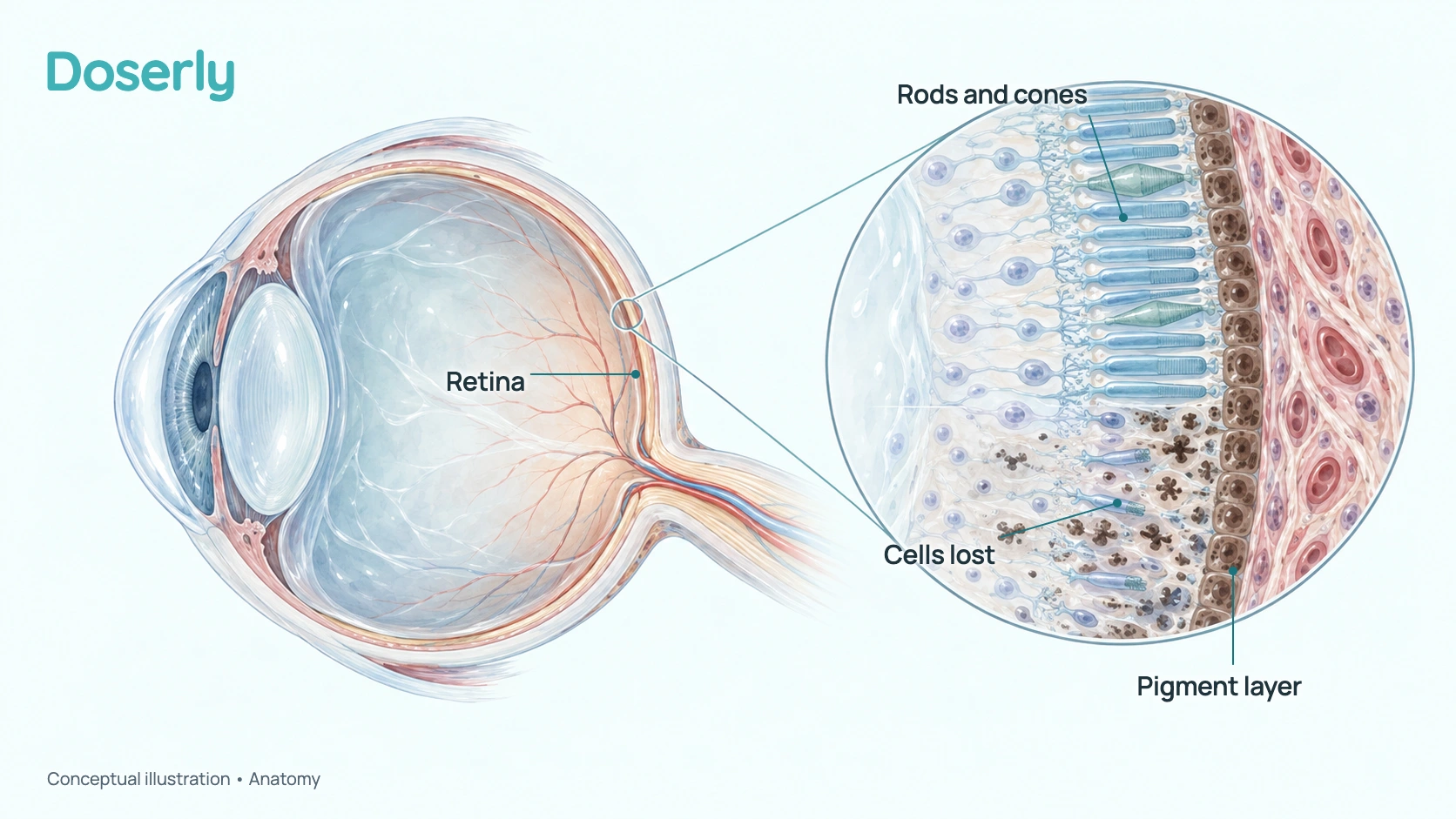
A 25-person early-AMD crossover used 20 mg/day for three months and improved focal electroretinogram measures; the authors said clinical significance required replication. A 60-person wet-or-dry AMD trial used 30 mg/day for six months, a mixed disease population. A 93-person open-label extension used 20 mg/day for 12 months while some participants continued AREDS; without a randomized control, stability cannot be assigned cleanly to saffron. These studies do not establish reduced progression to advanced AMD. [1], [2], [4]
One result answers one question
How do forms and labels differ?
Study extracts were measured oral products, not culinary pinches. Crocin, crocetin and whole-saffron extracts differ in chemistry and exposure. Record botanical identity, stigma rather than adulterant plant material, extract specification, each amount, daily total and concurrent AREDS formula. [4], [5]
How should the product be stored?
Follow the finished product’s label, keep it dry in its original container and away from children. Discard an expired, heat-damaged, broken-seal or untraceable product.
What does human research show?

| Question | Best direct evidence | Finding | Boundary |
|---|---|---|---|
| Efficacy | Falsini 2010 · early-AMD crossover · 25 | Focal electroretinogram amplitude and threshold improved; clinical significance unestablished | Specific product and population |
| Replication | Limited evidence | No universal effect established | Variable formulations |
| Universal dose? | None | Not established | Rows cannot be combined |
Keep the finished product reviewable
What are the risks and interactions?
Saffron can cause gastrointestinal symptoms, headache, dizziness or allergy. Concentrated exposure may affect bleeding, blood pressure, mood or pregnancy risk; anticoagulants, antiplatelets, antihypertensives, psychiatric medicines, pregnancy and planned surgery require professional review. Eye emergencies cannot wait for a supplement trial. [2], [3], [5], [6]
Seek urgent eye care for sudden vision loss, new central distortion, a curtain or shadow, flashes, many floaters, severe pain or rapidly changing symptoms.
What is the legal and regulatory status?
In the United States, it is sold as a dietary supplement; FDA does not approve it for safety and effectiveness before sale. In Canada, verify the exact product, NPN and authorized label. Legal sale does not prove efficacy or sport suitability. [6]
When should use stop?
Stop for any allergic reaction, persistent symptom worsening, unexpected laboratory result or doubt about product identity.
What should be monitored?
Track the exact extract, dose, product lot, concurrent AREDS and prescribed eye treatment. Keep visual acuity, retinal imaging and ophthalmologist-defined endpoints separate from electroretinography. Do not infer disease slowing from a short-term signal.
What can community experience add?
Reports can compare color, aroma, capsule tolerance and perceived visual change. They cannot distinguish expectancy from retinal function or progression. No systematic current community sample was assembled.
How do related options compare?
| Option | Main distinction |
|---|---|
| Culinary saffron | Food amount without study-standardized exposure |
| Saffron extract | Finished product used in small eye trials |
| Crocin or crocetin | Separate constituents with separate evidence |
Common questions
Does saffron slow AMD progression?
That has not been established by the cited small functional studies.
What did 20 mg/day change?
Focal electroretinogram measures in a 25-person crossover.
Is 30 mg/day better?
No comparison establishes that; it came from a different mixed-AMD trial.
Can it replace AREDS2?
No. The evidence and target populations differ.
Is culinary saffron equivalent?
No. Spice weight does not specify the studied extract.
What should be tracked?
Exact extract, dose, concurrent AREDS or treatment and objective eye outcomes.
Glossary
Terms for reading the evidence.
- Endpoint
- A defined result measured in a study.
- Anaphylaxis
- A potentially life-threatening systemic allergic reaction.
- Biomarker
- A biological measure that does not guarantee clinical benefit.
- Standardization
- A measured specification for a product component.
- Cross-reactivity
- Immune recognition of related proteins from different sources.
How this guide was researched
NCBI identities, publication notices, indexed abstracts and available open methods were checked. Null outcomes, mixed products, surrogate endpoints and missing details remain visible.
Research record · checked October 9, 2026
Identity: NCBI EFetch verified PMID 20688744, 28289690 and 38485112 by title, first author, journal, DOI and descendant notices. No correction, retraction or expression of concern appeared.
Design: randomized crossover, small parallel trial and open-label extension answer different questions. Concurrent AREDS in the extension remains explicit.
Endpoint: electrophysiology and short-term visual measures are not converted into reduced AMD progression.
Explore the sources
Primary human evidence and official context.
Showing 6 sources
- 01
Influence of saffron supplementation on retinal flicker sensitivity in early age-related macular degeneration. ↗
Randomized crossover trial
Twenty-five patients used 20 mg/day for three months per period; electroretinogram measures improved, with uncertain clinical significance.
- 02
Short-term Outcomes of Saffron Supplementation in Patients with Age-related Macular Degeneration: A Double-blind, Placebo-controlled, Randomized Trial. ↗
Randomized controlled trial
Sixty people with wet or dry AMD received 30 mg/day or placebo for six months; mixed disease categories and small size limit transfer.
- 03
Saffron therapy for the ongoing treatment of age-related macular degeneration. ↗
Open-label extension
Ninety-three adults used 20 mg/day for 12 months; existing AREDS continued and no randomized comparator remained.
- 04
Antioxidant Saffron and Central Retinal Function in ABCA4-Related Stargardt Macular Dystrophy. ↗
Randomized crossover trial
Thirty-one people used 20 mg or placebo in six-month periods; rare inherited disease and functional endpoints do not establish AMD efficacy.
- 05
AREDS/AREDS2 Frequently Asked Questions ↗
Official clinical guidance
Defines the evidence-based formula and AMD stages; saffron is not part of AREDS2.
- 06
FDA 101: Dietary Supplements ↗
Official supplement overview
FDA does not approve dietary supplements for safety and effectiveness before sale.
No matching sources
Try a different term or show the full list.
Editorial note
This guide separates composition, biomarker, symptom and clinical outcome. It does not turn a narrow signal into a general promise.