
In this guide
What does this guide compare?
Less soreness, improved performance and healing an injury are not equivalent endpoints.
This collection compares products discussed around one topic. It is not a protocol to take in full. Links to individual profiles appear after the article.
| Reference point | Context |
|---|---|
| Products compared | 5 |
| Evidence scope | Ingredient, formulation, population and measured outcome |
| Complete combination | The cited studies do not automatically validate all members together |
Which products are compared?
Creatine, Fish Oil (EPA/DHA), Collagen (Types I, II, III), Magnesium, Tart Cherry Extract.
Individual profiles describe formulation, source-reported amounts, tolerability and interactions. Those details remain ingredient-specific. An amount studied alone is not automatically appropriate in a combination.
How do their roles differ?
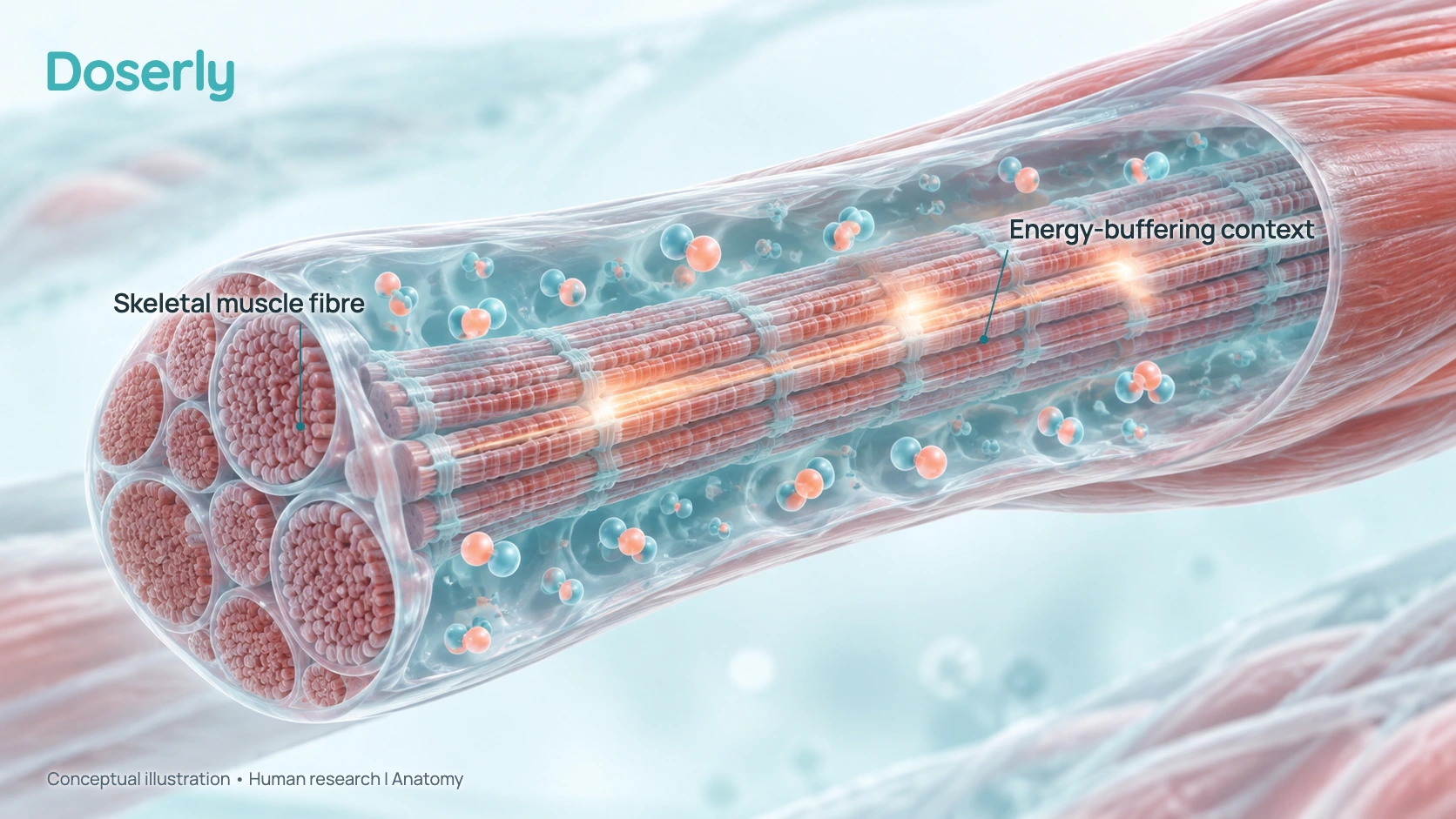
This collection compares creatine, fish oil, collagen, magnesium and tart cherry extract. Repeated exercise performance, muscle soreness, tendon outcomes and nutrient adequacy are separate questions. Creatine’s role in short-duration energy turnover does not establish that these five products accelerate every aspect of recovery. The creatine-plus-HMB study discussed below also tested an ingredient outside this collection. [1], [2], [3]
Selected ingredient studies and their limits
These examples compare distinct preparations and outcomes. Their schedules describe research and are not a regimen to combine.
Creatine. evidence is strongest for creatine monohydrate in repeated high-intensity efforts and resistance training. In the 31-man Hultman dosing study, separate schedules increased muscle creatine: 5 g four times daily for 6 days, or 3 g once daily for 28 days. This biopsy outcome describes tissue loading, not a measured reduction in soreness or injury. A separate 19-man, 12-week resistance-training trial evaluated strength and muscle adaptation. Results from these distinct designs cannot validate the whole collection. [1], [6], [7]
Magnesium. nutritional adequacy and symptom treatment are different questions. In a 94-person trial, 520 mg elemental magnesium as an oxide complex at bedtime for 4 weeks did not outperform placebo for nocturnal leg-cramp frequency. That studied amount exceeds the U.S. adult supplemental upper limit of 350 mg/day and is not a routine target. For high-blood-pressure risk, FDA permits only a qualified claim because the supporting evidence is inconsistent and inconclusive. [8], [9], [10]
Tart cherry. The 2026 review pooled 19 trials and found favorable signals for selected strength-recovery and CRP measures. Pooled soreness, creatine kinase and several cytokine outcomes were not significant. Heterogeneity was substantial and some findings depended on individual studies; certainty ranged from very low to moderate. Preparations and schedules differed. This does not establish injury healing or equivalence across extracts. [11]
What does the research show?
A 2026 crossover trial in 30 active older adults reported functional improvements with creatine plus HMB alongside supervised exercise. The small, short combined-intervention study cannot isolate creatine’s contribution or establish the effects of this collection. A separate 2025 crossover study in 14 men reported some performance and subjective benefits after creatine loading, without improvement in objective sleep duration or efficiency. The broader evidence remains strongest for repeated high-intensity exercise. [1][2][3] The published correction specifies 3 g/day calcium HMB rather than free-acid HMB. [12]
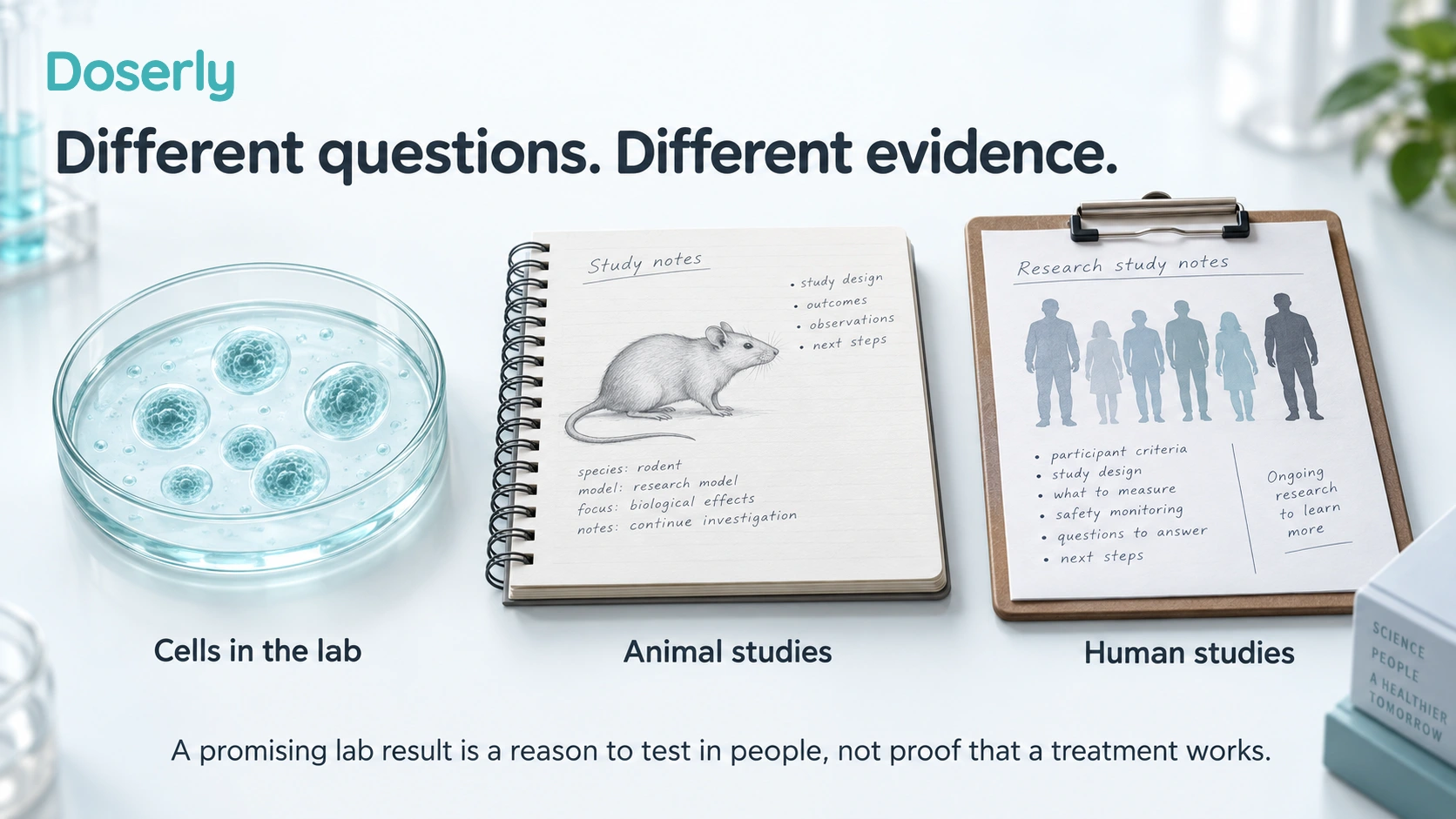
An observational association, a laboratory finding and a perceived benefit answer different questions. Randomized trials need their comparator, duration and population kept in view. An inconclusive result does not establish that an effect is impossible; it limits the claim that can be made.
Which overlaps and risks matter?
Cautions and interactions
Stimulant totals can accumulate across pre-workout products and drinks. Creatine-related water gain should not be recorded as immediate new muscle tissue. Product certification can reduce some contamination concerns but does not establish effectiveness or eliminate every anti-doping risk. [1][2][3]
A complete product list includes prescription medicines, nonprescription products and supplements. Combination formulas can conceal duplicate ingredients. Timing and spacing from a medicine should follow its labeling and pharmacist guidance; this collection does not supply a universal timetable.
Regulatory status
In the United States, FDA does not approve dietary supplements for safety and effectiveness before marketing. In Canada, a natural health product requires a product licence before sale; its NPN or DIN-HM must match the finished product. An ingredient name or inclusion in this collection does not establish that every product or claim is authorized. Authorization also does not validate the complete combination. [4], [5]
What should be recorded and how should changes be interpreted?
Doserly brings dose logs, symptoms and routine changes together. For this collection, useful observations include training load, repeatable strength or performance measures, recovery symptoms, sleep and ingredient totals.
- Doses and adherence: record the formulation, amount actually taken, timing and missed doses so observations have context.
- Potential benefits and tolerability: compare consistent symptoms or measurements over time alongside sleep, food and activity changes. Personal trends help evaluate the experience without proving causal efficacy.
- Product list: maintain the full product list for review with a pharmacist or clinician.
- AI monthly reports: summarize recorded doses, symptoms and trends to prepare for a discussion. Reports depend on the data entered and are not a diagnosis or an instruction to change treatment.
Explore the topic further
Common questions
Are less soreness and better performance the same outcome?
No. Perceived soreness, blood markers, strength recovery and later performance require separate measurements. A change in one does not automatically establish a change in the others.
Does creatine loading prove faster injury recovery?
No. The cited loading study measured muscle creatine, and the training trial concerned resistance-training adaptation. Neither establishes treatment of an injury. [6], [7]
Should nighttime cramps be treated as proof of magnesium deficiency?
No. In the cited 94-person trial, the magnesium oxide complex did not outperform placebo for nocturnal cramp frequency. That population and outcome also differ from post-exercise recovery. [8], [10]
What makes recovery tracking useful?
Record the training session, sleep, pain or soreness, functional performance and product changes consistently. A supplement timeline without training load and sleep context can make ordinary variation look like a product effect.
Glossary
Terms for interpreting the comparisons.
- Formulation
- The exact preparation, including its ingredients, their forms and labeled amounts.
- Study population
- The people included in a study; their characteristics limit where its result applies.
- Comparator
- The placebo, treatment or condition used as the comparison.
- Measured outcome
- What the study evaluates, such as a symptom, laboratory result or clinical event.
- Overlap
- The same ingredient appearing in more than one product used together.
How was this guide researched?
Sources and limits
This AI-assisted educational guide compares the cited public references. Findings remain tied to the ingredients, preparations and populations studied. It is not a systematic review or independent medical peer review. Doserly develops a commercial tracking app. Illustrations explain concepts; app screens show example data. Report a correction with its source to Doserly support.
Explore the sources
The references below provide context for the claims and their limits.
Showing 12 sources
- 01
NIH ODS — Exercise and athletic performance ↗
Public reference
Check the reported population, preparation and limitations.
- 02
Combined creatine and β-hydroxy-β-methylbutyrate supplementation with integral conditioning exercise enhances functional performance and metabolic health in physically active older adults: A randomized controlled crossover trial. ↗
Public reference
Check the reported population, preparation and limitations.
- 03
Effects of Creatine Monohydrate Loading on Sleep Metrics, Physical Performance, Cognitive Function, and Recovery in Physically Active Men: A Randomized, Double-Blind, Placebo-Controlled, Crossover Trial. ↗
Public reference
Check the reported population, preparation and limitations.
- 04
FDA — Questions and Answers on Dietary Supplements ↗
Regulatory reference
United States dietary supplement regulation.
- 05
- 06
Muscle creatine loading in men ↗
Human dosing study
Full article checked for separate loading, maintenance, gradual-dose and washout groups.
- 07
Performance and muscle fiber adaptations to creatine supplementation and heavy resistance training ↗
Randomized controlled trial
Full article page reviewed; 19 resistance-trained men.
- 08
Magnesium - Health Professional Fact Sheet ↗
Official nutrient monograph
Relevant full-page sections reviewed.
Detail: Adult RDAs, supplemental-and-medication-only UL, food sources, salt absorption, deficiency assessment, harms, medicine interactions and evidence summaries.
- 09
FDA Announces Qualified Health Claim for Magnesium and Reduced Risk of High Blood Pressure ↗
Regulatory evidence review
Official summary and linked review letter checked.
Detail: FDA permits only qualified language because the evidence is inconsistent and inconclusive.
- 10
Effect of Magnesium Oxide Supplementation on Nocturnal Leg Cramps: A Randomized Clinical Trial. ↗
Randomized controlled trial
Abstract and methods/results extract reviewed.
Detail: 94 adults; 520 mg elemental magnesium at bedtime for 4 weeks; no significant advantage over placebo.
- 11
Effects of Tart Cherry Juice Supplementation on Recovery from Exercise-Induced Muscle Damage in Athletes: A Systematic Review and Meta-Analysis. ↗
Systematic review and meta-analysis
19 trials; outcomes and certainty vary by measure.
- 12
Correction to: Combined creatine and β-hydroxy-β-methylbutyrate supplementation with integral conditioning exercise ↗
Published correction
The preparation was 3 g/day calcium HMB, not the free-acid form.
No matching sources
Try a different term or show the full list.