
In this guide
What is zinc?
Zinc is an essential trace mineral required by many enzymes and transcription factors. It contributes to DNA and protein synthesis, cell division, immune function, wound healing, growth and taste. The body has no specialized long-term zinc store, so regular dietary intake matters. [1]
A zinc supplement can correct inadequate intake or a diagnosed deficiency, but more is not automatically better. Age, sex, pregnancy, diet, absorption disorders and prolonged high-dose use change the decision.
Typical Zinc Protocols
| Purpose or population | Form and amount each time | Frequency | Total per day | Duration |
|---|---|---|---|---|
| U.S. RDA · adult men | Elemental zinc from all sources | Across the day | 11 mg zinc | Ongoing reference intake |
| U.S. RDA · nonpregnant adult women | Elemental zinc from all sources | Across the day | 8 mg zinc | Ongoing reference intake |
| Hemilä cold trial · adults who developed a cold | Zinc acetate lozenge with 13 mg elemental zinc | Six times daily | 78 mg elemental zinc/day | Up to 5 days after first symptoms |
The trial total exceeded the adult 40 mg/day UL, but it was a short treatment experiment rather than a maintenance recommendation. Its recovery outcome was null and adverse effects were more frequent than with placebo. [1], [3]
Why lozenge formulation and exposure window stay attached
Cold studies vary by salt, lozenge excipients, elemental dose, timing and route. The 2020 trial supplies a complete schedule: 13 mg elemental zinc as acetate, six times daily, up to five days. [3] The 2024 review pooled highly heterogeneous prevention and treatment studies and rated much of the evidence low or very low certainty. [2]
This guide reports research exposure without converting it into a routine regimen.
Three zinc questions, three dose windows
Do not turn a short treatment experiment into a maintenance target.
RDA: 11 mg men, 8 mg nonpregnant women. Count food and supplements.
13 mg six times daily for at most 5 days; this exact trial was null.
Adult UL 40 mg/day. Prolonged excess can impair copper absorption.
Formulation, route and duration are part of the intervention.
Should zinc be cycled?
No general cycle is evidence based. Adequacy is a continuing nutrition question. A short lozenge experiment has a symptom-defined stop and should not become repeated high-dose maintenance.
What happens when it is stopped?
There is no zinc withdrawal syndrome. A deficiency can recur if low intake, malabsorption or high requirements persist. Taste disturbance or nausea from a lozenge usually resolves after stopping; suspected copper deficiency needs clinical evaluation.
Which foods provide zinc?
Oysters, meat, poultry and seafood are rich sources. Dairy, eggs, beans, nuts and whole grains also contribute. Phytate in legumes and grains reduces zinc absorption, so restrictive or largely plant-based diets can require more deliberate planning. [1]
Which zinc forms are used?
Labels may list zinc sulfate, acetate, gluconate, citrate, picolinate or oxide. Compare elemental zinc, not total compound mass. ODS notes that absorption differs among preparations and that citrate and gluconate have similar absorption in one small study, while oxide was lower; this does not prove a universal clinical winner. [1]
For colds, a lozenge is a local oral dosage form, not an ordinary swallowed tablet. Excipients, dissolution and timing differ across studies. Avoid intranasal zinc gels or sprays because irreversible anosmia has been reported. [1]
How should zinc be stored?
Keep it dry, sealed and away from children. Store lozenges and flavored products where children cannot mistake them for candy.
What is zinc commonly used for?
Zinc is used to prevent or treat deficiency and is marketed for immune support, wound healing, fertility, testosterone and colds. Essential functions support correcting deficiency; they do not establish that zinc raises testosterone, accelerates healing or prevents infections in zinc-replete adults.
What does human research show?
The 2024 Cochrane review included 34 randomized studies with 8,526 participants. Prevention may make little or no difference in developing a cold. For treatment, eight studies with 972 participants suggested a mean 2.37-day shorter duration, but heterogeneity was extreme (I² 97%) and certainty was low. Non-serious adverse events were more common (RR 1.34, 95% CI 1.15–1.55; 16 studies, 2,084 participants). [2]
A 2020 randomized double-blind trial assigned 253 working adults before a cold occurred. Eighty-seven people who developed a cold entered the primary analysis. Zinc acetate supplied 13 mg elemental zinc six times daily for at most five days. Recovery did not differ over ten days (rate ratio 0.68, 95% CI 0.42–1.08; p=0.10), and adverse effects were reported more often with zinc. [3]
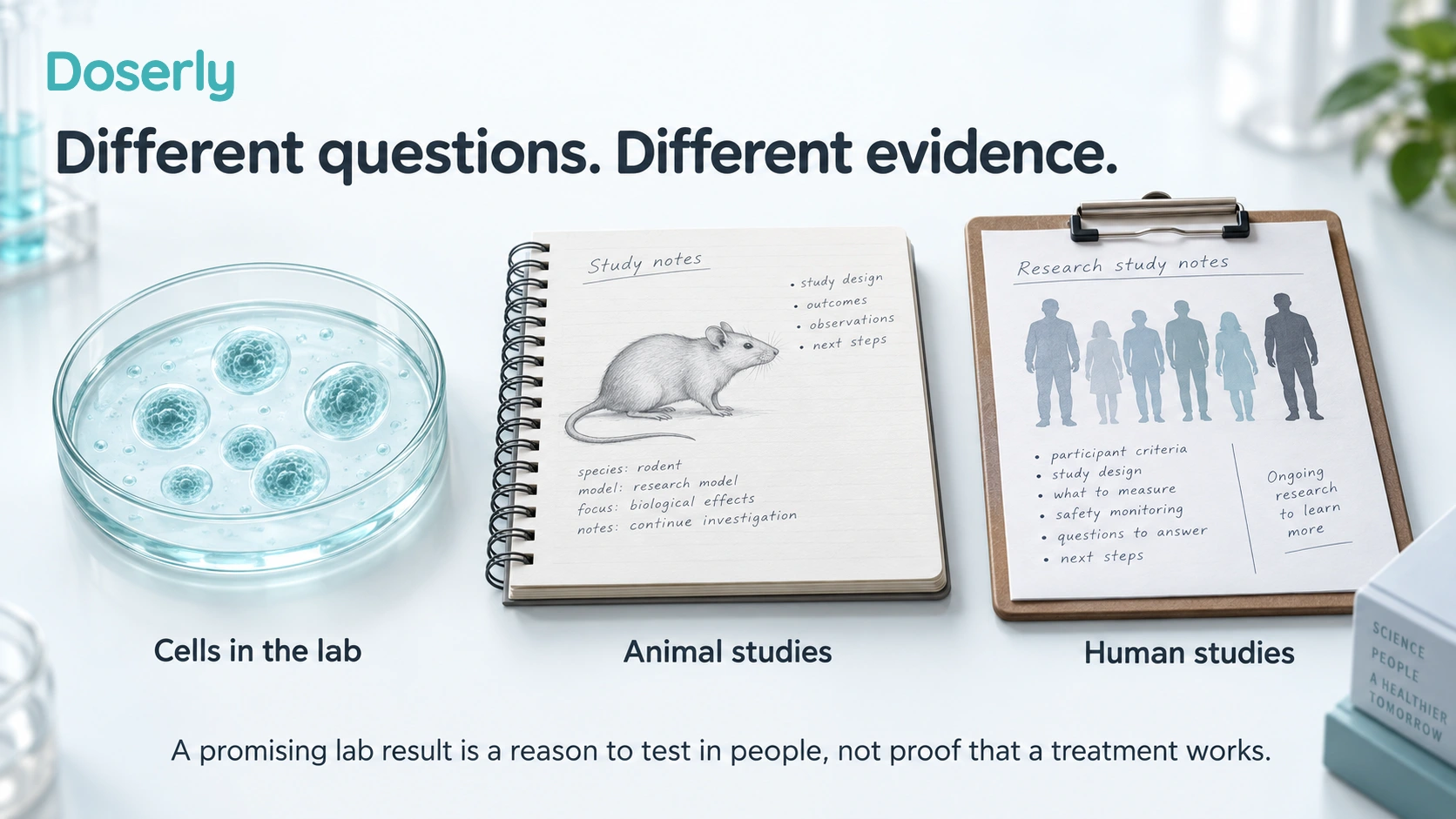
Those results support uncertainty rather than a universal lozenge protocol. Prevention, treatment, swallowed supplements, lozenges and intranasal products must not be pooled conceptually.
How does zinc work?
Zinc binds proteins involved in catalysis, structure and gene regulation. Deficiency impairs epithelial barriers and innate and adaptive immune responses. In lozenge research, local ionic zinc exposure in the mouth and throat is proposed as relevant, which is why a swallowed daily capsule cannot be assumed equivalent. [1], [2]
What are the risks and interactions?
Nausea, vomiting, abdominal cramps, diarrhea, headache and metallic taste can occur. Prolonged excessive intake can impair copper absorption, causing hypocupremia, anemia, neutropenia and neurologic injury. Very high zinc can also reduce HDL cholesterol and alter immune function. [1]
Separate zinc from quinolone and tetracycline antibiotics: ODS advises taking the antibiotic at least two hours before or four to six hours after zinc. Take penicillamine at least one hour apart. Thiazide diuretics can increase urinary zinc loss. [1]
In the United States, dietary supplements generally lack FDA premarket approval for safety or efficacy. In Canada, natural health products require licensing and authorized labels carry an NPN or DIN-HM. [4], [5]
Which medicines interact with zinc?
Quinolone and tetracycline antibiotics form poorly absorbed complexes with zinc. Penicillamine absorption also falls. Diuretics and medicines affecting intake or gastrointestinal absorption can change status. Oncology or infection treatment should not be altered to add zinc without the treating team.
What should be monitored?
For suspected deficiency or prolonged high intake, a clinician may review dietary exposure, serum/plasma zinc with inflammation context, copper, ceruloplasmin, complete blood count and neurologic symptoms. Plasma zinc has preanalytic and illness-related limitations, so it is not interpreted alone. [1]
What do public communities report?
People commonly discuss metallic taste, nausea, lozenge brands and copper balancing. Anecdotes rarely preserve elemental dose, formulation, start time or confirmed cold duration. This overhaul did not independently recrawl or quantify community posts.
How does zinc compare with nearby guides?
| Guide | Main question | Key difference |
|---|---|---|
| Copper | Copper adequacy and excess | Chronic zinc can reduce copper absorption |
| Vitamin C | Antioxidant nutrition and cold claims | Different evidence and upper-limit profile |
| Selenium | Selenium adequacy and narrow margin | Different biomarkers and toxicity pattern |
| Iron | Iron deficiency and anemia | Requires different labs and overdose precautions |
Common questions about zinc
What is the adult RDA?
It is 11 mg/day for adult men and 8 mg/day for nonpregnant adult women in the U.S. framework. [1]
What is the adult upper limit?
Forty milligrams/day from food, beverages and supplements for routine intake in healthy adults. It is not a treatment target. [1]
Do zinc lozenges shorten every cold?
No. The pooled evidence is low certainty and heterogeneous, and a modern 78 mg/day acetate trial was null. [2], [3]
Is zinc acetate better than gluconate?
Evidence does not establish a universally superior retail form. Elemental dose, lozenge chemistry, dissolution, timing and adherence all differ.
Why does copper matter?
High zinc induces intestinal metal-binding processes that reduce copper absorption; prolonged excess can produce blood and neurologic injury. [1]
Can zinc be used inside the nose?
Avoid intranasal zinc. Smell loss, sometimes permanent, has been linked to these products. [1]
Does zinc raise testosterone?
Correcting a deficiency can restore normal physiology, but evidence does not support routine high-dose zinc as a testosterone enhancer in zinc-replete adults.
Glossary
Plain explanations of zinc terms.
- Elemental zinc
- The actual amount of zinc ion, distinct from the full mass of a zinc salt.
- Recommended Dietary Allowance (RDA)
- A daily intake intended to meet the needs of nearly all healthy people in a group.
- Tolerable Upper Intake Level (UL)
- The highest usual daily intake expected to pose little risk to healthy people; not a treatment goal.
- Lozenge
- A dosage form intended to dissolve slowly in the mouth, creating a different exposure from a swallowed tablet.
- Hypocupremia
- An abnormally low blood copper state that can occur with prolonged excessive zinc.
- Anosmia
- Loss of smell; a serious risk associated with intranasal zinc products.
How this guide was researched
This draft uses the NIH ODS zinc monograph source text retrieved through EXA and read October 9, 2026, a current read of the 2024 Cochrane review, the primary 2020 zinc-acetate trial and current U.S./Canadian regulatory pages. Source access dates are stated individually below.
How this guide was made
Research and drafting were AI-assisted. This draft awaits Doserly editorial and independent clinical review. Doserly makes a tracking app and operates Doserly Academy. Read the editorial policy.
Explore the sources
Official nutrient guidance, a systematic review and an exact-form trial define separate claims.
Showing 5 sources
- 01
Zinc — Health Professional Fact Sheet ↗
Official nutrient monograph
Current source text retrieved through EXA and read for RDAs, UL, forms, deficiency, copper risk, intranasal warning and medicine timing; this was not a full direct browser read.
Detail: Adult RDA 11 mg men and 8 mg nonpregnant women; adult UL 40 mg/day; chronic excess can impair copper status.
- 02
Zinc for prevention and treatment of the common cold ↗
Systematic review of randomized trials
Current evidence page and primary review results read for study count, estimates, heterogeneity, certainty and adverse events.
Detail: 34 studies/8,526 participants; treatment duration estimate −2.37 days with I² 97% and low certainty; non-serious adverse events increased.
- 03
Zinc acetate lozenges for the treatment of the common cold: a randomised controlled trial. ↗
Randomized double-blind placebo-controlled trial
Primary abstract read for exact elemental amount, six-times-daily frequency, duration, population and outcomes.
Detail: 13 mg elemental zinc as acetate six times daily for up to 5 days; 87 primary-analysis colds; no recovery benefit.
- 04
Questions and Answers on Dietary Supplements ↗
Regulatory overview
Current official page reviewed.
Detail: General U.S. supplement framework.
- 05
Product Licensing ↗
Regulatory overview
Current official page reviewed.
Detail: Canadian natural-health-product licensing and NPN or DIN-HM.
No matching sources
Try a different term or show the full list.