
In this guide
What monitoring does menopausal HRT need?
Monitoring usually starts with how you feel, how you take the prescribed treatment, unwanted effects, bleeding and changes in your health. It is not normally a search for one ideal estradiol number. For usual-age menopause care, routine hormone panels generally do not diagnose the transition or determine an individual HRT dose. A blood test can still be useful when it answers a different clinical question or a particular medicine requires it. [1], [2], [3], [4]
NICE recommends reviewing treatment for menopausal symptoms at 3 months and annually afterward, with earlier review when problems or clinical circumstances warrant it. The BMS practice standards include symptoms, side effects, weight, blood pressure and discussion of routine screening. Your actual plan may need more frequent contact. The first review is an opportunity to assess the treatment, not a promise that every concern will have resolved by that date. [1], [4]
This guide covers menopausal treatment monitoring. Premature ovarian insufficiency, younger-age diagnostic uncertainty and other endocrine conditions need their own clinical context. Testosterone and nonhormonal medicines can have separate monitoring requirements. Follow the current instructions for your named product and indication rather than adopting a generic “HRT lab panel.” [1], [2], [8]
Which decision is a test supposed to inform?
| Question | What usually matters | What to clarify |
|---|---|---|
| Is this the usual-age menopause transition? | Symptoms, menstrual history, age and medicines. | At 45 or older, NICE usually identifies typical menopause/perimenopause clinically; younger-age cases differ. [1] |
| Is the chosen treatment helping? | The intended symptoms, practical function, actual use and unwanted effects. | Name the concern that remains rather than assuming every symptom needs more estrogen. [2], [3], [4] |
| Could something else explain a symptom? | A targeted assessment based on the symptom and history. | What condition is being investigated, and how would the result change care? [1], [7] |
| Does a medicine require safety tests? | The current named-product label and clinical situation. | US Veozah has scheduled liver testing; this is distinct from ordinary estrogen follow-up. [8] |
| Is bleeding expected or concerning? | Stage, regimen, timing, amount, duration, adherence and risk factors. | Do not substitute a normal hormone result for a bleeding assessment. [1], [5], [6] |
A useful question is: “If this result is high, low or in range, what will we do differently?” An answer may be a targeted investigation, a product-specific safety decision or reassurance with continued clinical review. If no meaningful decision follows, repeating a panel may create more numbers without resolving the concern. This question is practical consultation advice, not a rule that you should refuse a clinician's requested test.
One test, one clinical question
Diagnosis, symptom review and medicine safety are distinct tasks.
Identify the transition
Usually clinical at age 45 or older; younger-age exceptions need their own pathway.
Review the treatment
Symptoms, actual medicine use, unwanted effects and health changes.
Investigate or check safety
A targeted symptom question or current named-product requirement.
Conceptual decision aid, not a required blood panel or diagnostic algorithm. Sources: NICE [1], BMS [2], BMS standards [4], Veozah US label [8].
What should be recorded before treatment and at follow-up?
Bring the exact product names, strengths, routes and schedules. A patch release rate, a gel pump count and a tablet amount describe different things; a photograph of the packaging can prevent a transcription mistake. Record when each medicine started or changed, whether doses were missed, whether patches stayed attached and whether your supply changed to another product. These details help the clinician distinguish the prescribed plan from what actually happened. [2], [4], [6]
For a person with a uterus taking systemic estrogen, include the protection plan: progestogen product, route and continuous or sequential schedule, or the exact IUD and insertion date. This is part of treatment safety, not an optional symptom supplement. If estrogen changes, ask whether protection also needs review. Serum estradiol does not replace a review of that regimen. Do not stop the protection component simply because the estrogen is a patch or your symptoms are improving. [1], [6]
Describe the initial goals and what has changed. For example: “Night sweats wake me less often, but sleep is still poor,” or “Vaginal discomfort improved, but I now have troublesome breast tenderness.” Mixed results are useful. They allow discussion of an effective component, an unwanted effect and a persistent symptom without reducing the whole experience to success or failure. Some symptoms may need local treatment or another assessment instead of a systemic dose change. [1], [2], [4]
Tell the clinician about new diagnoses, operations, medicines, smoking changes, relevant family history and any change in your priorities. BMS standards include weight and blood pressure checks and discussion of routine breast and cervical screening according to the applicable programme. Screening intervals and eligibility differ by country and personal history; an HRT prescription does not supply an international screening schedule. [4]
A review should end with an understandable next step. Write down what stays the same, what changes, which test is ordered and why, when to contact the practice earlier, and when the next review should happen. If a result will arrive after the appointment, clarify who reviews it and how you will receive the plan. This administrative preparation helps prevent a test from becoming a number with no agreed follow-up.
When can hormone tests help identify menopause?
NICE usually identifies perimenopause clinically in otherwise healthy people aged 45 or older with the relevant symptoms and menstrual changes. Menopause is generally identified after 12 months without a period when hormonal contraception does not explain it. After hysterectomy, symptoms can be considered because periods are no longer observable. In this usual-age context, tests such as estradiol, anti-Müllerian hormone or ovarian imaging are not recommended solely to identify menopause. [1]
There are age-specific exceptions. FSH may be considered when menopause is suspected at ages 40–45 with associated symptoms and menstrual changes, or under 40 when premature ovarian insufficiency is suspected. The under-40 pathway is more than a single result and belongs in the POI guide. FSH should not be used to identify menopause during combined estrogen/progestogen contraception or high-dose progestogen use. Tell the clinician what you are taking before interpreting an absent period or laboratory result. [1]
A normal result does not automatically invalidate symptoms. Equally, a result outside the laboratory range does not establish that every symptom has the same cause. Diagnostic hormone testing, assessment of another illness and safety monitoring during a particular treatment are different tasks. Ask which task is being performed before applying advice from a different situation. [1], [3]
Why is a single estradiol result difficult to interpret?
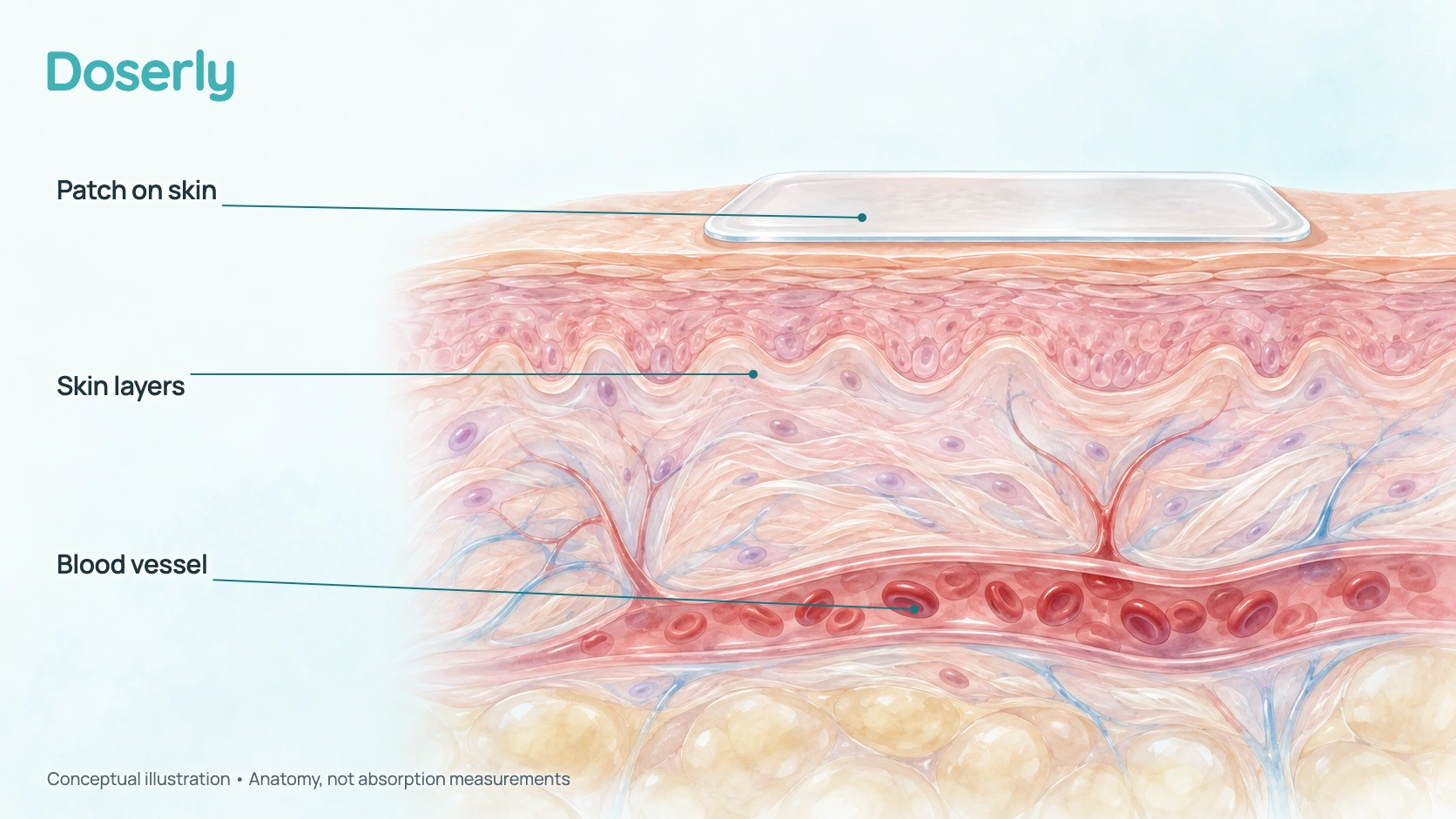
During perimenopause, your own ovarian hormone output can fluctuate while treatment adds estrogen. A routine serum estradiol assay cannot tell how much measured estradiol came from the ovaries and how much came from the medicine. BMS also describes substantial variation between individuals receiving the same formulation and amount, as well as variation within the dosing interval. The number is a measurement at one sampling time, not a map of the whole transition. [2], [3]
The assay measures estradiol, not every form of estrogenic activity in the body. Oral estradiol is partly converted to estrone; some other estrogen products contain components that are not represented by a serum estradiol result. BMS advises against using serum estradiol to monitor oral estradiol or combined hormonal contraception in this context. A result cannot be treated as a universal comparison between tablets, patches, gels and other estrogen preparations. [2]
Laboratories and methods also matter. BMS describes assay bias and cross-reactivity, and cautions against comparing results from different laboratories as though they were directly interchangeable. Timing since a transdermal application can affect the result. If a clinician orders a test, keep the product, sampling time, laboratory and units with the value. Do not turn a unit conversion or two results from different contexts into a self-directed dose adjustment. [2]
Is there a universal estradiol target for symptom relief or bone protection?
The BMS report describes poor correlation between serum estradiol and symptom control and no established serum threshold that guarantees prevention of bone loss or osteoporotic fracture. The WHC patient information similarly explains that estradiol and FSH do not determine symptom severity, how long symptoms will last or the dose an individual needs. A target shared online is not automatically a validated treatment goal for you. [2], [3]
This does not mean that a specialist can never request estradiol. It means the result needs a named question, the relevant population and recognition of its limits. BMS notes uncertainty about the optimum monitoring strategy in premature ovarian insufficiency; a younger-age replacement or other specialist pathway cannot simply be copied into usual-age symptom care. Ask why a result would help in your situation rather than assuming everyone should reach the same level. [2]
Persistent symptoms deserve a response even when a number looks satisfactory. That response may involve checking the treatment actually used, tolerability, the symptom's likely cause and other care options. It should not begin and end with either “your blood is normal” or “you must increase until you reach this internet target.” These are practical ways to structure a discussion; the clinician decides whether a particular test or change is appropriate. [2], [3], [4]
Should you stop medicine before a blood draw?
There is no universal instruction in this guide to pause estrogen, progesterone or other medicines before testing. The intended question changes the preparation. A diagnostic assessment and a measurement during treatment are not necessarily trying to observe the same state. Ask the ordering clinician or laboratory for the exact instructions for your medicine and test; do not copy a pause interval from another person's regimen. [1], [2]
Useful preparation questions include whether to take the normal scheduled medicine, whether sampling time matters, whether fasting is required for the actual ordered test, and what product or supplement information the laboratory needs. Record the instructions rather than assuming a routine morning draw settles every issue. If you accidentally prepared differently, tell the clinician before they interpret the value. These are organizational questions, not a proposed laboratory protocol.
Which nonhormone tests or medicine-specific checks may be needed?
Testing for a suspected condition is separate from checking a menopause hormone panel. For example, NICE NG88 recommends a full blood count for heavy menstrual bleeding, advises against routine female-hormone testing for that problem, and reserves thyroid testing for people with other suggestive signs or symptoms. This illustrates a defined investigation question. It is not a recommendation that everyone starting HRT needs the same extensive blood panel. [7]
A named medicine can have mandatory safety monitoring. In the US, the Veozah/fezolinetant label revised February 2026 requires liver tests before treatment and follow-up monthly for the first 3 months, then at months 6 and 9. Its boxed warning addresses liver injury, including postmarketing cases. This nonhormonal hot-flash medicine is an example of product-specific monitoring; its calendar must not be transferred to all estrogen or progesterone treatment. [8]
If you take Veozah, use the current label and prescriber's plan for the exact tests, suitability decisions and response to abnormal results. The label instructs immediate discontinuation and medical attention for possible liver-injury symptoms, such as new jaundice or dark urine. A prebooked follow-up test is not a reason to wait when those symptoms occur. This guide does not reproduce the laboratory stopping thresholds as a self-management algorithm. [8]
Other treatments have their own rules. Follow the source for the actual medicine, indication and country. For women's testosterone therapy, use the separate product and indication discussion; do not borrow men's replacement targets or assume every country's products have the same regulatory status. The term “nonhormonal” also does not mean monitoring-free.
Two different monitoring rhythms
A clinical review and a drug-specific laboratory calendar are not interchangeable.
Routine symptom treatment
NICE: review at 3 months, then annually; earlier when clinically indicated.
US Veozah safety testing
Liver tests before starting; monthly for the first 3 months, then months 6 and 9.
Keep the instructions specific
The Veozah calendar is not a universal estrogen/progesterone schedule. Possible liver injury needs action before the next planned test.
No dose, personal response deadline or laboratory stopping threshold is shown. Sources: NICE [1], BMS standards [4], Veozah label revised February 2026 [8].
What changes should prompt contact before the planned review?
NICE explains that unscheduled vaginal bleeding can occur during the first 6 months of systemic HRT or within 3 months after changing its preparation or amount. Beyond those periods, prompt help is advised. BMS guidance also identifies situations needing earlier assessment, including heavy or prolonged bleeding and relevant risk factors. These time windows describe a context; they do not instruct you to wait out concerning bleeding. [1], [5]
Record when bleeding began, whether it was spotting or heavier, how long it lasted, whether it was expected with the chosen schedule, and any missed protection doses or medicine changes. A normal hormone value does not establish that bleeding is harmless. A symptom diary cannot measure the uterine lining or decide whether imaging or another investigation is needed. Contact the clinician with the actual history. [5], [6]
For new severe symptoms or suspected serious medicine reactions, use appropriate urgent care rather than waiting for a routine appointment or an app reminder. If a treatment causes troublesome effects, contact the prescriber sooner to agree a plan. The annual review is a minimum routine rhythm, not a boundary that prevents earlier assessment. [1], [4], [8]
Review sooner when the situation changes
Routine dates do not replace symptom assessment.
Bleeding context
NICE: first 6 months of systemic HRT, or 3 months after a preparation/amount change; prompt help beyond those windows.
Earlier bleeding assessment
Heavy/prolonged bleeding and relevant risk factors can require investigation sooner under BMS guidance.
Medicine-specific serious symptoms
Use the named-product urgent instructions; do not wait for an annual review or a scheduled safety test.
The 6/3-month context is not advice to wait. No ultrasound threshold or self-triage pathway. Sources: NICE [1], BMS bleeding [5], US Veozah label [8].
What do public discussions reveal about monitoring questions?
A public discussion about HRT and bloodwork asks whether medicine should be taken before testing. Replies offer differing preparation advice and personal experiences. Another discussion asks which tests to request at a first perimenopause visit and receives a wide range of suggested panels. These selected accounts show how easily diagnosis, general health investigations and treatment monitoring become mixed together. They do not establish the correct preparation or a required list of tests. [9], [10]
The useful takeaway is the question: “What are we trying to find out?” We do not adopt the threads' dosing advice, blanket claims that testing is never useful, or suggestions that everyone needs a large panel. Individual improvement, persistent symptoms and worry about unwanted effects all belong in a consultation even when online answers disagree. The threads are public experiences, not a representative survey or a substitute for primary guidance. [1], [2], [7], [9], [10]
What can you track without creating a lab-optimization project?
Keep the record small enough to maintain. Choose two or three important concerns and a practical description: nights interrupted by sweating, days vaginal discomfort limits activity, or sleep that still affects daytime function. Add unwanted effects and bleeding, not only hoped-for improvements. Record dates of prescribed changes and what you actually took; this gives the clinician context without pretending to measure hormone action.
If a test was ordered, retain its date, units, laboratory and the reason stated by the clinician. Put the agreed follow-up next to it. A laboratory reference interval is not necessarily an individualized treatment target, and a graph connecting unrelated results can exaggerate certainty. You can bring the original report rather than reconstructing a medical interpretation yourself. [2], [3]
Doserly tracks the schedule you and your clinician choose. It does not recommend doses. Records and reminders can help you remember a prescribed plan and prepare for review; they do not order tests, certify uterine protection or diagnose a reaction. Keep urgent-care instructions and product-specific safety advice outside any expectation that the app will automatically identify a problem.
Common questions about HRT monitoring
Do I need a baseline estrogen level before ordinary menopause HRT?
Not usually solely to diagnose or manage typical usual-age menopause symptoms. NICE and WHC distinguish this from younger-age diagnosis and tests for another clinical question. Ask what a proposed baseline would change: confirming a different diagnosis, investigating a problem and monitoring a medicine are different purposes. Bring your symptom history and exact treatment so the clinician can choose a relevant assessment. A baseline panel is not automatically a requirement for every menopause consultation. See diagnostic testing. [1], [3]
Do normal hormone results mean my symptoms are imaginary?
No. A single level does not quantify symptom severity or establish that no care is needed. Symptoms still require a considered history, and other possible causes may need assessment. Describe the problems that affect daily life and the circumstances in which they occur. This gives the clinician something useful to investigate beyond whether one result falls inside a reference range. Both the symptoms and the test’s limitations belong in the discussion. See what hormone measurements can show. [2], [3]
Should I ask for an increase because my result is below an online target?
Do not change treatment on that basis yourself. There is no universal serum estradiol target for symptom control or bone protection in this context. Review symptoms, treatment use and the clinical question with the prescriber before interpreting an online comparison. The relevant next step might involve checking how the product is used or investigating another cause, rather than automatically increasing it. A laboratory number needs a purpose and context before it can inform treatment. See targets and their limits. [2], [3]
Can I compare last year's result with a different laboratory's result?
Keep both original reports and their contexts. BMS cautions that assay differences limit direct comparison; units, sampling time and the medicine also matter. A clinician should interpret them before a treatment decision. Note whether the product, route or collection conditions changed between samples, rather than treating the numerical difference as proof that treatment failed. The useful question is whether the results answer the same clinical question under comparable conditions. See sampling and laboratory interpretation. [2]
Is my first review always a blood-test appointment?
No. The routine review focuses on symptoms, unwanted effects, treatment use and health changes. Tests depend on the clinical question and named medicine; BMS includes basic weight and blood-pressure checks and screening discussion. Ask in advance whether any test or preparation is needed, then bring the actual products and a short account of benefit and difficulties. The appointment should lead to a clear next step even when a hormone blood test is not useful. See routine review. [1], [4]
Does every nonhormonal menopause medicine need the Veozah liver-test schedule?
No. The stated schedule belongs to the current US Veozah label. Other products and countries require their own instructions; “nonhormonal” does not determine one shared monitoring plan. Confirm the exact medicine, the local label and who will arrange and review the required tests. A symptom diary can help describe changes but cannot replace a required safety test. Do not transfer another person’s medicine schedule to your prescription merely because both treat hot flashes. See product-specific tests. [8]
Can a normal result rule out a cause of unexpected bleeding?
No. Report the bleeding pattern, regimen and relevant changes. Current NICE and BMS guidance governs assessment; a hormone result cannot replace it. Include whether the bleeding was expected under the prescribed schedule and whether a product or protective component changed. Those details help the clinician decide what evaluation is appropriate. A reassuring blood result does not establish the cause of bleeding or justify waiting through a concerning change. See bleeding and clinical assessment. [1], [5], [6]
What should I leave the follow-up appointment knowing?
You should understand the intended treatment goal, agreed plan, purpose of any test, who will review results, when to seek earlier help and the next review date. Ask for written instructions when medicine preparation or safety monitoring is important. If a test has been requested, clarify how the result will reach you and what to do if you hear nothing. This practical preparation makes follow-up easier to act on. See preparing your record. [1], [4]
Glossary
Terms used in treatment review and laboratory interpretation.
- Perimenopause
- The transition toward menopause, with changing ovarian hormone patterns and possible symptoms.
- Menopause
- Usually identified after 12 months without a period when hormonal contraception does not explain the absence.
- Postmenopause
- The stage after menopause; symptoms can continue.
- Estrogen
- A hormone class that includes estradiol.
- Estradiol
- An estrogen made by the body and used in certain prescribed medicines.
- Progesterone
- A hormone and one member of the progestogen family.
- Progestogen
- A family of progesterone-like medicines; some provide uterine protection with estrogen.
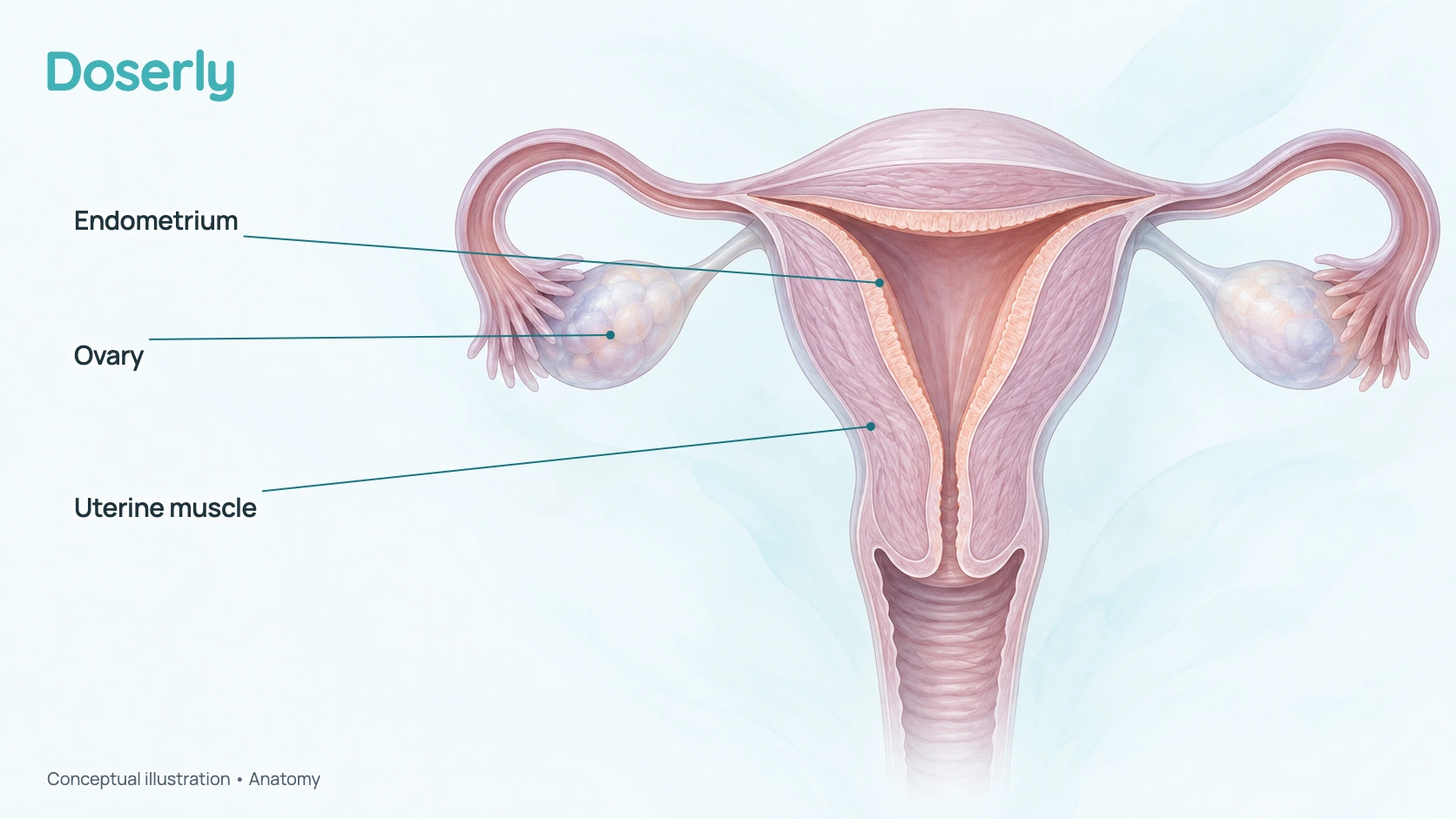
- Endometrium
- The lining inside the uterus.
- HRT / MHT
- Hormone replacement therapy; menopausal hormone therapy in this guide.
- Systemic treatment
- Treatment reaching the wider body through the circulation.
- FSH
- Follicle-stimulating hormone; interpretation depends on age, stage and medicines.
- Premature ovarian insufficiency
- Loss or disturbance of ovarian activity before age 40, requiring its own assessment.
- Sequential combined HRT
- Estrogen through the cycle with progestogen on specified days.
- Continuous combined HRT
- Estrogen and progestogen supplied continuously.
- IUD
- Intrauterine device; type and indication determine its role.
- Anemia
- A low hemoglobin or red-cell-related problem; heavy bleeding can prompt investigation.
- Serum
- The blood component used for certain laboratory measurements.
- Assay
- The laboratory method used to measure a substance.
- Reference interval
- A laboratory comparison interval, not automatically an individual treatment target.
- Endogenous
- Produced within the body, for example by the ovaries.
- Exogenous
- Supplied from outside the body, such as a prescribed hormone.
- Estrone
- An estrogen also called E 1; oral estradiol can be metabolized to it.
- Cross-reactivity
- An assay response to another substance that can affect the reported value.
- Sampling time
- When the blood was drawn relative to medicine use and other relevant context.
- Baseline
- A recorded starting context or measurement, useful only for a defined purpose.
- Hepatotoxicity
- Liver injury associated with a medicine or other substance.
- Jaundice
- Yellowing of skin or eyes that can signal a problem needing medical attention.
- Shared treatment review
- Discussion of benefits, problems, preferences and the agreed next step.
How was this guide researched?
Source selection and limits
We checked original NICE recommendations, the BMS July 2025 estradiol-measurement report, June 2026 WHC hormone-test information and BMS practice standards, and May 2026 BMS bleeding/protection guidance. NICE NG88 supplies a distinct heavy-bleeding investigation example. The current US Veozah label is revised February 2026; its safety schedule is not transferred to other medicines or countries. [1], [2], [3], [4], [5], [6], [7], [8]
One public discussion was retrieved directly; another was checked through public indexed text after direct access failed. They supply questions, not a required test panel or sampling instructions. [9], [10]
This is an AI-assisted Doserly editorial guide checked October 2, 2026. No independent clinician review is claimed. Doserly develops a commercial tracking app. Record-keeping suggestions are practical editorial advice, not a validated diagnostic scale or automated clinical-monitoring system. Material new guidance, labels or safety findings trigger earlier source review.
Sources
Original identities and access limitations; checked October 2, 2026.
Showing 10 sources
- 01
Recommendations | Menopause: identification and management | Guidance | NICE ↗
Full official guideline recommendations
Sections 1.3 diagnosis,1.5 symptoms,1.7 POI,1.8 treatment/bleeding and 1.9 review. UK guidance, not worldwide authorization.
- 02
Measurement of serum estradiol in the menopause transition ↗
Full original clinician guidance PDF
Key points, assay/route interpretation and clinical uncertainty. No universal target or invented medicine-pause instruction.
- 03
Hormone blood tests in the menopause transition ↗
Full original patient-information PDF
Key points and hormone-testing sections: fluctuating levels, poor relation to symptoms, oral/transdermal interpretation and younger-age exceptions.
- 04
British Menopause Society: Menopause Practice Standards ↗
Full original practice-standards PDF
Standard 5: symptoms, unwanted effects, weight, blood pressure, screening discussion and review timing. UK screening programme is not an international schedule.
- 05
Management of unscheduled bleeding on hormone replacement therapy (HRT) ↗
Official current guideline key-message page
Assessment, adherence, risk factors and earlier investigation for heavy/prolonged bleeding. No ultrasound cutoff or self-triage algorithm reproduced.
- 06
Progestogens and endometrial protection ↗
Full original guidance PDF
Key points; uterine protection, sequential/continuous contexts, vaginal limitations, IUD and compounded preparations. No separate examples assembled into a prescription.
- 07
Heavy menstrual bleeding: assessment and management (NG88): Recommendations ↗
Full official guideline recommendations
Sections 1.1–1.3; full blood count for heavy bleeding, no routine female-hormone test and thyroid testing only with other suggestive symptoms. Used for a different investigation question, not a universal menopause panel.
- 08
VEOZAH- fezolinetant tablet, film coated ↗
Full current US label on DailyMed
Boxed warning, sections 2.1 and 5.1: baseline liver testing; monthly first 3 months, then months 6 and 9; symptoms of injury require immediate stopping and medical attention. Product-specific, not every HRT medicine.
- 09
HRT and bloodwork ↗
Public opening post and accessible comments
Direct public thread retrieved. Differing medicine-before-test advice supplies a consultation question, not a sampling protocol. No usernames, votes or source prescriptions reproduced.
- 10
46F just entering Perimenopause and looking for what blood work I should get done in my first visit ↗
Public search-indexed opening post and comments
Search-indexed text checked; direct opening failed. Broad test suggestions and blanket hormone-testing claims are not adopted. No identifying narrative or username reproduced.
No matching sources
Try a different term or show the full list.