
Getting Started with HRT: The Complete HRT Guide
On this page
Quick Reference Card
Attribute
Topic
- Value
- Starting menopausal hormone therapy (HRT/MHT): candidacy, route selection, monitoring, and early treatment expectations
Attribute
Guide Type
- Value
- Treatment overview / onboarding entry point
Attribute
Main Clinical Goal
- Value
- Relieve bothersome menopause symptoms while matching route and regimen to individual risk profile
Attribute
Most Effective For
- Value
- Vasomotor symptoms (hot flashes, night sweats); also helps prevent bone loss and can improve sleep, mood, and genitourinary symptoms in selected patients
Attribute
Core Building Blocks
- Value
- Estrogen-only therapy (if no uterus), estrogen + progestogen therapy (if uterus present), local vaginal estrogen for GSM, selective use of testosterone for diagnosed HSDD in specialist care
Attribute
Common Estrogen Routes
- Value
- Oral tablet, transdermal patch, transdermal gel, transdermal spray, vaginal ring, low-dose vaginal therapy
Attribute
Common Progestogen Options
- Value
- Micronized progesterone, medroxyprogesterone acetate, norethindrone-containing combinations, levonorgestrel IUD for endometrial protection in selected patients
Attribute
Typical Starter Principle
- Value
- Use the lowest effective dose, then adjust based on symptoms, bleeding pattern, side effects, and risk review
Attribute
Best Candidate Profile
- Value
- Symptomatic person younger than 60 or within 10 years of menopause onset without contraindications
Attribute
Monitoring Focus
- Value
- Symptom response, blood pressure, bleeding pattern, breast screening adherence, VTE/stroke/breast cancer risk review, treatment tolerance
Attribute
Prescription Required
- Value
- Yes
Attribute
Medical Supervision
- Value
- Required for all systemic HRT
Overview / What Is Getting Started With HRT?
The Basics
Getting started with HRT is not about picking a single "menopause pill." It is the process of deciding whether hormone therapy is a good fit for your symptoms, your stage of menopause, your uterus status, your medical history, and your own comfort level with risk. For some people, the right starting point is a low-dose estradiol patch and oral progesterone. For others, it is vaginal estrogen only. For some, systemic HRT is not appropriate at all.
This matters because menopause symptoms are not all the same. Hot flashes, night sweats, sleep disruption, joint aches, brain fog, vaginal dryness, urinary urgency, mood instability, and low libido may all show up in the same person, but they do not all respond the same way to the same therapy. Good HRT starts with the symptom pattern, not with marketing claims or social-media protocols.
Modern HRT care is also very different from the simplified message many people still carry from the early 2000s: that hormone therapy is broadly dangerous and should be avoided. The current evidence is more nuanced. Hormone therapy remains the most effective treatment for vasomotor symptoms and helps prevent bone loss, but its benefit-risk balance depends heavily on when it is started, which formulation is used, and who is taking it.[1][2][3]
Getting started usually means an iterative phase. Your first prescription is often not your final regimen. Many people need a few months of adjustment to find the best route, dose, and progestogen strategy. That does not mean the treatment is failing. It usually means the process is doing what it is supposed to do: individualizing care.
The Science
The contemporary framework for initiating menopausal hormone therapy is built around four pillars: symptom burden, timing since menopause, route-specific risk, and endometrial protection. The 2022 North American Menopause Society position statement, NICE NG23, and the Endocrine Society guideline all converge on the same core conclusion: hormone therapy remains the most effective treatment for vasomotor symptoms, but treatment must be individualized according to age, years since menopause, route, dose, and progestogen exposure.[1][2][3]
The "timing hypothesis" is central. Risk-benefit looks most favorable in symptomatic women younger than 60 years or within 10 years of menopause onset.[1][3] The reason this matters is not merely chronological age. It reflects the interaction between estrogen exposure and vascular biology. Data from WHI subgroup analyses, ELITE, and KEEPS suggest that starting closer to menopause is associated with a more favorable cardiovascular profile than starting much later.[6][7][8][9]
Clinically, "getting started" therefore involves more than symptom treatment. It is a structured risk-stratification step: determine whether systemic therapy is appropriate, whether local therapy alone is enough, whether transdermal estrogen is preferable to oral therapy, whether the person still has a uterus, and whether special situations such as migraine with aura, VTE history, liver disease, or hormone-sensitive cancer history should change the plan.
Medical / Chemical Identity
Property
Topic Classification
- Value
- Treatment overview: initiation of menopausal hormone therapy
Property
Core Hormone Classes
- Value
- Estrogens, progestogens/progestins, vaginal DHEA, selective estrogen receptor modulators, optional testosterone in selected specialist settings
Property
Main Estrogen Used In Modern HRT
- Value
- 17-beta estradiol (oral, patch, gel, spray, ring, vaginal formulations)
Property
Main Progesterone Used In Modern HRT
- Value
- Micronized progesterone; synthetic progestins used in some combinations
Property
Key Distinction
- Value
- Systemic HRT treats whole-body menopause symptoms; local vaginal therapy primarily treats GSM
Property
Uterus Rule
- Value
- If uterus present, systemic estrogen generally requires endometrial protection with a progestogen
Property
Route Categories
- Value
- Oral, transdermal, vaginal, intrauterine (for endometrial protection), rarely injectable/implanted outside standard menopause practice
Property
Primary Clinical Indications
- Value
- Vasomotor symptoms, GSM, prevention of bone loss in selected patients, hormone replacement in premature ovarian insufficiency/early menopause
Property
Not A Diagnostic Test Strategy
- Value
- Routine estradiol, AMH, inhibin, or FSH testing is not recommended for most symptomatic people aged 45 or older[2]
A Practical Note
"HRT" and "MHT" are often used interchangeably. Many professional societies now prefer "menopausal hormone therapy" because "replacement" can imply restoring a single normal level, whereas real-world treatment is a symptom-targeted, risk-adjusted clinical decision.[1]
Mechanism of Action / Pathophysiology
The Basics
HRT works by supplying hormones that the ovaries are producing less reliably or have largely stopped producing. Estrogen is the main hormone that improves hot flashes, night sweats, and many genitourinary symptoms. Progesterone or another progestogen is usually added if you still have a uterus because estrogen on its own can overstimulate the uterine lining.
The reason symptoms vary so widely is that estrogen receptors are not just in reproductive tissues. They are in the brain, bones, blood vessels, skin, bladder, vagina, and connective tissue. That is why menopause can feel like a whole-body event rather than a single symptom. Stabilizing estrogen exposure can reduce thermoregulatory instability, improve sleep disrupted by night sweats, and help protect bone remodeling.
Progesterone is more than "uterus protection." It also affects the central nervous system. Some people find micronized progesterone calming or sleep-promoting. Others feel sedated, bloated, or emotionally worse on it. That variability is one reason regimen fitting matters so much during the first few months.
The Science
Menopause symptoms are driven primarily by declining and unstable ovarian steroid production, especially estradiol, along with loss of ovulation and reduced progesterone production. Estrogen withdrawal and fluctuation narrow the hypothalamic thermoneutral zone, making very small core temperature shifts trigger heat-dissipation responses such as flushing and sweating.[1][3]
Systemic estradiol therapy improves vasomotor symptoms by stabilizing this thermoregulatory system. It also slows bone resorption by reducing osteoclast activity and helps maintain urogenital tissue integrity through estrogen receptor signaling in vulvovaginal and lower urinary tract tissues.[1][3] Endometrial physiology is the key reason progestogen is required when a uterus is present: unopposed systemic estrogen increases endometrial hyperplasia and cancer risk, while progestogen counterbalances proliferative effects on the endometrium.[1][4]
Route matters mechanistically. Oral estrogen undergoes first-pass hepatic metabolism, increasing liver exposure and altering clotting factors, triglycerides, inflammatory markers, and binding proteins. Transdermal estrogen bypasses first-pass hepatic metabolism, which helps explain why thrombotic risk is lower with transdermal formulations than with oral estrogen in observational data.[11][12]
Pathway & System Visualization
[!INFO Diagram placeholder — onboarding flow for HRT candidacy, route selection, and monitoring pathway to be added]
Pharmacokinetics / Hormone Physiology
The Basics
If you are deciding how to start HRT, the route often matters almost as much as the dose. Oral estrogen goes through the digestive system and liver first. Patches, gels, and sprays absorb through the skin and enter circulation more directly. Vaginal low-dose products mainly act locally rather than systemically.
That sounds technical, but it has practical consequences. Oral estrogen can be convenient and inexpensive, but it has a bigger effect on liver-driven clotting pathways. Transdermal estrogen is often preferred for people with migraine with aura, elevated triglycerides, obesity, smoking exposure, or concerns about blood clot risk. Vaginal estrogen is usually the right choice when the main problem is vaginal dryness, recurrent UTI symptoms, or painful sex rather than whole-body symptoms.
Hormone physiology also changes depending on where you are in menopause. In late perimenopause, your own hormones may still be spiking and crashing underneath the prescribed regimen. That is why some still-cycling people feel dramatically better one week and then terrible again around ovulation or premenstrually. In established postmenopause, there is usually less endogenous fluctuation and sometimes a more predictable response.
The Science
Oral estradiol and conjugated estrogens are absorbed through the gastrointestinal tract and pass through the portal circulation, increasing hepatic exposure. This first-pass effect raises hepatic production of clotting factors and several binding proteins, which is one reason oral estrogen is associated with higher venous thromboembolism risk than transdermal estrogen.[11][12]
Transdermal estradiol delivers hormone through the skin and produces steadier systemic levels without the same first-pass hepatic signal. This pharmacokinetic difference is clinically relevant in VTE-sensitive populations and is one reason multiple guideline and review sources now favor transdermal therapy when vascular risk is part of the decision.[1][2][11][12]
Micronized progesterone is absorbed orally and commonly taken at bedtime because of its sedative metabolites. Local vaginal estrogen products have minimal systemic absorption at low doses and are therefore used primarily for genitourinary syndrome of menopause rather than systemic vasomotor control.[1][3]
Community experience closely mirrors this physiology. Many still-cycling users report that HRT helps but does not fully suppress endogenous swings, especially in early perimenopause. That is consistent with the physiology: menopausal HRT is not designed to completely suppress ovarian cycling in the way combined hormonal contraception often does.
Research & Clinical Evidence
HRT and Vasomotor Symptoms
The Basics
This is the strongest evidence area in all of menopause medicine. If hot flashes and night sweats are the main problem, HRT is the benchmark treatment other options are compared against. Most people who are going to respond notice at least some improvement within weeks, though full stabilization can take longer.
The Science
NAMS, NICE, and the Endocrine Society all identify hormone therapy as the most effective treatment for vasomotor symptoms.[1][2][3] In KEEPS, both lower-dose oral conjugated estrogens and transdermal estradiol produced large reductions in moderate-to-severe hot flashes and night sweats compared with placebo, with benefit evident by 6 months and sustained through 4 years.[10]
HRT and Bone Protection
The Basics
People often think of HRT as only a hot flash treatment, but it is also one of the most effective ways to slow early menopause-related bone loss. This matters most when symptoms are significant and bone risk is already on the table, including early menopause and premature ovarian insufficiency.
The Science
The 2022 NAMS statement and Endocrine Society guideline both note that hormone therapy prevents bone loss and fracture.[1][3] WHI data showed fracture benefits in both estrogen-alone and combined-therapy arms, even though those trials used older oral regimens rather than modern transdermal-first practice.[4][5][7]
HRT and Cardiovascular Timing
The Basics
The question is not whether HRT is "good for the heart" in every person. It is whether timing, formulation, and baseline vascular health change the answer. That is why current care treats HRT as symptom therapy first, not as a cardiovascular prevention drug.
The Science
ELITE found that oral estradiol slowed carotid intima-media thickness progression when therapy was started within 6 years of menopause, but not when started 10 or more years later.[8] WHI timing analyses showed more favorable coronary patterns closer to menopause and less favorable patterns further from menopause, while stroke risk did not show the same protective timing signal.[6] Contemporary interpretation is therefore timing-sensitive and risk-stratified, not broadly cardioprotective.[1][6][7][8]
HRT and Route-Specific Safety
The Basics
This is where modern HRT counseling changed most after the early WHI era. Different routes do not carry identical risk. Oral and transdermal estrogen can deliver similar symptom relief, but they do not stress the coagulation system in the same way.
The Science
In ESTHER, current oral estrogen use was associated with increased VTE risk, whereas transdermal estrogen was not.[11] A later systematic review and meta-analysis found oral estrogen carried higher risk of first VTE and DVT than transdermal estrogen.[12] These data are observational rather than head-to-head randomized VTE trials, but the direction is consistent enough to shape clinical practice.
HRT and Quality-of-Life Recovery
The Basics
Patients often care less about a single symptom score than about whether they can sleep, think, work, and function again. Community reports strongly reinforce that practical outcome: many users frame HRT success as "I feel like myself again," not merely "I had fewer hot flashes."
The Science
Formal trials show symptom and sleep improvements, while community reporting adds useful real-world nuance: the most meaningful improvements are often in day-to-day function, especially sleep continuity, emotional steadiness, and the ability to exercise or work consistently.[10] That community signal should be treated as supportive and anecdotal, not as a substitute for randomized evidence.
Evidence & Effectiveness Matrix
Category
Vasomotor Symptoms
- Evidence Strength
- 10/10
- Reported Effectiveness
- 7/10
- Summary
- Strongest indication for systemic HRT across guideline statements and randomized trials.[1][2][3][10] Community reports are positive but often describe a troubleshooting phase.
Category
Sleep Quality
- Evidence Strength
- 7/10
- Reported Effectiveness
- 6/10
- Summary
- Sleep often improves indirectly via vasomotor relief and sometimes directly with bedtime progesterone. Community reports are mixed-positive because progesterone tolerability varies.
Category
Mood & Emotional Wellbeing
- Evidence Strength
- 6/10
- Reported Effectiveness
- 6/10
- Summary
- HRT can improve mood in some symptomatic patients, especially when poor sleep and vasomotor symptoms are major drivers, but it is not a universal antidepressant. Community reports are clearly mixed.
Category
Anxiety & Stress Response
- Evidence Strength
- 4/10
- Reported Effectiveness
- 5/10
- Summary
- Evidence is less consistent than for hot flashes. Community reports split between calm/sleep benefits and worse anxiety during early adjustments.
Category
Cognitive Function
- Evidence Strength
- 4/10
- Reported Effectiveness
- N/A
- Summary
- Brain fog often improves clinically, but high-quality direct evidence is less robust than for VMS or bone outcomes. Community discussion is present but too broad to score reliably here.
Category
Genitourinary Health (GSM)
- Evidence Strength
- 9/10
- Reported Effectiveness
- N/A
- Summary
- Strong evidence supports low-dose vaginal estrogen and related local therapies for GSM, but community onboarding threads reviewed here did not focus on GSM.[1][3]
Category
Bone Health & Osteoporosis
- Evidence Strength
- 8/10
- Reported Effectiveness
- N/A
- Summary
- Strong guideline and WHI support for bone-loss prevention and fracture reduction, especially relevant in early menopause and POI.[1][3][4][5]
Category
Cardiovascular Health
- Evidence Strength
- 6/10
- Reported Effectiveness
- N/A
- Summary
- Evidence is timing- and formulation-dependent rather than universally beneficial. ELITE and WHI timing analyses support a favorable early-start framing, not a blanket prevention claim.[6][8]
Category
Energy & Fatigue
- Evidence Strength
- 4/10
- Reported Effectiveness
- 7/10
- Summary
- Direct trial evidence is limited, but community reports often describe major functional recovery within weeks to months.
Category
Thrombotic Risk
- Evidence Strength
- 8/10
- Reported Effectiveness
- N/A
- Summary
- Route-specific safety difference is well supported: oral estrogen has higher VTE risk than transdermal estrogen.[11][12]
Categories not scored (insufficient direct topic-specific data): Sexual Function & Libido, Metabolic Health & Insulin Sensitivity, Body Composition & Weight, Joint & Musculoskeletal Health, Skin, Hair & Appearance, Headache & Migraine, Breast Cancer Risk, Endometrial Safety, Menstrual & Reproductive, Other Physical Symptoms
Benefits & Therapeutic Effects
The Basics
For the right candidate, HRT can be one of the highest-impact treatments in midlife medicine. The most predictable benefit is better control of hot flashes and night sweats. From there, many second-order benefits follow: better sleep, less exhaustion, better concentration, less irritability, and better day-to-day function.
The benefit profile also depends on why you are starting. If the main problem is vaginal dryness or recurrent urinary symptoms, local vaginal estrogen may be enough. If the main problems are whole-body symptoms such as hot flashes, sleep disruption, and diffuse symptom burden, systemic therapy is usually the relevant option. If you have early menopause or premature ovarian insufficiency, hormone therapy may also be part of replacing hormones until the average age of natural menopause.
One of the most important practical benefits is not symptom elimination. It is decision clarity. Once symptoms are better controlled, it becomes easier to tell which issues were truly menopause-driven and which need separate evaluation, such as thyroid disease, iron deficiency, depression, sleep apnea, medication side effects, or cardiovascular symptoms.
The Science
Guideline-supported benefits are clearest in three domains: vasomotor symptom control, GSM treatment, and bone-loss prevention.[1][2][3] WHI and later reanalyses support fracture benefit, while KEEPS supports real symptom improvement with both oral and transdermal starter regimens.[4][5][7][10] Some people also experience meaningful mood, sleep, and quality-of-life improvements, but those are more individualized and often mediated through relief of primary menopause symptoms rather than a direct effect in every case.
The key clinical point is that benefits are formulation-specific. Transdermal estradiol plus micronized progesterone is not the same regimen that drove the initial WHI headlines. Modern benefit-risk conversations should therefore focus on current formulations, current age/timing context, and the person's actual goals.
Risks, Side Effects & Safety
The Basics
HRT is effective, but it is not benign, and the biggest counseling mistake is to make it sound either risk-free or universally dangerous. The right framing is absolute risk in the right population.
For healthy symptomatic people younger than 60 or within 10 years of menopause onset, the balance is often favorable.[1][3] That does not mean everyone should take HRT. It means that in an appropriate candidate, the absolute risks are often smaller than people expect from old headlines, especially when modern formulations and transdermal routes are used thoughtfully.
Common side effects in the first few months include breast tenderness, bloating, nausea, headache, sleepiness from progesterone, skin irritation from patches, and irregular bleeding or spotting. Most are not dangerous, but some are reasons to switch route, dose, or progestogen.
The most important serious-risk categories are blood clots, stroke, breast cancer, gallbladder disease, and endometrial problems if estrogen is used without adequate uterine protection. Route, age, time since menopause, and progestogen choice all matter.
The Science
In the original WHI combined estrogen-progestin trial, oral conjugated equine estrogens plus medroxyprogesterone acetate were associated with higher rates of breast cancer, stroke, and VTE, along with lower fracture risk.[4] Estrogen-only WHI data in women without a uterus showed a different profile, including no breast cancer increase in the original intervention phase and favorable later follow-up in women aged 50 to 59.[5][7]
Absolute risk framing matters. In WHI timing analyses, coronary heart disease risk estimates were more favorable close to menopause and less favorable further from menopause, while stroke risk remained elevated overall.[6] Route matters too: oral estrogen increases hepatic coagulation signaling; transdermal estrogen does not appear to raise VTE risk to the same extent in observational evidence.[11][12]
Practical high-priority safety points:
- VTE: oral estrogen is the bigger concern; transdermal is generally preferred when VTE risk factors are present.[11][12]
- Breast cancer: risk depends on regimen, duration, and background risk; combined therapy is more concerning than estrogen-only therapy.[1][4][7]
- Endometrium: systemic estrogen without adequate progestogen in a person with a uterus is unsafe.[1][4]
- Stroke: risk rises more with oral therapy and with later initiation.[1][6]
- Unexplained bleeding: requires evaluation, especially after the initial adjustment window.
Absolute contraindications or near-absolute red flags generally include:
- Current or prior estrogen-sensitive breast cancer unless specialist-directed
- Unexplained vaginal bleeding
- Active or prior VTE in many cases unless specialist-managed
- Active liver disease
- Recent stroke or myocardial infarction
- Known high-risk thrombophilia without specialist input
HRT always requires medical supervision because regimen choice is inseparable from safety review.
Dosing & Treatment Protocols
The Basics
There is no single standard HRT starter pack. Regimens are built from a few common decisions:
- Do you need systemic therapy, local vaginal therapy, or both?
- Do you still have a uterus?
- Are you still cycling, or are you clearly postmenopausal?
- Is there a reason to prefer transdermal over oral estrogen?
The common starting strategy is to begin with a lower effective systemic dose and reassess after about 8 to 12 weeks unless side effects demand earlier changes. If you still have a uterus, a progestogen is added for endometrial protection. If you are still having periods, sequential regimens are often used; if you are clearly postmenopausal, continuous-combined regimens are common.
Common educational examples, not prescribing instructions:
Component
Oral estradiol
- Typical starter range
- 0.5 to 1 mg daily
Component
Estradiol patch
- Typical starter range
- 25 to 50 mcg/day equivalent
Component
Estradiol gel
- Typical starter range
- Low to standard daily pump regimen depending on brand
Component
Micronized progesterone
- Typical starter range
- 100 mg nightly continuous, or 200 mg nightly for 12 to 14 days per month in sequential regimens
Component
Low-dose vaginal estrogen
- Typical starter range
- Product-specific loading phase, then maintenance 1 to 3 times weekly
The Science
Dose selection is not purely symptom-based. It is a balance between symptom control and minimizing adverse effects. NICE emphasizes discussing dose, route, duration, and regimen style at initiation.[2] NAMS and the Endocrine Society emphasize personalization and periodic reevaluation.[1][3]
Sequential regimens generally fit ongoing bleeding patterns better in late perimenopause, while continuous-combined regimens are more often used once spontaneous bleeding has largely stopped. Low-dose vaginal therapy can be layered on if GSM persists despite systemic treatment.[1][2]
Dosing protocols often change over the course of treatment: starting doses get adjusted, routes get switched, timing gets refined. Doserly maintains a complete history of every protocol change, giving you and your provider a clear picture of what has been tried and how each adjustment affected your symptoms.
The app's adherence analytics show your consistency patterns and can highlight whether missed doses or timing variations correlate with symptom changes. When your provider is considering a dose adjustment, having this data available makes the conversation more productive and the decision more informed.
Turn symptom and safety notes into a clearer timeline.
Doserly helps you log doses, symptoms, and safety observations side by side so patterns are easier to discuss with a qualified clinician.
Pattern view
Logs and observations

Pattern visibility is informational and should be reviewed with a clinician.
What to Expect (Timeline)
Days 1-14: Some people notice rapid improvement in hot flashes or sleep, especially with transdermal estrogen or bedtime progesterone. Others mostly notice side effects first: breast tenderness, bloating, patch irritation, sleepiness, or light spotting.
Weeks 3-4: Early responders often start seeing more stable vasomotor benefit. Still-cycling perimenopausal users may also notice that good days and bad days still cluster around their natural cycle.
Weeks 5-8: This is often the first meaningful checkpoint. If there is no benefit at all, or if side effects are clearly intolerable, the regimen may need adjustment. Community reports frequently place the "I think this is helping" moment somewhere in this range.
Months 3-6: This is the most useful window for judging whether a starting plan is working. Bleeding patterns should be clearer. Vasomotor response should be much easier to assess. Sleep, function, and mood trends are often more obvious when you compare months rather than days.
After 6 months: The question usually shifts from "Is this working?" to "Is this the right version of working?" Some people stay on the first regimen. Others change route, dose, or progestogen. Some add vaginal estrogen for GSM or revisit persistent symptoms that were not primarily menopause-driven.
Typical timelines from clinical studies describe averages. Your own timeline is what matters. Doserly's trend analysis turns your daily symptom entries into visual trajectories, showing you how each symptom is progressing over weeks and months of treatment.
The app helps you see patterns that day-to-day experience can obscure, like a gradual improvement in sleep quality that started two weeks after a dose change, or hot flash frequency dropping steadily even when individual bad days make it feel like nothing has changed. These insights give both you and your provider a clearer picture of treatment response.
Connect protocol changes to labs and health markers.
Doserly can keep lab results, biomarkers, symptoms, and dose history close together so follow-up conversations have better context.
Insights
Labs and trends
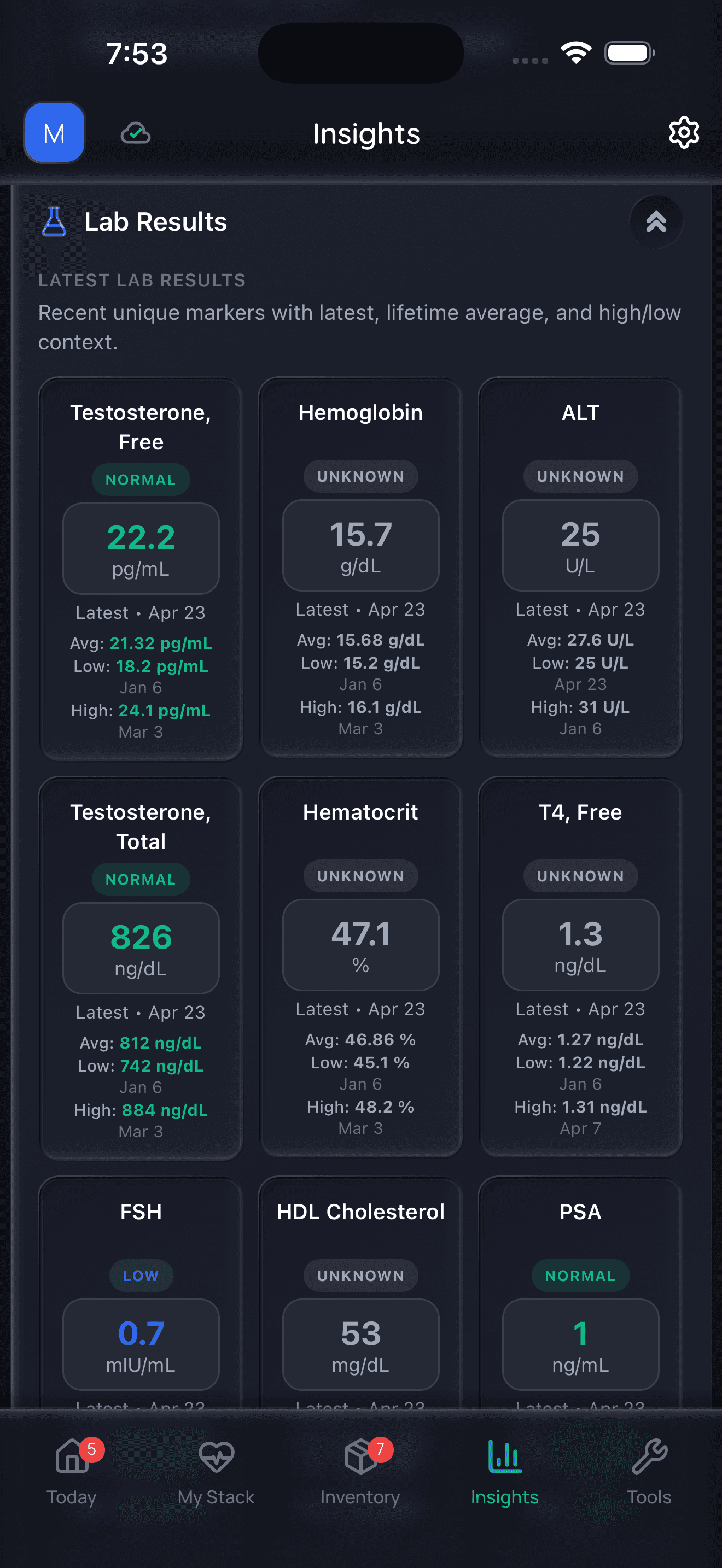
Doserly organizes data; it does not diagnose or interpret labs for you.
Timing Hypothesis & Window of Opportunity
The Basics
One of the biggest modern HRT ideas is that timing matters. Starting at age 52 with new bothersome symptoms is not the same clinical situation as starting for the first time at 67, 15 years after menopause. Those are different benefit-risk conversations.
The simplified rule you will often hear is "younger than 60 or within 10 years of menopause." That is not a magic cutoff, but it is the most commonly used evidence-based frame. It explains why the same therapy can look reasonable in one person and much less favorable in another.
The Science
NAMS and the Endocrine Society explicitly state that the benefit-risk ratio is most favorable in symptomatic women younger than 60 years or within 10 years of menopause onset.[1][3] WHI timing analyses showed more favorable coronary patterns closer to menopause and less favorable patterns further away.[6] ELITE provided randomized support for this biology by showing less progression of subclinical atherosclerosis when estradiol was started within 6 years of menopause, but not when started 10 or more years later.[8]
KEEPS complements this by showing that recently postmenopausal women using oral or transdermal starter regimens did not demonstrate major adverse cardiovascular signals over the study period and did show symptom benefits.[9][10] Taken together, these data support the modern counseling model: treat bothersome symptoms in the appropriate window, use the safest formulation that fits the patient, and do not treat HRT as universal cardiovascular prevention.
Interactions & Compatibility
Drug-drug interactions
- Thyroid hormone: oral estrogen can raise thyroxine-binding globulin; some levothyroxine users need dose reassessment after starting or stopping oral estrogen.
- Anticoagulants: systemic estrogen requires careful review in anyone already on anticoagulation or with thrombotic history.
- Lamotrigine: estrogen can reduce lamotrigine levels.
- CYP inducers: rifampin, carbamazepine, phenytoin, and St. John's Wort can lower estrogen exposure.
- Tamoxifen: menopause symptom management in breast cancer survivors requires oncology-informed planning; do not improvise systemic HRT around tamoxifen.
Supplement interactions
- St. John's Wort: may lower hormone exposure by inducing metabolism.
- Calcium / vitamin D / magnesium: commonly used alongside HRT for bone health; these are complementary rather than conflicting.
- Phytoestrogen supplements: usually not a major issue at food-level intake, but stacking multiple estrogenic therapies without clinician review can muddy symptom interpretation.
Lifestyle compatibility
- Smoking increases cardiovascular and thrombotic concern, especially with oral estrogen.
- Migraine with aura makes transdermal routes more attractive than oral routes.
- Obesity, immobility, or major upcoming surgery can change how safe the route choice is.
Related guides
- Estradiol
- Micronized Progesterone
- Levonorgestrel IUD
- Perimenopause
- Menopause
- Compounded & Bioidentical HRT
Decision-Making Framework
Starting HRT is best treated as a structured conversation, not a yes-or-no ideology test.
Step 1: Define the real treatment target
Ask what you are actually trying to improve:
- Hot flashes and night sweats?
- Sleep broken by vasomotor symptoms?
- Vaginal dryness or recurrent urinary symptoms?
- Mood or function that worsened with the menopause transition?
- Bone protection because of early menopause or low bone density?
Step 2: Clarify the clinical context
- Still have a uterus?
- Still cycling?
- Younger than 60 and within 10 years of menopause?
- Personal history of breast cancer, stroke, VTE, migraine with aura, liver disease, or significant cardiovascular disease?
Step 3: Match the route to the risk profile
- Transdermal estrogen often makes the most sense when vascular safety is a priority.
- Oral estrogen may still be reasonable in lower-risk patients when convenience, tolerance, or cost matters.
- Low-dose vaginal therapy may be enough when GSM is the main problem.
Step 4: Decide how success will be judged
Good decisions need an endpoint. Before starting, decide what would count as meaningful benefit by 8 to 12 weeks: fewer hot flashes, fewer wake-ups, better functioning at work, less vaginal pain, fewer rage episodes, better exercise tolerance, or all of the above.
Step 5: Plan the follow-up before the first dose
The best starts are not open-ended. They include a review date, a plan for what to do about spotting or side effects, and a clear path for when to escalate, switch, or stop.
Shared decision-making works best when both you and your provider have good data. Doserly gives you a personalized health picture that makes treatment discussions more meaningful: your symptoms, their severity, how they have changed over time, and how they connect to your current protocol.
Whether you are evaluating whether to start HRT, considering a switch to a different route, or discussing whether it is time to adjust your dose, having your own tracked data alongside the clinical evidence puts you in a stronger position to make decisions that reflect your individual experience and goals.
Keep side effects, flags, and follow-up notes visible.
Doserly helps you document safety observations, side effects, medication changes, and follow-up questions so important context is not scattered.
Safety log
Flags and notes
Safety notes are not emergency guidance; seek medical help when appropriate.
Administration & Practical Guide
Oral estrogen
- Take consistently at the same time each day.
- If nausea is an issue, some people tolerate it better with food.
- Oral route is often simple but less attractive when VTE or triglyceride concerns are present.
Transdermal patches
- Apply to clean, dry skin on the lower abdomen or buttock unless product instructions say otherwise.
- Rotate sites.
- Do not cut patches unless the product specifically allows it.
- Keep a fixed patch-change schedule because "I forgot which day I changed it" is one of the most common new-user problems.
Gels and sprays
- Allow to dry fully before dressing.
- Avoid transfer to partners, children, or pets before the site is dry.
- These are useful when patch irritation is a problem.
Bedtime progesterone
- Often taken at night because it can be sedating.
- New users should know that "sleepy" and "hungover" are both possible reactions.
- If progesterone causes unacceptable mood or next-day sedation, talk with the prescriber rather than silently pushing through.
Vaginal estrogen
- Use exactly as directed during loading and maintenance phases.
- It is often the right addition when systemic HRT helps hot flashes but vaginal or urinary symptoms persist.
Monitoring & Lab Work
Good HRT follow-up is mostly clinical, not laboratory-driven.
Before starting
- Symptom review and treatment goals
- Uterus status
- Blood pressure
- Personal/family history of breast cancer, VTE, stroke, liver disease, migraine with aura, and cardiovascular disease
- Bleeding history
- Current screening status: mammography as age/risk appropriate, cervical screening as applicable, bone-density context when relevant
Early follow-up
- Reassess at roughly 8 to 12 weeks after initiation or sooner if bleeding, side effects, or safety concerns arise
- Ask specifically about hot flashes, sleep, bleeding, breast tenderness, headaches, mood changes, and patch/gel adherence
- Recheck blood pressure and major interval history
Longer-term follow-up
- At least annual review for most stable users
- Repeat risk-benefit conversation
- Revisit route and dose
- Review ongoing need for therapy and whether GSM, libido, or sleep issues need separate attention
When labs matter
Routine estradiol or FSH testing is not standard for most starters aged 45 or over.[2] Labs become more relevant in special situations such as suspected premature ovarian insufficiency, persistent unexplained symptoms, unusual absorption concerns, testosterone use, thyroid adjustment, or evaluation of another condition that could mimic menopause symptoms.
Complementary Approaches & Lifestyle
HRT works best when it is part of a broader health strategy rather than the whole strategy.
- Resistance training and impact exercise: especially important for bone, strength, and insulin sensitivity
- Protein adequacy and Mediterranean-style eating: helpful for muscle maintenance, cardiovascular risk, and weight stability
- Sleep hygiene: still matters even if progesterone helps
- CBT for menopause symptoms: supported by NICE as an adjunct or alternative in selected patients[2]
- Smoking cessation: especially important if oral therapy is under consideration
- Bone-support nutrients: Vitamin D3, Magnesium, and appropriate calcium intake may complement HRT in bone-focused care
- Selective supplement use: Black Cohosh and Soy Isoflavones may be discussed when nonhormonal symptom support is needed, though evidence is weaker than for HRT
Lifestyle change is not a substitute for appropriate medical treatment in someone with severe vasomotor symptoms, sleep disruption, or early menopause. But it does change long-term outcomes and often improves how well the overall plan works.
Stopping HRT / Discontinuation
There is no universal deadline to stop HRT. That is one of the biggest updates in modern menopause care.
Some people stop because symptoms have settled and they want to see how they do without treatment. Some stop because risks changed. Some switch from systemic to local therapy because GSM remains while hot flashes are gone. Some continue longer because benefits remain meaningful and the risk profile still supports treatment.[1]
Discontinuation can be abrupt or gradual. Evidence does not prove one taper method is always better, but gradual dose reduction is commonly used when people want to reduce the chance of symptom rebound. The more important point is that stopping should be planned, not accidental. If severe symptoms return, the risk-benefit equation can be revisited rather than treating recurrence as failure.
Special Populations & Situations
Breast cancer survivors
Systemic HRT is generally avoided unless specialist-directed. GSM management may still include local options in some oncology-informed cases.
Premature ovarian insufficiency and early menopause
Hormone therapy often functions more like physiologic replacement than elective symptom treatment and is usually continued until around the average age of natural menopause unless contraindicated.[1][2]
Surgical menopause
Symptoms can begin abruptly and be more intense. Estrogen needs may be higher early on, and hysterectomy changes whether a progestogen is required.
Migraine with aura
Transdermal estrogen is generally preferred because of steadier levels and lower vascular concern than oral estrogen.
Prior VTE or thrombophilia
This is specialist territory. Transdermal routes may be safer than oral in selected cases, but do not self-initiate therapy here.
Strong cardiovascular risk profile
Risk stratification matters more than broad anti-HRT or pro-HRT rules. Route, dose, age, and timing are critical.
Ongoing regular cycles in perimenopause
Still-cycling patients often need more patience with regimen fitting because endogenous hormones are still fluctuating underneath treatment.
Regulatory, Insurance & International
United States
Systemic HRT is prescription-only. Multiple FDA-approved estradiol and progesterone products are available in oral, transdermal, and vaginal forms. Insurance coverage varies widely by route, brand, and formulary tier. Compounded menopause hormones are not FDA-approved substitutes for approved products.
United Kingdom
NHS prescribing follows NICE guidance. Oral, transdermal, and local products are widely used. The HRT Prescription Prepayment Certificate may reduce ongoing prescription costs for eligible users.
Canada
Health Canada-approved estrogen and progesterone products are available, with provincial formulary differences. Coverage varies by province and plan.
Australia
Approved HRT options are available through standard prescribing channels, with PBS coverage for some formulations and private out-of-pocket costs for others.
European Union
Availability varies by country, but estradiol-based and progestogen-based options are widely used. Country-specific formularies and reimbursement determine practical access.
The practical point across regions is the same: access often shapes route choice as much as biology does. The "best" regimen on paper is not useful if it is unaffordable or unavailable.
FAQ
1. Do I need hormone blood tests before starting HRT?
Usually not if you are 45 or older and have typical menopause symptoms. Most starts are based on symptoms and history, not hormone panels.[2]
2. If I still have a uterus, do I always need progesterone?
For systemic estrogen, generally yes. Endometrial protection matters.
3. Is a patch safer than a pill?
Often yes for clot-related risk, especially if VTE or vascular risk factors matter. But "safer" still depends on the individual.[11][12]
4. How fast should HRT work?
Some people feel changes within days or weeks. A fair assessment usually takes about 8 to 12 weeks, and sometimes longer.
5. Can I start HRT in perimenopause if I still get periods?
Yes, in some cases. The regimen design is just different, and expectations have to account for ongoing endogenous hormone fluctuation.
6. If I had a hysterectomy, do I still need progesterone?
Usually not for endometrial protection, because there is no endometrium to protect.
7. Will HRT make me gain weight?
HRT is not considered a primary cause of menopause weight gain. Menopause-related body-composition changes are multifactorial.
8. Does HRT prevent heart disease?
It should not be prescribed for that purpose. Timing-sensitive cardiovascular discussions matter, but symptom treatment remains the core indication.[1][3]
9. Can I use vaginal estrogen without systemic HRT?
Yes. That is often the right choice if GSM is the main issue.[1]
10. Do I have to stop after 5 years?
No fixed stop date applies to everyone. Duration should be individualized and reviewed regularly.[1]
11. What if progesterone makes me feel awful?
Tell your prescriber. Type, timing, regimen style, or route may need to change.
12. What if HRT helps some symptoms but not all of them?
That is common. Residual symptoms may need dose adjustment, an added local therapy, or evaluation for a non-menopause cause.
Myth vs. Fact
Myth: HRT is unsafe for everyone because of the WHI.Fact: WHI changed practice, but the current interpretation is age-, timing-, route-, and regimen-specific, not universally anti-HRT.[4][5][6][7]
Myth: You must get hormone bloodwork to know what to prescribe.Fact: Most people aged 45 or over with typical symptoms do not need routine hormone testing to start menopause treatment.[2]
Myth: Oral and transdermal estrogen are basically identical in risk.Fact: Symptom benefit may be similar, but thrombotic risk differs by route, with transdermal generally favored when vascular risk matters.[11][12]
Myth: Progesterone is optional if the estrogen dose is low.Fact: If you have a uterus and are using systemic estrogen, endometrial protection still matters.
Myth: If you do not feel perfect in 2 weeks, HRT failed.Fact: Some people respond quickly, but many need 2 to 3 months and sometimes a regimen adjustment.
Myth: Vaginal estrogen is the same as systemic HRT.Fact: Low-dose vaginal estrogen is primarily local therapy for GSM, not full-body symptom treatment.
Myth: Starting HRT late is the same as starting near menopause.Fact: Timing changes the benefit-risk balance.[1][6][8]
Myth: Compounded hormones are always more personalized and safer.Fact: Compounded products are not automatically safer and are not FDA-approved substitutes for approved bioidentical products.
Myth: HRT should be used to prevent dementia or heart disease.Fact: Current guidelines do not recommend starting HRT for those prevention goals.[1][3]
Myth: Stopping HRT always has to be abrupt at a fixed age.Fact: Duration and discontinuation are individualized and revisited over time.[1]
Sources & References
- "The 2022 Hormone Therapy Position Statement of The North American Menopause Society." Menopause. 2022;29(7):767-794.
- National Institute for Health and Care Excellence. Menopause: identification and management (NG23). Updated November 7, 2024.
- Stuenkel CA, et al. Treatment of Symptoms of the Menopause: An Endocrine Society Clinical Practice Guideline. J Clin Endocrinol Metab. 2015;100(11):3975-4011.
- Rossouw JE, et al. Risks and benefits of estrogen plus progestin in healthy postmenopausal women: principal results from the Women's Health Initiative randomized controlled trial. JAMA. 2002;288(3):321-333.
- Anderson GL, et al. Effects of conjugated equine estrogen in postmenopausal women with hysterectomy: the Women's Health Initiative randomized controlled trial. JAMA. 2004;291(14):1701-1712.
- Rossouw JE, et al. Postmenopausal hormone therapy and risk of cardiovascular disease by age and years since menopause. JAMA. 2007;297(13):1465-1477.
- Manson JE, et al. Randomized Trial Evaluation of the Benefits and Risks of Menopausal Hormone Therapy Among Women 50-59 Years of Age. Am J Epidemiol. 2020;189(9):879-889.
- Hodis HN, et al. Vascular Effects of Early versus Late Postmenopausal Treatment with Estradiol. N Engl J Med. 2016;374:1221-1231.
- Miller VM, et al. The Kronos Early Estrogen Prevention Study (KEEPS): what have we learned? Menopause. 2019;26(9):1071-1084.
- Santoro N, et al. Longitudinal changes in menopausal symptoms comparing women randomized to low-dose oral conjugated estrogens or transdermal estradiol plus micronized progesterone versus placebo: the KEEPS. Menopause. 2017;24(3):238-246.
- Canonico M, et al. Hormone therapy and venous thromboembolism among postmenopausal women: impact of the route of estrogen administration and progestogens: the ESTHER study. Circulation. 2007;115(7):840-845.
- Mohammed K, et al. Oral vs Transdermal Estrogen Therapy and Vascular Events: A Systematic Review and Meta-Analysis. J Clin Endocrinol Metab. 2015;100(11):4012-4020.
Related Guides & Cross-Links
Same Category
- Estradiol
- Micronized Progesterone
- Estradiol + Progesterone (Bijuva)
- Levonorgestrel IUD
- Compounded & Bioidentical HRT