
In this guide
What can help sexual health through menopause?
Start by separating the problem you want to change: dryness or pain, reduced desire, difficulty with arousal or orgasm, or a combination. Menopause-related genital symptoms can be treated, and distressing low desire can be assessed without assuming a single hormone is responsible. A plan may include local treatment, systemic menopause care when appropriate, review of other medicines, psychological or relationship support, or a specific prescription for an established indication. [1], [2], [4]
Low desire is not automatically a disorder. Whether it troubles you matters; another person's expectation is not the only measure of sexual health. The ISSWSH guideline uses a biopsychosocial assessment, considering physical symptoms, medications, emotional health and relationships together. It distinguishes hypoactive sexual desire disorder, or HSDD, from a low laboratory testosterone result or a simple difference in desire between partners. [2]
You do not have to tolerate painful sex, use penetration as the measure of success or be sexually active to deserve treatment for genital discomfort. Explain the outcome you want in your own words. “I want daily burning to stop” and “I miss wanting intimacy” are different goals that may need different treatments. [2], [4]
Which concern needs which discussion?
| Main concern | Useful next discussion | Important boundary |
|---|---|---|
| Dryness, burning or painful penetration | Genital assessment and local-care choices | Not every symptom is GSM or an infection |
| Low desire that causes personal distress | Biopsychosocial assessment for HSDD and contributors | A testosterone result does not diagnose HSDD |
| Poor sleep or hot flashes interfering with intimacy | Suitable menopause treatment and sleep support | Symptom relief does not guarantee restored desire |
| Change after another medicine | Review its indication and possible adverse effects | Do not stop needed treatment on your own |
| Bleeding or persistent unexplained pain | Clinical assessment | Do not assume lubrication or more hormone is the answer |
More than one concern can apply. An assessment may include a physical examination when appropriate, chosen investigations and a conversation about the kind of sexual activity you want. Tell the clinician if you prefer to discuss part of the history privately, need an interpreter or want to pause an examination. The aim is care you can use comfortably, not a standard performance target. [2], [4]
One conversation, distinct outcomes
Name the concern you want to change.
Comfort
Dryness, burning and pain need local assessment.
Desire
Personal distress and contributors guide HSDD assessment.
Context
Sleep, medicines and relationships can matter together.
Conceptual care map, not diagnosis or a response forecast. Sources: ISSWSH [2], AUA/SUFU/AUGS [4].
Why distinguish dryness, pain and desire?
Genitourinary syndrome of menopause, or GSM, includes menopause-associated genital, sexual and urinary symptoms. Dryness and tissue discomfort can make sexual contact unpleasant and reduce interest in it. Treating a painful symptom may remove an obstacle, but desire, arousal and orgasm are not interchangeable outcomes. Someone can want intimacy and experience pain, or have comfortable genital tissue and still feel distressed by low desire. [2], [4]
Describe the location and circumstances of discomfort: external burning, vaginal dryness, pain at entry, deeper pain, symptoms with everyday activity or symptoms only with a particular contact. Explain discharge, bleeding, urinary complaints and any product that seems to irritate. The AUA/SUFU/AUGS guideline stresses that assessment should consider other conditions and coexisting causes. A familiar menopause symptom should not prevent an examination or investigation when the presentation calls for it. [4]
Ask what the proposed treatment is meant to improve. A lubricant used during contact has a different role from a regularly used moisturizer or prescription vaginal medicine. A desire treatment does not diagnose an infection or treat every cause of pain. Clarifying the goal makes the follow-up more useful: less burning in daily life, comfortable contact, less sexual distress or another outcome you choose. [1], [2], [4]
Which local treatments can help GSM?
NICE recommends offering vaginal estrogen for menopause-associated genitourinary symptoms, including to people already using systemic HRT. Low-dose local products are intended mainly for genital and urinary symptoms; a small amount can enter the circulation, so “local” does not mean zero absorption. The formulation can be chosen together according to preference, ability to use it and the named product's information. [1]
Nonhormonal moisturizers or lubricants can be used alone or alongside vaginal estrogen. They can also be considered when estrogen is unsuitable or not wanted. If estrogen or these nonhormonal options are ineffective or not tolerated, NICE considers vaginal prasterone. It considers oral ospemifene when locally applied treatment is impractical, for example because of disability. These are different medicines and indications, not interchangeable versions of a lubricant. Product authorization, precautions and access depend on the jurisdiction. [1]
The local-estrogen guide explains why the vaginal route alone is not enough to determine systemic exposure. A low-dose local ring and a systemic estrogen ring are different treatments. Systemic estrogen with a uterus generally needs adequate endometrial protection; the usual low-dose local-estrogen approach differs. Check the actual product rather than copying a ring's schedule or protection rule to another ring. [5]
Persistent pain, bleeding or irritation deserves reassessment even if a prescription is being used correctly. It may be necessary to reconsider the diagnosis, formulation or another cause. NICE advises against vaginal laser treatment for GSM outside a randomized trial; marketing terms such as “rejuvenation” do not supply evidence of effectiveness or long-term safety. [1], [4]
What if you have had breast cancer?
Discuss symptoms with the treating team instead of assuming there are no options. NICE starts with nonhormonal moisturizers or lubricants for people with a personal breast-cancer history. It considers vaginal estrogen for persistent symptoms despite nonhormonal treatment, and calls for a breast-cancer specialist when an aromatase inhibitor is involved. It also explicitly acknowledges uncertainty about recurrence risk. [1]
That is a guideline discussion, not permission to ignore a product's contraindications. Current local-estrogen labels can contain cancer restrictions; a specialist may need to reconcile those with a particular patient's situation and guideline-supported use. Do not stop an aromatase inhibitor, tamoxifen or another cancer medicine to manage genital or sexual symptoms without the cancer team's plan. [1], [5]
If penetration is painful or unwanted, care can still focus on everyday comfort and other forms of intimacy. Explain the symptom burden and your goals rather than waiting until you feel the problem is serious enough to mention. The GSM guide and the named medicine guides provide more detail about local treatment and its limits.
When is testosterone a treatment discussion?
NICE says to consider testosterone for low sexual desire associated with menopause when HRT alone is not effective. The ISSWSH guideline gives a more detailed assessment framework: consider distressing HSDD after evaluating modifiable contributors, and use treatment with appropriate monitoring. This is a specific sexual-health indication, not a general recommendation for energy, weight loss, memory or muscle building. [1], [2]
The current regulatory context is product-specific. It is inaccurate to say that no women's testosterone product is licensed in the UK. The MHRA AndroFeme cream information, revised July 25, 2025, has an indication for HSDD in postmenopausal women on optimized HRT, after psychological and social factors and other treatable causes have been reviewed. NICE's note describing off-label use in November 2015 is historical; it does not erase a later product authorization or make every preparation licensed. [1], [3]
An indication and a decision to prescribe are separate. The label includes contraindications, transfer precautions, monitoring and a lack of long-term clinical-trial safety data beyond 24 months at physiological doses. Different countries and formulations can have different status. The women's testosterone guide covers the named products and clinical boundaries; this overview does not invent a dose or transfer a men's regimen into menopause care. [2], [3]
Keep indication, product and test separate
Testosterone is a specific treatment discussion, not a general wellness prescription.
Clinical indication
Distressing HSDD with contributor assessment.
Actual UK product
AndroFeme: postmenopausal HSDD on optimized HRT.
Laboratory role
Testing helps avoid excessive exposure; it does not diagnose HSDD.
Product-specific authorization and monitoring remain necessary; no doses shown. Sources: NICE [1], ISSWSH [2], MHRA [3].
What can a testosterone test tell you?
A testosterone result does not diagnose HSDD. ISSWSH uses the history and personal distress to assess the condition, with total testosterone measurements serving a different purpose during prescribing: establishing a baseline and helping avoid excessive exposure. The goal is not to push a result to a high number until desire returns. Assay methods, reference ranges and other medicines can affect interpretation. [2]
If treatment is being considered, ask what will be checked, when it will be repeated and which adverse effects to report. The AndroFeme label describes clinical and laboratory monitoring and advises stopping ineffective optimized therapy after six months. This is a product-specific clinical plan, not a reason to wait six months for an important unwanted effect. Acne, unwanted hair changes or signs of virilization require attention; some changes can be irreversible. [3]
Neither a low result nor a friend's improvement demonstrates that treatment is appropriate for you. If desire remains low, revisit the original goal, distress, pain, sleep and contributing conditions rather than automatically escalating. Physiological monitoring and symptom review are complementary, not substitutes for a clinical conversation. [2], [3]
How do other medicines and life circumstances fit?
The ISSWSH assessment includes potentially contributing medicines, physical conditions, mood and relationship factors. That does not mean a distressing symptom is “all in your head.” It means a treatment can fail if an important obstacle, such as pain or profound fatigue, is left out of the plan. Contributors may be addressed alongside a sexual-health medicine when clinically appropriate; they are not always a requirement to delay every other option. [2]
If an antidepressant seems related to a change, discuss benefits and adverse effects with its prescriber. NICE depression guidance recognizes effects on sexual function among treatment considerations. Stopping effective depression care abruptly to improve libido can create another problem. Ask whether a medication review, psychological support or another adjustment is appropriate for the original indication. Testosterone is not automatically an established solution for medication-induced sexual dysfunction. [2], [6]
Practical preferences also matter: privacy, time, trust, the kind of touch that feels comfortable and whether sexual activity is wanted at all. You can define improvement without a required frequency of intercourse. Partner participation is optional. A treatment discussion should respect your goals and consent, rather than use another person's satisfaction as the sole outcome.
Is contraception or infection prevention still relevant?
Menopausal HRT is not contraception. Pregnancy can remain possible during perimenopause, and a contraception plan depends on age, bleeding history, medicines and the method used. Testosterone is not a contraceptive either and should not be used as a presumed pregnancy safeguard. Ask about the actual contraception method rather than assuming irregular periods or a hormone prescription ends the question. [2], [7]
Menopause also does not remove the need to consider sexually transmitted infection prevention when relevant. Sexual history can help a clinician decide whether testing or another assessment is needed; a new symptom is not automatically GSM. Product compatibility matters too: the AndroFeme label says contact between condoms and that cream should be avoided. Follow the named product's instructions rather than assuming every cream is compatible with every barrier method. [3], [4]
The FSRH guidance cited here is UK guidance, not a universal stopping age or authorization for every method. The getting-started guide explains the distinction between HRT, contraception and uterine protection, with links to the specific questions.
What do public experiences show?
A June 2026 public discussion describes strong improvement in some menopause symptoms while desire remains a separate concern. Accessible replies include perceived benefit, little response, unwanted effects and difficulty finding a clinician comfortable with assessment. Another discussion describes improved stability without restored libido. Together they illustrate why an overall “HRT worked” verdict can miss the goal a person most wants to change. [8], [9]
These are selected public accounts, not a survey, treatment-response rate or comparison of medicines. No usernames, identifying histories, source doses, named-clinic promotions or self-adjustment instructions are retained. Claims in the threads about universal disease protection and broad testosterone benefits are not adopted. The useful questions concern appropriate assessment, mixed response and a follow-up plan. [8], [9]
What can you record before follow-up?
Record the concern you chose to address: dryness in everyday life, discomfort with contact, desire or distress about the change. You can use words rather than numbers. Note treatment start dates, the actual formulation and unwanted effects, while avoiding intimate details you do not want to store or share. These are editorial preparation suggestions, not a validated sexual-function instrument or diagnosis.
Improvement in one dimension need not imply improvement in another. At follow-up, explain both: “the burning eased, but I still miss desire,” or “contact is comfortable, and I am content without more interest.” Ask whether the diagnosis and treatment goal still fit and whether a separate referral would help. Menopause treatment is ordinarily reviewed at three months and annually, with earlier review for ineffective treatment or adverse effects; testosterone and other prescriptions can have distinct product-specific schedules. [1], [3]
A mixed response is useful information
Review the original goal and the actual change.
What improved?
Daily comfort, pain, desire and distress can move differently.
What stayed difficult?
Reassess contributors rather than automatically escalating.
What needs earlier contact?
Persistent unexplained pain, bleeding or important unwanted effects.
Editorial record suggestions with clinical context; not a validated sexual-function scale. Sources: [1]–[3].
What questions are worth asking?
Is low desire always a medical problem after menopause?
No. Personal distress and the wider context matter; a difference between partners' desire is not by itself HSDD. You can be content with less sexual interest and still seek care for dryness or pain. If the change troubles you, describe what you miss and how it affects your life rather than trying to meet a required frequency. The assessment considers health, medicines and relationships together. See assessment and whole-person care. [2]
Will vaginal estrogen restore my libido?
It can treat menopause-associated local symptoms, but relief of dryness or pain is not a guarantee of restored desire. Removing discomfort may help the kind of contact you want, while a distressing desire change can need its own assessment. Explain both goals at follow-up rather than calling the treatment a failure because only one improves. Choice of product, persistent symptoms and other possible causes still need review. See local care and assessment. [1], [4]
Can I use local treatment while already taking systemic HRT?
NICE recommends offering vaginal estrogen for genitourinary symptoms even when systemic HRT is already being used. The clinician should identify the actual local product and its precautions; “vaginal” does not always mean a low-dose local medicine. A systemic vaginal ring has different exposure and protection considerations. Tell the prescriber about every formulation so the complete plan can be reviewed without duplicating assumptions. See local care and the linked vaginal-estrogen guide. [1], [5]
Does a low testosterone result mean I need testosterone?
No. A result does not diagnose HSDD or explain every desire change. ISSWSH uses a clinical biopsychosocial assessment, while testosterone measurement has a different role in prescribing and avoiding excessive exposure. Discuss personal distress, pain, sleep, medicines and other contributors first or alongside appropriate treatment. There is no universal high hormone target that guarantees desire. See testing and testosterone for the indication, product and monitoring distinctions. [2], [3]
Is women's testosterone always off-label in the UK?
No. The MHRA AndroFeme information revised July 25, 2025 includes a specific HSDD indication for postmenopausal women on optimized HRT after relevant contributors are assessed. That does not license every testosterone preparation or every use. NICE's November 2015 off-label note describes an earlier regulatory situation. Ask about the named product, your country and the actual indication, not a family-wide claim. See testosterone and the dedicated medicine guide. [1], [3]
What if sex is painful after breast cancer treatment?
Ask the treating team about symptom care; you do not have to assume there are no options. NICE starts with nonhormonal moisturizers or lubricants and considers local estrogen for persistent symptoms in selected circumstances. Aromatase-inhibitor treatment calls for breast-specialist involvement, and recurrence uncertainty and product restrictions matter. Do not stop cancer treatment to manage symptoms on your own. A plan can prioritize everyday comfort and the activity you want. See cancer context. [1], [5]
Should I push through pain to keep the tissues healthy?
You do not need to use painful penetration as a treatment or success measure. Explain persistent pain, burning, bleeding or irritation so a clinician can assess the cause and discuss appropriate local care. GSM can coexist with other conditions, and a desire treatment will not address every cause of discomfort. Choose goals and activities that are comfortable and wanted, rather than following pressure or a fixed performance rule. See assessment and local care. [2], [4]
How do I judge whether treatment is helping?
Compare the outcome you wanted with what actually changed: daily comfort, pain with contact, desire or personal distress. These can move differently, so a short account is often clearer than a single overall score. Note unwanted effects and ask whether a different diagnosis or contributor needs attention. Product-specific testosterone review differs from ordinary menopause follow-up, and important adverse effects deserve earlier contact. See tracking and testing for practical preparation and clinical monitoring boundaries. [1], [3]
Glossary
Terms used in assessment and care.
- Perimenopause
- The transition toward menopause, with changing ovarian hormone patterns and possible symptoms.
- Menopause
- Usually identified after 12 months without a period when hormonal contraception does not explain the absence.
- Postmenopause
- The stage after menopause; symptoms can continue.
- Estrogen
- A hormone class that includes estradiol.
- Estradiol
- An estrogen made by the body and used in certain prescribed medicines.
- Progesterone
- A hormone and one member of the progestogen family.
- Progestogen
- A family of progesterone-like medicines; some provide uterine protection with estrogen.
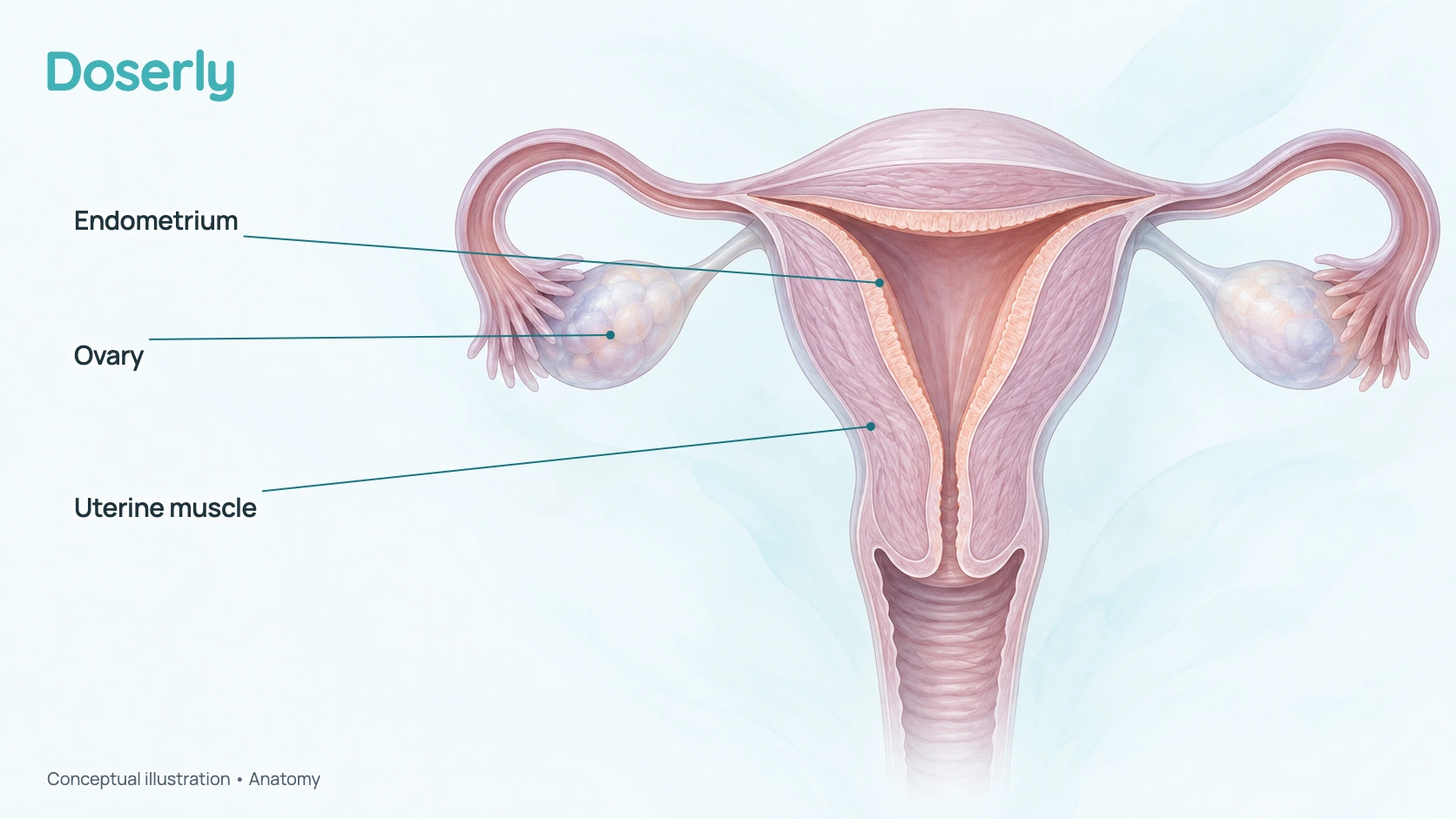
- Endometrium
- The lining inside the uterus.
- HRT / MHT
- Hormone replacement therapy; menopausal hormone therapy in this guide.
- Systemic treatment
- Treatment reaching the wider body through the circulation.
- Local vaginal estrogen
- A low-dose product intended mainly for genitourinary symptoms.
- Vasomotor symptoms
- Hot flashes and night sweats.
- Genitourinary syndrome of menopause
- A group of menopause-associated vaginal, sexual and urinary symptoms.
- Hysterectomy
- Surgical removal of the uterus; the extent of surgery matters.
- Sexual desire
- Interest in sexual activity; a lower level is not automatically a disorder.
- HSDD
- Hypoactive sexual desire disorder; assessment includes personal distress and relevant contributors.
- Arousal
- Sexual excitement or response, distinct from desire and orgasm.
- Orgasm
- A sexual climax; not a required outcome for every wanted sexual activity.
- Dyspareunia
- Pain associated with sexual intercourse; the cause requires assessment.
- Lubricant
- A product used to reduce friction during contact.
- Vaginal moisturizer
- A product used regularly for vaginal dryness, distinct from a hormone prescription.
- Testosterone
- An androgen; prescribing for women has specific indications, formulations and monitoring.
- SHBG
- Sex hormone-binding globulin, a blood protein considered in testosterone interpretation.
- Virilization
- Androgen-related physical changes, some of which may be irreversible.
- Biopsychosocial assessment
- Assessment considering physical health, emotional factors and social or relationship context.
- Aromatase inhibitor
- A medicine used in certain breast-cancer treatment plans that reduces estrogen production.
- Off-label
- Use outside the specific authorized product information in a jurisdiction.
- Systemic vaginal ring
- A vaginal estrogen product intended for systemic effects, distinct from a low-dose local ring.
- Contraception
- A method intended to prevent pregnancy; menopausal HRT is not contraception.
- Consent
- Voluntary agreement to an examination or activity; it can be withdrawn.
How was this guide researched?
Source selection and limits
Current NICE recommendations and full original ISSWSH 2021 guidance supply symptom, biopsychosocial and monitoring distinctions. The actual MHRA AndroFeme SmPC, revised July 25, 2025, was retrieved in full; its indication updates the older guideline licensing context without licensing every preparation. Original AUA/SUFU/AUGS GSM guidance, BMS May 2026 protection guidance and FSRH relevant sections were checked in this project. Adult-depression recommendations inform medication-review context, not an instruction to stop care. Public opening/posts and accessible comments supply mixed-response questions, with direct-versus-indexed access declared. No dose, universal hormone target, clinic promotion or sexual-performance standard is invented.
This is an AI-assisted Doserly editorial guide checked October 3, 2026. No independent clinician review is claimed. Doserly develops a commercial tracking app. Practical record-keeping suggestions are editorial advice, not a validated diagnostic scale or clinical-monitoring system. Material new guidance, labels or safety information trigger earlier source review.
Sources
Original source identities and access limitations; checked October 3, 2026.
Showing 9 sources
- 01
Recommendations | Menopause: identification and management | Guidance | NICE ↗
Full official guideline recommendations
Sections 1.3 diagnosis,1.5 symptoms,1.7 POI,1.8 treatment/bleeding and 1.9 review. UK guidance, not worldwide authorization.
- 02
International Society for the Study of Women’s Sexual Health Clinical Practice Guideline for the Use of Systemic Testosterone for Hypoactive Sexual Desire Disorder in Women ↗
Full original guideline via PMC
Biopsychosocial assessment, distress, testosterone testing, treatment boundaries and safety. Historical 2021 licensing statement superseded by actual UK product information.
- 03
AndroFeme 10 mg/mL cream: Summary of Product Characteristics ↗
Full original official SmPC PDF
Sections 4.1–4.5: postmenopausal HSDD on optimized HRT, contributor assessment, monitoring, six-month nonresponse, transfer and safety limitations. No regimen invented in overview.
- 04
Genitourinary Syndrome of Menopause: AUA/SUFU/AUGS Guideline (2025) ↗
Original guideline statements and relevant evidence discussion
Diagnosis, local care, formulation uncertainty, breast-cancer shared decisions, endometrial surveillance and follow-up. Short-term evidence limits retained; original table/text not reproduced.
- 05
Progestogens and endometrial protection ↗
Full original guidance PDF
Key points; uterine protection, sequential/continuous contexts, vaginal limitations, IUD and compounded preparations. No separate examples assembled into a prescription.
- 06
Depression in adults: treatment and management | Recommendations | NICE ↗
Full relevant original recommendation sections
Assessment, preferences, coordination, treatment review and immediate-risk referral; not every modality reproduced.
- 07
FSRH Guideline: Contraception for Women Aged Over 40 Years ↗
Original guideline PDF, relevant sections
Summary, sections 6–7 and table 9: contraception/HRT;52 mg IUD protection up to 5 years differs from contraception lifespan. UK scope retained.
- 08
Estrogen gave me my brain back. How do I get my libido back? ↗
Direct public opening and accessible comments via web; EXA direct fetch failed
Benefit in other symptoms with persistent desire concern; replies show perceived benefit, partial response, adverse effects and access. No doses or clinic promotions adopted.
- 09
My libido is completely gone even on hrt. Anyone else feel stable but libido hasn’t come back? ↗
Public search-indexed opening and accessible comments; direct EXA fetch failed
Stability without restored desire and mixed replies. No personal history, source schedule, unverified medicine access or response rate adopted.
No matching sources
Try a different term or show the full list.