
In this guide
What is Astaxanthin?
Astaxanthin is a red-orange xanthophyll from algae, microbes or synthesis. Small skin trials measure erythema and appearance, not skin-cancer prevention. No U.S. RDA, AI or UL exists for astaxanthin. EFSA’s 2020 assessment concerned combined dietary exposure and supplements containing up to 8 mg/day for adults; it is not a universal efficacy dose. [1]
Typical Astaxanthin Protocols
| Source and population | Form and amount each time | Frequency | Total exposure | Duration or boundary |
|---|---|---|---|---|
| Ito 2018 · 23 healthy Japanese adults | Algal astaxanthin 4 mg capsule | Once daily | 4 mg/day | 9 weeks before repeat UV testing |
| Tominaga 2017 · 65 healthy women | Astaxanthin 6 mg or 12 mg | Daily; administration count not reported | 6 or 12 mg/day | 16 weeks; seasonal skin measures |
| EFSA 2020 adult safety assessment | Food supplement astaxanthin up to 8 mg/day plus background diet | Daily exposure model | Up to 8 mg/day supplement in adults | Safety scope, not efficacy protocol |
These rows reproduce sources. Do not average them into one universal regimen.
From source to outcome
Not algal biomass.
Small surrogate study.
Not an efficacy target.
Which forms and label details matter?
Record source organism, natural extract versus synthetic material, free or esterified astaxanthin, active milligrams, carrier oil, antioxidants and allergens. Total algal biomass is not the astaxanthin dose.
How should it be stored?
Follow the label, close the container and protect it from heat, light and moisture.
Read the label before the claim
Keep the tested preparation.
Do not infer a universal regimen.
Appearance is not disease treatment.
What is it commonly used for?
Products are marketed for skin, eyes, exercise, inflammation and cardiovascular health. The most direct human skin evidence is small and sponsor-linked; broad disease claims exceed it.
What does human research show?
Ito randomized 23 healthy Japanese adults to 4 mg once daily or placebo. After nine weeks, the astaxanthin group had a greater change in minimal erythema dose and selected post-UV moisture measures; the tiny study does not establish sunscreen replacement or cancer prevention. [2] Tominaga assigned 65 healthy women to 6 mg/day, 12 mg/day or placebo for 16 weeks during a season when skin conditions worsened. Placebo deterioration was not seen on several measures in active groups, but company employment and environmental timing limit inference. [3] EFSA concluded that combined background intake with an 8 mg/day supplement was safe for adults, while younger age groups had different exposure conclusions. [1] A safety review covered 87 human studies but debated natural-versus-synthetic extrapolation; absence of a signal is not proof of unlimited dosing. [4]
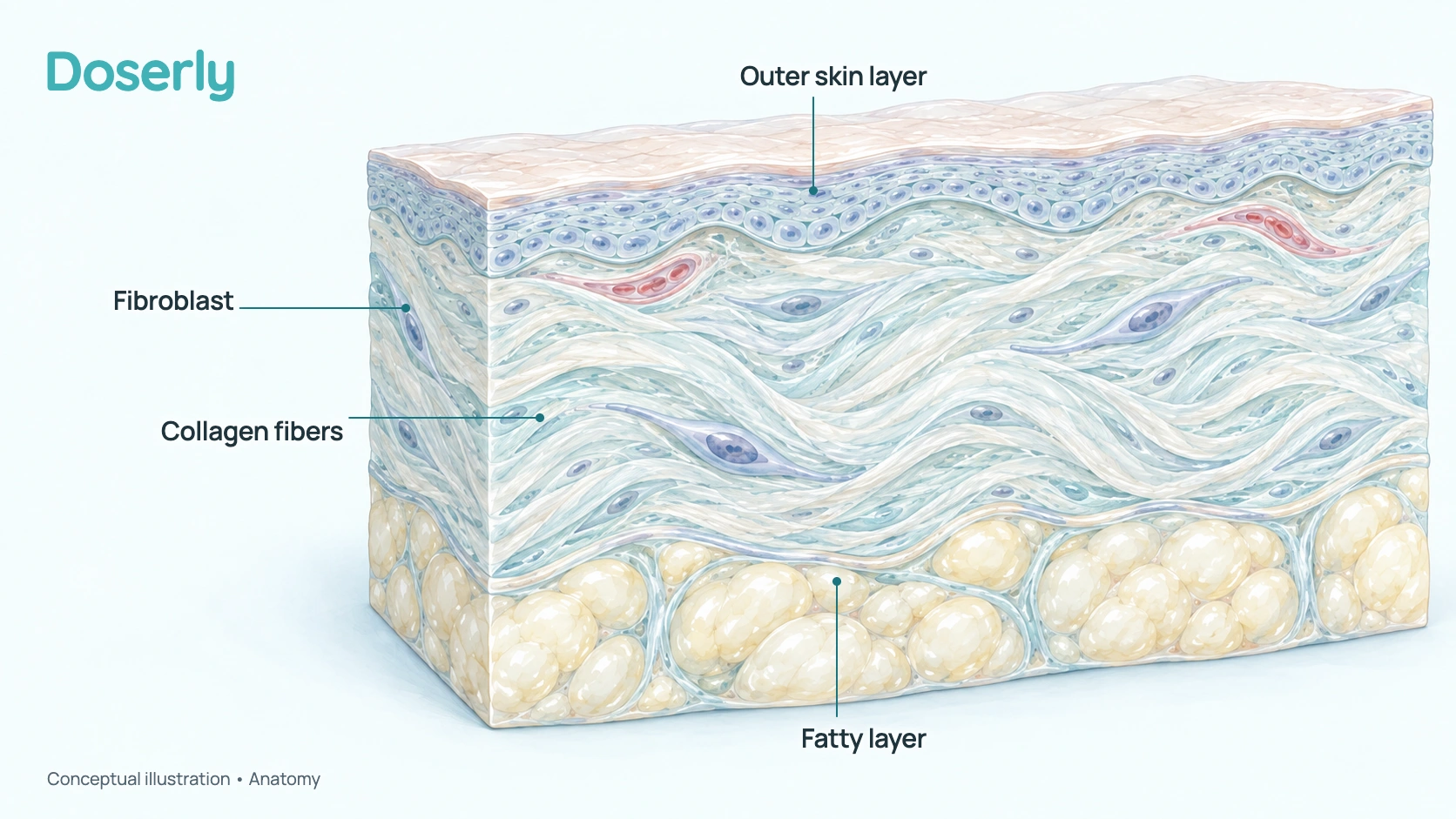
How might it act?
Astaxanthin can absorb light and alter redox or inflammatory signals in experimental systems. These mechanisms do not establish prevention of photoaging, eye disease or cardiovascular events in humans.
How does it compare with related products?
| Product | Identity to preserve | Evidence boundary |
|---|---|---|
| Collagen | Source, hydrolysis and peptide grams | Skin findings are sensitive to funding and study quality |
| Hyaluronic acid | Hyaluronan mass and molecular weight | Small product-linked oral trials |
| Keratin | Hydrolysate source and co-ingredients | Finished-product evidence cannot isolate generic keratin |
| Astaxanthin | Natural or synthetic source and active mg | Small skin trials do not establish disease prevention |
What are the risks and interactions?
Orange-red stool or skin discoloration and GI symptoms can occur. Review pregnancy, breastfeeding, allergy to source material, blood-pressure or glucose medicines, anticoagulants and surgery. It does not replace sun protection.
Which medicines require review?
Have the product reviewed with medicines, before surgery, and during pregnancy or breastfeeding. No universal separation interval is established.
Regulatory status: In the United States, supplements generally lack premarket efficacy approval. In Canada, verify the finished product’s NPN or DIN-HM and licensed conditions. [5], [6]
What should be monitored?
Record product, lot, form, amount per administration, frequency, daily total, co-ingredients, meals, symptoms, medicines, chosen outcome and review date.
What happens when it is stopped?
No ingredient-specific withdrawal syndrome is established. Record the stop date, symptoms and chosen outcome; seek care for a persistent serious symptom.
Seek prompt care for a serious allergic reaction, unusual bleeding, persistent palpitations, chest pain or another severe symptom.
What do public communities report?
Public reports can suggest questions to track, but they do not verify the product, dose or causality. This update did not newly quantify a community sample.
Common questions about Astaxanthin
Is astaxanthin a sunscreen?
No. It does not replace topical sunscreen, clothing or exposure reduction.
Does 8 mg/day work better?
EFSA’s 8 mg/day figure is a safety exposure scope for adults, not an efficacy target.
Are natural and synthetic astaxanthin identical evidence?
No. Source, isomers, esterification and tested preparation should be preserved.
Can it prevent skin cancer?
The cited trials did not test or establish that outcome.
Why can color change?
Astaxanthin is a pigment; stool or skin color changes are plausible at higher exposure.
What should I track?
Source, active mg, form, carrier, meals, color/GI effects, medicines, outcome and review date.
Glossary
Terms for reading the evidence.
- Active amount
- The declared amount of the studied ingredient, distinct from total blend mass.
- Formulation
- Source, processing, molecular size and co-ingredients that define the tested product.
- Randomized controlled trial
- A study assigning participants to intervention or comparator by chance.
- Funding sensitivity
- A result pattern that changes when studies are grouped by sponsor support.
- Endpoint
- The prespecified measurement used to judge a study result.
- Generalizability
- How well a result applies beyond the exact study product and population.
How this guide was researched
Accessible official sources and human reports were read on October 9, 2026. Titles, authors, journals, DOI, PMID and visible corrections were checked. An unreported frequency was not guessed.
How this guide was made
Research and drafting were AI-assisted. This draft awaits Doserly editorial review and independent clinical review. See the editorial policy.
Explore the sources
Sources preserve form, amount, frequency, population, duration and outcome.
Showing 6 sources
- 01
Safety of astaxanthin for its use as a novel food in food supplements. ↗
Official European safety assessment
Current page or report reviewed; scope and limits retained.
Detail: Adult combined-exposure conclusion for supplements up to 8 mg/day; younger groups differ.
- 02
The Protective Role of Astaxanthin for UV-Induced Skin Deterioration in Healthy People-A Randomized, Double-Blind, Placebo-Controlled Trial. ↗
Randomized UV-response trial
Current page or report reviewed; scope and limits retained.
Detail: 23 adults; 4 mg once daily; nine-week surrogate outcomes.
- 03
Protective effects of astaxanthin on skin deterioration. ↗
Randomized skin trial
Current page or report reviewed; scope and limits retained.
Detail: 65 women; 6 or 12 mg/day for 16 weeks; company-linked seasonal study.
- 04
Astaxanthin: How much is too much? A safety review. ↗
Safety review
Current page or report reviewed; scope and limits retained.
Detail: 87 human studies and natural-versus-synthetic safety discussion.
- 05
Questions and Answers on Dietary Supplements ↗
U.S. regulatory overview
Current page or report reviewed; scope and limits retained.
Detail: Supplements generally lack efficacy preapproval.
- 06
Product Licensing ↗
Canadian licensing overview
Current page or report reviewed; scope and limits retained.
Detail: Finished natural health products require licensing and authorized labels.
No matching sources
Try a different term or show the full list.