
In this guide
What is L-Lysine?
L-lysine is an indispensable amino acid used in body proteins. The WHO adult requirement concerns total dietary lysine, while a capsule may declare free lysine, lysine hydrochloride or the lysine portion of a blend. The dietary requirement describes total intake from foods and supplements combined; it does not prescribe a powder. [1]
Typical L-Lysine Research Protocols
| Source and population | Form and amount per administration | Frequency | Total exposure | Duration or window |
|---|---|---|---|---|
| Ghosh 2010 · 271 people in low-income peri-urban Ghanaian households | Two tablets: 1,200 mg lysine HCl, paper-reported as ~1,000 mg lysine/day | Two tablets daily with food; spacing not reported | Paper-reported ~1,000 mg lysine/day | 16 weeks |
| Griffith 1987 · 52 completers with frequently recurrent HSV | L-lysine monohydrochloride tablets providing 1,000 mg L-lysine per administration | Three times daily | 3,000 mg L-lysine/day | 6 months |
| DiGiovanna 1984 · 21 people with frequently recurrent HSV | Lysine hydrochloride 400 mg per administration | Three times daily | 1,200 mg lysine HCl/day | Treatment and prophylaxis trial |
These rows reproduce studies. Do not average their populations, forms, frequencies or durations into one regimen.
From dietary requirement to claim
Units, mixture, timing and endpoint stay attached to their source.
Should L-Lysine be cycled?
No verified trial establishes a cycle. A review point can limit indefinite use, but it does not prove a physiological reset.
What happens when it is stopped?
No withdrawal syndrome is established. An acute or short study cannot predict persistence after stopping.
Which foods provide it?
Meat, fish, eggs, dairy, soy and other legumes provide indispensable amino acids within complete protein matrices. Portions and digestibility vary; a value in mg/kg/day concerns total dietary intake. [1]
Which forms and label details matter?
The Ghana paper reported that two tablets provided 1,200 mg/day lysine hydrochloride, described as approximately 1,000 mg/day lysine. Treat that as the paper’s rounded product declaration, not a universal salt-to-lysine conversion. A label that lists only a salt mass does not establish the free-lysine mass.
How should it be stored?
Follow the finished-product label, close the container and protect it from moisture and heat. Keep the lot number and discard a product with a broken seal or unexplained change.
What is L-Lysine commonly used for?
Lysine is marketed for protein support and recurrent cold sores. Nutrition evidence in people at risk of inadequate intake and herpes trials answer different questions. The herpes studies are old, small and conflicting; they do not support substituting lysine for antiviral diagnosis, prevention or treatment.
What does human research show?
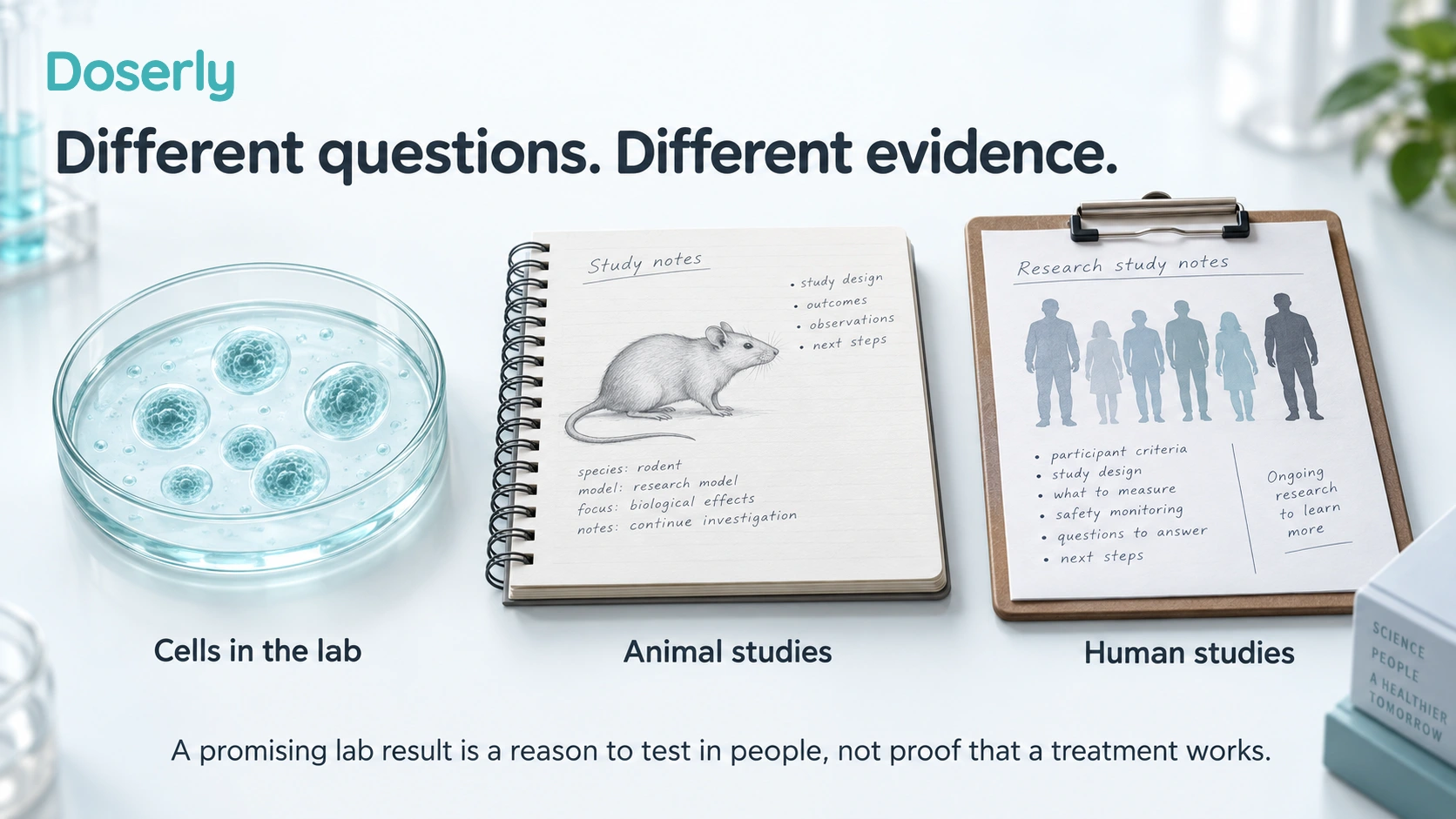
The randomized 16-week Ghana study found less diarrheal morbidity in children and respiratory morbidity in men, but not a universal effect across subgroups; its nutritional setting does not establish a general immune dose. [2] A 2017 review judged the herpes literature too limited and inconsistent for a firm prophylaxis regimen. [3] In one older multicenter trial, 27 lysine and 25 placebo completers received 1,000 mg L-lysine three times daily for six months; recurrences, symptom severity and healing time favored lysine. [4] A separate 21-person trial using 400 mg lysine hydrochloride three times daily found no substantial treatment or prevention benefit. [5] Dose, salt declaration, sample size and era differ, so these trials do not establish a modern standard of care.
How might it act?
As an indispensable amino acid, L-Lysine contributes to protein synthesis and specific metabolic pathways. A normal biochemical role does not establish that a concentrated dose improves symptoms in someone whose intake is adequate.
What are the risks and interactions?
Gastrointestinal symptoms are possible with concentrated amino-acid products. Kidney or liver disease, pregnancy, breastfeeding, childhood use and inherited amino-acid disorders warrant clinician review. A 16-week trial in one nutritional setting does not define chronic safety or a supplement UL.
Which medicines can interact?
Product-specific interaction data are limited. Have the complete formula reviewed by a pharmacist when taking medicines, especially for neurologic, psychiatric, metabolic, kidney or liver conditions. Do not invent a universal separation interval.
Regulatory status: In the United States, supplements are not routinely approved for efficacy before sale. In Canada, check the NPN or DIN-HM and licensed label conditions. [6], [7]
What should be monitored?
Record product, lot, form, amount per administration, frequency, daily total, co-ingredients, dietary context, symptoms and intended outcome. Set a review date before starting.
Stop and seek advice for an allergic reaction, persistent vomiting, unusual weakness, confusion or another severe symptom.
What do public communities report?
Public discussions often emphasize taste, timing and felt effects while omitting lot, total diet and validated outcomes. This update did not independently recrawl or quantify those posts.
How does L-Lysine compare?
Common questions about L-Lysine
Does lysine prevent cold sores?
The small older trials conflict, and the 2017 review did not establish a firm prevention regimen. Do not replace antiviral care with lysine.
Did lower and higher herpes doses perform the same way?
No. A 1,200 mg/day lysine-HCl trial was null, while a six-month trial at 1,000 mg L-lysine three times daily favored lysine. Differences in product declarations and studies prevent a simple threshold claim.
Is 1,200 mg lysine HCl exactly 1,000 mg lysine?
That is the rounded relationship reported for the Ghana trial product. Do not apply it as a universal chemical conversion.
Does the Ghana trial apply to well-nourished adults?
Not directly. It enrolled households at risk of lysine inadequacy and found subgroup-specific morbidity results.
Can lysine treat an active herpes lesion?
The evidence is inconsistent and old. Seek diagnosis and evidence-based antiviral advice for recurrent or severe lesions.
What should I track?
Record free lysine versus hydrochloride, the declared lysine amount, each administration, recurrence timing, lesion duration, other treatments and the review date.
Glossary
Plain terms for interpreting the evidence.
- Indispensable amino acid
- An amino acid the diet must provide.
- Dietary requirement
- Total required intake; not a supplement dose.
- Amount per administration
- Amount consumed at one time, distinct from daily total.
- NOAEL
- Highest tested level without an observed adverse effect in one study; not automatically a UL.
- UL
- Tolerable Upper Intake Level established by an authority.
- Biomarker
- Biological measure that is not necessarily a felt or clinical benefit.
How this guide was researched
The complete WHO report, accessible primary human studies and live NCBI metadata were read on October 9, 2026. Titles, authors, journals, DOI, PMID, available PMCID and CommentsCorrections were checked. Open full text supplied methods details; an unreported frequency was not guessed. [1], [2], [3], [4], [5], [6], [7]
How this guide was made
Research and drafting were AI-assisted. This draft awaits Doserly editorial review and independent clinical review. See the editorial policy.
Explore the sources
Sources preserve form, dose, frequency, population, duration and outcome.
Showing 7 sources
- 01
Protein and amino acid requirements in human nutrition: report of a joint WHO/FAO/UNU expert consultation ↗
Official expert report
Current primary source and identity checked; limitations are retained in the text.
Detail: Adult dietary requirement: 30 mg/kg/day; it is not a supplement dose.
- 02
Effect of lysine supplementation on health and morbidity in subjects belonging to poor peri-urban households in Accra, Ghana. ↗
Randomized controlled trial
Current primary source and identity checked; limitations are retained in the text.
Detail: 271 participants; the paper reports 1200 mg lysine HCl as approximately 1000 mg lysine/day for 16 weeks.
- 03
Lysine for Herpes Simplex Prophylaxis: A Review of the Evidence. ↗
Evidence review
Current primary source and identity checked; limitations are retained in the text.
Detail: Review of small, heterogeneous herpes studies; concludes longer controlled studies are needed.
- 04
Success of L-lysine therapy in frequently recurrent herpes simplex infection. Treatment and prophylaxis. ↗
Double-blind multicenter trial
Current primary source and identity checked; limitations are retained in the text.
Detail: 52 completers; 1000 mg L-lysine per administration three times daily for six months; outcomes favored lysine.
- 05
Failure of lysine in frequently recurrent herpes simplex infection. Treatment and prophylaxis. ↗
Double-blind controlled trial
Current primary source and identity checked; limitations are retained in the text.
Detail: 21 participants; 400 mg lysine hydrochloride three times daily; no substantial prevention or treatment benefit.
- 06
Questions and Answers on Dietary Supplements ↗
U.S. regulatory overview
Current primary source and identity checked; limitations are retained in the text.
Detail: Dietary supplements are not routinely FDA-approved for efficacy before sale.
- 07
Product Licensing ↗
Canadian licensing overview
Current primary source and identity checked; limitations are retained in the text.
Detail: Canadian authorization attaches to the licensed finished product and label conditions.
No matching sources
Try a different term or show the full list.