
In this guide
What is L-Ornithine?
L-ornithine is a non-protein-forming amino acid in the urea cycle. Its normal role in handling nitrogen does not show that extra oral ornithine improves sleep, exercise, growth hormone or ammonia-related disease in a healthy person. The WHO indispensable-amino-acid table assigns no adult dietary requirement to this compound; it therefore supplies no supplement target. [1]
Typical L-Ornithine Research Protocols
| Source and population | Form and amount per administration | Frequency | Total exposure | Duration or window |
|---|---|---|---|---|
| Miyake 2014 · 52 healthy Japanese workers with slight stress/fatigue | Two capsules supplied 500 mg LOHC, declared as 400 mg L-ornithine | Once nightly before bed | 400 mg/day net L-ornithine | 8 weeks |
| Miura study summarized in Yang 2025 · 23 healthy men | L-ornithine hydrochloride 6, 9.2 or 12 g/day | Daily total; administration count not recovered from the review | Up to 12 g/day LOHC (9.403 g/day net L-ornithine) | 28 days per level |
These rows reproduce studies. Do not average their populations, forms, frequencies or durations into one regimen.
From dietary requirement to claim
Units, mixture, timing and endpoint stay attached to their source.
Should L-Ornithine be cycled?
No verified trial establishes a cycle. A review point can limit indefinite use, but it does not prove a physiological reset.
What happens when it is stopped?
No withdrawal syndrome is established. An acute or short study cannot predict persistence after stopping.
Which foods provide it?
The body produces ornithine from arginine. Foods supply protein and urea-cycle precursors rather than the concentrated ornithine-hydrochloride preparations studied in trials. No food-equivalent supplement target follows from the WHO report. [1]
Which forms and label details matter?
Keep free L-ornithine, L-ornithine hydrochloride (LOHC), L-ornithine L-aspartate (LOLA) and ornithine alpha-ketoglutarate separate. Salt grams and net L-ornithine grams are not interchangeable. LOLA evidence in liver disease cannot be assigned to retail free ornithine.
How should it be stored?
Follow the finished-product label, close the container and protect it from moisture and heat. Keep the lot number and discard a product with a broken seal or unexplained change.
What is L-Ornithine commonly used for?
Ornithine is marketed for sleep, stress, fatigue, exercise and growth hormone. Direct evidence for sleep and stress is one small eight-week trial with selected Japanese workers and multiple outcomes. High-dose safety research does not establish benefit.
What does human research show?
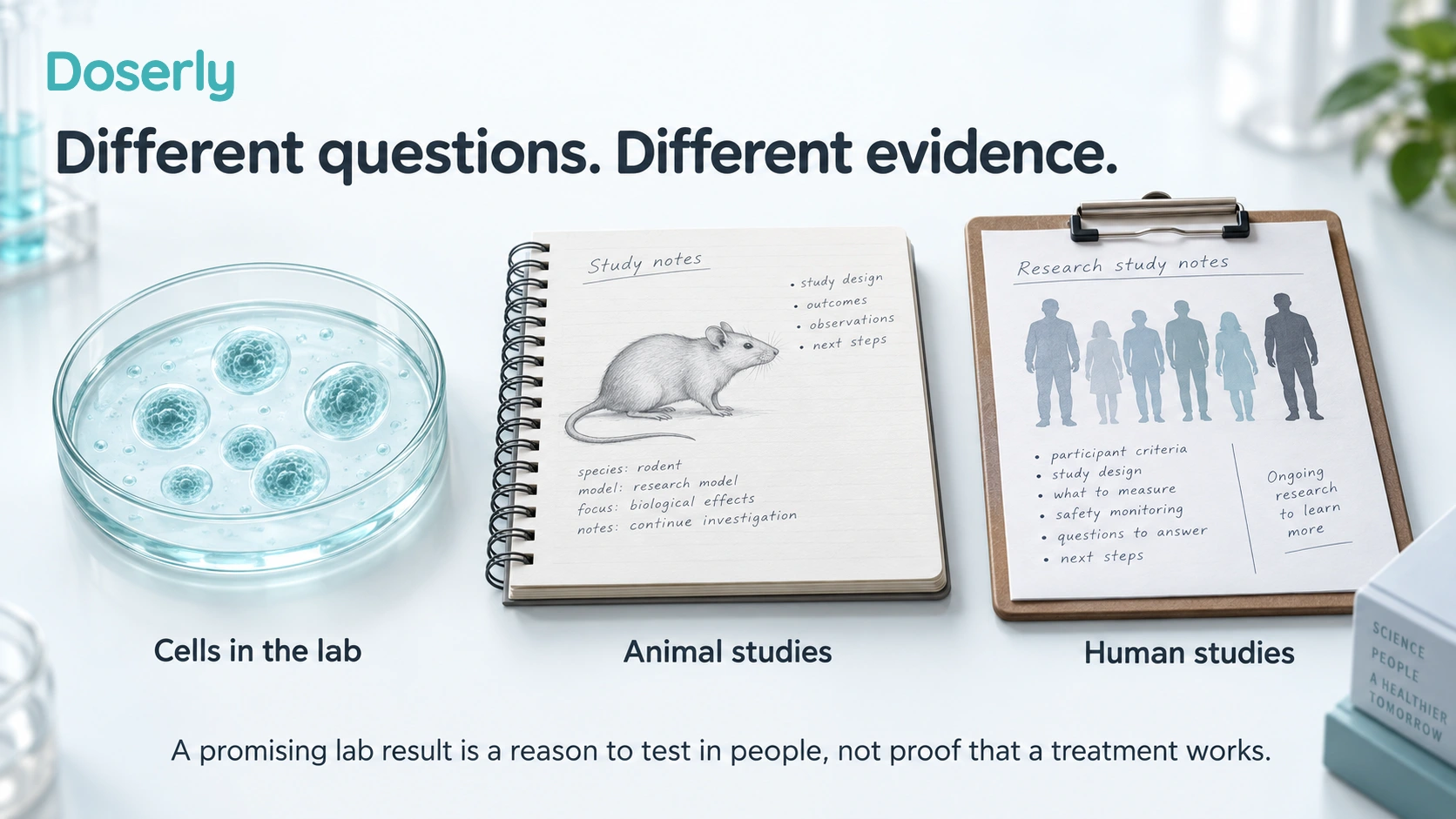
Miyake randomized 52 healthy Japanese workers who reported slight stress and fatigue to 400 mg net L-ornithine once before bed or placebo for eight weeks. Some cortisol-ratio, anger and subjective sleep measures favored ornithine, while several sleep subscales did not differ consistently. The product supplier employed study authors, the sample was small and multiple outcomes were tested; this is a preliminary signal, not an insomnia treatment. [2] Yang's 2025 systematic safety review included 22 oral studies in healthy people across LOHC, LOLA and ornithine alpha-ketoglutarate. It estimated a study-derived repeated-dose NOAEL of 12 g/day LOHC (9.403 g/day net ornithine), based mainly on a 23-person escalation study. GI symptoms occurred at a very high single dose. This form-specific safety estimate is not an official UL, efficacy regimen or evidence that lower amounts improve performance. [3]
How might it act?
Ornithine accepts carbamoyl phosphate in the urea cycle and also feeds polyamine and proline pathways. A urea-cycle intermediate can be biologically necessary without oral supplementation becoming a general detoxification or growth-hormone intervention.
What are the risks and interactions?
GI cramping and diarrhea are the main dose-limiting signals, especially after large single doses. High-ammonia symptoms, liver disease and urea-cycle disorders require medical assessment; do not substitute retail ornithine for LOLA or specialist treatment. Pregnancy, breastfeeding, childhood use and kidney disease lack adequate self-use evidence.
Which medicines can interact?
Product-specific interaction data are limited. Have the complete formula reviewed by a pharmacist when taking medicines, especially for neurologic, psychiatric, metabolic, kidney or liver conditions. Do not invent a universal separation interval.
Regulatory status: In the United States, supplements are not routinely approved for efficacy before sale. In Canada, check the NPN or DIN-HM and licensed label conditions. [4], [5]
What should be monitored?
Record product, lot, form, amount per administration, frequency, daily total, co-ingredients, dietary context, symptoms and intended outcome. Set a review date before starting.
Stop and seek advice for an allergic reaction, persistent vomiting, unusual weakness, confusion or another severe symptom.
What do public communities report?
Public discussions often emphasize taste, timing and felt effects while omitting lot, total diet and validated outcomes. This update did not independently recrawl or quantify those posts.
How does L-Ornithine compare?
| Option | What it supplies | Limit |
|---|---|---|
| L-Ornithine | One defined amino acid | Does not replace complete protein |
| EAAs | All nine indispensable amino acids | Formula varies |
| BCAAs | Leucine, isoleucine and valine | Six EAAs are absent |
| Complete protein | All EAAs in a protein matrix | Portion and digestibility vary |
Common questions about L-Ornithine
Does ornithine treat insomnia?
No. One small eight-week trial found selected subjective signals, with multiple outcomes and manufacturer links.
Is LOLA the same as L-ornithine powder?
No. L-ornithine L-aspartate is a defined combination used in a different clinical context; do not transfer its evidence to free ornithine.
Why distinguish LOHC from net ornithine?
The hydrochloride salt includes additional mass. The bedtime trial itself declared 500 mg LOHC as 400 mg L-ornithine.
Does the 12 g/day NOAEL mean 12 g is a good dose?
No. It is a short, form-specific safety finding, not an official UL or benefit regimen.
Can it manage high ammonia at home?
No. Confusion, severe lethargy or suspected liver-related hyperammonemia needs urgent medical care.
What should I track?
Record form, salt and net amounts, each administration, bedtime, sleep outcome, GI symptoms, medicines and review date.
Glossary
Plain terms for interpreting the evidence.
- Indispensable amino acid
- An amino acid the diet must provide.
- Dietary requirement
- Total required intake; not a supplement dose.
- Amount per administration
- Amount consumed at one time, distinct from daily total.
- NOAEL
- Highest tested level without an observed adverse effect in one study; not automatically a UL.
- UL
- Tolerable Upper Intake Level established by an authority.
- Biomarker
- Biological measure that is not necessarily a felt or clinical benefit.
How this guide was researched
The complete WHO report, accessible primary human studies and live NCBI metadata were read on October 9, 2026. Titles, authors, journals, DOI, PMID, available PMCID and CommentsCorrections were checked. Open full text supplied methods details; an unreported frequency was not guessed. [1], [2], [3], [4], [5]
How this guide was made
Research and drafting were AI-assisted. This draft awaits Doserly editorial review and independent clinical review. See the editorial policy.
Explore the sources
Sources preserve form, dose, frequency, population, duration and outcome.
Showing 5 sources
- 01
Protein and amino acid requirements in human nutrition: report of a joint WHO/FAO/UNU expert consultation ↗
Official expert report
Current primary source and identity checked; limitations are retained in the text.
Detail: Ornithine is not assigned an adult indispensable-amino-acid requirement in WHO Table 49; treatment of urea-cycle disorders or hepatic encephalopathy is a separate medical context.
- 02
Randomised controlled trial of the effects of L-ornithine on stress markers and sleep quality in healthy workers. ↗
Randomized sleep and stress trial
Current primary source and identity checked; limitations are retained in the text.
Detail: Two bedtime capsules supplied 500 mg LOHC, declared as 400 mg L-ornithine, once nightly for eight weeks in 52 workers.
- 03
Safety assessment of L-ornithine oral intake in healthy subjects: a systematic review. ↗
Systematic safety review
Current primary source and identity checked; limitations are retained in the text.
Detail: 22 studies; study-derived repeated-dose NOAEL 12 g/day LOHC (9.403 g/day net ornithine), not an official UL.
- 04
Questions and Answers on Dietary Supplements ↗
U.S. regulatory overview
Current primary source and identity checked; limitations are retained in the text.
Detail: Dietary supplements are not routinely FDA-approved for efficacy before sale.
- 05
Product Licensing ↗
Canadian licensing overview
Current primary source and identity checked; limitations are retained in the text.
Detail: Canadian authorization attaches to the licensed finished product and label conditions.
No matching sources
Try a different term or show the full list.