
In this guide
What is NAC?
N-acetyl-L-cysteine is an acetylated cysteine derivative used as a mucolytic and as a prescription antidote in acetaminophen poisoning. A retail capsule is not an emergency antidote plan and its glutathione-precursor role does not prove every marketed benefit. The WHO indispensable-amino-acid table does not assign this compound an adult dietary requirement; it therefore supplies no supplement target. [1]
Typical NAC Research Protocols
| Source and population | Form and amount per administration | Frequency | Total exposure | Duration or window |
|---|---|---|---|---|
| PANTHEON 2014 · 1,006 adults aged 40–80 with moderate-to-severe COPD | Oral NAC 600 mg per administration | Twice daily | 1,200 mg/day | 1 year |
| Zhou 2024 · 968 adults aged 40–80 with mild-to-moderate COPD | Oral NAC 600 mg per administration | Twice daily | 1,200 mg/day | 2 years |
| Grant 2009 · 50 adults with trichotillomania | Oral NAC 600 mg per administration initially | Twice daily for weeks 1–6, then 1,200 mg twice daily | 1,200 → 2,400 mg/day | 12 weeks |
| Bloch 2013 · 39 children/adolescents with trichotillomania | Oral NAC titrated from 600 mg once daily | Weekly titration to 1,200 mg twice daily | 600 → 2,400 mg/day | 12 weeks; no benefit over placebo |
These rows reproduce studies. Do not average their populations, forms, frequencies or durations into one regimen.
From dietary requirement to claim
Units, mixture, timing and endpoint stay attached to their source.
Should NAC be cycled?
No verified trial establishes a cycle. A review point can limit indefinite use, but it does not prove a physiological reset.
What happens when it is stopped?
No withdrawal syndrome is established. An acute or short study cannot predict persistence after stopping.
Which foods provide it?
Foods contain cysteine and protein, not the same concentrated NAC preparation used in trials or medicines. No NAC food-equivalent target follows from the WHO amino-acid report. [1]
Which forms and label details matter?
Keep oral supplement capsules, prescription oral solution, inhaled acetylcysteine and intravenous antidote protocols separate. Enter the NAC amount itself, not the weight of a blend, and record sulfur odor, effervescent excipients and co-ingredients.
How should it be stored?
Follow the finished-product label, close the container and protect it from moisture and heat. Keep the lot number and discard a product with a broken seal or unexplained change.
What is NAC commonly used for?
NAC is marketed for respiratory mucus, glutathione support and compulsive behaviors. Large COPD evidence is mixed by population and outcome, while one adult trichotillomania trial was positive and a similarly structured pediatric trial was null.
What does human research show?
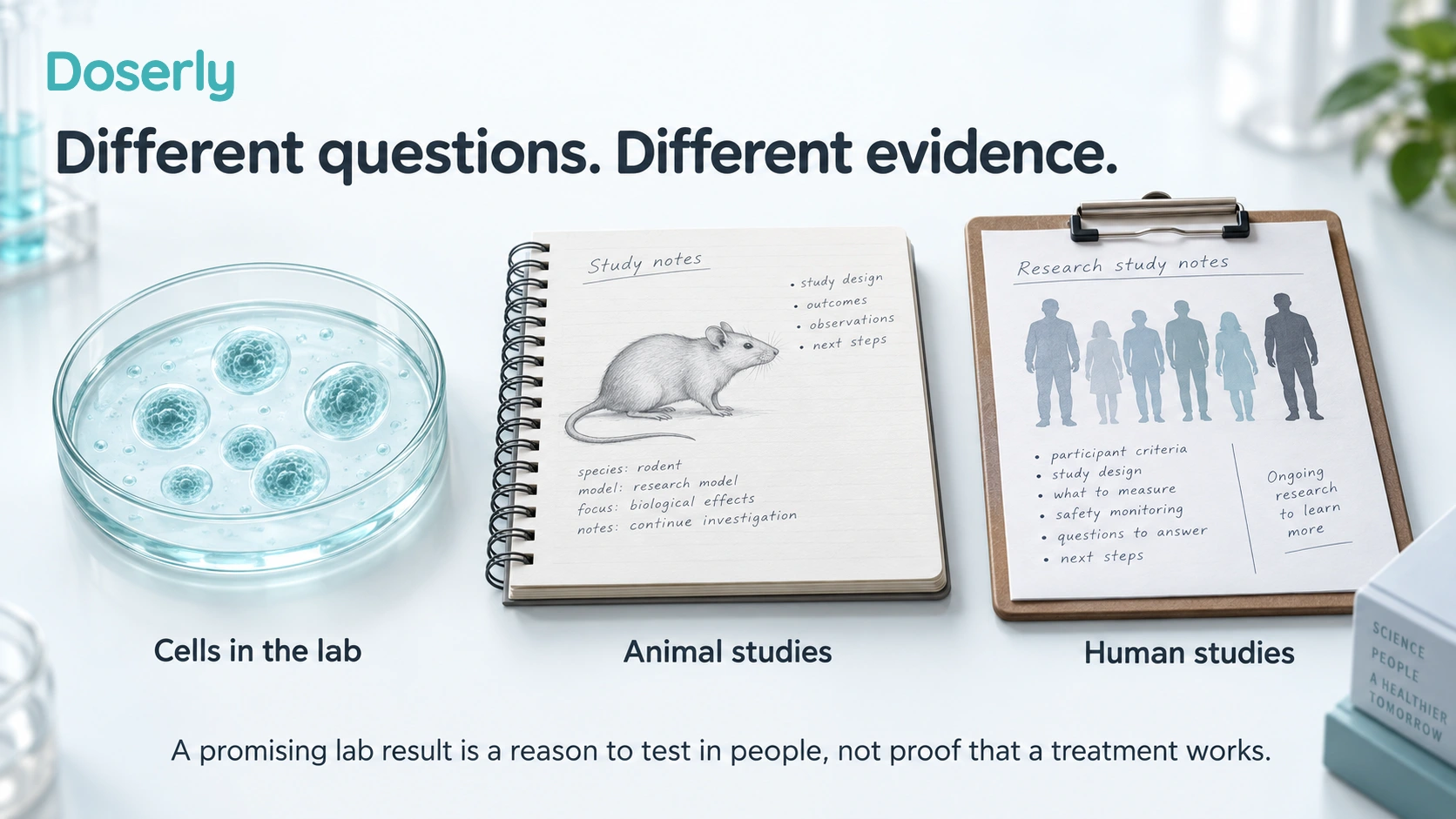
PANTHEON randomized 1,006 Chinese adults aged 40–80 with moderate-to-severe COPD to one 600 mg NAC tablet twice daily or placebo for one year. Among 482 analyzed per arm, annual exacerbations were 1.16 versus 1.49 per patient-year (RR 0.78, 95% CI 0.67–0.90); the symptom-based exacerbation definition, disease severity, setting and manufacturer funding constrain generalization. [3] Zhou later randomized 968 adults with mild-to-moderate COPD to the same 600 mg twice-daily schedule or placebo for two years. NAC did not significantly reduce annual exacerbations (0.65 versus 0.72 per patient-year; RR 0.90, 95% CI 0.80–1.02) or improve FEV1. The contrast shows that disease severity, risk and endpoint definitions matter; neither study creates a universal respiratory regimen. [2] In 50 adults with trichotillomania, Grant used 1,200 mg/day for six weeks then 2,400 mg/day for six weeks and found symptom improvement. [4] Bloch used a staged titration to 1,200 mg twice daily in 39 participants aged 8–17 and found no benefit over placebo on primary or secondary outcomes. Adult findings should not be generalized to children or to every compulsive behavior. [5] Acetaminophen poisoning is a time-critical medical emergency: prescription acetylcysteine dosing depends on route, timing, weight, measured concentration and clinical supervision. Retail self-treatment can dangerously delay care. [6]
How might it act?
NAC supplies cysteine for glutathione synthesis and can reduce disulfide bonds in mucus. It also affects redox and glutamate-related pathways. These mechanisms do not make an oxidative-stress biomarker, mucus change or psychiatric scale interchangeable with a clinical benefit.
What are the risks and interactions?
NAC can cause nausea, vomiting, diarrhea and sulfur odor; inhaled or intravenous medical forms have different bronchospasm and hypersensitivity risks. Asthma, bleeding risk, nitroglycerin use, pregnancy, childhood, liver disease or suspected acetaminophen overdose require professional review. Call emergency or poison services for overdose rather than taking a supplement.
Which medicines can interact?
Product-specific interaction data are limited. Have the complete formula reviewed by a pharmacist when taking medicines, especially for neurologic, psychiatric, metabolic, kidney or liver conditions. Do not invent a universal separation interval.
Regulatory status: In the United States, FDA’s August 2022 final guidance says NAC is excluded from the statutory dietary-supplement definition, while describing enforcement discretion for certain products that would otherwise be lawfully marketed and are not disease-labeled. This is conditional policy, not efficacy approval. In Canada, verify the finished product’s NPN or DIN-HM and licensed conditions. [6], [8]
What should be monitored?
Record product, lot, form, amount per administration, frequency, daily total, co-ingredients, dietary context, symptoms and intended outcome. Set a review date before starting.
Stop and seek advice for an allergic reaction, persistent vomiting, unusual weakness, confusion or another severe symptom.
What do public communities report?
Public discussions often emphasize taste, timing and felt effects while omitting lot, total diet and validated outcomes. This update did not independently recrawl or quantify those posts.
How does NAC compare?
Common questions about NAC
Can a NAC supplement treat acetaminophen overdose?
Do not self-treat. Poisoning requires immediate emergency or poison-center care and prescription dosing based on time, weight, laboratory results and route.
Does NAC prevent COPD exacerbations?
The large 2024 two-year trial did not show a significant reduction or FEV1 improvement. Other reviews vary by population and included studies, so no universal claim follows.
Does adult trichotillomania evidence apply to children?
No. The adult trial was positive, while the 8–17-year-old trial using up to 2,400 mg/day was null.
Is NAC simply dietary cysteine?
No. NAC is an acetylated preparation with different product and regulatory contexts; food protein does not provide the same exposure.
Is FDA enforcement discretion approval?
No. It is a conditional enforcement policy for qualifying products, and it does not approve disease claims or efficacy.
What should I track?
Record formulation, each dose, respiratory or behavioral outcome, medicines, asthma and bleeding context, GI effects, odor and review date.
Glossary
Plain terms for interpreting the evidence.
- Indispensable amino acid
- An amino acid the diet must provide.
- Dietary requirement
- Total required intake; not a supplement dose.
- Amount per administration
- Amount consumed at one time, distinct from daily total.
- NOAEL
- Highest tested level without an observed adverse effect in one study; not automatically a UL.
- UL
- Tolerable Upper Intake Level established by an authority.
- Biomarker
- Biological measure that is not necessarily a felt or clinical benefit.
How this guide was researched
The complete WHO report, accessible primary human studies and live NCBI metadata were read on October 9, 2026. Titles, authors, journals, DOI, PMID, available PMCID and CommentsCorrections were checked. Open full text supplied methods details; an unreported frequency was not guessed. [1], [2], [3], [4], [5], [6], [7], [8], [9]
How this guide was made
Research and drafting were AI-assisted. This draft awaits Doserly editorial review and independent clinical review. See the editorial policy.
Explore the sources
Sources preserve form, dose, frequency, population, duration and outcome.
Showing 9 sources
- 01
Protein and amino acid requirements in human nutrition: report of a joint WHO/FAO/UNU expert consultation ↗
Official expert report
Current primary source and identity checked; limitations are retained in the text.
Detail: N-acetyl-L-cysteine is not assigned an adult indispensable-amino-acid requirement in Table 49; cysteine nutrition and NAC product exposure are distinct.
- 02
Effect of high-dose N-acetylcysteine on exacerbations and lung function in patients with mild-to-moderate COPD: a double-blind, parallel group, multicentre randomised clinical trial. ↗
Large multicentre randomized COPD trial
Current primary source and identity checked; limitations are retained in the text.
Detail: 968 adults; 600 mg twice daily for two years; exacerbation rate and FEV1 outcomes were null.
- 03
Twice daily N-acetylcysteine 600 mg for exacerbations of chronic obstructive pulmonary disease (PANTHEON): a randomised, double-blind placebo-controlled trial. ↗
Randomized COPD exacerbation trial; corrected article and erratum checked
Current primary source and identity checked; limitations are retained in the text.
Detail: 1,006 Chinese adults with moderate-to-severe COPD; the corrected article reports 600 mg twice daily for one year and fewer symptom-defined annual exacerbations. The April 2014 erratum corrects the methods text to say the predetermined inhaled-corticosteroid user:nonuser ratio was about 4:6, based on investigator experience, and corrects the Research-in-context HIACE sample to 120. It does not change the NAC schedule or main exacerbation rate ratio.
- 04
N-acetylcysteine, a glutamate modulator, in the treatment of trichotillomania: a double-blind, placebo-controlled study. ↗
Randomized adult trichotillomania trial
Current primary source and identity checked; limitations are retained in the text.
Detail: 50 adults; 1,200 mg/day for six weeks then 2,400 mg/day for six weeks; symptoms improved.
- 05
N-Acetylcysteine in the treatment of pediatric trichotillomania: a randomized, double-blind, placebo-controlled add-on trial. ↗
Randomized pediatric add-on trial
Current primary source and identity checked; limitations are retained in the text.
Detail: 39 participants aged 8–17; weekly titration to 1,200 mg twice daily; no benefit over placebo.
- 06
CETYLEV (acetylcysteine) tablets for oral solution: prescribing information ↗
Prescription antidote label
Current primary source and identity checked; limitations are retained in the text.
Detail: Acetaminophen poisoning requires urgent, route- and weight-specific medical treatment; retail capsules are not a self-treatment plan.
- 07
Guidance for Industry: Policy Regarding N-acetyl-L-cysteine ↗
NAC-specific U.S. enforcement guidance
Current primary source and identity checked; limitations are retained in the text.
Detail: FDA states NAC is excluded from the supplement definition but describes enforcement discretion for qualifying products that would otherwise be lawful and are not disease-labeled.
- 08
Questions and Answers on Dietary Supplements ↗
U.S. regulatory overview
Current primary source and identity checked; limitations are retained in the text.
Detail: Dietary supplements are not routinely FDA-approved for efficacy before sale.
- 09
Product Licensing ↗
Canadian licensing overview
Current primary source and identity checked; limitations are retained in the text.
Detail: Canadian authorization attaches to the licensed finished product and label conditions.
No matching sources
Try a different term or show the full list.