
In this guide
What is NMN?
Nicotinamide mononucleotide, or NMN, is a molecule the body can convert to NAD. NAD participates in energy-transfer reactions and is consumed by enzymes involved in signaling and repair. NMN is related to niacin and nicotinamide riboside, but it has no established dietary requirement or anti-aging regimen.
The human evidence needs two lanes. Short studies show that oral NMN can change NAD-related biomarkers and one narrow population had improved muscle insulin sensitivity. Larger claims about energy, disease prevention and longevity remain unproven, and long-term safety is not established.
Typical NMN Protocols
| Purpose or population | Form and amount each time | Frequency | Total per day | Duration |
|---|---|---|---|---|
| Mechanistic metabolic trial, 25 overweight or obese postmenopausal women with prediabetes | NMN 250 mg | Once daily | 250 mg | 10 weeks |
This trial used a defined population and sensitive laboratory measures. It cannot establish that 250 mg treats diabetes, causes weight loss, benefits men or younger adults, or should be taken indefinitely. [1]
Where this schedule comes from
Two separate NMN questions
Regulatory status and clinical efficacy are not the same finding.
A 2026 NDI response is listed, but its exact letter was unavailable at review.
Does NMN need to be cycled?
No validated NMN cycle exists. Ten weeks describes one study, not an on/off rule. A clinician-reviewed personal trial should name the intended outcome, other NAD precursors, a review date and a stopping rule.
What happens when NMN is stopped?
A withdrawal syndrome has not been established. NAD-related biomarkers may return toward baseline after exposure ends. A change in energy or sleep after stopping cannot by itself prove that NMN caused it.
Does food provide NMN?
Small amounts of NMN occur in foods, but food exposure is far below research supplement amounts and no food-composition system supports an NMN intake target. Ordinary vitamin B3 adequacy should be discussed through established niacin equivalents, not an NMN milligram goal.
Which NMN form should a label identify?
Most records refer to beta-NMN, the biologically relevant isomer. Capsules, powders, enteric, sublingual and liposomal products are marketed, but robust head-to-head human evidence has not established that one delivery system produces better clinical outcomes.
The label should identify beta-NMN, amount per serving, servings per day, other NAD precursors and an authorized product identifier where applicable. Purity or absorption claims require product-specific evidence.
How should NMN be stored?
Follow the specific label for temperature, moisture, light and expiry. Keep the original container closed and away from children. Do not infer a universal refrigeration requirement from a different formulation.
What is NMN commonly used for?
NMN is marketed for longevity, energy, glucose control, physical performance and cognition. These uses are often extrapolated from animal models or NAD biology. Human trials are short and heterogeneous. A biomarker change or one mechanistic result does not establish prevention of aging-related disease.
What does human research show?
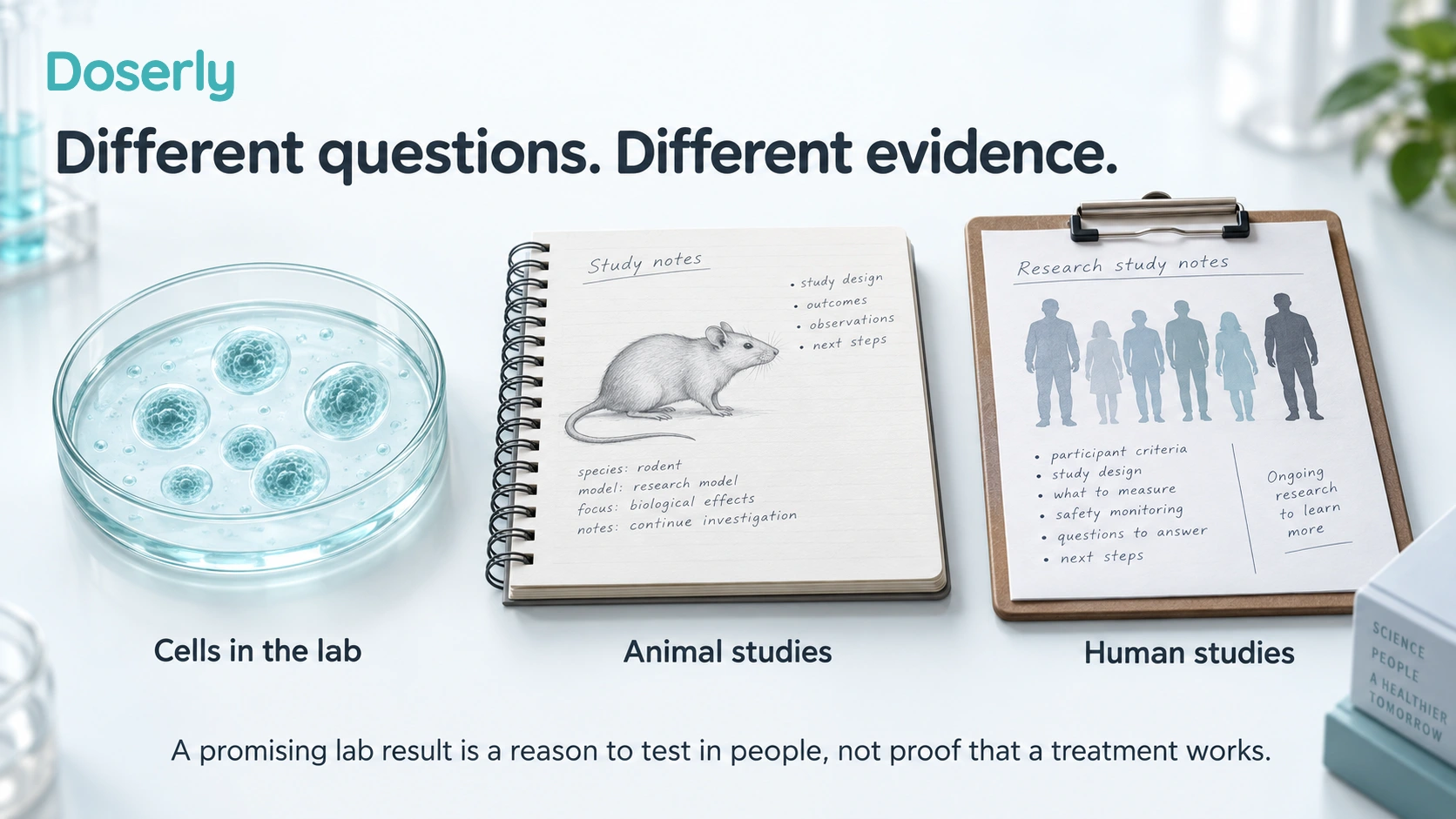
Yoshino and colleagues randomized 25 overweight or obese postmenopausal women with prediabetes to 250 mg NMN once daily or placebo for 10 weeks. Insulin-stimulated glucose disposal measured by hyperinsulinemic-euglycemic clamp and skeletal-muscle insulin signaling increased with NMN. The study was small, condition- and sex-specific, and mechanistic; it did not establish weight loss, diabetes prevention or a general anti-aging effect. [1]
Zhang and colleagues reviewed 12 randomized studies with 513 participants. NMN significantly raised blood NAD overall, but most clinically relevant glucose and lipid outcomes did not differ significantly from control. Seven studies had some risk-of-bias concerns and five were rated high risk. This synthesis supports target engagement more strongly than metabolic benefit. [2]
How does NMN work?
NMN adenylyltransferases convert NMN to NAD. NAD then supports redox reactions and serves as a substrate for sirtuins, PARPs and other enzymes. Oral NMN may be transformed before tissues use it, and the route across membranes remains biologically complex. The pathway explains why biomarkers can change; it does not predict a clinical response.
What are the risks?
Short adult trials have generally reported tolerability, but the database is too small and brief to define an NMN-specific UL or long-term cancer, liver, kidney or metabolic safety. Pregnancy, lactation, pediatric use and use during cancer treatment lack adequate clinical evidence. Stacking NMN with NR, niacinamide or high-dose niacin increases uncertainty.
Seek clinical review for severe or persistent symptoms and before use with glucose-lowering medicines, chemotherapy, investigational treatment, significant liver or kidney disease, pregnancy or breastfeeding. “No serious adverse event” in a short small trial does not mean no rare or delayed harm.
What is NMN’s current U.S. and Canadian status?
In the United States, supplements generally lack FDA premarket approval for safety or efficacy. [5] FDA concluded in 2022 that NMN was excluded from the dietary-supplement definition because of the drug-investigation provision. In its September 29, 2025 petition response, FDA amended that position: it stated NMN is a dietary ingredient under section 201(ff)(1)(E), is a new dietary ingredient, and that “marketing” for the drug-exclusion provision does not require lawful marketing. [3]
That decision is not blanket approval. An NDI still carries product-, formulation-, use- and safety-specific duties. FDA’s list updated July 9, 2026 shows NDIN 1444 for beta-NMN submitted November 17, 2025 and an FDA response dated January 28, 2026, but the public report field is “N/A.” The list says such files are in the process of being posted. Because the letter itself was unavailable, this guide makes no claim about its determination. [4]
In Canada, natural health products require a product licence and an authorized label with an NPN or DIN-HM. A U.S. petition response does not establish Canadian authorization. [6]
What should be monitored?
A personal record should distinguish NMN exposure from the clinical outcome that motivated it. Blood NAD is a target-engagement marker; it is not a validated longevity test. With metabolic disease or glucose-lowering therapy, clinician-directed glucose measures and medicines matter more than a consumer “biological age” score. Record concurrent NAD precursors, adverse effects and the review date.
What do public communities report?
People report energy, sleep changes or no noticeable effect, often while combining several “longevity” products. These reports cannot establish frequency or causation because product identity, dose, baseline status and co-interventions vary. This overhaul did not independently recrawl or quantify community posts.
How does NMN compare with nearby options?
| Guide | What it is | Key difference |
|---|---|---|
| Nicotinamide riboside | Nucleoside NAD precursor | Separate trials and a form-specific NR chloride regulatory record |
| Vitamin B3 | Niacin family nutrient | Established RDAs and a source-limited UL; different pharmacology |
| Vitamin B2 | Riboflavin coenzyme precursor | Established RDA and different evidence |
| Metformin | Prescription medicine | Not a dietary supplement; clinical indications and monitoring apply |
Common questions about NMN
Is NMN proven to slow aging?
No. Human trials have not demonstrated longer life or prevention of age-related disease.
Is 250 mg the established daily dose?
No. It is the exact amount in one 10-week trial of 25 postmenopausal women with prediabetes. [1]
Does NMN improve insulin sensitivity?
One small trial found improved muscle insulin sensitivity in a narrow population. Across 12 trials, most pooled glucose and lipid outcomes were not significantly different from control. [1], [2]
Is there an NMN UL?
No NMN-specific U.S. UL is established. That means evidence is insufficient to define one, not that all doses are safe.
Did FDA legalize every NMN supplement in 2025?
No. FDA amended its ingredient-exclusion interpretation and described NMN as an NDI. Product-specific notification, safety, manufacturing and labeling requirements still matter. [3]
What did FDA’s January 2026 NDI letter decide?
The current FDA list shows a January 28, 2026 response for NDIN 1444, but the letter was not publicly accessible when reviewed. This guide does not infer its conclusion. [4]
Is sublingual or liposomal NMN better?
Comparative human outcome evidence is insufficient to establish a broadly superior delivery system.
Glossary
Plain explanations of NMN evidence and regulation terms.
- Nicotinamide mononucleotide (NMN)
- An intermediate in NAD biosynthesis and the subject of short human supplementation trials.
- NAD
- A coenzyme in redox metabolism and a consumed substrate for several signaling enzymes.
- New dietary ingredient (NDI)
- A U.S. regulatory category that can carry premarket notification and safety duties for the applicable ingredient and conditions of use.
- Hyperinsulinemic-euglycemic clamp
- A controlled research method for measuring insulin sensitivity.
- Biomarker
- A measurable biological signal, such as blood NAD, that does not automatically establish a health benefit.
- Tolerable Upper Intake Level (UL)
- A chronic intake boundary; no NMN-specific U.S. UL is established.
How this guide was researched
This draft uses the primary Yoshino randomized trial, a 12-trial meta-analysis, FDA’s September 2025 petition response, FDA’s NDI list updated July 2026, and current U.S. and Canadian regulatory pages. Relevant text was retrieved and read on October 9, 2026. The exact January 2026 NDI response was unavailable and is not represented as verified.
How this guide was made
Research and drafting were AI-assisted. This draft awaits Doserly editorial and independent clinical review. Doserly makes a tracking app and operates Doserly Academy, both promoted here. Read the editorial policy.
Explore the sources
Primary clinical and regulatory sources answer separate NMN questions.
Showing 6 sources
- 01
Nicotinamide mononucleotide increases muscle insulin sensitivity in prediabetic women. ↗
Randomized placebo-controlled trial
Primary abstract, full-text record and trial description read.
Detail: 25 overweight or obese postmenopausal women with prediabetes; NMN 250 mg once daily for 10 weeks; clamp and muscle-signaling outcomes.
- 02
Efficacy of oral nicotinamide mononucleotide supplementation on glucose and lipid metabolism for adults: a systematic review with meta-analysis on randomized controlled trials. ↗
Systematic review and meta-analysis
Abstract and bibliographic record read.
Detail: 12 trials, 513 participants, blood NAD and clinical metabolic outcomes; seven studies with some risk-of-bias concerns and five at high risk.
- 03
FDA response to citizen petition FDA-2023-P-0872 regarding NMN ↗
Regulatory primary source
Official petition-response PDF read.
Detail: Amended dietary-ingredient/exclusion interpretation, NDI conclusion and market/IND sequence. One OCR rendering misread 2025 as 2029; docket metadata and companion response establish 2025.
- 04
Submitted 75-Day Premarket Notifications for New Dietary Ingredients ↗
Regulatory primary source
Official list read; exact linked response unavailable.
Detail: NDIN 1444 beta-NMN/Effepharm, submitted 17 Nov 2025, response dated 28 Jan 2026, report number N/A; no determination inferred.
- 05
Questions and Answers on Dietary Supplements ↗
Regulatory overview
Current official page reviewed.
Detail: General U.S. dietary-supplement framework.
- 06
Product Licensing ↗
Regulatory overview
Current official page reviewed.
Detail: Canadian licensing and NPN or DIN-HM.
No matching sources
Try a different term or show the full list.