
Vitamin B2 (Riboflavin): The Complete Supplement Guide
On this page
Quick Reference Card
Attribute
Common Name
- Detail
- Vitamin B2 (Riboflavin)
Attribute
Other Names / Aliases
- Detail
- Riboflavin, riboflavine, vitamin G (historical), lactoflavin
Attribute
Category
- Detail
- Water-Soluble Vitamin (B-complex)
Attribute
Primary Forms & Variants
- Detail
- Free riboflavin (most common supplement form); riboflavin 5'-monophosphate (FMN, also called riboflavin-5'-phosphate); FAD and FMN are the active coenzyme forms in the body
Attribute
Typical Dose Range
- Detail
- 1.1-1.3 mg/day (RDA for adults); 400 mg/day (most studied dose for migraine prevention); 1.6-25 mg/day (deficiency repletion)
Attribute
RDA / AI / UL
- Detail
- RDA: 1.3 mg/day (males 14+), 1.1 mg/day (females 19+), 1.4 mg/day (pregnancy), 1.6 mg/day (lactation). AI: 0.3 mg (0-6 mo), 0.4 mg (7-12 mo). No UL established (IOM 1998).
Attribute
Common Delivery Forms
- Detail
- Tablet, capsule, liquid, B-complex formula, multivitamin
Attribute
Best Taken With / Without Food
- Detail
- Higher doses (10-30 mg+) are better absorbed with food; lower doses (5 mg or less) show similar absorption with or without food
Attribute
Key Cofactors
- Detail
- Works synergistically with other B vitamins, particularly B6 (requires FMN for activation), folate/B9 (MTHFR enzyme requires FAD), and B3/niacin (tryptophan-to-niacin conversion requires FAD). Iron utilization also depends on adequate riboflavin status.
Attribute
Storage Notes
- Detail
- Store in a cool, dry, dark place. Highly sensitive to light (UV and visible light cause rapid degradation). Relatively heat-stable.
Overview
The Basics
Riboflavin is one of the eight B vitamins, and it plays a role in practically every energy-producing process in your body. Your cells rely on two molecules made from riboflavin, called FMN and FAD, to convert food into usable energy. If you think of your metabolism as a factory production line, riboflavin is one of the workers who shows up at nearly every station.
Beyond energy production, riboflavin helps your body maintain its antioxidant defenses, produce red blood cells, and keep homocysteine (an amino acid linked to heart health when elevated) at healthy levels. It also supports the activation of several other B vitamins, making it something of a team player in the B-complex family [1][2].
Most people in the United States get enough riboflavin from their diet, particularly from dairy products, eggs, lean meats, and fortified grains. True clinical deficiency is rare in developed countries. However, suboptimal riboflavin status may be more common than previously thought, with some studies suggesting that a significant portion of the population, especially older adults, may have levels below the optimal range even when meeting the RDA [3].
Riboflavin has gained particular attention for its potential role in migraine prevention. High-dose supplementation (400 mg/day) has been studied for reducing migraine frequency, and several headache societies now include it in their prevention guidelines [4][5].
The Science
Riboflavin (7,8-dimethyl-10-ribityl-isoalloxazine) is a water-soluble vitamin that serves as the precursor to two essential flavocoenzymes: flavin mononucleotide (FMN, also known as riboflavin-5'-phosphate) and flavin adenine dinucleotide (FAD). These coenzymes participate in reduction-oxidation (redox) reactions catalyzed by flavoproteins, with approximately 84% of flavoproteins utilizing FAD and 16% utilizing FMN [3].
In cellular energy metabolism, FMN functions as the prosthetic group of Complex I (NADH:ubiquinone oxidoreductase) of the mitochondrial electron transport chain, while FAD participates in Complex II (succinate dehydrogenase), amino acid catabolism, fatty acid beta-oxidation, and the tricarboxylic acid (TCA) cycle [3]. FAD also serves as the cofactor for glutathione reductase, the enzyme responsible for regenerating reduced glutathione (GSH) from its oxidized form (GSSG), thereby linking riboflavin status directly to the cellular antioxidant defense system [3].
Four riboflavin-dependent enzymes participate in folate metabolism and the methionine-homocysteine cycle: methylenetetrahydrofolate reductase (MTHFR), methionine synthase reductase (MTRR), dimethylglycine dehydrogenase (DMGDH), and sarcosine dehydrogenase (SARDH) [3]. This involvement in one-carbon metabolism underlies the relationship between riboflavin status, homocysteine concentrations, and the MTHFR 677C>T polymorphism [6].
Additional biosynthetic roles include: FAD-dependent protein folding in the endoplasmic reticulum, cholesterol biosynthesis (via squalene monooxygenase and 3-beta-hydroxysterol 24-reductase), coenzyme A synthesis from pantothenic acid, niacin synthesis from tryptophan, vitamin B6 activation to pyridoxal 5'-phosphate, and heme biosynthesis [3].
Chemical & Nutritional Identity
Property
Chemical Name
- Value
- 7,8-Dimethyl-10-[(2S,3S,4R)-2,3,4,5-tetrahydroxypentyl]benzo[g]pteridine-2,4(3H,10H)-dione
Property
Synonyms
- Value
- Riboflavin, vitamin B2, vitamin G (historical), lactoflavin, riboflavine
Property
Molecular Formula
- Value
- C17H20N4O6
Property
Molecular Weight
- Value
- 376.36 g/mol
Property
CAS Number
- Value
- 83-88-5
Property
PubChem CID
- Value
- 493570
Property
Category
- Value
- Water-soluble vitamin; B-complex member; flavin coenzyme precursor
Property
Active Coenzyme Forms
- Value
- Flavin mononucleotide (FMN); Flavin adenine dinucleotide (FAD)
Property
RDA (IOM 1998)
- Value
- Males 14+: 1.3 mg/day; Females 19+: 1.1 mg/day; Pregnancy: 1.4 mg/day; Lactation: 1.6 mg/day
Property
EAR (IOM 1998)
- Value
- Males 19+: 1.1 mg/day; Females 19+: 0.9 mg/day
Property
AI (IOM 1998)
- Value
- 0-6 months: 0.3 mg/day; 7-12 months: 0.4 mg/day
Property
UL
- Value
- Not established (no adverse effects observed at 400 mg/day for 3+ months)
Property
DV (FDA)
- Value
- 1.3 mg for adults and children age 4+
Property
Physical Properties
- Value
- Yellow-orange crystalline powder; naturally fluorescent under UV light; water-soluble; heat-stable (melting point 278-282 C); highly light-sensitive
More than 90% of dietary riboflavin is in the form of FAD or FMN bound to proteins in food. The remaining 10% consists of the free form and glycosides or esters [1][2]. In supplements, the two most common forms are free riboflavin and riboflavin 5'-monophosphate (the FMN form). Both forms are absorbed efficiently; the FMN form is hydrolyzed to free riboflavin in the intestine prior to absorption [3].
The distinction between supplement forms is less clinically significant than it is for some other B vitamins (such as methylcobalamin vs. cyanocobalamin for B12), because the body converts free riboflavin to FMN and then to FAD through sequential phosphorylation and adenylation reactions catalyzed by riboflavin kinase and FAD synthase, respectively [3].
Mechanism of Action
The Basics
Riboflavin's main job is to serve as the raw material for two helper molecules, FMN and FAD, that your body's enzymes need to carry out hundreds of chemical reactions. The most important of these reactions involve energy production: converting the carbohydrates, fats, and proteins you eat into ATP, the energy currency your cells actually use.
Think of FMN and FAD as shuttle buses for electrons. In the process of breaking down food for energy, electrons need to be moved from one station to another inside your cells' power plants (mitochondria). FMN and FAD are the vehicles that carry these electrons along the chain, making it possible for energy production to proceed efficiently [3].
Riboflavin also supports your body's antioxidant defenses. One of the most important antioxidants your body produces is glutathione, and the enzyme that recycles used glutathione back into its active form requires FAD to function. Without adequate riboflavin, this recycling process slows down, leaving your cells more vulnerable to oxidative damage [3].
A lesser-known but increasingly appreciated role is riboflavin's involvement in processing homocysteine, an amino acid that, when elevated, is considered a risk factor for cardiovascular disease. An enzyme called MTHFR, which helps convert homocysteine into the harmless amino acid methionine, depends on FAD as its cofactor. People who carry certain genetic variants of the MTHFR gene may benefit particularly from adequate riboflavin intake [6].
The Science
Riboflavin functions exclusively through its coenzyme derivatives, FMN and FAD. The conversion pathway proceeds as follows: riboflavin is phosphorylated by riboflavin kinase (EC 2.7.1.26) using ATP to form FMN, which is subsequently adenylated by FAD synthase (FMN adenylyltransferase, EC 2.7.7.2) to produce FAD [3].
In mitochondrial oxidative phosphorylation, FMN serves as the prosthetic group of NADH:ubiquinone oxidoreductase (Complex I), accepting two electrons from NADH and transferring them to iron-sulfur clusters within the complex. FAD is covalently bound to succinate dehydrogenase (Complex II), linking the TCA cycle directly to the electron transport chain. FAD also functions as the cofactor for the electron-transferring flavoprotein (ETF) and ETF-ubiquinone oxidoreductase, which channel electrons from fatty acid beta-oxidation and certain amino acid degradation pathways into the respiratory chain [3].
The glutathione reductase reaction (GSSG + NADPH -> 2 GSH) is FAD-dependent, establishing riboflavin as a critical link between energy metabolism and the thiol-based antioxidant system. The erythrocyte glutathione reductase activation coefficient (EGRAC) exploits this dependency as a functional biomarker of riboflavin status [1][3].
In one-carbon metabolism, FAD serves as the prosthetic group of MTHFR, which catalyzes the NADPH-dependent reduction of 5,10-methylenetetrahydrofolate to 5-methyltetrahydrofolate, the methyl donor for the remethylation of homocysteine to methionine. The common MTHFR 677C>T polymorphism (rs1801133) produces a thermolabile variant with reduced FAD binding affinity. Individuals homozygous for this variant (MTHFR 677TT, prevalence 3-32% worldwide) exhibit elevated homocysteine, particularly when riboflavin status is suboptimal [6].
Absorption & Bioavailability
The Basics
Riboflavin follows a straightforward absorption path. When you eat riboflavin-containing foods, the FAD and FMN bound to proteins are first released by stomach acid, then broken down into free riboflavin by enzymes in your small intestine. This free riboflavin is then absorbed, primarily in the upper part of the small intestine [1][3].
There is an important absorption ceiling to be aware of. Your intestinal transporters become saturated at around 27 mg of riboflavin per dose. This means that taking more than roughly 27 mg at once does not proportionally increase how much your body absorbs. At higher supplemental doses (150 mg, 300 mg), bioavailability drops to 14.5% and 8.3% respectively [3]. This is relevant for migraine-dose supplementation (400 mg): your body absorbs only a fraction, though passive diffusion allows some uptake beyond the transporter saturation point.
For doses below 5 mg, it does not matter whether you take riboflavin with food or on an empty stomach. For higher doses (10-30 mg and above), taking riboflavin with a meal improves absorption [3].
One practical consideration: your large intestine can also absorb small amounts of riboflavin produced by your gut bacteria. The significance of this bacterial contribution to your overall riboflavin status is not fully understood, but it adds a modest additional source [3].
The Science
Dietary FAD and FMN are released from food proteins by gastric acid. In the small intestinal lumen, FMN phosphatase and FAD pyrophosphatase hydrolyze the coenzymes to free riboflavin, which is the required form for intestinal absorption [1][3].
Riboflavin is absorbed in the small intestine via the riboflavin transporter family (RFVT): RFVT1 (SLC52A1), RFVT2 (SLC52A2), and RFVT3 (SLC52A3), expressed on the apical membranes of enterocytes in the jejunum and ileum [3]. Transport is carrier-mediated and saturable, with an apparent absorption ceiling around 27 mg per dose [1]. Beyond transporter saturation, passive paracellular diffusion permits additional, though less efficient, absorption.
Bioavailability data by dose:
- 400 mcg from food (spinach, milk): 60-67%
- 5 mg supplement: ~58% (no food effect)
- 10-30 mg (as FMN): improved with food vs. fasted
- 150 mg: 14.5% (urinary recovery method)
- 300 mg: 8.3% (urinary recovery method) [3]
Colonic absorption also occurs via RFVT transporters at lower maximal capacity than small intestinal transport. This pathway may facilitate uptake of bacterially synthesized riboflavin from Lactobacillus and Bifidobacterium species [3].
Renal handling involves RFVT-mediated tubular reabsorption. Chronic ethanol exposure reduces RFVT1-3 expression, approximately halving both intestinal uptake and renal reabsorption, contributing to the high prevalence (15-50%) of riboflavin deficiency in individuals with chronic alcohol use disorder [3].
Body stores are limited. Supplementation with 1.6 mg/day increases tissue stores over 6 weeks; higher doses (2-4 mg) achieve repletion by 4 weeks. After cessation, stores return to baseline within approximately 6 months [3].
Research & Clinical Evidence
Migraine Prevention
The Basics
The most extensively studied use of supplemental riboflavin beyond basic nutrition is migraine prevention. The rationale is straightforward: some researchers believe that impaired mitochondrial energy production plays a role in triggering migraines, and since riboflavin is essential for mitochondrial function, supplying extra riboflavin might help those energy pathways work more efficiently [4].
The evidence is encouraging but not universal. Studies using 400 mg/day for at least three months have generally shown a reduction in migraine frequency, with about 59-68% of participants experiencing at least a 50% decrease in migraine attacks. A 2021 meta-analysis of nine clinical trials (673 subjects) found that riboflavin supplementation significantly decreased migraine days, duration, frequency, and pain scores [7]. Both the American Academy of Neurology and the Canadian Headache Society include riboflavin in their migraine prevention recommendations [4][5].
Not everyone responds, however. Some studies, particularly those in children and those using lower doses (50-200 mg), have failed to find a benefit. It has been suggested that genetic differences in mitochondrial function may partly determine who responds to riboflavin [4].
The Science
Mitochondrial dysfunction has been implicated in migraine pathogenesis across subtypes, including migraine with aura, migraine without aura, and complicated migraine. Riboflavin, as the precursor to FMN (Complex I cofactor) and FAD (Complex II cofactor), is hypothesized to augment impaired mitochondrial oxidative phosphorylation in susceptible individuals [4].
In a landmark randomized controlled trial (n=55), 400 mg/day riboflavin for 3 months reduced migraine attack frequency (p = 0.005) and headache days (p = 0.012) compared to placebo. The responder rate (greater than 50% reduction in frequency) was 59% for riboflavin vs. 15% for placebo (NNT = 2.3). Adverse events were minor: diarrhea and polyuria in the riboflavin group [8].
A dose-response meta-analysis (2026, 12 trials, n=749) demonstrated a significant linear relationship between riboflavin dose (up to 400 mg/day) and reductions in migraine frequency and duration, without evidence of a threshold effect (p < 0.001). Pooled weighted mean difference for frequency: -1.39 attacks (95% CI: -2.52 to -0.25) [7].
In a comparative trial, 400 mg/day riboflavin demonstrated efficacy comparable to sodium valproate for migraine prophylaxis, with fewer side effects [9].
Pediatric results are inconsistent. A retrospective study of 41 children found benefits with 200-400 mg/day over 3-6 months [10], but two small RCTs using 50-200 mg/day in children failed to demonstrate superiority over placebo [11][12]. Mitochondrial DNA haplogroup analysis suggests a genetic component to riboflavin response, potentially explaining inter-individual variability [4].
MTHFR Polymorphism, Homocysteine, and Blood Pressure
The Basics
An important area of research involves the relationship between riboflavin and a common genetic variation called MTHFR 677C>T. People who carry two copies of the T variant (called MTHFR 677TT) have a version of the MTHFR enzyme that does not bind to its riboflavin-derived cofactor (FAD) as tightly as normal. This reduced binding leads to higher homocysteine levels and is associated with increased cardiovascular risk [6].
The good news is that riboflavin supplementation appears to partially compensate for this reduced binding. Even modest doses (1.6 mg/day) have been shown to lower homocysteine by 22-40% in MTHFR 677TT individuals, with the greatest reductions seen in those with the lowest baseline riboflavin status [6].
In the same population, riboflavin supplementation (1.6 mg/day) has been shown to produce additional blood pressure reductions on top of standard antihypertensive medication, with systolic decreases of approximately 5-9 mmHg sustained over years of follow-up [6].
The Science
The MTHFR 677C>T (rs1801133) variant results in an alanine-to-valine substitution at position 222, producing a thermolabile enzyme with reduced FAD binding affinity. Homozygosity (TT genotype) has a population prevalence of 3-32% globally, with higher rates in European and East Asian populations [6].
Supplementation with 1.6 mg riboflavin for 12 weeks in MTHFR 677TT individuals reduced plasma homocysteine by 22% in those with adequate baseline riboflavin status, and by up to 40% in those with suboptimal riboflavin status [6]. In a large population analysis, subjects carrying the MTHFR 677T allele had elevated homocysteine only when riboflavin status was suboptimal; those with optimal riboflavin status showed no genotype-dependent elevation [6].
In hypertensive MTHFR 677TT individuals already receiving antihypertensive medication, riboflavin 1.6 mg/day for 16 weeks produced an additional systolic blood pressure reduction of 5.6 +/- 2.6 mmHg. A four-year follow-up confirmed sustained efficacy, with systolic reduction of -9.2 +/- 12.8 mmHg and diastolic reduction of -6.0 +/- 9.9 mmHg, despite increases in concomitant antihypertensive medications [6].
Red Blood Cell Health
The Basics
Riboflavin is needed for healthy red blood cell production. When riboflavin status is low, hemoglobin levels can drop, contributing to a form of anemia. Correcting a riboflavin deficiency with modest supplements (2-4 mg/day) has been shown to improve hemoglobin levels, particularly in women and populations where dietary riboflavin is limited [3].
There is no evidence that taking more riboflavin than needed enhances red blood cell function in people who are already riboflavin-replete. The benefit appears specifically linked to correcting deficiency.
The Science
Supplementation with riboflavin (2-4 mg) in women with suboptimal riboflavin status improved hemoglobin concentrations over 8 weeks, with the degree of improvement correlating with the severity of underlying deficiency [3]. The mechanism likely involves FAD-dependent protoporphyrinogen IX oxidase (PPOX), which catalyzes the penultimate step in heme biosynthesis. Riboflavin deficiency does not impair iron absorption per se, but appears to reduce iron utilization for hemoglobin synthesis [3].
Eye Health
The Basics
Your retina contains riboflavin, where it supports the function of photoreceptors (the cells that detect light and color) and helps protect the eye's surface. Studies have found that higher dietary riboflavin intakes are associated with a reduced risk of developing nuclear cataracts. Riboflavin deficiency, conversely, is associated with various ocular disorders including damage to the corneal surface [3].
The Science
Riboflavin concentrations in the retina are responsive to dietary intake up to a saturation point (approximately 3 mg/kg feed in animal models), mediated by a sodium-independent retinal transporter with an apparent Km of 80 +/- 14 nM. Higher dietary intakes associated with reduced nuclear cataract formation in epidemiological studies [3].
Evidence & Effectiveness Matrix
Category
Pain Management (Migraine)
- Evidence Strength
- 8/10
- Reported Effectiveness
- 7/10
- Summary
- Multiple RCTs and meta-analyses support 400 mg/day for migraine frequency reduction. Community reports are largely positive but with meaningful non-responder rate.
Category
Heart Health (Homocysteine/MTHFR)
- Evidence Strength
- 7/10
- Reported Effectiveness
- 4/10
- Summary
- Strong evidence for homocysteine reduction specifically in MTHFR 677TT genotype. Limited community discussion.
Category
Blood Pressure
- Evidence Strength
- 6/10
- Reported Effectiveness
- 4/10
- Summary
- Compelling evidence in MTHFR 677TT individuals; limited generalizability. No community reports.
Category
Energy Levels
- Evidence Strength
- 4/10
- Reported Effectiveness
- 5/10
- Summary
- Mechanistically central to energy metabolism; supplementation benefits primarily deficiency correction. Limited community reports.
Category
Focus & Mental Clarity
- Evidence Strength
- 3/10
- Reported Effectiveness
- 5/10
- Summary
- Anecdotal MTHFR community reports of brain fog reduction. No controlled evidence for cognitive enhancement.
Category
Mood & Wellbeing
- Evidence Strength
- 3/10
- Reported Effectiveness
- 5/10
- Summary
- MTHFR community reports mood improvement with riboflavin. Likely reflects deficiency correction.
Category
Immune Function
- Evidence Strength
- 3/10
- Reported Effectiveness
- N/A
- Summary
- Mechanistic basis (antioxidant system support); limited clinical evidence. Community data not yet collected.
Category
Skin Health
- Evidence Strength
- 3/10
- Reported Effectiveness
- 3/10
- Summary
- Deficiency causes dermatitis; correction resolves symptoms. No evidence for skin benefits in replete individuals. Mixed community reports.
Category
Side Effect Burden
- Evidence Strength
- 9/10
- Reported Effectiveness
- 8/10
- Summary
- Exceptionally well-tolerated. No UL established. Only reported side effects: yellow urine, occasional loose stools at high doses.
Category
Treatment Adherence
- Evidence Strength
- N/A
- Reported Effectiveness
- 7/10
- Summary
- Community reports good adherence due to low side effect burden, low cost, and simple dosing.
Categories scored: 10
Categories with community data: 7
Categories not scored (insufficient data): Fat Loss, Muscle Growth, Weight Management, Appetite & Satiety, Food Noise, Sleep Quality, Memory & Cognition, Anxiety, Stress Tolerance, Motivation & Drive, Emotional Aliveness, Emotional Regulation, Libido, Sexual Function, Joint Health, Inflammation, Recovery & Healing, Physical Performance, Gut Health, Digestive Comfort, Nausea & GI Tolerance, Hair Health, Heart Rate & Palpitations, Hormonal Symptoms, Temperature Regulation, Fluid Retention, Body Image, Bone Health, Longevity & Neuroprotection, Cravings & Impulse Control, Social Connection, Withdrawal Symptoms, Daily Functioning
Benefits & Potential Effects
The Basics
Riboflavin's benefits fall into two distinct categories: those that come from meeting your body's basic needs, and those that emerge at higher supplemental doses.
At the nutritional level (1-2 mg/day), riboflavin supports energy production, red blood cell formation, antioxidant defense, and the activation of several other B vitamins. For most people eating a varied diet, these needs are already met. The primary beneficiaries of standard-dose supplementation are those at risk of deficiency: vegans who avoid dairy, pregnant and lactating women, individuals with certain genetic conditions affecting riboflavin transport, and people with chronic alcohol use [1][2].
At higher doses (400 mg/day), the evidence points primarily to migraine prevention. This benefit does not appear to be related to correcting a deficiency per se, but rather to providing substrate for mitochondrial energy production beyond what normal dietary intake supplies [4][7].
For individuals who carry the MTHFR 677TT genetic variant (approximately 3-32% of the population), even modest riboflavin supplementation (1.6 mg/day) may help lower homocysteine levels and support blood pressure management. This is a targeted benefit that applies to a specific subset of the population [6].
The Science
The hierarchy of evidence for riboflavin supplementation benefits, ranked by strength:
- Migraine frequency reduction (Level 1b): Multiple RCTs demonstrate efficacy of 400 mg/day. Meta-analysis of 9 trials (n=673) shows significant reductions in migraine days (p=.005), duration (p=.003), frequency (p=.001), and pain score (p=.015) [7]. NNT of 2.3 in the landmark Schoenen trial [8].
- Homocysteine reduction in MTHFR 677TT (Level 2a): Consistent evidence from multiple cohort studies and interventional trials showing 22-40% reduction in homocysteine with 1.6 mg/day in genetically susceptible individuals [6].
- Blood pressure reduction in MTHFR 677TT (Level 2a): Additive blood pressure reduction (systolic -5.6 to -9.2 mmHg) when combined with antihypertensive therapy, confirmed over 4-year follow-up [6].
- Hemoglobin improvement in deficiency (Level 2b): Correction of riboflavin deficiency improves hemoglobin synthesis in populations with suboptimal status [3].
- Cataract risk reduction (Level 3): Epidemiological association between higher dietary riboflavin intake and reduced nuclear cataract risk [3].
Reading about potential benefits gives you a framework. Seeing whether those benefits are showing up in your own body turns knowledge into confidence. Doserly lets you track the specific health markers relevant to this supplement, building a personal dataset that captures what's actually changing week over week.
The app's AI analytics go further than simple logging. By correlating your supplement intake with the biomarkers and health outcomes you're tracking, Doserly surfaces patterns you might miss on your own, like whether a dose adjustment three weeks ago corresponds to the improvement you're noticing now. When it's time to evaluate whether a supplement is earning its place in your stack, you have your own data to guide the decision.
Capture changes while they are still fresh.
Log symptoms, energy, sleep, mood, and other observations alongside protocol events so patterns do not live only in memory.
Trend view
Symptom timeline
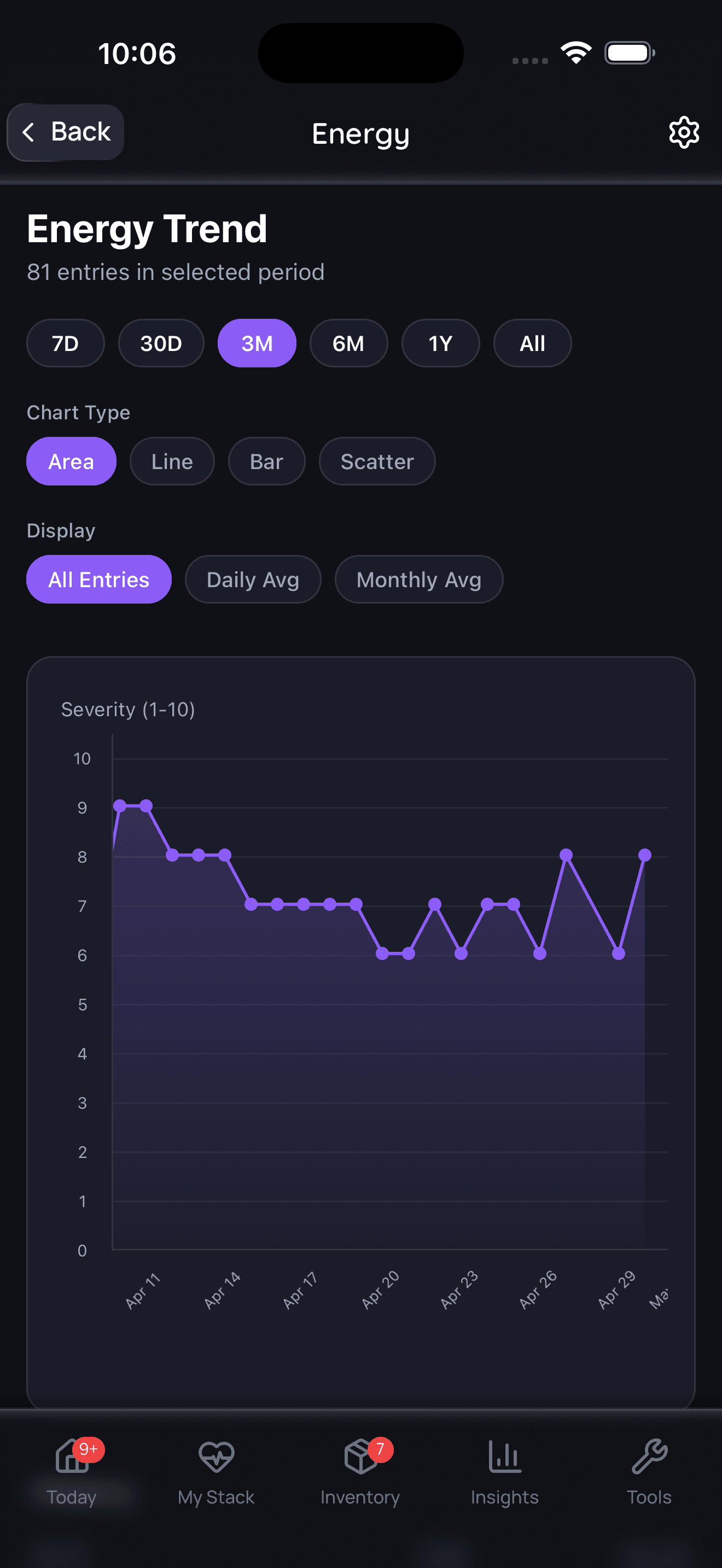
Symptom tracking is informational and should be interpreted with a qualified clinician.
Side Effects & Safety
The Basics
Riboflavin has one of the best safety profiles of any supplement. It is so well tolerated that the Institute of Medicine chose not to set an upper intake limit, noting that no adverse effects have been observed even at doses of 400 mg/day taken for three months or longer [1][2].
The most commonly noticed effect of riboflavin supplementation is harmless but hard to miss: bright yellow or neon-colored urine. This occurs because excess riboflavin is excreted in urine, and riboflavin is naturally a vivid yellow-orange pigment. This color change is completely benign and simply indicates that your body is excreting what it does not need [1].
At high doses (400 mg), some individuals report mild gastrointestinal effects such as loose stools or, rarely, diarrhea. Reports of polyuria (increased urination) have also been noted in clinical trials, though these effects are uncommon and generally mild [8].
Because riboflavin is water-soluble, it does not accumulate in the body the way fat-soluble vitamins can. Any excess is efficiently excreted by the kidneys, which is the fundamental reason for its excellent safety record.
The Science
The FNB did not establish a UL for riboflavin due to the absence of reported adverse effects from food or supplement intakes, including clinical trial doses of 400 mg/day administered for 3 or more months [1][2]. The limited available data on adverse effects do not mean high intakes carry no risk; the FNB noted that data are insufficient to define a no-observed-adverse-effect level (NOAEL) but urged precaution [2].
Reported adverse events in clinical trials of 400 mg/day riboflavin for migraine prevention were minor: diarrhea and polyuria in two participants (vs. abdominal cramps in one placebo participant). No serious adverse events were attributed to riboflavin [8].
Riboflavin's water solubility and the saturable nature of intestinal absorption (ceiling ~27 mg per dose via active transport) limit systemic exposure even at high oral doses. Bioavailability at 300 mg is approximately 8.3%, meaning only ~25 mg is absorbed from a 300 mg dose [3].
No clinically relevant drug interactions have been identified for riboflavin [1]. Chronic alcohol consumption reduces riboflavin absorption and renal reabsorption via downregulation of RFVT transporters, but this represents an effect of alcohol on riboflavin status rather than a riboflavin-drug interaction [3].
Knowing the possible side effects is the first step. Catching them early in your own experience is what keeps a supplement routine safe. Doserly lets you log any symptoms as they arise, tagging them with severity, timing relative to your dose, and whether they resolve on their own or persist.
The app's interaction checker cross-references everything in your stack, supplements and medications alike, flagging known interactions before they become a problem. It also monitors your total intake against established upper limits, alerting you if your combined sources of a nutrient are approaching thresholds where risk increases. Think of it as a safety net that works quietly in the background while you focus on the benefits.
Connect protocol changes to labs and health markers.
Doserly can keep lab results, biomarkers, symptoms, and dose history close together so follow-up conversations have better context.
Insights
Labs and trends
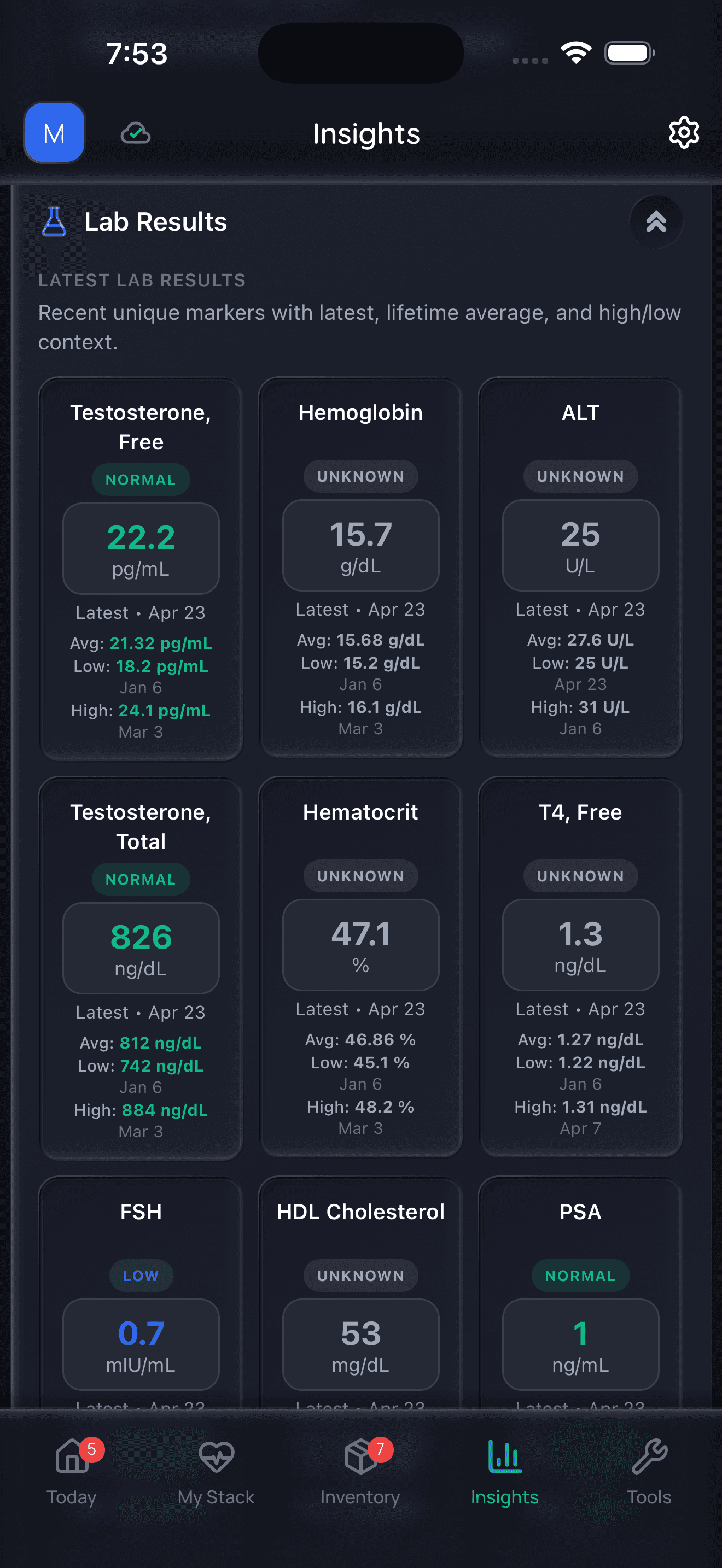
Doserly organizes data; it does not diagnose or interpret labs for you.
Dosing & Usage Protocols
The Basics
Riboflavin dosing depends entirely on your goal, and the ranges differ dramatically between basic nutritional needs and therapeutic applications.
For general nutrition, the RDA is modest: 1.1-1.3 mg/day for adults. Most people meet this through diet alone, particularly if they consume dairy products, eggs, or fortified grains. A standard multivitamin or B-complex typically provides 100% of the daily value (1.3 mg) [1][2].
For migraine prevention, the most commonly studied and recommended dose is 400 mg/day, taken as a single daily dose. This is roughly 300 times the RDA. While this may seem excessive, it reflects the fact that intestinal absorption is limited (only about 27 mg is absorbed via active transport per dose, with additional passive absorption), and the therapeutic rationale is different from simply preventing deficiency. Most headache specialists and guidelines recommend trying this dose for at least 2-3 months before evaluating whether it is effective [4][5][7].
For MTHFR-related homocysteine management, doses as low as 1.6 mg/day have demonstrated efficacy, which is only slightly above the RDA [6].
For correcting riboflavin deficiency, doses of 1.6-25 mg/day have been used, with repletion achieved within 4-6 weeks depending on the dose [3].
The Science
Dosing protocols by clinical context:
Migraine prophylaxis: 400 mg/day orally, minimum 3-month trial recommended. Dose-response meta-analysis (2026) demonstrated a linear relationship between riboflavin dose and migraine frequency/duration reduction up to 400 mg, without evidence of a plateau [7]. No benefit has been consistently demonstrated below 400 mg in RCTs, though some observational data suggest possible benefit at lower doses.
MTHFR 677TT homocysteine reduction: 1.6 mg/day for 12+ weeks [6].
MTHFR 677TT blood pressure support: 1.6 mg/day for 16+ weeks as adjunct to antihypertensive medication [6].
Deficiency correction: 1.6 mg/day achieves repletion over 6 weeks; 2-4 mg/day achieves repletion by 4 weeks. Higher doses (10-25 mg/day) have been used for more rapid correction [3].
Riboflavin transporter deficiency: High-dose supplementation (doses vary, typically much higher than migraine doses) under medical supervision; this is a life-threatening condition requiring specialist management [1].
Getting the dose right matters more than most people realize. Too little may be ineffective, too much wastes money or introduces risk, and inconsistency undermines both. Doserly tracks every dose you take, across every form, giving you a clear record of what you're actually consuming versus what you planned.
The app helps you compare RDA recommendations against therapeutic ranges discussed in the research, so you can see exactly where your intake falls. If you switch forms, say from a standard capsule to a liposomal liquid, Doserly adjusts your tracking to account for different bioavailabilities. Pair that with smart reminders that keep your timing consistent, and the precision that makes a real difference in outcomes becomes effortless.
Turn symptom and safety notes into a clearer timeline.
Doserly helps you log doses, symptoms, and safety observations side by side so patterns are easier to discuss with a qualified clinician.
Pattern view
Logs and observations

Pattern visibility is informational and should be reviewed with a clinician.
What to Expect (Timeline)
Weeks 1-2: At migraine-prevention doses (400 mg/day), the most immediate change is bright yellow urine, which begins within hours of the first dose. Most people report no other noticeable changes in this period. If you are correcting a deficiency, early improvements in energy and skin symptoms (angular stomatitis, cracked lips) may begin to appear within the first week or two.
Weeks 3-4: If supplementing for deficiency correction, tissue stores should be noticeably improving by this point (measurable by EGRAC if tested). For migraine prevention, most sources indicate this is too early to evaluate effectiveness. Some community members report noticing fewer migraines during this window, but the clinical trial evidence generally evaluates outcomes at the 3-month mark.
Weeks 5-8: Deficiency-related symptoms should be substantially resolved. For migraine prevention, some individuals begin to notice a reduction in attack frequency. Community reports suggest this is when responders first start to see a pattern: "wait, I think this month was slightly less awful."
Weeks 8-12: The standard evaluation point for migraine prevention. Clinical trials measure outcomes at 3 months, and this is when the clearest picture of efficacy emerges. In responders, migraine frequency reductions of 50% or more are typical. Non-responders generally see no significant change by this point.
3+ months: For those who respond, the benefits appear to persist with continued supplementation. One study showed that the therapeutic effect persisted for 3 months after stopping supplementation, suggesting some lasting change in mitochondrial function [8]. For MTHFR-related homocysteine and blood pressure benefits, continued supplementation is needed; effects reverse when supplementation stops.
After discontinuation: Body stores of riboflavin return to baseline within approximately 6 months of stopping supplementation [3]. For migraine prevention, some users report return of migraines within days to weeks of stopping.
Interactions & Compatibility
Synergistic
- Magnesium: Frequently recommended alongside riboflavin for migraine prevention. Many neurologists prescribe the combination of magnesium (400-600 mg/day), riboflavin (400 mg/day), and CoQ10 (100-200 mg/day) as a first-line migraine prevention stack. Each targets a different aspect of mitochondrial and neurological function.
- Vitamin B6: Riboflavin (as FMN) is required for the activation of vitamin B6 to its active coenzyme form, pyridoxal 5'-phosphate (PLP). Adequate riboflavin status supports B6 function.
- Vitamin B9 (Folic Acid/Methylfolate): Riboflavin (as FAD) is a cofactor for MTHFR, the enzyme that converts folate into its active methylated form. In MTHFR 677TT individuals, both riboflavin and folate work together to normalize homocysteine levels.
- Vitamin B12: Riboflavin (as FAD) is required for methionine synthase reductase (MTRR), which helps maintain the activity of methionine synthase (a B12-dependent enzyme).
- Vitamin B3 (Niacin): The biosynthesis of niacin from tryptophan requires FAD. Adequate riboflavin status supports endogenous niacin production.
- Vitamin C: Both participate in the antioxidant defense network. Riboflavin supports glutathione recycling; vitamin C regenerates other antioxidants.
- Iron: Riboflavin deficiency impairs iron utilization for hemoglobin synthesis. Adequate riboflavin supports the heme biosynthesis pathway (FAD-dependent PPOX enzyme).
- Selenium: Synergistic antioxidant support. Both are involved in the glutathione system.
Caution / Avoid
- Alcohol (chronic use): Chronic alcohol consumption reduces expression of riboflavin transporters (RFVT1-3), approximately halving intestinal absorption and renal reabsorption. Prevalence of riboflavin deficiency in individuals with chronic alcoholism: 15-50% [3].
- UV light therapy / phototherapy: Prolonged exposure to UV light, as used in phototherapy for jaundice or skin disorders, degrades riboflavin. Individuals undergoing phototherapy may require additional riboflavin [1].
Note on drug interactions: Riboflavin is not known to have any clinically relevant interactions with medications [1]. This is one of its advantages as a supplement, particularly for migraine prevention in patients who may be taking multiple other medications.
How to Take / Administration Guide
Recommended forms: Free riboflavin and riboflavin 5'-monophosphate (R5P) are both available. Both are effective; the body converts free riboflavin to FMN and FAD efficiently. R5P may offer marginal advantages for individuals with certain genetic variants affecting riboflavin kinase, but for most people, standard riboflavin is cost-effective and well-absorbed.
Timing considerations: For general supplementation (1-5 mg), timing relative to meals is not critical. For higher doses (10+ mg), taking riboflavin with a meal improves absorption [3]. For migraine prevention (400 mg), most studies administered the dose once daily; splitting the dose has not been studied but is sometimes practiced to reduce the (already minimal) GI effects.
Stacking guidance: Riboflavin is commonly taken as part of a B-complex supplement or multivitamin. For migraine prevention, standalone riboflavin at 400 mg is typically needed because B-complex formulas rarely contain this amount. The commonly recommended migraine prevention stack of riboflavin + magnesium + CoQ10 can be taken together with a meal.
Cycling guidance: No cycling or breaks are recommended or necessary. Riboflavin is a water-soluble vitamin with no accumulation risk. For migraine prevention, consistent daily use is recommended; some community members report migraine return within days of missing doses.
Choosing a Quality Product
Third-party certifications: Look for USP Verified, NSF Certified, or ConsumerLab-approved products. For standalone riboflavin at migraine-prevention doses (400 mg), options may be more limited than for standard B-complex formulas. GMP certification (Good Manufacturing Practice) is a baseline requirement.
Active vs. standard forms: Standard free riboflavin is the most common and well-studied supplement form. Riboflavin 5'-monophosphate (R5P) is the bioactive coenzyme form and is sometimes marketed as "activated B2." Both are effective for most people; the cost difference may not be justified unless there is a specific reason to prefer R5P.
Red flags: Be cautious of products that combine many ingredients with riboflavin and market the combination as a "migraine formula" without providing the full 400 mg of riboflavin studied in clinical trials. Proprietary blends that do not disclose individual ingredient amounts make it impossible to verify adequate dosing.
Excipient and filler considerations: Riboflavin supplements are generally simple formulations with minimal filler concerns. Check for common allergens (gluten, soy, dairy) if relevant to your dietary restrictions.
Supplement-specific quality markers: Riboflavin should be bright yellow-orange in color. A product that is white or colorless likely does not contain significant riboflavin. Store in opaque containers, as riboflavin degrades rapidly in light.
Storage & Handling
Riboflavin is highly sensitive to light, both in solid form and especially in solution. Supplements should be stored in opaque (non-clear) containers, in a cool, dry place away from direct sunlight. This is the single most important storage consideration for riboflavin [1][3].
Temperature stability is less of a concern. Riboflavin is heat-stable with a melting point of 278-282 degrees Celsius, meaning normal room temperature storage is fine. No refrigeration is required.
Moisture can accelerate photodegradation in powder form. Keep containers tightly sealed and avoid storing in bathrooms or other high-humidity environments.
Shelf life: Follow manufacturer's expiration date. Properly stored riboflavin supplements maintain potency well within typical shelf life periods.
Lifestyle & Supporting Factors
Dietary sources: Riboflavin is well-supplied by a diet that includes dairy products, eggs, lean meats (especially organ meats), and fortified grains. Beef liver is the richest food source (2.9 mg per 3 oz serving, or 223% of the daily value). A single cup of yogurt or milk provides 38-46% of the DV [1]. For those following plant-based diets, fortified cereals, almonds, mushrooms, and spinach provide meaningful amounts.
Signs of potential deficiency: Angular stomatitis (cracked corners of the mouth), cheilosis (swollen, cracked lips), sore throat, skin rashes, itchy and red eyes, and fatigue may suggest riboflavin inadequacy. These symptoms overlap with deficiencies of other B vitamins, so clinical assessment is important.
Populations with increased needs: Vegetarian athletes (increased metabolic demand), pregnant and lactating women (RDA increases to 1.4 and 1.6 mg/day respectively), vegans who avoid dairy, individuals with chronic alcohol use, and people with riboflavin transporter deficiency [1][2].
Exercise: Physical activity increases riboflavin requirements by producing stress in metabolic pathways that use flavocoenzymes. Vegetarian athletes are particularly at risk [1].
Cooking methods: Because riboflavin is water-soluble, boiling causes approximately twice as much riboflavin loss compared to steaming or microwaving. Steaming, roasting, and microwaving better preserve riboflavin content [1].
Light exposure in food storage: Milk stored in glass or clear containers loses riboflavin rapidly due to photodegradation. This is the reason milk is sold in opaque containers. Store riboflavin-rich foods away from light [1][3].
Regulatory Status & Standards
United States (FDA): Riboflavin is classified as a dietary supplement under DSHEA. It is also used as a food additive and is included in the FDA's list of GRAS (Generally Recognized as Safe) substances. Mandatory fortification of enriched grain products with riboflavin has been in effect in the US for decades. The DV is set at 1.3 mg for adults and children 4+.
Canada (Health Canada): Riboflavin is approved as a natural health product (NHP). Available in food supplements and used in food fortification.
European Union (EFSA): Riboflavin is an authorized vitamin for use in food supplements and food fortification throughout the EU. EFSA has issued authorized health claims for riboflavin related to normal energy-yielding metabolism, normal functioning of the nervous system, maintenance of normal mucous membranes, maintenance of normal red blood cells, maintenance of normal skin, maintenance of normal vision, protection of cells from oxidative stress, and reduction of tiredness and fatigue.
Australia (TGA): Riboflavin is listed as a permitted substance for use in listed medicines (supplements).
Athlete & Sports Regulatory Status:
Riboflavin is not prohibited by any sports regulatory body. It does not appear on the WADA Prohibited List, is not flagged by USADA, UKAD, Sport Integrity Canada, Sport Integrity Australia, NADA Germany, or any other national anti-doping agency. It is not banned by any professional sports league (NFL, NBA, MLB, NHL, NCAA) or collegiate athletics organization.
Athletes should note that the fluorescent yellow urine caused by riboflavin supplementation is harmless and does not affect drug testing results. Products certified by Informed Sport, NSF Certified for Sport, or listed on the Cologne List are available for athletes seeking third-party batch testing assurance.
Regulatory status and prohibited substance classifications change frequently. Athletes should always verify the current status of any supplement with their sport's governing body, their national anti-doping agency, and a qualified sports medicine professional before use. Third-party certification (Informed Sport, NSF Certified for Sport) reduces but does not eliminate the risk of contamination with prohibited substances.
Frequently Asked Questions
Does riboflavin really help with migraines?
Based on available research, high-dose riboflavin (400 mg/day) has been shown to reduce migraine frequency in several clinical trials. A meta-analysis of 9 trials found significant reductions in migraine days, duration, frequency, and pain scores. Both the American Academy of Neurology and the Canadian Headache Society include riboflavin in their migraine prevention guidelines. However, not everyone responds, and most studies recommend trying it for at least 2-3 months before evaluating effectiveness. Consulting with a healthcare provider about whether riboflavin is appropriate for your situation is recommended.
Why does riboflavin turn my urine bright yellow?
Riboflavin is a naturally bright yellow-orange pigment (its name comes from the Latin "flavus," meaning yellow). When you take more riboflavin than your body needs, the excess is excreted through your kidneys into your urine. This is completely harmless and is actually a visible indicator that you are absorbing the vitamin. The color change can occur within hours of taking a supplement.
Is 400 mg of riboflavin safe? That seems like a lot.
While 400 mg is roughly 300 times the RDA, the Institute of Medicine did not set an upper tolerable intake level for riboflavin because no adverse effects have been observed at this dose, even after months of use. Riboflavin's water-soluble nature means excess is efficiently excreted. The most commonly reported effect is bright yellow urine. The FNB does note that the absence of observed harm does not guarantee safety at all possible doses and urges general caution.
Do I need to take riboflavin with food?
At lower doses (5 mg or less), absorption is similar with or without food. At higher doses (10 mg and above), taking riboflavin with a meal improves absorption. For migraine-prevention doses (400 mg), taking it with food is generally recommended.
What is the MTHFR connection to riboflavin?
MTHFR is an enzyme that requires riboflavin (as FAD) to function. A common genetic variant (MTHFR 677C>T) reduces this enzyme's ability to bind FAD, leading to higher homocysteine levels. Individuals who carry two copies of this variant (MTHFR 677TT) may benefit from riboflavin supplementation, which has been shown to lower homocysteine and support blood pressure management in this population.
Can I get enough riboflavin from food alone?
Most people in developed countries get adequate riboflavin from diet, especially if they consume dairy, eggs, and fortified grains. Average US intake from food is 1.8-2.5 mg/day, well above the RDA of 1.1-1.3 mg. However, some research suggests suboptimal status may be more common than previously thought, even in people meeting the RDA. For therapeutic purposes like migraine prevention (400 mg/day), food sources alone cannot provide adequate amounts.
Is riboflavin 5'-phosphate (R5P) better than regular riboflavin?
R5P is the biologically active coenzyme form and is sometimes marketed as "activated B2." For most people, standard riboflavin is converted to FMN and FAD efficiently, and the additional cost of R5P may not be justified. R5P may theoretically benefit individuals with rare genetic variants affecting riboflavin kinase, but this is not well-established in clinical studies.
Should I take riboflavin as a standalone supplement or as part of a B-complex?
For general nutritional purposes, a B-complex supplement provides adequate riboflavin along with the other B vitamins that work together synergistically. For migraine prevention at 400 mg/day, a standalone riboflavin supplement is needed because B-complex formulas typically contain only 1-25 mg.
How long does it take for riboflavin to help with migraines?
Based on clinical trial protocols, most sources recommend taking 400 mg/day for at least 2-3 months before evaluating effectiveness. Some individuals report improvement within 4-6 weeks, while others may not notice changes until the full 3-month mark. Clinical trials measure outcomes at the 3-month point.
Does riboflavin interact with any medications?
Riboflavin is not known to have any clinically relevant interactions with medications. This is one of its advantages as a supplement and one reason it is often recommended by neurologists alongside prescription medications for migraine prevention.
Myth vs. Fact
Myth: All B vitamins are basically the same, so a B-complex covers everything riboflavin does.
Fact: While B vitamins work together and a B-complex provides adequate riboflavin for general nutrition (typically 1-25 mg), the therapeutic dose for migraine prevention (400 mg/day) is 15 to 300 times higher than what any standard B-complex provides. For migraine prevention, a standalone riboflavin supplement is necessary [4][7].
Myth: Riboflavin can cause toxicity if you take too much.
Fact: Riboflavin is one of the safest supplements available. The Institute of Medicine did not establish an upper tolerable intake level because no adverse effects have been observed, even at 400 mg/day for months. Its water-soluble nature means excess is excreted in urine. The bright yellow urine it causes is harmless [1][2].
Myth: If your urine turns yellow from riboflavin, it means the vitamin is not being absorbed.
Fact: Yellow urine indicates that your body has absorbed riboflavin and is excreting the excess through the kidneys. Riboflavin is one of the most efficiently absorbed B vitamins, with 60-67% bioavailability at dietary doses. The yellow color is the vitamin itself being properly processed and eliminated [1][3].
Myth: Riboflavin prevents all migraines in everyone who takes it.
Fact: Clinical trials show that approximately 59-68% of participants experience at least a 50% reduction in migraine frequency with 400 mg/day. That means roughly 30-40% of people do not respond. Riboflavin appears most effective at reducing migraine frequency rather than eliminating migraines entirely, and its effect on migraine intensity is inconsistent [4][7][8].
Myth: You only need riboflavin if you are deficient.
Fact: While clinical deficiency is rare in developed countries, suboptimal riboflavin status may be surprisingly common. One study found that 45% of elderly adults consuming the RDA had suboptimal status as measured by EGRAC. Additionally, the therapeutic use of riboflavin for migraine prevention is unrelated to deficiency and operates through a different mechanism (mitochondrial energy support) [3].
Myth: Natural riboflavin from food is fundamentally different from supplement riboflavin.
Fact: Dietary riboflavin is mostly in the form of FAD and FMN, which are hydrolyzed to free riboflavin in the intestine before absorption. Supplement riboflavin is typically free riboflavin. Both forms end up as the same molecule in the intestine and are absorbed and utilized identically. Bioavailability from food sources (60-67%) is comparable to supplements at similar doses [1][3].
Myth: Higher doses of riboflavin are always better.
Fact: Intestinal absorption of riboflavin is saturable, with a ceiling around 27 mg per dose via active transport. At 150 mg, bioavailability drops to about 14.5%, and at 300 mg to about 8.3%. While passive absorption allows some additional uptake, taking ever-higher doses does not proportionally increase the amount your body uses [3].
Sources & References
Clinical Trials & RCTs
[1] Institute of Medicine, Food and Nutrition Board. Dietary Reference Intakes: Thiamin, Riboflavin, Niacin, Vitamin B6, Folate, Vitamin B12, Pantothenic Acid, Biotin, and Choline. Washington, DC: National Academy Press; 1998.
[2] Said HM, Ross AC. Riboflavin. In: Ross AC, Caballero B, Cousins RJ, Tucker KL, Ziegler TR, eds. Modern Nutrition in Health and Disease. 11th ed. Baltimore, MD: Lippincott Williams & Wilkins; 2014:325-30.
[3] Hoey L, McNulty H, Strain JJ. Studies of biomarker responses to intervention with riboflavin: a systematic review. Am J Clin Nutr. 2009;89:1960S-80S. https://pubmed.ncbi.nlm.nih.gov/19403636/
[4] Holland S, Silberstein SD, Freitag F, Dodick DW, Argoff C, Ashman E. Evidence-based guideline update: NSAIDs and other complementary treatments for episodic migraine prevention in adults. Neurology. 2012;78:1346-53. https://pubmed.ncbi.nlm.nih.gov/22529203/
[5] Pringsheim T, Davenport W, Mackie G, et al. Canadian Headache Society guideline for migraine prophylaxis. Can J Neurol Sci. 2012;39:S1-59. https://pubmed.ncbi.nlm.nih.gov/22683887/
[6] McNulty H, Dowey le RC, Strain JJ, et al. Riboflavin lowers homocysteine in individuals homozygous for the MTHFR 677C>T polymorphism. Circulation. 2006;113:74-80. https://pubmed.ncbi.nlm.nih.gov/16380544/
[7] Chen YS, Lee HF, Tsai CH, et al. Effect of Vitamin B2 supplementation on migraine prophylaxis: a systematic review and meta-analysis. Nutr Neurosci. 2022;25(7):1431-1439. https://pubmed.ncbi.nlm.nih.gov/33779525/
[8] Schoenen J, Jacquy J, Lenaerts M. Effectiveness of high-dose riboflavin in migraine prophylaxis: a randomized controlled trial. Neurology. 1998;50:466-70. https://pubmed.ncbi.nlm.nih.gov/9484373/
[9] Rahimdel A, Zeinali A, et al. Effectiveness of Vitamin B2 versus Sodium Valproate in Migraine Prophylaxis: a randomized clinical trial. Electron Physician. 2015;7(3):1344-8.
[10] Condò M, Posar A, Arbizzani A, Parmeggiani A. Riboflavin prophylaxis in pediatric and adolescent migraine. J Headache Pain. 2009;10:361-5. https://pubmed.ncbi.nlm.nih.gov/19649688/
[11] MacLennan SC, Wade FM, Forrest KM, et al. High-dose riboflavin for migraine prophylaxis in children: a double-blind, randomized, placebo-controlled trial. J Child Neurol. 2008;23:1300-4. https://pubmed.ncbi.nlm.nih.gov/18984840/
[12] Bruijn J, Duivenvoorden H, Passchier J, et al. Medium-dose riboflavin as a prophylactic agent in children with migraine: a preliminary placebo-controlled, randomised, double-blind, cross-over trial. Cephalalgia. 2010;30:1426-34. https://pubmed.ncbi.nlm.nih.gov/20974610/
Systematic Reviews & Meta-Analyses
[7] (listed above) Chen et al. 2022. Systematic review and meta-analysis of 9 trials (673 subjects) on riboflavin for migraine prophylaxis.
Observational Studies
[13] Zschabitz S, Cheng TY, Neuhouser ML, et al. B vitamin intakes and incidence of colorectal cancer: results from the Women's Health Initiative Observational Study cohort. Am J Clin Nutr. 2013;97:332-43. https://pubmed.ncbi.nlm.nih.gov/23255571/
[14] Bassett JK, Hodge AM, English DR, et al. Dietary intake of B vitamins and methionine and risk of lung cancer. Eur J Clin Nutr. 2012;66:182-7. https://pubmed.ncbi.nlm.nih.gov/21934698/
Government/Institutional Sources
[1] (listed above) Institute of Medicine. Dietary Reference Intakes for B Vitamins. 1998.
[15] NIH Office of Dietary Supplements. Riboflavin Fact Sheet for Health Professionals. Updated May 11, 2022. https://ods.od.nih.gov/factsheets/Riboflavin-HealthProfessional/
[16] U.S. Department of Agriculture, Agricultural Research Service. FoodData Central. https://fdc.nal.usda.gov/
Related Supplement Guides
Same Category (B Vitamins)
- Vitamin B1 (Thiamine, Benfotiamine)
- Vitamin B3 (Niacin, Niacinamide)
- Vitamin B5 (Pantothenic Acid)
- Vitamin B6
- Vitamin B7 (Biotin)
- Vitamin B9 (Folic Acid, Methylfolate)
- Vitamin B12
- B-Complex
Common Stacks / Pairings
- Magnesium (migraine prevention stack partner)
- Iron (riboflavin supports iron utilization)
- Choline (B-vitamin synergy, one-carbon metabolism)
Related Health Goal
- Vitamin D3 (sometimes included in migraine prevention protocols)
- Selenium (antioxidant synergy via glutathione system)
- Vitamin C (antioxidant network partner)