
In this guide
What is sulforaphane?
Sulforaphane is an isothiocyanate formed when glucoraphanin from broccoli and other cruciferous plants meets the enzyme myrosinase. It is a phytochemical, not an essential nutrient, and has no RDA, adequate intake, tolerable upper intake level or deficiency syndrome.
That conversion step is central. Fresh sprouts, cooked broccoli, broccoli-seed extract and a glucoraphanin-plus-myrosinase capsule can create very different exposure even when their front labels sound similar. Human studies also use different units, formulations and endpoints, so their schedules are not interchangeable. [1]–[4]
Typical Sulforaphane Protocols
| Study and population | Product | Amount each administration | Daily total | Frequency and duration | Main interpretation |
|---|---|---|---|---|---|
| Atwell 2015 · healthy adults | Fresh sprouts or myrosinase-treated extract | 200 μmol once, or 100 μmol | 200 μmol sulforaphane equivalents/day | Once daily or twice 12 hours apart; short exposure study | Sprouts produced about threefold higher metabolites; molecular targets showed no dose response |
| Nouchi 2022 · 144 healthy older adults | Broccoli-derived glucoraphanin capsules | 30 mg glucoraphanin as three capsules taken together | 30 mg glucoraphanin/day | Once daily for 12 weeks | Processing speed and negative mood favored active product; several biomarkers were null |
| Yuan 2025 · 43 former smokers at elevated lung-cancer risk | Broccoli sprout preparation | Not reported in abstract | Potential 95 μmol sulforaphane/day | Administration count not reported; 12 months | Histopathology null; Ki-67 signal without caspase-3 or TUNEL change |
| Dwibedi 2025 · 74 drug-naive adults with prediabetes | Broccoli sprout extract | 150 μmol sulforaphane per dose | 150 μmol/day | Once daily for 12 weeks | Prespecified 0.3 mmol/L fasting-glucose target missed; small overall effect and exploratory subgroup |
The Atwell comparison shows why a nominal sulforaphane-equivalent amount is not the same as measured exposure. The Nouchi study administered a precursor, while Dwibedi administered an extract designed to deliver sulforaphane. Preserve the exact label unit rather than converting between them.
- Declared compound
- Record glucoraphanin, sulforaphane equivalents or food weight exactly as stated.
- Myrosinase
- Record whether active myrosinase is present, absent or unreported; it changes conversion.
- Endpoint
- Choose exposure, cognition, fasting glucose, histology or a tissue biomarker before interpreting change.
What is sulforaphane commonly used for?
Cognition and mood
In 144 healthy older adults, 30 mg glucoraphanin as three capsules taken together daily for 12 weeks improved processing speed and reduced negative mood relative to placebo. Other oxidative-stress, inflammatory and neural-plasticity biomarkers were null. Multiple outcomes, healthy volunteers and company-linked product context make independent replication important. [5]
Glucose and metabolic health
The 2025 prediabetes trial missed its prespecified primary target of a 0.3 mmol/L fasting-glucose reduction versus placebo. The overall estimate was −0.2 mmol/L, while a larger “responder” effect and microbiome pattern came from exploratory subgroup analyses. This is a research lead, not a microbiome test for choosing treatment. [8]
A small fatty-liver study reported decreases in ALT, γ-GTP and urinary 8-OHdG within the active group over two months. The accessible abstract does not provide a clear between-group effect estimate for each outcome, so within-group change should not be treated as proof of treatment efficacy. [7]
Cancer-risk biomarkers
In former smokers, 95 μmol/day for 12 months changed bronchial Ki-67 but not bronchial histopathology, caspase-3 or TUNEL. In men scheduled for prostate biopsy, 200 μmol/day increased metabolites and changed selected gene expression, while HDAC activity and several prostate-tissue biomarkers were null. These are biomarker studies, not evidence that supplements prevent cancer. [6], [9]
Endpoint map
Selected signals do not erase null outcomes
How do forms and labels differ?
Fresh sprouts contain precursor and plant myrosinase. Cooking can inactivate myrosinase. Some extracts state glucoraphanin only; others add active myrosinase or report a nominal sulforaphane yield. A proprietary blend that omits both quantities cannot be matched confidently to a trial.
In eight men, raw broccoli produced estimated bioavailability of 37% versus 3.4% cooked and reached peak plasma levels sooner. In 12 adults, adding 1 g brown mustard powder to 200 g cooked broccoli increased urinary SF-NAC more than fourfold. Both studies demonstrate exposure, not a health outcome. [2], [3]
Conversion chain
The front label is only the first step
Higher exposure does not automatically establish a clinical benefit.
How should sulforaphane products be stored?
Follow the finished product label for temperature, moisture and expiry. Keep capsules sealed and dry. Fresh sprouts are perishable and carry ordinary raw-sprout food-safety concerns; follow public-health handling advice and avoid home sprouting when a clinician advises against raw sprouts because of infection risk.
What does the human evidence show?
| Question | Evidence | Finding | Boundary |
|---|---|---|---|
| Does myrosinase change exposure? | Small crossover studies | Yes, substantially | Exposure is not efficacy |
| Does 30 mg glucoraphanin improve cognition? | 144-person, 12-week RCT | Processing-speed and mood signals | Multiple outcomes; healthy adults |
| Does BSE meet the prediabetes target? | 74-person, 12-week RCT | No | Small overall effect; exploratory subgroup |
| Does it improve bronchial histology? | 43-person, 12-month phase II trial | No | Ki-67 changed; other apoptosis markers null |
| Does it prevent cancer or extend life? | No direct human outcome trial | Not established | Mechanism and surrogate biomarkers are insufficient |
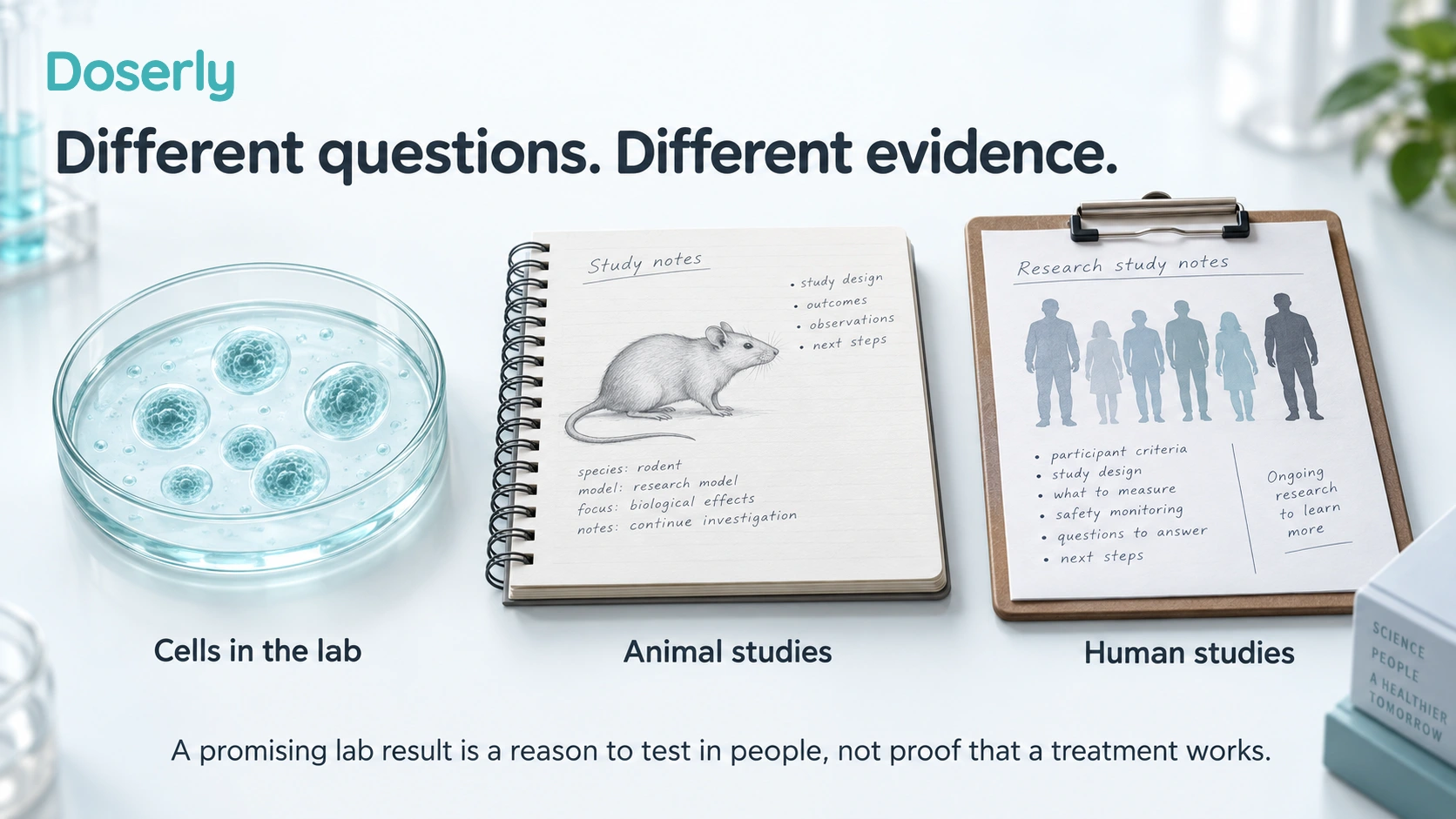
The evidence establishes that formulation changes exposure and that sulforaphane can engage biological pathways in humans. Clinical benefits remain condition-specific, small and uneven across endpoints. [1]–[10]
What are the risks and interactions?
Trials generally report tolerability, but GI symptoms occur and sample sizes are too small for uncommon harms. Record nausea, abdominal discomfort, bowel change, headache, rash, sleep change or another new symptom. Raw sprouts can carry foodborne pathogens.
Direct drug-interaction evidence is limited. Pregnancy, breastfeeding, childhood use, thyroid disease with low iodine intake, liver or kidney disease, cancer treatment and planned surgery warrant clinician review. A pathway hypothesis should not be used to alter chemotherapy or another prescription.
What is the legal and regulatory status?
In the United States, broccoli-derived products sold as supplements fall under dietary-supplement requirements; FDA does not approve them to treat prediabetes, fatty liver, cognitive decline or cancer. In Canada, verify the specific natural health product’s NPN or DIN-HM. Authorization of one finished product does not establish equivalent conversion or efficacy for another.
What happens when you stop?
Sulforaphane has no established withdrawal syndrome or evidence-based taper. Metabolite exposure falls after intake stops. Any perceived change may return toward baseline, but persistent cognitive, glucose, liver or GI concerns need appropriate clinical assessment.
What should you monitor?
Record product, glucoraphanin amount, stated sulforaphane yield, myrosinase source, amount at each administration, daily total, timing, preparation method and co-ingredients. Choose one outcome in advance. Glucose or liver monitoring should follow a clinician’s plan; a symptom log cannot diagnose or replace laboratory care.
What does community experience add?
Public reports may surface sprouting effort, odour, GI tolerance, cost and confusion about label units. They cannot verify conversion, Nrf2 activity, glucose benefit or cancer prevention. No systematic current community sample was assembled, so this guide reports no consensus protocol, brand or responder rate.
How does sulforaphane compare with related options?
| Option | Practical distinction | Evidence boundary |
|---|---|---|
| Fresh broccoli sprouts | Food matrix with precursor and plant myrosinase | Variable composition; raw-sprout safety matters |
| Glucoraphanin-only extract | Relies more on microbial conversion | Exposure is less predictable |
| Glucoraphanin plus active myrosinase | Designed to improve conversion | Better exposure does not guarantee benefit |
| Preformed sulforaphane equivalent | Label may state nominal active yield | Stability and assay specification matter |
| Medical care | Uses validated diagnosis and disease endpoints | Should not be delayed by supplement testing |
Common questions
Is sulforaphane the same as glucoraphanin?
No. Glucoraphanin is the precursor; myrosinase converts it into sulforaphane.
Does cooking destroy sulforaphane?
Cooking can inactivate plant myrosinase and lower formation. In a small crossover, raw broccoli produced much higher exposure than cooked broccoli. [2]
Does mustard improve absorption?
One 12-person crossover found that 1 g brown mustard powder added to cooked broccoli increased urinary sulforaphane metabolite more than fourfold. This was an exposure result. [3]
Does sulforaphane lower blood glucose?
The 2025 prediabetes trial missed its prespecified target. A small overall effect and exploratory responder subgroup need confirmation. [8]
Does it prevent cancer?
No trial shows that taking sulforaphane prevents cancer. Human studies have measured surrogate biomarkers with mixed results. [6], [9]
Is it a detox supplement?
Sulforaphane can change Nrf2-regulated enzymes, but that does not prove broad toxin clearance or a clinical detoxification outcome.
Is there one best dose?
No. Trials use food weight, glucoraphanin or sulforaphane equivalents with different conversion systems. There is no universal dose.
Glossary
Plain explanations of sulforaphane research terms.
- Glucoraphanin
- A glucosinolate precursor that can be converted into sulforaphane.
- Myrosinase
- An enzyme from plants or microbes that helps convert glucoraphanin into sulforaphane.
- Nrf2
- A transcription factor regulating cellular stress-response genes; activation is not itself a clinical benefit.
- SF-NAC
- A urinary sulforaphane metabolite used to estimate exposure.
- Ki-67
- A cell-proliferation marker; a change does not prove fewer cancers.
- Surrogate endpoint
- A marker used in place of a direct patient outcome, whose clinical meaning may remain uncertain.
How this guide was researched
Ten PubMed identities and correction records were checked through NCBI EFetch. Full methods were used where accessible. Formulation, amount, administration count, exposure endpoint and clinical endpoint were extracted separately; null primary and tissue outcomes remain visible.
Research record · checked October 9, 2026
Identity verification: PMIDs 38841734, 18950181, 29806738, 25522265, 19028145, 40041932, 31155953, 35966784, 26604653 and 39929977 matched their titles, first authors, journals and DOIs in NCBI EFetch. None had a linked correction, concern or retraction record.
Protocol extraction: glucoraphanin mass, sulforaphane equivalents and food weight remain separate. Administration frequency stays unreported where the checked source does not establish it.
Endpoint hierarchy: the missed prediabetes target and null histology, apoptosis and prostate-tissue biomarkers remain beside positive selected signals.
Commercial context: product supply, employee affiliations and patents are retained as study limitations where reported.
Explore the sources
Human exposure studies, randomized trials and current synthesis.
Showing 10 sources
- 01
Bioavailability and kinetics of sulforaphane in humans after consumption of cooked versus raw broccoli. ↗
Randomized crossover exposure study
Eight-person raw-versus-cooked comparison; exposure rather than clinical efficacy.
- 02
Supplementation of the Diet by Exogenous Myrosinase via Mustard Seeds to Increase the Bioavailability of Sulforaphane in Healthy Human Subjects after the Consumption of Cooked Broccoli. ↗
Randomized crossover exposure study
Mustard myrosinase increased urinary metabolite after cooked broccoli.
- 03
Absorption and chemopreventive targets of sulforaphane in humans following consumption of broccoli sprouts or a myrosinase-treated broccoli sprout extract. ↗
Human formulation and schedule study
Sprouts gave higher exposure; measured molecular targets showed no dose response.
- 04
Effects of sulforaphane intake on processing speed and negative moods in healthy older adults: Evidence from a randomized controlled trial. ↗
Randomized controlled trial
Exact three-capsule once-daily protocol and selected cognitive and mood signals.
- 05
Randomized Phase II Clinical Trial of Sulforaphane in Former Smokers at High Risk for Lung Cancer. ↗
Randomized phase II biomarker trial
Ki-67 signal with null histology, caspase-3 and TUNEL outcomes.
- 06
Effect of broccoli sprout extract and baseline gut microbiota on fasting blood glucose in prediabetes: a randomized, placebo-controlled trial. ↗
Randomized controlled trial
Missed prespecified glucose target; small overall estimate and exploratory microbiome subgroup.
- 07
Sulforaphane Bioavailability and Chemopreventive Activity in Men Presenting for Biopsy of the Prostate Gland: A Randomized Controlled Trial. ↗
Randomized controlled biomarker trial
Higher exposure and selected gene-expression change with null HDAC and tissue biomarkers.
- 08
Sulforaphane-rich broccoli sprout extract improves hepatic abnormalities in male subjects. ↗
Randomized controlled trial
Within-group liver-marker changes; accessible abstract lacks clear between-group estimates.
- 09
Bioactive sulforaphane from cruciferous vegetables: advances in biosynthesis, metabolism, bioavailability, delivery, health benefits, and applications. ↗
Narrative scientific review
Current context on biosynthesis, metabolism, delivery and evidence gaps.
- 10
Dietary Supplements ↗
Official regulatory overview
Explains manufacturer responsibility and dietary-supplement oversight.
No matching sources
Try a different term or show the full list.
Editorial note
This guide keeps precursor, enzyme, measured exposure, pathway markers and clinical outcomes separate so better conversion is not presented as guaranteed benefit.