
In this guide
What does this guide compare?
Botanical identity and extract-specific evidence matter more than a shared label.
This collection compares products discussed around one topic. It is not a protocol to take in full. Links to individual profiles appear after the article.
| Reference point | Context |
|---|---|
| Products compared | 104 |
| Evidence scope | Ingredient, formulation, population and measured outcome |
| Complete combination | The cited studies do not automatically validate all members together |
Which products are compared?
Ashwagandha, Rhodiola Rosea, Ginseng (Panax/Korean, American, Siberian/Eleuthero), Holy Basil (Tulsi), Schisandra Berry, Maca Root, Astragalus, Shatavari, Cordyceps, Reishi Mushroom, Lion's Mane Mushroom, Chaga Mushroom, Turkey Tail Mushroom, Bacopa Monnieri, Ginkgo Biloba, Gotu Kola, Lemon Balm, Passionflower, Valerian Root, St. John's Wort, Mucuna Pruriens, Huperzine A, Vinpocetine, Turmeric/Curcumin, Boswellia Serrata, Ginger Root, Cat's Claw, White Willow Bark, Devil's Claw, Bromelain, Quercetin, Echinacea, Elderberry, Andrographis, Olive Leaf Extract, Oregano Oil, Garlic, Beta-Glucans, Pelargonium, Propolis, Royal Jelly, Manuka Honey, Hawthorn Berry, Grape Seed Extract, Pine Bark Extract (Pycnogenol), Red Yeast Rice, Nattokinase, Serrapeptase, Beetroot, Bergamot Extract, Milk Thistle, Artichoke Leaf Extract, Dandelion Root, Peppermint Oil, Slippery Elm, Marshmallow Root, DGL Licorice, Aloe Vera (Oral), Berberine, Digestive Enzyme Blends, Ox Bile, Betaine HCl, Activated Charcoal, Saw Palmetto, Pygeum, Stinging Nettle Root, Tongkat Ali, Fenugreek, Tribulus Terrestris, Pine Pollen, Fadogia Agrestis, Cistanche, Vitex/Chasteberry, Black Cohosh, Dong Quai, Red Clover, Cranberry Extract, D-Mannose, DIM (Diindolylmethane), Melatonin, Chamomile, California Poppy, Magnolia Bark, Apigenin, Tart Cherry Extract, Green Tea Extract (EGCG), Caffeine, Garcinia Cambogia, Forskolin, Glucomannan, Bitter Orange (Synephrine), Cayenne/Capsaicin, 7-Keto DHEA, Apple Cider Vinegar, Collagen (Types I, II, III), Hyaluronic Acid (Oral), Keratin, Astaxanthin, MSM (Methylsulfonylmethane), Glucosamine, Chondroitin Sulfate, Type II Collagen (UC-II), SAMe (S-Adenosyl Methionine), Strontium Citrate.
Individual profiles describe formulation, source-reported amounts, tolerability and interactions. Those details remain ingredient-specific. An amount studied alone is not automatically appropriate in a combination.
How do their roles differ?
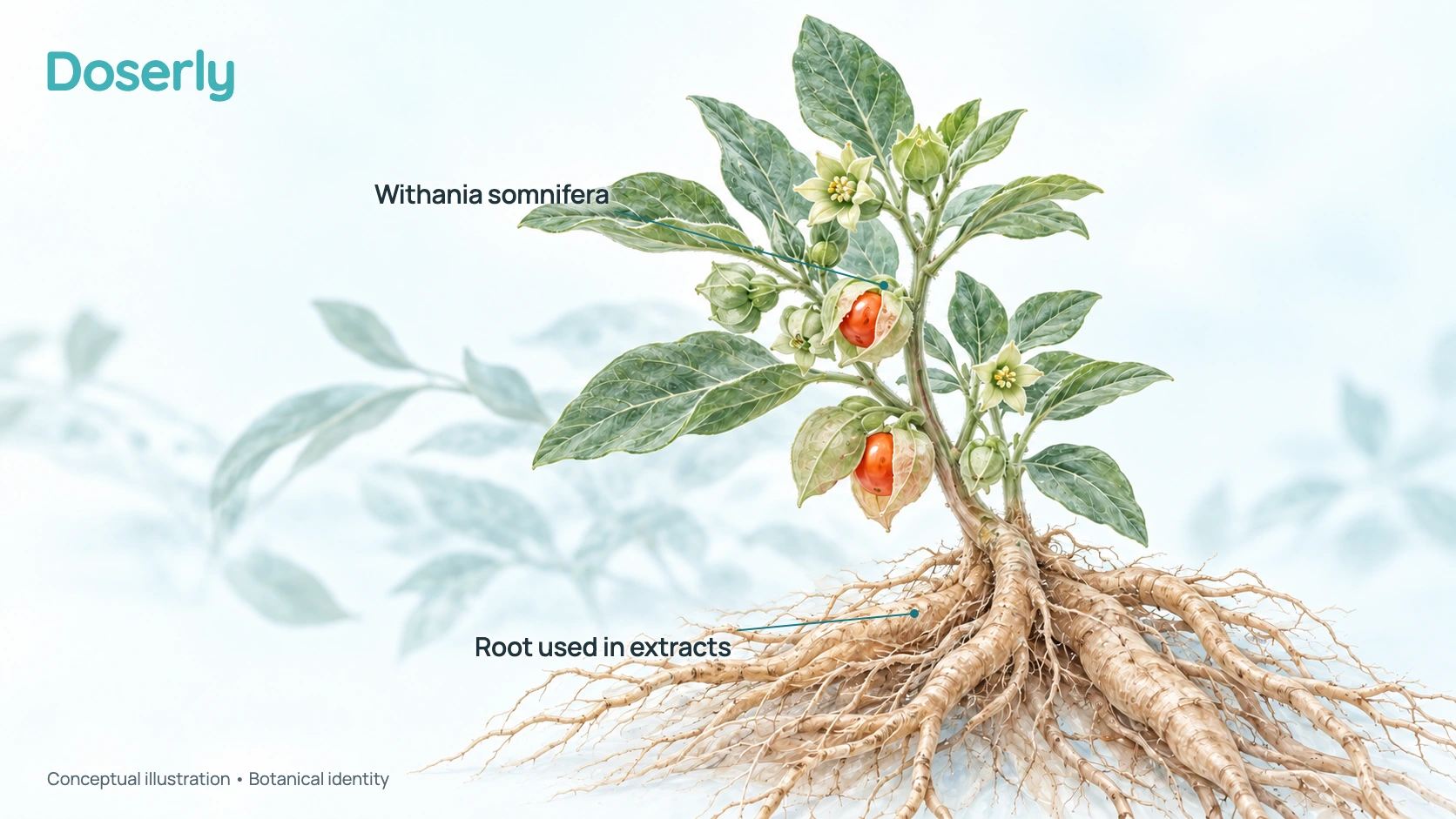
Botanical preparations contain multiple constituents, and extraction changes their relative amounts. A root extract, leaf extract, essential oil and isolated constituent can have different pharmacology. This library’s historical herbal category also includes mushrooms, enzymes and several non-botanical products; membership is a navigation convention, not a botanical identification. [1][2][3]
Selected ingredient studies and their limits
These examples compare distinct preparations and outcomes. Their schedules describe research and are not a regimen to combine.
Ashwagandha. the 2026 AshwaSR trial randomized 135 stressed adults to the same sustained-release root extract at 150 or 300 mg once daily after breakfast, or placebo, for 60 days. Several questionnaire outcomes favored the extract; 126 completed. Manufacturer funding and sponsor/vendor author employment limit independence. This does not establish equivalence with another extract or a benefit from a multi-ingredient combination. [6], [3]
Rhodiola. SHR-5 was studied at 576 mg/day for 28 days in 60 adults with stress-related fatigue. Improvements and reporting limitations need to be read together. A separate 12-week, 57-person depression trial found no significant difference between treatment groups on its primary outcome. These populations and outcomes differ from everyday energy or attention; NCCIH considers the evidence insufficient to establish usefulness for any health purpose. [7], [8], [9]
Ginseng. acute G115 studies in 30 and 20 healthy young adults tested task performance after single doses. The smaller trial found a memory signal at 400 mg, but slower attention at later time points after 200 or 600 mg. These mixed laboratory findings do not establish daily cognitive protection. Species also matters for safety: a separate American ginseng trial reduced warfarin exposure and INR. [10], [11], [12]
Holy basil. Holixer leaf extract, 125 mg twice daily with food for 8 weeks, was compared with placebo in 100 stressed adults; 85 completed. Perceived stress and insomnia questionnaire scores favored the extract. Between-group changes in Fitbit total sleep time and sleep efficiency did not differ significantly. The industry-funded result is preparation-specific and does not show prevention of an anxiety disorder. [13]
What does the research show?
A 2026 placebo-controlled trial randomized 135 stressed adults to two doses of a sustained-release ashwagandha formulation or placebo for 60 days and reported improvements in perceived stress. It tested a specific extract in a selected population. It does not establish equivalent effects for all ashwagandha products, other adaptogens or multi-herb stacks, and cannot resolve rare or long-term harms. [1][2][3]
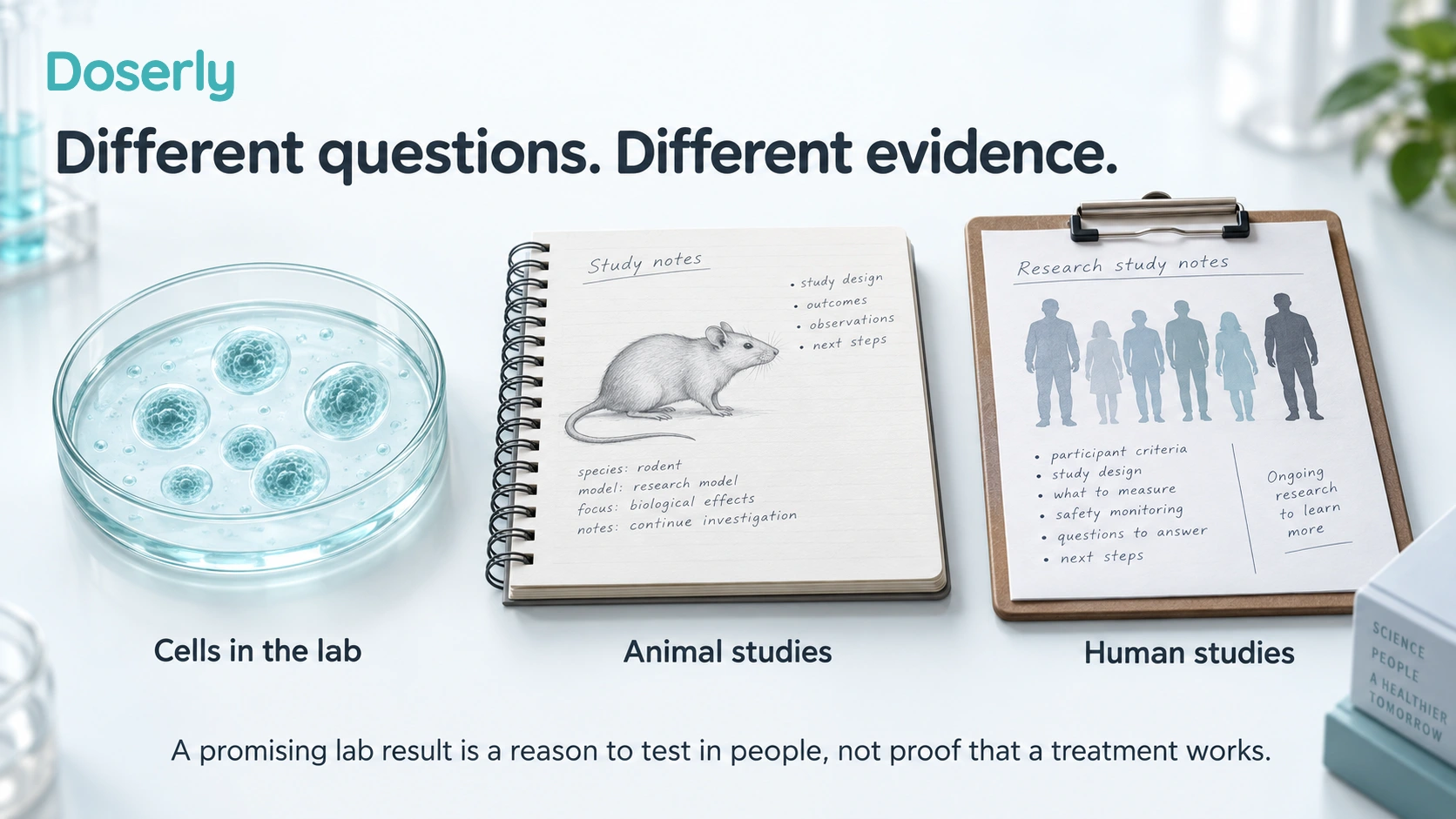
An observational association, a laboratory finding and a perceived benefit answer different questions. Randomized trials need their comparator, duration and population kept in view. An inconclusive result does not establish that an effect is impossible; it limits the claim that can be made.
Which overlaps and risks matter?
Cautions and interactions
Natural origin does not rule out toxicity. NCCIH describes documented herb–drug interactions as well as theoretical signals supported only by laboratory work; these evidence levels should stay separate. Ashwagandha has liver-injury reports and pregnancy, thyroid and medication cautions. St. John’s wort can substantially alter drug exposure. [1][2][3]
A complete product list includes prescription medicines, nonprescription products and supplements. Combination formulas can conceal duplicate ingredients. Timing and spacing from a medicine should follow its labeling and pharmacist guidance; this collection does not supply a universal timetable.
Regulatory status
In the United States, FDA does not approve dietary supplements for safety and effectiveness before marketing. In Canada, a natural health product requires a product licence before sale; its NPN or DIN-HM must match the finished product. An ingredient name or inclusion in this collection does not establish that every product or claim is authorized. Authorization also does not validate the complete combination. [4], [5]
Andrographis: 2026 Australian safety action
Because of unpredictable anaphylaxis risk, the TGA removed andrographis from ingredients permitted in new Australian listed medicines from September 17, 2026. Existing entries were not all cancelled immediately. Its recall page, updated October 8, identifies affected products: do not use them and follow the return instructions. Reactions can occur on first use or after previously uneventful use. These actions apply to Australia and do not establish a worldwide ban. [14], [15]
What should be recorded and how should changes be interpreted?
Doserly brings dose logs, symptoms and routine changes together. For this collection, useful observations include exact species, plant part, extract standardization, symptoms, adverse effects and concurrent medicines.
- Doses and adherence: record the formulation, amount actually taken, timing and missed doses so observations have context.
- Potential benefits and tolerability: compare consistent symptoms or measurements over time alongside sleep, food and activity changes. Personal trends help evaluate the experience without proving causal efficacy.
- Product list: maintain the full product list for review with a pharmacist or clinician.
- AI monthly reports: summarize recorded doses, symptoms and trends to prepare for a discussion. Reports depend on the data entered and are not a diagnosis or an instruction to change treatment.
Explore the topic further
Common questions
Does “adaptogen” identify one proven treatment?
No. It groups different plants, preparations and proposed effects. Ashwagandha stress questionnaires, rhodiola fatigue studies and acute ginseng tasks are not interchangeable outcomes. [2], [7], [8], [10]
Can a ginseng result apply to every ginseng product?
No. Species and extracts differ. Panax ginseng, American ginseng and Eleuthero require separate evidence; the American ginseng–warfarin trial illustrates why the exact identity also matters for safety. [10], [11], [12]
Does better perceived sleep mean objectively longer sleep?
Not necessarily. In the cited holy basil trial, questionnaire outcomes favored the extract but between-group Fitbit total sleep time and sleep efficiency changes did not differ significantly. [13]
Can several calming herbs be started together to compare them?
Concurrent changes make attribution difficult, and interacting medicines or overlapping effects need review. A dated product history can document the experience, but cannot isolate causality or establish combination safety. [1], [2]
Glossary
Terms for interpreting the comparisons.
- Formulation
- The exact preparation, including its ingredients, their forms and labeled amounts.
- Study population
- The people included in a study; their characteristics limit where its result applies.
- Comparator
- The placebo, treatment or condition used as the comparison.
- Measured outcome
- What the study evaluates, such as a symptom, laboratory result or clinical event.
- Overlap
- The same ingredient appearing in more than one product used together.
How was this guide researched?
Sources and limits
This AI-assisted educational guide compares the cited public references. Findings remain tied to the ingredients, preparations and populations studied. It is not a systematic review or independent medical peer review. Doserly develops a commercial tracking app. Illustrations explain concepts; app screens show example data. Report a correction with its source to Doserly support.
Explore the sources
The references below provide context for the claims and their limits.
Showing 15 sources
- 01
NCCIH — Herb–drug interactions ↗
Public reference
Check the reported population, preparation and limitations.
- 02
- 03
Efficacy and safety of Ashwagandha root extract sustained-release (AshwaSR) capsules in healthy adult, stressed subjects: A randomized, double-blind, placebo-controlled, parallel-group, 3-arm clinical trial. ↗
Public reference
Check the reported population, preparation and limitations.
- 04
FDA — Questions and Answers on Dietary Supplements ↗
Regulatory reference
United States dietary supplement regulation.
- 05
- 06
Ashwagandha: Health Professional Fact Sheet ↗
Official summary
Stress, sleep, safety, thyroid and liver-injury overview.
Full text checked October 9, 2026.
- 07
Rhodiola: Usefulness and Safety ↗
Official summary
Evidence limits, short-term safety, adverse effects and losartan interaction.
Full text checked October 9, 2026.
- 08
A randomised, double-blind, placebo-controlled, parallel-group study of the standardised extract shr-5 of the roots of Rhodiola rosea in the treatment of subjects with stress-related fatigue. ↗
Randomized trial
576 mg/day for 28 days in 60 adults with stress-related fatigue.
- 09
Rhodiola rosea versus sertraline for major depressive disorder: A randomized placebo-controlled trial. ↗
Randomized proof-of-concept trial
Response-guided SHR-5, sertraline or placebo for 12 weeks in 57 adults.
Full text checked; primary between-group result was not statistically significant.
- 10
Single doses of Panax ginseng (G115) reduce blood glucose levels and improve cognitive performance during sustained mental activity. ↗
Randomized crossover
Single 200 or 400 mg doses in 30 healthy young adults.
- 11
Dose dependent changes in cognitive performance and mood following acute administration of Ginseng to healthy young volunteers. ↗
Randomized crossover
Single 200, 400 and 600 mg doses in 20 healthy young adults.
- 12
Brief communication: American ginseng reduces warfarin's effect in healthy patients: a randomized, controlled Trial. ↗
Randomized interaction trial
Panax quinquefolius 1 g twice daily reduced INR and warfarin exposure in 20 healthy adults.
- 13
A randomized, double-blind, placebo-controlled trial investigating the effects of an Ocimum tenuiflorum (Holy Basil) extract (HolixerTM) on stress, mood, and sleep in adults experiencing stress. ↗
Randomized placebo-controlled trial
Holixer 125 mg twice daily for eight weeks in 100 adults experiencing stress; industry funded.
- 14
Andrographis removed from listed medicines framework because of allergy risk ↗
Regulatory notice
Andrographis is no longer permitted in new Australian listed medicines from September 17, 2026; existing entries were not all removed immediately.
- 15
Andrographis recalls: Concerns over allergy risk ↗
Regulatory notice
Product-specific recalls; page updated October 8, 2026. Do not use affected products and return them as directed.
No matching sources
Try a different term or show the full list.