
Rhodiola Rosea: The Complete Supplement Guide
On this page
Quick Reference Card
Attribute
Common Name
- Detail
- Rhodiola Rosea
Attribute
Other Names / Aliases
- Detail
- Arctic Root, Golden Root, Rose Root, Rosenroot, King's Crown, Orpin Rose, Hong Jing Tian (Traditional Chinese Medicine), Rhodiola
Attribute
Category
- Detail
- Herbal Extract (Adaptogen)
Attribute
Primary Forms & Variants
- Detail
- Standardized root extract (most common, typically 3% rosavins / 1% salidroside); SHR-5 extract (70% ethanolic, 4:1 drug:extract ratio, most studied); WS 1375 extract; High-salidroside extracts; Whole root powder (less studied)
Attribute
Typical Dose Range
- Detail
- 200-600 mg/day of standardized extract (commonly cited across sources)
Attribute
RDA / AI / UL
- Detail
- Not established. Rhodiola is an herbal supplement, not an essential nutrient. No formal dietary reference values exist.
Attribute
Common Delivery Forms
- Detail
- Capsule, tablet, liquid extract, powder
Attribute
Best Taken With / Without Food
- Detail
- Generally taken on an empty stomach for best absorption. Morning dosing is most common. Avoid late-day dosing as some users report sleep disruption.
Attribute
Key Cofactors
- Detail
- No established cofactors required. Often stacked with ashwagandha (complementary adaptogen) or B vitamins.
Attribute
Storage Notes
- Detail
- Store in a cool, dry place away from direct sunlight and moisture. No refrigeration required.
Overview
The Basics
Rhodiola rosea is a flowering plant that thrives in some of the harshest environments on Earth: high-altitude, cold-climate regions of northern Europe, Russia, and parts of Asia and North America. The fact that this plant survives where most others cannot is part of what drew traditional cultures to it. For centuries, people in Scandinavia, Russia, and parts of Central Asia used rhodiola root to build physical endurance, fight fatigue, and help the body handle stress. There are even stories (possibly speculative) of Viking warriors using it to maintain robustness during long campaigns.
What rhodiola does, in simple terms, is help your body manage stress more effectively. It belongs to a class of herbs called adaptogens, which are thought to help normalize the body's stress response rather than pushing it in one direction. This means rhodiola does not work like a stimulant that revs you up or a sedative that calms you down. Instead, it seems to help the body find balance, supporting energy when you are depleted and calm when you are overstimulated.
Today, people are interested in rhodiola primarily for mental fatigue, work-related stress, physical performance during exercise, and mild mood support. It is one of the more widely studied adaptogens, with a growing body of human clinical trials, though the overall evidence base is still considered preliminary by institutions like the National Center for Complementary and Integrative Health (NCCIH) [1].
The Science
Rhodiola rosea (family Crassulaceae) is a perennial flowering plant native to high-altitude regions (1,000-5,000m) across the Arctic and mountainous areas of Europe, Asia, and North America. The root is the primary medicinal segment and contains the bioactive compounds of interest: the phenylpropanoids salidroside (p-hydroxyphenylethyl-O-beta-D-glucopyranoside, also called rhodioloside) and the rosavins (rosavin, rosarin, rosin), along with tyrosol, flavonoids, and procyanidins [2].
Rhodiola has been classified as an adaptogen, a concept formalized by Russian pharmacologist Nikolai Lazarev in the 1940s and further developed by Israel Brekhman. The adaptogenic definition requires that a substance (a) increase nonspecific resistance to a wide range of stressors, (b) exhibit a normalizing influence on physiology regardless of the direction of the deviation, and (c) be innocuous and not disturb normal biological functions [3].
The two primary bioactive markers used for standardization are salidroside and the rosavins. The most widely studied standardized extract, SHR-5, is a 70% ethanolic extract with a 4:1 drug-to-extract ratio, standardized to approximately 3% rosavins and 1% salidroside. This formulation has been used in the majority of human clinical trials [4]. In Traditional Chinese Medicine, rhodiola root (Hong Jing Tian) is used at 3-6g daily for vitality and longevity [2].
A comprehensive review published in Medical Research Reviews identified over 140 compounds in Rhodiola rosea, with the pharmacological activity attributed primarily to salidroside, the rosavins, and their interactions with multiple cellular signaling pathways [5].
Chemical & Nutritional Identity
Property
Chemical Name (primary bioactive)
- Value
- Salidroside: p-hydroxyphenylethyl-O-beta-D-glucopyranoside
Property
Other Key Compounds
- Value
- Rosavins (rosavin, rosarin, rosin); Tyrosol; Procyanidins; Gossypetin; Lotaustralin
Property
Molecular Formula (Salidroside)
- Value
- C₁₄H₂₀O₇
Property
Molecular Weight (Salidroside)
- Value
- 300.31 g/mol
Property
CAS Number (Salidroside)
- Value
- 10338-51-9
Property
PubChem CID (Salidroside)
- Value
- 159278
Property
Category
- Value
- Herbal adaptogen; Phenylpropanoid-containing botanical
Property
RDA / AI / UL
- Value
- Not established (not an essential nutrient)
Rhodiola rosea is a multi-compound botanical rather than a single-molecule supplement. The root contains two classes of primary bioactives: (1) salidroside and its aglycone tyrosol, and (2) the rosavins, which are cinnamyl alcohol glycosides unique to R. rosea (distinguishing it from other Rhodiola species). The rosavins serve as a chemical marker for species authentication, since they are absent in most other Rhodiola species [2].
The root also contains a surprisingly high concentration of procyanidins (3.6-5.43% of dry root weight), which are the same class of compounds found in green tea (EGCG-derived). Other constituents include beta-sitosterol, gallic acid, cinnamic acid, and a small essential oil fraction (approximately 0.05% of dry root weight, too low to be pharmacologically significant) [2].
Standardization is critical because the rosavin and salidroside content varies significantly depending on growing conditions, altitude, harvest timing, and extraction method. The most clinically validated ratio is 3% rosavins to 1% salidroside, as used in the SHR-5 extract [4].
Mechanism of Action
The Basics
Rhodiola works through several different pathways in your body, and researchers are still working to fully understand all of them. The simplest way to think about it is that rhodiola helps your cells handle stress more efficiently.
When you are under chronic stress, whether physical, mental, or emotional, your body produces stress hormones like cortisol and uses up energy reserves faster than it can replenish them. Rhodiola appears to help on multiple fronts: it supports the activity of certain protective proteins (called heat shock proteins) that shield your cells from damage, it helps regulate the balance of chemical messengers in your brain (including serotonin, which affects mood, and norepinephrine, which affects alertness), and it enhances your cells' ability to produce and use energy.
One interesting feature is that rhodiola appears to have a bidirectional effect. Rather than simply stimulating or sedating, it seems to help the body recalibrate toward normal function. This is what makes it different from, say, caffeine (which pushes your system in one direction) or a sleeping pill (which pushes it in the other).
A mild, short-lived stimulatory effect has been reported after taking rhodiola, lasting roughly four hours. This is thought to come from salidroside, the main active compound [2].
The Science
Rhodiola rosea exerts its biological effects through multiple molecular mechanisms that converge on stress resistance at both the cellular and systemic levels.
Monoamine Oxidase Inhibition: In vitro, methanolic and water extracts of rhodiola at 100 mcg/mL inhibit MAO-A (84-93%) and MAO-B (82-89%). The constituent rosiridin shows potent MAO-B selectivity (83.8% inhibition at 10 mcM), while salidroside demonstrates weak MAO-B inhibition only (35.8% at 10 mcM) [6]. However, the clinical relevance of this MAO inhibition is uncertain, as oral rhodiola ingestion failed to modify the 5-HT/5-HIAA ratio in one study, suggesting the in vitro potency may not translate directly to systemic MAO inhibition [2].
Serotonergic Effects: Rhodiola increases neural serotonin and 5-HIAA concentrations in a dose-dependent manner (13-183% increase at 5-40 mg/kg in control rats). It upregulates 5-HT1A receptor protein expression and, through the ADAPT-232 formulation, downregulates 5-HT3 receptor expression via tyrosol and salidroside at 3 mcM. The suppression of 5-HT3 receptors is hypothesized to contribute to anxiolytic effects, as 5-HT3 activation is associated with anxiety [2][7].
Neuropeptide Y and Heat Shock Proteins: Rhodiola, particularly through salidroside, induces Neuropeptide Y activity and subsequent release of Hsp72 via HSP1-dependent mechanisms. In the ADAPT-232 formulation, synergistic effects were observed: the effective concentration of salidroside was 5.5 nM in combination versus 5,000 nM (5 mcM) in isolation. This Hsp72 induction is hypothesized to underlie the anti-stress effects [2].
Antioxidant Enzyme Induction: Salidroside induces expression of heme oxygenase-1 (HO-1), thioredoxin, and peroxiredoxin-I at the mRNA level. It also activates PARP-1 (an NAD+-dependent enzyme involved in DNA repair), which appears crucial for in vivo antioxidant protection [2][8].
AMPK Activation: Salidroside activates AMPK in skeletal muscle cells and increases glucose uptake in a concentration-dependent manner (1.25-80 mcM), with insulin-induced glucose uptake slightly enhanced [2].
Absorption & Bioavailability
The Basics
Rhodiola's main active compound, salidroside, is absorbed in your digestive tract through a specific transport system (the same one used by glucose). This is noteworthy because it means your body has an active mechanism for absorbing it, rather than relying on passive diffusion. The result is reasonably good absorption, though the exact numbers vary between studies.
Once absorbed, salidroside moves through your system relatively quickly. It reaches peak blood levels in about 25 minutes, and its effects are relatively short-lived, with a half-life of roughly 40-46 minutes in animal studies. This rapid clearance is one reason some people prefer to take rhodiola in divided doses throughout the day rather than a single large dose. It also explains why acute effects (like a brief period of increased alertness) tend to last about four hours.
The speed of absorption and clearance also means that rhodiola works differently from supplements that build up in your system over time. While some of its benefits (particularly stress resilience) may increase with consistent use over days to weeks, the acute mental clarity and energy effects are more immediate and shorter-lived.
The Science
Salidroside is absorbed in the intestines via the SGLT1 transporter (sodium-glucose linked transporter 1), a mechanism shared with other glucoside compounds. This active transport pathway means absorption is not purely concentration-dependent [2].
Pharmacokinetic data in rats:
- Bioavailability: Variable across studies: 32.1% at 12 mg/kg, 98.1% at 25 mg/kg, and 51.97% at 100 mg/kg. The inconsistencies are not yet explained and may reflect dose-dependent absorption kinetics or methodological differences [2].
- Tmax: Approximately 25 minutes
- Cmax: 10.47 +/- 1.08 mcg/mL (at standard dosing)
- Half-life: 40-46 minutes
- Saturation: Oral ingestion of 48 mg/kg did not confer additional serum concentrations relative to 24 mg/kg, suggesting an absorption ceiling [2].
Enzymatic Interactions: Rhodiola inhibits CYP3A4 in vitro (IC50: 1.7-3.1 mcg/mL) and P-glycoprotein (IC50: 16.7-51.7 mcg/mL). It also modestly inhibits CYP2C9. Despite the in vitro CYP3A4 inhibition, rhodiola failed to adversely modify warfarin pharmacokinetics in rats, suggesting the clinical significance may be limited at typical supplement doses [2][9].
Research & Clinical Evidence
The Basics
Rhodiola has been the subject of a growing number of clinical trials, and the results paint a picture of a supplement that is modestly effective for certain purposes, particularly mental fatigue, stress, and possibly mild depression. However, it is important to understand that most of this research is considered preliminary. The NCCIH, a branch of the National Institutes of Health, states there is not yet enough reliable evidence to determine whether rhodiola is useful for any specific health-related purpose, and notes that most human research is of low-to-moderate quality [1].
That said, here is what the research has found so far:
Stress and Mental Fatigue: This is where rhodiola has the strongest evidence. A meta-analysis of studies in students and working professionals found that rhodiola supplementation (typically 100-660 mg of standardized extract) was consistently associated with improvements in cognitive fatigue, processing errors, attention, reaction time, and general well-being [10]. A separate trial found that 576 mg of SHR-5 daily for 28 days significantly reduced burnout scores in people with chronic stress-related fatigue [11].
Depression: In a small clinical trial, 340-680 mg of SHR-5 daily for 42 days reduced depression symptoms on the BDI and HAMD rating scales, with improvements in insomnia and emotional instability [12]. Another study compared rhodiola directly to sertraline (Zoloft) for major depressive disorder and found that while sertraline was more effective overall, rhodiola was better tolerated and had fewer side effects [13].
Exercise Performance: A 2025 systematic review and meta-analysis (26 RCTs, 668 participants) found that rhodiola supplementation significantly improved endurance outcomes, including VO2max (effect size 0.32), time to exhaustion (effect size 0.38), and time trial performance (effect size -0.40). It also enhanced antioxidant capacity and reduced markers of muscle damage (creatine kinase) [14].
The Science
Mental Performance and Fatigue: A systematic review by Ishaque et al. (2012) assessed 11 RCTs and found that most trials demonstrated benefits of R. rosea on physical performance, mental performance, and certain mental health conditions, though the authors noted a lack of independent replications [15]. Subsequent trials have generally supported these findings: Olsson et al. (2009) demonstrated in a randomized, double-blind, placebo-controlled trial (n=60) that SHR-5 at 576 mg/day for 28 days significantly improved stress-related fatigue on the Pines' burnout score compared to placebo [11]. Edwards et al. (2012) found that 400 mg/day of WS 1375 for 4 weeks reduced perceived stress and improved social and work dysfunction in an open-label design [16].
Depression: Darbinyan et al. (2007) conducted a 6-week RCT (n=89) of SHR-5 at 340 mg or 680 mg daily versus placebo in patients with mild-to-moderate depression. Both doses reduced HAMD scores to 65-70% of baseline, and the higher dose halved BDI scores. Improvements were noted in insomnia and emotional instability [12]. Mao et al. (2015) compared rhodiola (340 mg/day) to sertraline (50 mg/day) and placebo in a 12-week trial (n=57). Sertraline produced larger improvements on the HAMD-17, but rhodiola was significantly better tolerated (fewer adverse events, p=0.014). Neither treatment was statistically superior to placebo on the primary outcome, though both showed clinically meaningful effect sizes [13].
Anxiety: Bystritsky et al. (2008) conducted an open-label pilot study of rhodiola (340 mg/day, 10 weeks) in 10 participants with generalized anxiety disorder. Significant reductions on the Hamilton Anxiety Rating Scale were observed [17]. The open-label design limits conclusions.
Exercise Performance: The 2025 meta-analysis by the research team (26 RCTs, 668 healthy participants, mean intervention 33 days) found statistically significant improvements with rhodiola supplementation in VO2max (11 studies; ES = 0.32, p < 0.01), time to exhaustion (7 studies; ES = 0.38, p < 0.05), and time trial performance (5 studies; ES = -0.40, p < 0.05). Total antioxidant capacity increased significantly, malondialdehyde decreased (ES = -1.21, p < 0.001), and creatine kinase levels were reduced (ES = -0.84, p < 0.001). No significant effects on inflammatory markers (IL-6, CRP) were found. Subgroup analysis showed greater VO2max improvements at doses exceeding 600 mg/day [14].
Cognition: A preclinical systematic review (Ma et al., 2018) found evidence that rhodiola improved learning and memory function in animal models, though most studies had a high risk of bias [18]. In rats, 50-100 mg/kg for 9 days enhanced memory and abolished scopolamine-induced amnesia [2].
Evidence & Effectiveness Matrix
Category
Energy Levels
- Evidence Strength
- 7/10
- Reported Effectiveness
- 7/10
- Summary
- Multiple RCTs show reduced fatigue. Community reports consistent "calm energy" effect. Meta-analysis supports reduced perceived fatigue.
Category
Stress Tolerance
- Evidence Strength
- 7/10
- Reported Effectiveness
- 7/10
- Summary
- Several RCTs demonstrate reduced stress-related fatigue and burnout scores. Consistent community reports of improved stress handling.
Category
Focus & Mental Clarity
- Evidence Strength
- 6/10
- Reported Effectiveness
- 6/10
- Summary
- Meta-analysis supports improved cognitive performance under fatigue. Community reports are positive but mixed, with some non-responders.
Category
Mood & Wellbeing
- Evidence Strength
- 6/10
- Reported Effectiveness
- 7/10
- Summary
- RCT evidence for mild-to-moderate depression. Community reports strongly positive for mood, though tolerance may develop.
Category
Anxiety
- Evidence Strength
- 5/10
- Reported Effectiveness
- 6/10
- Summary
- One open-label pilot study shows promise. Community reports generally positive. Serotonergic mechanisms support anxiolytic hypothesis.
Category
Physical Performance
- Evidence Strength
- 7/10
- Reported Effectiveness
- 6/10
- Summary
- 2025 meta-analysis (26 RCTs) demonstrates significant improvements in VO2max, time to exhaustion, and time trial performance. Greater effects at doses above 600 mg/day.
Category
Memory & Cognition
- Evidence Strength
- 5/10
- Reported Effectiveness
- N/A
- Summary
- Preclinical evidence strong (scopolamine protection). Limited human data. Cognition receives an A grade from one evidence review platform.
Category
Sleep Quality
- Evidence Strength
- 3/10
- Reported Effectiveness
- 5/10
- Summary
- Limited direct evidence. One depression trial noted insomnia improvement. Community reports are mixed, with some finding sleep improvement and others sleep disruption.
Category
Motivation & Drive
- Evidence Strength
- 3/10
- Reported Effectiveness
- 5/10
- Summary
- Not directly studied. May be secondary to fatigue reduction and mood improvement. Sparse community reports.
Category
Side Effect Burden
- Evidence Strength
- 7/10
- Reported Effectiveness
- 7/10
- Summary
- Multiple clinical trials report minimal adverse effects. Better tolerated than sertraline in one head-to-head trial.
Category
Longevity & Neuroprotection
- Evidence Strength
- 5/10
- Reported Effectiveness
- N/A
- Summary
- Preclinical evidence in nematodes (10-20% lifespan extension) and drosophila (24% lifespan enhancement). DAF-16/FOXO-mediated. No human longevity data. Community data not yet collected.
Categories scored: 11
Categories with community data: 9
Categories not scored (insufficient data): Fat Loss, Muscle Growth, Weight Management, Appetite & Satiety, Food Noise, Emotional Aliveness, Emotional Regulation, Libido, Sexual Function, Joint Health, Inflammation, Pain Management, Recovery & Healing, Gut Health, Digestive Comfort, Nausea & GI Tolerance, Skin Health, Hair Health, Heart Health, Blood Pressure, Heart Rate & Palpitations, Hormonal Symptoms, Temperature Regulation, Fluid Retention, Body Image, Immune Function, Bone Health, Cravings & Impulse Control, Social Connection, Treatment Adherence, Withdrawal Symptoms, Daily Functioning
Benefits & Potential Effects
The Basics
Rhodiola's benefits center around a core theme: helping your body and mind perform better under pressure. It is not a cure for any condition, and the effects tend to be subtle rather than dramatic. But for people dealing with chronic stress, demanding workloads, or fatigue that makes it hard to stay sharp, rhodiola may offer meaningful support.
The strongest evidence supports rhodiola for reducing perceived fatigue. If you are the kind of person who feels mentally drained by mid-afternoon, who makes more mistakes as the day wears on, or who notices your focus eroding during periods of high workload, this is where rhodiola has shown the most consistent benefits in clinical studies.
Closely related is its potential for mood support. Several studies suggest rhodiola may reduce symptoms of mild-to-moderate depression, and community reports frequently describe a general emotional uplift, a sense of being able to handle things that would normally feel overwhelming. This is distinct from the numbing or blunting some people experience with pharmaceutical antidepressants. Users often describe feeling "more like themselves" rather than artificially altered.
For physical performance, recent evidence suggests that rhodiola can modestly improve endurance metrics like VO2max and time to exhaustion, particularly at higher doses. The mechanism appears to be partly through reducing the perception of effort and partly through genuine improvements in antioxidant capacity and muscle damage recovery.
The Science
The therapeutic potential of Rhodiola rosea spans several domains, supported by varying levels of clinical evidence:
Anti-Fatigue Effects: The most robust evidence base. A meta-analysis of trials in academic and occupational settings demonstrated that rhodiola supplementation (100-660 mg standardized extract) was consistently associated with improved cognitive fatigue scores, reduced processing errors, improved sustained attention, and faster reaction times relative to placebo [10]. The mechanism likely involves both central (serotonergic modulation, Hsp72 induction) and peripheral (antioxidant enzyme upregulation, AMPK activation) pathways [2].
Antidepressant Activity: Rhodiola demonstrates antidepressant-like effects in forced swim test models at 10-20 mg/kg (3% rosavins, 1% salidroside) in animals, and in human trials at 340-680 mg/day of SHR-5. The mechanism is likely multifactorial: MAO inhibition (primarily MAO-B via rosiridin), serotonin synthesis enhancement, and 5-HT1A receptor upregulation [2][6][12]. Rhodiola has also been reported to reduce the side-effect profile of tricyclic antidepressants when co-administered [2].
Ergogenic Effects: The 2025 meta-analysis provides the strongest evidence to date: significant improvements in VO2max (ES = 0.32), time to exhaustion (ES = 0.38), time trial performance (ES = -0.40), antioxidant capacity, and reduced muscle damage markers (CK: ES = -0.84) across 26 RCTs. The antioxidant mechanism includes induction of thioredoxin and glutathione peroxidase in red blood cells and PARP-1 activation in lymphocytes [2][14].
Neuroprotective Effects: Salidroside has demonstrated neuroprotective activity against hypoglycemia, serum starvation, beta-amyloid toxicity, glutamate excitotoxicity, and hydrogen peroxide in vitro. Mechanisms include antioxidant enzyme induction (HO-1, thioredoxin, peroxiredoxin-I), mitochondrial stabilization, and JNK inhibition [2][8].
When you're taking multiple supplements, it's hard to know which one is doing the heavy lifting. The benefits described above may overlap with effects from other items in your stack, lifestyle changes, or seasonal variation. Doserly helps you untangle that by keeping everything in one place, with timestamps, doses, and outcomes logged together.
Over time, this builds something more valuable than any product review: your personal evidence record. You can see exactly when you started this supplement, what else was in your routine at the time, and how your tracked health markers responded. That clarity makes the difference between guessing and knowing, whether you're talking to a healthcare provider or simply deciding if it's worth reordering.
Keep sensitive protocol records in a purpose-built app.
Doserly is designed for private health tracking with structured records, offline-ready workflows, and exportable history when you need it.
Privacy
Health records
Privacy controls help you manage records; keep clinical records where required.
Side Effects & Safety
The Basics
Rhodiola is generally considered well tolerated. In clinical trials, the side effects that do appear tend to be mild: dizziness, dry mouth, and occasionally headache or insomnia. These effects are uncommon and typically resolve on their own. In one study that directly compared rhodiola to sertraline (a prescription antidepressant), rhodiola had significantly fewer side effects [13].
The NCCIH states that rhodiola is "possibly safe for up to 12 weeks" [1]. Beyond that timeframe, the safety data becomes less clear simply because long-term studies have not been conducted.
There is one important safety concern to be aware of: rhodiola should be used cautiously by anyone taking antidepressant medications. A case report documented tachyarrhythmia (rapid, irregular heartbeat) in a young woman who took rhodiola alongside her prescription antidepressant. This makes sense given rhodiola's activity on serotonin and MAO pathways [9].
The most frequently discussed "side effect" in user communities is not a traditional adverse effect but rather tolerance development. Many users report that rhodiola's acute effects (particularly the energy and mental clarity boost) diminish with daily continuous use over several weeks. Cycling protocols (for example, five days on and two days off, or three weeks on and one week off) are commonly recommended in user communities to maintain effectiveness.
The Science
Adverse Event Profile: Clinical trials consistently report a favorable safety profile. In the Mao et al. (2015) trial comparing rhodiola to sertraline, 63% of sertraline participants reported adverse events versus 30% in the rhodiola group (p = 0.014) [13]. Commonly reported adverse effects include dizziness and dry mouth [17]. The NCCIH additionally lists headache, insomnia, and excessive saliva production as possible side effects [1].
Contraindications: Patients taking prescription antidepressant medications should exercise caution. A case report documented tachyarrhythmia in a 26-year-old woman following 3 days of concurrent rhodiola and antidepressant use [9].
Drug Interactions:
- CNS stimulants: Theoretical potentiation via MAO inhibition. Clinical relevance undetermined [9].
- Antihypertensives: Potential for increased hypotensive side effects via MAO inhibition [9].
- Antidepressants: Risk of increased serotonergic activity, potentially leading to serotonin-related adverse effects [9].
- CYP2C9 substrates (e.g., warfarin, phenytoin): Modest CYP2C9 inhibition may affect narrow therapeutic index drugs [9].
- CYP3A4 substrates: In vitro inhibition (IC50: 1.7-3.1 mcg/mL), though in vivo significance may be limited [2][9].
- P-glycoprotein substrates: In vitro inhibition (IC50: 16.7-51.7 mcg/mL) [2].
- Losartan: An interaction between rhodiola and losartan has been reported [1].
Pregnancy and Lactation: Insufficient data. The NCCIH notes that "little is known about whether it's safe to use rhodiola during pregnancy or while breastfeeding" [1].
Supplement Adulteration: A quality concern exists. Analysis of 39 UK Rhodiola products found that 23% contained no detectable rosavin (a species authentication marker), two products contained no salidroside (suggesting no Rhodiola of any species was present), and one product contained 5-HTP, which is not a natural constituent of Rhodiola [2].
Dosing & Usage Protocols
The Basics
Rhodiola dosing depends on what you are hoping to achieve, and sources offer a range of recommendations. The most commonly cited range across the available research is 200-600 mg per day of a standardized extract (typically standardized to 3% rosavins and 1% salidroside). This is the range used in most clinical trials.
For general stress and fatigue support, most studies have used 200-400 mg daily. For exercise performance, the 2025 meta-analysis found greater benefits at doses exceeding 600 mg per day. For mild mood support, the clinical trials used 340-680 mg daily [14][12].
Some users report taking rhodiola only as needed rather than daily, particularly for acute situations like presentations, exam periods, or especially demanding workdays. The acute psychostimulatory effect (lasting roughly four hours) supports this approach.
Morning dosing is most common, and many practitioners advise against taking rhodiola in the afternoon or evening, as it may interfere with sleep in some individuals. Taking it on an empty stomach is often recommended for optimal absorption.
A significant practical consideration is tolerance. Community experience and some research suggest that rhodiola's acute effects may diminish with continuous daily use. Many users cycle their intake (for example, five days on and two days off, or three weeks on and one week off) to maintain effectiveness.
The Science
The standardized extract SHR-5 (3% rosavins, 1% salidroside, 70% ethanolic extract, 4:1 drug-to-extract ratio) has been used at the following doses in clinical trials:
Goal
Stress-related fatigue (chronic)
- Dose
- 576 mg/day SHR-5
- Duration
- 28 days
- Study
- Olsson et al. 2009 [11]
Goal
Mild-moderate depression
- Dose
- 340-680 mg/day SHR-5
- Duration
- 42 days
- Study
- Darbinyan et al. 2007 [12]
Goal
Major depressive disorder
- Dose
- 340 mg/day
- Duration
- 12 weeks
- Study
- Mao et al. 2015 [13]
Goal
Life-stress symptoms
- Dose
- 400 mg/day WS 1375
- Duration
- 4 weeks
- Study
- Edwards et al. 2012 [16]
Goal
Generalized anxiety
- Dose
- 340 mg/day
- Duration
- 10 weeks
- Study
- Bystritsky et al. 2008 [17]
Goal
Acute exercise performance
- Dose
- 3 mg/kg SHR-5 (single dose)
- Duration
- Acute
- Study
- De Bock et al. 2004 [19]
Goal
Student fatigue/cognition
- Dose
- 100 mg SHR-5
- Duration
- 20 days
- Study
- Spasov et al. 2000 [20]
It is important to note that 200 mg of SHR-5 is claimed to be bioequivalent to 800 mg of dry herb, due to the 4:1 concentration ratio [2].
When your stack includes several supplements, each with its own dose, form, and timing requirements, the logistics alone can derail consistency. Doserly consolidates all of it into one protocol view, so every dose across your entire routine is accounted for without spreadsheets or guesswork.
The app also tracks cumulative intake for nutrients that appear in multiple products. If your multivitamin, standalone supplement, and fortified protein shake all contain the same nutrient, Doserly adds them up and shows you the total alongside recommended and upper limits. Managing a thoughtful supplement protocol shouldn't require a degree in nutrition science. The app handles the complexity so you can focus on staying consistent.
Turn symptom and safety notes into a clearer timeline.
Doserly helps you log doses, symptoms, and safety observations side by side so patterns are easier to discuss with a qualified clinician.
Pattern view
Logs and observations

Pattern visibility is informational and should be reviewed with a clinician.
What to Expect (Timeline)
Rhodiola is somewhat unique among supplements in that it appears to have both acute and cumulative effects. Here is what the available research and community experience suggest about the timeline:
Day 1 (Acute Effects):
Some users notice a mild psychostimulatory effect within 30-60 minutes of their first dose, lasting approximately 4 hours. This is consistent with the rapid absorption of salidroside (Tmax ~25 minutes). Not everyone notices this; responses vary significantly between individuals. Some describe it as a subtle lift in mental clarity and alertness, while others notice nothing at all.
Week 1-2:
For stress and fatigue, this is typically when consistent effects begin to emerge. Users often report that stressful tasks feel less draining, morning grogginess lifts more easily, and they have more sustained mental stamina throughout the day. These initial effects tend to be mild but noticeable.
Week 3-4:
If rhodiola is going to work for you, most users and clinical trials suggest you will know by this point. The anti-fatigue and mood-support effects generally become more apparent. However, this is also the period when some users report the acute stimulatory effects beginning to plateau with continuous daily use.
Week 5-8:
In clinical trials for depression, significant improvements continued to accumulate over this period, with BDI scores roughly halving by week 6 at the higher dose [12]. For chronic stress and burnout, the 28-day Olsson trial showed significant improvement by the end of the study period [11].
Week 8-12+:
Longer-term effects are less well characterized, as most clinical trials do not extend beyond 12 weeks. The NCCIH notes rhodiola is "possibly safe for up to 12 weeks" [1]. Community experience suggests that cycling (periodic breaks) helps maintain effectiveness over the long term. Users who take rhodiola daily without breaks frequently report diminishing returns, while those who cycle it report sustained benefits.
Important Note on Tolerance:
A recurring theme in community reports is that the acute mental clarity and energy effects tend to diminish with continuous daily use, while the stress-resilience and mood effects may persist longer. This pattern, while not formally studied, is reported consistently enough across independent communities to be worth noting.
One of the hardest parts of any supplement routine is knowing whether it's working when results unfold gradually over weeks or months. Without a record, it's easy to abandon something too early or keep taking something that isn't delivering. Doserly solves that by giving you a visual timeline of your entire supplementation history mapped against the outcomes you care about.
When everything is in one view, you can compare how different supplements in your stack are performing over the same period. You can see whether adding this supplement coincided with the improvement you've noticed, or whether the timing points to something else entirely. That kind of clarity turns patience into a strategy rather than a gamble.
Capture changes while they are still fresh.
Log symptoms, energy, sleep, mood, and other observations alongside protocol events so patterns do not live only in memory.
Trend view
Symptom timeline
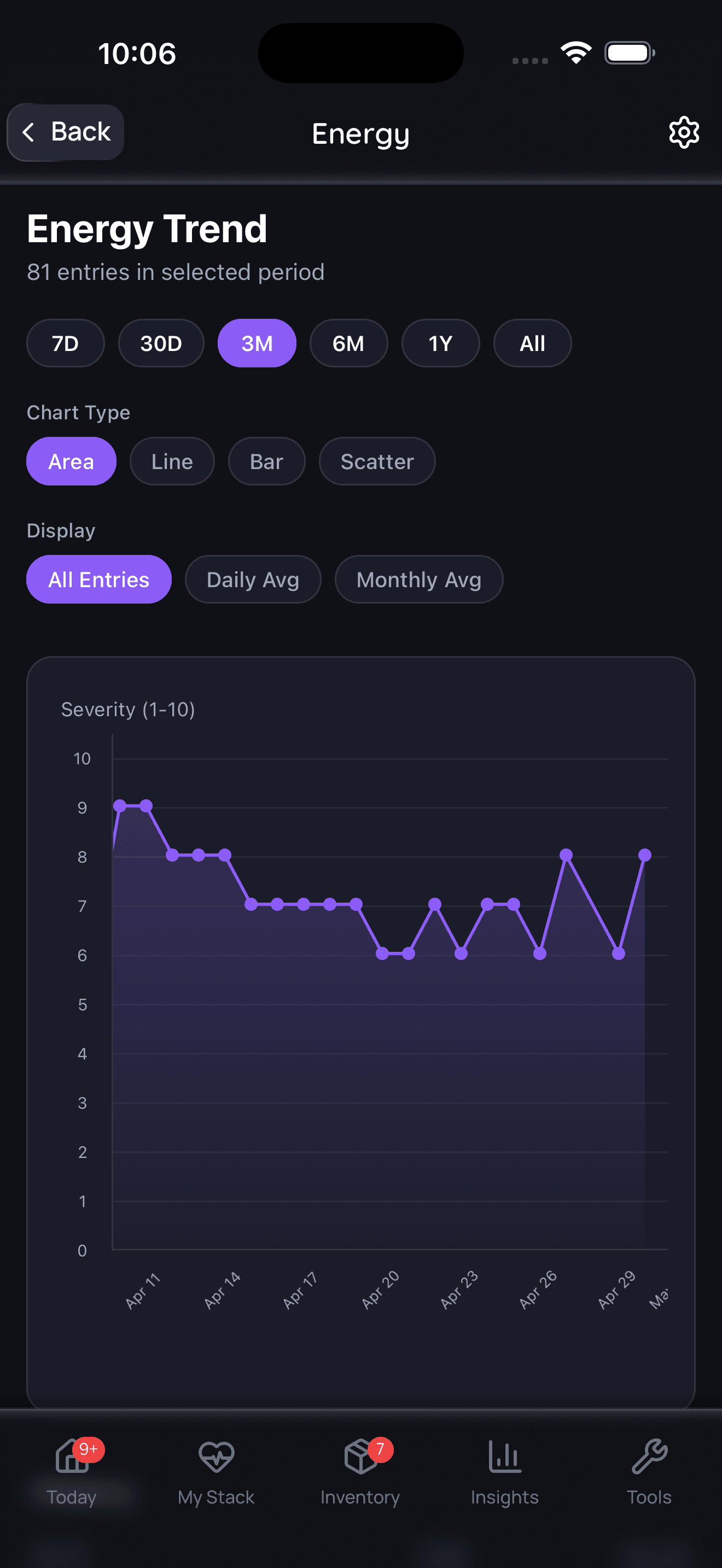
Symptom tracking is informational and should be interpreted with a qualified clinician.
Interactions & Compatibility
SYNERGISTIC
- Ashwagandha: The most commonly paired adaptogen. Ashwagandha tends to be more calming and cortisol-lowering, while rhodiola leans more toward energy and mental clarity. Together they may provide complementary adaptogenic support. Many community users take both daily or alternate between them.
- Ginseng (Panax): Fellow adaptogen with complementary mechanisms. The ADAPT-232 formulation combines rhodiola with eleuthero (Siberian ginseng) and schisandra, and this combination has shown synergistic effects on Neuropeptide Y and Hsp72 induction [2].
- Schisandra: Part of the ADAPT-232 adaptogen blend. Synergistic with rhodiola for stress resilience at the cellular level.
- L-Theanine: May complement rhodiola's energizing effects with a calming influence, similar to how L-theanine is paired with caffeine but without the jitter potential.
- B Vitamins (B-Complex): B6 is involved in serotonin and neurotransmitter production. Since rhodiola affects serotonergic pathways, adequate B vitamin status may support its mechanisms.
- Magnesium: Supports general stress-response pathways. Magnesium deficiency may impair some of the enzymatic processes rhodiola modulates.
- St. John's Wort: Salidroside (from rhodiola) synergistically enhanced the anti-binge-eating effect of subeffective doses of St. John's Wort in animal models [2]. However, combining two supplements with serotonergic activity increases the theoretical risk of excessive serotonin elevation.
CAUTION / AVOID
- Antidepressant medications (SSRIs, SNRIs, MAOIs, TCAs): Case report of tachyarrhythmia when rhodiola was taken alongside an antidepressant. The MAO inhibition and serotonergic effects of rhodiola create a theoretical risk of serotonin-related adverse effects when combined with serotonergic drugs [9]. Consult a healthcare provider before combining.
- Warfarin and other CYP2C9 substrates: Rhodiola modestly inhibits CYP2C9, which could affect the metabolism of narrow therapeutic index drugs like warfarin and phenytoin [9].
- CYP3A4-metabolized drugs: In vitro inhibition of CYP3A4 has been demonstrated (IC50: 1.7-3.1 mcg/mL), though clinical significance at typical supplement doses is uncertain [2][9].
- Losartan: An interaction between rhodiola and losartan (an ARB used for blood pressure) has been reported [1].
- CNS stimulants: Theoretical potentiation via MAO inhibition activity. Clinical relevance has not been established but caution is warranted [9].
- Phenytoin (Dilantin): Rhodiola may increase the risk of side effects with anti-seizure medications [9].
How to Take / Administration Guide
Recommended forms: Standardized root extract capsules or tablets are the most studied and commonly recommended form. The clinically validated standardization is 3% rosavins and 1% salidroside. This ratio is important because it distinguishes genuine R. rosea from other Rhodiola species and from adulterated products.
Some community users differentiate between two approaches: higher-rosavin extracts (associated with mood and stress benefits) and higher-salidroside extracts (associated with physical performance and focus). This distinction has some pharmacological basis, as the two compound classes act through partially different mechanisms, but it has not been formally validated in comparative clinical trials.
Timing considerations: Morning dosing on an empty stomach is most commonly recommended. Many sources advise against taking rhodiola in the late afternoon or evening, as it may interfere with sleep onset in some individuals. For those taking divided doses, a morning and early afternoon schedule is typical (e.g., with breakfast and at noon).
Stacking guidance: Rhodiola pairs well with other adaptogens like ashwagandha (for stress support) and with B vitamins and magnesium (for general cofactor support). It should not be stacked with prescription antidepressants without medical supervision due to the serotonergic overlap.
Cycling guidance: Based on community experience and the tolerance development observed in some users, cycling protocols are commonly recommended. Common approaches include 5 days on / 2 days off, 3 weeks on / 1 week off, or as-needed dosing for acute situations. This is not formally validated in clinical trials but is a consistent recommendation in user communities.
Reconstitution for powders: Rhodiola root powder has a bitter, astringent taste. It can be mixed into smoothies or taken in capsule form to avoid the taste. Standardized extracts in capsule form are generally preferred for consistent dosing.
Choosing a Quality Product
Third-party certifications: Look for products that carry USP Verified, NSF Certified for Sport, or other third-party testing seals. Given the documented adulteration issues with rhodiola products, third-party verification is particularly important for this supplement.
Standardization matters: Products standardized to 3% rosavins and 1% salidroside align with the formulation used in the majority of clinical trials (SHR-5). The presence of rosavins is the key marker that distinguishes genuine R. rosea from other Rhodiola species (such as R. crenulata, which contains salidroside but lacks rosavins).
Red flags: Be cautious of products that list only "Rhodiola extract" without specifying the species (R. rosea) and the standardization percentages. Analysis of 39 Rhodiola products in the UK found that 23% contained no detectable rosavin, suggesting adulteration or substitution with other Rhodiola species. Two products lacked salidroside entirely, and one contained undeclared 5-HTP [2].
Active vs. cheap forms: The SHR-5 extract (70% ethanolic, 4:1 concentration) is the most extensively studied. Whole root powder is significantly less concentrated and has less clinical validation. When comparing products, note whether dosing refers to the extract or to the equivalent herb weight.
Excipient/filler considerations: Common capsule fillers include cellulose, silicon dioxide, and magnesium stearate. These are generally considered inert. Avoid products with unnecessary additives, artificial colors, or undisclosed proprietary blends.
Brand transparency indicators: Products that provide a Certificate of Analysis (COA), test for heavy metals and microbial contamination, and clearly state the extraction method and concentration ratio demonstrate better manufacturing practices.
Storage & Handling
Rhodiola extracts in capsule or tablet form should be stored in a cool, dry place away from direct sunlight and moisture. No refrigeration is required. The active compounds (salidroside and tyrosol) appear stable at room temperature, with one study confirming stability in solution at room temperature for at least 2 hours and at 4 degrees C or -20 degrees C for at least 30 days [2].
Liquid extracts may have more specific storage requirements depending on the solvent base (typically ethanol or glycerin) and should be stored according to the manufacturer's instructions.
Shelf life varies by product and manufacturer. Check the expiration date on the packaging and discard expired products.
Lifestyle & Supporting Factors
Diet: While rhodiola is not found in meaningful quantities in food, a balanced diet rich in B vitamins, magnesium, and antioxidants may support the same pathways rhodiola modulates. Ensuring adequate protein intake supports tryptophan availability, which feeds into the serotonin pathways rhodiola influences.
Exercise: Rhodiola may complement an exercise routine by reducing perceived effort and improving recovery. The evidence for ergogenic effects is strongest for endurance activities. Some community users take it specifically on training days for acute performance support.
Sleep: Good sleep hygiene supports the stress-management pathways rhodiola targets. Since rhodiola may interfere with sleep in some individuals if taken later in the day, morning dosing is advisable for those who are sleep-sensitive.
Stress management: Rhodiola is a complement to, not a replacement for, foundational stress management practices like adequate sleep, exercise, social connection, and cognitive-behavioral strategies. It may be most effective when used alongside these practices rather than as a standalone intervention.
Monitoring: Given rhodiola's effects on serotonin pathways and potential drug interactions, anyone taking prescription medications (particularly antidepressants, blood thinners, or anti-seizure drugs) should work with a healthcare provider and monitor for any changes in medication efficacy or side effects.
Regulatory Status & Standards
United States (FDA): Rhodiola rosea is marketed as a dietary supplement under DSHEA. It has not been evaluated by the FDA for efficacy in diagnosing, treating, curing, or preventing any disease. No FDA-approved drug product containing rhodiola or salidroside exists. Rhodiola root extract does not currently have GRAS (Generally Recognized as Safe) status.
Canada (Health Canada): Rhodiola rosea has a Natural Health Product monograph with approved claims related to traditional use as an adaptogen. Licensed Natural Health Products containing rhodiola carry an NPN (Natural Product Number).
European Union (EFSA): In the EU, Rhodiola rosea is available as a traditional herbal medicinal product under the Traditional Herbal Registration (THR) scheme. EFSA has assessed various health claims related to rhodiola. The European Pharmacopoeia includes a monograph for Rhodiola rosea root.
NCCIH Assessment: The National Center for Complementary and Integrative Health (NCCIH) at the NIH states: "There isn't enough reliable evidence to determine whether rhodiola or its components are useful for any health-related purpose. Most of the research in people is of low-to-moderate quality" [1]. The NCCIH classifies rhodiola as "possibly safe for up to 12 weeks."
Athlete & Sports Regulatory Status:
- WADA: Rhodiola rosea is NOT on the WADA Prohibited List. It is permitted both in-competition and out-of-competition.
- National Anti-Doping Agencies: No major NADOs (USADA, UKAD, Sport Integrity Canada, Sport Integrity Australia) have issued specific prohibitions or alerts regarding rhodiola supplements. However, athletes should be aware of contamination risk (23% of tested products lacked species-authenticating markers).
- NCAA: Rhodiola is not on the NCAA banned substance list. However, the NCAA recommends that supplements provided by athletic departments carry NSF Certified for Sport or Informed Sport certification.
- Athlete Certification Programs: NSF Certified for Sport and Informed Sport certified rhodiola products are available. Athletes should preferentially select certified products to minimize contamination risk.
- GlobalDRO: Athletes can check rhodiola's status at GlobalDRO.com for their specific sport jurisdiction.
Regulatory status and prohibited substance classifications change frequently. Athletes should always verify the current status of any supplement with their sport's governing body, their national anti-doping agency, and a qualified sports medicine professional before use. Third-party certification (Informed Sport, NSF Certified for Sport) reduces but does not eliminate the risk of contamination with prohibited substances.
Frequently Asked Questions
What is the best form of rhodiola to take?
Based on available clinical evidence, standardized root extracts containing approximately 3% rosavins and 1% salidroside are the most studied formulation. This ratio is found in the SHR-5 extract used in the majority of clinical trials. Products that specify this standardization more closely match the formulations that have been tested.
How quickly does rhodiola work?
Some individuals notice a subtle increase in mental clarity and alertness within 30-60 minutes of the first dose, with these acute effects lasting approximately 4 hours. However, the stress-resilience and mood-support benefits typically become more apparent over 1-4 weeks of consistent use. Based on available clinical data, most studies assess outcomes after 4-6 weeks of supplementation.
Can I take rhodiola every day?
Clinical trials have used daily dosing for up to 12 weeks without significant safety concerns. However, many experienced users report that continuous daily use leads to diminishing acute effects over time. Community-recommended cycling protocols include 5 days on / 2 days off, or 3 weeks on / 1 week off.
Is rhodiola safe to take with antidepressants?
Caution is warranted. A case report documented tachyarrhythmia when rhodiola was taken concurrently with an antidepressant. Rhodiola has MAO inhibition activity and serotonergic effects that could theoretically interact with serotonergic medications. Anyone taking antidepressants should consult a healthcare provider before adding rhodiola.
Does rhodiola affect hormones?
Preliminary evidence suggests rhodiola may be mildly anti-estrogenic: a standardized extract (3% rosavins, 1% salidroside) competitively inhibited estrogen binding to the receptor in vitro, and failed to show estrogenic effects in ovarectomized rats. No significant effects on testosterone, thyroid hormones, or cortisol have been established in human studies, though the adaptogenic effects are hypothesized to help normalize the stress-hormone axis.
Can athletes safely use rhodiola?
Rhodiola is not on the WADA Prohibited List and is not banned by major sports organizations. However, the documented quality issues with rhodiola supplements (adulteration, undeclared ingredients) make third-party certification particularly important for athletes. NSF Certified for Sport or Informed Sport certified products should be preferred.
Is rhodiola the same as Rhodiola crenulata?
No. Rhodiola rosea and Rhodiola crenulata are different species. R. crenulata contains salidroside but lacks the rosavins that are characteristic of R. rosea. Most clinical research has focused on R. rosea. Some commercial products may substitute R. crenulata (which is cheaper to source) without disclosure.
Does rhodiola cause dependency or withdrawal?
Available evidence does not suggest physical dependency. Users who discontinue rhodiola typically report a return to baseline rather than withdrawal symptoms. One community user noted that "running out accidentally does bring back my trouble," which likely reflects a return to baseline stress/fatigue levels rather than a withdrawal syndrome.
What time of day should I take rhodiola?
Morning dosing on an empty stomach is most commonly recommended. Multiple community reports and some practitioners advise against afternoon or evening dosing, as rhodiola may interfere with sleep onset in sensitive individuals.
Why doesn't rhodiola work for me?
Non-responders are not uncommon. Several factors may be involved: product quality (species authentication, standardization), individual variation in gut microbiome and enzyme activity, baseline stress levels (rhodiola may be more noticeable in those who are stressed or fatigued versus those at baseline), and dose adequacy. Trying a different brand with verified 3% rosavin / 1% salidroside standardization and adjusting the dose may be worth exploring.
Myth vs. Fact
Myth: Rhodiola is a stimulant like caffeine.
Fact: Rhodiola is classified as an adaptogen, not a stimulant. While some users experience a mild psychostimulatory effect lasting about 4 hours, the mechanism is fundamentally different from caffeine (which blocks adenosine receptors). Rhodiola works through serotonergic modulation, Hsp72 induction, and antioxidant enzyme activation. Community users consistently describe its energy as "calm" and "focused" rather than jittery or stimulating [2].
Myth: All Rhodiola supplements are the same.
Fact: Significant quality variation exists. An analysis of 39 commercial Rhodiola products found that 23% contained no detectable rosavin (the marker distinguishing R. rosea from other species), and two products contained no rhodiola-related compounds at all. Standardization to 3% rosavins and 1% salidroside is critical for matching the clinical evidence [2].
Myth: Rhodiola will cure depression.
Fact: Rhodiola has shown potential for reducing symptoms of mild-to-moderate depression in small clinical trials, but it is not a cure for depression. In a head-to-head comparison with sertraline, rhodiola was less effective but better tolerated [13]. It should not be used as a replacement for prescribed antidepressant medication without medical guidance.
Myth: Higher doses of rhodiola are always better.
Fact: The dose-response relationship for rhodiola is not linear and may follow an inverted-U curve. In nematode longevity studies, 10-25 mcg/mL extended lifespan while 50-100 mcg/mL actually reduced lifespan. Absorption data also suggests a ceiling effect, with 48 mg/kg not producing higher serum levels than 24 mg/kg [2]. For most purposes, 200-600 mg of standardized extract appears to be the effective range.
Myth: Rhodiola rosea and Rhodiola crenulata are interchangeable.
Fact: These are different species with different chemical profiles. R. rosea contains both rosavins and salidroside, while R. crenulata contains salidroside but typically lacks rosavins. Most clinical research has been conducted with R. rosea extracts standardized for both compound classes. Substituting R. crenulata may not replicate the same effects.
Myth: Rhodiola works immediately and you will feel dramatic effects right away.
Fact: While some users notice subtle acute effects, many people experience no perceptible effect on day one. The stress-resilience and mood-support benefits typically develop over 1-4 weeks of consistent use. Several community members report noticing nothing initially but recognizing the difference only after stopping. Non-responders are also common.
Myth: You can take rhodiola indefinitely without breaks.
Fact: While clinical trials up to 12 weeks have not shown safety issues, tolerance development is a well-documented theme in community reports. Many experienced users find that cycling (periodic breaks) helps maintain effectiveness. This practical observation, while not formally studied, is consistent across independent user communities over many years.
Myth: Rhodiola is entirely safe to combine with any medication.
Fact: Rhodiola inhibits CYP3A4, CYP2C9, and P-glycoprotein in vitro, which could theoretically affect the metabolism of various drugs. A case report documented a cardiac arrhythmia when rhodiola was combined with an antidepressant. An interaction with losartan has also been reported. Anyone taking prescription medications should consult a healthcare provider before adding rhodiola [1][9].
Sources & References
Clinical Trials & RCTs
[1] National Center for Complementary and Integrative Health (NCCIH). "Rhodiola: Usefulness and Safety." NIH, updated April 2025. https://www.nccih.nih.gov/health/rhodiola
[4] Panossian A, Wikman G, Sarris J. "Rosenroot (Rhodiola rosea): traditional use, chemical composition, pharmacology and clinical efficacy." Phytomedicine. 2010;17(7):481-493.
[11] Olsson EM, von Scheele B, Panossian AG. "A randomised, double-blind, placebo-controlled, parallel-group study of the standardised extract SHR-5 of the roots of Rhodiola rosea in the treatment of subjects with stress-related fatigue." Planta Med. 2009;75(2):105-112.
[12] Darbinyan V, Aslanyan G, Amroyan E, et al. "Clinical trial of Rhodiola rosea L. extract SHR-5 in the treatment of mild to moderate depression." Nord J Psychiatry. 2007;61(5):343-348.
[13] Mao JJ, Xie SX, Zee J, et al. "Rhodiola rosea versus sertraline for major depressive disorder: A randomized placebo-controlled trial." Phytomedicine. 2015;22(3):394-399.
[16] Edwards D, Heufelder A, Zimmermann A. "Therapeutic effects and safety of Rhodiola rosea extract WS 1375 in subjects with life-stress symptoms: results of an open-label study." Phytother Res. 2012;26(8):1220-1225.
[17] Bystritsky A, Kerwin L, Feusner JD. "A pilot study of Rhodiola rosea (Rhodax) for generalized anxiety disorder (GAD)." J Altern Complement Med. 2008;14(2):175-180.
[19] De Bock K, Eijnde BO, Ramaekers M, et al. "Acute Rhodiola rosea intake can improve endurance exercise performance." Int J Sport Nutr Exerc Metab. 2004;14(3):298-307.
[20] Spasov AA, Wikman GK, Mandrikov VB, et al. "A double-blind, placebo-controlled pilot study of the stimulating and adaptogenic effect of Rhodiola rosea SHR-5 extract on the fatigue of students caused by stress during an examination period with a repeated low-dose regimen." Phytomedicine. 2000;7(2):85-89.
Systematic Reviews & Meta-Analyses
[10] Ishaque S, Shamseer L, Bukutu C, Vohra S. "Rhodiola rosea for physical and mental fatigue: a systematic review." BMC Complement Altern Med. 2012;12:70.
[14] Meta-analysis of 26 RCTs (668 participants). "The effect of Rhodiola rosea supplementation on endurance performance and related biomarkers: a systematic review and meta-analysis." Published 2025. PubMed ID: 41080184.
[15] Ishaque S, Shamseer L, Bukutu C, Vohra S. "Rhodiola rosea for physical and mental fatigue: a systematic review." BMC Complement Altern Med. 2012;12:70.
Observational Studies & Reviews
[2] Panossian A, Wikman G. "Effects of Adaptogens on the Central Nervous System and the Molecular Mechanisms Associated with Their Stress-Protective Activity." Pharmaceuticals. 2010;3(1):188-224. (Additional pharmacological data from independent evidence synthesis of 38 references across 22 trials and 2 meta-analyses)
[3] Lazarev NV. "General and specific in the action of pharmacological agents." Farmakol Toksikol. 1958;21:81-86.
[5] Tao H, Wu X, Cao J, et al. "Rhodiola species: a comprehensive review of traditional use, phytochemistry, pharmacology, toxicity, and clinical study." Med Res Rev. 2019;39(5):1779-1850.
[18] Ma GP, Zheng Q, Xu MB, et al. "Rhodiola rosea L. Improves Learning and Memory Function: Preclinical Evidence and Possible Mechanisms." Front Pharmacol. 2018;9:1415.
Government/Institutional Sources
[9] Memorial Sloan Kettering Cancer Center. "Rhodiola." About Herbs database. Last updated November 9, 2022. https://www.mskcc.org/cancer-care/integrative-medicine/herbs/rhodiola
Pharmacology & Mechanism Studies
[6] van Diermen D, Marston A, Bravo J, et al. "Monoamine oxidase inhibition by Rhodiola rosea L. roots." J Ethnopharmacol. 2009;122(2):397-401.
[7] Panossian A, Wikman G. "Evidence-based efficacy of adaptogens in fatigue, and molecular mechanisms related to their stress-protective activity." Curr Clin Pharmacol. 2009;4(3):198-219.
[8] Palumbo DR, Occhiuto F, Spadaro F, et al. "Rhodiola rosea Extract Protects Human Cortical Neurons against Glutamate and Hydrogen Peroxide-induced Cell Death Through Reduction in the Accumulation of Intracellular Calcium." Phytother Res. 2012;26(6):878-883.
Related Supplement Guides
Same Category (Adaptogens)
- Ashwagandha
- Ginseng
- Holy Basil (Tulsi)
- Schisandra Berry
- Maca Root
- Astragalus
- Cordyceps
- Reishi Mushroom
- Lion's Mane Mushroom
Common Stacks / Pairings
- L-Theanine (calm focus support)
- Magnesium (stress-response cofactor)
- B-Complex (serotonin pathway support)
- St. John's Wort (synergistic serotonergic support, use caution)
- Caffeine (complementary energy, use caution)
Related Health Goal
- Bacopa Monnieri (cognitive performance)
- Ginkgo Biloba (cognitive support)
- Creatine (physical performance)
- CoQ10 (cellular energy, fatigue)
- 5-HTP (serotonin precursor, mood support)