
In this guide
What does this guide compare?
Fiber, enzymes, eye-health products and hydration formulas serve different purposes.
This collection compares products discussed around one topic. It is not a protocol to take in full. Links to individual profiles appear after the article.
| Reference point | Context |
|---|---|
| Products compared | 26 |
| Evidence scope | Ingredient, formulation, population and measured outcome |
| Complete combination | The cited studies do not automatically validate all members together |
Which products are compared?
| Product group | Examples in this collection | Why the distinction matters |
|---|---|---|
| Fibers | Psyllium, acacia, pectin, chia | Fiber identity and the symptom being treated matter; psyllium evidence does not validate all fibers [3] |
| Digestive enzymes | General blends, papain, pancreatin | Enzyme activity and a diagnosed insufficiency are different from an unspecified digestive-wellness claim |
| Eye-health products | Lutein, zeaxanthin, bilberry, AREDS2 | AREDS2 evidence applies to selected AMD stages and a defined formula, not all eye products [2] |
| Metabolic and botanical products | Saffron, gymnema, bitter melon, banaba, cinnamon | Formulation-specific research cannot replace diabetes treatment or establish a common dose [1] |
| Algae and marketed detox products | Chlorella, spirulina, clay, zeolite, cilantro, modified citrus pectin, EDTA | Food ingredients, adsorbents and prescription chelation are not interchangeable; OTC chelation claims are not approved [6] |
| Hydration products | Electrolyte powders, coconut-water powder, oral rehydration salts | ORS has a defined glucose-electrolyte purpose; a generic powder is not automatically equivalent [7] |
How do their roles differ?
This category groups unlike products: viscous fibers, digestive enzymes, carotenoids, glucose-related botanicals and hydration formulas. Fiber fermentation is distinct from enzyme replacement; an oral rehydration formula has a different purpose from a wellness electrolyte blend. [1][2][3]
What does the research show?
Fiber evidence is ingredient-specific
The 2023 AGA–ACG guideline conditionally suggests fiber for adults with chronic idiopathic constipation, with low certainty of evidence. Among the evaluated fibers, psyllium appeared effective; bran and inulin data were limited and uncertain. This does not establish the same benefit for acacia, pectin or chia, nor does it address every cause of constipation. Adequate hydration and flatulence are relevant practical considerations. [3]
A medical formulation is not a generic wellness blend
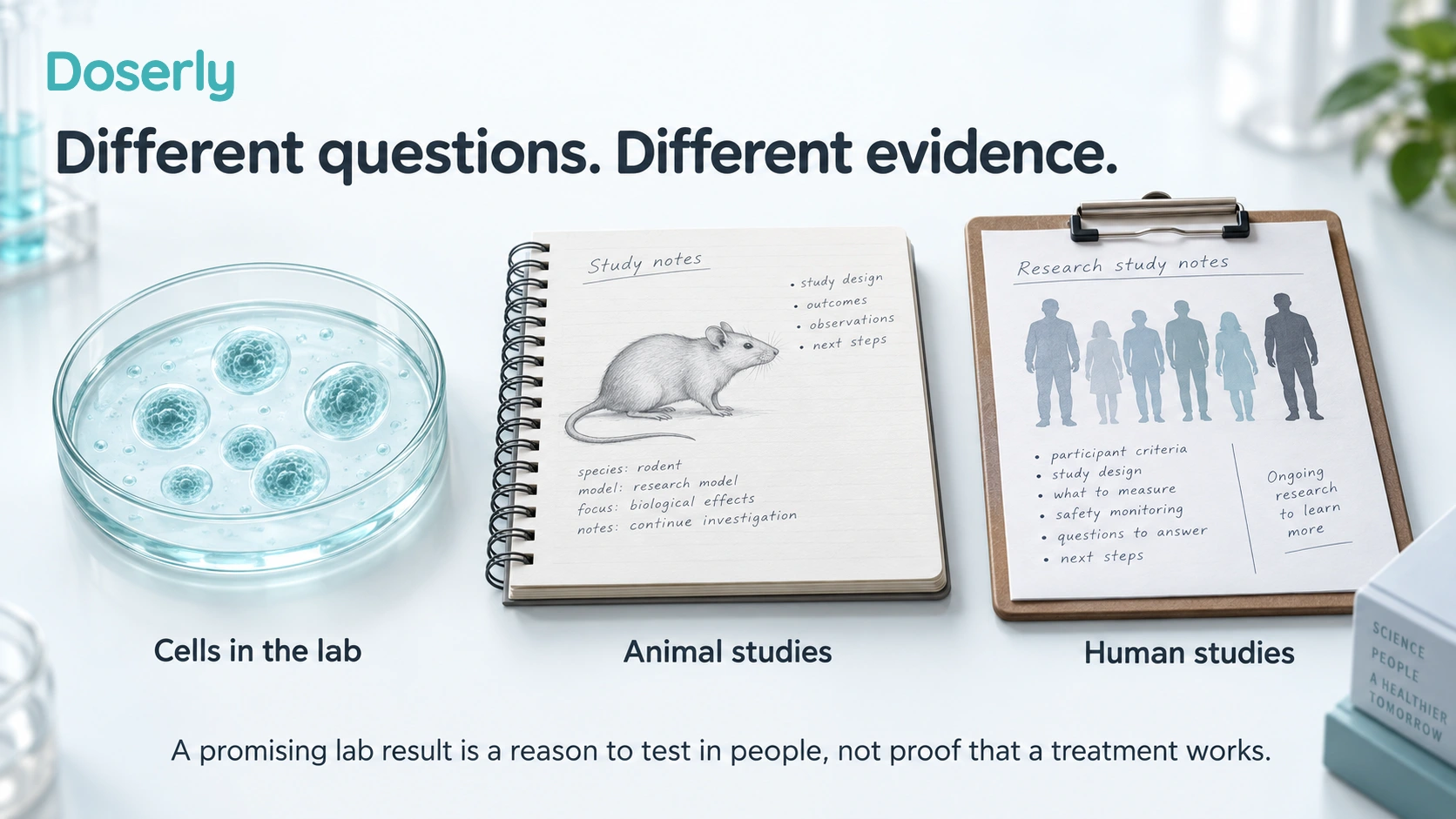
AREDS2 is a defined intervention for selected age-related macular degeneration stages, not general eye protection for everyone. Similarly, WHO oral rehydration salts describe a specified glucose-electrolyte solution for dehydration from diarrhea. Ordinary electrolyte powders or coconut-water products cannot be presumed equivalent from the front label. Follow the finished ORS product’s water volume and directions; concentration changes alter the formulation. Severe dehydration requires medical assessment. [2][7]
Detoxification claims require a separate standard of evidence
FDA states that no chelation product is approved for over-the-counter use for any condition. Approved chelation drugs require prescription supervision, and unapproved home-use products can cause dehydration, kidney failure or death. A “research-context” EDTA entry in this directory is not an endorsement of self-treatment, and evidence for prescribed chelation cannot validate clay, zeolite, cilantro or citrus-pectin detox claims. The collection provides no chelation schedule. [6]
Which overlaps and risks matter?
Cautions and interactions
Digestive symptoms, swallowing difficulties, medications and kidney function can affect suitability. A detox label does not establish removal of a clinically important toxin. Suspected poisoning and significant dehydration require appropriate clinical assessment, not trial-and-error supplement tracking. [1][2][3]
A complete product list includes prescription medicines, nonprescription products and supplements. Combination formulas can conceal duplicate ingredients. Timing and spacing from a medicine should follow its labeling and pharmacist guidance; this collection does not supply a universal timetable.
Regulatory status
In the United States, FDA does not approve dietary supplements for safety and effectiveness before marketing. In Canada, a natural health product requires a product licence before sale; its NPN or DIN-HM must match the finished product. An ingredient name or inclusion in this collection does not establish that every product or claim is authorized. Authorization also does not validate the complete combination. [4], [5]
What should be recorded and how should changes be interpreted?
Doserly brings dose logs, symptoms and routine changes together. For this collection, useful observations include the precise indication, product formula, bowel symptoms, hydration context and relevant clinical follow-up.
- Doses and adherence: record the formulation, amount actually taken, timing and missed doses so observations have context.
- Potential benefits and tolerability: compare consistent symptoms or measurements over time alongside sleep, food and activity changes. Personal trends help evaluate the experience without proving causal efficacy.
- Product list: maintain the full product list for review with a pharmacist or clinician.
- AI monthly reports: summarize recorded doses, symptoms and trends to prepare for a discussion. Reports depend on the data entered and are not a diagnosis or an instruction to change treatment.
Explore the topic further
Common questions
Are all fibers interchangeable for constipation?
No. The guideline’s positive signal centered on psyllium among the fibers it evaluated. It did not establish equal efficacy for every fiber in this directory. [3]
Is any electrolyte powder an oral rehydration salt product?
No. Compare the declared formulation, intended use and required dilution. ORS is designed around glucose and electrolytes for diarrheal dehydration. [7]
Does an EDTA listing mean I can use it for home detoxification?
No. FDA has not approved OTC chelation for any condition. Prescription chelation and an unapproved supplement claim are different situations. [6]
Do AREDS2 findings apply to everyone who wants better vision?
No. The eye-disease stage and exact formulation matter; the evidence is not a general vision-enhancement claim. [2]
Glossary
Terms for interpreting the comparisons.
- Formulation
- The exact preparation, including its ingredients, their forms and labeled amounts.
- Study population
- The people included in a study; their characteristics limit where its result applies.
- Comparator
- The placebo, treatment or condition used as the comparison.
- Measured outcome
- What the study evaluates, such as a symptom, laboratory result or clinical event.
- Overlap
- The same ingredient appearing in more than one product used together.
How was this guide researched?
Sources and limits
This AI-assisted educational guide compares the cited public references. Findings remain tied to the ingredients, preparations and populations studied. It is not a systematic review or independent medical peer review. Doserly develops a commercial tracking app. Illustrations explain concepts; app screens show example data. Report a correction with its source to Doserly support.
Explore the sources
The references below provide context for the claims and their limits.
Showing 7 sources
- 01
NCCIH — Diabetes and dietary supplements ↗
Public reference
Check the reported population, preparation and limitations.
- 02
National Eye Institute — AREDS/AREDS2 questions and evidence ↗
Public reference
Check the reported population, preparation and limitations.
- 03
American Gastroenterological Association-American College of Gastroenterology Clinical Practice Guideline: Pharmacological Management of Chronic Idiopathic Constipation. ↗
Clinical guideline
Conditional fiber recommendation, low-certainty evidence and psyllium-specific limits.
- 04
FDA — Questions and Answers on Dietary Supplements ↗
Regulatory reference
United States dietary supplement regulation.
- 05
- 06
FDA — Questions and Answers on Unapproved Chelation Products ↗
Regulatory reference
No FDA-approved OTC chelation; serious risks and unproven detoxification claims.
- 07
WHO — Oral rehydration salts: production of the new ORS ↗
Official guidance
Defined glucose-electrolyte solution for diarrheal dehydration, not a generic sports-drink category.
No matching sources
Try a different term or show the full list.