
In this guide
What does this guide compare?
Performance, muscle adaptation and recovery are different study outcomes.
This collection compares products discussed around one topic. It is not a protocol to take in full. Links to individual profiles appear after the article.
| Reference point | Context |
|---|---|
| Products compared | 7 |
| Evidence scope | Ingredient, formulation, population and measured outcome |
| Complete combination | The cited studies do not automatically validate all members together |
Which products are compared?
Creatine, Whey Protein, Casein Protein, Plant-Based Protein, HMB (Beta-Hydroxy Beta-Methylbutyrate), Nitric Oxide Boosters, Pre-Workout Blends.
Individual profiles describe formulation, source-reported amounts, tolerability and interactions. Those details remain ingredient-specific. An amount studied alone is not automatically appropriate in a combination.
How do their roles differ?
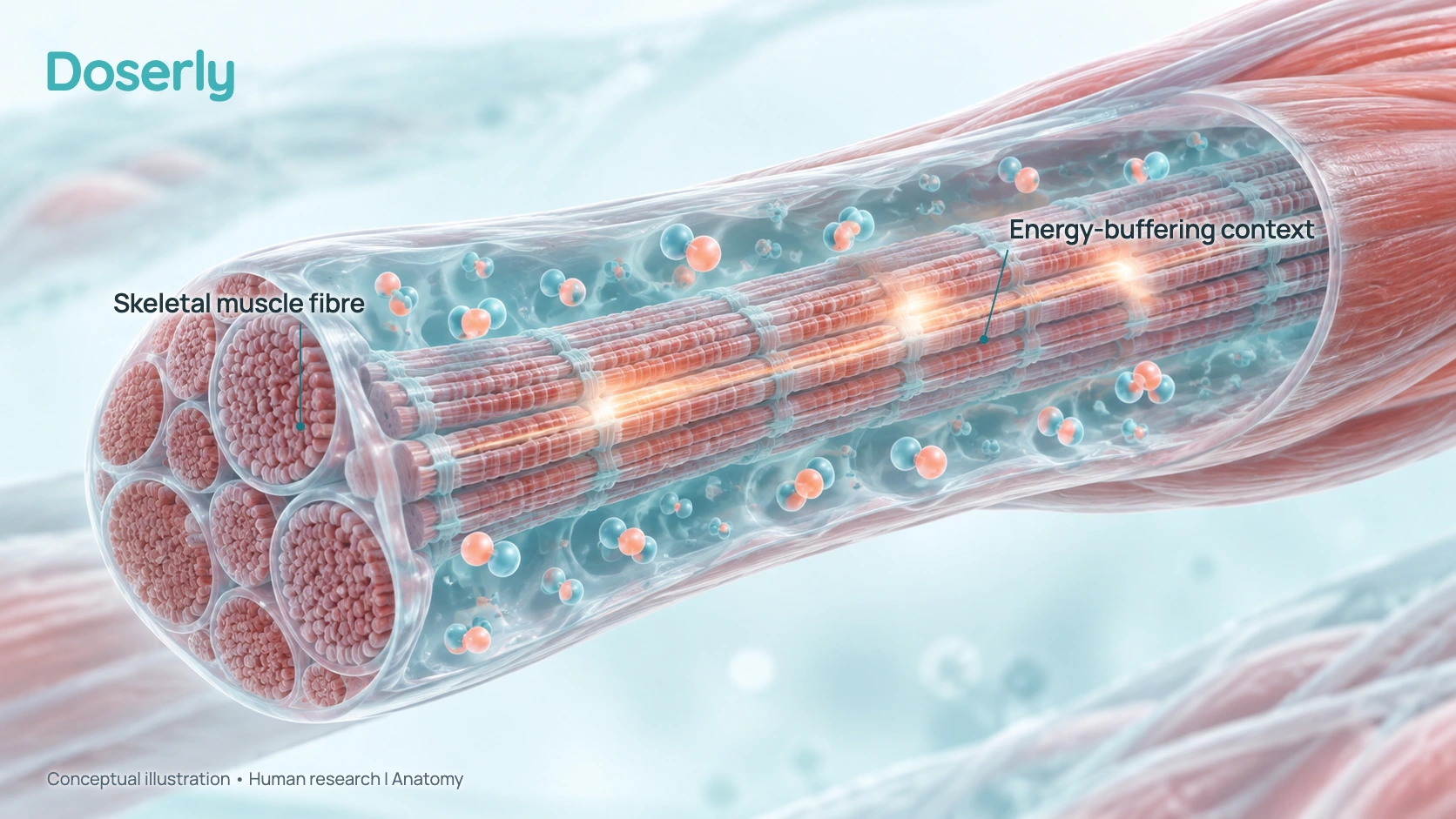
Creatine supports phosphocreatine-mediated ATP regeneration during brief intense effort. Protein supplies amino acids for adaptation; caffeine changes perceived effort and alertness. These roles differ from electrolyte replacement or carbohydrate fueling, and combining them does not itself demonstrate synergy. [1][2][3]
Selected ingredient studies and their limits
These examples compare distinct preparations and outcomes. Their schedules describe research and are not a regimen to combine.
Creatine. evidence is strongest for creatine monohydrate in repeated high-intensity efforts and resistance training. In the 31-man Hultman dosing study, separate schedules increased muscle creatine: 5 g four times daily for 6 days, or 3 g once daily for 28 days. This biopsy outcome describes tissue loading, not a measured reduction in soreness or injury. A separate 19-man, 12-week resistance-training trial evaluated strength and muscle adaptation. Results from these distinct designs cannot validate the whole collection. [1], [6], [7]
What does the research show?
Compare proteins by composition and total intake The published correction specifies 3 g/day calcium HMB rather than free-acid HMB. [11]
A 2025 synthesis included 43 eligible randomized trials, with 30 contributing to the muscle-mass meta-analysis. Animal protein had a small pooled advantage over plant protein for muscle mass (standardized difference 0.20 in favor of animal protein); soy-versus-milk comparisons did not show a difference, and pooled strength and physical-performance differences were not significant. The result does not imply that every animal product outperforms every plant blend. Protein source, amount, leucine matching, population and the rest of the diet change the comparison. [9]
An overnight muscle-synthesis result also does not establish that bedtime is always the best time to take protein. A small preliminary trial comparing daytime and nighttime casein during resistance training did not demonstrate a timing advantage. Adequate intake and a feasible routine remain distinct from claims about a special anabolic window. [10]
HMB findings depend on the population and comparator
A meta-analysis of six randomized trials involving 193 trained or competitive athletes found no significant pooled improvement in bench press, leg press, body mass, fat-free mass or fat mass. This does not answer every use in older or clinical populations, but it prevents transferring a positive combined-intervention study into a reliable performance claim for trained athletes. [8]
Creatine evidence does not validate the whole sports shelf
A 2026 crossover trial in 30 active older adults reported functional improvements with creatine plus HMB alongside supervised exercise. The small, short combined-intervention study cannot isolate creatine’s contribution or establish the effects of this collection. A separate 2025 crossover study in 14 men reported some performance and subjective benefits after creatine loading, without improvement in objective sleep duration or efficiency. The broader evidence remains strongest for repeated high-intensity exercise. [1][2][3]
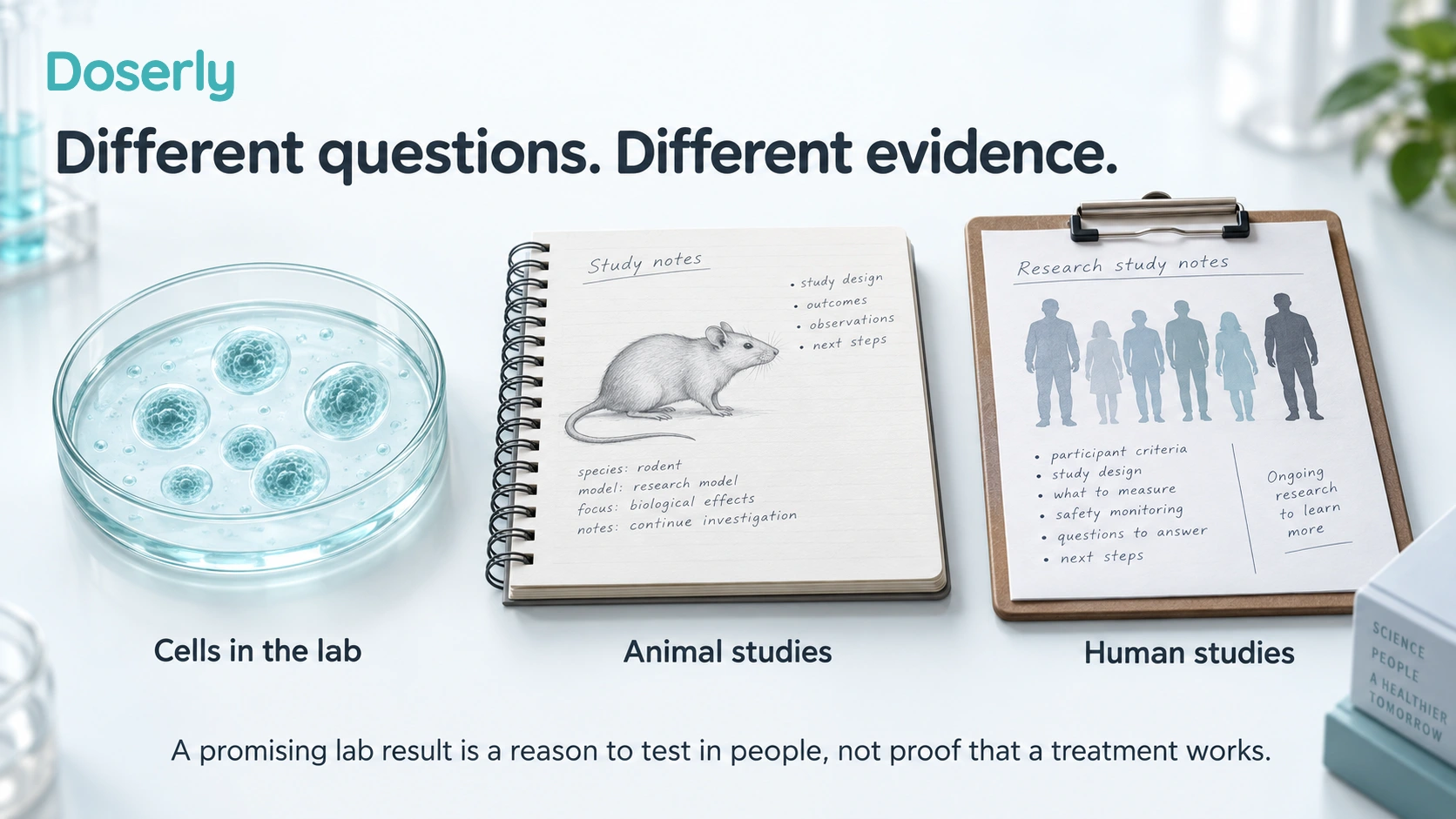
An observational association, a laboratory finding and a perceived benefit answer different questions. Randomized trials need their comparator, duration and population kept in view. An inconclusive result does not establish that an effect is impossible; it limits the claim that can be made.
Which overlaps and risks matter?
Cautions and interactions
Stimulant totals can accumulate across pre-workout products and drinks. Creatine-related water gain should not be recorded as immediate new muscle tissue. Product certification can reduce some contamination concerns but does not establish effectiveness or eliminate every anti-doping risk. [1][2][3]
A complete product list includes prescription medicines, nonprescription products and supplements. Combination formulas can conceal duplicate ingredients. Timing and spacing from a medicine should follow its labeling and pharmacist guidance; this collection does not supply a universal timetable.
Regulatory status
In the United States, FDA does not approve dietary supplements for safety and effectiveness before marketing. In Canada, a natural health product requires a product licence before sale; its NPN or DIN-HM must match the finished product. An ingredient name or inclusion in this collection does not establish that every product or claim is authorized. Authorization also does not validate the complete combination. [4], [5]
What should be recorded and how should changes be interpreted?
Doserly brings dose logs, symptoms and routine changes together. For this collection, useful observations include training load, repeatable strength or performance measures, recovery symptoms, sleep and ingredient totals.
- Doses and adherence: record the formulation, amount actually taken, timing and missed doses so observations have context.
- Potential benefits and tolerability: compare consistent symptoms or measurements over time alongside sleep, food and activity changes. Personal trends help evaluate the experience without proving causal efficacy.
- Product list: maintain the full product list for review with a pharmacist or clinician.
- AI monthly reports: summarize recorded doses, symptoms and trends to prepare for a discussion. Reports depend on the data entered and are not a diagnosis or an instruction to change treatment.
Explore the topic further
Common questions
Does a higher protein-powder weight mean more protein?
Not necessarily. Compare declared protein grams, amino-acid composition, other ingredients and the amount actually consumed. A powder scoop and its protein content are different quantities. [1][9]
Must casein be taken before sleep to work?
The cited direct timing comparison did not demonstrate a bedtime advantage. Acute overnight studies and long-term training adaptations answer different questions. [10]
Is HMB reliably beneficial for an already trained athlete?
The cited six-trial meta-analysis did not show pooled strength or body-composition benefit in that population. A result from older adults or a combination with creatine cannot settle that question. [2][8]
Can I treat pre-workout or nitric-oxide boosters as one standardized product?
No. They are marketing categories with variable ingredients and amounts. Compare each finished formula and total stimulant exposure; none of the studies here validates every blend. [1]
Glossary
Terms for interpreting the comparisons.
- Formulation
- The exact preparation, including its ingredients, their forms and labeled amounts.
- Study population
- The people included in a study; their characteristics limit where its result applies.
- Comparator
- The placebo, treatment or condition used as the comparison.
- Measured outcome
- What the study evaluates, such as a symptom, laboratory result or clinical event.
- Overlap
- The same ingredient appearing in more than one product used together.
How was this guide researched?
Sources and limits
This AI-assisted educational guide compares the cited public references. Findings remain tied to the ingredients, preparations and populations studied. It is not a systematic review or independent medical peer review. Doserly develops a commercial tracking app. Illustrations explain concepts; app screens show example data. Report a correction with its source to Doserly support.
Explore the sources
The references below provide context for the claims and their limits.
Showing 11 sources
- 01
NIH ODS — Exercise and athletic performance ↗
Public reference
Check the reported population, preparation and limitations.
- 02
Combined creatine and β-hydroxy-β-methylbutyrate supplementation with integral conditioning exercise enhances functional performance and metabolic health in physically active older adults: A randomized controlled crossover trial. ↗
Public reference
Check the reported population, preparation and limitations.
- 03
Effects of Creatine Monohydrate Loading on Sleep Metrics, Physical Performance, Cognitive Function, and Recovery in Physically Active Men: A Randomized, Double-Blind, Placebo-Controlled, Crossover Trial. ↗
Public reference
Check the reported population, preparation and limitations.
- 04
FDA — Questions and Answers on Dietary Supplements ↗
Regulatory reference
United States dietary supplement regulation.
- 05
- 06
Muscle creatine loading in men ↗
Human dosing study
Full article checked for separate loading, maintenance, gradual-dose and washout groups.
- 07
Performance and muscle fiber adaptations to creatine supplementation and heavy resistance training ↗
Randomized controlled trial
Full article page reviewed; 19 resistance-trained men.
- 08
Effects of beta-hydroxy-beta-methylbutyrate supplementation on strength and body composition in trained and competitive athletes: A meta-analysis of randomized controlled trials. ↗
Human research
Six randomized trials, 193 participants; pooled strength and body-composition results were null.
- 09
Effect of Plant Versus Animal Protein on Muscle Mass, Strength, Physical Performance, and Sarcopenia: A Systematic Review and Meta-analysis of Randomized Controlled Trials. ↗
Human research
Small pooled muscle-mass difference; protein type, outcome and population matter.
- 10
Daytime and nighttime casein supplements similarly increase muscle size and strength in response to resistance training earlier in the day: a preliminary investigation. ↗
Human research
Small preliminary trial; no demonstrated advantage of nighttime placement.
- 11
Correction to: Combined creatine and β-hydroxy-β-methylbutyrate supplementation with integral conditioning exercise ↗
Published correction
The preparation was 3 g/day calcium HMB, not the free-acid form.
No matching sources
Try a different term or show the full list.