
Nitric Oxide Boosters: The Complete Supplement Guide
On this page
Quick Reference Card
Attribute
Common Name
- Detail
- Nitric Oxide Boosters
Attribute
Other Names / Aliases
- Detail
- Beetroot juice, dietary nitrate, nitrate shots, L-citrulline, citrulline malate, L-arginine, arginine blends, nitric oxide support
Attribute
Category
- Detail
- Sports performance / circulatory support category
Attribute
Primary Forms & Variants
- Detail
- Beetroot juice, beetroot shots, beetroot powder, nitrate salts, L-citrulline, citrulline malate, L-arginine, arginine blends
Attribute
Typical Dose Range
- Detail
- Beetroot/nitrate trials commonly use 5 to 14.9 mmol acute pre-exercise or 5 to 9.9 mmol/day repeated; citrulline trials commonly use 3 to 6 g/day; arginine BP trials show effects at 4 g/day and above
Attribute
RDA / AI / UL
- Detail
- No category-specific RDA, AI, or UL established. This is a multi-compound category, not a single nutrient.
Attribute
Common Delivery Forms
- Detail
- Juice, shot, powder, capsule, tablet, blend, sports shot
Attribute
Best Taken With / Without Food
- Detail
- Goal-dependent. Nitrate studies often use timed intake before exercise, while citrulline and arginine are commonly taken in ways that balance tolerance and convenience.
Attribute
Key Cofactors
- Detail
- Oral bacteria for nitrate reduction, hydration, exercise timing, and, for amino acid pathways, adequate overall protein intake and blood-flow support from the rest of the diet
Attribute
Storage Notes
- Detail
- Juice is usually refrigerated after opening. Powders and capsules should stay cool, dry, and sealed. Beetroot products can stain surfaces and clothing.
Overview
The Basics
Nitric oxide boosters are not one single supplement. They are a category of products and ingredients that try to support nitric oxide, a signaling molecule that helps blood vessels relax and widen. The most common paths are beetroot or nitrate-based products, which rely on oral bacteria, and amino-acid based products like L-citrulline and L-arginine, which feed the body’s own nitric oxide synthase pathway [1][2][3][4][5].
People usually reach for this category for three reasons. Some want a better workout pump or exercise performance. Some want support for blood pressure or circulation. Others use it for erection quality or general blood flow. The category attracts a lot of attention because it sits at the intersection of sports nutrition and cardiovascular support, so the marketing tends to be louder than the evidence [1][2][4][5].
The big practical takeaway is that form matters. Beetroot juice, citrulline, and arginine do not behave the same way. Beetroot products depend on the nitrate to nitrite conversion that happens partly in the mouth. Citrulline is often a more efficient way to raise arginine levels. Arginine can work, but it generally needs higher doses and is more limited by tolerance [1][3][4][5].
The Science
The nitric oxide system has two major input routes. The classical route uses L-arginine as the substrate for nitric oxide synthase enzymes, which generate nitric oxide and L-citrulline. The alternative route begins with inorganic nitrate, which is reduced to nitrite by oral bacteria and then further reduced to nitric oxide in blood and tissues [1][3].
This dual-pathway framing is important because it explains why the same broad category can produce different outcomes. Nitrate-based products appear to perform best in exercise contexts when oral microbiota are intact, while citrulline and arginine are more relevant when the goal is to raise arginine availability and support endothelial nitric oxide production [1][3][4][5].
The evidence is strongest for blood pressure and short-duration exercise performance. Blood pressure effects are real but modest. Exercise effects are real but goal-specific, with the clearest benefit in certain performance windows and in some populations more than others [1][2][4][5].
Chemical & Nutritional Identity
Property
Category status
- Detail
- Multi-ingredient category, not a single chemical
Property
Core actives
- Detail
- Inorganic nitrate, nitrite, L-citrulline, L-arginine, beetroot-derived nitrate
Property
Molecular formula
- Detail
- Not applicable to the category as a whole
Property
Molecular weight
- Detail
- Not applicable to the category as a whole
Property
CAS number
- Detail
- Not applicable to the category as a whole
Property
PubChem CID
- Detail
- Not applicable to the category as a whole
Property
Classification
- Detail
- Sports performance and circulatory support category
Property
Form differences
- Detail
- Beetroot juice and beetroot shots supply nitrate directly. Citrulline is a precursor to arginine and is often better tolerated than arginine. Arginine is the direct nitric oxide synthase substrate but is limited by intestinal handling at higher doses.
Property
Daily values
- Detail
- No RDA, AI, or UL is established for this category.
The phrase "nitric oxide boosters" is a useful consumer label, but chemically it covers multiple overlapping pathways. That is why a beetroot shot, a citrulline powder, and an arginine capsule can all live under the same umbrella while producing different user experiences [1][3][4][5].
Mechanism of Action
The Basics
Nitric oxide boosters work by helping the body make more nitric oxide, which is the signal that tells blood vessel walls to relax. Wider vessels can improve blood flow, reduce pressure, and make it easier for working muscles to get oxygen and nutrients [1][2][4][5].
There are two common routes. Beetroot and other nitrate-rich products rely on a mouth-bacteria conversion chain. Citrulline and arginine feed the body’s own enzyme system. That is why the same broad category can show up in both workout stacks and blood-pressure conversations [1][3][4][5].
The Science
The nitrate route begins when inorganic nitrate is absorbed and then concentrated in saliva. Oral bacteria reduce nitrate to nitrite, and nitrite can then be converted to nitric oxide in the stomach, blood, and tissues. This pathway is especially relevant when oxygen availability is lower, such as during exercise [1][3].
The amino acid route uses nitric oxide synthase. L-citrulline raises plasma arginine more efficiently than oral arginine in many practical settings because citrulline escapes much of the gut and liver first-pass handling. Arginine can still lower blood pressure and support nitric oxide production, but the dose needed is often higher and the GI ceiling is more noticeable [4][5].
Vascular relaxation is ultimately mediated through soluble guanylyl cyclase and cyclic GMP signaling in smooth muscle cells. That downstream effect is the common endpoint shared by the different inputs in this category, even when the upstream chemistry differs [1][2][4][5].
Pathway
Nitrate route
Beetroot or dietary nitrate -> oral bacteria -> nitrite -> nitric oxide -> cGMP signaling -> vasodilation [1][3]
Amino acid route
L-citrulline -> L-arginine -> nitric oxide synthase -> nitric oxide -> cGMP signaling -> vasodilation [4][5]
Practical note
Arginine also has alternative metabolic fates, including the urea cycle. That helps explain why higher doses do not always translate into better results [5].
Absorption & Bioavailability
The Basics
Absorption is where this category gets interesting. Beetroot and other nitrate products depend on a mouth step that many people do not think about. If that oral step is disrupted, the effect can drop. Citrulline and arginine are different. Citrulline is usually the smoother way to raise arginine levels, while arginine is more likely to hit a gut tolerance limit [1][3][4][5].
The practical pattern from the literature is clear. Acute nitrate studies often time intake well before exercise, not right before it. Community comments sometimes report a fast subjective lift, but the trial window is usually longer [1][6].
The Science
In the nitrate pathway, oral bacteria matter. The oral microbiome study showed nitrate-sensitive bacterial modules linked with cardiovascular and cognitive indices, reinforcing that the mouth is part of the pharmacology, not just a bystander [3].
In the sports literature, nitrate timing was most often studied with 5 to 14.9 mmol taken at least 150 minutes before exercise, or 5 to 9.9 mmol/day in repeated protocols. The performance signal was strongest in shorter exercise windows and was not equally strong across every use case [1].
For the amino acid route, L-citrulline is generally the more efficient arginine precursor. L-arginine does lower blood pressure in controlled trials, but the benefit is dose-dependent and appears to plateau after the mid-single-digit gram range in the meta-analysis [4][5].
Turn symptom and safety notes into a clearer timeline.
Doserly helps you log doses, symptoms, and safety observations side by side so patterns are easier to discuss with a qualified clinician.
Pattern view
Logs and observations

Pattern visibility is informational and should be reviewed with a clinician.
Research & Clinical Evidence
Blood Pressure and Circulation
The Basics
The blood-pressure story is one of the strongest parts of this category. Beetroot juice, citrulline, and arginine all show some degree of blood-pressure support in human trials. The size of the effect is usually modest rather than dramatic [2][4][5].
The Science
Beetroot juice lowered blood pressure in hypertensive patients in meta-analysis [2]. L-citrulline also reduced brachial systolic and diastolic blood pressure in pooled trial data, with effects around 4.5 mmHg systolic and 3.6 mmHg diastolic [4]. L-arginine meta-analysis showed a larger average systolic reduction, about 6.4 mmHg, with a dose-response signal around 4 g/day [5].
The common thread is vasodilation. The differences come from the upstream pathway, the dose, and the population studied [2][4][5].
Exercise Performance
The Basics
Exercise performance is the other major use case. In plain language, these products are often used to support pump, endurance, or perceived training quality. The best evidence is for nitrate-based strategies rather than vague blended products [1][6].
The Science
The nitrate performance meta-analysis found a modest but real ergogenic effect across 123 studies and 1,705 participants, with the clearest benefit in a 2 to 10 minute exercise window and with acute doses in the 5 to 14.9 mmol range taken well before exercise [1]. The clinical trial protocol in type 2 diabetes also frames dietary nitrate as a way to improve skeletal muscle blood flow, mitochondrial function, and exercise efficiency [6].
Sexual Function and Blood Flow
The Basics
Community discussion often turns nitric oxide boosters into a circulation and erectile-function category. That is not a fantasy use case, but the human data are less extensive than the performance and blood-pressure data [4][5].
The Science
The mechanistic logic is straightforward. If nitric oxide improves endothelial function and vascular relaxation, erection quality may improve in some users. The strongest direct human support in the current KB is indirect, coming from the vascular data rather than large dedicated erectile-function trials in this category [4][5].
Metabolic Disease and Exercise Tolerance
The Basics
In people with reduced exercise capacity, nitrate is being studied as a way to improve blood flow and oxygen use. This matters because nitric oxide support is not only about gym performance. It may also matter in cardiometabolic contexts [6].
The Science
The clinical trial protocol in type 2 diabetes describes an 8-week dietary nitrate intervention designed to improve plasma nitrate and nitrite, skeletal muscle perfusion, mitochondrial function, and exercise efficiency [6]. That supports the idea that the nitrate pathway can matter in disease states where nitric oxide bioavailability is reduced [6].
Evidence & Effectiveness Matrix
Category
Physical Performance
- Evidence Strength
- 8/10
- Reported Effectiveness
- 7/10
- Direction
- Positive
- Summary
- The nitrate meta-analysis supports modest ergogenic benefit, and community reports are strongly pump- and workout-focused.
Category
Blood Pressure
- Evidence Strength
- 8/10
- Reported Effectiveness
- 5/10
- Direction
- Positive
- Summary
- Beetroot, citrulline, and arginine all show BP support, but the community reports fewer objective measurements.
Category
Sexual Function
- Evidence Strength
- 5/10
- Reported Effectiveness
- 7/10
- Direction
- Positive
- Summary
- Human vascular logic is plausible and community use is common for erection support, but direct trials are limited in this KB.
Category
Energy Levels
- Evidence Strength
- 4/10
- Reported Effectiveness
- 6/10
- Direction
- Positive
- Summary
- Users report clean energy and better circulation, but the signal is mostly subjective.
Category
Heart Health
- Evidence Strength
- 6/10
- Reported Effectiveness
- 5/10
- Direction
- Positive
- Summary
- Cardiovascular framing is common, but direct heart-outcome data are limited.
Category
Nausea & GI Tolerance
- Evidence Strength
- 4/10
- Reported Effectiveness
- 5/10
- Direction
- Mixed
- Summary
- Beetroot powder and arginine are more likely to cause GI complaints than citrulline.
Category
Side Effect Burden
- Evidence Strength
- 4/10
- Reported Effectiveness
- 5/10
- Direction
- Mixed
- Summary
- Headaches, GI issues, and sleep interference appear, but serious effects are not a community theme.
Category
Treatment Adherence
- Evidence Strength
- 3/10
- Reported Effectiveness
- 6/10
- Direction
- Positive
- Summary
- Users stick with the forms that are easy to tolerate and easy to time.
Categories scored: 8
Categories with community data: 8
Categories not scored (insufficient data): Fat Loss, Muscle Growth, Weight Management, Appetite & Satiety, Food Noise, Sleep Quality, Focus & Mental Clarity, Memory & Cognition, Mood & Wellbeing, Anxiety, Stress Tolerance, Motivation & Drive, Emotional Aliveness, Emotional Regulation, Libido, Joint Health, Inflammation, Pain Management, Recovery & Healing, Gut Health, Digestive Comfort, Skin Health, Hair Health, Heart Rate & Palpitations, Hormonal Symptoms, Temperature Regulation, Fluid Retention, Body Image, Immune Function, Bone Health, Longevity & Neuroprotection, Cravings & Impulse Control, Social Connection, Withdrawal Symptoms, Daily Functioning, Other
Benefits & Potential Effects
The Basics
The best-supported benefits are circulation, blood pressure support, and exercise performance. Some users also notice better pump, better erection quality, and a cleaner feeling of energy. The main idea is simple: if nitric oxide signaling improves, blood can move more freely [1][2][4][5].
The Science
Beetroot-based nitrate supplementation has the clearest performance evidence, especially for short-duration exercise and certain endurance-style workloads [1]. Beetroot juice also lowers blood pressure in hypertensive patients [2]. L-citrulline and L-arginine extend the category into amino-acid based vascular support, with BP reductions seen in meta-analyses [4][5].
Community sentiment is more enthusiastic than the clinical literature on a per-use basis. Users frequently describe a better pump, stronger circulation, and more noticeable erection quality. That does not mean the benefits are universal, but it does explain why this category remains popular despite being subtler than a stimulant [community data].
Capture changes while they are still fresh.
Log symptoms, energy, sleep, mood, and other observations alongside protocol events so patterns do not live only in memory.
Trend view
Symptom timeline
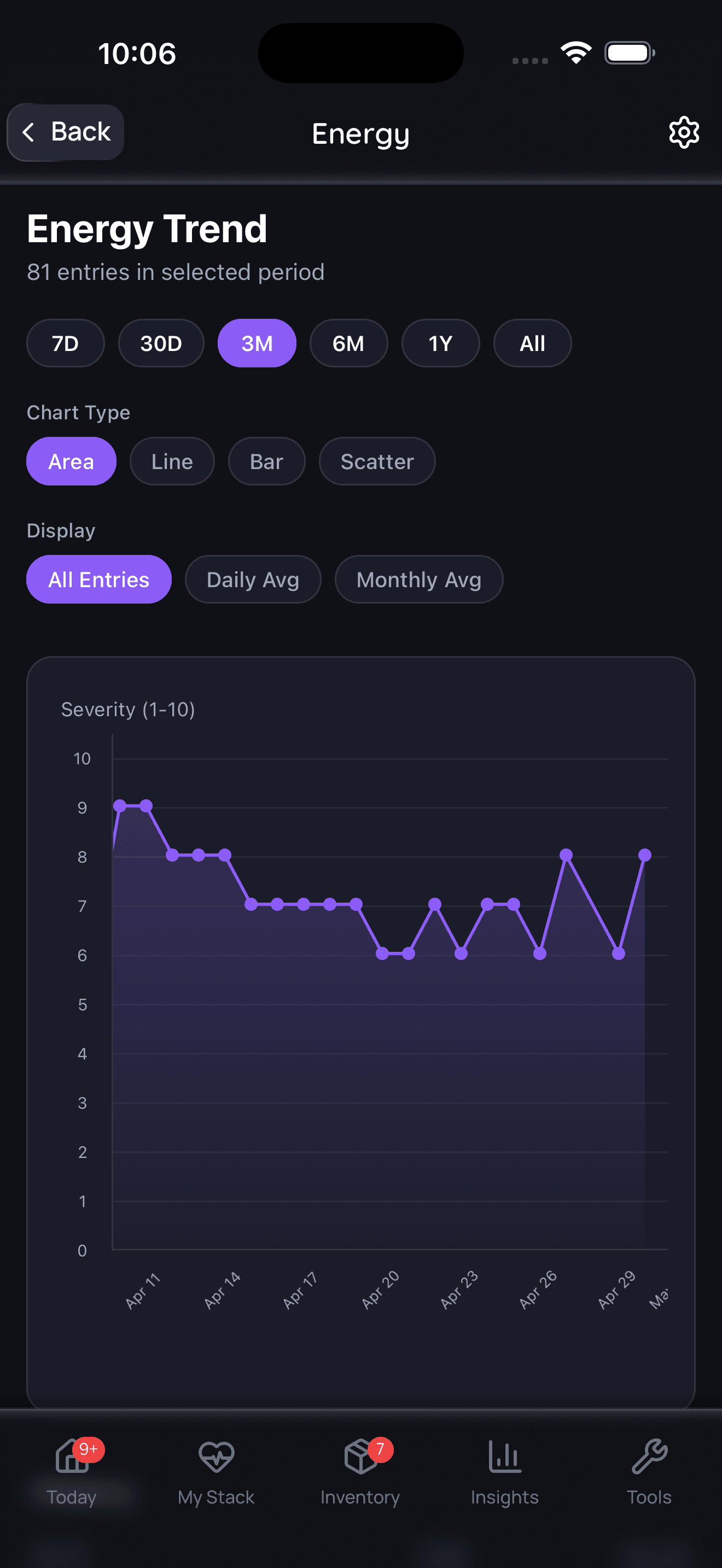
Symptom tracking is informational and should be interpreted with a qualified clinician.
Side Effects & Safety
The Basics
Most side effects are tolerability problems rather than acute danger signals. The common ones are GI upset, headaches, and the cosmetic beetroot effect that turns urine or stool reddish. Some users also report sleep interference when they take certain forms late in the day [community data].
The Science
Blood-pressure lowering is part of the mechanism, so people taking antihypertensive medication, prescription nitrates, or other vasodilators should treat this category cautiously and discuss it with a clinician. The risk is not that nitric oxide boosters are inherently dangerous for everyone. The risk is that they are physiologically active [2][4][5].
Arginine is more likely than citrulline to cause GI limits at higher doses, and beetroot powder is a frequent source of digestive complaints in community discussion. The USADA nutrition guide also reminds athletes that supplements carry contamination risk and that third-party testing reduces, but does not eliminate, that risk [7]. WADA’s prohibited list page does not name nitrate or nitric oxide as prohibited substances on the page reviewed here, but athletes still need to verify product-level contamination risk and sport-specific rules [8].
Dosing & Usage Protocols
The Basics
There is no single dose that fits the whole category. The practical range depends on which pathway the product uses and what the user wants from it. Nitrate-based products are usually timed as an acute pre-exercise strategy. Citrulline and arginine are often discussed as daily or repeated-use support for circulation and training [1][2][4][5][6].
The Science
Beetroot and nitrate studies commonly use 5 to 14.9 mmol taken at least 150 minutes before exercise, or repeated daily dosing in the 5 to 9.9 mmol range [1]. Beetroot juice lowered blood pressure in hypertensive patients in meta-analysis, which supports a separate circulation-focused use case [2].
L-citrulline meta-analysis showed blood-pressure effects in the 3 to 6 g/day zone, while L-arginine meta-analysis showed blood-pressure effects at 4 g/day and above, with no clear additional gain above the mid-single-digit range [4][5]. This is a good example of why a category-level dose does not exist. The dose follows the form [4][5].
Track injection timing, draw notes, and site rotation.
Doserly helps keep syringe-related notes, injection site history, reminders, and reconstitution context together for easier review.
Injection log
Site rotation
Injection logs support record-keeping; follow clinician instructions for administration.
What to Expect
The first thing many users notice is not a dramatic stimulant-like rush. It is a pump, a sense of circulation, or a mild change in workout feel. That can happen the same day, but the controlled literature is usually more conservative about timing [1][2].
Within 1 to 2 weeks, repeated use may begin to show up as more stable circulation or more predictable workout sessions. Over 3 to 6 weeks, blood-pressure and exercise-tolerance trends are easier to judge if the user is logging them consistently. Longer use is where the question becomes less about "does it work once" and more about "is the form and dose worth keeping" [2][4][5][6].
The category is also highly form-sensitive. Some users get the outcome they wanted from beetroot. Others prefer citrulline because it is easier on the stomach. A few users notice that arginine feels inferior or irritating, which is consistent with the tolerability pattern seen in both trials and community discussion [4][5][community data].
Interactions & Compatibility
SYNERGISTIC
- Beetroot: the clearest nitrate-based pairing for exercise performance and blood pressure support.
- L-Citrulline: often used as the amino-acid companion when the goal is sustained arginine support.
- L-Arginine: mechanistically related, though many users prefer citrulline for tolerability.
- Creatine: common in performance stacks when the goal is training output rather than just vascular support.
- Electrolyte Powders/Tablets: useful when exercise, sweat loss, and hydration are part of the same protocol.
CAUTION / AVOID
- Antibacterial mouthwash or strong oral antiseptics around nitrate-based intake, because they can blunt the oral conversion step [1][3].
- Prescription nitrates, blood-pressure medications, and other vasodilators unless a clinician is monitoring the combination [2][4][5].
- Stacking multiple "pump" products with unclear labeling, because it becomes hard to know what is actually doing the work.
- Any product with a proprietary blend that hides how much nitrate, citrulline, or arginine it really contains.
How to Take / Administration Guide
The Basics
The category is best thought of as a timing problem. Nitrate products are often used as a timed pre-exercise strategy. Citrulline is usually used as a powder or capsule when the user wants a smoother, more tolerable option. Arginine is the least favored for routine use because the stomach often notices it before the muscles do [1][4][5].
The Science
In the nitrate literature, acute dosing is usually planned well before exercise, which is one reason the community timing advice and the trial timing advice do not always line up [1]. Citrulline and arginine are less timing-sensitive in the sense that users often take them as daily support or pre-workout support, but they still benefit from consistency if the goal is blood-pressure trend tracking [4][5].
Powders mix best in water or a flavored drink. Beetroot powder has the strongest taste and color, so it is usually the most noticeable form in practice. For juice or shots, cold storage and batch consistency matter because the nitrate content can vary more than casual users expect [2][6].
Choosing a Quality Product
The biggest quality question is not whether the category exists. It is whether the label tells you what kind of nitric oxide support you are actually buying.
- Look for exact nitrate content on beetroot products, ideally in mg or mmol, not just "proprietary blend" language.
- Look for transparent form labeling on amino-acid products, especially whether a product is free-form citrulline or citrulline malate.
- Look for a clearly stated gram amount on arginine products. Hidden doses are a bad sign.
- Look for third-party testing where athlete testing matters. USADA’s guidance makes clear that contamination risk is real, so certification is a risk-reduction tool, not a guarantee [7].
- Look for batch consistency, COA availability, and clear ingredient sourcing.
- Look for formulas that avoid unnecessary fillers if the user has GI sensitivity.
For this category, the most important quality marker is dose transparency. If the label cannot tell you how much nitrate, citrulline, or arginine is actually inside the serving, the product is not giving you enough information to evaluate it [1][2][4][5][7].
Storage & Handling
Keep powders and capsules cool, dry, and tightly sealed. Beetroot products are sensitive to moisture and the juice forms are usually the most perishable after opening. If a product stains hands or counters easily, that is not automatically a quality problem, but it does mean handling matters more than with a bland capsule [2][6].
Lifestyle & Supporting Factors
The nitrate route depends on oral bacteria, so oral hygiene habits are part of the story. Diet also matters. A pattern that includes leafy greens and beets gives the nitrate pathway more context, while hydration and exercise are what make the blood-flow story visible in the first place [1][3][6].
This category also fits better when the rest of the routine is not chaotic. Sleep, hydration, and training consistency make it easier to tell whether a nitric oxide booster is doing anything or whether the change came from something else in the stack [community data].
Regulatory Status & Standards
WADA’s current Prohibited List page reviewed in this run does not name nitrate or nitric oxide as prohibited substances on the page itself, but athletes still need to verify product-level contamination risk and sport-specific policies [8]. USADA’s nutrition guide also emphasizes that supplements can be contaminated and that third-party testing reduces, but does not eliminate, that risk [7].
For athletes, the useful habit is to verify the exact product in the exact sport context, not to assume the ingredient category alone answers the question. Global product certification programs are helpful, but they do not replace sport-specific checking [7][8].
FAQ
What are nitric oxide boosters?
They are products that aim to support nitric oxide signaling through nitrate-based or amino-acid based pathways. In practice, that usually means beetroot, citrulline, arginine, or blends built around those ingredients [1][3][4][5].
Is beetroot better than citrulline?
Based on available sources, beetroot is the best-studied for exercise performance, while citrulline is often discussed as the smoother amino-acid option for blood flow and blood pressure support. The better choice depends on the goal [1][2][4].
How long before exercise do people usually take beetroot?
In the trial literature, acute nitrate protocols are commonly timed at least about 150 minutes before exercise. Community users sometimes report a faster sensation, but the measured performance window is usually longer [1][community data].
Do I need to avoid mouthwash?
If the product relies on the nitrate-to-nitrite pathway, mouthwash can matter because it may blunt the oral bacteria step. That issue is much less relevant for pure amino-acid products [3].
Why is arginine less popular than citrulline?
Community users usually prefer citrulline because it is easier on the stomach and more efficient at raising arginine levels. Arginine still has trial support, but it often needs higher doses and is more likely to cause GI complaints [4][5][community data].
Can nitric oxide boosters lower blood pressure?
The human literature says they can, but the size of the effect is usually modest. Beetroot, citrulline, and arginine all show blood-pressure lowering in controlled data, though the exact result depends on form and dose [2][4][5].
Why does beetroot turn urine or stool red?
That is a known beetroot effect and is usually cosmetic. It can look alarming, but it is commonly reported and not the same thing as blood loss [community data].
Are nitric oxide boosters safe with blood pressure medication?
Because these products can lower blood pressure, the safest answer is that the combination should be reviewed with a clinician who knows the person’s medication list and baseline BP [2][4][5][7].
Can I stack beetroot with citrulline?
Users do stack them, and the biochemical logic is easy to see, but the category is already active enough that dose transparency matters. The better question is usually whether the stack is doing something measurable for the user rather than whether the theory sounds good [1][3][4][community data].
How do I know if a blend is dosed well?
Based on available data, the label should clearly state the nitrate amount, the citrulline amount, or the arginine amount in a serving. If the formula hides those numbers in a proprietary blend, it is hard to evaluate [1][2][4][5].
Myth vs. Fact
Myth: All nitric oxide boosters are the same.
Fact: Beetroot, citrulline, and arginine all influence nitric oxide, but they do so through different pathways and with different tolerability profiles [1][3][4][5].
Myth: More nitrate automatically means better performance.
Fact: The performance literature shows a dose window, not a simple "more is better" pattern. Acute timing and form matter [1].
Myth: Arginine is the best pre-workout nitric oxide booster.
Fact: Arginine does have blood-pressure and vascular evidence, but citrulline and beetroot are often better tolerated and better studied for their common use cases [1][2][4][5].
Myth: Beetroot works instantly for everyone.
Fact: Some people report fast subjective effects, but controlled performance studies usually time nitrate dosing well before exercise [1][community data].
Myth: Mouthwash does not matter.
Fact: If the product depends on the nitrate route, oral bacteria matter. Antibacterial mouthwash can blunt that conversion step [3].
Myth: If a product helps blood flow, it must be safe for everyone.
Fact: The category is physiologically active. People on blood-pressure medication or other vasodilators should treat it as something to review with a clinician [2][4][5][7].
Sources & References
Systematic Reviews & Meta-Analyses
- Factors that Moderate the Effect of Nitrate Ingestion on Exercise Performance in Adults: A Systematic Review with Meta-Analyses and Meta-Regressions. PubMed. https://pubmed.ncbi.nlm.nih.gov/35580578/Summary: 123 studies and 1,705 participants. Shows a modest exercise-performance benefit for inorganic nitrate, with beetroot juice and high-nitrate diet outperforming nitrate salts.
- Nitrate Derived From Beetroot Juice Lowers Blood Pressure in Patients With Arterial Hypertension: A Systematic Review and Meta-Analysis. PubMed. https://pubmed.ncbi.nlm.nih.gov/35369064/Summary: Seven studies, 218 participants. Beetroot juice lowered systolic BP by about 4.95 mmHg in hypertensive patients.
- Network analysis of nitrate-sensitive oral microbiome reveals interactions with cognitive function and cardiovascular health across dietary interventions. PubMed. https://pubmed.ncbi.nlm.nih.gov/33721836/Summary: Mechanistic support for the oral bacteria step in nitrate conversion and for nitrate-sensitive microbiome changes.
- Effect of L-citrulline Supplementation on Blood Pressure: a Systematic Review and Meta-Analysis of Clinical Trials. PubMed. https://pubmed.ncbi.nlm.nih.gov/30206378/Summary: L-citrulline lowered systolic and diastolic blood pressure in pooled clinical trial data.
- Effect of l-Arginine Supplementation on Blood Pressure in Adults: A Systematic Review and Dose-Response Meta-analysis of Randomized Clinical Trials. PubMed. https://pubmed.ncbi.nlm.nih.gov/34967840/Summary: L-arginine lowered SBP and DBP in 22 randomized trials, with an effective threshold around 4 g/day.
Clinical Trials & RCTs
- Nitrate supplementation and exercise tolerance in patients with type 2 diabetes. ClinicalTrials.gov protocol NCT02804932. https://clinicaltrials.gov/study/NCT02804932Summary: 8-week dietary nitrate protocol aimed at skeletal muscle perfusion, mitochondrial function, and exercise capacity.
Government / Institutional Sources
- USADA Nutrition Guide. https://www.usada.org/wp-content/uploads/Nutrition-Guide.pdfSummary: Official athlete nutrition guide emphasizing contamination risk and the limits of third-party testing.
- WADA Prohibited List. https://www.wada-ama.org/en/prohibited-listSummary: Official global anti-doping reference page reviewed for current prohibited-substance context.
Monographs
None used in this crawl cycle.