
In this guide
What is vitamin A?
Vitamin A includes fat-soluble retinoids, chiefly retinol and retinyl esters. It supports vision, immune function, cellular differentiation, reproduction, growth and organ development. Provitamin A carotenoids such as beta-carotene can be converted to retinol; lutein, zeaxanthin and lycopene are not vitamin A sources. [1]
The phrase “vitamin A” can hide meaningful differences. RAE compares biological activity, but the preformed-vitamin-A UL, pregnancy risk and high-dose beta-carotene smoking trials cannot be collapsed into one rule.
Typical Vitamin A Protocols
| Purpose or population | Form and amount each time | Frequency | Total per day | Duration |
|---|---|---|---|---|
| RDA, adult men 19+ | Vitamin A from all sources | Daily | 900 mcg RAE | Ongoing reference intake |
| RDA, adult women 19+ | Vitamin A from all sources | Daily | 700 mcg RAE | Ongoing reference intake |
| RDA, pregnancy 19–50 | Vitamin A from all sources | Daily | 770 mcg RAE | During pregnancy |
| RDA, lactation 19–50 | Vitamin A from all sources | Daily | 1,300 mcg RAE | During lactation |
| Adult U.S. UL | Preformed vitamin A only, all sources | Daily | 3,000 mcg RAE maximum | Chronic safety boundary |
| ATBC harm exposure, male smokers 50–69 | Beta-carotene 20 mg | Daily | 20 mg beta-carotene | 5–8 years; median 6.1 |
| CARET harm exposure, high-risk adults | Beta-carotene 30 mg + retinyl palmitate 25,000 IU | Daily | Combination exposure | Mean follow-up 4.0 years; stopped early |
The last two rows document exposures that produced harm signals and must not be copied as protocols. ATBC studied 29,133 Finnish male smokers. CARET studied 18,314 smokers, recent former smokers and asbestos-exposed workers and could not isolate beta-carotene from retinyl palmitate. [2], [3]
Where these amounts come from
The current NIH ODS monograph supplies RDAs, RAE conversions, UL scope, deficiency, pregnancy risk and interactions. [1] Primary ATBC and CARET reports supply exact harm-trial populations, schedules and outcomes. [2], [3]
We do not turn trial harms into regimens, apply the preformed-vitamin-A UL to beta-carotene, or convert IU without knowing the form.
Form changes the safety question
RAE combines activity, but toxicology and trial evidence remain form-specific.
Food carotenoids are not equivalent to high-dose beta-carotene trial capsules.
Does vitamin A need to be cycled?
No authority defines a general cycle. Because preformed vitamin A is stored in the liver, alternating high doses does not erase cumulative exposure. A diagnosed deficiency or malabsorption disorder needs cause-specific treatment and monitoring.
What happens when vitamin A is stopped?
Vitamin A does not cause a recognized withdrawal syndrome. Stopping a supplement removes that source, but liver stores and other foods remain. A person using prescribed retinoids or treated for deficiency should not change care without the prescriber.
Which foods provide vitamin A?
Liver, fish, eggs and dairy provide preformed vitamin A. Leafy green, orange and yellow vegetables and fruits provide provitamin A carotenoids. Liver is exceptionally concentrated, so food frequency belongs in a total-exposure review. [1]
Which vitamin A form should be compared?
Retinyl acetate, retinyl palmitate and retinol are preformed vitamin A. Beta-carotene is provitamin A, with variable conversion. One mcg RAE equals 1 mcg retinol, 2 mcg supplemental beta-carotene, 12 mcg food beta-carotene or 24 mcg food alpha-carotene or beta-cryptoxanthin. [1]
IU cannot be converted correctly without knowing the source form. A mixed product should state both amount and source; the same IU number can represent different RAE activity.
How should vitamin A be stored?
Follow the label for heat, moisture, light and expiry. Keep products closed and away from children. Preserve the Supplement Facts panel because form, mcg RAE and IU context affect interpretation.
What is vitamin A commonly used for?
Vitamin A treats deficiency and supports normal vision and development. It is also marketed for skin, immunity and eye health. Retinoid medicines, AREDS eye formulas and ordinary vitamin A supplements are different interventions and should not borrow one another’s claims.
What does human evidence show?
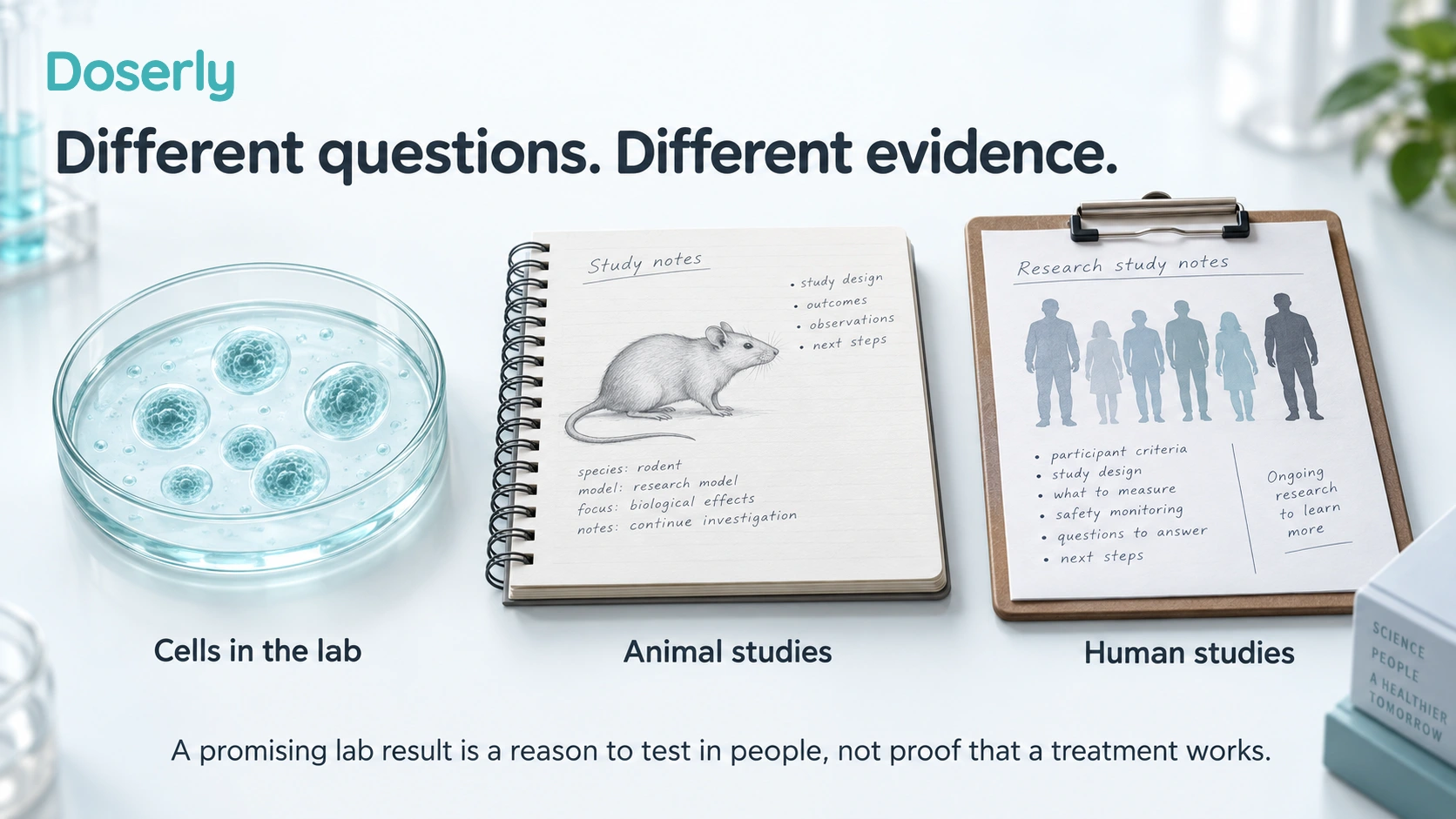
ATBC randomized 29,133 male smokers aged 50–69 to beta-carotene 20 mg/day, vitamin E, both or placebo for 5–8 years. Beta-carotene increased lung-cancer incidence: relative risk 1.18 versus no beta-carotene. [2]
CARET randomized 18,314 high-risk adults to beta-carotene 30 mg plus 25,000 IU retinyl palmitate daily or placebo. After mean follow-up of 4 years, lung-cancer risk was 1.28 and all-cause mortality 1.17 in the active group; the trial stopped 21 months early. The combination design cannot assign harm to one ingredient. [3]
How does vitamin A work?
Retinal is part of rhodopsin for low-light vision. Retinoic acid regulates gene expression and cellular differentiation. Retinyl esters store vitamin A in the liver. Beta-carotene conversion varies with dose, diet and genetics. [1]
What are the risks and interactions?
Excess preformed vitamin A can cause headache, blurred vision, nausea, dizziness, muscle pain, poor coordination, liver injury, coma or death. During pregnancy it can cause birth defects. The adult UL of 3,000 mcg RAE/day applies to preformed vitamin A from all sources, not beta-carotene. [1]
High-dose beta-carotene is not benign: ATBC and CARET found lung-cancer and mortality harm in smoking or asbestos-exposed populations. This does not make carrots harmful. [2], [3]
In the United States, supplements generally lack FDA premarket approval. In Canada, natural health products require a licence and authorized labels carry an NPN or DIN-HM. [4], [5]
Health Canada’s current Prescription Drug List places oral vitamin A above 10,000 IU per dosage form, or above 10,000 IU at the largest labeled daily dose, in the prescription-drug framework. That product-status threshold is not an RDA, UL or efficacy target. [6]
Which medicines interact with vitamin A?
Orlistat can reduce absorption and lower vitamin A concentrations. Acitretin and bexarotene are retinoid medicines; adding vitamin A supplements can cause dangerous excess. Isotretinoin users should likewise follow prescriber instructions rather than combine retinoid exposures. [1]
What should be monitored?
Serum retinol can document substantial deficiency but is insensitive until stores are nearly depleted and can fall during acute or chronic infection. Interpretation combines symptoms, diet, malabsorption, liver context and medicines. High preformed exposure warrants review of total sources and liver-related risk. [1]
What do public communities report?
Discussions often confuse IU with RAE, food carotenoids with beta-carotene capsules, or retinol skin products with oral intake. Reports cannot quantify total exposure or pregnancy risk. The prior Doserly dossier reviewed community material; this overhaul did not independently recrawl it.
How does vitamin A compare with nearby options?
| Guide | What it is | Key difference |
|---|---|---|
| Beta-carotene | Provitamin A carotenoid | Different conversion, UL scope and smoking-trial risk |
| Vitamin E | Fat-soluble antioxidant vitamin | Different units, bleeding context and trial evidence |
| Cod liver oil | Oil containing vitamins A and D | Can add preformed vitamin A and vitamin D together |
| Prenatal vitamins | Pregnancy multi-nutrient product | Form and total preformed vitamin A require review |
Common questions about vitamin A
What does mcg RAE mean?
It adjusts for unequal vitamin A activity across retinol and provitamin A carotenoids. [1]
Does the 3,000 mcg RAE UL include beta-carotene?
No. It applies to preformed vitamin A from all sources. Beta-carotene has separate evidence and risks. [1]
Is beta-carotene safer for smokers?
High-dose supplements increased lung-cancer risk in ATBC and the CARET combination trial. Smokers and asbestos-exposed people should not use those trials as prevention protocols. [2], [3]
Why is pregnancy different?
Excess preformed vitamin A is teratogenic. Review retinol, retinyl esters and retinoid medicines with the prenatal-care team. [1]
Can IU always be converted to RAE?
Only when the source form is known. Retinol and food carotenoids have different conversions. [1]
Is serum retinol a perfect status test?
No. It may stay stable until liver stores are nearly depleted and can decrease during infection. [1]
Glossary
Plain explanations of vitamin A forms, units and evidence terms.
- Retinol activity equivalent (RAE)
- A unit that adjusts for unequal vitamin A activity across retinol and provitamin A carotenoids.
- Preformed vitamin A
- Retinol and retinyl esters that can be used directly and count toward the preformed-vitamin-A UL.
- Provitamin A carotenoid
- A carotenoid such as beta-carotene that the body can convert to retinol.
- Teratogenic
- Capable of disrupting embryonic or fetal development and causing birth defects.
- Retinoid
- A vitamin-A-related compound; some retinoids are prescription medicines.
- Tolerable Upper Intake Level (UL)
- For adult vitamin A, 3,000 mcg RAE/day from preformed vitamin A only.
How this guide was researched
This draft uses the current NIH ODS vitamin A monograph, primary ATBC and CARET trial reports, and current FDA and Health Canada regulatory pages. Relevant source text was read on October 9, 2026.
How this guide was made
Research and drafting were AI-assisted. This draft awaits Doserly editorial and independent clinical review. Doserly makes a tracking app and operates Doserly Academy, both promoted here. Read the editorial policy.
Explore the sources
Official nutrient, primary trial and regulatory sources answer different questions.
Showing 6 sources
- 01
Vitamin A and Carotenoids - Health Professional Fact Sheet ↗
Official nutrient monograph
Current relevant sections reviewed.
Detail: Forms, RAE, foods, RDAs, UL scope, deficiency, pregnancy harm, status and interactions.
- 02
The Effect of Vitamin E and Beta Carotene on the Incidence of Lung Cancer and Other Cancers in Male Smokers ↗
Randomized double-blind trial
Primary report read.
Detail: 29,133 male smokers aged 50–69; beta-carotene 20 mg/day factorial exposure; 5–8 years; lung-cancer outcome.
- 03
Effects of a Combination of Beta Carotene and Vitamin A on Lung Cancer and Cardiovascular Disease ↗
Randomized double-blind trial
Primary report read.
Detail: 18,314 high-risk adults; beta-carotene 30 mg plus retinyl palmitate 25,000 IU/day; lung-cancer and mortality harm; early stop.
- 04
Questions and Answers on Dietary Supplements ↗
Regulatory overview
Current official page reviewed.
Detail: U.S. supplement framework.
- 05
Product Licensing ↗
Regulatory overview
Current official page reviewed.
Detail: Canadian licensing and NPN or DIN-HM.
- 06
Prescription Drug List ↗
Canadian ingredient/status qualifiers
Current official row and qualifier reviewed.
Detail: Oral vitamin A is prescription above 10,000 IU per dosage form or at the largest recommended daily dose; this is a product-status qualifier, not a nutrition limit.
No matching sources
Try a different term or show the full list.