
In this guide
What are Duavee and Duavive?
Duavee pairs conjugated estrogens, or CEE, with bazedoxifene in an oral menopause tablet for women with a uterus. The estrogen treats symptoms; bazedoxifene is a selective estrogen receptor modulator, or SERM, with agonist/antagonist effects that differ by tissue. It provides uterine opposition in this studied pairing instead of a progestin. It is not an estrogen-only tablet or estrogen plus micronized progesterone. [1]
EU Duavive uses the same named amounts in a modified-release tablet but has a narrower indication: estrogen-deficiency symptoms at least 12 months after the last menses, with a uterus, when progestin-containing therapy is not appropriate. US Duavee includes moderate-to-severe vasomotor treatment and restricted osteoporosis prevention. EU authorization does not imply the US bone indication or current stock in every country. [1], [2], [3]
The complete product is the important unit. Bazedoxifene is not a general permission to combine any estrogen amount or add another hormone. Neither named regimen is contraception or a disease-prevention wellness plan. [1], [2]
Which dose and added-hormone restrictions are exact?
| Product / country | Population / indication | Route | Amount | Schedule | Context | Source |
|---|---|---|---|---|---|---|
| Duavee · US | Moderate/severe menopausal VMS; restricted osteoporosis prevention; uterus | Oral fixed tablet | CEE 0.45 mg + bazedoxifene 20 mg | One daily, with or without food; swallow whole | No progestins/additional estrogens/additional estrogen agonist-antagonists | Label [1] |
| Duavive · EU | Estrogen-deficiency symptoms; uterus; ≥12 months since menses; progestin therapy not appropriate | Oral modified-release tablet | CEE 0.45 mg + bazedoxifene 20 mg | One daily, with or without food; swallow whole | Population-specific EU indication; no imported US bone approval | SmPC [2] |
Both selected products use the named 0.45 mg/20 mg daily pair. These are content amounts, not an estradiol-equivalence conversion. The acetate salt quantity is not a second bazedoxifene dose to substitute. A continuous calendar contains no planned estrogen-free week or separately added progesterone phase. [1], [2]
The labels advise against progestins, additional estrogens and additional estrogen agonist/antagonists. If symptoms persist, discuss a different complete regimen rather than adding estradiol or assuming a vaginal estrogen is automatically compatible. A nonhormonal local option or another prescribed treatment can be considered on its own merits. [1], [2], [4]
Doserly
ORIGINAL EXPLANATORY DIAGRAM
Estrogen plus SERM is one complete pairing
Named US/EU products; no added hormone plan is inferred.
CEE 0.45 mg
Estrogen mixture treats the named symptom indication.
Bazedoxifene 20 mg
SERM reduces uterine stimulation within this pairing; not progesterone.
One whole tablet daily
With or without food. Labels advise against progestins, added estrogens and additional estrogen agonist/antagonists.
Evidence note: full US label and current EMA product information. No custom estrogen/SERM schedule, foreign indication transfer or stock guarantee.
Verification scope
Named full labels and stated jurisdiction, checked October 2, 2026. Revisions are distinct from access dates. Local stock and reimbursement were not verified.
Which goals differ between the US and EU?
The clearest shared goal is relief of estrogen-deficiency symptoms such as hot flashes. Sleep may improve when sweats stop disrupting it; claims of universal mood, cognitive or weight benefit exceed the verified indication. In the EU, suitability specifically includes why progestin-containing therapy is not appropriate. That does not remove the estrogen/SERM contraindications. [1], [2]
US osteoporosis prevention is restricted to significant risk after considering non-estrogen medication. The EU selected indication does not include that separate US approval. If bone prevention is the only goal, compare the relevant bone treatments and risks. Neither label independently authorizes treating menopausal vaginal atrophy as the sole systemic indication; ongoing local symptoms deserve their own assessment and a compatible plan. [1], [2], [4]
How do swallowing and missed-dose instructions differ?
Swallow the named tablet whole, once daily, with or without food. The EU modified-release description matters: crushing or turning it into a custom mixture is not the verified administration. Route and both ingredients should remain on the medication list, including when another clinician considers a local or systemic hormone. [1], [2]
US Duavee says take a missed dose when remembered unless the next is almost due and do not take two together. EU Duavive says take a forgotten tablet when remembered; if more than one was forgotten, take only the most recent and do not double. Follow the actual supplied leaflet, without transferring a contraceptive backup rule. [1], [2]
What do symptom, bone and endometrial studies establish?
The US label describes a 12-week randomized placebo-controlled vasomotor study, with frequency and severity differences at weeks 4 and 12. Other studies assess bone density and endometrial findings over their own follow-up periods. Those group outcomes do not give an exact day when one person should respond or establish superiority over every estradiol/progestogen option. [1]
Bazedoxifene reduces the endometrial stimulation that CEE alone can cause. The combination’s endometrial studies support the named pair, not arbitrary extra estrogen or lifetime cancer-free protection. Hyperplasia is a tissue finding distinct from cancer. Persistent or new bleeding still requires investigation even when a regimen is intended to limit stimulation. [1], [2]
The EU SmPC says the long-term breast and stroke effects of CEE/bazedoxifene remain unknown. Short trials and observational comparisons cannot promise no breast cancer, clot or cardiovascular risk. WHI’s CEE-alone population after hysterectomy is not this CEE/SERM population with a uterus. Absence of progestin does not erase all systemic safety questions. [1], [2]
Doserly
ORIGINAL EXPLANATORY DIAGRAM
Different outcomes need different evidence
Symptom relief and limited endometrial findings do not settle every long-term risk.
Symptom study
US label: 12-week study with symptom comparisons at weeks 4 and 12.
Endometrium
The named pair reduces stimulation. Persistent or new bleeding still requires assessment.
Long-term limits
EU SmPC says long-term breast and stroke effects remain unknown. No zero-risk guarantee.
What contraindications and practical risks remain?
The labels restrict use with unexplained bleeding, relevant breast or estrogen-dependent cancer, venous/arterial thromboembolic disease, thrombophilia, liver disease and serious allergy. EU wording also specifically includes untreated endometrial hyperplasia and its reproductive restrictions. Both estrogen and SERMs can contribute to VTE risk. Sudden chest pain, breathlessness, painful swollen leg or new neurologic symptoms require urgent assessment. [1], [2]
US use with renal impairment and in women over 75 is not recommended; EU text also does not recommend renal-impairment use and notes limited older-population experience. These are product wording, not universal stopping ages for all MHT. Review relevant interacting drugs, including enzyme inducers/inhibitors, because altered estrogen or bazedoxifene exposure can affect the complete balance. [1], [2]
Muscle spasms, nausea, abdominal symptoms, dizziness or tolerability concerns can matter. Do not add another hormone to counter an unwanted effect without reviewing the explicit restrictions. The current US manufacturer label retrieved is March 2024; FDA’s named first-six February 2026 revisions do not establish its automatic update. [1], [5]
How should benefit, bleeding and adherence be reviewed?
Record the complete tablet, daily use, missed doses, the date its moisture pouch was opened, symptoms, bleeding and adverse effects. A blister removed early or a pouch used beyond its specified period is a practical question, not simply a dose issue. Check whether an added prescription or over-the-counter product conflicts with the no-extra-hormone instructions. [1], [2]
NICE recommends review at three months then annually, earlier for difficulties; the EU SmPC calls for at least annual risk/benefit appraisal. Persistent unscheduled systemic-HRT bleeding beyond six months after starting or three months after changing treatment needs prompt assessment, earlier if concerning. Serum estrogen is not an individualized guarantee of response or uterine protection. [1], [2], [4]
What needs deciding before a switch?
NICE permits gradual reduction or immediate cessation of MHT, but it does not supply a custom alternate-day estrogen/SERM protocol. The fixed combination changes both components together. Establish the reason for stopping, possible symptom return and next complete regimen instead of adding a progestin or estrogen while continuing this tablet. Serious suspected reactions need prompt assessment. [1], [2], [4]
If switching to systemic estrogen alone with a uterus, the new plan generally needs adequate progestogen protection; bazedoxifene in a discontinued tablet is not continuing protection. If symptoms are local only, assess compatible local treatment rather than automatically restarting systemic therapy. Keep product-specific transitions and current package advice with the prescriber. [1], [2], [4]
Why does the original pouch matter?
US Duavee storage is 20–25°C with excursions 15–30°C; dispense in original packaging, leave tablets in blisters until immediately before use and protect from moisture. Use within 60 days after opening the foil pouch. EU Duavive says not above 25°C and original packaging for moisture protection, also use within 60 days after pouch opening. [1], [2]
Record the opening date rather than rely only on the printed expiry. Moving tablets into an ordinary pill organizer may remove the verified moisture protection. Ask the pharmacist before changing packaging and about heat, damage or an unknown opening date; these details are part of reliable use, not cosmetic packaging preferences. [1], [2]
How is this different from a progestin-containing regimen?
Prempro supplies CEE and MPA, while Duavee supplies CEE and a SERM. Separate estradiol/progesterone offers other routes and schedules. The practical comparison includes symptom goal, eligibility, bleeding, contraindications and ability to use the medicine correctly, rather than declaring no-progestin universally safer. [1], [2], [4] [7]
EU suitability when progestin therapy is not appropriate is a specific label criterion, not proof that all progestogen adverse experiences predict success here. Bazedoxifene has its own risks and the combination’s added-hormone restrictions limit adjustment. Neither the CEE amount nor the estrogen receptor mechanism yields a verified one-to-one estradiol conversion. [1], [2]
What do public Duavee accounts add?
Fresh reviews describe perceived hot-flash and sleep relief, partial local symptom benefit, swelling, gastrointestinal or other tolerability concerns, and decisions to continue or change treatment. Older backorder stories and foreign brand references do not verify current national stock. Disease reports are not causal evidence or incidence estimates. [6]
No identities, ratings, quotes, doses or response timelines are reproduced. Some writers describe adding other hormones; those anecdotes do not override the label’s no-additional-estrogen/progestin rule. Their useful role is prompting questions about persistent GSM, edema, access and what to do if the complete regimen no longer fits. [1], [2], [6]
Common questions about Duavee and Duavive
Is bazedoxifene progesterone?
No. It is a SERM with tissue-dependent estrogen agonist/antagonist action. The named combination uses it for uterine opposition. [1], [2] The protection evidence belongs to the specific estrogen/SERM pairing, not to bazedoxifene as interchangeable progesterone. Another systemic estrogen or an altered ratio changes the regimen being evaluated. If the pairing does not suit your symptoms or history, discuss a different complete treatment rather than independently adding a component. See the comparison. [1], [2]
Can extra estradiol be added for persistent symptoms?
The labels advise against additional estrogens, progestins and other estrogen agonist/antagonists. Discuss a different complete plan. [1], [2] Persistent symptoms should prompt review of the treatment goal, adherence and suitable alternatives, not an unreviewed estrogen increase. Those restrictions also mean this guide does not invent a universal exemption for adding local hormones. Ask how the actual label and clinical guidance apply to the proposed change. See risks and restrictions. [1], [2]
Does the EU label include US bone prevention?
No. The selected EU indication is estrogen-deficiency symptoms with uterus when progestin therapy is not appropriate. [1], [2], [3] Approval, indication and reimbursement remain separate country questions. An authorized product name does not transfer all uses from one jurisdiction into another. Match the population and local product information before describing a treatment goal or price. The guide keeps US and EU rows separate. See indications and benefits. [1], [2], [3]
Why not use an ordinary pill organizer automatically?
Original moisture-protective packaging and a 60-day limit after pouch opening are specific instructions. Check with the pharmacist first. [1], [2] The opening date of the foil pouch and keeping each tablet protected until use are part of the medicine’s handling instructions. A familiar tablet shape does not make routine repackaging appropriate. Bring the actual box to the pharmacist if travel or reminders create a practical issue. See storage and packaging. [1], [2]
Does this pairing have proven lower long-term breast or stroke risk?
No comparative long-term superiority is established in the checked information. The EU SmPC explicitly leaves long-term breast and stroke effects unknown. Uterine opposition within the named pairing and relief of a symptom are different outcomes from those risks. Do not convert a mechanism, short study or absence of a reported event into lifetime protection. The evidence section explains what the studies address and which questions remain unresolved. [1], [2]
Glossary
Definitions for interpreting the product, calendar and limitations.
- Estrogen
- A hormone class that includes estradiol, estrone and estriol.
- MHT / HRT
- Menopausal hormone therapy; hormone replacement therapy is a broader term.
- Vasomotor symptoms
- Menopausal hot flashes and night sweats.
- GSM
- Genitourinary syndrome of menopause: symptoms and tissue changes involving genital and urinary areas.
- Systemic treatment
- Medicine delivered through the circulation to act throughout the body.
- Local treatment
- Treatment directed mainly at the tissue where it is applied; some absorption can still occur.
- First-pass metabolism
- Initial liver processing after a swallowed medicine is absorbed from the gut.
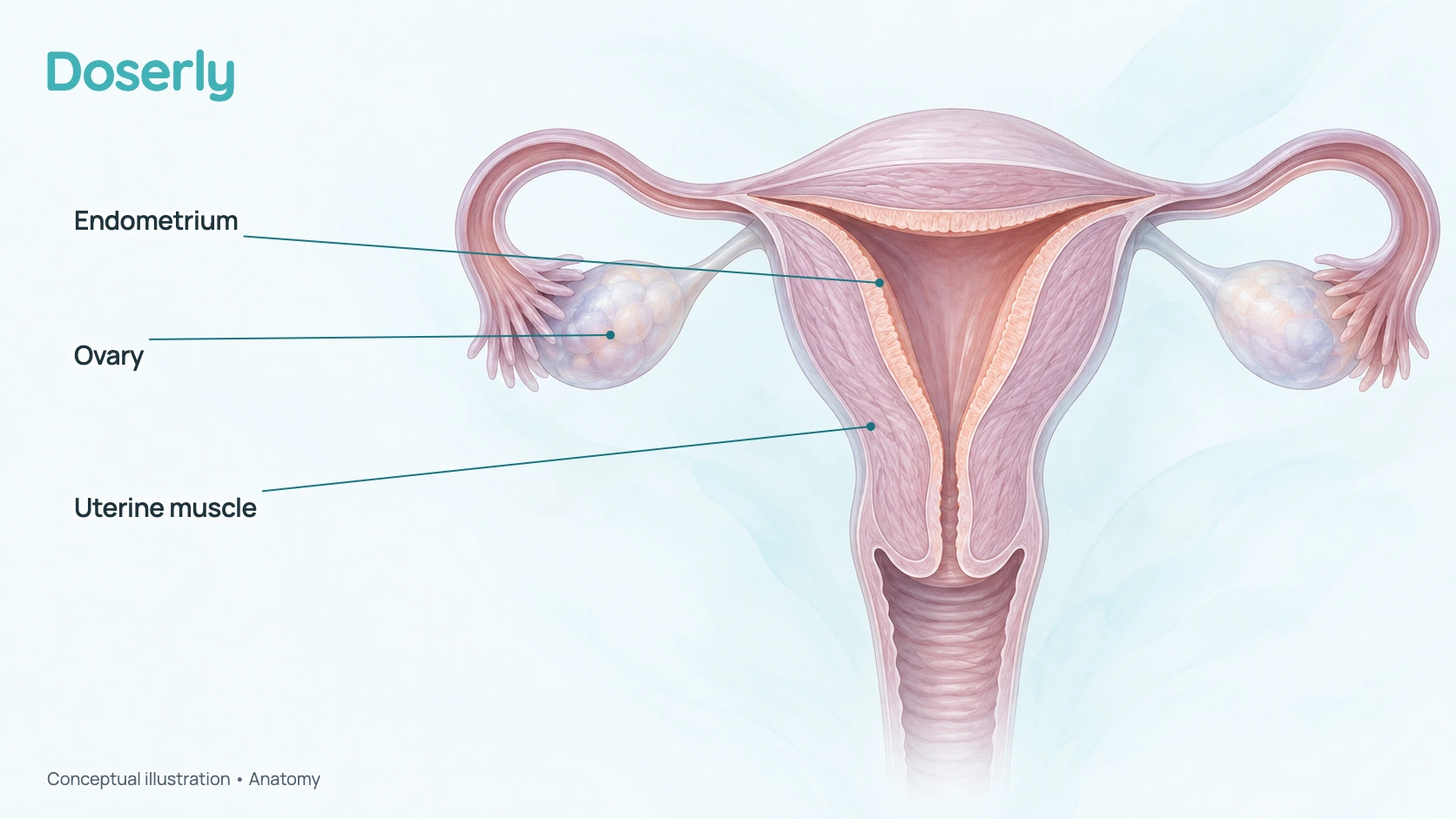
- Endometrium
- The lining inside the uterus.
- Endometrial hyperplasia
- Excess growth of uterine lining; some forms can precede cancer.
- Progestogen
- A medicine class including progesterone and synthetic progestins, used for uterine protection in systemic HRT.
- Micronized progesterone
- Progesterone processed into small particles to support absorption; route and schedule remain important.
- Continuous combined
- Estrogen and progestogen taken without planned monthly breaks.
- Sequential
- Progestogen taken during a defined part of an estrogen-treatment cycle.
- Withdrawal bleed
- A planned bleed associated with stopping the progestogen part of a sequential regimen.
- Hysterectomy
- Surgery to remove the uterus; it does not always remove the ovaries.
- VTE
- Venous thromboembolism: a clot in a vein, including leg clots and pulmonary embolism.
- Pulmonary embolism
- A clot blocking an artery in the lungs; a medical emergency.
- Absolute risk
- How often an event occurs in a specified population over a specified time.
- Relative risk
- An event rate in one group compared with another; it needs baseline risk to show practical size.
- Contraindication
- A circumstance in which a medicine should not be used according to its label.
- Compounded product
- A pharmacy-prepared medicine; approval of an ingredient does not approve the finished preparation.
- Conjugated estrogens / CEE
- An estrogen mixture, not a single estradiol molecule.
- SERM
- Selective estrogen receptor modulator with tissue-dependent agonist/antagonist effects.
- Bazedoxifene
- The SERM in the named estrogen/bazedoxifene combination.
- Modified release
- Formulation controls component release; swallow the named tablet whole.
- Pouch opening date
- Date starting the product-specific moisture-pack usable period.
- Fixed combination
- Two active components in one dosage form, changed together.
How was this guide researched?
Named full labels define calendars, indications and risks. Marketing records do not prove stock; guidelines inform care without changing authorization. Public accounts remain separate from clinical evidence. Sources identify document revision and access.
How this page was made
This Doserly editorial guide was prepared with AI assistance using public sources checked October 2, 2026. No independent clinician reviewer is claimed. Doserly develops a commercial tracking app. Original figures explain concepts and do not represent trial results. The directory identifies source revisions and access limitations. January 2027 is a review target; new evidence can require an earlier check.
Sources and updates
Numbered public sources checked October 2, 2026.
Showing 7 sources
- 01
DUAVEE — prescribing information ↗
Full label
US complete estrogen/SERM combination, no added hormones and blister storage.
- 02
DUAVIVE — EPAR product information ↗
Full SmPC and leaflet
EU indication restricted to progestin-inappropriate population; exact full schedule.
- 03
Duavive — European public assessment report ↗
Full public assessment page
Current authorization and document date, not EU-wide stock.
- 04
Menopause: identification and management — Recommendations ↗
Full guideline
Clinical review and bleeding decisions; not an expanded EU indication.
- 05
FDA Approves Labeling Changes to Menopausal Hormone Therapy Products ↗
Full statement
Duavee is not among the named first six revised products.
- 06
Duavee User Reviews ↗
Public patient reviews
Mixed relief, edema/tolerability, local symptom and old access accounts.
- 07
PREMPRO / PREMPHASE — prescribing information ↗
Full label
CEE/MPA comparison, not estrogen/SERM dose equivalence.
No matching sources
Try a different term or show the full list.