
In this guide
What are esterified estrogens?
Esterified estrogens are an oral prescription estrogen mixture represented here by the US Menest label. Its principal components are sulfate salts, particularly estrone sulfate and equilin sulfate. It is not the same composition as conjugated equine estrogens, or CEE, and not one estradiol molecule. Plain Menest contains no progestogen or testosterone. [1]
Current access is a central qualification. The DailyMed records retrieved for Menest list marketing-end dates of February 28, 2026 for the 0.3 mg and 0.625 mg products, and April 30, 2026 for the 1.25 mg and 2.5 mg products. A Pfizer label remains available, but a public label is not proof of current manufacture, local stock or a new dispensing pathway. These dates do not themselves establish withdrawal of application approval or a safety recall. [1], [2]
This guide explains that retained label and the questions involved in continuing or replacing treatment. It does not certify a current worldwide product inventory. The word “esterified” in this product name also should not be confused with injectable estradiol esters: the named route here is oral. [1], [2]
Which schedules does the retained Menest label describe?
| Product / country | Population / indication | Route | Amount | Schedule | Context | Source |
|---|---|---|---|---|---|---|
| Menest · retained US label | Moderate/severe menopausal vasomotor symptoms | Oral | Label usual dosage: 1.25 mg/day; also says start at lowest dose | Cyclic example: 3 weeks on/1 week off | Separate progestin with uterus; marketing end recorded | Label [1]; records [2] |
| Menest · retained US label | Moderate/severe menopausal vulvar/vaginal atrophy | Oral | 0.3–1.25 mg or more/day by tissue response in label | Cyclic; individualized | Consider local product if only vaginal symptoms; separate protection with uterus | Label [1] |
The label contains both lowest-dose language and a listed usual vasomotor dosage of 1.25 mg daily. Do not silently replace that wording with a universal 0.3–1.25 mg starting range. Its vaginal-atrophy range belongs to that separate indication, and the phrase “or more” is not permission to escalate without a prescriber. A current treatment decision also requires checking access and a feasible alternative. [1], [2]
The cyclic example means estrogen for three weeks followed by a week off. The prescriber must separately specify the progestogen product, amount and exposure days with a uterus. The menopause schedule is not the label’s much different hypogonadism or cancer-palliation schedule. Those other indications are outside this guide’s ordinary menopause protocol table. [1]
Doserly
ORIGINAL EXPLANATORY DIAGRAM
Read the retained schedule as a whole
Menest label reference, with current access qualification.
Estrogen course
The named menopausal example is 3 weeks on and 1 week off.
Uterus present
A separate progestin plan is required. The off week is not itself protection.
Supply check
All four listed strengths have 2026 marketing-end records. Verify local access and replacement.
Evidence note: selected retained US label schedules, with current marketing records checked. No current-stock guarantee or cross-product dose conversion.
Verification scope
Named full labels and stated jurisdiction, checked October 2, 2026. Revisions are distinct from access dates. Local stock and reimbursement were not verified.
Which treatment goals fit this medicine?
The retained indications include moderate-to-severe menopausal hot flashes and vulvar/vaginal atrophy. Relief of night sweats may improve sleep when sweats are the cause of awakenings; it does not make this a treatment for every cause of insomnia, fatigue or low mood. Set a specific goal, such as fewer disruptive sweats or better local comfort, rather than “hormone balance.” [1], [3]
If vaginal symptoms are the only problem, the label recommends considering a topical vaginal product. A local preparation can target the problem without treating the oral tablet’s systemic exposure as inevitable. Conversely, a local product does not replace systemic treatment when a separate indication requires it. Persistent pain, discharge or bleeding needs assessment for other causes. [1], [3]
How do route and composition affect treatment?
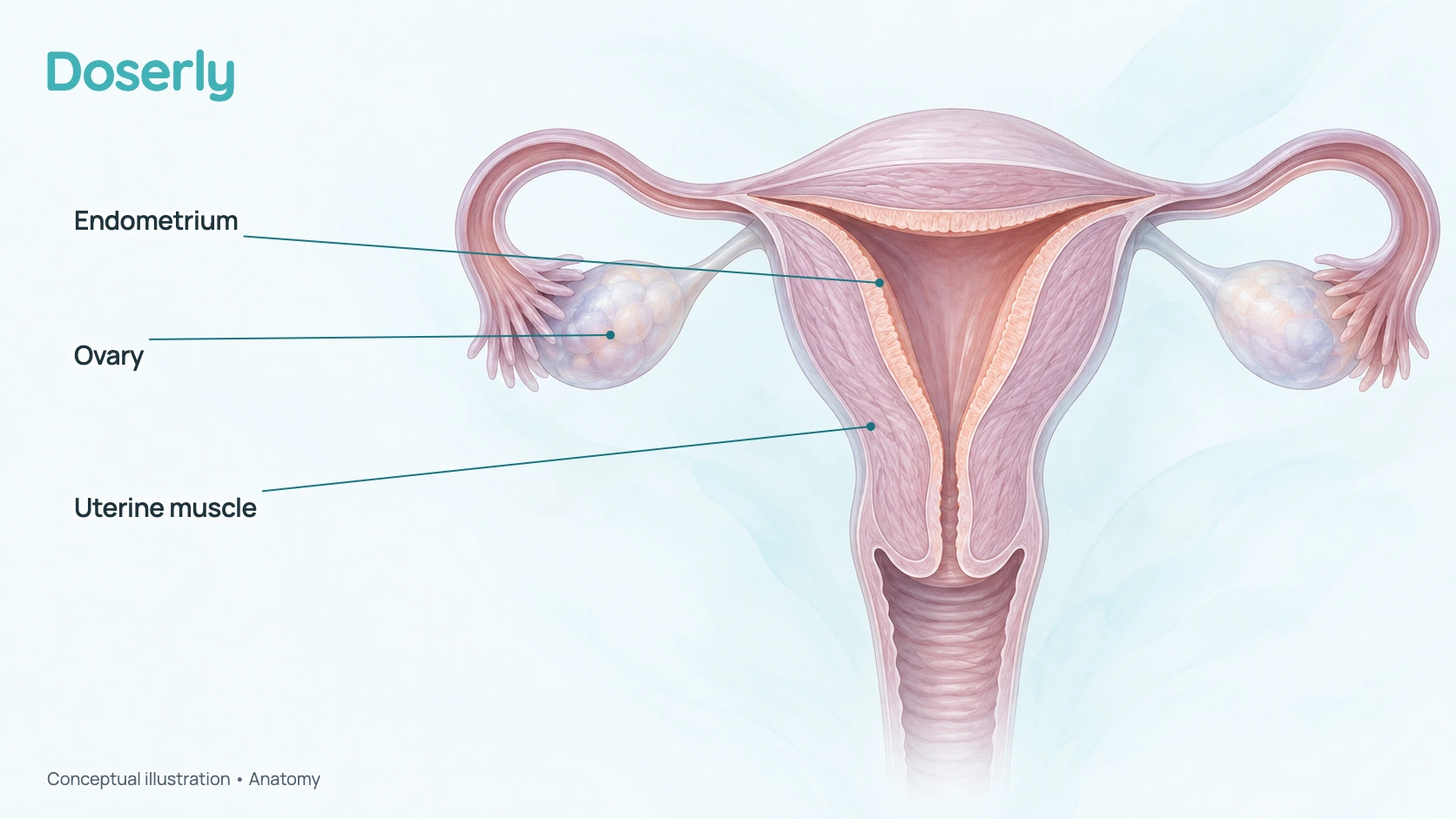
The named tablet is swallowed. It is not an injectable estrogen ester, vaginal insert or skin patch. Oral delivery includes initial liver exposure, called first-pass metabolism; changing to transdermal estradiol changes the product and route together. The mixture’s milligram amount does not provide a verified estradiol-equivalence instruction. [1], [3]
Products combining esterified estrogens with methyltestosterone add an androgen with its own effects and risks. A libido report about that combination cannot establish the effect of Menest alone. Similarly, the label’s description of estrogens of a type excreted by pregnant mares does not verify a modern claim of exclusively plant sourcing. The rebuild retains the verified composition rather than guessing its manufacturing origin. [1]
What evidence can and cannot be assigned to Menest?
The retained label describes estrogen pharmacology, approved indications and class safety evidence. WHI tested oral CEE alone or with medroxyprogesterone acetate; it did not test Menest as the estrogen product. Its findings remain important to systemic hormone decisions but are not precise product-specific event rates for esterified estrogens. This guide therefore does not copy a WHI rate into a Menest risk chart. [1], [5]
There is no verified head-to-head evidence here that Menest is safer or more effective than estradiol patches, CEE tablets or every other estrogen. Natural-sounding terminology and a sulfate reservoir are not clinical outcome comparisons. General guidance weighs route, age, time since menopause, symptoms and baseline risk, while the retained label still matters for the exact preparation. [1], [3]
Doserly
ORIGINAL EXPLANATORY DIAGRAM
A shared hormone class is not one product
Composition, evidence and marketing status answer different questions.
Menest alone
Esterified-estrogen mixture; no testosterone or progestin.
WHI evidence
CEE was the studied estrogen. Its event rates are not Menest-specific.
Androgen combination
Adding methyltestosterone changes the medicine. Reviews cannot isolate the estrogen.
What risks and interactions need attention?
Systemic estrogen stimulates the endometrium. With a uterus, the label calls for adding a progestin to reduce endometrial-cancer risk. An estrogen-free week is not itself progestogen protection, and a compounded progesterone skin cream should not be assumed to supply it. Report unexplained or recurrent bleeding instead of treating it only as a calendar problem. [1], [3]
The label contraindications include unexplained genital bleeding, relevant estrogen-sensitive cancers, venous clots, recent active arterial thromboembolic disease, liver dysfunction and pregnancy. Headache, breast discomfort, nausea, bloating and irregular bleeding can occur. New severe symptoms are not evidence that more estrogen is needed. Sudden breathlessness, chest pain, a swollen painful leg, weakness, speech difficulty or vision loss requires urgent assessment. [1]
CYP3A4-inducing medicines and St John’s wort may reduce exposure; inhibitors can increase it. Review thyroid treatment and other medicines as well as surgery or prolonged immobility. FDA’s first six revised menopause labels did not establish a Menest update; the retrieved label remains revised February 2024. Neither a class announcement nor a marketing end date proves that its risks disappeared. [1], [4]
What should follow-up record?
Record the exact product, estrogen days, planned off days and separate progestogen schedule. A pharmacy-access problem belongs in the review alongside symptom control and adverse effects: running out unexpectedly is different from a clinician-planned stop. NICE recommends review at three months and annually thereafter, sooner for difficulties; the retained label gives periodic reassessment such as three-to-six-month intervals. These are clinical review frameworks, not a universal blood-test program. [1], [2], [3]
Persistent unscheduled bleeding beyond six months after systemic HRT starts or three months after a change warrants prompt assessment under NICE, with earlier assessment for concerning bleeding. Blood estradiol is not a universal dosing target for this estrogen mixture. Tests and screening should answer an individual clinical question rather than imply that normal results remove all systemic risk. [1], [3]
How should a stop or supply-related switch be planned?
Ask the pharmacist and prescriber about access before the remaining medicine runs out. A replacement plan should state the new product and route, its own labeled amount and calendar, uterine protection, and the symptoms to reassess. Do not create a milligram-for-milligram substitute from a different estrogen name or borrow a methyltestosterone-combination dose. [1], [2], [3]
NICE allows gradual reduction or immediate stopping of menopausal HRT. Symptoms can return, and local vaginal treatment may still be useful after systemic treatment ends. If systemic estrogen continues through a switch, keep the required protection plan explicit. Serious suspected adverse effects require assessment rather than an ordinary taper experiment. [1], [3]
What storage instruction belongs to Menest?
The retained Menest label says not to store above 25°C. Keep the exact package and expiry information and protect medicine from children. That is not the same instruction as every oral estrogen’s controlled-room-temperature excursion range. A marketed-end date also does not extend the expiry of a remaining bottle. Ask the pharmacist about heat exposure, damage or a proposed substitute. [1], [2]
How does it compare with other estrogen preparations?
Estradiol tablets, patches and gels and CEE tablets have their own compositions, indications and schedules. Route-related clot considerations can favor a transdermal option in appropriate people, but the product contraindications and uterine protection still apply. An apparent “equivalent estrogen” chart cannot settle every individual switch. [1], [3]
The most consequential comparison may now be practical: a feasible regulated alternative with a complete plan versus reliance on a retained brand label. This does not make compounding automatically necessary or establish that the old medicine was unsafe. Separate documented marketing status, product approval and actual local supply. [1], [2], [3]
What can the public accounts tell us?
The plain-Menest page retrieved here contains a very limited account describing night-sweat relief alongside perceived weight gain. This is an individual report, not a response estimate or proof of causation. The evidence is too sparse to claim a broad current Menest sentiment pattern. [6]
The older collection relied mainly on esterified-estrogen/methyltestosterone combination reviews. Those cannot isolate the estrogen ingredient or show what Menest alone does to libido, mood or weight. This rebuild does not carry forward their scores or favorable proportions. Bring the actual product and symptom to the discussion, especially when access is changing. [1], [6]
Common questions about esterified estrogens
Is Menest currently in routine supply?
The retrieved repository lists marketing-end dates in 2026 for all four strengths. Verify actual local access with a pharmacist; a retained label is not stock evidence. [2] The record describes a marketing status, not the contents of every pharmacy or the expiry of a bottle already dispensed. Contact the pharmacist before supply runs out and ask the prescriber for a feasible alternative when needed. Keep approval, marketing status and actual availability separate. See the product scope. [2]
Was Menest approval withdrawn because of harm?
The checked marketing records do not establish that claim. A manufacturing/marketing change, withdrawal of approval and a safety recall are different events. [2] Do not turn a repository date into an explanation of why the manufacturer changed access. The source does not establish a harm-driven approval withdrawal or recall. If a pharmacy proposes a replacement, assess its own instructions rather than assuming every retained bottle has become unsuitable. See the access and product context. [2]
Is its usual hot-flash amount 0.3 mg?
The retained label lists 1.25 mg daily as the usual vasomotor dosage while also saying start at the lowest dose. The vaginal-atrophy range is a different indication. [1] The indication, lowest-dose instruction and response-guided prescribing need to be read together. A number remembered from another estrogen does not replace the actual Menest table. The retained reference also does not guarantee current supply, so discuss both the clinical plan and the practical access route. See the named schedules. [1], [2]
Does a week off protect my endometrium?
No. The label calls for progestin with systemic estrogen in someone with a uterus; an estrogen-free interval is not itself that medicine. [1] The prescribed estrogen calendar and uterine-protection calendar answer different questions. Ask which medicine provides opposition and how it fits the full cycle; do not independently leave it out because estrogen is paused. Bleeding that is concerning still needs assessment rather than a calendar explanation alone. See risks and protection. [1], [3]
Is it the same as an estrogen-and-testosterone combination?
No. Plain Menest contains the estrogen mixture, without methyltestosterone. Combination experience does not isolate its effects. [1] A review of a combination containing an androgen cannot show which ingredient produced a benefit or unwanted effect. Confirm the complete ingredients on the actual prescription before comparing a testimonial, indication or amount. Switching should be based on the named formulation and clinical goal. See composition and route. [1]
Did WHI directly test Menest?
No. WHI’s hormone trials used CEE. Their safety findings inform care but are not Menest-specific event estimates. [5] Keep the studied oral mixture, accompanying progestin and population attached to any trial outcome. Those results remain relevant to systemic hormone decisions without providing a precise Menest-versus-patch prediction. A product-specific comparative safety claim needs its own evidence, not simply a shared estrogen category. See the evidence boundaries. [5]
Can I replace it with the same milligrams of estradiol?
No direct conversion is verified here. A switch needs a named product, route, schedule and protection plan with reassessment. [1], [3] The active ingredients and pharmacology differ, and a changed route adds another distinction. Ask the prescriber to specify the replacement rather than multiply an old tablet amount into a patch or gel. Follow-up should consider symptoms, tolerability, availability and the complete accompanying regimen. See stopping and switching. [1], [3]
Glossary
Definitions for interpreting the product, calendar and limitations.
- Estrogen
- A hormone class that includes estradiol, estrone and estriol.
- MHT / HRT
- Menopausal hormone therapy; hormone replacement therapy is a broader term.
- Vasomotor symptoms
- Menopausal hot flashes and night sweats.
- GSM
- Genitourinary syndrome of menopause: symptoms and tissue changes involving genital and urinary areas.
- Systemic treatment
- Medicine delivered through the circulation to act throughout the body.
- Local treatment
- Treatment directed mainly at the tissue where it is applied; some absorption can still occur.
- First-pass metabolism
- Initial liver processing after a swallowed medicine is absorbed from the gut.
- Endometrium
- The lining inside the uterus.
- Endometrial hyperplasia
- Excess growth of uterine lining; some forms can precede cancer.
- Progestogen
- A medicine class including progesterone and synthetic progestins, used for uterine protection in systemic HRT.
- Micronized progesterone
- Progesterone processed into small particles to support absorption; route and schedule remain important.
- Continuous combined
- Estrogen and progestogen taken without planned monthly breaks.
- Sequential
- Progestogen taken during a defined part of an estrogen-treatment cycle.
- Withdrawal bleed
- A planned bleed associated with stopping the progestogen part of a sequential regimen.
- Hysterectomy
- Surgery to remove the uterus; it does not always remove the ovaries.
- VTE
- Venous thromboembolism: a clot in a vein, including leg clots and pulmonary embolism.
- Pulmonary embolism
- A clot blocking an artery in the lungs; a medical emergency.
- Absolute risk
- How often an event occurs in a specified population over a specified time.
- Relative risk
- An event rate in one group compared with another; it needs baseline risk to show practical size.
- Contraindication
- A circumstance in which a medicine should not be used according to its label.
- Compounded product
- A pharmacy-prepared medicine; approval of an ingredient does not approve the finished preparation.
- Esterified estrogens
- The defined sulfate-salt estrogen mixture in the retained Menest label.
- Equilin
- An estrogen component present as a sulfate salt in Menest.
- Marketing end date
- Repository date for product marketing; distinct from approval withdrawal and a stock check.
- Androgen
- A hormone class including testosterone; adding one changes the preparation.
How was this guide researched?
Named full labels define calendars, indications and risks. Marketing records do not prove stock; guidelines inform care without changing authorization. Public accounts remain separate from clinical evidence. Sources identify document revision and access.
How this page was made
This Doserly editorial guide was prepared with AI assistance using public sources checked October 2, 2026. No independent clinician reviewer is claimed. Doserly develops a commercial tracking app. Original figures explain concepts and do not represent trial results. The directory identifies source revisions and access limitations. January 2027 is a review target; new evidence can require an earlier check.
Sources and updates
Numbered public sources checked October 2, 2026.
Showing 6 sources
- 01
MENEST — prescribing information ↗
Full label
Named US oral mixture and retained schedules; not current-stock evidence.
- 02
MENEST — DailyMed product and marketing records ↗
Full label and repository records
All four listed strengths have marketing-end dates in 2026.
- 03
Menopause: identification and management — Recommendations ↗
Full guideline
Symptom care, route risk, review, bleeding and stopping.
- 04
FDA Approves Labeling Changes to Menopausal Hormone Therapy Products ↗
Full statement
Named first six revised products; not proof Menest was updated.
- 05
The Women’s Health Initiative Randomized Trials: A Review ↗
Full investigator review
WHI tested oral CEE regimens, not Menest.
- 06
Menest User Reviews ↗
Public patient reviews
Very limited plain-Menest account, separate from androgen combinations.
No matching sources
Try a different term or show the full list.