
In this guide
What is surgical menopause?
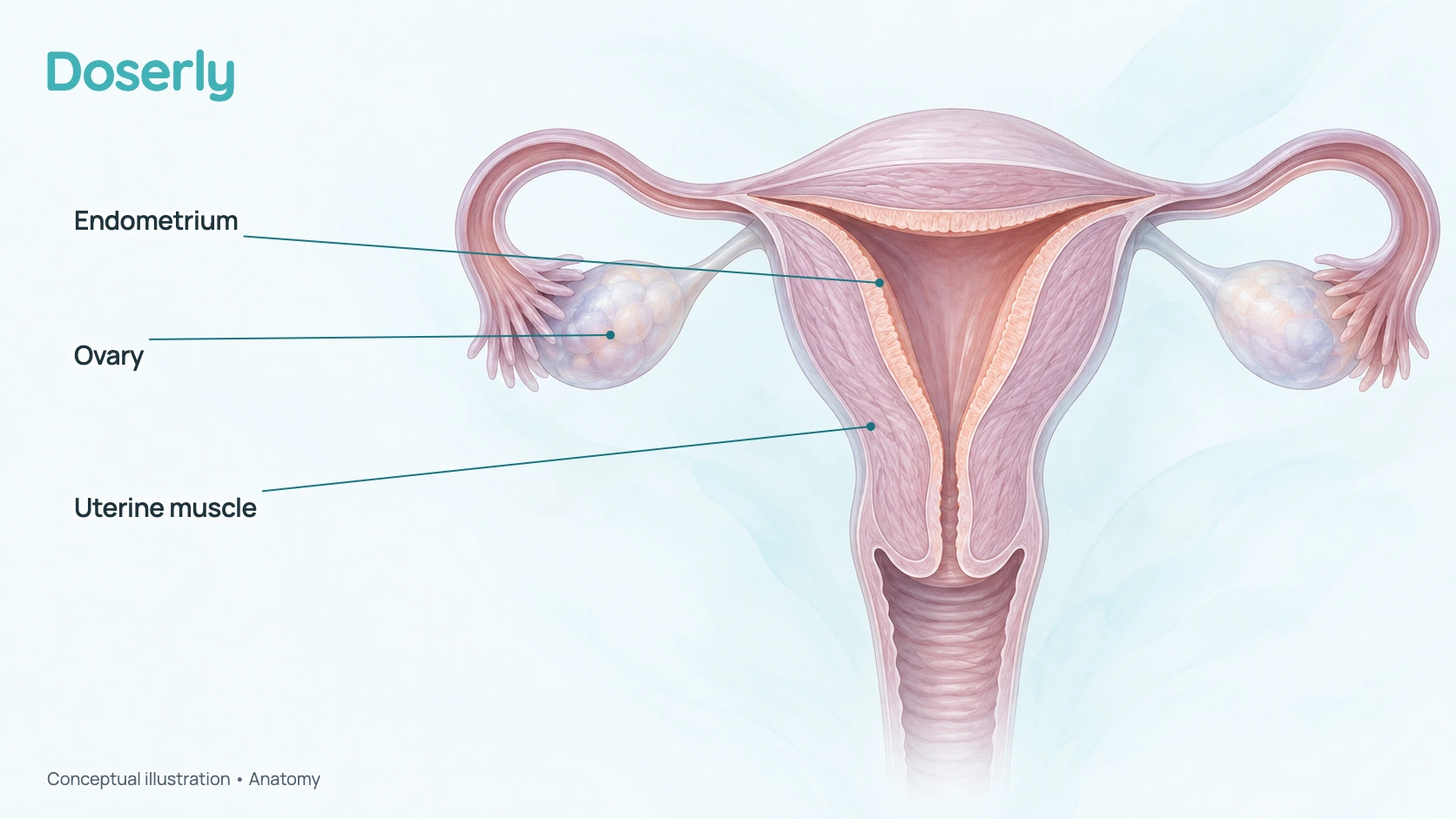
Surgical menopause occurs when both ovaries are removed before they have stopped functioning naturally. The hormone change can be abrupt rather than the fluctuating transition of natural perimenopause. Symptoms may be substantial, but the experience varies. Removing the uterus alone is a hysterectomy; it does not necessarily remove the ovaries. Removing one ovary is also different from removing both. The operation report matters more than the shorthand “everything removed.” [1], [2]
Planning should include the reason for surgery, the organs being removed, your age, whether HRT is suitable, and who will manage symptoms and follow-up. NICE says people likely to experience menopause because of medical or surgical treatment should receive information about menopause and fertility beforehand. If the surgery has already happened, ask for that discussion now rather than assuming you missed the opportunity. [1], [2], [5]
This guide explains the menopause consequences and care decisions; it is not a recommendation to have or avoid an operation. Risk-reducing surgery, endometriosis and cancer treatment have different purposes and restrictions. Your surgical team should explain the options for the underlying condition alongside the consequences for ovarian function. Natural-menopause treatment advice should not be copied without that context. [1], [4], [6], [10]
How do you confirm what the operation changed?
| Operation or context | What it means for menopause care | What to confirm |
|---|---|---|
| Both ovaries removed before natural menopause | Permanent loss of their ovarian function; symptoms can begin abruptly. | Whether the uterus was also removed, age and the reason for surgery. [1], [2] |
| Hysterectomy with ovaries retained | Periods are no longer observable, but this is not automatically bilateral ovary removal. | Which ovaries remain and how symptoms will be assessed. [2], [3] |
| One ovary removed | Different from removal of both ovaries. | Whether the remaining ovary functions and the relevant clinical history. [1], [2] |
| Both ovaries removed after natural menopause | Still a change in ovarian tissue, but not the same younger-age starting context. | Existing symptoms, previous treatment and the individual review. [1] |
| Subtotal hysterectomy or residual endometriosis | May change the usual estrogen-only discussion. | Remaining tissue, disease history and the specialist protection plan. [1], [6], [7] |
A bilateral salpingo-oophorectomy removes both fallopian tubes and both ovaries. The term describes more than a hysterectomy and should be recorded accurately. Ask whether the procedure was complete as planned and whether pathology results change the postoperative care plan. For risk-reducing surgery, NICE gives specific HRT recommendations that depend on personal breast-cancer history and uterus status. [4]
A person whose functioning ovaries were removed does not need to wait for 12 months without periods to discuss the known consequence. Conversely, no periods after hysterectomy with ovaries retained cannot by itself identify menopause. If the operation details are unclear, obtain the discharge summary or ask the team before applying a regimen meant for a different situation. [1], [2], [3]
Which organs were removed?
Operation terms answer different questions.
Hysterectomy
Uterus removed; ovaries may remain. Period absence does not prove bilateral ovary removal.
Bilateral oophorectomy
Both ovaries removed; before natural menopause this causes permanent ovarian-function loss.
Bilateral salpingo-oophorectomy
Both ovaries and fallopian tubes removed; record uterus status separately.
Conceptual definitions, not a recommendation for surgery. Sources: BMS [1], WHC [2], NICE [4].
Which treatments may be appropriate after surgery?
| Care goal | Options to discuss | Important qualification |
|---|---|---|
| Abrupt vasomotor symptoms and younger-age hormone replacement | Systemic HRT if appropriate, with a product and route selected for the individual. | Contraindications, surgery reason, uterus and postoperative timing matter. [1], [2] |
| Vaginal dryness, pain or urinary concerns | Local treatment and assessment of the actual problem. | Restart after surgery follows the treating team's instructions; systemic treatment may not address everything. [2], [3] |
| HRT is unsuitable or not preferred | Appropriate nonhormonal medicines, menopause-specific CBT and other support. | Suitability, interactions and safety monitoring depend on the option. [3], [10] |
| Bone and general health after early ovarian loss | Replacement discussion when appropriate, individual risk assessment and preventive care. | Symptom absence does not remove the younger-age health context. [1], [2], [3] |
| Difficult mood, sexual or recovery concerns | Targeted clinical support alongside the menopause plan. | Do not assume estrogen alone solves every postoperative problem. [1], [2], [10] |
BMS and WHC emphasize offering HRT to people undergoing surgical menopause under 45 when there is no contraindication, generally until at least the average natural-menopause age. The BMS toolkit uses approximately 51 as that reference age. At that point, ongoing treatment is reviewed individually; it is not an instruction to stop automatically on a birthday. This is younger-age replacement guidance, not a regimen copied from first-time initiation decades after natural menopause. [1], [2]
Your prescription should name each product, strength, route and schedule. This page does not construct a starting amount from different sources. WHC explains that the abrupt change may require a different prescribing approach from ordinary natural menopause, but the exact plan remains individualized. If you already use HRT before surgery, ask whether the product or route needs to change and who will provide the postoperative prescription. [2]
When should HRT start, and what happens around the operation?
Make the timing discussion before surgery when possible. Ask whether treatment is expected to start promptly, whether pathology or another clinical issue must be settled first, and how to obtain help if symptoms are difficult in the meantime. For eligible people after risk-reducing bilateral salpingo-oophorectomy, NICE says to start as soon as clinically appropriate. “Clinically appropriate” includes the actual operation and history; it is not a universal same-day instruction. [2], [4]
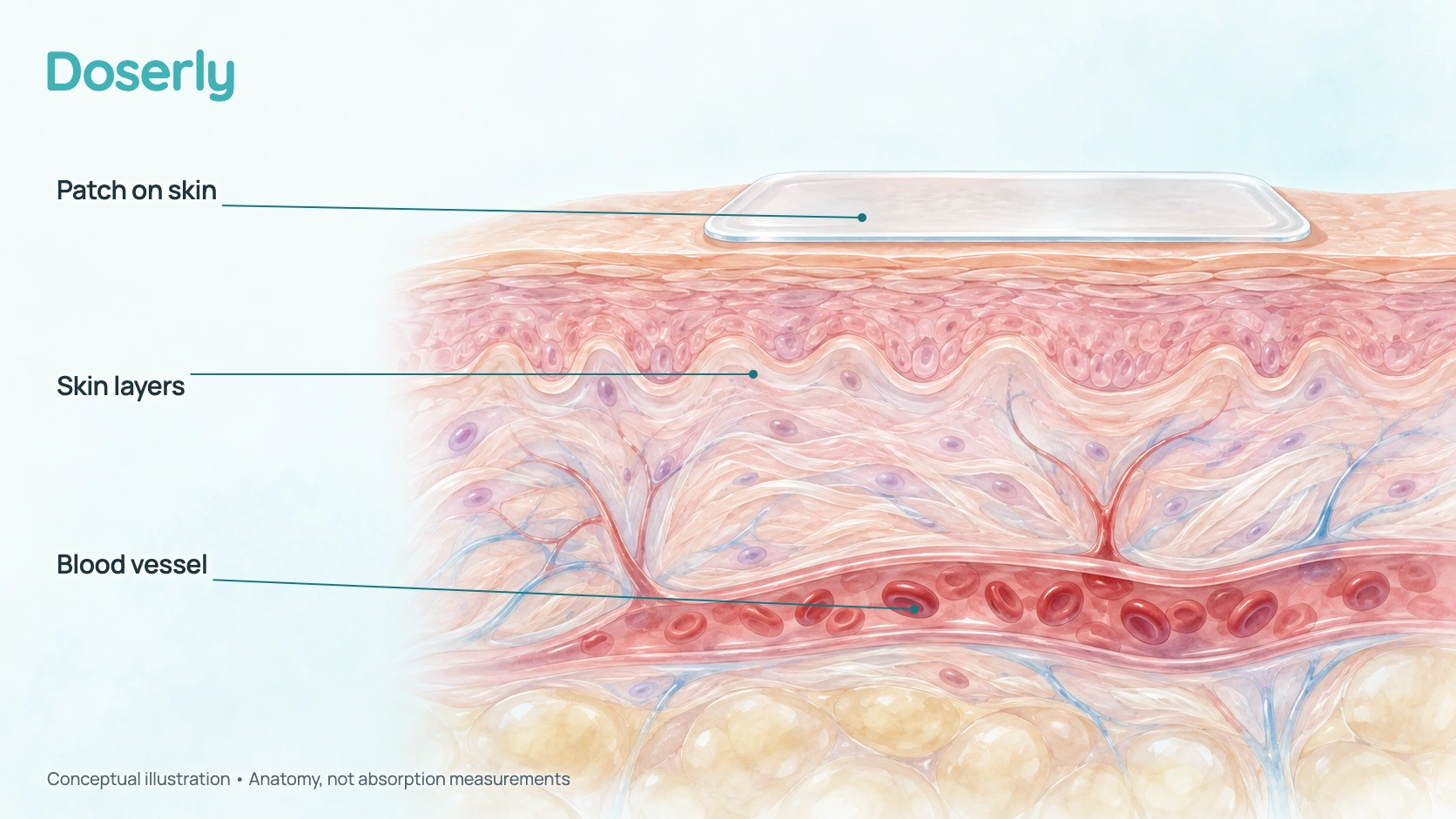
WHC recommends considering the transdermal route in the immediate postoperative context because surgery and reduced mobility affect clot risk. It also explains that oral HRT already in use may need an individual plan around surgery, including whether to stop, change route or use clot-prevention measures. Do not pause or substitute medicines using a generic online rule. Ask the surgeon and prescriber for the instructions that apply to your operation. [2]
Endometriosis can add a separate timing question. The February 2026 BMS guidance says there is no clear consensus on the ideal interval for hormonal therapy after endometriosis surgery; symptom burden and possible reactivation of disease should be discussed. This differs from automatically applying one delay reported by another person. The right plan should be documented, especially if the hospital and usual prescriber will share follow-up. [6]
Discharge preparation can be practical: the prescription, how it will be supplied, the relevant surgical contact, expected recovery instructions and a planned symptom review. Clarify which symptoms belong to the surgical team and which should be discussed with the menopause prescriber. If the teams recommend different plans, ask them to reconcile the instructions rather than choosing a mixture yourself.
Agree the start and handoff plan
The clinical context determines timing.
Before surgery when possible
Discuss suitability, organs removed, fertility and the intended menopause plan.
At discharge
Confirm prescription/supply, pending pathology, route and the right contact.
At review
Assess useful effects, unwanted effects, recovery and who owns the next decision.
No universal same-day start or delay is shown. Risk-reducing and endometriosis contexts differ. Sources: WHC [2], NICE [4], BMS [6].
Why may progestogen still be discussed after hysterectomy?
With a uterus, systemic estrogen generally needs adequate endometrial protection. After a total hysterectomy, estrogen-only treatment is usually the ordinary option. But a subtotal procedure can leave tissue relevant to protection, and severe or residual endometriosis can change the discussion even when the uterus has been removed. Tell the prescriber the operation and disease history, not only whether periods have stopped. [1], [3], [7]
The current BMS endometriosis guidance generally favors continuous combined treatment in relevant postoperative endometriosis contexts, particularly extensive residual disease. It explains that decisions must balance symptom relief, possible reactivation and other risks, and that high-quality evidence is limited. Do not conclude that every person without a uterus needs progesterone or that no person without a uterus ever does. These are specialist, history-dependent decisions. [6], [7]
If a progestogen is prescribed, keep its actual route and schedule with the estrogen record. Improvement on estrogen does not establish that the protection component can be omitted. If tolerability is poor, ask for a review rather than silently abandoning one part of the plan. A changed estrogen prescription can also require discussion of the accompanying protection. [3], [7]
How does risk-reducing or cancer-related surgery change the decision?
NICE NG241 offers HRT until the average menopause age, usually around 51, to people who have not had breast cancer and have risk-reducing bilateral salpingo-oophorectomy before that age. It specifies combined HRT with a uterus and estrogen-only HRT without one, plus individualized discussion beyond the average age. Those criteria should stay attached to the recommendation. They do not establish that everyone with a cancer-gene variant has the same history or plan. [4]
For a person with a personal breast-cancer history undergoing risk-reducing surgery, NICE says to liaise with the breast-cancer care team before offering HRT. A preventive operation and surgery during treatment of an existing cancer are not interchangeable. Tell the team about previous cancer treatment and current medicines before using a general menopause recommendation. [4]
The joint BGCS/BMS guidance after gynaecological cancer assesses HRT by cancer type and treatment context, rather than one universal “all cancer forbids HRT” or “all cancer surgery permits HRT” rule. Local care also has its own assessment. The guide's original publication is August 2024; a later website date is not presented as a new clinical revision. Ask who will make the cancer-specific decision and explain suitable alternatives if systemic hormones are inappropriate. [10]
What does the evidence tell us, and what remains uncertain?
The sources consistently support counselling before and after surgery and a specific replacement discussion after younger-age ovarian loss when treatment is appropriate. They also describe an abrupt hormone change and potentially substantial symptoms. But the BMS toolkit acknowledges limited large-scale high-quality evidence quantifying every long-term consequence in different surgical populations. This guide does not turn that uncertainty into a precise personal risk or a guarantee of symptom relief. [1], [2]
Some long-term associations after earlier ovary removal come from observational research. They should not be read as proof that a particular prescription prevents dementia or heart disease in every person. Current NICE does not offer ordinary menopause HRT solely for cardiovascular or dementia prevention; younger-age replacement is a distinct indication with its own context. Discuss the applicable guidance and your history rather than combining reassuring conclusions from different populations. [1], [3]
Endometriosis evidence is particularly limited for recurrence and malignant transformation under different regimens. BMS discusses uncertainty and individualized choices; we do not provide an invented percentage or suggest that estrogen is absolutely forbidden after every endometriosis operation. New or recurring symptoms deserve specialist assessment rather than automatically increasing, stopping or switching by a template. [6]
History changes the treatment discussion
The same operation name does not create the same prescription.
Younger-age ovarian loss
Replacement discussion when suitable, generally to the average natural-menopause age; then review individually.
Endometriosis or remaining tissue
Can change the ordinary estrogen-only discussion after hysterectomy; specialist, limited-evidence decisions.
Risk-reducing or cancer surgery
Personal breast-cancer history and cancer type need explicit assessment and the appropriate team.
No cancer-risk percentage, comparative regimen ranking or automatic treatment eligibility. Sources: BMS [1], NICE [4], BMS endometriosis [6], BGCS/BMS [10].
How should recovery, sexual health and fertility be discussed?
Postoperative healing and menopausal symptoms can happen together. Difficult sleep or vaginal discomfort does not tell you whether a surgical complication is present. Follow the surgeon's recovery instructions for activity, wound concerns, bleeding and return to vaginal treatment. NHS hysterectomy information notes that some postoperative vaginal bleeding/discharge can occur, while heavy bleeding, blood clots or strong-smelling discharge require contact. This is different from simply applying an ordinary HRT bleeding calendar to a fresh operation. [2], [14]
For later unexpected bleeding while using systemic HRT, give the actual regimen and timing. Current NICE describes the first 6 months of systemic treatment or 3 months after a change as a common context, with prompt help beyond and earlier BMS assessment for heavy/prolonged bleeding or relevant risks. These windows are not an instruction to wait through a concerning postoperative problem. [3], [9]
Sexual comfort, desire and body-image concerns deserve a specific discussion. Vaginal symptoms may need local care; low desire has multiple influences, including recovery, pain, sleep, medicines and relationship context. Do not treat removal of both ovaries as automatically prescribing testosterone. See the separate sexual-health and women's testosterone guides for assessment and product-specific context. [1], [2]
Fertility information should be given before a procedure likely to affect it. Removing both ovaries and removing the uterus change different parts of reproductive function. HRT does not restore removed ovaries or undo the operation. If future family-building matters, ask the team for timely specialist counselling on the options relevant to the planned procedure; do not assume that symptom treatment is a fertility-preservation method. [5], [11]
What should follow-up include?
Keep the surgical follow-up and menopause-treatment review distinct. The surgical team checks the operation's recovery and results; the prescriber reviews symptoms, unwanted effects, actual treatment use and health changes. NICE's routine symptom-treatment review is at 3 months and annually afterward, earlier when indicated. BMS practice standards include weight, blood pressure and discussion of applicable routine screening. Your surgery or cancer history can require additional contacts. [3], [8]
A useful handoff names who supplies treatment, who reviews pathology, who adjusts the menopause plan and whom to contact between visits. If treatment is deferred, ask what would allow the decision to be revisited and what symptom support is available now. If a useful prescription is continued, agree the next review rather than assuming it should never be reassessed.
What should you ask before the next appointment?
A short written agenda can separate three questions: how the operation is healing, how the hormone plan is working, and what longer-term care is needed. Put the original operation details and prescription at the top. If you have not received a pathology explanation, ask who will give it and whether any pending result affects treatment timing. If different teams are involved, request one clearly documented plan rather than assuming each has seen the other's advice.
For a treatment concern, describe one useful change and one unresolved problem. Ask whether the next step is to continue, assess another cause or review a medicine component. If supply is difficult, explain what you could actually obtain. Before leaving, record the contact for recovery concerns, the contact for prescription questions and the planned review date. These are practical preparation suggestions, not a postoperative protocol or instruction to alter medicines.
What do public accounts add?
One public discussion asks when HRT should start after surgery and receives differing experiences, including immediate treatment and delays tied to individual circumstances. Another asks what to expect and how to prepare; replies include people with little symptom disruption as well as concern about recovery. They show why a clear plan is helpful, not a universal start date or a response rate. [12], [13]
These accounts were checked through public indexed text after direct access failed. No source dose, username or identifying recovery story is copied. We do not adopt claims that a particular wait will “starve” residual disease or that another person's improvement predicts yours. Use the questions to ask about timing, supply, symptom support and the reason for your own plan. [2], [6], [12], [13]
What is worth tracking after the operation?
Begin with the operation date and confirmed organs removed, the treatment actually prescribed and any agreed start delay. Add two or three important symptoms, unwanted effects and medicine changes. Mixed results, such as fewer night sweats with persistent discomfort or a difficult protection component, can help the clinician focus the review.
Keep the surgical team's warning instructions accessible and act on them without waiting to complete a diary. Notes cannot distinguish healing from a complication, establish hormone adequacy or decide that recurrent endometriosis is harmless. If a concern needs contact, use the record to describe it briefly rather than using the app as a triage tool.
Doserly tracks the schedule you and your clinician choose. It does not recommend doses. Reminders and practical notes can support the prescription and preparation for follow-up; they do not choose the postoperative start date, replace cancer-team decisions or restore fertility.
Common questions about surgical menopause
Does a hysterectomy always cause surgical menopause?
No. Removal of the uterus and removal of both ovaries are different operations. Confirm what was removed; retained ovaries change the context even though periods are no longer observable. The discharge summary or operation report can help clarify the procedure when everyday descriptions are ambiguous. Tell the menopause clinician about any later ovarian surgery as well. The treatment discussion depends on the actual organs and clinical history, rather than the word hysterectomy alone. See operation details. [1], [2], [3]
Do I wait 12 months to discuss HRT after both ovaries are removed?
No natural-period waiting rule is needed to discuss the known consequence of removing both ovaries. Timing depends on suitability, the operation, pathology and the individual plan. Ask before surgery when possible, or contact the team afterward if the plan is unclear. Waiting 12 months to name natural menopause is a different situation from responding to a documented operation. The team should explain whether treatment can start and what needs clarification first. See treatment timing. [1], [2], [4]
Does everyone start the same dose on the day of surgery?
No. The prescription and timing are individualized. Ask for the actual product, route, schedule and clinical reason; there is no universal postoperative regimen in this guide. The reason for surgery, relevant disease and recovery circumstances can affect the discussion. If different teams give different instructions, ask them to reconcile the plan rather than combining pieces yourself. Clear discharge instructions should identify who supplies the medicine and who answers questions about starting it. See timing around surgery. [2], [4], [6]
Can I need a progestogen after the uterus is removed?
Sometimes the operation details or residual endometriosis change the usual estrogen-only discussion. Do not apply either an “always” or “never” rule; ask the specialist to explain the reason for your regimen. The relevant information includes what tissue remains and the disease context, not simply the absence of periods. If a prescribed component is difficult to tolerate, request review rather than silently omitting it. See why a progestogen may still be discussed. [6], [7]
Must HRT stop at 51?
No automatic birthday stop follows from the younger-age replacement reference. Ongoing use beyond the average age, described around 51 here, is reviewed for benefits, risks and indication. The reference explains the context of replacing hormones lost earlier; it does not decide every later treatment question. Ask what remains useful, whether your health or preferences have changed and when the next review should occur. A continuation or stopping decision needs that current context. See treatment after younger surgery. [1], [2], [4]
Is risk-reducing surgery the same as a personal breast-cancer history?
No. NICE keeps those circumstances separate and requires liaison with the breast-cancer team for people with that personal history before offering HRT. Give the clinician both the reason for surgery and any previous cancer treatment or current medicines. A general statement about hormones after risk-reducing surgery does not resolve every situation involving cancer. Ask who will coordinate the recommendation and explain alternatives if systemic hormones are unsuitable. See cancer and risk-reducing surgery. [4]
Can symptom tracking tell me whether surgery is healing normally?
No. Follow the surgical instructions and contact the team for concerning changes. Records describe your experience; they do not diagnose recovery or a complication. Keep the relevant contact information available and explain the change directly rather than waiting to collect a complete diary. Questions about healing may belong to the surgical team even when menopause treatment is also underway. A symptom entry can support the conversation, but it cannot provide postoperative reassurance. See recovery and warning symptoms. [14]
Will HRT restore fertility after the operation?
No. HRT does not undo removal of reproductive organs. Discuss the planned procedure and relevant fertility options with the team before treatment when possible. Removing ovaries and removing the uterus affect different aspects of reproduction, so the exact operation matters. Symptom relief afterward should not be mistaken for restoration of the organs or preservation of fertility. If future family plans are important to you, make them part of the specialist discussion in time. See fertility and recovery. [5], [11]
Glossary
Terms used in assessment and care.
- Perimenopause
- The transition toward menopause, with changing ovarian hormone patterns and possible symptoms.
- Menopause
- Usually identified after 12 months without a period when hormonal contraception does not explain the absence.
- Postmenopause
- The stage after menopause; symptoms can continue.
- Estrogen
- A hormone class that includes estradiol.
- Estradiol
- An estrogen made by the body and used in certain prescribed medicines.
- Progesterone
- A hormone and one member of the progestogen family.
- Progestogen
- A family of progesterone-like medicines; some provide uterine protection with estrogen.
- Endometrium
- The lining inside the uterus.
- Endometrial hyperplasia
- Excessive growth of the uterine lining; distinct from a cancer diagnosis.
- HRT / MHT
- Hormone replacement therapy; menopausal hormone therapy in this guide.
- Systemic treatment
- Treatment reaching the wider body through the circulation.
- Local vaginal estrogen
- A low-dose product intended mainly for genitourinary symptoms.
- Vasomotor symptoms
- Hot flashes and night sweats.
- Genitourinary syndrome of menopause
- A group of menopause-associated vaginal, sexual and urinary symptoms.
- Premature ovarian insufficiency
- Loss or disturbance of ovarian activity before age 40, requiring its own assessment.
- Hysterectomy
- Surgical removal of the uterus; the extent of surgery matters.
- Oophorectomy
- Surgical removal of one or both ovaries.
- Sequential combined HRT
- Estrogen through the cycle with progestogen on specified days.
- Continuous combined HRT
- Estrogen and progestogen supplied continuously.
- Withdrawal bleeding
- Bleeding that can follow completion of a scheduled progestogen course.
- Unscheduled bleeding
- Bleeding outside the expected pattern of the agreed treatment.
- Contraception
- A method intended to prevent pregnancy; menopausal HRT is not one.
- IUD
- Intrauterine device; type and indication determine its role.
- CBT
- Cognitive behavioural therapy; menopause-specific approaches address particular symptoms.
- Bilateral
- On both sides; bilateral oophorectomy removes both ovaries.
- Unilateral
- On one side; does not mean both ovaries were removed.
- Bilateral salpingo-oophorectomy
- Removal of both fallopian tubes and both ovaries.
- Subtotal hysterectomy
- An operation that retains the cervix; remaining tissue can matter for hormone care.
- Pathology report
- Examination of removed tissue that can inform subsequent care.
- Residual endometriosis
- Endometriosis tissue that remains after surgery.
- Care handoff
- Communication of the plan and responsibilities between teams.
How was this guide researched?
Source selection and limits
We checked the original BMS surgical toolkit (September 2024), WHC patient factsheet (September 2025), current NICE recommendations and pre-treatment quality statement, February 2026 BMS endometriosis guidance, May 2026 protection/bleeding guidance and June 2026 practice standards. Cancer and fertility context uses the original joint BGCS/BMS guideline and official NCI information. The older NHS recovery-page review is disclosed and does not supply a universal activity or healing timeline. [1], [2], [3], [4], [5], [6], [7], [8], [9], [10], [11], [14]
The source guidance includes evidence limits; we do not import broad dementia/CVD-prevention claims, a fixed preoperative pause, a starting amount or an endometriosis risk percentage. Public threads were checked through indexed text after direct access failed and provide questions only. [12], [13]
This is an AI-assisted Doserly editorial guide checked October 2, 2026. No independent clinician review is claimed. Doserly develops a commercial tracking app. Practical record-keeping suggestions are editorial advice, not a validated diagnostic scale or clinical-monitoring system. Material new guidance, labels or safety information trigger earlier source review.
Sources
Original source identities and access limitations; checked October 2, 2026.
Showing 14 sources
- 01
Surgical menopause: a toolkit for healthcare professionals ↗
Full original toolkit PDF
Definition, counselling and younger-age replacement context; limited large-scale outcome evidence. No blanket dementia/CVD guarantee or copied starting regimen.
- 02
Surgical menopause ↗
Full original patient-information PDF
Operation, individualized prescribing, timing, perioperative route and vaginal care. Do not convert an example stop interval into a universal instruction.
- 03
Recommendations | Menopause: identification and management | Guidance | NICE ↗
Full official guideline recommendations
Sections 1.3 diagnosis,1.5 symptoms,1.7 POI,1.8 treatment/bleeding and 1.9 review. UK guidance, not worldwide authorization.
- 04
Ovarian cancer: identifying and managing familial and genetic risk (NG241): Recommendations ↗
Full original recommendations
Section 1.10: risk-reducing bilateral salpingo-oophorectomy, personal breast-cancer history, uterus and timing. Eligibility conditions stay attached.
- 05
Quality statement 5: Information before treatment likely to cause menopause ↗
Full original quality statement
Information about menopause and fertility before medical/surgical treatment likely to induce menopause.
- 06
Induced menopause in women with endometriosis ↗
Full current original guidance PDF
Residual endometriosis, combined-regimen preference, timing uncertainty and limited high-quality recurrence/malignant-transformation evidence. No quantified risk or individual regimen invented.
- 07
Progestogens and endometrial protection ↗
Full original guidance PDF
Key points; uterine protection, sequential/continuous contexts, vaginal limitations, IUD and compounded preparations. No separate examples assembled into a prescription.
- 08
British Menopause Society: Menopause Practice Standards ↗
Full original practice-standards PDF
Standard 5: review, symptoms, unwanted effects, weight, blood pressure and screening discussion. Country-specific screening remains separate.
- 09
Management of unscheduled bleeding on hormone replacement therapy (HRT) ↗
Official current guideline key-message page
Assessment, adherence, risk factors and earlier investigation for heavy/prolonged bleeding. No ultrasound cutoff or self-triage algorithm reproduced.
- 10
BGCS/BMS guidelines on management of menopausal symptoms after gynaecological cancer ↗
Original joint guideline PDF, relevant sections
Cancer-type-specific assessment and specialist decisions. Original recommendation discussion retrieved; later website date is not a clinical revision.
- 11
Female Fertility and Cancer ↗
Full official patient-information page
Surgery/fertility and questions before treatment. HRT is not represented as restoring removed organs or preserving fertility.
- 12
When did you start HRT after surgery? ↗
Public search-indexed opening post and comments
Public indexed text retrieved; direct access failed. Different timing accounts are questions, not a start interval or evidence that a delay treats residual disease.
- 13
Upcoming hysterectomy w/ovaries also ↗
Public search-indexed opening post and comments
Public indexed text checked; direct access failed. Preparation concerns and varied symptom accounts; no usernames, prescriptions or identifying story.
- 14
Hysterectomy: Recovery ↗
Full official recovery information page
Older visible review date disclosed. Bleeding/discharge warning distinction supports following surgical instructions; no recovery deadline or activity prescription copied.
No matching sources
Try a different term or show the full list.