
In this guide
What is Apigenin?
Apigenin is a flavone found in parsley, celery and chamomile. A small human pharmacokinetic study administered one isolated-aglycone exposure, but it did not test sleep or establish a bedtime regimen. A 2024 sleep-and-aging review maps human sleep evidence to apigenin-containing chamomile preparations rather than isolated apigenin capsules. Mechanistic and animal findings remain indirect for a retail sleep claim. [1], [3]
Typical Apigenin Protocols
| Source and population | Form and amount each time | Frequency | Total exposure | Duration or boundary |
|---|---|---|---|---|
| Borges 2022 · 3 healthy men in the isolated-apigenin arm | Commercial aglycone capsule, 191 μmol (about 51.6 mg), dissolved in 450 mL hot water | One acute administration | Isolated exposure, not a validated bedtime dose | Blood 0–6 hours and urine 0–24 hours; pharmacokinetics only |
| Meyer 2006 · 11 healthy adults | Blanched parsley 2 g/kg body weight, providing 65.8 ± 15.5 μmol apigenin/kg | Single oral bolus after an apigenin/luteolin-free diet | Food-matrix exposure; not an isolated supplement dose | Blood through 28 hours and 24-hour urine; pharmacokinetics only |
| Janssen 1998 · 18 healthy adults | Dried parsley 5 g/day, providing 84 mg apigenin/day | Daily within a randomized crossover feeding period | 84 mg/day from parsley | 7-day exposure in each 2-week period; no significant hemostasis effect |
| Zick 2011 · 34 adults with chronic primary insomnia | Three 90 mg chamomile tablets = 270 mg extract per administration; each tablet specified at ≥2.5 mg apigenin | Twice daily | ≥15 mg/day apigenin by specification; later analysis found 3.9 mg/tablet, or 23.4 mg/day | 28 days; multiconstituent extract, primary sleep outcomes null |
These rows reproduce sources. Do not average them into one universal regimen.
From source to outcome
Chamomile evidence is indirect.
Three men; pharmacokinetics only.
Matrix and formulation matter.
Which forms and label details matter?
Distinguish free apigenin from glycosides such as apiin and apigenin glucosides in food or tea. Also record formulation and excipients: absorption from a parsley matrix, chamomile tea and an isolated capsule cannot be assumed equivalent.
How should it be stored?
Follow the finished-product label. Keep the container closed, dry and protected from heat and light; teas, tinctures and extracts can have different storage directions.
Read the label before the claim
Do not merge unlike preparations.
A daily total does not reveal timing.
Mechanism is not a sleep result.
What is it commonly used for?
Isolated apigenin is marketed for sleep, relaxation, healthy aging and inflammation. Human evidence includes one tiny, acute isolated-aglycone pharmacokinetic arm plus food-matrix and chamomile studies; none establishes sleep efficacy for an isolated bedtime capsule.
What does human research show?
Borges administered 191 μmol of isolated apigenin aglycone, about 51.6 mg, once to three healthy men. Only 0.5% of the intake appeared as measured conjugates in 0–24-hour urine. The study measured pharmacokinetics, not sleep, and industry funding and conflicts were reported. Its additional parsley and chamomile arms produced different absorption timing and urinary recovery, showing why chemical form and matrix matter. [3] Meyer gave 11 healthy adults a single parsley bolus after a flavone-free diet. Apigenin peaked in plasma on average about 7.2 hours later, and 0.22% of the ingested amount appeared in 24-hour urine; this was also pharmacokinetics, not efficacy. [2] In a randomized crossover feeding study, 18 volunteers consumed 5 g dried parsley supplying 84 mg apigenin/day for seven days; measured hemostasis variables did not change significantly. [4] Zick’s chamomile trial used three 90 mg tablets twice daily. Each tablet was specified at a minimum 2.5 mg apigenin and later measured at 3.9 mg; primary sleep outcomes were null, and the multiconstituent preparation cannot be treated as isolated apigenin. [5] No verified randomized human sleep-efficacy trial of isolated oral apigenin was located in this current review.
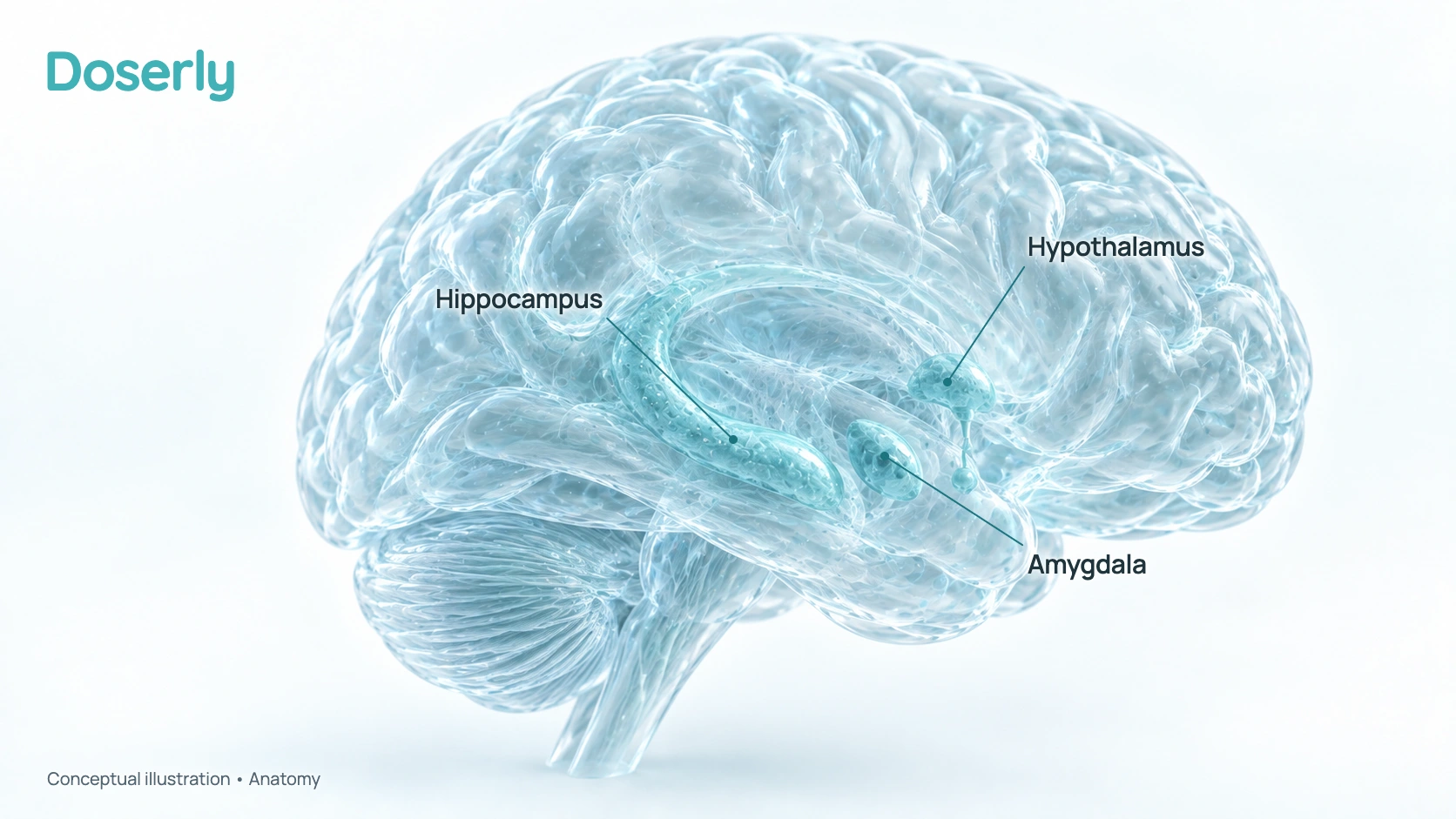
How might it act?
Human pharmacokinetic work recovered glucuronide and sulfate metabolites after oral exposure and found poor absorption of the free parent compound. GABA-receptor and CD38 findings come mainly from laboratory and animal models. These observations explain research interest but do not validate a 25 mg, 50 mg or other bedtime dose.
How does it compare with related products?
| Product | Identity to preserve | Human-evidence boundary |
|---|---|---|
| Chamomile | Species, flower preparation, tea versus standardized extract | Limited direct sleep trials; outcomes and preparations vary |
| California poppy | Flowering aerial parts, powder or specified extract | Traditional-use monograph and combination studies; monotherapy evidence is sparse |
| Magnolia bark | Species, bark extract, magnolol/honokiol standardization | Human trials mostly test multi-ingredient formulas |
| Apigenin | Isolated flavone versus food glycosides or chamomile extract | No verified isolated-apigenin sleep efficacy trial |
| L-Theanine | Purified theanine versus tea with caffeine and catechins | A separate ingredient with its own human trials |
What are the risks and interactions?
Short-term safety of isolated concentrated apigenin is not well defined in human trials. In-vitro work suggests possible effects on drug-metabolizing enzymes and transporters, but clinical magnitude is uncertain. Review anticoagulants, narrow-therapeutic-index medicines, sedatives, hormone therapies, chemotherapy, pregnancy and breastfeeding with a pharmacist or clinician. [6]
Which medicines require review?
Do not convert an in-vitro enzyme result into a precise separation interval. Bring the exact formulation and dose to a pharmacist, especially when medicine exposure must stay within a narrow range.
Regulatory status: In the United States, supplements generally lack premarket efficacy approval. In Canada, verify the finished product’s NPN or DIN-HM and licensed conditions. [7], [8]
What should be monitored?
Record product, lot, form, amount per administration, frequency, daily total, co-ingredients, meals, symptoms, medicines, chosen outcome and review date.
What happens when it is stopped?
No ingredient-specific withdrawal syndrome is established. Record the stop date and compare the same sleep and next-day measures rather than changing several products at once.
Seek prompt care for a serious allergic reaction, unusual bleeding, persistent palpitations, chest pain or another severe symptom.
What do public communities report?
Public reports commonly mention relaxation, vivid dreams, morning grogginess or no effect. Those reports rarely verify species, extract, co-ingredients or sleep diagnosis, so they generate tracking questions rather than efficacy estimates.
Common questions about Apigenin
Has isolated apigenin been proven to improve human sleep?
No verified randomized oral sleep-efficacy trial of isolated apigenin was located in the current review.
Can chamomile trials prove apigenin works?
No. Chamomile contains many constituents and its preparation cannot be reduced to one molecule.
Is 50 mg a clinically established bedtime dose?
No. About 51.6 mg appeared once in a three-person pharmacokinetic arm, but that study did not test sleep or establish a bedtime dose.
Why include parsley studies?
They show human absorption and metabolism while also demonstrating that a food-exposure study is not an efficacy trial.
Is apigenin absorbed the same from every source?
No. Glycoside form and the parsley, tea or supplement matrix can change absorption and metabolism.
What should I track?
Free or glycoside form, formulation, amount each time, timing, co-ingredients, sleep and next-day outcomes, medicines and adverse effects.
Glossary
Terms for reading the evidence.
- Preparation identity
- Species or compound, plant part, extraction, ratio and standardization that define the tested product.
- Amount per administration
- Amount consumed at one time, distinct from daily total.
- PSQI
- Pittsburgh Sleep Quality Index, a self-reported questionnaire rather than an objective sleep recording.
- ISI
- Insomnia Severity Index, a symptom questionnaire used to rate perceived insomnia severity.
- Monotherapy
- The ingredient was tested without another active intervention.
- Traditional use
- A regulatory category based on long-standing use; it is not equivalent to efficacy established by modern randomized trials.
How this guide was researched
Accessible official sources and human reports were read on October 9, 2026. Titles, authors, journals, DOI, PMID and visible corrections were checked. An unreported frequency was not guessed.
How this guide was made
Research and drafting were AI-assisted. This draft awaits Doserly editorial review and independent clinical review. See the editorial policy.
Explore the sources
Sources preserve form, amount, frequency, population, duration and outcome.
Showing 8 sources
- 01
Apigenin: a natural molecule at the intersection of sleep and aging. ↗
Sleep and aging evidence review
Current page or report reviewed; scope and limits retained.
Detail: Human sleep evidence involves apigenin-containing chamomile, not isolated-apigenin efficacy trials.
- 02
Bioavailability of apigenin from apiin-rich parsley in humans. ↗
Human food pharmacokinetic study
PubMed abstract reviewed; scope and limits retained.
Detail: 11 adults; single parsley bolus; blood and urine kinetics, not clinical efficacy.
- 03
Absorption, distribution, metabolism and excretion of apigenin and its glycosides in healthy male adults. ↗
Human pharmacokinetic study
Full text, trial registry and PubMed record reviewed; scope and limits retained.
Detail: Three men received isolated aglycone once; additional parsley and chamomile arms showed matrix-dependent metabolite patterns. Sleep was not tested.
- 04
Effects of the flavonoids quercetin and apigenin on hemostasis in healthy volunteers: results from an in vitro and a dietary supplement study. ↗
Randomized crossover feeding study
PubMed abstract reviewed; scope and limits retained.
Detail: 18 adults; parsley supplied 84 mg apigenin/day for seven days; no significant hemostasis effect.
- 05
Preliminary examination of the efficacy and safety of a standardized chamomile extract for chronic primary insomnia: a randomized placebo-controlled pilot study. ↗
Randomized multiconstituent chamomile trial
Full text and PubMed record reviewed; scope and limits retained.
Detail: Three 90 mg tablets twice daily supplied at least 15 mg/day apigenin by specification; primary sleep outcomes were null.
- 06
Pharmacokinetic properties and drug interactions of apigenin, a natural flavone. ↗
Pharmacokinetic and interaction review
PubMed abstract reviewed; scope and limits retained.
Detail: Poor bioavailability and mainly preclinical interaction evidence; clinical research gaps remain.
- 07
Questions and Answers on Dietary Supplements ↗
U.S. regulatory overview
Current official page reviewed; scope and limits retained.
Detail: Supplements generally lack efficacy preapproval.
- 08
Product Licensing ↗
Canadian licensing overview
Current official page reviewed; scope and limits retained.
Detail: Finished natural health products require licensing and authorized labels.
No matching sources
Try a different term or show the full list.