
In this guide
What is California Poppy?
California poppy is not an opium-poppy preparation. The European monograph covers powdered flowering aerial parts for traditional adult use, while modern clinical studies mostly test combinations. EMA classifies the sleep and mild-stress uses as traditional use based on long-standing experience, because clinical evidence is insufficient for well-established use. It recommends adults only and review if symptoms persist beyond two weeks. [1]
Typical California Poppy Protocols
| Source and population | Form and amount each time | Frequency | Total exposure | Duration or boundary |
|---|---|---|---|---|
| EMA traditional-use monograph · adults | Powdered flowering aerial parts 480–600 mg per dose | One dose with dinner and another 30–60 minutes before bed | 960–1,500 mg/day | Traditional-use schedule; seek review if symptoms last >2 weeks |
| Hanus 2004 · 264 adults with mild-to-moderate generalized anxiety | Per tablet: California poppy extract 20 mg + hawthorn 75 mg + elemental magnesium 75 mg | Two tablets twice daily | Poppy extract 80 mg/day plus co-ingredients | 3 months; combination anxiety trial, not a poppy sleep monotherapy trial |
| Abdellah 2020 · 36 entered, 22 per-protocol | Per tablet: California poppy extract 80 mg + valerian extract 32 mg | Up to four tablets nightly | Up to poppy 320 mg + valerian 128 mg/night | 1 month; open observational study without placebo |
These rows reproduce sources. Do not average them into one universal regimen.
The EMA sleep directions name two 480–600 mg doses, which calculate to 960–1,200 mg. The same monograph separately prints a 960–1,500 mg daily range without explaining a third administration. This guide preserves that mismatch instead of inventing a schedule for the extra 300 mg.
From source to outcome
Not well-established efficacy.
Specific to flowering aerial parts.
Poppy effects cannot be isolated.
Which forms and label details matter?
Preserve Eschscholzia californica, flowering aerial parts, powder versus extract, drug-to-extract ratio, solvent and amount per administration. Do not transfer the EMA powdered-herb schedule to a concentrated extract by matching milligrams.
How should it be stored?
Follow the finished-product label. Keep the container closed, dry and protected from heat and light; teas, tinctures and extracts can have different storage directions.
Read the label before the claim
Do not merge unlike preparations.
A daily total does not reveal timing.
Mechanism is not a sleep result.
What is it commonly used for?
Products are marketed for sleep initiation, mild stress and relaxation. The best human trial located for anxiety used California poppy with hawthorn and magnesium; the sleep study used it with valerian and had no control group.
What does human research show?
EMA’s conclusion supports a traditional-use registration pathway, not efficacy established by modern randomized trials. [1] Hanus randomized 264 adults to a fixed formula or placebo for three months. Two tablets twice daily supplied 80 mg/day California poppy extract plus 300 mg/day hawthorn extract and 300 mg/day elemental magnesium. Total Hamilton anxiety and self-rated anxiety favored the formula, while the somatic-score comparison narrowly missed significance (p=0.054). The result cannot isolate poppy or establish a bedtime effect. [2] Abdellah followed 36 adults with adjustment insomnia using up to four nightly tablets, each with 80 mg poppy extract and 32 mg valerian extract. Twenty-six returned for the final visit and only 22 were included per protocol. Scores and several diary measures improved over one month, but diary sleep latency did not. The open, uncontrolled design, attrition, co-ingredient and manufacturer-linked authors prevent a causal poppy-only conclusion. [3] The EMA assessment explicitly says well-established use cannot be accepted because clinical efficacy data are lacking. [4]
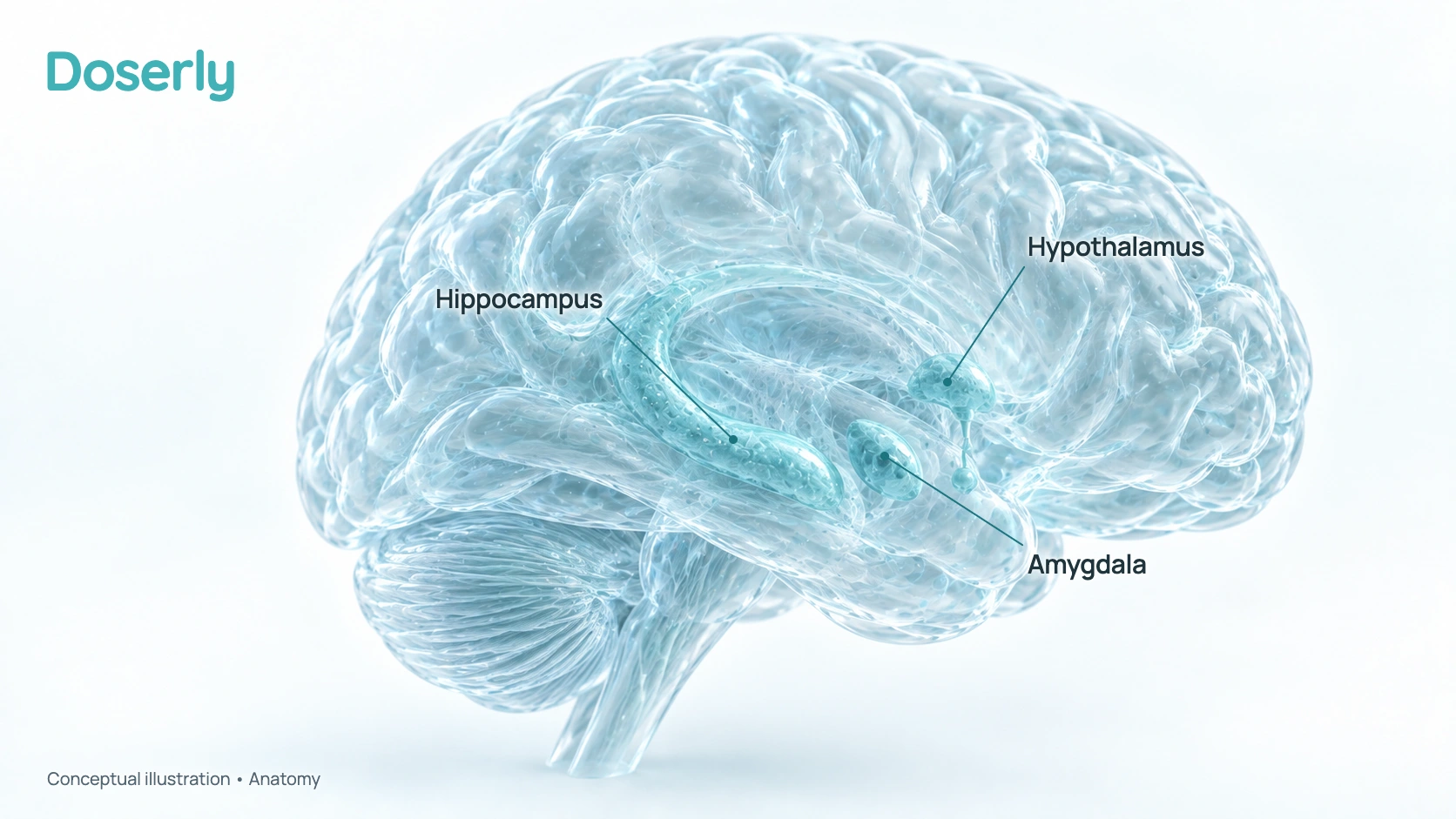
How might it act?
California poppy contains several isoquinoline alkaloids, including californidine, eschscholtzine, reticuline and protopine. In a recombinant-receptor experiment, their effects differed across gamma-aminobutyric acid (GABA) receptor subtypes; several compounds showed little or no direct modulation under the tested conditions. That model used frog oocytes expressing receptors, not sleeping humans, and does not identify an effective retail extract or dose.
How does it compare with related products?
| Product | Identity to preserve | Human-evidence boundary |
|---|---|---|
| Chamomile | Species, flower preparation, tea versus standardized extract | Limited direct sleep trials; outcomes and preparations vary |
| California poppy | Flowering aerial parts, powder or specified extract | Traditional-use monograph and combination studies; monotherapy evidence is sparse |
| Magnolia bark | Species, bark extract, magnolol/honokiol standardization | Human trials mostly test multi-ingredient formulas |
| Apigenin | Isolated flavone versus food glycosides or chamomile extract | No verified isolated-apigenin sleep efficacy trial |
| L-Theanine | Purified theanine versus tea with caffeine and catechins | A separate ingredient with its own human trials |
What are the risks and interactions?
The EMA monograph reports no established medicine interactions at assessment, but it also says the product may impair driving and machinery use. Safety in pregnancy and breastfeeding is not established and use is not recommended; adult use only. Review alcohol, sedatives and other sleep products because clinical combination data are limited. [1][4]
Which medicines require review?
Do not drive or operate machinery if affected. Review alcohol, hypnotics, anxiolytics, opioids, antihistamines and multi-ingredient sleep formulas before use; absence of a reported interaction is not proof of no interaction.
Regulatory status: In the United States, supplements generally lack premarket efficacy approval. In Canada, verify the finished product’s NPN or DIN-HM and licensed conditions. [5], [6]
What should be monitored?
Record product, lot, form, amount per administration, frequency, daily total, co-ingredients, meals, symptoms, medicines, chosen outcome and review date.
What happens when it is stopped?
No ingredient-specific withdrawal syndrome is established. Record the stop date and compare the same sleep and next-day measures rather than changing several products at once.
Seek prompt care for a serious allergic reaction, unusual bleeding, persistent palpitations, chest pain or another severe symptom.
What do public communities report?
Public reports commonly mention relaxation, vivid dreams, morning grogginess or no effect. Those reports rarely verify species, extract, co-ingredients or sleep diagnosis, so they generate tracking questions rather than efficacy estimates.
Common questions about California Poppy
Is California poppy the same as opium poppy?
No. Eschscholzia californica is a different species and the EMA monograph concerns its flowering aerial parts.
Does the EMA schedule prove the product works?
No. It is a traditional-use schedule supported by long-standing use, not well-established clinical efficacy.
Can I use 500 mg of an extract as 500 mg of powder?
No. Extraction ratio and solvent change the preparation; milligrams are not interchangeable.
Did the anxiety trial test California poppy alone?
No. It also supplied hawthorn and elemental magnesium.
Did the insomnia study include a placebo?
No. It was a small open observational study of poppy plus valerian.
What should I track?
Species, aerial part, powder or extract, ratio, amount each time, timing, co-ingredients, sleep outcome and next-day impairment.
Glossary
Terms for reading the evidence.
- Preparation identity
- Species or compound, plant part, extraction, ratio and standardization that define the tested product.
- Amount per administration
- Amount consumed at one time, distinct from daily total.
- PSQI
- Pittsburgh Sleep Quality Index, a self-reported questionnaire rather than an objective sleep recording.
- ISI
- Insomnia Severity Index, a symptom questionnaire used to rate perceived insomnia severity.
- Monotherapy
- The ingredient was tested without another active intervention.
- Traditional use
- A regulatory category based on long-standing use; it is not equivalent to efficacy established by modern randomized trials.
How this guide was researched
Accessible official sources and human reports were read on October 9, 2026. Titles, authors, journals, DOI, PMID and visible corrections were checked. An unreported frequency was not guessed.
How this guide was made
Research and drafting were AI-assisted. This draft awaits Doserly editorial review and independent clinical review. See the editorial policy.
Explore the sources
Sources preserve form, amount, frequency, population, duration and outcome.
Showing 6 sources
- 01
Eschscholziae herba - herbal medicinal product ↗
Official traditional-use monograph
Current page or report reviewed; scope and limits retained.
Detail: Adults, flowering aerial parts, traditional-use status, schedules and precautions.
- 02
Double-blind, randomised, placebo-controlled study to evaluate the efficacy and safety of a fixed combination containing two plant extracts (Crataegus oxyacantha and Eschscholtzia californica) and magnesium in mild-to-moderate anxiety disorders. ↗
Randomized combination trial
Current page or report reviewed; scope and limits retained.
Detail: 264 adults; two tablets twice daily for three months; poppy not isolated.
- 03
A combination of Eschscholtzia californica Cham. and Valeriana officinalis L. extracts for adjustment insomnia: A prospective observational study. ↗
Prospective observational combination study
Current page or report reviewed; scope and limits retained.
Detail: 36 entered and 22 analyzed per protocol; no placebo; poppy plus valerian.
- 04
Final assessment report on Eschscholzia californica Cham., herba ↗
Official evidence assessment
Current page or report reviewed; scope and limits retained.
Detail: Well-established use rejected for lack of clinical efficacy data; safety gaps documented.
- 05
Questions and Answers on Dietary Supplements ↗
U.S. regulatory overview
Current page or report reviewed; scope and limits retained.
Detail: Supplements generally lack efficacy preapproval.
- 06
Product Licensing ↗
Canadian licensing overview
Current page or report reviewed; scope and limits retained.
Detail: Finished natural health products require licensing and authorized labels.
No matching sources
Try a different term or show the full list.