
In this guide
What is CoQ10?
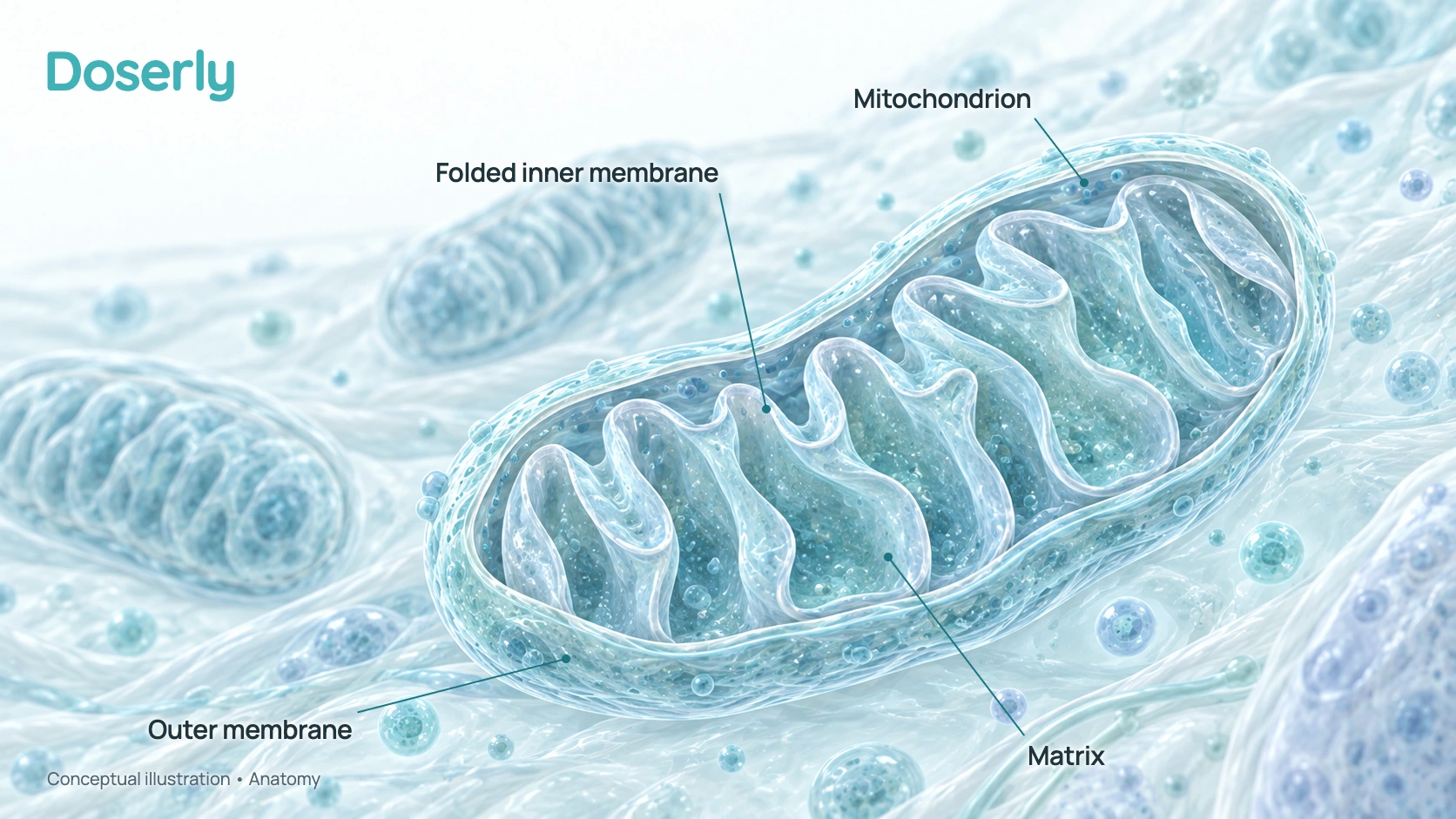
Coenzyme Q10 is an endogenous, fat-soluble quinone present in cell membranes. In mitochondria it accepts and donates electrons between respiratory-chain complexes. Its reduced form, ubiquinol, also participates in redox protection. Supplements usually contain oxidized ubiquinone or reduced ubiquinol.
An established biochemical role does not guarantee that extra CoQ10 improves every fatigue, muscle or longevity outcome. The clearest way to assess it is by clinical context. A major heart-failure trial found an adjunctive long-term signal, small migraine studies found selected benefits, statin-myalgia syntheses conflict, and a large Parkinson trial found no disease-slowing benefit. [1]–[4]
Typical CoQ10 Protocols
| Study and population | Product | Amount each administration | Daily total | Frequency and duration | Main interpretation |
|---|---|---|---|---|---|
| Q-SYMBIO 2014 · 420 patients with moderate-to-severe chronic heart failure | CoQ10 as add-on to standard therapy | 100 mg | 300 mg | Three times daily for 2 years | Major adverse cardiovascular events: 15% with CoQ10 versus 26% with placebo; trial limitations prevent replacement-care claims |
| Sándor 2005 · 42 adults with migraine | CoQ10 | 100 mg | 300 mg | Three times daily for 3 months | Selected attack-frequency, headache-day and nausea-day measures favored CoQ10; small trial |
Q-SYMBIO enrolled people already receiving standard heart-failure therapy. At two years, the composite major-event endpoint occurred in 15% of the CoQ10 group and 26% of placebo. Slow recruitment, international variation and a lower-than-planned number of events narrow certainty, while the clinically important signal supports further study. [1]
The migraine trial used the same daily total but addressed a different disorder and followed only 42 people. Its 50% responder rate for attack frequency was 47.6% with CoQ10 and 14.4% with placebo in the third month. A small trial should not be converted into guaranteed prevention. [2]
- Redox form
- Record ubiquinone or ubiquinol instead of treating every CoQ10 product as identical.
- Amount and schedule
- Keep 100 mg per administration distinct from the 300 mg daily total used in these trials.
- Treatment context
- Heart-failure medicines, migraine preventives, statins, insulin and warfarin must remain visible.
What is CoQ10 commonly used for?
Heart failure and cardiovascular risk
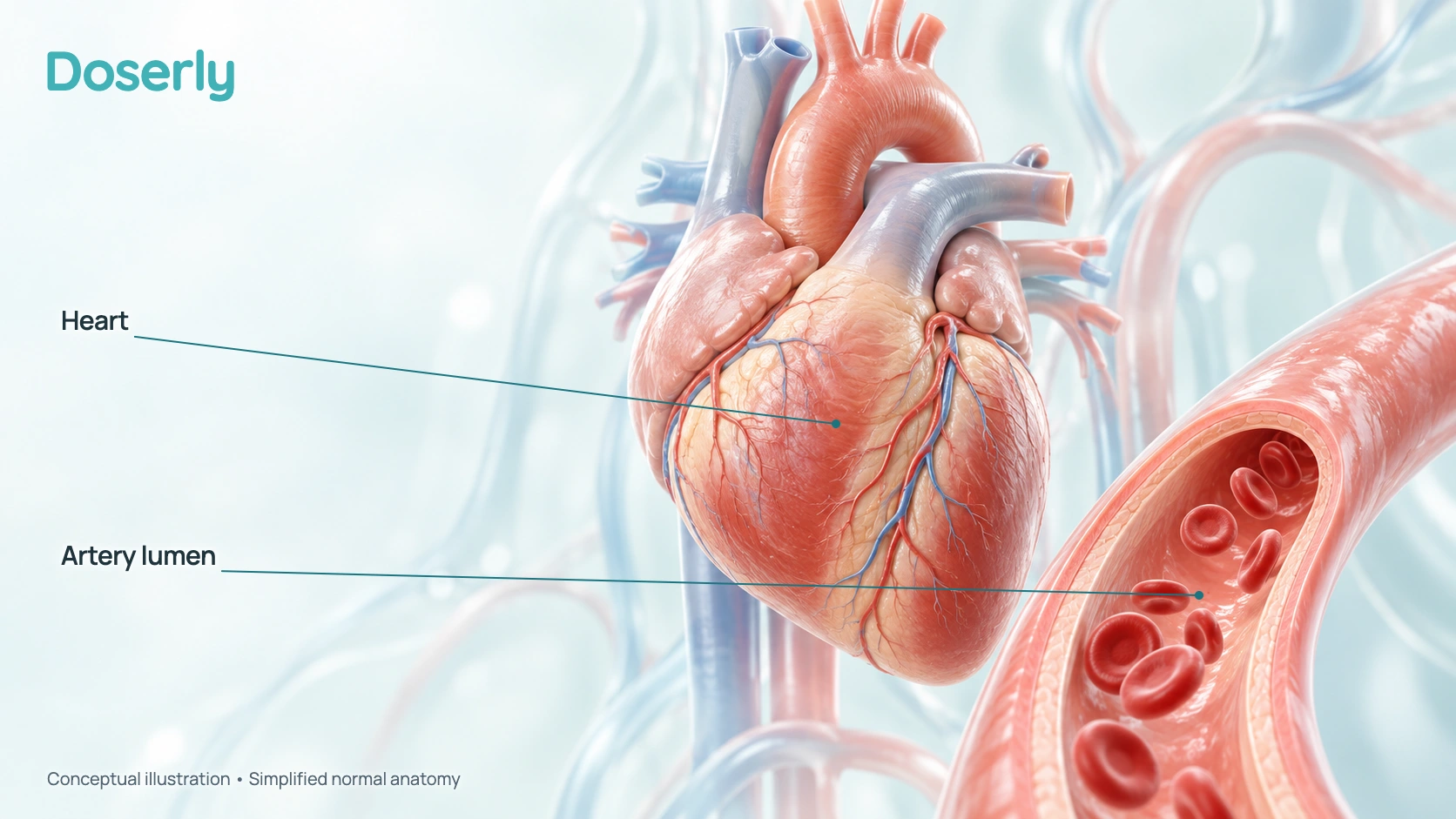
Q-SYMBIO is the most notable hard-outcome trial, but CoQ10 remained adjunctive to guideline care. Current American Heart Association public guidance says benefits are not clear and more research is needed. A 2026 meta-analysis in prediabetes or type 2 diabetes reported changes in triglycerides, fasting glucose, HbA1c, insulin resistance, CRP and HDL, with no significant total-cholesterol, LDL or blood-pressure effect. Biomarker changes are not fewer heart attacks or longer life. [1], [5]
Migraine prevention
The 2005 trial supports a possible reduction in attack frequency. Current NCCIH guidance characterizes the overall evidence as limited: pooled studies suggest possible reductions in migraine duration and frequency, but not severity, and the amount of evidence is small. [2], [6]
Statin-associated muscle symptoms
Statins can lower circulating CoQ10, which makes supplementation biologically plausible. Plausibility has not produced a reliable clinical result. The 2020 review pooled seven trials with 321 participants and found no myalgia or adherence benefit. An updated 2025 meta-analysis pooled seven RCTs with 389 participants and found a small pain-intensity reduction: WMD −0.96 (95% CI −1.88 to −0.03). Its trials were small, short (30–90 days), used 100–600 mg/day and were highly heterogeneous. This conflict prevents a reliable responder or dose claim. Do not stop or reduce a statin based on a supplement experiment. [3], [6], [8]
Energy, exercise and healthy aging
CoQ10 supports normal cellular bioenergetics, but an “energy pathway” is not proof that supplementation improves fatigue, VO2max, performance or lifespan in a healthy person. Study results must be kept with their measured populations and endpoints. No human trial shows that CoQ10 extends life.
Clinical map
One molecule, different clinical questions
Results stay attached to the population, comparator, schedule and outcome that produced them.
How do forms and labels differ?
Ubiquinone is the oxidized form and has been used in major trials including Q-SYMBIO. Ubiquinol is the reduced form. Some pharmacokinetic comparisons report higher plasma exposure with ubiquinol, especially in older adults, but higher blood concentration does not establish better symptoms or clinical outcomes.
Softgels dissolved in oil and products taken with food may improve absorption compared with dry powder. Match the form and amount to the trial behind the claim. A proprietary “mitochondrial complex” may combine CoQ10 with PQQ, alpha-lipoic acid or carnitine; its outcomes cannot be assigned to CoQ10 alone.
Redox forms
Ubiquinone and ubiquinol interconvert
A blood-level difference does not prove a superior clinical outcome. Match a product to the form tested for the claim.
How should CoQ10 be stored?
Keep the container sealed, dry and protected from heat and direct light. Follow the finished product’s temperature and expiry instructions. Oil softgels can be damaged by heat, while opened or leaking capsules should be discarded. Record brand, form, strength and lot after any product switch.
What does the human evidence show?
| Question | Evidence | Finding | Boundary |
|---|---|---|---|
| Does adjunctive CoQ10 improve heart-failure outcomes? | Q-SYMBIO, 420 patients | 15% versus 26% major events at two years | Add-on trial with recruitment and event-count limits |
| Can it reduce migraine attacks? | 42-person RCT | Selected third-month outcomes favored CoQ10 | Small sample and prevention context |
| Does it reliably relieve statin myalgia? | 2020 and 2025 syntheses | Null result versus small pain signal | Small, short, heterogeneous trials |
| Does high-dose CoQ10 slow Parkinson disease? | Large phase 3 RCT | No evidence of benefit | Disease-specific null result |
| Does it improve metabolic biomarkers? | 20-RCT 2026 meta-analysis | Selected glucose, lipid and CRP signals | No event outcome; several endpoints null |
The large Parkinson study is a useful correction to mechanism-first reasoning. Mitochondrial dysfunction is relevant to the disease, yet high-dose CoQ10 did not slow clinical decline. A pathway can be real while an oral intervention fails. [4]
The newer metabolic meta-analysis also illustrates endpoint discipline. Changes in HbA1c, fasting glucose or CRP may matter as research signals, but they cannot be translated into cardiovascular-event reduction, reversal of diabetes or longevity. [5]
What are the risks and interactions?
CoQ10 is generally well tolerated in trials. Digestive upset and insomnia can occur. Stop and seek care for severe allergy, persistent vomiting, fainting, unusual bleeding or a marked change in glucose symptoms.
NCCIH specifically flags possible interactions with warfarin and insulin and possible incompatibility with some cancer treatments. Warfarin users need prescriber review and stable INR monitoring rather than an unsupervised start or stop. People using insulin or other glucose-lowering treatment should not change medication from a supplement reading. Oncology teams should review antioxidant supplements before or during treatment. [6]
Health Canada’s current monograph calls for clinician review with blood-pressure medication and, for products above 100 mg/day, blood thinners. Pregnancy and breastfeeding also require professional review. These are product-label risk boundaries, not proof that every interaction will occur. [7]
What is the legal and regulatory status?
In the United States, CoQ10 is sold as a dietary supplement and is not preapproved by FDA as a treatment for heart failure, migraine, statin myalgia or aging. In Canada it is regulated as a natural health product; an authorized product should carry an NPN or DIN-HM and follow licensed dose, claim and caution language. Authorization does not make it interchangeable with a prescription or prove every marketed claim.
What happens when you stop?
CoQ10 has no established withdrawal syndrome and does not require an invented taper. Any symptom or biomarker change may move toward baseline after exposure ends. Stopping an adjunct during heart-failure, migraine, diabetes or anticoagulation care should be discussed when it could complicate interpretation or medication monitoring.
What should you monitor?
Record ubiquinone or ubiquinol, brand, strength, amount per administration, daily total, meal timing, start date and co-ingredients. Choose the outcome in advance: migraine days, a validated muscle-pain score, glucose readings or a clinician-defined heart-failure measure.
Track digestive symptoms, sleep changes, bruising or bleeding and any medication change. Warfarin users follow the prescriber’s INR plan. Insulin users follow their glucose plan. Heart-failure symptoms such as rapid weight gain, worsening swelling, breathlessness, chest pain or fainting need medical evaluation, not supplement adjustment.
What does community experience add?
Public reports can surface GI intolerance, sleep disruption, softgel size, cost and perceived differences after switching between ubiquinone and ubiquinol. They cannot verify an INR interaction, myocardial CoQ10, statin causality or cardiovascular-event prevention. No systematic current community sample was assembled, so this guide reports no consensus brand, form, dose or responder rate.
How does CoQ10 compare with related options?
| Option | Practical distinction | Evidence boundary |
|---|---|---|
| Ubiquinone | Oxidized CoQ10 used in landmark outcome trials | Product formulation affects exposure |
| Ubiquinol | Reduced CoQ10 with possible exposure advantages | No universal clinical-superiority proof |
| PQQ | Different redox cofactor sold for mitochondrial support | Cannot inherit CoQ10 trial outcomes |
| Alpha-lipoic acid | Distinct cofactor and antioxidant with neuropathy research | Different indications and interactions |
| Standard medical therapy | Treatments with indication-specific guideline roles | CoQ10 trials generally test adjunctive use |
Common questions
Is ubiquinol better than ubiquinone?
It may yield higher blood exposure in some people, but no universal clinical advantage is established. Match the form to the evidence supporting the claim.
Does CoQ10 treat heart failure?
Q-SYMBIO found an adjunctive outcome signal at 100 mg three times daily, but participants remained on standard therapy. CoQ10 is not a replacement for heart-failure treatment. [1]
Can CoQ10 prevent migraine?
Small trials and meta-analyses suggest possible reductions in frequency or duration, with no consistent severity effect. Evidence remains limited. [2], [6]
Does it prevent statin muscle pain?
The evidence conflicts. A 2020 meta-analysis was null, while a 2025 update found a small pooled pain signal with high heterogeneity and a confidence interval close to no effect. Do not stop a statin without medical advice. [3], [8]
Should it be taken with food?
CoQ10 is fat soluble, and many trial products are oil-based softgels. Following the tested or labeled meal instructions improves protocol fidelity; it does not guarantee an outcome.
Can it interact with warfarin?
Yes, NCCIH and Health Canada flag blood-thinner review. A prescriber should manage starting or stopping CoQ10 and decide whether INR monitoring needs adjustment. [6], [7]
Does CoQ10 extend lifespan?
No human trial has shown longer life from CoQ10. Mitochondrial and antioxidant mechanisms are not human longevity outcomes.
Glossary
Plain explanations of CoQ10 terms.
- Coenzyme
- A non-protein molecule that helps an enzyme or biological process work.
- Ubiquinone
- The oxidized form of CoQ10 used in many clinical trials.
- Ubiquinol
- The reduced form of CoQ10 that participates in redox cycling.
- Electron transport chain
- Mitochondrial protein complexes that transfer electrons and help create the gradient used to make ATP.
- MACE
- A composite of major adverse cardiovascular events defined by a specific trial.
- INR
- A standardized clotting measurement used to monitor warfarin.
How this guide was researched
Each PubMed identifier was checked against its displayed title and authors. Primary trial schedules were separated into amount per administration, daily total, frequency and duration. Positive heart-failure and migraine findings were kept beside null statin-myalgia and Parkinson findings.
Research record · checked October 9, 2026
Fresh reads: Q-SYMBIO, the Sándor migraine trial, the 2020 and 2025 statin-myalgia reviews, the negative Parkinson trial, the 2026 metabolic meta-analysis, NCCIH and Health Canada guidance.
Identity verification: PMID 25282031, PMID 15728298, PMID 32179207, PMID 41158831, PMID 24664227 and PMID 42642774 matched their displayed titles and authors.
Protocol extraction: both primary protocols used 100 mg each administration and 300 mg/day, three times daily; their populations and durations remain distinct.
Conflicting and negative findings: both statin-myalgia syntheses and the high-dose Parkinson null result remain visible.
Safety boundary: warfarin, insulin and cancer-treatment cautions come from current official guidance.
Explore the sources
Primary trials, systematic reviews and current official interaction guidance.
Showing 8 sources
- 01
The effect of coenzyme Q10 on morbidity and mortality in chronic heart failure: results from Q-SYMBIO: a randomized double-blind trial. ↗
Randomized controlled trial
Exact 100 mg three-times-daily adjunctive protocol, two-year major-event finding and trial limitations.
- 02
Efficacy of coenzyme Q10 in migraine prophylaxis: a randomized controlled trial. ↗
Randomized controlled trial
Exact 100 mg three-times-daily, three-month protocol and selected migraine-frequency findings in 42 people.
- 03
Effect of Coenzyme Q10 on statin-associated myalgia and adherence to statin therapy: A systematic review and meta-analysis. ↗
Systematic review and meta-analysis
Seven pooled trials found no reliable myalgia or statin-adherence benefit.
- 04
A randomized clinical trial of high-dosage coenzyme Q10 in early Parkinson disease: no evidence of benefit. ↗
Phase 3 randomized trial
Large negative clinical-outcome trial that limits mechanism-based neuroprotection claims.
- 05
The effect of CoQ10 supplementation on cardiovascular risk factors in patients with prediabetes and type 2 diabetes mellitus: a grade-assessed systematic review and dose-response meta-analysis. ↗
Systematic review and dose-response meta-analysis
Twenty RCTs, selected metabolic biomarker signals and several null cardiovascular-risk-factor outcomes.
- 06
Coenzyme Q10 ↗
Official evidence and safety overview
Current evidence boundaries and warfarin, insulin and cancer-treatment interaction cautions.
- 07
Coenzyme Q10 (Ubiquinone-10) monograph ↗
Official natural health product monograph
Canadian authorized-use, dose and risk-label framework, including medication cautions.
- 08
Effects of coenzyme Q10 supplementation on myopathy in statin-treated patients: a systematic review and meta-analysis. ↗
Systematic review and meta-analysis
Seven RCTs found a small pooled pain reduction with high heterogeneity, small samples and short durations.
No matching sources
Try a different term or show the full list.
Editorial note
This guide separates CoQ10’s normal biochemical role from supplement exposure and indication-specific clinical outcomes.