
Urolithin A: The Complete Supplement Guide
On this page
Quick Reference Card
Attribute
Common Name
- Detail
- Urolithin A
Attribute
Other Names / Aliases
- Detail
- Uro-A, 3,8-dihydroxybenzo[c]chromen-6-one
Attribute
Category
- Detail
- Gut microbiome-derived metabolite / postbiotic-style longevity supplement
Attribute
Primary Forms & Variants
- Detail
- Purified synthetic Urolithin A in capsules, softgels, powders, and functional-food formats; dietary precursors from ellagitannins are not equivalent because many adults convert them poorly [1][3]
Attribute
Typical Dose Range
- Detail
- Human trials in this dossier used 500 mg/day and 1,000 mg/day most often, with some human literature spanning roughly 10 mg/day to 1,000 mg/day [2][4][5][6][7]
Attribute
RDA / AI / UL
- Detail
- No RDA, AI, or UL established [1][7]
Attribute
Common Delivery Forms
- Detail
- Capsule, softgel, powder, functional food matrix
Attribute
Best Taken With / Without Food
- Detail
- Study protocols vary and do not establish a universal meal rule; follow product-specific instructions and consistency rather than assuming a food-dependent advantage [2][3][5]
Attribute
Key Cofactors
- Detail
- No essential cofactor established; precursor-rich foods such as pomegranate support natural formation in some people, but direct supplementation is more reliable across metabotypes [3]
Attribute
Storage Notes
- Detail
- Store in a cool, dry environment away from excess heat and moisture; quality standards should show assay and impurity limits when available [8]
Overview
The Basics
Urolithin A is not a vitamin or mineral that everyone needs every day. It is a small compound your body may make after gut microbes break down ellagitannins and ellagic acid from foods such as pomegranate and some berries and nuts. The catch is that many people do not make much of it at all, which is one reason the supplement category exists [3][7].
The main reason people care about Urolithin A is mitochondrial maintenance. Mitochondria are the energy-producing parts of your cells, and Urolithin A is studied because it appears to support mitophagy, the cleanup process that helps remove worn-out mitochondria. That sounds exciting, but the human data is still more modest than the marketing. The clearest signals so far are in muscle strength, muscle endurance, inflammatory biomarkers, and now some immune-aging measures, not in a dramatic reversal of aging itself [2][4][5][6][7].
The Science
Urolithin A is a coumarin-class metabolite of ellagic acid with molecular formula C13H8O4 and PubChem CID 5488186 [1]. Human interest in the compound centers on mitophagy-related signaling, mitochondrial metabolism, and downstream effects on muscle and inflammatory biology [2][4][6]. Across the current human literature, dose ranges commonly span 500 to 1,000 mg/day, with intervention windows from 28 days to 4 months [2][3][4][5][6][7].
The human evidence base remains small. A first-in-human study showed favorable short-term safety plus molecular signatures consistent with improved mitochondrial and cellular health [2]. Later randomized trials reported gains in muscle strength or endurance alongside reductions in acylcarnitines and CRP, but not all primary endpoints succeeded [4][5]. A 2024 systematic review concluded that Urolithin A shows biologic activity and some performance-related promise, while broader claims for physical function, cardiovascular outcomes, or general anti-aging effects remain underpowered and unresolved [7].
Chemical & Nutritional Identity
Property
Chemical Name
- Value
- 3,8-dihydroxybenzo[c]chromen-6-one
Property
Molecular Formula
- Value
- C13H8O4
Property
Molecular Weight
- Value
- 228.20 g/mol
Property
CAS Number
- Value
- 1143-70-0
Property
PubChem CID
- Value
- 5488186
Property
Category
- Value
- Coumarin-derived gut microbial metabolite
Property
Natural Source Context
- Value
- Produced after microbial metabolism of ellagitannins and ellagic acid rather than consumed directly in meaningful amounts [1][3]
Property
Common Supplement Forms
- Value
- Purified synthetic Urolithin A in capsules, softgels, powders, or functional food matrices
Property
Nutrient Status
- Value
- Not an essential nutrient
Property
RDA / AI / UL
- Value
- None established
Urolithin A is best understood as a metabolite-based supplement, not as a deficiency-correction nutrient. That distinction matters because the usual nutritional framework of daily values and deficiency syndromes does not apply cleanly here [1][7]. The practical decision is not whether someone is "low in Urolithin A" by standard clinical criteria. It is whether the compound offers enough benefit to justify supplementation in the face of limited, short-duration human evidence.
Mechanism of Action
The Basics
The simplest way to think about Urolithin A is that it helps the cell do housekeeping around old mitochondria. Instead of acting like a stimulant, it is studied as a compound that may improve how cells recycle damaged mitochondrial parts and maintain better energy machinery over time.
That does not mean more mitophagy automatically means more energy in daily life. Biology and felt benefit are not the same thing. The mechanism is interesting and plausible, but the clinical payoff is still uneven across human studies [2][4][5][7].
The Science
The mechanistic rationale for Urolithin A centers on induction of mitophagy and downstream remodeling of mitochondrial metabolism [2][4][6]. In early human work, 4 weeks of oral Urolithin A at 500 mg and 1,000 mg modulated plasma acylcarnitines and skeletal-muscle mitochondrial gene expression in older sedentary adults [2]. In the middle-aged ATLAS trial, transcriptomic and proteomic analyses suggested increases in pathways tied to mitochondrial protein complexes, contractile function, phospho-Parkin signaling, and mitochondrial metabolism [4].
The immune-aging trial adds a second mechanistic lane. Four weeks of 1,000 mg/day altered CD8+ T-cell phenotype, increased fatty-acid oxidation capacity, and was associated with markers of mitochondrial biogenesis and inflammatory-pathway remodeling in immune cells [6]. Taken together, current human evidence suggests that Urolithin A acts less like a general-purpose antioxidant and more like a mitochondrial quality-control modulator with muscle and immune readouts that are measurable before broad physical-function changes become obvious [2][4][6].
Pathway
Urolithin A sits downstream of dietary ellagitannins. Foods such as pomegranate provide precursor compounds, gut microbes convert those precursors into urolithins, and only then does Urolithin A appear in circulation. That pathway is unreliable across people because conversion depends heavily on microbiome composition [3].
Direct supplementation changes the story. Instead of relying on precursor conversion, oral Urolithin A delivers parent compound plus conjugated metabolites into circulation more consistently across different metabotypes [3]. From there, the research focus shifts to mitochondrial quality control, fatty-acid oxidation, inflammation-linked biomarkers, and muscle or immune phenotypes rather than to a classic nutrient replacement pathway [2][4][6].
Absorption & Bioavailability
The Basics
Bioavailability is one of the most important practical sections for this supplement because natural production is highly inconsistent. A person can eat pomegranate regularly and still produce very little Urolithin A if the relevant microbes are missing or underrepresented. That is why the supplement category exists in the first place [3].
Direct oral supplementation appears to solve the exposure problem better than precursor foods do. It does not solve the bigger question of whether higher blood exposure creates meaningful benefits for everyone, but it does make the compound much more consistently available in the body [3][7].
The Science
In the crossover bioavailability study, only 12% of participants had detectable Urolithin A at baseline, and only about 40% converted pomegranate-juice precursors into meaningful Urolithin A after challenge [3]. Direct supplementation with 500 mg Urolithin A significantly raised plasma parent compound and conjugates, producing more than six-fold greater exposure than pomegranate juice [3]. Urolithin A producer status also tracked with higher gut-microbiome diversity and a higher Firmicutes-to-Bacteroides ratio [3].
The first-in-human study further showed that Urolithin A was bioavailable in plasma at all tested doses, with repeated dosing at 500 mg and 1,000 mg altering biomarker profiles over 4 weeks [2]. This means the compound has a clearer exposure story than many longevity supplements. The uncertainty now sits downstream, at the level of clinical meaning rather than absorption failure.
Understanding how your body absorbs a supplement is only useful if you can act on it. Doserly lets you log exactly when you take each form, whether it's a capsule with a meal, a sublingual tablet on an empty stomach, or a liquid taken with a cofactor, so you can see how timing and form choices affect your results over time.
The app also tracks cofactor pairings that influence absorption. If a supplement works better alongside vitamin C, fat, or black pepper extract, Doserly reminds you to take them together and logs both. Over weeks, your personal data reveals whether those pairing strategies are translating into measurable differences in the biomarkers you're tracking.
Turn symptom and safety notes into a clearer timeline.
Doserly helps you log doses, symptoms, and safety observations side by side so patterns are easier to discuss with a qualified clinician.
Pattern view
Logs and observations

Pattern visibility is informational and should be reviewed with a clinician.
Research & Clinical Evidence
Muscle function in middle-aged adults
The Basics
The strongest upbeat paper in the dossier is the 4-month middle-aged adult trial. It found better muscle strength and some improvement in exercise-related measures, with lower inflammation-linked biomarkers. That is the best current argument for Urolithin A as a muscle-aging supplement rather than a vague longevity concept [4].
The Science
The ATLAS trial randomized overweight, untrained middle-aged adults to placebo, 500 mg/day, or 1,000 mg/day for 4 months [4]. Both active-dose groups improved hamstring muscle strength by about 12% relative to placebo, and the trial also reported favorable changes in aerobic-endurance-related outcomes, 6-minute walk performance, plasma acylcarnitines, CRP, and skeletal-muscle mitophagy or mitochondrial markers [4]. Peak power output, however, did not significantly improve, which limits how broadly the positive signal can be generalized [4].
Older-adult endurance and biomarker data
The Basics
The older-adult JAMA trial is less tidy. It supports better muscle endurance and better biomarker trends, but it did not deliver a significant win on the co-primary endpoints. This is an important reality check against overly confident marketing [5].
The Science
In adults aged 65 to 90 years, 1,000 mg/day for 4 months improved endurance in the tibialis anterior and first dorsal interosseus while reducing several plasma acylcarnitines, ceramides, and CRP relative to placebo [5]. Yet the change in 6-minute walk distance and maximal ATP production was not significantly better than placebo, even though both groups improved over time [5].
Immune-aging biology
The Basics
The newer immune-aging study broadens the story beyond muscle. It suggests that Urolithin A may influence immune-cell composition and cellular energy handling, especially in CD8+ cells. That is scientifically interesting, but it is still early and short-term [6].
The Science
In 50 healthy middle-aged adults, 1,000 mg/day for 28 days expanded less terminally exhausted CD8+ cells and increased CD8+ fatty-acid oxidation capacity compared with placebo [6]. Secondary analyses also found shifts in NK cells, nonclassical monocytes, mitochondrial biogenesis markers, inflammatory cytokine patterns, and single-cell transcriptional programs [6]. The study supports mechanistic plausibility for immune-aging effects, but it does not yet prove durable clinical benefit [6].
Big-picture review
The Basics
If you zoom out, the current evidence says Urolithin A is biologically active and probably not useless. It also says the category is not mature enough for sweeping anti-aging claims [7].
The Science
The 2024 systematic review of five human studies concluded that Urolithin A showed dose-dependent anti-inflammatory effects and upregulated some mitochondrial, autophagy, and fatty-acid oxidation markers [7]. It also reported increased muscle strength and endurance signals, while failing to find convincing effects on maximal ATP production, mitochondrial dynamics, anthropometrics, cardiovascular outcomes, or broad physical function [7].
Evidence & Effectiveness Matrix
Category
Energy Levels
- Evidence Strength
- 4/10
- Reported Effectiveness
- 5/10
- Summary
- Human studies show biologic activity but not clean, consistent energy outcomes. Community reports split between clear gains and no felt change.
Category
Physical Performance
- Evidence Strength
- 6/10
- Reported Effectiveness
- 5/10
- Summary
- Muscle-strength and endurance signals are the strongest clinical use-case, but primary performance endpoints have not always succeeded [4][5][7].
Category
Recovery & Healing
- Evidence Strength
- 4/10
- Reported Effectiveness
- 5/10
- Summary
- Some performance and endurance data imply better tissue-energy handling, but direct recovery evidence is limited.
Category
Daily Functioning
- Evidence Strength
- 3/10
- Reported Effectiveness
- 5/10
- Summary
- Whole-body function outcomes such as 6-minute walk improvement are mixed and still underpowered [5][7].
Category
Inflammation
- Evidence Strength
- 6/10
- Reported Effectiveness
- N/A
- Summary
- Repeated biomarker improvements in CRP and related inflammatory patterns are among the more reproducible human signals [4][5][6][7].
Category
Immune Function
- Evidence Strength
- 5/10
- Reported Effectiveness
- N/A
- Summary
- A short RCT suggests immune-metabolic remodeling and favorable CD8+/NK/monocyte shifts, but the field is early [6].
Category
Side Effect Burden
- Evidence Strength
- 6/10
- Reported Effectiveness
- 4/10
- Summary
- Short-term trials generally describe good tolerability, while community reports surface fatigue, headaches, and GI issues in a minority of users [2][5][7].
Category
Treatment Adherence
- Evidence Strength
- 2/10
- Reported Effectiveness
- 3/10
- Summary
- Adherence is weakened mainly by price, trust, and hard-to-feel benefits rather than by established toxicity.
Category
Longevity & Neuroprotection
- Evidence Strength
- 3/10
- Reported Effectiveness
- 4/10
- Summary
- Theoretical appeal is strong, but direct human healthy-aging outcomes remain limited and often overstated.
Benefits & Potential Effects
The Basics
The most defensible benefit language for Urolithin A is narrower than the internet version. It may support muscle strength, muscle endurance, and some mitochondrial or inflammatory biomarkers, especially in middle-aged or older adults with age-related decline in the background [4][5][7].
The less defensible language is the dramatic anti-aging pitch. Current human data do not show that Urolithin A broadly improves physical function, body composition, or cardiovascular outcomes in a settled way. That does not mean the supplement is meaningless. It means the likely benefit range is more selective and less flashy than the marketing suggests [5][7].
The Science
Across the current human dossier, the most repeatable positive findings are muscle-specific or biomarker-specific. The ATLAS trial showed improved leg strength and favorable mitochondrial or inflammatory biomarker shifts [4]. The older-adult JAMA trial showed better muscle endurance and plasma metabolomic changes despite null co-primary endpoints [5]. The immune-aging study adds short-term immunometabolic effects that may matter for future geroscience applications [6].
What the evidence does not yet establish is a reliable general-health transformation. The systematic review found no convincing effect on anthropometrics, cardiovascular outcomes, or broad physical function in healthy adults [7]. That is why Urolithin A is better described as a targeted mitochondrial-health candidate than as a proven anti-aging staple.
Reading about potential benefits gives you a framework. Seeing whether those benefits are showing up in your own body turns knowledge into confidence. Doserly lets you track the specific health markers relevant to this supplement, building a personal dataset that captures what's actually changing week over week.
The app's AI analytics go further than simple logging. By correlating your supplement intake with the biomarkers and health outcomes you're tracking, Doserly surfaces patterns you might miss on your own, like whether a dose adjustment three weeks ago corresponds to the improvement you're noticing now. When it's time to evaluate whether a supplement is earning its place in your stack, you have your own data to guide the decision.
Capture changes while they are still fresh.
Log symptoms, energy, sleep, mood, and other observations alongside protocol events so patterns do not live only in memory.
Trend view
Symptom timeline
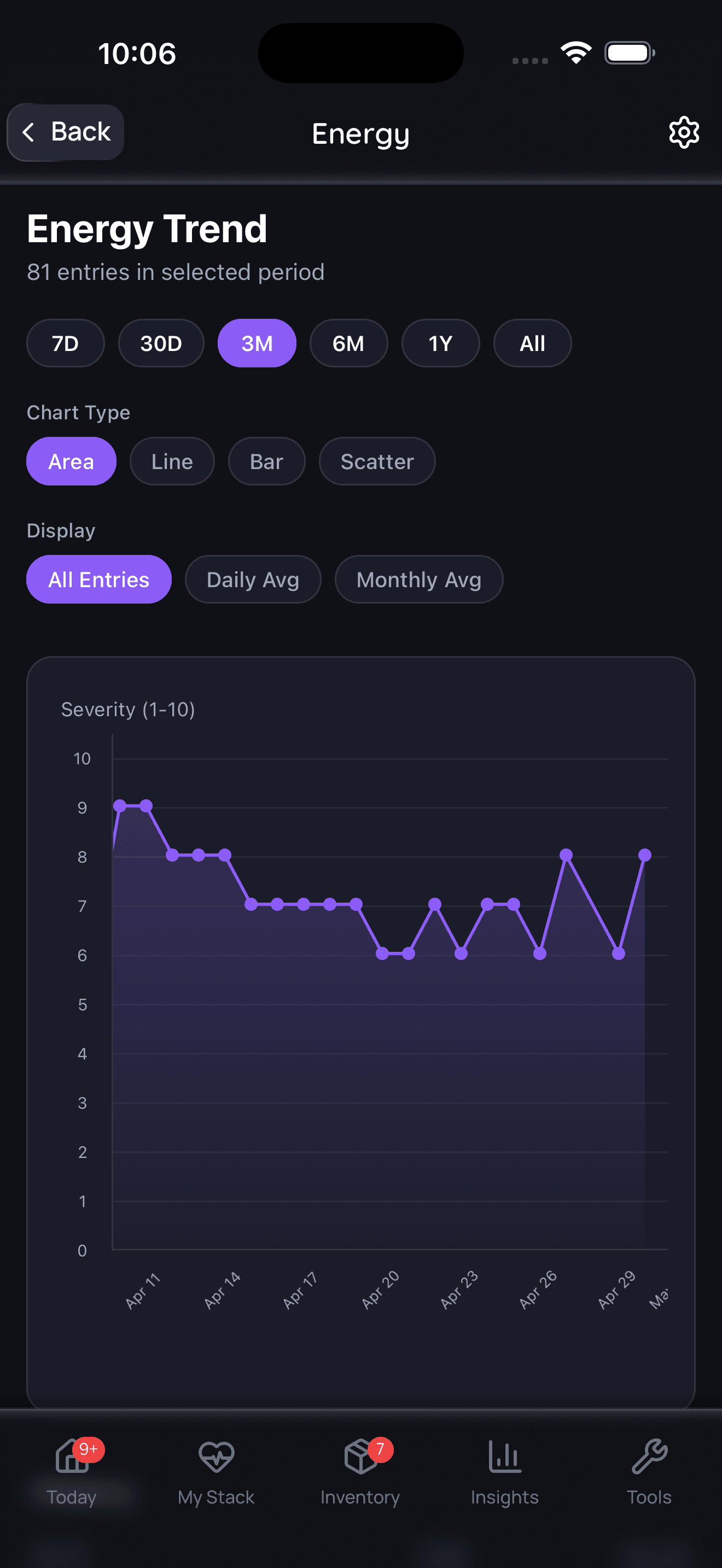
Symptom tracking is informational and should be interpreted with a qualified clinician.
Side Effects & Safety
The Basics
Short-term clinical safety looks fairly reassuring. Human trials generally describe Urolithin A as safe and well tolerated over 4 weeks to 4 months [2][5][7]. That is the good news.
The less comfortable part is that "well tolerated in trials" does not mean "problem-free in the real world." Community reports mention fatigue, headaches, diarrhea, and disappointing subjective results. Some of that may reflect poor product quality or unrealistic expectations rather than a direct compound effect, but it still matters for real buyers [5][7].
The Science
The first-in-human study identified a favorable safety profile across tested doses and documented bioavailability plus molecular changes rather than major safety problems [2]. The 4-month older-adult trial also reported no statistical difference in adverse events versus placebo [5]. The systematic review similarly described unrelated adverse events as mild or moderate across the small human literature [7].
The safety conversation therefore has two layers. The compound itself looks reasonably tolerable over short study windows [2][5][7]. The market experience is messier because not every commercial product is equally trustworthy, and subjective downside feels more significant when benefits are uncertain.
Dosing & Usage Protocols
The Basics
Human dosing is fairly concentrated around two levels: 500 mg/day and 1,000 mg/day. Those are the ranges that show up most often in the current human evidence base [2][3][4][5][6][7].
That does not mean those numbers are universally right for every person. It means those are the doses we actually have data on. The main practical difference is that 500 mg/day is enough to create a major exposure advantage over precursor foods, while 1,000 mg/day appears often in longer efficacy-oriented trials [2][3][5][6].
The Science
Four weeks of 500 mg/day and 1,000 mg/day in older sedentary adults produced measurable plasma exposure and biomarker modulation [2]. The bioavailability crossover study used a 500 mg direct-supplement comparison and showed more than six-fold higher exposure than pomegranate juice [3]. The ATLAS trial used 500 mg/day and 1,000 mg/day for 4 months [4]. The older-adult JAMA trial and the immune-aging trial both used 1,000 mg/day [5][6].
There is still no established RDA, no accepted maintenance dose, and no long-term dose-finding consensus [1][7]. This is a research-range discussion, not a settled wellness standard.
Getting the dose right matters more than most people realize. Too little may be ineffective, too much wastes money or introduces risk, and inconsistency undermines both. Doserly tracks every dose you take, across every form, giving you a clear record of what you're actually consuming versus what you planned.
The app helps you compare research ranges against your real intake, so you can see exactly where your routine falls. If you switch forms, Doserly adjusts your tracking so the comparison stays clear. Pair that with smart reminders that keep timing consistent, and the precision that makes a real difference in outcomes becomes effortless.
Track injection timing, draw notes, and site rotation.
Doserly helps keep syringe-related notes, injection site history, reminders, and reconstitution context together for easier review.
Injection log
Site rotation
Injection logs support record-keeping; follow clinician instructions for administration.
What to Expect (Timeline)
The timeline for Urolithin A is usually subtle rather than dramatic. Early use, during the first few weeks, may feel like nothing at all. That is common in both community discussion and the way the human trials are structured [2][4][5][7].
By around 4 weeks, study papers start showing biomarker movement more clearly than subjective transformation, especially in mitochondrial and inflammatory readouts [2][6]. By 2 months, the older-adult trial found better muscle endurance in selected muscle groups [5]. By 4 months, the middle-aged trial found stronger leg-strength improvements and broader performance-adjacent biomarker changes [4].
The practical expectation is therefore modest. Some users may notice improved exercise tolerance, steadier energy, or better recovery over months. Many will notice little or nothing, particularly if baseline function is already good or if expectations are shaped by anti-aging marketing rather than the actual trial record.
Interactions & Compatibility
SYNERGISTIC
- NMN and Nicotinamide Riboside: often paired in longevity stacks aimed at mitochondrial or cellular-energy support. Human evidence for the combination is not yet established, so stack benefits remain inferential.
- CoQ10: a common pairing in mitochondrial-support routines. The rationale is complementary rather than proven as a specific combination protocol.
- Resveratrol, Pterostilbene, Spermidine, and Fisetin: frequently grouped in longevity-oriented stacks. This reflects community behavior more than proven additivity.
CAUTION / AVOID
- Formal supplement-drug interaction data for Urolithin A itself are sparse in the current human dossier. That evidence gap should matter more than confident online claims.
- If someone is using multiple mitochondrial or longevity supplements at once, attribution becomes difficult. A positive or negative effect may not be traceable to Urolithin A alone.
- Athletes should be cautious with any non-certified product even if Urolithin A itself is not specifically named on the current WADA Prohibited List, because contamination risk is a separate problem from ingredient status [10][11][12].
- People pursuing low-cost marketplace products should be careful because the community record includes repeated concerns about counterfeit, underdosed, or poorly documented products.
How to Take / Administration Guide
Most published human trials used once-daily oral supplementation or a daily total dose that could be delivered consistently over weeks to months [2][4][5][6]. Some protocols used softgels, while other work used a food-product format or a structured supplement intervention [2][3][5]. The key pattern is consistency, not a special ritual.
Because there is no well-established meal-timing rule, the most practical approach is to use a high-quality product according to its label and keep timing stable enough that any effect can be evaluated honestly. If someone is already using multiple supplements, separating new additions and tracking them carefully is more valuable than inventing elaborate timing theories.
Community discussion also reinforces a basic point: if the supplement is hard to evaluate subjectively, adding it to a crowded stack makes interpretation even worse. The cleaner the routine, the easier it is to judge whether the compound is doing anything useful.
Choosing a Quality Product
Urolithin A is a category where quality screening matters a lot. First, prefer single-ingredient products or very simple formulas. Proprietary blends make it harder to know whether the label delivers a meaningful amount of Urolithin A or whether the product is mostly marketing filler. Second, look for assay data, lot-specific testing, and impurity limits rather than vague claims about purity.
The TGA compositional guideline is useful here because it shows what a serious quality framework can look like: identity confirmation, assay and purity targets, water-content limits, and impurity caps including elemental impurities [8]. In the commercial market, the best proxy is independent third-party testing plus transparent lot documentation.
For athletes or anyone subject to drug testing, use certification programs built for contamination risk, not generic branding language. USADA currently points athletes toward NSF Certified for Sport as the most suitable risk-reduction program and warns that labels alone, even those carrying certification marks, should be verified by batch in the database [11]. Informed Sport makes a similar contamination-risk case and tests certified products batch by batch [11]. Avoid products that imply WADA or USADA approval, because those claims are misleading [10][11].
Red flags include:
- unusually cheap products relative to category norms
- fake or unverifiable manufacturer addresses
- proprietary blends that bury the actual Urolithin A amount
- no lot-specific certificate or no third-party verification
- marketplace listings with suspiciously uniform reviews
Storage & Handling
Urolithin A is generally handled as a stable solid powder ingredient in regulatory-quality documents [8]. In practical consumer terms, that means cool, dry storage away from moisture, strong heat, and unnecessary light exposure is sensible. Standard supplement storage habits are likely adequate unless a specific product label says otherwise.
The more important handling issue is not temperature. It is traceability. Keep products in original packaging with lot numbers visible so any certification, recall, or adverse-event question can be checked later.
Lifestyle & Supporting Factors
The strongest lifestyle comparison for Urolithin A is exercise. Even people enthusiastic about the compound often admit that training, sleep, and metabolic health likely matter more than any single supplement in this space. If mitochondrial health is the goal, regular physical activity remains the benchmark intervention.
Diet still matters, just not in a simple way. Ellagitannin-rich foods can support natural Urolithin A production in some people, but the bioavailability study makes it clear that many adults are poor converters [3]. That means good diet is still worthwhile, but it should not be treated as a guaranteed substitute for direct exposure.
The broader lifestyle takeaway is straightforward: Urolithin A makes the most sense as an add-on to a solid routine, not as a rescue strategy for poor sleep, low activity, or unrealistic anti-aging expectations.
Regulatory Status & Standards
In the United States, Urolithin A sits inside the usual supplement and food-ingredient framework rather than being an approved drug for age-related decline. The FDA GRAS inventory includes a Urolithin A entry closed on 20 December 2018 with an "FDA has no questions" response, which supports food-ingredient context but does not authorize disease claims or prove efficacy [9].
In Australia, TGA has a current compositional guideline for Urolithin A permitted for use in listed medicines, updated 1 October 2025. That page provides identity, assay, purity, and impurity specifications, which is helpful for product-quality review [8]. In Europe, a European Commission novel-food application summary exists for Urolithin A, but this research pass did not confirm a final official authorization endpoint, so EU status should be checked before making market-specific claims. For Canada, no Urolithin A-specific Health Canada decision page was identified in this dossier, so current NPN or ingredient status should be verified at the product level.
For athletes, the current anti-doping message is more about contamination than about Urolithin A itself. WADA’s 2026 Prohibited List is now in force, and Urolithin A is not specifically named in the list materials reviewed for this guide [10]. That does not make every supplement safe. USADA emphasizes that athletes remain strictly liable for contaminated products and should verify certified lots directly through the NSF Certified for Sport database [11]. Global DRO also explicitly states that it does not apply to dietary supplements, which means supplement safety cannot be inferred from a medication-style search result [12].
Clinical-trial context is active rather than finished. Published human trials already include NCT03283462, NCT03464500, and NCT05735886 [4][5][6]. Additional registered work continues to explore metabolic, vascular, immune, and oncology-adjacent use cases, which means the evidence base is still moving.
Frequently Asked Questions
What is Urolithin A, in simple terms?
It is a small compound linked to the breakdown of ellagitannin-rich foods by gut microbes. In supplement form, it is studied mainly for mitochondrial quality-control effects rather than as an essential nutrient [1][3][7].
Does everyone make Urolithin A naturally from food?
No. Based on the current human crossover study, only a minority of participants had meaningful baseline levels, and only about 40% converted pomegranate precursors well after challenge [3].
Do the human studies support anti-aging claims?
Based on available human data, that claim is too broad. The evidence is better for selected muscle and biomarker outcomes than for sweeping aging or longevity effects [4][5][7].
What doses have actually been studied?
Commonly studied human doses in this dossier are 500 mg/day and 1,000 mg/day, usually over 4 weeks to 4 months [2][3][4][5][6][7].
How long does it take before people notice anything?
Based on the available trials and anecdotal reports, changes, if they occur, are more likely to appear over weeks to months than within days. Many users report no obvious short-term effect at all [4][5][7].
Is Urolithin A safe?
Short-term human trials generally describe it as safe and well tolerated, but long-term independent safety data are still limited. Product quality also matters, because market variability can change the real-world experience [2][5][7][8].
Can pomegranate juice replace a Urolithin A supplement?
Not reliably. The crossover study suggests direct supplementation creates much more consistent exposure than relying on precursor conversion from pomegranate juice [3].
Is Urolithin A allowed in sport?
Based on the current WADA materials reviewed here, Urolithin A is not specifically named on the 2026 Prohibited List. Athletes should still use certified products cautiously because contamination risk is separate from ingredient status [10][11][12].
What is the biggest downside in real-world use?
The most common practical downside is not a proven severe safety signal. It is the combination of price, uncertain felt benefit, and difficulty trusting lower-cost products.
Myth vs. Fact
- Myth: Urolithin A is basically a guaranteed anti-aging breakthrough.
Fact: Current human evidence supports biologic activity and some muscle-performance signals, but not a settled broad anti-aging effect [4][5][7]. - Myth: If you drink pomegranate juice, you already get the same thing.
Fact: Many adults convert ellagitannin precursors poorly, and direct supplementation produced much higher exposure in the human crossover study [3]. - Myth: Better mitochondrial biomarkers automatically mean you will feel dramatically more energetic.
Fact: Biomarker movement and subjective benefit are not the same. Multiple users and at least one major RCT show meaningful biologic changes without clear primary-endpoint wins [4][5]. - Myth: Because short-term trials looked safe, any commercial Urolithin A product is fine.
Fact: Trial tolerability does not solve the separate problem of supplement authenticity, labeling quality, or contamination [8][11][12]. - Myth: Athletes do not need to worry because the ingredient is not specifically listed by WADA.
Fact: Athletes still face contamination risk and strict liability, which is why certified-lot verification remains important [10][11][12].
Sources & References
Clinical Trials & Human Intervention Studies
- Andreux PA, Blanco-Bose W, Ryu D, et al. The mitophagy activator urolithin A is safe and induces a molecular signature of improved mitochondrial and cellular health in humans. Nature Metabolism. 2019. PubMed: https://pubmed.ncbi.nlm.nih.gov/32694802/
- Singh A, D'Amico D, Andreux PA, et al. Direct supplementation with Urolithin A overcomes limitations of dietary exposure and gut microbiome variability in healthy adults to achieve consistent levels across the population. European Journal of Clinical Nutrition. 2021. PubMed: https://pubmed.ncbi.nlm.nih.gov/34117375/
- Singh A, D'Amico D, Andreux PA, et al. Urolithin A improves muscle strength, exercise performance, and biomarkers of mitochondrial health in a randomized trial in middle-aged adults. Cell Reports Medicine. 2022. PubMed: https://pubmed.ncbi.nlm.nih.gov/35584623/
- Liu S, D'Amico D, Shankland E, et al. Effect of Urolithin A supplementation on muscle endurance and mitochondrial health in older adults: a randomized clinical trial. JAMA Network Open. 2022. PubMed: https://pubmed.ncbi.nlm.nih.gov/35050355/
- Denk D, Singh A, Kasler HG, et al. Effect of the mitophagy inducer urolithin A on age-related immune decline: a randomized, placebo-controlled trial. Nature Aging. 2025/2026 indexing record. PubMed: https://pubmed.ncbi.nlm.nih.gov/41174221/
Systematic Reviews & Evidence Synthesis
- Hodzic Kuerec A, et al. Targeting aging with urolithin A in humans: a systematic review. PubMed: https://pubmed.ncbi.nlm.nih.gov/39002645/
Governmental / Regulatory / Official Standards
- PubChem. Urolithin A, CID 5488186. https://pubchem.ncbi.nlm.nih.gov/compound/Urolithin-A
- Therapeutic Goods Administration. Urolithin A compositional guideline for listed medicines. https://www.tga.gov.au/resources/resources/compositional-guidelines/urolithin
- U.S. Food and Drug Administration. GRAS Notice Inventory / Recently Published GRAS Notices and FDA Letters. https://www.fda.gov/food/gras-notice-inventory/recently-published-gras-notices-and-fda-letters
- World Anti-Doping Agency. WADA’s 2026 Prohibited List is now in force. https://www.wada-ama.org/en/news/wadas-2026-prohibited-list-now-force
- U.S. Anti-Doping Agency. Athlete Advisory: Always Verify Third-Party Certified Logos on Dietary Supplements. https://www.usada.org/dietary-supplements/verify-third-party-logos-supplements/
- Global DRO. Home and FAQ materials. https://www.globaldro.com/ and https://www.globaldro.com/us/search/FAQ
Related Supplement Guides
- Same Category: Resveratrol, Pterostilbene, Fisetin, Spermidine
- Common Stacks / Pairings: NMN, Nicotinamide Riboside, CoQ10, Quercetin
- Related Health Goal: Turmeric/Curcumin, Senolytics, CoQ10, Spermidine