
PQQ (Pyrroloquinoline Quinone): The Complete Supplement Guide
On this page
Quick Reference Card
Attribute
Common Name
- Detail
- PQQ
Attribute
Other Names / Aliases
- Detail
- Pyrroloquinoline quinone, PQQ disodium salt, BioPQQ, mnemoPQQ
Attribute
Category
- Detail
- Quinone compound / mitochondrial-support supplement
Attribute
Primary Forms & Variants
- Detail
- PQQ free acid and, more commonly, pyrroloquinoline quinone disodium salt
Attribute
Typical Dose Range
- Detail
- Most fixed-dose human trials used 20 to 21.5 mg/day; one early exploratory human study used roughly 0.2 to 0.3 mg/kg/day
Attribute
RDA / AI / UL
- Detail
- No established RDA, AI, or UL
Attribute
Common Delivery Forms
- Detail
- Capsule, tablet, powder, combination mitochondrial-support blends
Attribute
Best Taken With / Without Food
- Detail
- Human trials do not establish a required meal condition; many users take it earlier in the day, often with other mitochondrial supplements
Attribute
Key Cofactors
- Detail
- No essential cofactor established; commonly paired with CoQ10/Ubiquinol, NAD+ Precursors, Alpha-Lipoic Acid, and L-Carnitine
Attribute
Storage Notes
- Detail
- Store sealed in a cool, dry place away from heat and moisture
Overview
The Basics
PQQ is a small quinone compound that shows up in tiny amounts in foods and is sold mainly as a mitochondrial-support supplement. The reason people talk about it is not that it fills a classic deficiency like magnesium or vitamin D. The interest comes from a different story: PQQ appears to interact with redox signaling and mitochondrial biology, which makes it attractive in brain-health, longevity, and energy-support marketing [1][2].
That marketing runs ahead of the evidence. The best human data on PQQ is not a broad anti-aging win. It is a narrower set of trials suggesting possible benefits in memory, attention, and certain brain-related measures, plus some exploratory data on inflammation, sleep, and fatigue [4][5][6][7][8]. If you think of PQQ as a proven longevity supplement, the data is not there. If you think of it as a plausible but still unsettled mitochondrial-support ingredient, that is closer to reality.
The Science
PQQ, chemically 4,5-dihydro-4,5-dioxo-1H-pyrrolo[2,3-f]quinoline-2,7,9-tricarboxylic acid, is a redox-active quinone with distinct parent-compound and disodium-salt entries in PubChem [1]. Mechanistic and review literature describe PQQ as a signaling-active compound linked to redox cycling, mitochondrial biogenesis pathways, and antioxidant effects rather than as an established essential nutrient with accepted daily intake targets [1][2][3].
Human evidence is mixed but not empty. Controlled trials using roughly 20 to 21.5 mg/day of PQQ disodium salt reported improvements in selected cognitive domains over 8 to 12 weeks in middle-aged and older adults [6][7]. A smaller combination-product trial in mild cognitive impairment also reported favorable biomarker and orientation-domain changes, although it did not isolate PQQ cleanly [8]. These findings support interest, not overstatement.
Chemical & Nutritional Identity
Property
Chemical Name
- Value
- Pyrroloquinoline quinone
Property
Expanded Name
- Value
- 4,5-dihydro-4,5-dioxo-1H-pyrrolo[2,3-f]quinoline-2,7,9-tricarboxylic acid
Property
Common Supplemental Form
- Value
- Pyrroloquinoline quinone disodium salt
Property
Molecular Formula
- Value
- PQQ: C14H6N2O8; disodium salt: C14H4N2Na2O8
Property
Molecular Weight
- Value
- PQQ: 330.21 g/mol; disodium salt: 374.17 g/mol
Property
PubChem CID
- Value
- PQQ: 1024; disodium salt: 16218548
Property
Category
- Value
- Aromatic water-soluble quinone
Property
Nutrient Status
- Value
- No established RDA, AI, or UL
Property
Natural Food Context
- Value
- Found in low background amounts in foods such as fermented soy products and tea
Commercial products usually use the disodium salt because it is the supplemental form evaluated in major human studies and regulatory reviews [1][6][7][11]. That distinction matters because claims about “PQQ” often blur the parent compound and the salt even though product labels usually reflect the salt form.
Mechanism of Action
The Basics
The simplest way to understand PQQ is to think of it as a signaling compound around cellular energy systems. It is often marketed as something that helps your body build or maintain healthier mitochondria, the structures that help cells produce usable energy. That description is directionally fair, but it is still a simplification. PQQ is not a battery charger. It is more like a molecule that may influence how cells handle stress, redox balance, and mitochondrial housekeeping [2][3].
This is why the supplement feels promising on paper. Better mitochondrial signaling sounds like it should improve many parts of health. The problem is that mechanism does not guarantee a noticeable outcome. A molecule can affect pathway markers without producing a dramatic change in mood, stamina, memory, or lifespan.
The Science
Mechanistic work links PQQ to NAD+-related signaling and mitochondrial-biogenesis pathways involving SIRT1, PGC-1alpha, NRF-1, NRF-2, and TFAM [2][3]. In fibroblast experiments, physiologically relevant nanomolar PQQ exposure increased cellular NAD+ and stimulated markers of mitochondrial biogenesis, which the authors attributed to activation of the SIRT1/PGC-1alpha pathway [3].
PQQ is also described as a strong redox-cycling compound with antioxidant and signaling activity, and review literature suggests it may modulate inflammatory and metabolic responses in ways that affect mitochondrial function [2]. These data explain why PQQ is heavily marketed for cellular energy and neuroprotection, but they remain mechanistic support rather than proof of broad clinical benefit [2][3].
Pathway
PQQ sits in a mitochondrial-support narrative that starts with redox chemistry and moves downstream into signaling. After oral intake, measurable plasma and urinary exposure can be detected in humans, but the most detailed human work is still limited and does not provide a neat consumer-friendly “bioavailability percentage” [4][11].
From there, the important pathway story is not one single receptor. It is a network story. PQQ appears to influence redox balance, NAD+-linked signaling, and mitochondrial-biogenesis markers that converge on transcriptional regulators such as PGC-1alpha and TFAM [2][3]. The result is a supplement category with stronger pathway plausibility than long-term clinical certainty.
Absorption & Bioavailability
The Basics
PQQ is easy to market because the theory sounds clean: take the supplement, support your mitochondria, feel more energetic. Absorption is messier than that. Human data show that orally consumed PQQ can be detected in blood and urine, which means the compound or its related forms are getting into circulation. What is less clear is how efficiently different commercial forms translate into consistent tissue-level effects in everyday users [4][11].
That uncertainty matters because many supplements are sold as if absorption and outcome are already solved problems. With PQQ, they are not. The ingredient is better understood as “biologically active after oral intake” than “fully characterized in humans.”
The Science
EFSA noted that absorption, distribution, metabolism, and excretion data in animals and humans remain limited, even though the ingredient was considered safe under the assessed conditions of use [11]. The early human crossover study demonstrated measurable plasma and urine exposure after single-dose and short repeated-dose supplementation, alongside metabolomic changes interpreted as enhanced mitochondria-related function [4].
The practical point is that human exposure is real, but exact form-by-form bioavailability remains incompletely mapped. For readers choosing among commercial products, that means marketing language about superior delivery systems should be treated more cautiously than direct clinical trial outcomes.
Research & Clinical Evidence
The Basics
The cleanest human evidence for PQQ is in cognition-related outcomes. Two randomized, placebo-controlled trials found improvements in memory and related cognitive measures after about 8 to 12 weeks of supplementation at roughly 20 mg/day [6][7]. That does not make PQQ a guaranteed brain supplement, but it does make cognition the strongest direct human use case in this dossier.
Other areas are weaker. A small open-label study reported improvements in stress, fatigue, and sleep, but open-label designs are much easier to overread [5]. A small exercise study found higher PGC-1alpha signaling but no actual performance advantage, which is an important reality check for the “more mitochondria equals better workouts” story [10].
The Science
In healthy adults aged 40 to under 80 years, 12 weeks of 21.5 mg/day PQQ disodium salt improved composite memory, verbal memory, reaction time, complex attention, cognitive flexibility, executive function, and motor speed relative to placebo [6]. A second placebo-controlled study in adults aged 20 to 65 years found age-stratified effects, with younger adults showing earlier gains in cognitive flexibility and processing speed and older adults showing later memory-related gains [7].
Supportive but weaker human evidence includes an open-label 8-week study in 17 adults reporting better stress, fatigue, quality-of-life, and sleep scores at 20 mg/day [5]. In contrast, a randomized exercise trial in untrained men found no significant improvement in aerobic performance or body composition despite a rise in PGC-1alpha protein levels [10]. A small mild-cognitive-impairment trial using a dihydrogen-PQQ blend also showed favorable biomarker and orientation-domain changes, but attribution to PQQ alone is limited because the intervention was combined [8].
Evidence & Effectiveness Matrix
Category
Memory & Cognition
- Evidence Strength
- 7/10
- Reported Effectiveness
- 6/10
- Summary
- This is the strongest direct human evidence area, with multiple placebo-controlled trials showing memory-related improvements over 8 to 12 weeks [6][7].
Category
Focus & Mental Clarity
- Evidence Strength
- 6/10
- Reported Effectiveness
- 6/10
- Summary
- Trial data and community reports both suggest possible attention and clarity benefits, but the effect looks moderate rather than dramatic [6][7].
Category
Energy Levels
- Evidence Strength
- 5/10
- Reported Effectiveness
- 6/10
- Summary
- Community interest is high and the mechanistic rationale is strong, but controlled human energy data remain limited and indirect [4][5].
Category
Sleep Quality
- Evidence Strength
- 4/10
- Reported Effectiveness
- 4/10
- Summary
- Human sleep data comes mainly from a small open-label study, while community reports are clearly mixed [5].
Category
Inflammation
- Evidence Strength
- 5/10
- Reported Effectiveness
- Community data not yet collected.
- Summary
- The early human metabolism study reported lower CRP and IL-6 after short repeated dosing, but the evidence base is still small [4].
Category
Side Effect Burden
- Evidence Strength
- 6/10
- Reported Effectiveness
- 5/10
- Summary
- Short-term safety looks reassuring in trials and toxicology work, but community reports show variable stimulation and sleep reactivity [6][7][9].
Benefits & Potential Effects
The Basics
The most defensible PQQ benefits are not as broad as the marketing suggests. If the question is whether PQQ might support memory, attention, and some aspects of brain-related function in certain adults, the answer is yes, there is enough human evidence to take that seriously [6][7]. If the question is whether PQQ reliably boosts workout performance, guarantees all-day energy, or acts like a proven longevity intervention, the evidence is much thinner [2][10].
That gap between promising biology and measured everyday benefit is the key framing issue. PQQ may be worthwhile for people interested in mitochondrial and cognition support, but it is not a clean “feel it immediately” supplement for most users.
The Science
Placebo-controlled trials support the strongest clinical language around memory, attention, cognitive flexibility, and related neurocognitive domains in middle-aged and older adults after 8 to 12 weeks of supplementation [6][7]. The small MCI combination trial adds supportive biomarker and brain-metabolism signals, but because it was not monotherapy, it is best treated as suggestive rather than definitive [8].
The weaker benefit areas are also important. The early human metabolism study suggested anti-inflammatory and mitochondria-related metabolic changes, and the open-label sleep-fatigue study suggested broader quality-of-life effects, but neither establishes a high-certainty all-purpose wellness claim [4][5]. For exercise performance, the best direct human study was negative on actual performance outcomes despite mitochondrial-signaling changes [10].
Reading about potential benefits gives you a framework. Seeing whether those benefits are showing up in your own body turns knowledge into confidence. Doserly lets you track the specific health markers relevant to this supplement, building a personal dataset that captures what's actually changing week over week.
The app's AI analytics go further than simple logging. By correlating your supplement intake with the biomarkers and health outcomes you're tracking, Doserly surfaces patterns you might miss on your own, like whether a timing change or new stack partner lines up with the improvement you're noticing now. When it is time to decide whether PQQ deserves a place in your routine, you have your own data instead of marketing language.
Keep sensitive protocol records in a purpose-built app.
Doserly is designed for private health tracking with structured records, offline-ready workflows, and exportable history when you need it.
Privacy
Health records
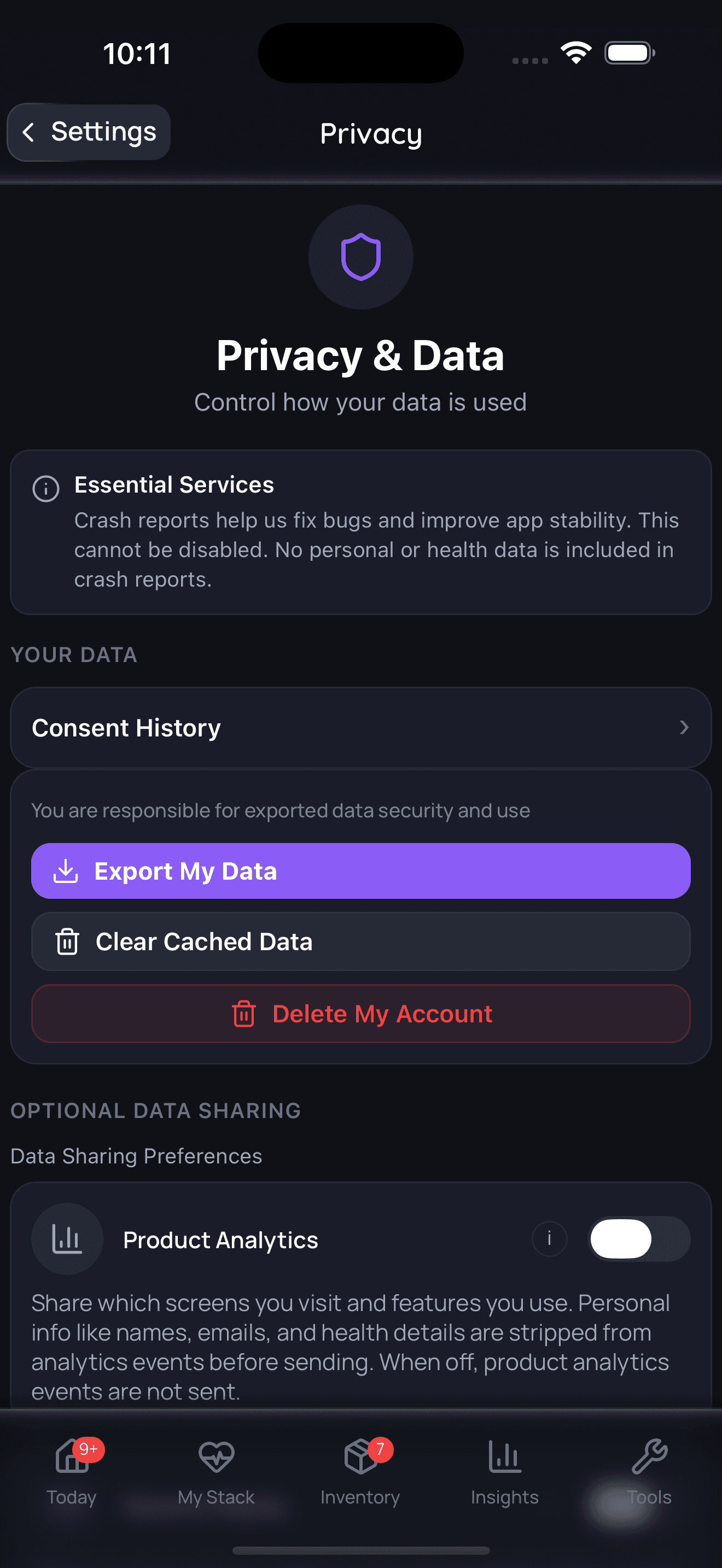
Privacy controls help you manage records; keep clinical records where required.
Side Effects & Safety
The Basics
Short-term PQQ use usually looks tolerable, but “tolerable” is not the same as “neutral for everyone.” The main real-world complaint is not severe toxicity. It is variability. Some people describe better energy and clearer thinking, while others describe feeling overstimulated, sleeping worse, or getting a wired-and-tired effect that makes the supplement less appealing.
That pattern matters because it changes how the supplement should be evaluated. PQQ is not best thought of as a universally calming mitochondrial helper. It seems more accurate to think of it as a biologically active compound that some users tolerate smoothly and others experience as activating.
The Science
The randomized cognition trials reported no major adverse-event pattern attributable to PQQ at roughly 20 to 21.5 mg/day over 12 weeks [6][7]. The toxicology package for mnemoPQQ also reported negative genotoxicity findings and a 90-day NOAEL above 600 mg/kg body weight in animal testing, which supports a favorable nonclinical safety profile [9]. EFSA likewise concluded that PQQ disodium salt was safe at the intended 20 mg/day use level for healthy adults, excluding pregnant and lactating women [11].
That said, the strongest community tolerability theme is activation. Mixed anecdotal data suggest that sleep disruption, overstimulation, or an unpleasant “too much energy” feeling may be the main practical tolerability problem in sensitive users. This does not overturn the short-term safety data, but it does argue for more nuance than the phrase “well tolerated” usually conveys.
Knowing the possible side effects is the first step. Catching them early in your own experience is what keeps a supplement routine safe. Doserly lets you log any symptoms as they arise, tagging them with severity, timing relative to your dose, and whether they fade quickly or keep repeating.
The app's interaction checker cross-references everything in your stack, supplements and medications alike, flagging known risks and helping you spot when a “minor” issue is really a pattern. That is especially useful with PQQ because the biggest real-world risk is not one headline toxicity. It is subtle overstimulation, stack confounding, and the temptation to keep pushing the dose.
Keep side effects, flags, and follow-up notes visible.
Doserly helps you document safety observations, side effects, medication changes, and follow-up questions so important context is not scattered.
Safety log
Flags and notes

Safety notes are not emergency guidance; seek medical help when appropriate.
Dosing & Usage Protocols
The Basics
The most common study-linked dose is about 20 mg per day. That number shows up repeatedly in the fixed-dose human literature and in the EFSA novel-food safety review [5][6][7][10][11]. For practical reading, that is the main evidence anchor.
The complication is that not every study used the same framing. One early human metabolism trial used roughly 0.2 to 0.3 mg/kg, which lands in a similar zone for many adults but still creates enough variation that supplement labels and study summaries can feel less tidy than they first appear [4]. The honest takeaway is that PQQ dosing is centered around the low-20-milligram range in human research, not all over the map.
The Science
Human trials most often used fixed doses of 20 mg/day or 21.5 mg/day over six to twelve weeks [5][6][7][10]. The early crossover metabolism study used weight-based dosing, specifically 0.2 mg/kg acutely and 0.3 mg/kg in the repeated-dose phase [4]. The safety and regulatory literature does not support a strong case for escalating well beyond the dose band already studied most often in humans [9][11].
Where the literature is weak is individualized protocol logic. There is not enough high-quality evidence to claim that higher doses, stacked doses, or form-switching reliably create better subjective results. Based on the available evidence, commonly studied human intake sits near 20 mg/day, while anything materially above that moves faster into speculation than into stronger proof.
What to Expect (Timeline)
The most realistic PQQ timeline is measured in weeks, not days. In the better cognition trials, changes showed up after roughly 8 to 12 weeks, with some age-dependent differences in when specific domains shifted [6][7]. That means people expecting a dramatic same-day mitochondrial surge are likely to be disappointed.
A second timeline issue is that subjective response is not uniform. Some community users report a stimulating effect very quickly, sometimes within the first few days, while others feel nothing obvious even after longer use. If PQQ does help a particular user, the strongest research-backed expectation is gradual change in cognition-related outcomes over two to three months rather than a clean, immediate “energy booster” effect.
Timelines in the research give you a general idea of when to expect results, but your body has its own schedule. Doserly tracks your progress against those benchmarks, letting you see whether your experience lines up with the typical response window or whether something in your routine may be pushing the outcome off course.
By logging biomarkers and subjective outcomes alongside your supplement intake, you build a personal timeline that shows exactly when changes started and how they progressed. The app's trend analysis helps separate random good days from actual improvement, which matters with subtle supplements like PQQ.
Capture changes while they are still fresh.
Log symptoms, energy, sleep, mood, and other observations alongside protocol events so patterns do not live only in memory.
Trend view
Symptom timeline
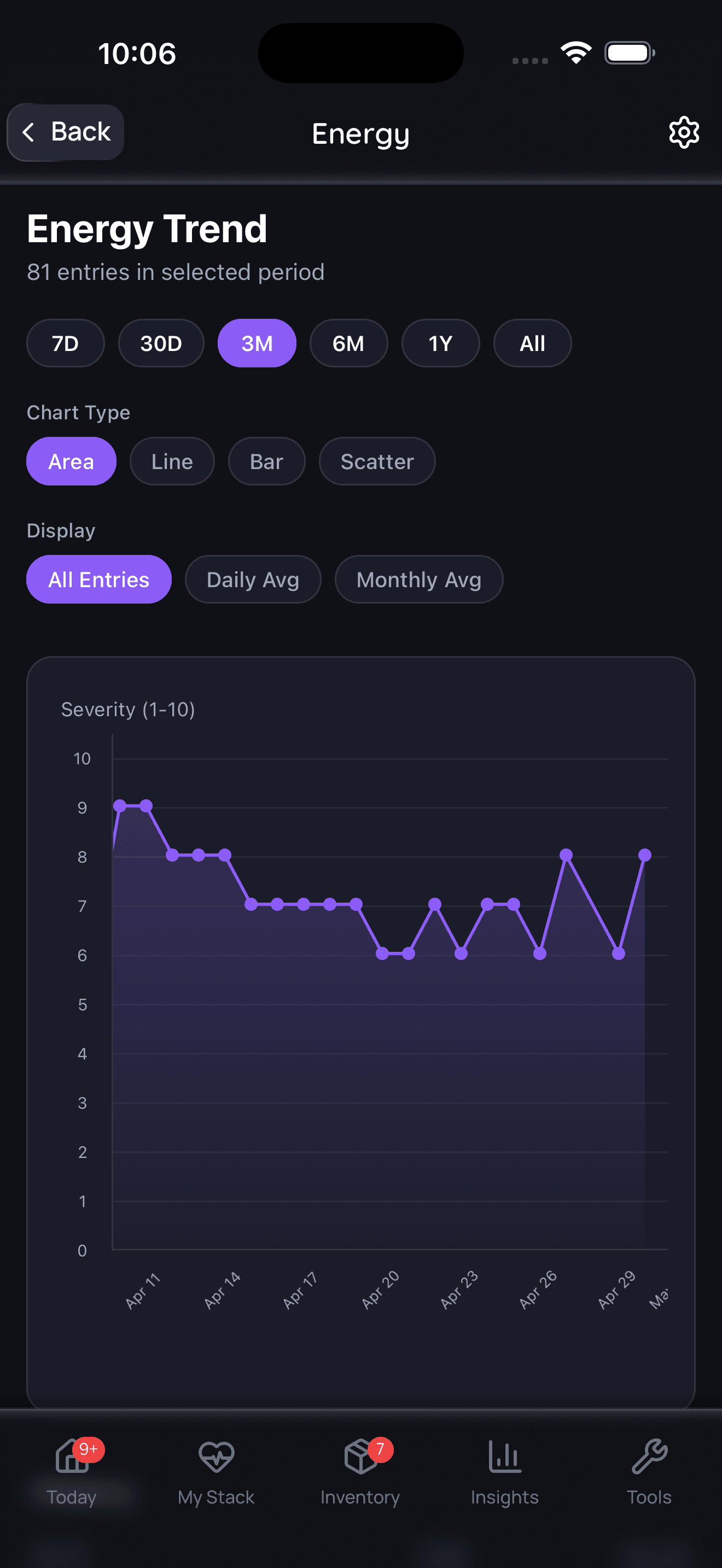
Symptom tracking is informational and should be interpreted with a qualified clinician.
Interactions & Compatibility
Synergistic
- CoQ10/Ubiquinol: Commonly paired in mitochondrial-support protocols because CoQ10 is framed around electron transport while PQQ is framed around mitochondrial signaling and biogenesis.
- NAD+ Precursors: Frequently stacked in longevity-oriented routines focused on cellular energy and mitochondrial health.
- Alpha-Lipoic Acid: Often discussed alongside PQQ in antioxidant and mitochondrial-support stacks.
- L-Carnitine: Fits the same “mitochondrial support” logic and appears in multi-supplement energy protocols.
- Magnesium: Not a direct mechanistic partner, but often used when users want to offset stimulation or support sleep quality in broader routines.
Caution / Avoid
- Stimulant-sensitive routines: If caffeine, pre-workouts, or other activating supplements already disturb sleep or increase anxiety, PQQ may add to that subjective load even though formal drug-interaction data are limited.
- Complex multi-supplement longevity stacks: PQQ is often taken with several compounds at once, which makes it harder to identify what is helping, what is irritating, and what is simply adding cost and complexity.
- Medication-heavy regimens: High-quality PQQ-specific drug-interaction trials were not identified in the current sources. Readers on cardiovascular, psychiatric, glucose-lowering, or anticoagulant medications should use extra caution because the absence of strong interaction data is not the same as proof of no interaction.
- Athlete use without certification: Product-level contamination risk matters more than ingredient hype. Favor third-party tested products and verify current status with anti-doping resources.
How to Take / Administration Guide
Recommended forms: Most clinical evidence involves oral PQQ disodium salt in capsule or powder form. That makes standard oral products the most evidence-aligned starting point. Enhanced-delivery claims exist, but current sources do not show a clear human-outcome advantage for premium delivery systems.
Timing considerations: Many users take PQQ earlier in the day because the real-world tolerability signal includes occasional activation or later bedtime. Human trials do not establish a strict meal requirement, so with-food versus without-food decisions are usually guided by routine consistency and personal tolerance.
Stacking guidance: PQQ often appears with CoQ10, NAD-oriented products, alpha-lipoic acid, and other mitochondrial-support ingredients. That may fit the way the supplement is marketed, but it also increases confounding. If someone wants to learn whether PQQ itself is helping, changing one major variable at a time is the cleaner approach.
Cycling guidance: There is no well-established need to cycle PQQ based on current human trial data. The stronger limitation is not a known cycling requirement. It is uncertainty about whether long-term continuous use produces meaningful added benefit.
Choosing a Quality Product
Third-party certifications: Prefer products with independent testing such as USP-style verification, NSF, Informed Sport, or other credible third-party programs when available. Athletes should be stricter than average consumers because contamination risk matters even when the ingredient itself is not obviously prohibited [12].
Active vs. vague forms: Look for clear labeling of pyrroloquinoline quinone disodium salt or a named raw material such as BioPQQ rather than generic “mitochondrial matrix” branding. A label that hides the actual PQQ amount inside a proprietary blend is a red flag.
Red flags:
- proprietary blends that bundle PQQ with many “longevity” ingredients without listing exact amounts
- aggressive anti-aging, dementia-prevention, or limitless-energy claims
- products implying that a much higher dose is automatically superior despite the human literature clustering near 20 mg/day
- formulas that make athlete-safe or contaminant-free claims without third-party certification
Excipient and filler considerations: Keep an eye on caffeine, stimulants, or heavily stacked nootropic ingredients in combination formulas. For PQQ, the biggest practical quality issue is often not the filler list. It is the tendency for the product to be buried in a complicated blend.
Storage & Handling
PQQ products are usually handled like standard dry supplements: cool, dry storage, tight closure, and protection from excess heat and humidity. Because most products are sold in relatively small-dose capsules, packaging quality matters more than unusual storage conditions.
Lifestyle & Supporting Factors
PQQ works best as part of a routine that already supports energy regulation rather than as a substitute for that routine. Sleep quality, exercise consistency, calorie intake, and overall metabolic health shape whether a subtle mitochondrial-support supplement is even noticeable.
That matters because PQQ is easy to overinterpret. If someone improves sleep, training structure, protein intake, and stress management at the same time they start PQQ, the supplement may get too much credit. The strongest lifestyle recommendation here is not a specific protocol. It is cleaner tracking and lower confounding.
Useful support factors from the current evidence and community context include:
- consistent sleep timing, especially if the supplement feels activating
- realistic exercise expectations, because mitochondrial-marker changes do not automatically translate into better performance [10]
- keeping the rest of the stack stable long enough to judge whether PQQ is doing anything at all
- paying attention to food-based background intake without assuming that dietary exposure and supplement exposure are interchangeable [2][11]
Regulatory Status & Standards
In the United States, PQQ supplements are sold within the dietary-supplement framework governed by DSHEA rather than the drug-approval system. FDA’s dietary-supplement guidance also notes that firms introducing new dietary ingredients are responsible for safety substantiation and, where required, NDI notification obligations [13]. That means market availability should not be confused with FDA approval for effectiveness.
In the European Union, EFSA evaluated pyrroloquinoline quinone disodium salt as a novel food and concluded it was safe under the intended conditions of use at up to 20 mg/day for healthy adults, excluding pregnant and lactating women [11]. EFSA also emphasized that this dose is far above estimated background dietary exposure [11]. A PQQ-specific Health Canada or TGA monograph was not identified in the current sources, so country-specific availability should be verified locally.
Athlete status is more straightforward than many supplement readers assume. The USADA overview of the WADA Prohibited List does not single out PQQ as a named prohibited ingredient on its current overview page, but athletes are still directed to GlobalDRO for status checks and to supplement-risk resources because contamination remains the core problem [12]. Third-party certification lowers risk but does not eliminate it.
Regulatory status and prohibited-substance classifications change over time. Athletes should verify current status with their governing body, anti-doping agency, and qualified sports medicine support before use.
Frequently Asked Questions
What is PQQ actually supposed to do?
Based on available research, PQQ is mainly studied as a mitochondrial-support and cognition-related supplement. The best human evidence points toward possible improvements in selected memory and attention measures, not broad guaranteed anti-aging effects [6][7].
Is PQQ a vitamin?
Not in the accepted regulatory sense. Review literature discusses it as a vitamin-like accessory factor, but there is no established RDA, AI, or deficiency definition recognized in the way readers would expect for classic vitamins [2][11].
Does PQQ really create new mitochondria?
Mechanistic and signaling studies support the idea that PQQ influences mitochondrial-biogenesis pathways, but that does not mean a user will automatically feel a dramatic outcome. Human performance data do not show a simple “more mitochondria, better performance” result [3][10].
How long does PQQ usually take to show anything noticeable?
Based on available trial data, the cleanest evidence window is about 8 to 12 weeks for cognition-related outcomes [6][7]. Community reports vary widely, with some users feeling stimulation quickly and others noticing nothing obvious.
Is PQQ good for sleep?
The answer is mixed. One small open-label study suggested sleep-related improvements, but community reports include both better sleep and worse sleep, especially in users who feel stimulated by it [5].
Is 20 mg the standard dose?
It is the most common dose used in the stronger fixed-dose human studies and in the EFSA novel-food review [6][7][11]. That does not make it universally “the right dose,” but it is the best-supported reference point in the current evidence.
Can I take PQQ with CoQ10?
This is a common stack in mitochondrial-support routines and is one of the most frequent pairing patterns in community use. The key issue is not that the pairing is unusual. It is that stacked use makes it harder to know which ingredient is doing what.
Is PQQ safe long term?
Short-term trial and toxicology data are reasonably reassuring, but long-duration real-world human safety data are still limited [6][7][9][11]. That means “safe in the short term” is better supported than “settled long-term safety.”
Is PQQ banned for athletes?
Current anti-doping guidance does not prominently list PQQ itself as a named prohibited ingredient on the overview source used for this guide, but athletes should still verify current status and focus heavily on product certification because contamination risk is the bigger issue [12].
Myth vs. Fact
Myth: PQQ is basically a guaranteed energy booster.
Fact: Community reports often mention better energy, but the human clinical evidence is stronger for cognition-related outcomes than for clean, consistent energy enhancement [4][6][7].
Myth: If PQQ raises mitochondrial markers, performance must improve too.
Fact: A controlled exercise study found higher PGC-1alpha signaling without better aerobic performance or body composition, which is exactly why pathway markers and real-world outcomes should not be treated as interchangeable [10].
Myth: More PQQ automatically means more benefit.
Fact: The current human literature clusters around roughly 20 to 21.5 mg/day. There is no strong evidence in the current dossier showing that simply pushing the dose higher produces better outcomes [4][6][7][11].
Myth: PQQ is a proven anti-aging supplement.
Fact: PQQ has strong mechanistic and longevity-oriented marketing appeal, but the current human evidence base is much narrower. The best-controlled data support selected cognitive outcomes, not broad lifespan or anti-aging claims [2][6][7].
Myth: PQQ is always calming because it supports mitochondria.
Fact: Sleep and stimulation reports are mixed. Some users describe better sleep or no issue, while others describe later bedtime, overstimulation, or an unpleasant wired feeling [5].
Myth: If PQQ is not banned, any PQQ supplement is athlete-safe.
Fact: Anti-doping risk is often about contamination and poor manufacturing controls, not just the named ingredient. Certified products and current status checks still matter [12].
Sources & References
Chemical and Review Sources
- PubChem. "Pyrroloquinoline Quinone / Pyrroloquinoline Quinone Disodium Salt." https://pubchem.ncbi.nlm.nih.gov/compound/Pyrroloquinoline-quinoneChemical identity, molecular properties, and compound identifiers.
- Jonscher KR, Chowanadisai W, Rucker RB. "Pyrroloquinoline-Quinone Is More Than an Antioxidant: A Vitamin-like Accessory Factor Important in Health and Disease Prevention." Biomolecules. 2021. PMC: https://pmc.ncbi.nlm.nih.gov/articles/PMC8533503/Broad review covering chemistry, food exposure, mitochondrial signaling, and vitamin-like framing.
- Saihara K, Kamikubo R, Ikemoto K, et al. "Pyrroloquinoline Quinone, a Redox-Active o-Quinone, Stimulates Mitochondrial Biogenesis by Activating the SIRT1/PGC-1alpha Signaling Pathway." Biochemistry. 2017. PubMed: https://pubmed.ncbi.nlm.nih.gov/29185343/Mechanistic paper on SIRT1/PGC-1alpha activation and mitochondrial-biogenesis signaling.
Clinical Trials & Human Studies
- Harris CB, Chowanadisai W, Mishchuk DO, et al. "Dietary pyrroloquinoline quinone (PQQ) alters indicators of inflammation and mitochondrial-related metabolism in human subjects." J Nutr Biochem. 2013. PubMed: https://pubmed.ncbi.nlm.nih.gov/24231099/Human crossover study linking short-term PQQ exposure to changes in inflammation markers and metabolomic indicators of mitochondrial function.
- Nakano M, Yamamoto T, Okamura H, et al. "Effects of Oral Supplementation with Pyrroloquinoline Quinone on Stress, Fatigue, and Sleep." Functional Foods in Health and Disease. 2012. DOI: https://doi.org/10.31989/ffhd.v2i8.81Small open-label study reporting improvements in stress, fatigue, quality-of-life, and sleep-related measures.
- Nakano M, Ohsawa I, Ohta S, et al. "Effect of Dietary Pyrroloquinoline Quinone Disodium Salt on Cognitive Function in Healthy Volunteers: A Randomized, Double-Blind, Placebo-Controlled, Parallel-Group Study." J Am Nutr Assoc. 2021. PubMed: https://pubmed.ncbi.nlm.nih.gov/34415830/Placebo-controlled cognition trial in adults with age-related forgetfulness.
- Nakano M, Ohta S, Fujisawa K, et al. "Pyrroloquinoline quinone disodium salt improves brain function in both younger and older adults." Food Funct. 2023. PubMed: https://pubmed.ncbi.nlm.nih.gov/36807425/Age-stratified placebo-controlled cognition study showing different timing of effects in younger versus older adults.
- Andrade R, Sousa R, Coimbra DR, et al. "The impact of six-week dihydrogen-pyrroloquinoline quinone supplementation on mitochondrial biomarkers, brain metabolism, and cognition in elderly individuals with mild cognitive impairment: a randomized controlled trial." 2024. PubMed: https://pubmed.ncbi.nlm.nih.gov/38908296/Small MCI trial using a combination intervention that included PQQ.
- Sivaprakasapillai B, Viswanathan G, Sadasivam K, et al. "Safety assessment of a novel, dietary pyrroloquinoline quinone disodium salt (mnemoPQQ)." J Toxicol Sci. 2022. PubMed: https://pubmed.ncbi.nlm.nih.gov/35546737/Product-specific toxicology and safety package.
- Jansen LT, Nguyen A, Nilsson M, et al. "Effects of Pyrroloquinoline Quinone (PQQ) Supplementation on Aerobic Exercise Performance and Indices of Mitochondrial Biogenesis in Untrained Men." J Am Coll Nutr. 2019. PubMed: https://pubmed.ncbi.nlm.nih.gov/31860387/Exercise trial showing higher PGC-1alpha signaling without clear ergogenic benefit.
Regulatory and Institutional Sources
- European Food Safety Authority. "Safety of pyrroloquinoline quinone disodium salt as a novel food pursuant to Regulation (EC) No 258/97." 2017. https://www.efsa.europa.eu/en/efsajournal/pub/5058EU novel-food safety opinion supporting use up to 20 mg/day under the assessed conditions.
- U.S. Anti-Doping Agency. "World Anti-Doping Agency (WADA) Prohibited List." https://www.usada.org/athletes/substances/prohibited-list/Current anti-doping overview and athlete verification guidance.
- U.S. Food and Drug Administration. "New Dietary Ingredients in Dietary Supplements - Background for Industry." https://www.fda.gov/food/new-dietary-ingredient-ndi-notification-process/new-dietary-ingredients-dietary-supplements-background-industryBackground on the U.S. dietary-supplement and NDI framework.