
In this guide
What is piracetam?
Piracetam is a synthetic pyrrolidone compound and the original member of the racetam family. It has been studied as a medicine for neurologic and cognitive conditions, but it is not an essential nutrient and does not have a dietary role. Its mechanism remains diffuse, with proposed effects on membrane fluidity, neuronal function and blood-cell or platelet properties rather than one clean receptor target. [7]
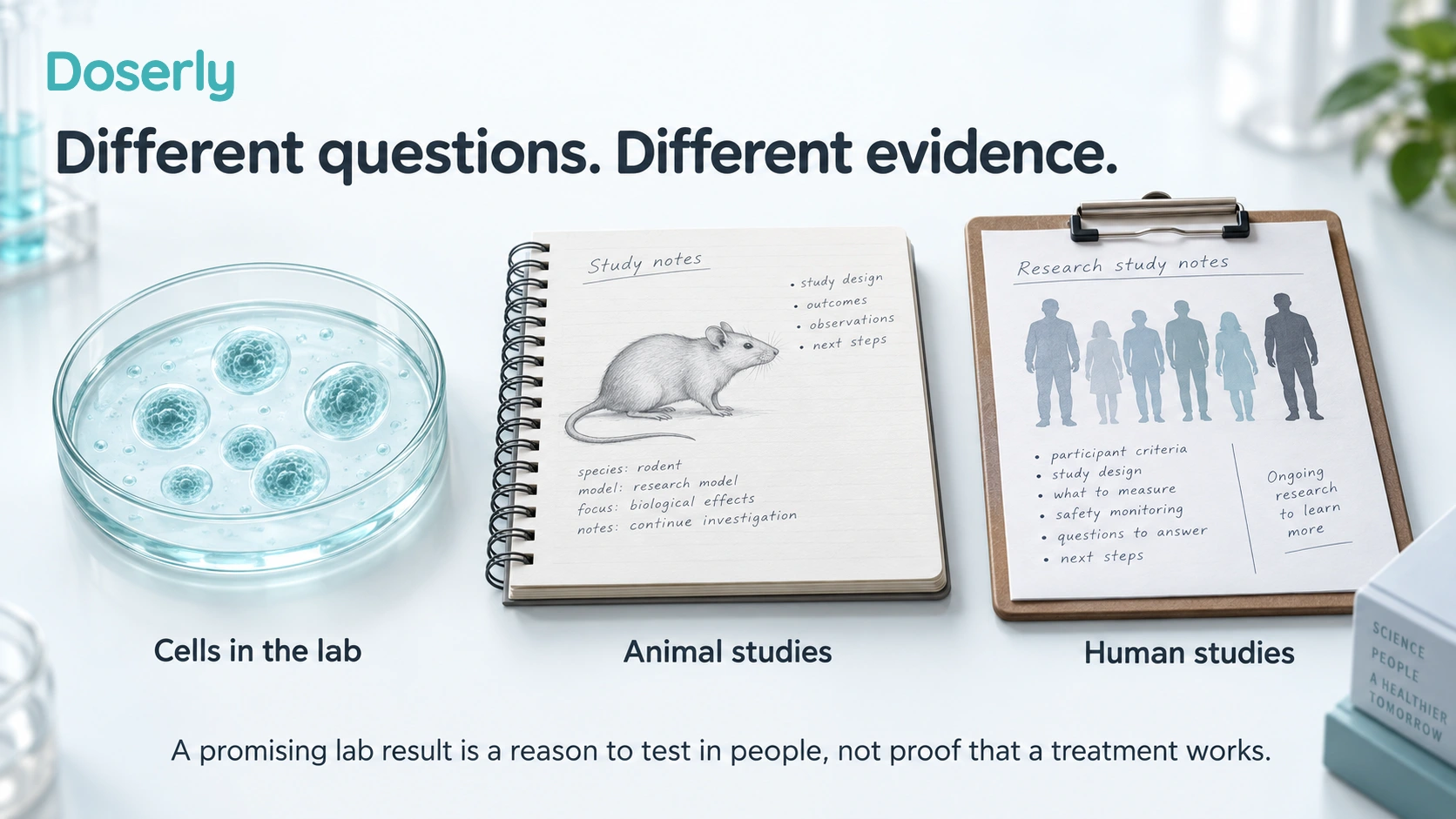
The evidence divides sharply by population. Small trials in disabling cortical myoclonus support a specialist medical role. Trials in dementia, cognitive impairment and memory problems are older, heterogeneous and not convincingly positive on specific cognitive outcomes. There is no robust trial base establishing memory enhancement in healthy adults. [1]–[5]
That divide also shapes safety and regulation. A drug-like compound used at high doses in neurologic care should not be treated as an ordinary capsule from a supplement shelf.
Typical Piracetam Research Protocols
| Study and population | Product and route | Amount each administration | Daily total | Frequency and duration | Main interpretation |
|---|---|---|---|---|---|
| Rameis 1994 · 16 healthy men | Oral test or reference tablet | 1600 mg | 1600 mg | Single fasted administration; 24-hour sampling | Formulation bioavailability study; no cognitive efficacy endpoint |
| Brown 1993 · 21 selected patients with disabling cortical myoclonus | Oral piracetam added to existing therapy in 19 of 21 | Not reported in the indexed abstract | 2.4–16.8 g/day | Daily for each 14-day crossover phase | Multiple myoclonus ratings improved; enriched prior-responder sample |
| Koskiniemi 1998 · 20 people with Unverricht-Lundborg disease | Oral piracetam | 4.8, 8.4 or 12 g | 9.6, 16.8 or 24 g/day | Two divided doses daily; two weeks per phase; placebo plus two of three doses without washout | 24 g/day improved the primary myoclonus score; lower doses improved functional disability |
| Fedi 2001 · 11 people with progressive myoclonus epilepsy | Oral add-on piracetam | Not fixed; titrated in clinical study | Started at 3.2 g/day; maximum 20 g/day | Daily with assessments through 18 months | Open-label myoclonus improvement through 12 months; other neurologic symptoms did not improve |
The 24 g/day trial is often detached from its context online. Participants had a rare progressive myoclonus epilepsy, received specialist assessment, remained on antiepileptic treatment and completed short crossover phases. It does not define an “advanced” cognition dose. Brown's study also selected people who had already appeared to respond before randomization. [3], [4]
- Product identity
- Record authorized medicine versus unverified powder, manufacturer, strength, dosage form and dispensing source.
- Administration
- Separate amount each time from daily total; record divided doses, titration, missed administrations and co-medications.
- Clinical context
- Record indication, kidney function, bleeding risk, neurologic baseline and the clinician-selected endpoint.
What is piracetam commonly used for?
Memory and cognition
The newest synthesis is not persuasive. Gouhie and colleagues included 18 studies and 886 adults with memory impairment. The pooled memory estimate was nonsignificant: standardized mean difference 0.75, with a 95% confidence interval from −0.19 to 1.69 and I² of 96%. The interval includes no effect, and the heterogeneity makes a single average difficult to interpret. [1]
The updated Cochrane review reached a similar practical conclusion from older dementia and cognitive-impairment studies. Global impression favored piracetam, but specific cognitive measures were inconclusive, many crossover data were unusable and the available literature did not support treatment. Neither review establishes enhancement in healthy students or workers. [2]
Cortical myoclonus
This is the coherent clinical signal. Brown's selected 21-person crossover found improved motor, writing, functional-disability and global ratings with piracetam; 10 participants required rescue during placebo and none during piracetam. Most used other antimyoclonic medicines. [3]
Koskiniemi's 20-person crossover in Unverricht-Lundborg disease compared placebo and two of three daily doses. The 24 g/day schedule improved the primary summed myoclonus score, while 9.6 and 16.8 g/day improved functional disability. Fedi's later 11-person open study suggested sustained myoclonus benefit through 12 months, but other neurologic symptoms did not improve. [4], [5]
Three different questions
One compound, separate evidence streams
Mechanism and healthy-user claims
The membrane-fluidity hypothesis is plausible and may help explain stronger effects in impaired tissue than in healthy systems. It remains a mechanism, not proof of better recall, focus or verbal fluency. Healthy-user claims rely heavily on extrapolation and anecdotes rather than modern controlled evidence. [7]
How do forms and labels differ?
Clinical studies used defined oral tablets, solutions or research formulations. Gray-market products may be sold as powder, capsules or imported tablets without the manufacturing controls of an authorized medicine. A milligram label does not establish identity, purity, dissolution or lawful market status.
Avoid treating a research certificate, “pharmaceutical grade” phrase or vendor assay as equivalent to regulator authorization. Where piracetam is a medicine, use the authorized product and dispensing route. Where it is not authorized, online availability does not create a legitimate supplement category.
How should piracetam be stored?
Follow the pharmacy or authorized product label. Keep tablets or solution in the original container, dry and away from children. Do not keep an unlabelled bulk powder beside food or ordinary supplements. Unknown powder stability, identity and contamination cannot be corrected by home storage.
What does the human evidence show?
| Question | Best direct evidence | Finding | Boundary |
|---|---|---|---|
| Does piracetam improve memory impairment? | 18-study 2024 meta-analysis | No significant pooled difference | I² 96%; wide interval and older heterogeneous studies |
| Does it treat dementia or cognitive impairment? | Updated Cochrane review | Specific cognitive evidence inconclusive | Global impression signal did not establish treatment benefit |
| Does it reduce cortical myoclonus? | Small selected crossover trials | Yes, on myoclonus ratings | Rare disease, high doses, co-medication and specialist care |
| Does it enhance healthy cognition? | No strong modern evidence base | Unproven | Clinical impairment data do not transfer |
| Is one retail product equivalent to a trial medicine? | No | Unknown | Identity, purity and authorization can differ |
Protocol boundary
A rare-disease schedule does not transfer to self-use
What are the risks and interactions?
Reported adverse effects include nervousness, agitation, sleepiness, insomnia, headache, dizziness, GI symptoms and weight change. The small myoclonus trials cannot define uncommon harms, and tolerability in monitored neurologic patients does not establish safety of unverified retail products.
Kidney function matters because renal clearance is important and product information in authorized markets commonly adjusts or avoids use with impairment. Piracetam can influence platelet aggregation or bleeding-related physiology; anticoagulants, antiplatelet medicines, bleeding disorders and surgery require clinician review. Thyroid hormone combinations have historical reports of confusion, irritability and sleep disturbance. Seizure or myoclonus treatment must not be altered without the treating neurologist.
Seek prompt care for severe agitation, confusion, unusual bleeding, allergic symptoms, marked neurologic worsening or seizure change. Pregnancy, breastfeeding and pediatric self-use lack a safe consumer evidence base.
What is the legal and regulatory status?
In the United States, FDA's 2019 warning letter states that piracetam is not a dietary supplement or conventional food and does not qualify for the dietary-supplement structure/function exception; FDA has not approved a retail nootropic use. In parts of Europe, piracetam appears as a nationally authorized medicine, with indication and access determined by each country. [8], [9]
In Canada, verify any claimed product in the Drug Product Database or Licensed Natural Health Products Database and follow provincial sale rules. An online listing without a DIN or NPN is not evidence of Canadian authorization. [10]
What happens when you stop?
There is no validated taper for healthy nootropic use because that use is not established. People taking piracetam for myoclonus or another medical indication should not stop suddenly without the neurologist; symptom recurrence can be clinically important. Anecdotal rebound reports do not define a withdrawal syndrome or taper schedule.
What should you monitor?
Medical monitoring depends on indication and jurisdiction. It may include kidney function, neurologic or functional rating, sedation or agitation, sleep, GI effects, bleeding symptoms and interacting medicines. Record seizure or myoclonus changes with the scale and timing selected by the clinician. A self-rated “focus” score cannot replace neurologic assessment.
What does community experience add?
Public reports can surface taste, cost, timing, headaches, sleep changes and sourcing problems. They cannot establish purity, kidney safety, a choline requirement or causal cognitive benefit. No systematic current community sample was assembled, so this guide reports no consensus nootropic dose, cycling schedule or withdrawal rate.
How does piracetam compare with related options?
| Option | Practical distinction | Evidence boundary |
|---|---|---|
| Authorized piracetam medicine | Defined product under a national medicine system | Indication and access remain country-specific |
| Gray-market piracetam | Online powder or capsule without clear medicine authorization | Identity, purity and legal sale may be uncertain |
| Aniracetam or oxiracetam | Related synthetic racetams | Evidence and pharmacology cannot be inherited from piracetam |
| Choline donor | Nutrient ingredient often paired anecdotally | No established requirement to combine with piracetam |
| Established cognitive care | Diagnosis, medicines and non-drug support matched to cause | Has condition-specific evidence and monitoring |
Common questions
Is piracetam a supplement?
Not in the ordinary nutrient sense. FDA has stated it does not qualify as a dietary supplement ingredient, while some European countries regulate piracetam as a medicine. [8], [9]
Does piracetam improve memory?
The 2024 pooled result in adults with memory impairment was not significant and was extremely heterogeneous. Healthy-user enhancement remains unproven. [1]
Why do myoclonus studies look positive?
They studied a disabling neurologic syndrome with high-dose add-on treatment and specialist ratings. That population and endpoint are different from everyday memory or focus. [3]–[5]
Is 24 g/day an advanced nootropic dose?
No. It was a medical-study daily total in Unverricht-Lundborg disease, split into two administrations and tested under specialist care. [4]
Does piracetam require choline?
No controlled evidence establishes a universal requirement. Adding another active product can add adverse effects and confusion.
Does kidney function matter?
Yes. Renal clearance contributes materially, and authorized product directions may adjust use for impairment. [6]
Can piracetam increase bleeding risk?
It can affect platelet-related physiology. People using anticoagulants or antiplatelets, with a bleeding disorder or approaching surgery need clinical review.
Is it banned in sport?
Do not infer permission from absence on a list or from a seller's claim. Check the current rules and product contamination risk through the athlete's governing resources.
Glossary
Plain explanations of piracetam evidence terms.
- Racetam
- A family of synthetic pyrrolidone compounds named after piracetam.
- Myoclonus
- Sudden brief involuntary muscle jerks; cortical myoclonus originates from abnormal cortical activity.
- Unverricht-Lundborg disease
- A rare inherited progressive myoclonus epilepsy studied in a piracetam crossover trial.
- Crossover trial
- A design in which participants receive more than one treatment in successive periods.
- Heterogeneity
- Variation among study results; very high heterogeneity limits confidence in one pooled average.
- Enriched sample
- A study population selected for a trait such as prior apparent response, which can limit generalization.
- DIN
- Canadian Drug Identification Number for an authorized drug product.
How this guide was researched
Eleven PubMed identities were checked live through NCBI EFetch, including title, authors, journal, DOI and descendant publication-status records. The linked Cochrane update replaced the older indexed version for interpretation. Primary abstracts and the available full crossover report supplied exact population, per-administration amount, daily total, phase design and endpoints. FDA, EMA and Health Canada sources supplied jurisdiction-specific status.
Research record · checked October 9, 2026
Identity verification: PMID 38878641 is the 2024 memory meta-analysis; PMID 11405971 the Cochrane update; PMID 8419809 the selected cortical-myoclonus crossover; PMID 9527146 the Unverricht-Lundborg crossover; PMID 11346373 the long open-label study; PMID 7820328 the pharmacokinetic crossover; PMID 10338102 the mechanism review.
Publication status: PMID 11405971 updates PMID 10796585. No other linked erratum, expression of concern or retraction appeared for sources used.
Protocol extraction: 24 g/day is shown as two 12 g administrations in a rare-disease trial, not a consumer recommendation.
Endpoint hierarchy: nonsignificant memory evidence and positive myoclonus ratings remain separate.
Regulatory boundary: online availability does not establish dietary-supplement or medicine authorization.
Explore the sources
Current memory synthesis, primary neurologic trials, pharmacokinetics and official regulatory records.
Showing 10 sources
- 01
Cognitive effects of piracetam in adults with memory impairment: A systematic review and meta-analysis. ↗
Systematic review and meta-analysis
Eighteen studies; nonsignificant memory estimate with 96% heterogeneity.
- 02
Piracetam for dementia or cognitive impairment. ↗
Updated systematic review
Specific cognitive outcomes inconclusive; available evidence did not support treatment.
- 03
Effectiveness of piracetam in cortical myoclonus. ↗
Selected crossover trial
Twenty-one prior apparent responders, mostly on co-medication; multiple myoclonus ratings improved.
- 04
Piracetam relieves symptoms in progressive myoclonus epilepsy: a multicentre, randomised, double blind, crossover study comparing the efficacy and safety of three dosages of oral piracetam with placebo. ↗
Randomized crossover trial
Three high daily totals tested in rare disease; 24 g/day improved the primary myoclonus score.
- 05
Long-term efficacy and safety of piracetam in the treatment of progressive myoclonus epilepsy. ↗
Small open-label add-on study
Myoclonus ratings improved; other neurologic symptoms did not; maximum 20 g/day.
- 06
Pharmacokinetics of piracetam: a study on the bioavailability with special regard to renal and non-renal elimination. ↗
Single-dose bioavailability crossover
Sixteen healthy men received 1600 mg; formulation equivalence, not efficacy.
- 07
Piracetam: novelty in a unique mode of action. ↗
Mechanistic review
Membrane-fluidity hypothesis; does not establish healthy cognitive enhancement.
- 08
Peak Nootropics warning letter ↗
Official enforcement record
States piracetam is not a dietary supplement or conventional food and addresses unauthorized drug claims.
- 09
Piracetam: list of nationally authorised medicinal products ↗
Official medicine record
Documents country-specific nationally authorized piracetam medicines.
- 10
Drug Product Database ↗
Official product database
Used to verify whether a claimed Canadian drug product has a current DIN and status.
No matching sources
Try a different term or show the full list.
Editorial note
This guide keeps memory impairment, healthy enhancement and specialist myoclonus treatment separate. It does not convert high-dose neurologic trials into self-experimentation instructions.