
In this guide
What is potassium?
Potassium is a positively charged mineral required for cell membrane voltage, nerve signaling, muscle contraction and fluid balance. Most intake comes from foods such as potatoes, beans, lentils, dairy, fruit and vegetables.
A low food intake, a low blood potassium concentration and a prescription for potassium are different problems. Serum potassium is tightly regulated and does not directly measure total dietary adequacy. Replacement after a diuretic loss or in kidney disease belongs in clinical care.
Typical Potassium Protocols
| Purpose or population | Form and amount each time | Frequency | Total per day | Duration |
|---|---|---|---|---|
| U.S. AI · men age 19+ | Food, beverages and supplements combined | Across the day | 3,400 mg elemental potassium | Ongoing reference intake |
| U.S. AI · women age 19+ | Food, beverages and supplements combined | Across the day | 2,600 mg elemental potassium | Ongoing reference intake |
| TOHP adults with high-normal diastolic pressure | Potassium chloride; amount per administration not reported in the accessible abstract | Daily; number of administrations not reported | 60 mmol potassium/day (about 2,346 mg elemental potassium) | 6 months |
The AIs describe total usual intake, not a supplement prescription. The TOHP amount is a trial total in a screened population; this guide does not infer tablet count or administration frequency that the accessible primary abstract does not state. [1], [2]
How the units were handled
NIH ODS provides the adult AIs and their total-intake scope. [1] TOHP reports 60 mmol potassium per day. Using potassium’s molar mass, 1 mmol potassium is about 39.1 mg, so 60 mmol is about 2,346 mg elemental potassium. This conversion does not make the trial a self-care regimen.
Three lines, three meanings
Keep the chemical form and the source’s original schedule attached.
Conversion preserves units; it does not convert a research regimen into a recommendation.
Should potassium be cycled?
No general cycle is evidence based. The need depends on diet, losses, kidney handling and medicines. Planned breaks do not make an excessive dose safe; a prescribed course should follow its monitoring plan.
What happens when potassium is stopped?
There is no withdrawal syndrome. If an ongoing loss or low intake persists, potassium can fall again. Abruptly changing prescribed replacement or a potassium-retaining medicine without clinical guidance can be hazardous.
Which foods provide potassium?
Potatoes, beans, lentils, squash, leafy vegetables, yogurt, milk, bananas, dried fruit, fish and meat all contribute. Food-first intake distributes potassium across meals and supplies other nutrients. People with kidney disease may need an individualized food plan rather than a generic “eat more potassium” message.
Which potassium forms are used?
Potassium chloride provides potassium and chloride and is common in research, prescriptions and salt substitutes. Potassium citrate or bicarbonate changes the accompanying anion and may be used for specific urinary indications. Potassium gluconate and other salts deliver different percentages of elemental potassium.
Read the elemental potassium line rather than comparing salt weights. Do not use a potassium chloride salt substitute as if it were ordinary table salt when kidney function or medicines raise hyperkalemia risk.
How should potassium be stored?
Keep the original labeled container dry and away from children. Do not transfer powders or salt substitutes into an unlabeled shaker.
What is potassium commonly used for?
People use potassium for perceived dietary gaps, blood pressure, cramps, sweating or replacement while taking a diuretic. Each use needs a different assessment. Cramps alone do not diagnose potassium deficiency, and a food-intake recommendation is not equivalent to treatment of hypokalemia.
What does human research show?
TOHP randomized 353 men and women with average diastolic blood pressure of 80–89 mm Hg to potassium chloride 60 mmol/day or placebo. At three months, diastolic pressure was 1.8 mm Hg lower with potassium; at six months the difference was 0.3 mm Hg and no longer meaningful. Systolic pressure did not differ at either visit. [2]
A 2020 dose-response meta-analysis included 32 randomized trials lasting at least four weeks, mostly in adults with hypertension, with supplement doses of 30–140 mmol/day. The relationship was nonlinear: benefit weakened above an exposure difference around 30 mmol/day, and high-exposure estimates were uncertain. Effects varied with hypertension, sodium intake and antihypertensive treatment. [3]
How does potassium work?
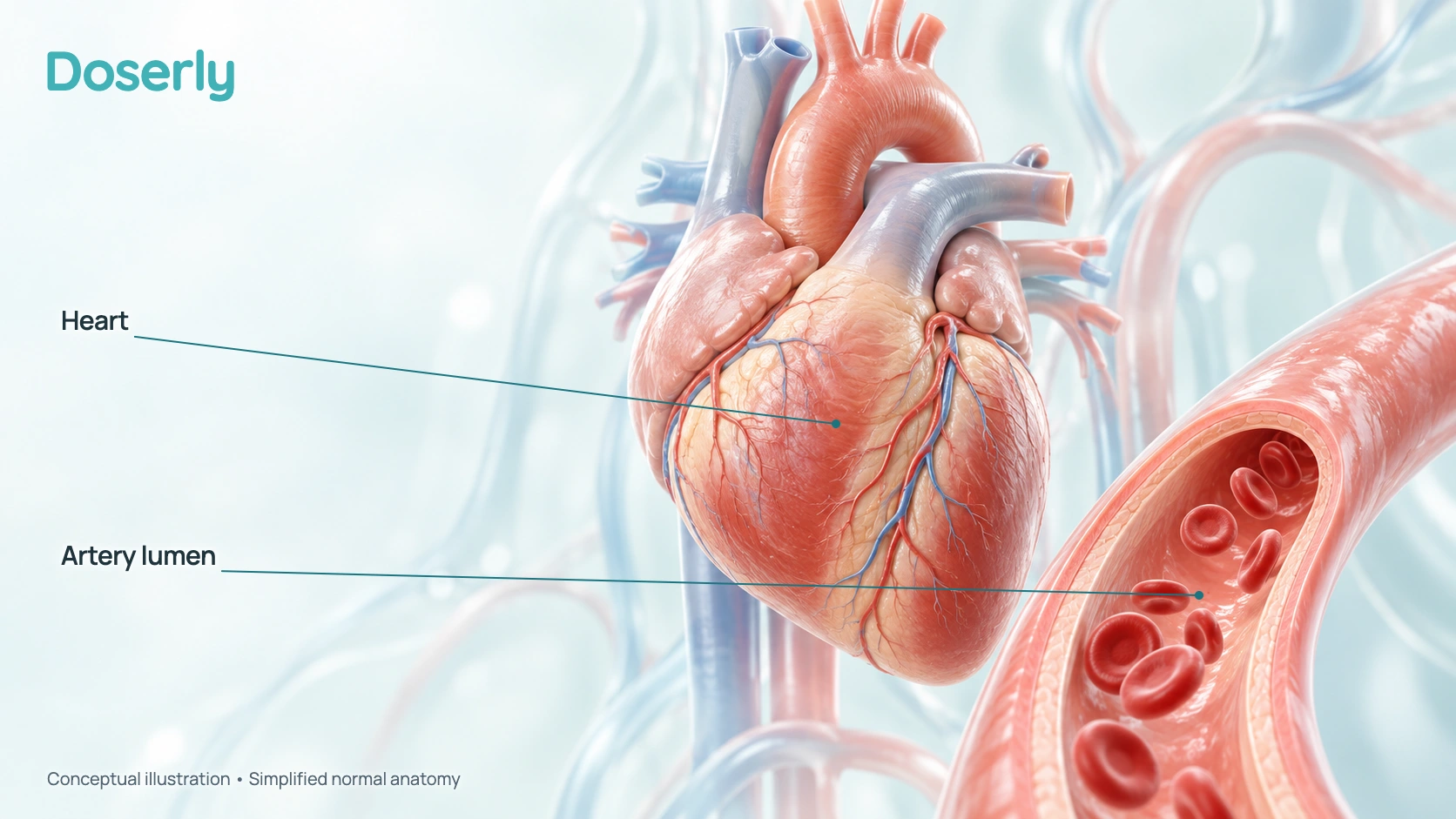
Potassium gradients across cell membranes help generate electrical signals in nerves, skeletal muscle and heart. The kidneys regulate potassium balance through filtration and secretion, influenced by aldosterone, sodium delivery and medicines. This explains why impaired excretion can turn supplementation into an acute rhythm risk.
What are the risks and interactions?
Too much circulating potassium can cause weakness, conduction abnormalities and dangerous arrhythmias, sometimes without early symptoms. Risk rises with chronic kidney disease, acute kidney injury, adrenal insufficiency, heart failure and diabetes in some contexts. Concentrated salts can also irritate the gastrointestinal tract. [1]
No UL was set because evidence was insufficient for healthy people; this must not be read as “unlimited.” In the United States, warnings apply to certain oral potassium drugs over 99 mg because of small-bowel injury reports, a rule that should not be misrepresented as a universal safe supplement ceiling. [1]
In the United States, dietary supplements generally lack FDA premarket approval for safety or efficacy. In Canada, natural health products require licensing and authorized labels carry an NPN or DIN-HM. [4], [5]
Health Canada’s current Prescription Drug List includes potassium citrate when recommended to treat renal tubular acidosis and kidney stones. That indication-specific status does not classify every potassium product and does not create a supplement intake limit. [6]
Which medicines interact with potassium?
ACE inhibitors, angiotensin-receptor blockers and potassium-sparing diuretics reduce potassium excretion and can cause hyperkalemia. Loop and thiazide diuretics can increase losses and cause hypokalemia. NSAIDs and other medicines can also matter when kidney function is reduced. [1]
What should be monitored?
For clinician-directed replacement, monitoring may include serum potassium, creatinine/eGFR, acid-base context, medicines and the cause of the abnormal result. Blood pressure research does not justify self-titrating to a potassium number. Seek urgent care for severe weakness, palpitations, fainting or suspected large ingestion.
What do public communities report?
People discuss cramps, salt substitutes, blood pressure and the small amount printed on retail labels. These reports rarely include kidney function, medicines, total food intake or laboratory confirmation. This overhaul did not independently recrawl or quantify community posts.
How does potassium compare with nearby guides?
| Guide | Main question | Key difference |
|---|---|---|
| Sodium/electrolyte formulas | Fluid and sodium replacement | Context depends on losses, fluid volume and duration |
| Magnesium | Intake and supplemental forms | Supplemental UL applies to certain sources and diarrhea is common |
| Calcium | Bone and total intake | Different absorption, stone and cardiovascular questions |
| Taurine | Sulfonic acid derivative | Not a substitute for potassium deficiency treatment |
Common questions about potassium
Is the adult AI a supplement dose?
No. It is a total daily intake reference from food, beverages and supplements. [1]
Does potassium have an upper limit?
No UL was established for healthy people, but kidney disease and medicines can make much lower intake dangerous. [1]
Is 60 mmol the same as 60 mg?
No. Sixty mmol of potassium is about 2,346 mg elemental potassium.
Did TOHP lower blood pressure for six months?
The small diastolic difference at three months had largely disappeared by six months, and systolic pressure did not improve. [2]
Can potassium fix exercise cramps?
Cramps are not a specific diagnosis. Fluid, sodium, fatigue, heat and other factors may contribute.
Are salt substitutes always safer than sodium chloride?
No. Potassium chloride can be dangerous when excretion is impaired.
Should potassium be taken with an ACE inhibitor?
Only with individualized clinical review and monitoring because the combination can cause hyperkalemia. [1]
Glossary
Plain explanations of potassium terms.
- Adequate Intake (AI)
- A reference used when evidence is insufficient to establish an RDA; it is not a treatment dose.
- Elemental potassium
- The mass of potassium itself, excluding the accompanying chloride, citrate or other salt component.
- Millimole (mmol)
- A chemical-amount unit; for potassium, 1 mmol is about 39.1 mg elemental potassium.
- Hyperkalemia
- An abnormally high blood potassium concentration that can impair cardiac conduction.
- Hypokalemia
- An abnormally low blood potassium concentration requiring cause-specific assessment.
- eGFR
- An estimate of kidney filtration used with clinical context to assess renal function.
How this guide was researched
This draft uses the current NIH potassium monograph, the primary TOHP potassium trial, a dose-response meta-analysis and current U.S./Canadian regulatory pages. Relevant source text was retrieved and read on October 9, 2026.
How this guide was made
Research and drafting were AI-assisted. This draft awaits Doserly editorial and independent clinical review. Doserly makes a tracking app and operates Doserly Academy. Read the editorial policy.
Explore the sources
Intake references, a single trial, pooled blood-pressure evidence and regulation answer different questions.
Showing 6 sources
- 01
Potassium — Health Professional Fact Sheet ↗
Official nutrient monograph
Current identity, intake, food, no-UL rationale, risk and medicine-interaction sections reviewed.
Detail: Adult AI 3,400 mg men and 2,600 mg women; no UL established; kidney impairment and potassium-retaining medicines can cause hyperkalemia below the AI.
- 02
The effect of potassium supplementation in persons with a high-normal blood pressure. Results from phase I of the Trials of Hypertension Prevention (TOHP). Trials of Hypertension Prevention (TOHP) Collaborative Research Group. ↗
Randomized placebo-controlled trial
Primary abstract, daily total, population and 3- and 6-month outcomes reviewed.
Detail: 353 adults; KCl 60 mmol/day; diastolic difference 1.8 mm Hg at 3 months and 0.3 at 6 months; no systolic effect.
- 03
Potassium Intake and Blood Pressure: A Dose-Response Meta-Analysis of Randomized Controlled Trials. ↗
Dose-response meta-analysis of randomized trials
Trial count, duration threshold, dose range, nonlinear findings and subgroup limitations reviewed.
Detail: 32 trials lasting at least 4 weeks, mostly hypertension; 30–140 mmol/day; nonlinear response and caution at high intake.
- 04
Questions and Answers on Dietary Supplements ↗
Regulatory overview
Current official page reviewed.
Detail: General U.S. supplement framework.
- 05
Product Licensing ↗
Regulatory overview
Current official page reviewed.
Detail: Canadian natural-health-product licensing and NPN or DIN-HM.
- 06
Prescription Drug List ↗
Canadian ingredient/status qualifiers
Current official row and qualifier reviewed.
Detail: Potassium citrate is prescription when recommended to treat renal tubular acidosis and kidney stones; the qualifier is indication-specific and not a nutrition limit.
No matching sources
Try a different term or show the full list.