
In this guide
What is shilajit?
Shilajit is a dark, complex exudate collected from rock formations in several mountain regions and used in Ayurvedic traditions. It contains a changing mixture of humic fractions, small organic compounds and minerals. Geography, raw material, extraction and purification alter the finished composition.
Clinical evidence therefore applies to the named processed or standardized preparation, not to every resin, powder or capsule sold as shilajit. Purity and efficacy are separate questions: a certificate can help characterize contaminants, but it does not prove a health outcome.
Typical Shilajit Research Protocols
| Source and context | Form and amount each time | Frequency | Total daily exposure | Duration |
|---|---|---|---|---|
| Pandit 2016 · androgen measures · healthy men aged 45–55 | Purified shilajit 250 mg per administration | Twice daily | 500 mg/day | 90 consecutive days |
| Keller 2019 · post-fatigue strength · 63 recreationally active young men | PrimaVie capsule 250 mg or 500 mg | Once daily | 250 or 500 mg/day | 56 days |
| Biswas 2010 · oligospermia · 35 enrolled, 28 completed | Processed shilajit capsule 100 mg | Twice daily after major meals | 200 mg/day | 90 days |
| Pingali 2022 · osteopenia · 60 postmenopausal women aged 45–65 | Standardized aqueous extract; per-administration amount not reported in accessible abstract | Daily; number of administrations not reported | 250 or 500 mg/day | 48 weeks |
These schedules are not interchangeable. The androgen trial did not test symptoms or treatment of diagnosed low testosterone. The strength trial used one capsule daily and its favorable result centered on an upper-strength subgroup. The fertility study compared participants with their own baseline, not with a concurrent placebo group. The bone study measured BMD and biomarkers, not fractures. [1]–[4]
Keep the study attached to the preparation
“Shilajit” alone is not enough information to transfer a finding.
Processed or purified extract, specification and exact mass.
Per-administration amount, frequency, total and duration.
Hormone lab, fatigue test, semen measure or BMD—not “vitality.”
A result transfers only as far as the study’s product, population, design and endpoint allow.
Should shilajit be cycled?
No controlled study establishes a cycle. The trials used continuous schedules from 56 days to 48 weeks. A planned review point can limit open-ended exposure, but it is not evidence for a physiological “reset.”
What happens when it is stopped?
No shilajit withdrawal syndrome is established. Hormone, BMD or performance measurements after discontinuation were not characterized well enough to predict persistence.
Do foods provide shilajit?
Shilajit is not a food nutrient and has no dietary requirement. Meals can supply protein, minerals and energy without reproducing this geological mixture. Mineral content on a shilajit label should be counted as measured exposure, not treated as an essential benefit of the category.
Which forms and quality details matter?
Purified standardized extracts identify a processing method and sometimes a minimum fulvic fraction. Processed shilajit was used in the uncontrolled fertility study. Resins, powders and liquids vary in water content and composition; “pea-sized” is not a reproducible amount. Raw exudate lacks the controlled identity used in the trials.
Match the label to the paper: preparation or trademark, extraction, fulvic/humic specification, capsule mass, other ingredients and lot number. Request a current lot certificate with quantitative lead, arsenic, cadmium, mercury and, where offered, thallium results plus microbial testing. A pass/fail badge without values, units and methods is weak evidence.
How should it be stored?
Follow the finished-product label. Close resins and powders tightly, protect them from moisture and heat, and retain the lot number and certificate. Discard products with a broken seal, unexplained odor, visible growth or composition that cannot be verified.
What is shilajit commonly used for?
Common goals include energy, exercise performance, testosterone, male fertility, bone health and healthy aging. The human evidence is small and outcome-specific. It does not establish a general vitality effect, treat endocrine disease or replace osteoporosis care.
Claims about ATP, antioxidant action or mineral transport often rely on laboratory or animal work. Those mechanisms can motivate research but do not predict a noticeable effect in an individual or justify adding an untested resin.
What does human research show?
The 90-day Pandit trial supports a change in laboratory androgen measures with one purified product in healthy men aged 45–55. The paper does not establish treatment of symptomatic hypogonadism, improved fertility, muscle gain or safety beyond 90 days. [1]
Keller randomized 63 recreationally active young men to 250 mg, 500 mg or placebo once daily for 56 days. The 500 mg group had a smaller post-fatigue decline in maximal voluntary contraction in the upper-strength subgroup. Pre-fatigue strength, peak torque and body weight were not improved. Natreon, the extract manufacturer, funded the study. [2]
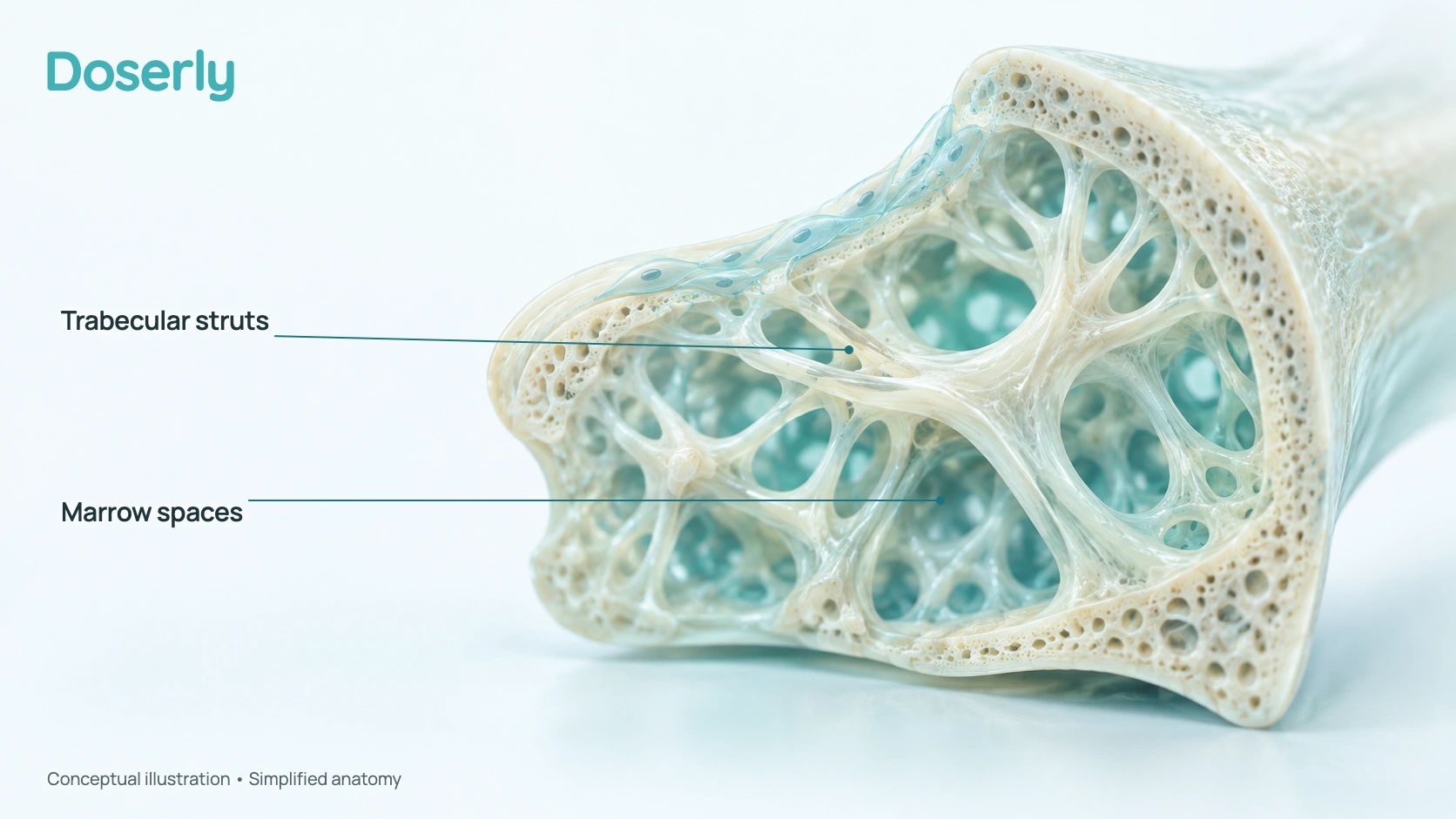
In 60 postmenopausal women with osteopenia, 250 or 500 mg total daily for 48 weeks attenuated lumbar-spine and femoral-neck BMD loss versus placebo and changed bone-turnover, inflammatory and oxidative-stress markers. It was one extract in a selected population and did not measure fractures. [4]
The oligospermia study reported improved semen and hormone measures after processed shilajit 100 mg twice daily for 90 days in 28 completers. Without a concurrent control, causality remains uncertain. [3]
How might shilajit act?
Shilajit contains multiple fractions that can participate in redox and ion-binding chemistry in laboratory systems. Animal and cell studies have explored mitochondrial, inflammatory and collagen-related pathways. Human trials measured hormones, strength under fatigue, BMD and biomarkers, but they do not isolate fulvic acid as the active cause.
Do not convert the extract mass into a “fulvic-equivalent dose” and assume it predicts response. The remaining matrix, purification and other constituents differ.
What are the risks and interactions?
Short trials of specified processed extracts reported limited adverse effects, but pregnancy, breastfeeding, children, chronic use and many medical conditions remain understudied. Hormone-related use deserves extra caution in people undergoing fertility or endocrine evaluation because supplementation can complicate interpretation.
What did contaminant studies find?
Kamgar 2025 found thallium up to 0.226 µg/g in sampled crude material and up to 0.5 µg/g in sampled supplements; the highest tablet contained 0.095 µg. Some tested supplements exceeded sampled crude material. These figures describe those samples and do not estimate prevalence across the market. [5]
A separate two-sample analysis reported lead, arsenic, mercury and other elements, with several above the comparison limits used by the authors. Its small sampling prevents a market-wide rate. [6]
Which medicines interact?
Reliable human interaction studies are lacking. Review the exact product with a pharmacist if taking hormone therapy, fertility medicines, anticoagulants, diabetes medicines or drugs affected by kidney or liver function. A variable mineral mixture also complicates medicines that bind polyvalent cations. Use medicine-specific separation advice; do not invent one rule for every drug.
Legal and regulatory status: In the United States, dietary supplements are not FDA-approved for efficacy before sale. FDA also warns about heavy-metal poisoning from certain unapproved Ayurvedic drug products, but that notice is not a shilajit-specific market survey. In Canada, a licensed natural health product has an NPN or DIN-HM tied to its finished formula and label. [7], [8], [9]
What should be monitored?
Record the exact product, lot, certificate date, amount per administration, frequency and intended outcome. Use the same validated measure at baseline and a prespecified review date. For testosterone or fertility goals, clinician-directed morning hormone and semen testing has timing and repeat-testing requirements; a single result should not guide self-treatment.
If there is a credible exposure concern, clinicians or poison-control specialists can select appropriate elemental testing. Do not order broad “heavy-metal panels” or chelation treatment solely because shilajit was used.
Seek urgent care or poison-control advice for severe abdominal pain, persistent vomiting, confusion, new weakness or numbness, collapse, or a suspected contaminated product exposure.
What do public communities report?
People discuss energy, libido, exercise, taste and resin authenticity. Reports rarely identify the assayed lot or distinguish a standardized extract from raw resin. This overhaul did not independently recrawl or quantify community posts.
How does shilajit compare?
| Guide | Main question | Key difference |
|---|---|---|
| Fulvic and humic acid | Isolated or blended humic fractions | Does not inherit whole-shilajit trial outcomes |
| Trace mineral drops | Multi-mineral concentrates | Label completeness and elemental overlap dominate |
| Boron | Defined trace element | No validated bone regimen; separate elemental exposure |
| Vitamin D3 | Nutrient status and skeletal health | Defined nutrient with intake references and clinical testing |
Common questions about shilajit
Is raw shilajit better?
Human findings came from processed or purified preparations. Raw material does not match those products and can have less controlled composition.
Does shilajit raise testosterone?
One randomized trial found higher laboratory measures in healthy men aged 45–55 after purified shilajit 250 mg twice daily for 90 days. That does not establish treatment of hypogonadism or symptom benefit. [1]
Does it build strength?
The Keller trial found less post-fatigue decline in an upper-strength subgroup at 500 mg once daily; it did not improve pre-fatigue strength or body weight. [2]
Does it prevent fractures?
No fracture outcome was tested. The osteopenia trial measured BMD and biomarkers. [4]
Is there an evidence-based universal dose?
No. Trial schedules ranged from 100 mg twice daily of processed product to 500 mg once daily of a standardized extract, for different populations and outcomes.
Does 50% fulvic acid make products equivalent?
No. A single percentage does not capture the rest of the mixture, process, purity or lot composition.
Are all products contaminated?
The analytical studies found toxic elements in sampled products but did not estimate the prevalence across all products. [5], [6]
What certificate should I request?
A current lot-specific report with quantitative results, units, methods and limits for identity, declared fractions, lead, arsenic, cadmium, mercury, relevant microbes and preferably thallium.
Glossary
Plain explanations of shilajit evidence and quality terms.
- Processed shilajit
- Material treated to remove or reduce impurities; the process and resulting composition still need documentation.
- Standardized extract
- A preparation adjusted or specified to contain a stated amount of one or more marker fractions.
- Fulvic fraction
- A heterogeneous operational fraction of humic material, not one active molecule.
- Bone mineral density
- A measurement of mineral content per projected bone area; it is a surrogate and not the same as a fracture outcome.
- MVIC
- Maximal voluntary isometric contraction, used in the cited exercise fatigue protocol.
- Certificate of analysis
- A lot-specific document reporting test methods and results for identity, content and contaminants.
- Thallium
- A toxic element measured in the cited shilajit sampling study.
How this guide was researched
This draft uses live NCBI metadata for four human studies and two elemental-analysis papers. Open full methods were read for the Keller exercise trial and the 2025 thallium study; accessible primary abstracts were used where full text was unavailable, and unreported administration frequency was left unreported. Official FDA and Health Canada regulatory pages were read directly. NCBI CommentsCorrections fields showed no correction relation on October 9, 2026 for the six audited PubMed records.
How this guide was made
Research and drafting were AI-assisted. This draft awaits Doserly editorial and independent clinical review. Read the editorial policy.
Explore the sources
Human findings and contaminant measurements remain preparation- and sample-specific.
Showing 9 sources
- 01
Clinical evaluation of purified Shilajit on testosterone levels in healthy volunteers. ↗
Randomized double-blind placebo-controlled trial
Live NCBI metadata, abstract, dosing schedule and CommentsCorrections checked.
Detail: Healthy men aged 45–55; purified shilajit 250 mg twice daily for 90 days; laboratory androgen outcomes.
- 02
The effects of Shilajit supplementation on fatigue-induced decreases in muscular strength and serum hydroxyproline levels. ↗
Randomized double-blind placebo-controlled trial
Live NCBI identity/CommentsCorrections and full methods/results/funding read.
Detail: 63 young active men; 250 or 500 mg in one capsule daily for 56 days; Natreon funded; favorable fatigue result centered on stronger subgroup.
- 03
Clinical evaluation of spermatogenic activity of processed Shilajit in oligospermia. ↗
Uncontrolled pre/post human study
Live NCBI metadata, abstract and CommentsCorrections checked for enrollment, completion and exact schedule.
Detail: 35 oligospermic men enrolled, 28 completed; processed shilajit 100 mg twice daily after major meals for 90 days.
- 04
Shilajit extract reduces oxidative stress, inflammation, and bone loss to dose-dependently preserve bone mineral density in postmenopausal women with osteopenia: A randomized, double-blind, placebo-controlled trial. ↗
Randomized double-blind placebo-controlled trial
Live NCBI identity/CommentsCorrections and primary abstract checked; administrations per day were not reported in the accessible abstract.
Detail: 60 postmenopausal women with osteopenia; 250 or 500 mg total daily for 48 weeks; BMD and biomarker outcomes, not fractures.
- 05
Quantifying of thallium in Shilajit and its supplements to unveil the potential risk of consumption of this popular traditional medicine. ↗
Analytical sampling study
Live NCBI identity/CommentsCorrections and full methods/results read for sampled crude materials, supplements and per-tablet thallium.
Detail: Up to 0.226 µg/g in sampled crude material, 0.5 µg/g in supplements and 0.095 µg in the highest tablet; no market prevalence estimate.
- 06
Rapid Determination and Quantification of Nutritional and Poisonous Metals in Vastly Consumed Ayurvedic Herbal Medicine (Rejuvenator Shilajit) by Humans Using Three Advanced Analytical Techniques. ↗
Two-sample elemental-analysis study
Live NCBI metadata, abstract and CommentsCorrections checked; sample scope kept explicit.
Detail: Indian- and Pakistani-source samples were analyzed with LIBS, ICP and EDX; findings do not establish market prevalence.
- 07
FDA warns about heavy metal poisoning associated with certain unapproved ayurvedic drug products ↗
Official Ayurvedic-product warning
Current official page read for heavy-metal hazard, symptoms and scope; it is not a shilajit-specific survey.
Detail: Product-specific FDA testing and class-context warning; no claim that FDA tested the shilajit samples cited here.
- 08
Questions and Answers on Dietary Supplements ↗
U.S. regulatory overview
Official page reviewed for premarket approval and manufacturer responsibility.
Detail: Supplement sale does not establish FDA-approved efficacy.
- 09
Product Licensing ↗
Canadian licensing overview
Official page reviewed for NPN/DIN-HM product identification.
Detail: Authorization applies to the licensed finished product and label.
No matching sources
Try a different term or show the full list.