
In this guide
What is SOD?
Superoxide dismutases are enzymes that convert superoxide radicals into hydrogen peroxide and oxygen. Other enzyme systems still have to clear the peroxide. Humans already produce several SOD forms in different cellular locations; dietary supplements generally provide plant-derived SOD, often from melon concentrate.
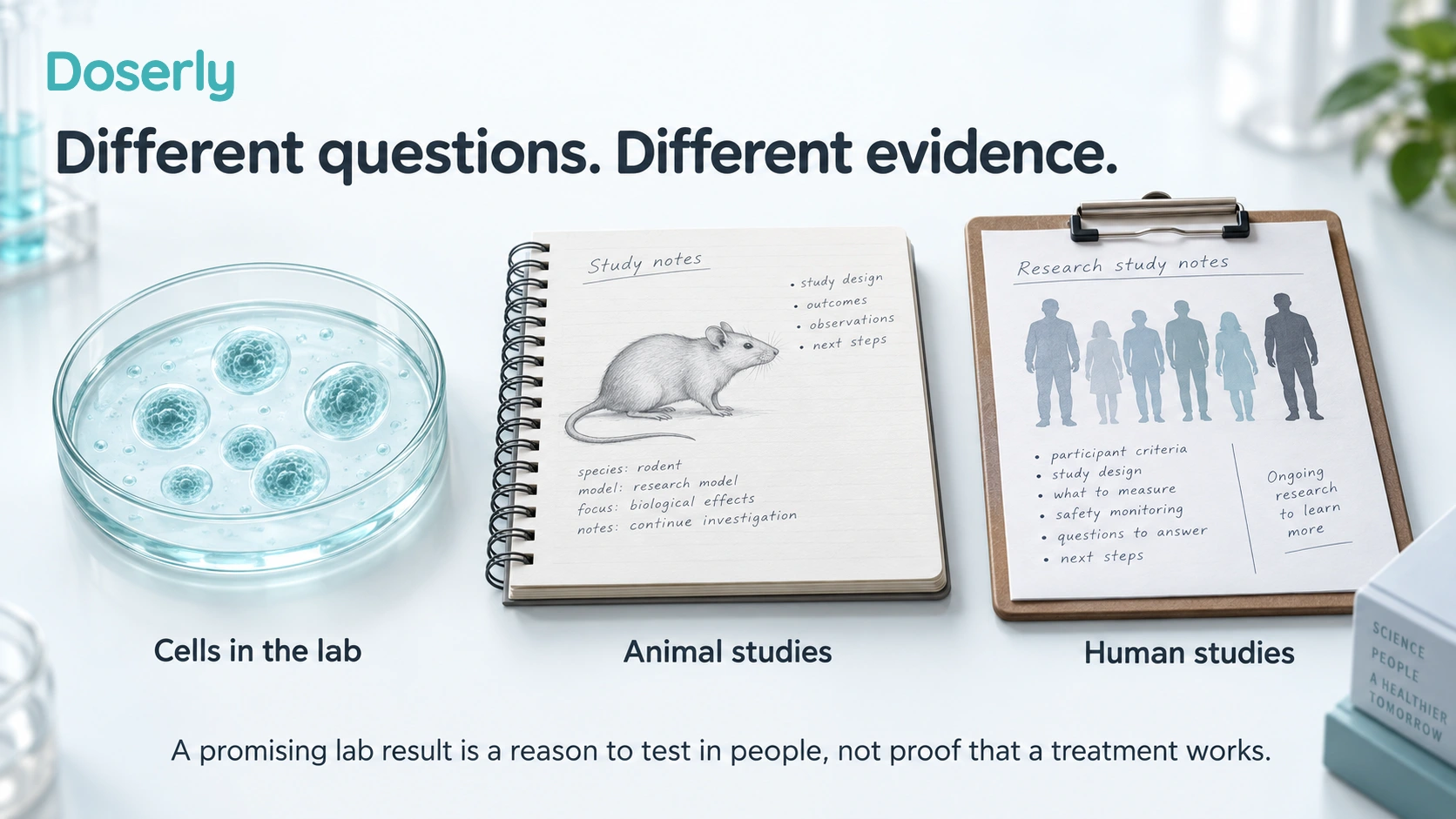
That established biology does not answer whether an intact oral enzyme survives digestion, reaches a relevant site or improves a clinical outcome. Formulations use carriers such as wheat gliadin to address delivery, which makes evidence specific to the tested finished product. In three small trials, one product improved selected questionnaire scores, one failed to improve fatigue or biochemical markers, and one produced no significant between-group physical-function result at six months. [1]–[3]
Typical SOD Protocols
| Study and population | Product | Amount each administration | Daily total | Frequency and duration | Main interpretation |
|---|---|---|---|---|---|
| Carillon 2014 · 61 healthy adults | Melon SOD concentrate capsule | 10 mg concentrate providing 140 U SOD | 10 mg concentrate / 140 U SOD | Once daily for 12 weeks | Selected stress, quality-of-life and fatigue scales favored the product; small industry-linked trial |
| Houghton 2011 · 38 women aged 50–65 with self-perceived fatigue | Thermolabile gliadin-combined plant SOD extract | Not reported in abstract | 500 mg/day | Administration count not reported; 12 weeks | No significant fatigue, antioxidant, oxidative-stress or hormone benefit |
| Koike 2022 · 46 women aged 50–80 with knee or low-back discomfort | Melon GliSODin | 500.4 mg as six capsules | 500.4 mg/day | Once daily before breakfast for 6 months | No statistically significant between-group outcomes at six months |
These rows are study records, not a single dosing ladder. The 10 mg value describes melon concentrate and the 140 U value describes measured enzyme activity. The 500 and 500.4 mg values describe different finished preparations. Ranking them by milligrams would create a false dose-response comparison.
The Carillon study gave one capsule daily. The Houghton abstract reports a daily total without an administration count. Koike’s full methods report six capsules totaling 500.4 mg once daily before breakfast. [1]–[3]
- Finished product
- Record the named melon extract, carrier and full ingredient list; evidence does not transfer automatically between products.
- Dose unit
- Keep product mass, concentrate mass and enzyme units in separate fields.
- Outcome
- Choose a validated fatigue, stress or function measure before reviewing the timeline; a laboratory antioxidant marker is a different endpoint.
What is SOD commonly used for?
Stress and fatigue
In 61 healthy people, one daily capsule containing 10 mg melon SOD concentrate and 140 U SOD for 12 weeks favored active product on selected perceived-stress, quality-of-life and fatigue scales. The trial was small, used multiple psychometric outcomes, and four of five authors were affiliated with ingredient companies. It supports a product-specific research signal, not a general SOD effect. [2]
A separate 38-person trial is an important counterweight. Its 500 mg/day gliadin-combined plant extract did not significantly improve general fatigue, other fatigue domains, antioxidant activity, oxidative-stress measures or hormones over 12 weeks. [1]
Joint discomfort and physical function
The six-month Melon GliSODin study enrolled 46 older women with knee or low-back discomfort. The report discusses tendencies and within-group changes, but no outcome differed significantly between groups at six months. Within-group improvement cannot establish that the supplement caused the change. [3]
Antioxidant and healthy-aging claims
SOD enzyme chemistry is real. However, lowering an unspecified concept called “oxidative stress” is not a patient outcome, and the null Houghton biochemical findings limit broad antioxidant claims. No human oral-SOD trial shows slower biological aging, fewer age-related diseases or longer life.
Small-trial map
The finished product changes the answer
Mass, enzyme units and carrier are not interchangeable dose measures.
How do forms and labels differ?
Superoxide dismutase is a protein enzyme, not one small-molecule antioxidant. Labels may identify melon concentrate, SOD enzyme activity in units, a wheat-gliadin complex, product mass or a proprietary blend. These are not equivalent quantities. A label that lists only total blend mass cannot confirm the SOD amount or activity.
Gliadin is used as a delivery carrier in some products. A carrier may change digestion and exposure, but it also makes wheat origin and allergen information relevant. Evidence from GliSODin or another named formulation should remain attached to that product.
Oral delivery check
Three questions before an outcome claim
Endogenous SOD activity does not prove that an oral product reaches or changes the same system.
How should SOD supplements be stored?
Follow the finished product’s label. Keep capsules sealed, dry and protected from heat and direct light. Enzyme proteins and carrier systems can be sensitive to moisture or temperature, but a general rule cannot replace product-specific stability instructions. Discard products with a damaged seal, moisture, unusual odor or an expired date.
What does the human evidence show?
| Question | Evidence | Finding | Boundary |
|---|---|---|---|
| Does one melon-SOD product change perceived stress or fatigue? | 61-person, 12-week RCT | Selected scales favored active product | Small, multiple outcomes, industry-linked |
| Does a 500 mg/day SOD/gliadin product reduce fatigue? | 38-person, 12-week RCT | No | Small sample of women; product-specific |
| Does 500.4 mg/day improve locomotive outcomes? | 46-person, 6-month RCT | No significant between-group outcome | Tendencies and within-group changes are not treatment effects |
| Does oral SOD increase lifespan? | No human lifespan trial | Not established | Enzyme mechanism cannot substitute for outcomes |
The evidence does not form a clean dose-response curve. Each study used a different finished product and reported different units. The most defensible conclusion is that one defined formulation generated a questionnaire signal that requires independent replication, while two other small trials did not demonstrate their target benefit. [1]–[3]
What are the risks and interactions?
Small trials cannot define uncommon or long-term harms. Digestive upset, headache, rash or another new symptom should be recorded. Stop and seek urgent care for breathing difficulty, swelling, fainting or another severe allergic reaction.
Some oral SOD products use wheat gliadin. People with celiac disease, wheat allergy or a medically prescribed gluten-free diet should check the complete label and manufacturer allergen information rather than assuming that “enzyme” means wheat-free. Multi-ingredient antioxidant blends add each co-ingredient’s risks and interactions.
Pregnancy, breastfeeding, childhood use, kidney or liver disease, immune disorders, planned surgery and complex medication regimens warrant clinician review because direct evidence is sparse. Oral SOD supplements are unrelated to tofersen, an intrathecal prescription drug that targets SOD1 messenger RNA in genetically defined ALS; the names do not make them interchangeable treatments.
What is the legal and regulatory status?
In the United States, oral SOD products marketed as supplements fall under the dietary-supplement framework. Manufacturers are responsible for safety and compliant labeling before marketing, and FDA can act against adulterated or misbranded products after marketing. SOD supplements are not FDA-approved to treat fatigue, pain, ALS or aging. [5]
In Canada, a product sold as a natural health product requires authorization and should carry an NPN or DIN-HM. Authorization of a particular product does not establish that every SOD formulation shares its enzyme activity, carrier or clinical evidence. [6]
What happens when you stop?
Oral SOD has no established withdrawal syndrome and no evidence-based taper. A perceived questionnaire or symptom change may move toward baseline after stopping. New or persistent fatigue, weakness, pain or neurological symptoms need assessment for their cause rather than repeated supplement cycling.
What should you monitor?
Record the manufacturer, named ingredient, carrier, concentrate mass, SOD units, amount at each administration, daily total, timing, start date and co-ingredients. Photograph the Supplement Facts or product label so a later formulation change is visible.
Choose one or two outcomes in advance, such as a consistent fatigue or perceived-stress scale or a clinician-defined function test. Track GI symptoms, headache, rash and allergy symptoms. A consumer supplement log cannot verify antioxidant activity in tissues or diagnose an oxidative-stress disorder.
What does community experience add?
Public reports may surface capsule tolerance, cost, wheat concerns and label confusion between milligrams and enzyme units. They cannot verify absorption, tissue enzyme activity, treatment of fatigue or an anti-aging effect. No systematic current community sample was assembled, so this guide reports no consensus dose, brand or responder rate.
How does SOD compare with related options?
| Option | Practical distinction | Evidence boundary |
|---|---|---|
| Melon SOD concentrate | May state concentrate mass and enzyme units | Evidence belongs to the tested finished product |
| SOD/gliadin complex | Uses a wheat-derived carrier for oral delivery | Requires allergen and celiac review |
| Vitamins C or E | Small-molecule nutrients with distinct roles and trials | Cannot inherit oral SOD results |
| CoQ10 or alpha-lipoic acid | Different compounds with indication-specific evidence | “Antioxidant” does not make them interchangeable |
| Medical evaluation | Looks for sleep, anemia, endocrine, medication or neurological causes | Should not be delayed by supplement testing |
Common questions
Is SOD an antioxidant?
It is an antioxidant enzyme that converts superoxide into hydrogen peroxide and oxygen. That biological role does not prove that swallowing an SOD product improves health.
Is oral SOD absorbed intact?
Protein digestion makes delivery a central uncertainty. Gliadin-combined formulations are designed around that problem, but exposure and efficacy remain product-specific. [4]
What do milligrams and SOD units mean?
Milligrams describe mass; enzyme units describe measured activity under a defined assay. They cannot be converted without product-specific data.
Does SOD reduce fatigue?
One small product-linked trial reported selected positive stress and fatigue scales, while another small trial found no fatigue benefit. The findings do not establish a general effect. [1], [2]
Is SOD gluten-free?
Some products use wheat gliadin. Check the full label and allergen statement; do not infer gluten status from the front label.
Is oral SOD the same as an ALS drug?
No. Tofersen is an intrathecal prescription drug targeting SOD1 mRNA in a genetically defined ALS subgroup. It is not an oral SOD supplement.
Does SOD slow aging?
No human trial shows that oral SOD slows biological aging, prevents age-related disease or extends life.
Glossary
Plain explanations of oral SOD terms.
- Superoxide dismutase
- An enzyme family that converts superoxide radicals into hydrogen peroxide and oxygen.
- Superoxide
- A reactive oxygen species formed during normal metabolism and other processes.
- Enzyme unit
- A measure of catalytic activity under specified assay conditions, not a unit of mass.
- Gliadin
- A group of wheat proteins used as a carrier in some oral SOD formulations.
- Between-group result
- A comparison of change in the active group with change in the control group; more informative than change within one group alone.
- Psychometric scale
- A structured questionnaire used to measure a construct such as perceived stress or fatigue.
How this guide was researched
Primary trial records and full reports were checked against their identifiers, with formulation, dose unit, administration frequency and outcomes extracted separately. Positive questionnaire findings were kept beside null fatigue, biomarker and between-group physical-function results.
Research record · checked October 9, 2026
Identity verification: PMID 21044831 is the Houghton fatigue trial; PMID 24949549/PMCID PMC4073155 is the Carillon stress and fatigue trial; PMID 35628874/PMCID PMC9143343 is the Koike locomotive-function trial.
Protocol extraction: Carillon reports one capsule daily; Koike reports six capsules totaling 500.4 mg once daily before breakfast. Only Houghton’s administration count remains unreported.
Unit discipline: concentrate mass, finished-product mass and SOD activity units remain distinct.
Negative evidence: null fatigue, biochemical and six-month between-group findings remain visible.
Conflict context: four of five Carillon authors had ingredient-company affiliations.
Explore the sources
Primary human trials, formulation context and official regulatory guidance.
Showing 6 sources
- 01
Effects of a gliadin-combined plant superoxide dismutase extract on self-perceived fatigue in women aged 50-65 years. ↗
Randomized controlled trial
Exact 500 mg/day total, 12-week design and null fatigue, antioxidant, oxidative-stress and hormone results.
- 02
Dietary supplementation with a superoxide dismutase-melon concentrate reduces stress, physical and mental fatigue in healthy people: a randomised, double-blind, placebo-controlled trial. ↗
Randomized controlled trial
One-capsule schedule, 10 mg/140 U product, selected questionnaire findings and company affiliations.
- 03
Clinical Efficacy of Melon GliSODin® for the Treatment of Aging-Related Dysfunction in Motor Organs-A Double Blind, Randomized Placebo-Controlled Study. ↗
Randomized controlled trial
Six-month 500.4 mg/day study with no significant between-group outcomes at the final visit.
- 04
Orally effective SOD: a new approach to the treatment of oxidative stress-related diseases ↗
Narrative formulation review
Useful for oral-delivery context; not independent proof of efficacy.
- 05
Dietary Supplements ↗
Official regulatory overview
Explains manufacturer responsibility and FDA oversight of adulterated or misbranded supplements.
- 06
Regulating Natural and Non-prescription Health Products ↗
Official regulatory overview
Describes the distinct Canadian framework for natural health products.
No matching sources
Try a different term or show the full list.
Editorial note
This guide keeps enzyme mechanism, oral delivery, product identity, activity units and patient outcomes separate so that established SOD biology is not presented as established supplement efficacy.