
In this guide
What is spermidine?
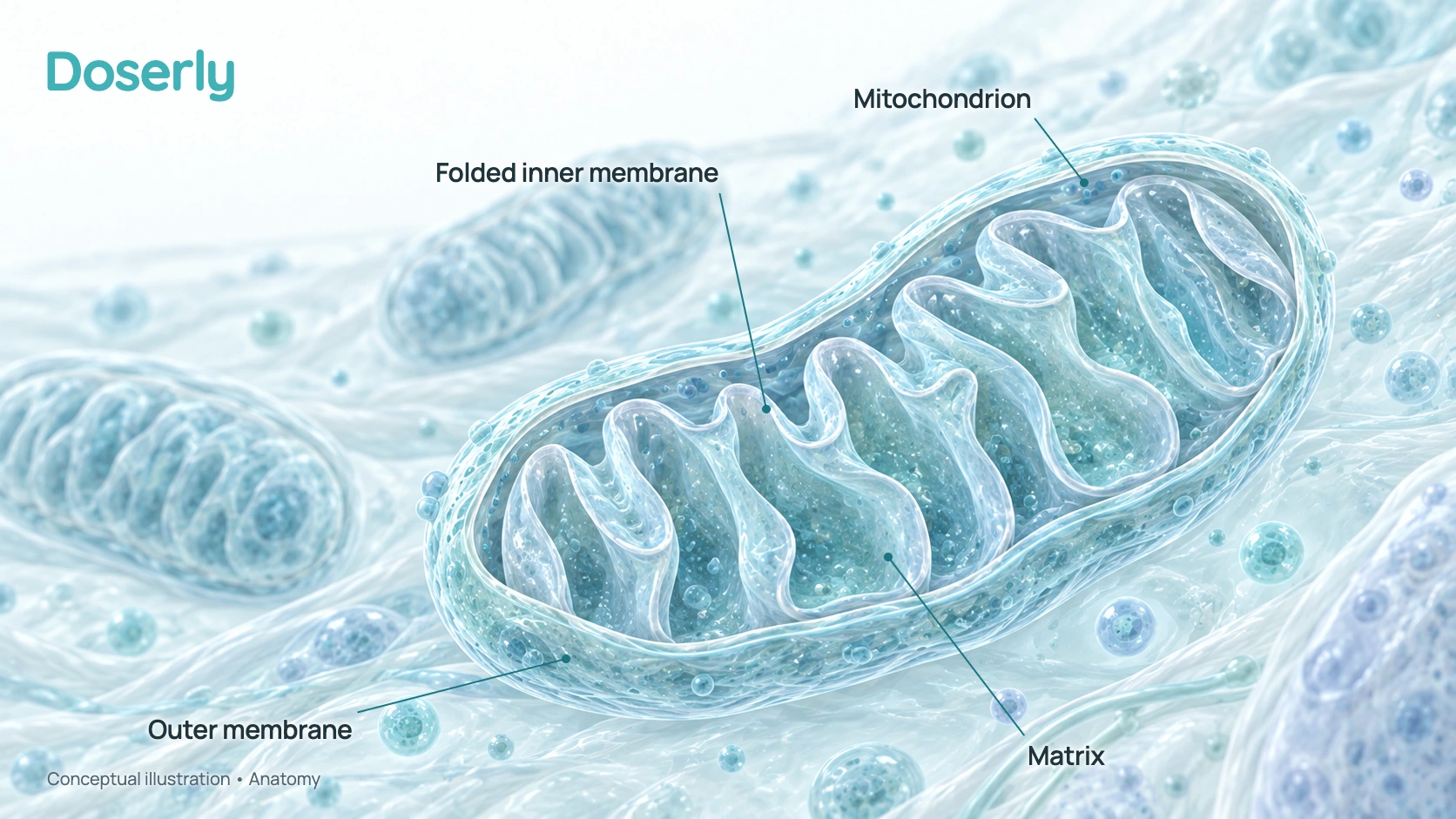
Spermidine is a polyamine produced in the body and found in foods including wheat germ, legumes, mushrooms and some fermented foods. Cells use polyamines in growth, gene expression, protein synthesis and stress responses. Spermidine also participates in pathways related to autophagy, the regulated recycling of cellular components.
Those roles explain the research interest but do not prove that a supplement slows aging. Human products include mixed wheat-germ extracts and purified spermidine salts. The longest randomized cognition trial was null on its prespecified endpoints, while higher-dose studies mainly describe short-term metabolism and tolerability. No randomized human trial demonstrates longer lifespan. [1]–[4]
Typical Spermidine Protocols
| Study and population | Product | Amount each administration | Daily total | Frequency and duration | Main interpretation |
|---|---|---|---|---|---|
| SmartAge 2022 · 100 adults aged 60–90 with subjective cognitive decline | 750 mg wheat-germ extract providing about 0.9 mg spermidine plus other polyamines | Six 125 mg extract capsules; timing split not reported | 750 mg extract / about 0.9 mg spermidine | Daily for 12 months | Prespecified memory endpoint and secondary outcomes were null |
| Senekowitsch 2023 · 12 healthy adults | Spermidine capsules | 7.5 mg as five capsules | 15 mg | Twice daily with breakfast and dinner for 5 days; crossover | Plasma spermine rose; plasma spermidine and putrescine did not |
| Keohane 2024 · 37 healthy men aged 50–70 | High-purity spermidine trihydrochloride | Not reported in abstract | 40 mg | Administration count not reported; 7 and 28 days | Short-term laboratory tolerability; minimal polyamine changes; no efficacy test |
SmartAge's six capsules contained an extract with several polyamines: about 0.9 mg spermidine, 0.5 mg spermine and 0.2 mg putrescine per daily 750 mg extract dose. It therefore cannot establish that purified spermidine alone produced any finding. The intervention did not change the primary mnemonic-discrimination endpoint or secondary outcomes versus placebo. [1]
The five-day study explicitly used five capsules in the morning and five in the evening, totaling 15 mg/day. The 40 mg abstract reports only a daily total, so its per-administration amount and frequency stay unreported. [2], [3]
- Form
- Record food, wheat-germ extract or purified trihydrochloride and every listed co-polyamine.
- Administration
- Separate each administration from the daily total; do not invent a once-daily schedule.
- Outcome
- Memory performance, plasma polyamines, laboratory safety and longevity are different questions.
What is spermidine commonly used for?
Cognition and memory
SmartAge enrolled people with subjective cognitive decline for 12 months. The between-group difference in mnemonic discrimination was −0.03 (95% CI −0.11 to 0.05; P=.47), and secondary outcomes were also null. Exploratory verbal-memory and inflammation signals were hypothesis-generating and did not override the prespecified result. Spermidine is not established to prevent dementia or treat cognitive decline. [1]
Autophagy and healthy aging
Mechanistic and animal work makes autophagy central to the spermidine story. Autophagy is a normal cellular process, not a symptom or a clinical outcome. Human supplement studies have not shown slower biological aging, fewer age-related diseases or longer survival. [4]
Cardiometabolic and immune claims
Food-intake observational studies and preclinical experiments generate hypotheses, but they cannot separate spermidine from the broader diet and lifestyle pattern. The randomized trials cited here did not establish cardiovascular-event prevention, immune treatment or improved daily function.
Evidence ladder
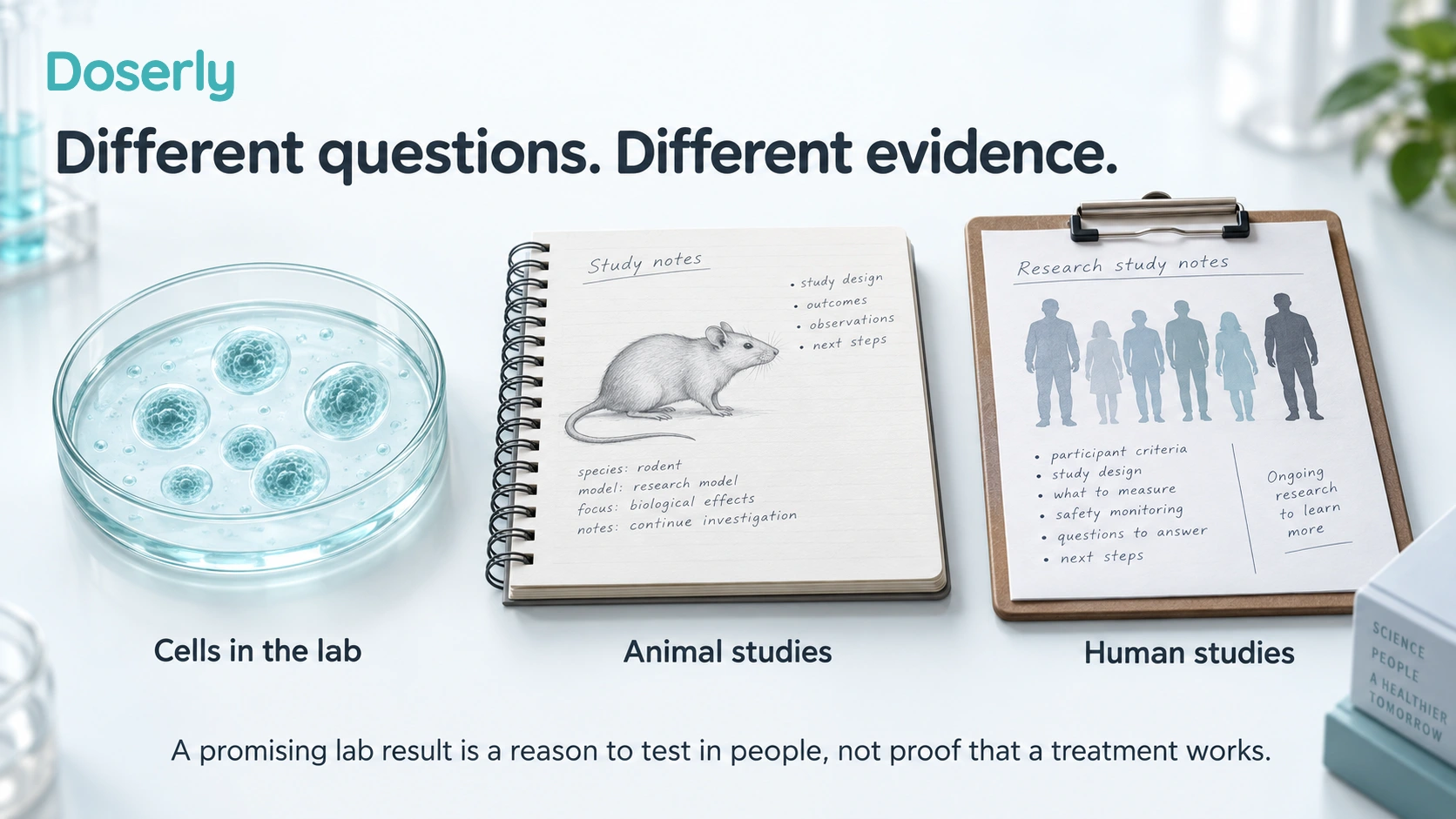
Three studies answer three different questions
Dose, formulation, duration and endpoint must stay attached to the source.
How do forms and labels differ?
Wheat-germ extract naturally contains several polyamines and food constituents. A label may state extract mass, spermidine content or both. Purified spermidine trihydrochloride is a different chemical preparation; salt mass and spermidine-equivalent mass may differ. A food serving is another distinct exposure.
The five-day pharmacokinetic study shows why label amount is not a direct blood-level promise. Plasma spermine rose, while spermidine and putrescine did not. Possible conversion and distribution complicate simple “more in, more in blood” reasoning. [2]
Product identity
“Spermidine” can describe different exposures
Evidence from one form cannot be assigned automatically to another.
How should spermidine be stored?
Keep the finished product sealed, dry and protected from heat and direct light. Follow the label for temperature, expiry and moisture protection. Wheat-germ extracts and purified salts are different products, so manufacturer-specific stability instructions matter. Discard a damaged, damp or altered product.
What does the human evidence show?
| Question | Evidence | Finding | Boundary |
|---|---|---|---|
| Does low-dose wheat-germ extract improve memory? | 100-person, 12-month RCT | Prespecified primary and secondary outcomes null | Mixed extract; single center |
| Does 15 mg/day raise plasma spermidine? | 12-person, 5-day crossover | No; plasma spermine rose | Very short, biomarker study |
| Is 40 mg/day tolerated? | 37-men, up-to-28-day RCT | No product-related events or laboratory signal | Short, male-only, sponsor-linked |
| Does supplementation extend human life? | No randomized lifespan trial | Not established | Preclinical mechanism is insufficient |
The null SmartAge primary result is the best long-duration outcome evidence. The 15 mg and 40 mg studies answer narrower questions and cannot rescue a cognitive or longevity claim. The 40 mg study’s authors and funding had Chrysea Labs ties, making independent confirmation particularly useful. [1]–[3]
What are the risks and interactions?
The cited trials suggest reasonable tolerability at 0.9 mg/day from extract for 12 months and 40 mg/day purified material for 28 days, but they are too small to define rare harms or broad long-term safety. GI symptoms, headache, sleep change, rash or another new symptom should be recorded.
Wheat-germ products may matter to people with wheat allergy or celiac disease; check the complete label and allergen statement. Polyamines participate in cell growth, so people with active cancer, recent cancer treatment or another condition where supplementation could complicate care should obtain specialist review rather than infer benefit or harm from laboratory mechanisms. Pregnancy, breastfeeding, childhood use, kidney or liver disease and complex medication regimens also lack strong direct evidence.
What is the legal and regulatory status?
In the United States, spermidine products marketed as supplements fall under the dietary-supplement framework. They are not FDA-approved to prevent dementia, induce clinically beneficial autophagy, treat cancer or slow aging. Manufacturers remain responsible for safety and compliant labeling before marketing. [5]
In Canada, a spermidine product sold as a natural health product requires product authorization and an NPN or DIN-HM. Product authorization does not make findings from one extract applicable to every purified or food-derived form. [6]
What happens when you stop?
Spermidine has no established withdrawal syndrome or evidence-based taper. Plasma polyamine homeostasis and dietary intake continue after stopping. A perceived change in memory, energy or sleep should be assessed in context; progressive cognitive symptoms warrant clinical evaluation rather than supplement cycling.
What should you monitor?
Record the product form, extract mass, spermidine-equivalent amount, co-polyamines, amount at each administration, daily total, timing and start date. Photograph the full label and note wheat-derived ingredients.
Choose an outcome before starting. A repeatable memory task, validated symptom scale or clinician-selected marker is more interpretable than a general feeling of “autophagy.” Track GI, sleep, headache and allergy symptoms. Do not use a supplement log to infer cancer safety or biological-age reversal.
What does community experience add?
Public discussions may surface capsule burden, wheat-germ versus purified products, cost and the absence of a felt effect. They cannot measure autophagy, establish brain benefit or supply a longevity endpoint. No systematic current community sample was assembled, so this guide reports no consensus brand, dose or responder rate.
How does spermidine compare with related options?
| Option | Practical distinction | Evidence boundary |
|---|---|---|
| Wheat-germ extract | Mixed polyamine and food matrix | SmartAge primary outcome null |
| Purified spermidine salt | Defined high-purity material | Human evidence mainly short PK/safety studies |
| Food sources | Part of a broader dietary pattern | Observational associations cannot isolate spermidine |
| Urolithin A | Distinct compound studied for mitophagy and muscle outcomes | Cannot inherit spermidine autophagy claims |
| Exercise and dietary pattern | Human outcome evidence across aging domains | Not interchangeable with a capsule trial |
Common questions
Does spermidine improve memory?
The 12-month SmartAge trial did not improve its prespecified memory endpoint or secondary outcomes. Exploratory signals require confirmation. [1]
Does it activate autophagy in humans?
Mechanistic and preclinical evidence supports the research rationale, but current supplement trials do not establish a clinically useful autophagy effect in people. [4]
Why did 15 mg not raise plasma spermidine?
The small PK study found higher spermine instead, consistent with conversion and tight handling. Distribution or other processes may also matter. [2]
Is 40 mg/day proven safe long term?
No. It was tolerated for up to 28 days in 37 healthy older men. That does not establish long-term or population-wide safety. [3]
Is wheat-germ extract equivalent to purified spermidine?
No. The extract contains other polyamines and food constituents, whereas the high-purity trial used spermidine trihydrochloride.
Does spermidine extend lifespan?
No randomized human trial shows lifespan extension or reduced age-related disease from supplementation.
Glossary
Plain explanations of spermidine terms.
- Polyamine
- A small positively charged molecule involved in cell growth, gene expression and other cellular processes.
- Autophagy
- A regulated process by which cells degrade and recycle selected components.
- Spermine
- A related polyamine that can be formed from spermidine and increased in the five-day oral study.
- Wheat-germ extract
- A mixed food-derived preparation containing spermidine and other compounds.
- Pharmacokinetics
- The study of how an administered substance is absorbed, distributed, transformed and eliminated.
- Exploratory outcome
- A result used to generate a hypothesis rather than confirm the trial's prespecified main question.
How this guide was researched
Primary trial records and full reports were checked against PMID, PMCID and DOI identifiers. Product form, co-polyamines, capsule count, per-administration amount and daily total were extracted separately. The null cognition result and sponsor context remain explicit.
Research record · checked October 9, 2026
Identity verification: PMID 35616942/PMC9136623 is SmartAge; PMID 37111071/PMC10143675 is the five-day pharmacokinetic trial; PMID 39405978 is the 40 mg/day safety trial.
Protocol extraction: SmartAge used six 125 mg extract capsules daily; the PK trial used 7.5 mg morning plus 7.5 mg evening. The 40 mg abstract did not report administration count.
Negative evidence: SmartAge's null prespecified memory and secondary outcomes lead the cognition conclusion.
Form boundary: mixed wheat-germ extract and purified trihydrochloride remain distinct.
Conflict context: the 40 mg study involved Chrysea Labs employees and funding.
Explore the sources
Primary human trials, mechanistic context and official regulatory guidance.
Showing 6 sources
- 01
Effects of Spermidine Supplementation on Cognition and Biomarkers in Older Adults With Subjective Cognitive Decline: A Randomized Clinical Trial. ↗
Randomized clinical trial
Exact mixed-extract dose, capsule count and null prespecified cognition and biomarker results.
- 02
High-Dose Spermidine Supplementation Does Not Increase Spermidine Levels in Blood Plasma and Saliva of Healthy Adults: A Randomized Placebo-Controlled Pharmacokinetic and Metabolomic Study. ↗
Randomized pharmacokinetic crossover
Exact morning/evening administrations and plasma spermine result over five days.
- 03
Supplementation of spermidine at 40 mg/day has minimal effects on circulating polyamines: An exploratory double-blind randomized controlled trial in older men. ↗
Exploratory randomized safety trial
Short-term laboratory tolerability, minimal polyamine changes and sponsor relationships.
- 04
Spermidine in health and disease. ↗
Mechanistic and translational review
Explains autophagy and preclinical longevity rationale without proving a human supplement outcome.
- 05
Dietary Supplements ↗
Official regulatory overview
Explains US dietary-supplement oversight and manufacturer responsibility.
- 06
Regulating Natural and Non-prescription Health Products ↗
Official regulatory overview
Describes the Canadian natural health product framework.
No matching sources
Try a different term or show the full list.
Editorial note
This guide keeps endogenous biology, mixed food extract, purified compound, blood biomarkers and human outcomes in their proper source-specific contexts.