
In this guide
What is medroxyprogesterone acetate?
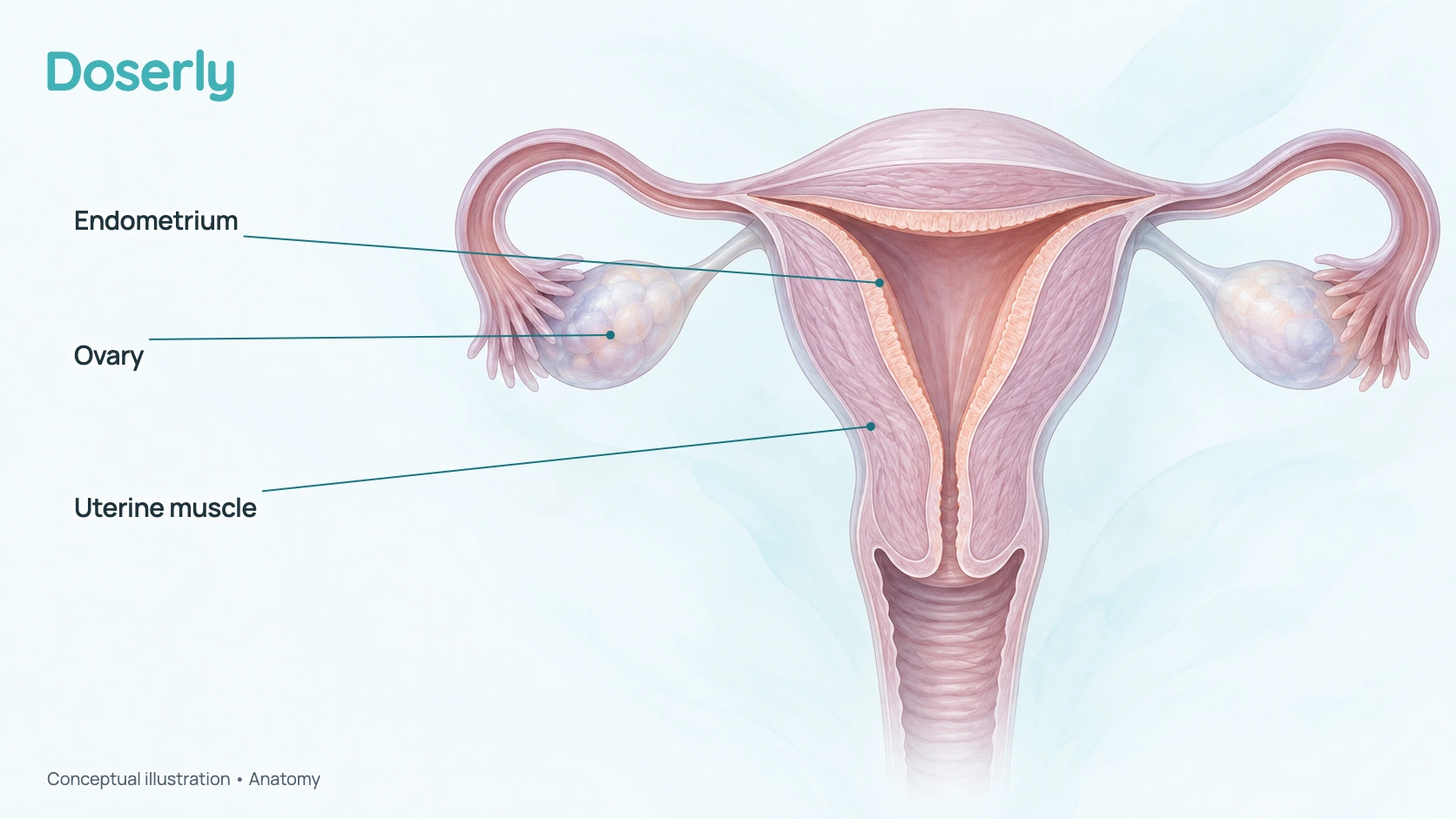
Medroxyprogesterone acetate, often called MPA, is a prescription synthetic progestogen, a medicine that acts at progesterone receptors. In menopausal hormone replacement therapy (HRT), it helps oppose estrogen’s growth-promoting effect on the endometrium, the lining inside the uterus. Provera is a familiar tablet brand. It is a different molecule from micronized progesterone; “progesterone” used loosely on a prescription discussion can hide that difference. [1], [4], [14]
The form and indication matter. Low-dose oral tablets used with menopausal estrogen are not the long-acting Depo-Provera contraceptive injection. Nor are they the high-dose tablets used for selected cancers. The same active ingredient does not make these products interchangeable. This guide focuses on menopausal treatment, with separate explanations of other indications when they clarify a label or warning. [1], [3], [10]
MPA can be useful when a person needs another uterine-protection option, including after difficulty tolerating micronized progesterone. That is not proof that it will improve mood, sleep or bleeding for everyone. Estrogen and the progestogen do different jobs; keep the intended pair and calendar visible. [4], [12], [13]
Typical Medroxyprogesterone Acetate Protocols
| Product and population | Amount each time | Schedule and total | Context and source |
|---|---|---|---|
| US Provera, postmenopausal uterus | 5 mg orally once daily | 12–14 consecutive days/month;5 mg on treatment days; source permits startingday 1 or 16 | With daily oral conjugated estrogen 0.625 mg; labeled protection [1] |
| US Provera, alternative labeled amount | 10 mg orally once daily | 12–14 consecutive days/month;10 mg on treatment days; startday 1 or 16 | Same estrogen/population as above; not a depot injection [1] |
| Irish Provera 10 mg, menopausal estrogen opposition | 10 mg orally once daily | 10–12 days startingday 16 of 28-day estrogen course;10 mg/day | Irish licensed schedule, not UK 10 mg authorization [2] |
| BMS continuous combined HRT | At least 2.5 mg orally each day | Every day, without scheduled break;2.5 mg/day at this stated minimum | Guideline regimen; estrogen exposure and patient context remain relevant [4] |
| BMS sequential regimen | 10 mg orally daily | 12 days/month in the listed practical example;10 mg on treatment days | Guideline source; broader evidence discussion describes 10–14 days, not a universal identical calendar [4] |
The usual prescribing pattern is a small oral amount each day continuously, or a larger amount on sequential exposure days. The US label’s minimum effective dose is not established; it describes starting at the lower labeled amount and regular reassessment. BMS minimum guidance is not the same as a worldwide licensed starting dose. Estrogen exposure, bleeding and unwanted effects are reviewed before adjustment. A planned sequential break is not an optional holiday while estrogen continues. Milligrams (mg) measure medicine amount; do not average a treatment-day dose over off-days and use that average as a tablet amount. [1], [4], [5]
Where these schedules come from
Rows 1–2: US Provera DOSAGE AND ADMINISTRATION. Row 3: Irish SmPC4.2. Rows 4–5: BMS May 2026 protection guidance. UK Provera 10 mg 4.1 does not list HRT; this is not an Irish-to-UK license transfer. The BMS practical list gives 12 days; its broader discussion gives 10–14 days. We retain one complete listed example. These rows exclude cancer-dose tablets and contraceptive injections. [1], [2], [3], [4]
What is it commonly used for?
The menopausal purpose is protection of the estrogen-stimulated lining. The US label specifically pairs Provera with daily oral conjugated estrogen 0.625 mg in postmenopausal women with a uterus. British guidance describes other continuous/sequential clinical regimens. Those are different sources, not a single worldwide license. A hysterectomy changes the usual protection requirement, but residual endometriosis can require an individual plan. [1], [4]
US tablets also treat secondary amenorrhea, absence of periods after previously menstruating, and abnormal bleeding due to hormonal imbalance without an underlying structural cause. Their 5–10 day courses differ from the 12–14 day menopausal course. UK 10 mg Provera lists those gynecologic uses and endometriosis, but its current indications do not list HRT; the Irish label does. A short bleeding-treatment course is not automatically adequate ongoing opposition to continued estrogen. [1], [2], [3]
Hot-flash relief from an estrogen/MPA combination cannot be credited entirely to MPA. Neither the tablet nor a good symptom response is contraception in this menopausal regimen. The actual contraceptive depot product has its own authorization and adverse-effect profile. [1], [10]
Why do its schedules differ?
A tablet’s strength does not tell you whether it is taken continuously or for a limited part of each cycle. US labeling gives 5 mg or 10 mg for 12–14 days/month with a specific estrogen. Irish labeling gives 10 mg for 10–12 days beginningday 16 of a 28-day course. BMS lists a 2.5 mg continuous minimum and a 10 mg sequential example. Preserve those source boundaries instead of assembling a new schedule from the smallest number in each. [1], [2], [4]
Estrogen exposure, stage, bleeding history and tolerability affect prescribing. More estrogen can require more progestogen, but there is limited robust dose-specific protection research for high estrogen. Absence of bleeding does not establish that an improvised low dose is adequate. Calendar months and repeated 28-day courses are different intervals; agreeing the dates matters as much as agreeing the tablet strength. [4], [5], [7]
Three calendars, three sources
Oral MPA examples retain the estrogen and jurisdiction.
US Provera
5 or 10 mg/day
12–14 consecutive days per calendar month; with daily labeled conjugated estrogen. [1]
Irish Provera
10 mg/day
10–12 days beginning day 16 of a 28-day estrogen course. [2]
BMS continuous
2.5 mg/day
Minimum guidance every day; separate from local product authorization. [4]
A month is not always 28 days. No depot/injection schedule is shown. Labeled and guideline rows are different kinds of evidence.
Are tablets and depot injections interchangeable?
No. Oral treatment is swallowed and can be prescribed with selected estrogen schedules. Depot means a formulation releases medicine over a prolonged period after injection. A depot cannot be treated as a daily tablet amount or quickly removed if effects are troublesome. Its contraceptive indication and associated evidence are separate from oral menopausal HRT. [1], [10]
This distinction is especially important for meningioma warnings. The 2024 communication addresses all injectable and at least 100 mg oral formulations; it explicitly excludes its recommendations for lower oral doses and combination products. It does not say that a 5 mg HRT tablet carries the same measured risk as a 150 mg contraceptive injection. The current low-dose UK label nevertheless gives its own meningioma caution, which should still be followed. [3], [10], [11]
How should tablets be stored?
US Provera is stored at controlled room temperature 20–25°C. Keep the exact pack label and expiry, away from children; unusual heat or moisture exposure is a question for the pharmacist. Storage of the oral tablet does not establish how to store an injection, patch or compounded preparation. [1]
The US 2.5 mg,5 mg and 10 mg tablets also differ in their listed coloring ingredients, even when the core inactive ingredients overlap. Allergy review should use the manufacturer and strength dispensed, not the brand name alone. Do not assume a tablet can be divided into accurate smaller doses because another strength or another country’s pack has a score line. [1], [3]
What do human studies actually show?
For the lining, the US label describes a three-year randomized trial, with treatment assigned by chance, comparing conjugated estrogen alone, estrogen plus cyclic MPA 10 mg for 12 days and an inactive placebo. Most women receiving the combination had no hyperplasia, excess lining growth, while estrogen alone caused substantially more abnormal biopsies. These are regimen-specific tissue findings, not a trial of every progestogen or route. [1]
The WHI combined trial studied 16608 women aged 50–79 with a uterus, using daily oral conjugated equine estrogen 0.625 mg plus MPA 2.5 mg or placebo. Its 2002 principal report had mean follow-up 5.2 years. Per 10000 person-years, treatment produced 7 more coronary events,8 more strokes,8 more pulmonary emboli and 8 more invasive breast cancers, alongside 6 fewer colorectal cancers and 5 fewer hip fractures. Person-years are accumulated follow-up time; these are not the same as events among 10000 people over five years. [8]
The trial did not compare MPA alone with progesterone, or estrogen gel plus MPA with another modern pair. It informs the tested combination’s balance and explains why it should not be prescribed to prevent heart disease. Later interpretation of age/timing does not erase the original result or make it an exact forecast for every younger symptomatic user. The 2003 breast analysis also found more invasive cancers and abnormal mammograms with that combination. [1], [8], [9]
The French meningioma study was observational: surgical cases were compared with controls using prescription data. It found an association with prolonged injectable MPA exposure. That is neither a randomized experiment nor direct evidence for routine low-dose oral HRT. The regulator’s dose/formulation scope and the current product warning must be read together. [10], [11]
WHI 2002: absolute differences
Extra or fewer events per 10,000 person-years, treatment minus placebo. Oral CEE 0.625 mg + MPA 2.5 mg daily; 16,608 women aged 50–79; mean follow-up 5.2 years. [8]
Plus means more events; minus means fewer. These are the original report’s pair-specific estimates, not a personal risk forecast or results for every HRT product.
How does it act differently from progesterone?
MPA acts at progesterone receptors to change the estrogen-stimulated lining toward a secretory pattern rather than continued growth alone. It is chemically modified progesterone, not the ovarian molecule made into smaller particles. Its metabolism and other receptor effects differ, so the micronized-progesterone sleep findings cannot simply be copied to MPA. [1], [4]
The clinically important question is whether the complete regimen supplies sufficient opposition over time. Feeling calm, sleepy or free of bleeding is not a measure of that tissue effect. Effects on mood, fluid retention and bleeding can matter for tolerability without establishing either better protection or a universally worse medicine. [1], [4]
What are the main risks and warning limits?
Recognized problems include bleeding changes, breast tenderness, headache, dizziness, depressed mood, bloating and fluid retention. Marked mood deterioration deserves prompt review; thoughts of self-harm need urgent help. New chest pain, sudden breathlessness, one-sided weakness or suspected clot symptoms need urgent assessment. Do not label a severe problem as a necessary settling-in phase. [1], [3]
The current US text retains its combined estrogen/progestin boxed warnings and contraindications including unexplained genital bleeding, breast cancer or hormone-dependent tumors, current/history of blood clots or arterial events, liver disease, pregnancy and serious hypersensitivity. The February 2026 changes in some other menopausal medicine labels do not prove this product’s box was removed. A June 2026 DailyMed listing update is not, by itself, a new provider-text revision. [1]
A meningioma is a tumor of the membranes around the brain and spinal cord. It is often benign, but its location can cause serious effects. The high-dose regulatory communication concerns all injections and oral formulations≥100 mg, primarily with prolonged use. Its special restrictions do not apply to the lower oral doses in this HRT table. Separately, the UK 10 mg label says stop if meningioma is diagnosed and advises caution with a history. “Not the same high-dose alert” therefore does not mean “ignore the product warning.” [3], [10]
New progressive headache, visual or hearing changes, loss of smell, seizures or weakness should be assessed, especially where a meningioma concern exists. Medicine review also includes liver disease, migraine, diabetes and other drugs affecting metabolism; the US CYP3A4 discussion acknowledges limited interaction-study evidence. Bioidentical-versus-synthetic language cannot replace the exact risk review. [1], [3], [10]
How do product labels differ across countries?
The US label supports oral menopausal protection with a specified conjugated estrogen; the current UK 10 mg label does not list that indication, while the Irish 10 mg label does. A national prescribing guideline can support clinical use beyond a product’s licensed indication without changing the license. Approval, marketing, pharmacy stock and reimbursement are separate facts. This guide certifies the reviewed labels, not a guarantee of supply or public coverage. [1], [2], [3], [4]
Ask the pharmacist for the actual strength and manufacturer, particularly after a substitution or travel. A prescription that says only “Provera” can omit whether the plan is daily low-dose HRT, a short bleeding course or another indication. Keep the estrogen and exposure days attached when checking a refill. The country access guides cover coverage pathways rather than making foreign labels interchangeable.
What do selected public discussions show?
A 2026 thread about changing from Prometrium to Provera begins with daytime tiredness and a flat mood on the previous medicine, followed by questions about alternatives. It shows why product identity matters: a reply’s assertion that one progestogen provides universally better protection is not a clinical comparison established by the conversation. Advice about vaginal progesterone is also not a substitute for a protective regimen. [12]
Another selected 2026 public excerpt includes a person describing doing better on oral MPA after problems with another progestogen. That is a useful counterpoint to uniformly negative portrayals, not a predicted response rate. The search excerpt does not supply a full clinical history, follow-up or independent tissue assessment. We did not retain names or identifying narratives. [13]
These accounts support practical questions about fatigue, mood and a supervised change. They cannot assign the combination’s benefits to MPA alone, prove long-term safety or set a dose. Improvement and unwanted effects can both occur; someone else’s preference does not settle the best treatment for a different person. [12], [13]
What should be monitored?
Keep the whole prescription visible: the estrogen product and amount, this progestogen’s product and route, the actual exposure days, and any missed doses or refill gaps. A record that says only “one hormone pill” loses the distinction between estrogen-only days and combined days. Bleeding dates, amount, sleep, mood and effects on daily activity help the review. They do not prove that the lining is protected. [4], [6], [7]
NICE recommends a review three months after starting treatment, then annually, with earlier review when treatment is ineffective, unwanted effects are troublesome or an adverse event occurs. An adverse event is an unwanted event during treatment; it is not automatically caused by the medicine. Review may change the product, estrogen exposure, progestogen amount, route or calendar. It also considers whether the treatment remains useful for the person’s current goals. [6]
Unscheduled bleeding should be reported rather than interpreted from a hormone blood test. NICE’s April 2026 update says bleeding is common during the first six months of systemic HRT or within three months of a change, and recommends prompt medical help beyond those periods. That is not an instruction to wait with heavy, prolonged, persistent or concerning bleeding. The British pathway assesses risk factors, adherence and both hormone components, and can arrange earlier ultrasound or tissue assessment. [6], [7]
A planned withdrawal bleed after a sequential course differs from bleeding between expected courses, or new bleeding after a stable interval without it. Ultrasound assesses the lining’s thickness; a biopsy takes a tissue sample. Neither a comfortable mood nor bleeding stopping after a dose change rules out disease by itself. Keep routine breast and cervical screening appropriate to local guidance and personal risk, and report new breast changes. The purpose of follow-up is clinical assessment, not finding a universally “optimal” progesterone blood level. [4], [6], [7]
What happens when treatment stops?
Stopping the whole HRT regimen and stopping only its progestogen are different decisions. If systemic estrogen continues with a uterus present, a protection plan is still needed. Planned off-days in a sequential prescription are part of that plan; extending them because the capsule or tablet is troublesome is a treatment change. Contact the prescriber to review a suitable alternative instead of quietly removing one component. [4], [6]
Symptoms can return after stopping HRT. NICE allows either gradual reduction or immediate stopping; gradual reduction may limit symptom recurrence in the short term, but makes no long-term difference. There is no universal tablet-cutting schedule in this guidance. A fixed combination changes both hormones when it is reduced or stopped, while separate products can be adjusted independently under clinical supervision. A scored line does not always mean a tablet is authorized to provide equal smaller doses. [6]
New severe mood deterioration, major impairment or suspected serious adverse effects need prompt help, not completion of an online “adjustment period.” A clinician may stop or change treatment urgently while arranging continuing protection where needed. Record the last actual dose and what estrogen was continued; those details make a review more useful than a general report that “the hormones did not suit me.” [4], [6], [7]
How does it compare with other options?
Micronized progesterone, medroxyprogesterone acetate, norethindrone acetate, dydrogesterone and a 52 mg levonorgestrel intrauterine system are different protection options. “Progestogen” names the family; “progestin” commonly describes a synthetic member. Capsule or tablet milligrams do not measure the same potency across these molecules. The amount is interpreted with its product, estrogen exposure and treatment days. The levonorgestrel device’s HRT protection duration is separate from its contraceptive duration. [4], [5]
Tolerability matters alongside protection. Someone who feels groggy on micronized progesterone may do differently on a synthetic progestogen, while another person has the opposite experience. A fixed estrogen/progestogen product can simplify taking the intended pair, but provides less independent adjustment than separate medicines. No comparison justifies transferring one molecule’s dose to another, or assuming a contraceptive pill supplies the intended HRT opposition. [4], [5]
Breast-cancer comparisons also require care. NICE says evidence is insufficient to establish whether the increase in risk with micronized progesterone or dydrogesterone differs from other progestogens. Observational associations can inform a discussion without proving a safer drug for every person. Personal cancer history, duration, estrogen route and the exact combination remain part of the clinical review. [6]
Common questions
Is Provera the same as Depo-Provera?
They share medroxyprogesterone acetate, but differ in formulation, exposure, indication and reversibility. Oral menopausal tablets are not a contraceptive depot schedule. The high-dose meningioma communication includes every injectable formulation, while its special recommendations exclude low-dose oral HRT. Keep the current oral label’s own caution. Confirm whether the prescription is for swallowed tablets or a depot injection before comparing schedules. See routes and risks. [1], [3], [10]
Does WHI mean I should never use MPA?
WHI informs the tested oral conjugated-estrogen/MPA combination and prevention setting. It is a reason for an individualized benefit/risk discussion, not a comparison proving every alternative safer for everyone. The initial report’s absolute differences are per 10000 person-years, and the studied women were 50–79. Keep population, duration and formulation attached. The hormone combination and population remain attached to each estimate; another formulation needs its own assessment. See evidence. [1], [8], [9]
Can I compare its milligrams with progesterone?
No. These are different molecules and products, with different potency, metabolism and studied regimens. A smaller milligram number does not mean less protection or fewer adverse effects. Use the exact product-and-estrogen row, not a mass ratio or a forum conversion. The prescriber considers exposure days and estrogen dose as well as the amount. Keep the actual estrogen prescription available when discussing any proposed change. See protocols and comparisons. [4], [5]
Does no bleeding prove the lining is protected?
No. Bleeding patterns help assess a regimen, but are not a tissue-protection test. Missed exposure days, estrogen changes and the route can alter the protection question even when symptoms feel better. New or persistent unscheduled bleeding also needs assessment rather than self-adjustment. Keep the complete calendar and product information available at review. Bleeding-free or symptom-free days do not replace the prescribed exposure calendar. See monitoring. [4], [6], [7]
Can I stop just the progestogen?
If systemic estrogen continues with a uterus present, the protection plan still matters. Planned sequential off-days are different from an unplanned prolonged gap. Trouble tolerating treatment is a reason to review the product, route or entire regimen; it is not proof that protection can be dropped. Stopping all HRT may be gradual or immediate under NICE guidance. See stopping. [4], [6]
How long should I wait with unwanted effects?
There is no mandatory forum adjustment deadline. NICE recommends earlier review for troublesome effects or ineffective treatment, rather than waiting for the annual visit. Severe impairment, major mood deterioration or concerning bleeding needs prompt assessment. Some effects change with time, but improvement cannot be promised from selected posts. Record what changed and when, including the paired estrogen and actual dose days. See risks and monitoring. [6], [7]
Glossary
Terms used to read the product and evidence.
- Adverse event
- An unwanted event during treatment; it is not automatically caused by the medicine.
- Amenorrhea
- Absence of menstrual periods. Secondary amenorrhea occurs after periods have previously occurred.
- Bioavailability
- The amount of an administered medicine reaching the circulation; formulation and route can change it.
- Bioidentical
- Chemically identical to a hormone the body makes; the word does not establish safety or product quality.
- Biopsy
- A tissue sample examined for abnormalities, unlike an ultrasound measurement of thickness.
- Boxed warning
- A prominent warning format used in a medicine label; removing the box does not remove every risk.
- Compounding
- Preparing a medicine to a prescription rather than supplying a standard approved finished product.
- Continuous combined HRT
- Estrogen and progestogen used continuously according to their prescriptions, without scheduled progestogen-free days.
- Contraindication
- A condition in which a particular product must not be used under its label.
- Cycle
- A repeating treatment calendar. A 28-day cycle and a calendar month have different lengths.
- Daily total
- All doses taken on one day added together, not the average across days without treatment.
- Endometrium
- The lining inside the uterus that can grow in response to estrogen.
- Estrogen
- A family of hormones including estradiol; systemic treatment and low-dose local treatment have different purposes.
- Excipient
- An ingredient other than the active medicine, such as a capsule oil or lecithin.
- First-pass metabolism
- Processing in the intestine and liver before an oral medicine reaches the wider circulation.
- Hormone replacement therapy (HRT)
- In this guide, hormone treatment for menopause-related needs; also called menopausal hormone therapy.
- Hyperplasia
- Excessive tissue growth. Endometrial hyperplasia is not the same diagnosis as endometrial cancer.
- Hysterectomy
- Surgery removing the uterus; removal of ovaries is a different procedure.
- Intrauterine device (IUD)
- A device placed inside the uterus. Protection duration in HRT can differ from contraception duration.
- Metabolite
- A substance produced as the body processes another substance. Some progesterone metabolites affect brain signaling.
- Micronization
- Making particles smaller to change their dissolution and absorption, without changing the hormone molecule.
- Milligram (mg)
- A unit of mass; a 100 mg capsule contains 100 milligrams of active progesterone.
- Observational study
- A study following treatment choices rather than randomly assigning them; confounding can affect comparisons.
- Off-label
- Use outside a product’s authorized indication, route or schedule; it can be guideline-supported without becoming labeled use.
- Oral
- Swallowed, passing through the digestive system.
- Perimenopause
- The transition toward menopause, when periods and hormone patterns can change.
- Placebo
- A comparison treatment without the tested active medicine.
- Postmenopause
- The stage after menopause; context and other hormonal treatments matter when identifying it.
- Progestogen
- The broader family of progesterone-like medicines, including progesterone and synthetic progestins.
- Randomized controlled trial
- A study assigning participants to groups by chance to make a treatment comparison.
- Sequential HRT
- A regimen giving progestogen on selected days of a repeating cycle.
- Systemic
- Reaching the wider body through the circulation, rather than being intended mainly for a local site.
- Transdermal
- Absorbed through the skin, as with an estrogen patch; evidence for progesterone cream is different.
- Vaginal
- Administered in the vagina; the route alone does not establish systemic exposure or uterine protection.
- Vasomotor symptoms
- Hot flashes and night sweats.
- Withdrawal bleeding
- Bleeding following removal of hormonal exposure, such as after a sequential progesterone course.
- Meningioma
- A tumor arising from membranes around the brain and spinal cord; often benign, but its location can have serious effects.
How this guide was researched
We compared current product information with May/August 2026 BMS guidance and NICE, then checked original human research and relevant public discussions. Each amount retains its product, route, indication and country. A listing or page update is not necessarily a prescribing-information revision.
The directory distinguishes full text, abstracts and public search excerpts. Combination results do not prove the progestogen’s independent effect. Discussions show selected experiences, not surveys, response rates or prescribing authority. Anatomy images are conceptual; data figures use the exact values from named sources.
This educational content does not replace a prescription or clinical assessment. Sources that can change require an updated check when making a new treatment decision.
Explore the sources
Checked October 2, 2026. Access level describes the material actually reviewed.
Showing 14 sources
- 01
PROVERA (medroxyprogesterone acetate tablets, USP): Prescribing Information ↗
Labels and regulators
Full prescribing and patient text retrieved. Provider text corresponds toMarch 2024 revision in DailyMed; June 2026 listing update does not independently certify revised dosing/warnings. Boxed language remains in retrieved text.
- 02
Provera 10 mg tablets: Summary of Product Characteristics ↗
Labels and regulators
Full SmPC retrieved. HRT10 mg/day 10–12 days startingday 16 of 28-day estrogen course, distinct from UK 10 mg product.
- 03
Provera Tablets 10 mg: Summary of Product Characteristics ↗
Labels and regulators
Full SmPC retrieved. No HRT indication in 4.1; low-dose meningioma caution/discontinuation statement in 4.4.
- 04
Progestogens and endometrial protection ↗
Clinical guidance
Full guidance retrieved. Oral opposition, higher estrogen exposure, vaginal uncertainty, IUDs and compounded creams.
- 05
HRT – Practical prescribing ↗
Clinical guidance
Full four-page document retrieved; dose-table headings checked in PDF text. Average-age population; POI excluded.
- 06
Menopause: identification and management (NG23): Recommendations ↗
Clinical guidance
Full recommendations retrieved. Diagnosis, breast-risk uncertainty, stopping and 3-month/annual review; 2026 bleeding amendments.
- 07
Management of unscheduled bleeding on hormone replacement therapy (HRT) ↗
Clinical guidance
Current recommendations page reviewed. Risk assessment, adherence and investigation pathways; not a self-triage tool.
- 08
Risks and benefits of estrogen plus progestin in healthy postmenopausal women: principal results from the Women’s Health Initiative randomized controlled trial ↗
Human research
PubMed abstract reviewed.16608 randomized, oral CEE 0.625 mg/MPA 2.5 mg versusplacebo; mean 5.2 years. Original absolute excess/fewer events per 10000 person-years.
- 09
Influence of estrogen plus progestin on breast cancer and mammography in healthy postmenopausal women: the Women’s Health Initiative Randomized Trial ↗
Human research
PubMed abstract reviewed. Same WHI combination; breast diagnoses and mammography are not standalone MPA effects.
- 10
Medroxyprogesterone acetate: Risk of meningioma and measures to minimise this risk ↗
Labels and regulators
Full letter retrieved. High-dose scope: all injectable and≥100 mgoral; recommendations exclude lower oral doses/combination products. Keep current low-dose label warning separately.
- 11
Use of progestogens and the risk of intracranial meningioma: national case-control study ↗
Human research
Full paper retrieved. French surgical cases/controls; injectable MPA exposure, dose/formulation and observational design limit transfer to oral HRT.
- 12
Prometrium vs Provera ↗
Public experiences
Public search text checked 2October 2026. Requests about switching after daytime tiredness; replies contain clinical assertions not endorsed here.
- 13
I have no options anymore ↗
Public experiences
Public search excerpt checked 2October 2026; selected contrast in tolerance, not full-thread review or a response rate.
- 14
Medroxyprogesterone Acetate: PubChem compound 6279; 2D structure record ↗
Labels and regulators
Complete small SDF downloaded for deterministic molecule SVG; chemical identity only, not clinical outcome evidence.
No matching sources
Try a different term or show the full list.
Updates and corrections
Draft researched October 2, 2026. Report a correction through Doserly support, identifying the claim and source. Legacy production drafts remain available.