
In this guide
What does postmenopause mean for your care?
Postmenopause is the stage after menopause has been identified. In the usual natural-menopause context, that generally means 12 months without a period when hormonal contraception does not explain the absence. It does not mean that hot flashes, sleep concerns or vaginal symptoms must have finished. It also does not mean that everyone needs systemic HRT. Care depends on your symptoms, health, treatment history and preferences. [1], [2], [3]
The practical change is that care should have a purpose beyond tracking whether periods are irregular. You may need relief from persistent symptoms, local treatment for vaginal discomfort, review of an existing prescription, assessment of new bleeding or an ordinary preventive-health plan. These tasks can overlap, but they are not interchangeable. A treatment that helps night sweats does not replace bone-risk assessment or evaluation of unexpected bleeding. [1], [4], [6], [8], [9]
This guide focuses on ongoing care after the natural transition. Menopause before 45, premature ovarian insufficiency, surgical ovary removal and cancer-treatment-induced menopause have additional contexts. The age when ovarian function changed matters, even years later. See the early menopause, POI, surgical and induced menopause guides for those situations. [1], [2]
How is postmenopause identified when periods are not straightforward?
| Context | Why the date can be unclear | Useful information |
|---|---|---|
| Natural periods stopped at the usual age | The 12-month history generally identifies menopause in the appropriate clinical context. | Last natural period, symptoms and any bleeding afterward. [1], [2] |
| Hormonal contraception or another bleeding-altering medicine | No bleeding may reflect the medicine rather than a final natural period. | Exact method, age, previous cycles and current treatment. [1], [12] |
| Hysterectomy with ovaries retained | Periods are no longer observable, but ovaries were not necessarily removed. | Operation details, age, symptoms and any subsequent ovarian procedure. [1] |
| Earlier ovarian insufficiency or treatment-induced change | A usual-age definition does not capture the whole pathway. | Original diagnosis, treatment history and specialist plan. [1] |
NICE generally uses clinical identification in otherwise healthy people aged 45 or older with a typical history. A hormone panel is not normally needed solely to label the usual transition. Tests for another suspected condition, a younger-age diagnosis or a named medicine's safety monitoring are separate questions. Do not use a single normal result to dismiss symptoms or a low estradiol result to assume that all new health problems have the same cause. [1]
If you are using HRT, clarify whether bleeding is expected under the prescribed schedule. A sequential regimen can have a planned withdrawal bleed; this is not the same as a new natural cycle. Conversely, unexplained bleeding after menopause should not simply be relabelled as “my periods came back.” The clinician needs the stage, uterus status, regimen and actual bleeding history. [1], [7], [8], [9]
After the final natural period, care continues
The stage helps organize care; it does not determine one treatment.
Identify the context
Usually 12 months without a period when hormonal contraception does not explain it.
Name the concern
Persistent symptoms, local discomfort, existing treatment or preventive health.
Keep safety separate
New unexplained bleeding needs assessment; a hormone result is not reassurance.
Conceptual guide, not an individual symptom timeline. Sources: NICE [1], NHS [2], NHS bleeding [9].
Which treatment matches the problem you want to address?
| Main concern | Options to discuss | Important distinction |
|---|---|---|
| Hot flashes or night sweats affecting daily life | Eligible systemic HRT, menopause-specific CBT and appropriate nonhormonal options. | Benefits, risks and suitability are individual; no universal starting product. [1], [4], [5] |
| Vaginal dryness, pain or related genitourinary symptoms | Local vaginal estrogen, moisturizers/lubricants and other appropriate assessment. | Local care may be needed even with systemic HRT; vaginal symptoms do not automatically require more systemic estrogen. [1], [4] |
| Persistent sleep or mood concerns | Clarify the symptom and consider menopause-specific and other care. | Do not presume every sleep or mood disorder is solved by a hormone change. [1], [3] |
| New unexplained bleeding | Clinical assessment of bleeding and the actual regimen. | This is a safety question, not a reason to adjust hormones using an online target. [1], [8], [9] |
| Bone or cardiovascular prevention | Personal risk assessment, screening when indicated and appropriate prevention/treatment. | HRT does not replace the preventive-health plan or supply a dementia/heart-prevention indication. [1], [6] |
Name the intended benefit before a treatment decision. “I want fewer nights interrupted by sweating” is more informative than “I want to optimize my hormones.” If you feel well without a symptom medicine, care can still include ordinary preventive health. If you have persistent symptoms, an elapsed anniversary does not make a discussion unnecessary. The plan should fit the concern and your health rather than a rule that all postmenopausal people should take, or avoid, the same treatment. [1], [3], [5]
How do starting later and continuing an effective treatment differ?
Starting systemic HRT for the first time many years after menopause and continuing an existing useful prescription are different discussions. Both need review, but one should not be treated as automatically equivalent to the other. Bring the age at menopause, approximate time since the final natural period, previous treatment and any health changes. The indication matters too: systemic symptom treatment and low-dose local vaginal care are distinct choices. [1], [5]
The NAMS 2022 position-statement abstract describes a generally favorable benefit–risk ratio for symptomatic people younger than 60 or within 10 years of menopause onset, without contraindications. It describes a less favorable ratio for initiation after 60 or more than 10 years from onset because absolute risks are greater. These are a framework for discussion, not a rule that everyone under 60 is eligible or that someone over 60 can never receive care. The guide uses the original abstract rather than claiming to have reviewed unavailable full-text details. [5]
For longer treatment duration, NAMS describes documented indications, shared decision-making and periodic reassessment. There is no useful decision in simply comparing your number of years with another person's. Ask what the prescription is achieving now, which risks have changed, what other options fit and what would happen if you stopped. A recurring symptom may be a reason to revisit care; it is not proof that a particular amount should be restored without assessment. [1], [5]
If you have no troublesome systemic symptoms and are considering first-time HRT solely because an online account promises brain or heart protection, pause for a discussion of the actual indication. NICE does not offer HRT solely for primary or secondary cardiovascular prevention or dementia prevention. Younger-age hormone replacement is a different context and should not be erased by applying an older-age initiation rule. [1]
Starting and continuing are separate decisions
Use the indication, timing and individual risk assessment.
Earlier initiation framework
NAMS abstract: younger than 60 OR within 10 years of onset, without contraindications; generally favorable benefit–risk ratio for symptoms.
Later first-time initiation
NAMS describes a less favorable ratio after 60 or more than 10 years since onset; assessment remains individual.
Ongoing useful treatment
Document the indication and periodically review benefits, risks and preferences. No universal stop date.
No personal risk percentage or cardiovascular/dementia-prevention indication. Sources: NAMS 2022 original abstract [5], NICE [1].
Why do uterus status and local treatment still matter?
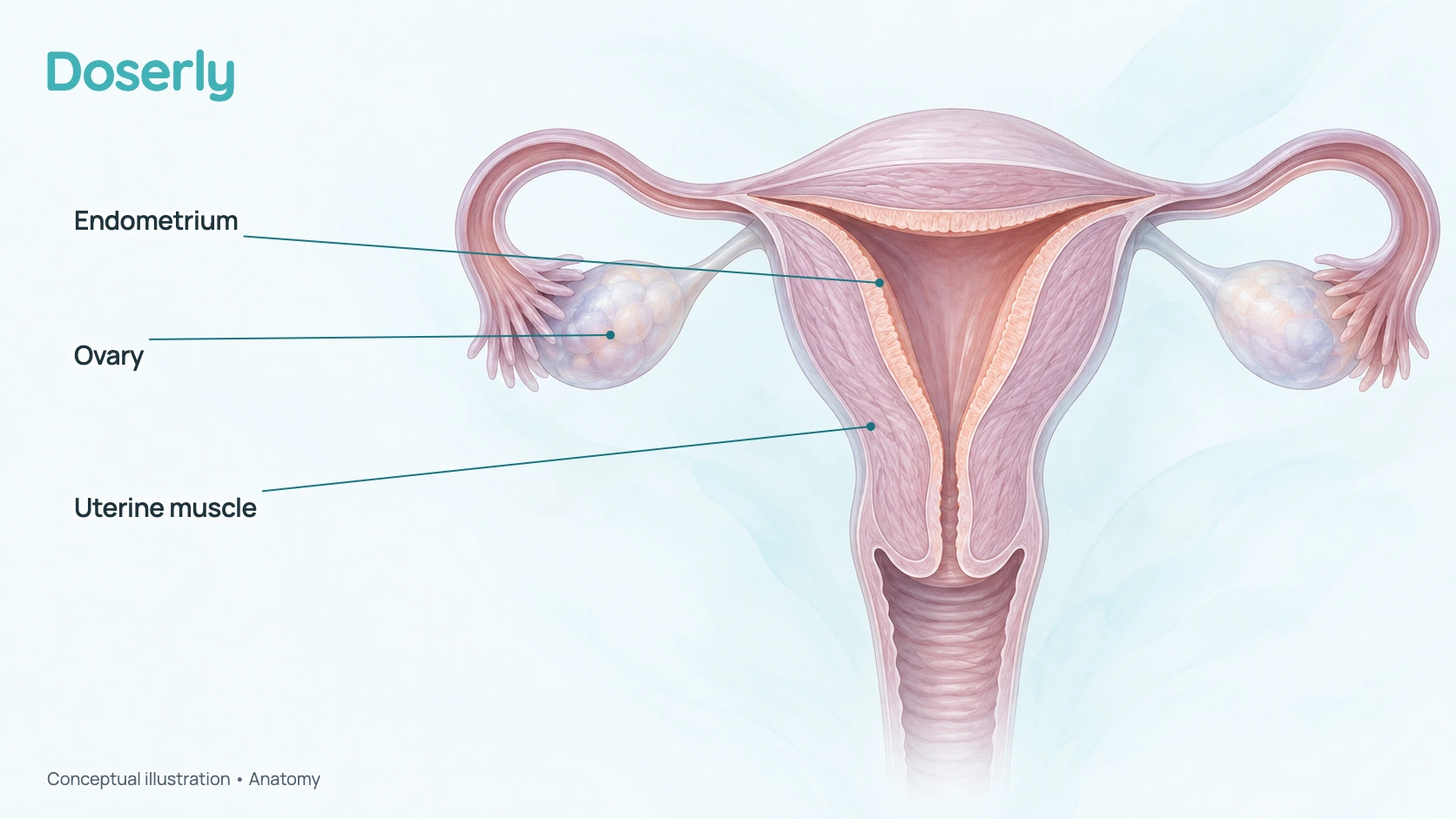
With a uterus, systemic estrogen generally needs adequate endometrial protection. Keep the progestogen or IUD information with the estrogen prescription, including the actual schedule and insertion date when relevant. An estrogen patch does not remove this need, and feeling better does not establish that the protection plan is adequate. If the estrogen formulation or amount changes, ask whether the protection should be reviewed as well. [1], [7]
After a total hysterectomy, estrogen-only treatment is usually the ordinary option, but operation details and conditions such as residual endometriosis can change the discussion. Tell the clinician what was removed rather than using “everything” as shorthand. The surgical menopause guide explains why uterus and ovary removal are different decisions. This page does not invent an exceptional regimen for you. [1], [7]
For genitourinary symptoms, NICE offers vaginal estrogen and allows its use alongside systemic HRT. It also discusses nonhormonal moisturizers and lubricants. Symptoms can recur when local treatment is stopped, so care may need ongoing review rather than a one-time course. A vaginal route alone is not enough to identify a local low-dose product; some vaginal delivery is systemic. Check the named medicine and its indication. [1], [13], [13]
A history of breast cancer or other complex health circumstances needs the relevant specialist discussion, including local options when nonhormonal care has not adequately helped. Do not assume a general statement about low-dose vaginal care authorizes every product or settles every cancer-related decision. The current recommendation, actual product and individual history matter. [1]
What should a bone-health and general-health plan include?
Bone health deserves its own assessment. Ask about relevant fracture history, other risk factors and whether screening is indicated under the applicable guideline. HRT can reduce fracture risk while used, but that does not mean every asymptomatic postmenopausal person should start it or that no one using HRT needs osteoporosis assessment. A screening result also has a purpose only when it leads to appropriate evaluation and, when indicated, treatment. [1], [6]
As a clearly labelled US example, the January 2025 USPSTF recommendation supports screening women aged 65 or older. It also supports screening postmenopausal women younger than 65 who are at increased fracture risk following clinical risk assessment. This recommendation applies to adults without known osteoporosis or a previous fragility fracture and excludes secondary osteoporosis from conditions or medicines that cause bone loss. Those circumstances need a different management pathway. [6]
The age/risk example is not an international entitlement or a replacement for a clinician's assessment. Ask which guideline your service uses and whether your history calls for evaluation rather than routine screening. A recent fracture, known osteoporosis or a cancer-treatment bone plan should not be treated as simply waiting to reach the screening age. This distinction is especially important when menopause occurred early or a medicine changes bone risk. [1], [6]
Continue ordinary cardiovascular and cancer-prevention care according to age, history and local guidance. Bring changes in blood pressure, diagnoses and medicines to treatment reviews. Healthy routines and an HRT prescription do not cancel screening or replace treatment of a separate condition. The related heart and bone health and nutrition and lifestyle guides address those goals in more detail. [1]
US bone-screening example
USPSTF January 2025; age and fracture risk have different roles.
Women 65 or older
Screen for osteoporosis to prevent fractures under the recommendation’s scope.
Postmenopausal women under 65
Screen when increased fracture risk is identified by clinical risk assessment.
Different management pathway
Known osteoporosis, prior fragility fracture or secondary osteoporosis are outside this routine-screening recommendation.
Not a global coverage promise, screening interval or rule that HRT replaces bone assessment. Source: original USPSTF recommendation [6].
Which bleeding needs assessment?
Unexplained bleeding after menopause should be checked, even if it is light, happens once or appears as pink or brown discharge. Many causes are possible; the need for assessment does not mean that cancer is the diagnosis. It does mean that an internet reassurance or a normal hormone result cannot establish the cause. Tell the clinician when it occurred and whether you use systemic hormones. [9]
During systemic HRT, NICE describes bleeding in the first 6 months or within 3 months after a preparation or amount change as a common context. Beyond those periods, prompt help is advised. BMS adds earlier-investigation exceptions such as heavy/prolonged bleeding and relevant risk factors. These periods do not instruct you to wait out concerning bleeding. A planned sequential withdrawal bleed also needs to be distinguished from an unexpected pattern. [1], [8]
Record amount, duration, pain or other associated concerns, expected schedule, missed protection and product changes. Do not alter estrogen or omit progestogen to “test” the cause yourself. The clinician decides whether the plan needs adjustment, imaging or other investigation. This guide does not reproduce ultrasound cutoffs or referral algorithms for self-triage. [7], [8]
What should ongoing treatment review accomplish?
NICE recommends review at 3 months after starting symptom treatment and annually thereafter, earlier when clinically indicated. A routine review should ask whether the intended benefit remains useful, whether unwanted effects are acceptable, how the medicine is actually used and whether health or preferences have changed. It should also give you a clear next step rather than automatically renewing or stopping without discussion. [1]
If you want to stop, discuss the reason and possible alternatives. NICE allows gradual reduction or immediate stopping and notes that gradual reduction may limit short-term recurrence, without a long-term symptom difference. Do not interpret this as a single taper schedule for every product. See stopping and tapering for the fuller decision; a prescriber should help with the actual plan. [1]
A review may leave a useful treatment unchanged. It may instead address a troublesome component, a new risk, local symptoms or an entirely different diagnosis. If access or supply makes the prescribed plan difficult, say so. A prescription that looks correct on paper is different from a schedule you could actually follow. Keep the original packaging and a brief account of the practical problem for the next contact.
How can you prepare for a decision-focused visit?
Bring the question you most want answered, not just a list of products you have seen recommended. If the issue is later first-time treatment, include the approximate menopause date and whether you have ever used systemic hormones. If it is continuation, describe the useful benefit and the current problem. For local symptoms, say whether systemic treatment has helped that concern or whether it persists separately.
Choose one practical priority for the appointment: understanding suitability, reviewing unwanted effects, assessing bleeding, discussing stopping or clarifying a preventive-health plan. Several priorities may need separate contacts. Ask which decision can be made today and what requires a result or specialist input. Before leaving, record the next step, who is responsible for it and when you should contact the practice if the expected follow-up does not arrive. This is preparation advice, not a proposed medical protocol.
What do public accounts add to postmenopause care?
Selected public discussions show different experiences. One asks about aging well without HRT and includes people who feel well or report little disruption. Another describes persistent symptoms, unwanted effects and difficulty settling on useful treatment. Together they challenge a universal story that everyone must need the same treatment or that symptoms always vanish after the final period. They do not measure either experience's frequency. [10], [11]
We do not copy the source prescriptions, supplement suggestions or advice to endure bleeding. Improvement, nonresponse and unwanted effects are all relevant, but an individual story cannot determine your risk or regimen. Use the themes to formulate a question: what problem am I treating, what benefit matters, what is bothering me, and what needs separate assessment? Primary guidance remains the clinical source. [1], [10], [11]
What is useful to track now?
A simple record can contain your menopause context, medicines, prescribed changes, two or three important symptoms and unwanted effects. For example, fewer night-sweat awakenings with persistent vaginal discomfort is a mixed result worth bringing to review. You do not need to manufacture a daily hormone graph or label every ordinary fluctuation a medication failure.
For a preventive-health plan, keep dates of actual screening and agreed follow-up rather than assuming the app chooses eligibility. For bleeding, use the record to describe events to the clinician, without waiting to accumulate a perfect dataset. Practical notes support a conversation; they do not diagnose the stage, measure uterine thickness or rule out a serious cause.
Doserly tracks the schedule you and your clinician choose. It does not recommend doses. Reminders and notes can help maintain the agreed prescription and prepare for review. The application does not decide whether to start HRT late, tell you when screening is medically indicated or replace urgent bleeding assessment.
Common questions about postmenopause
Does postmenopause mean symptoms must have ended?
No. Symptoms can continue after periods stop, and genitourinary concerns may need ongoing care. The stage identifies a context rather than a symptom deadline. Explain what still affects sleep, comfort or daily activities and what has already improved. Different symptoms may need different approaches, so one overall statement that menopause is “over” can miss a problem that remains treatable. Your current experience should guide the care discussion alongside your health history. See postmenopause and symptoms. [2], [3]
Must everyone take systemic HRT after menopause?
No. Discuss the actual indication, symptoms, health and preferences. Feeling well without systemic treatment does not remove the need for ordinary preventive health. Equally, persistent symptoms deserve consideration rather than an assumption that they must be endured. Begin with the problem you want help with, then review suitable options and their tradeoffs. Reaching postmenopause alone does not decide whether systemic hormones, local care or another approach is appropriate. See matching treatment to the problem. [1], [5]
Is starting after 60 the same as continuing treatment past 60?
No. First-time initiation and continuing a useful prescription require their own benefit–risk discussion. NAMS describes timing and documented ongoing indications; age alone does not replace assessment. Bring the approximate menopause date, previous hormone use and current health changes. For continuation, describe what the treatment still helps; for initiation, clarify the new treatment goal. These are more informative than assuming that every decision after 60 follows the same rule. See starting versus continuing. [5]
Can I use local vaginal treatment while on systemic HRT?
Yes, NICE permits local vaginal estrogen for genitourinary symptoms alongside systemic HRT. Use the named product and individual history; some vaginal delivery is systemic rather than local. Explain which symptoms remain despite your current treatment and confirm the purpose of each product. Local care does not remove the need to review the separate systemic regimen or its required uterine protection. The route name alone is not enough to identify the treatment’s role. See uterus and local treatment. [1]
Does taking HRT mean I can skip osteoporosis screening?
No. Screening or evaluation depends on age, risk, known disease and the applicable guideline. HRT does not replace that assessment. Tell the clinician about relevant fractures and any existing osteoporosis diagnosis or treatment, rather than assuming a symptom prescription covers every bone-health need. Screening an otherwise well person and assessing an established problem are different situations. Ask which local recommendation applies and what the result would change in your care. See bone and general health. [1], [6]
Can a single small spot of blood be ignored?
Unexplained postmenopausal bleeding needs assessment even if it is light or happens once. If you use HRT, give the actual regimen and timing; early-use windows have important exceptions. Note changes in products or use and whether a scheduled bleed was expected. A small amount does not establish a harmless cause, while asking for assessment does not mean cancer has already been diagnosed. Do not substitute an online reassurance for clinical review. See bleeding assessment. [1], [8], [9]
Does HRT prevent heart disease or dementia?
NICE does not offer HRT solely for primary or secondary cardiovascular prevention or dementia prevention. Symptom treatment and younger-age replacement are different indications. Ask what benefit the proposed prescription is intended to provide rather than treating a general prevention claim as a reason to start. Blood pressure, other health conditions and ordinary preventive care still need attention in their own right. The menopause plan should fit alongside that care. See longer-term health planning. [1]
Do I have to stop after a fixed number of years?
Duration is individualized around an ongoing indication, benefits, risks and periodic review. If stopping is considered, agree a product-appropriate plan rather than copying another person’s calendar. Explain why you want to stop and which symptoms or concerns matter most, so the discussion can include alternatives and follow-up. Continuing a useful treatment and deciding to stop both deserve a clear plan; neither is settled by counting years alone. See treatment review and stopping. [1], [5]
Glossary
Terms used in assessment and care.
- Perimenopause
- The transition toward menopause, with changing ovarian hormone patterns and possible symptoms.
- Menopause
- Usually identified after 12 months without a period when hormonal contraception does not explain the absence.
- Postmenopause
- The stage after menopause; symptoms can continue.
- Estrogen
- A hormone class that includes estradiol.
- Estradiol
- An estrogen made by the body and used in certain prescribed medicines.
- Progesterone
- A hormone and one member of the progestogen family.
- Progestogen
- A family of progesterone-like medicines; some provide uterine protection with estrogen.
- Endometrium
- The lining inside the uterus.
- Endometrial hyperplasia
- Excessive growth of the uterine lining; distinct from a cancer diagnosis.
- HRT / MHT
- Hormone replacement therapy; menopausal hormone therapy in this guide.
- Systemic treatment
- Treatment reaching the wider body through the circulation.
- Local vaginal estrogen
- A low-dose product intended mainly for genitourinary symptoms.
- Vasomotor symptoms
- Hot flashes and night sweats.
- Genitourinary syndrome of menopause
- A group of menopause-associated vaginal, sexual and urinary symptoms.
- FSH
- Follicle-stimulating hormone; interpretation depends on age, stage and medicines.
- Premature ovarian insufficiency
- Loss or disturbance of ovarian activity before age 40, requiring its own assessment.
- Hysterectomy
- Surgical removal of the uterus; the extent of surgery matters.
- Oophorectomy
- Surgical removal of one or both ovaries.
- Sequential combined HRT
- Estrogen through the cycle with progestogen on specified days.
- Continuous combined HRT
- Estrogen and progestogen supplied continuously.
- Withdrawal bleeding
- Bleeding that can follow completion of a scheduled progestogen course.
- Unscheduled bleeding
- Bleeding outside the expected pattern of the agreed treatment.
- Contraception
- A method intended to prevent pregnancy; menopausal HRT is not one.
- IUD
- Intrauterine device; type and indication determine its role.
- CBT
- Cognitive behavioural therapy; menopause-specific approaches address particular symptoms.
- Bioidentical
- Chemically identical to a hormone made by the body; not a guarantee of safety.
- Compounded preparation
- A specially prepared medicine, not automatically equivalent to an approved product.
- Anemia
- A low hemoglobin or red-cell-related problem; heavy bleeding can prompt investigation.
- Median
- The middle value of a set of observations, not a personal prediction.
- Observational study
- A study observing people without randomly assigning the treatment being examined.
How was this guide researched?
Source selection and limits
We checked current NICE, original NHS pages, the NAMS 2022 PubMed abstract, May 2026 BMS protection/bleeding guidance, the original USPSTF January 2025 screening recommendation and FSRH contraception guidance. US Femring label confirms the systemic vaginal exception. The older visible NHS bleeding review date is recorded; current HRT windows use NICE/BMS 2026. No trial-specific risk percentage is inferred from an abstract or transferred across products. [1], [2], [3], [4], [5], [6], [7], [8], [9], [12], [13]
One public discussion was directly retrieved; another was checked through indexed public text after direct access failed. They show varied concerns, not representative response rates or authority for prescriptions. [10], [11]
This is an AI-assisted Doserly editorial guide checked October 2, 2026. No independent clinician review is claimed. Doserly develops a commercial tracking app. Practical record-keeping suggestions are editorial advice, not a validated diagnostic scale or clinical-monitoring system. Material new guidance, labels or safety information trigger earlier source review.
Sources
Original source identities and access limitations; checked October 2, 2026.
Showing 13 sources
- 01
Recommendations | Menopause: identification and management | Guidance | NICE ↗
Full official guideline recommendations
Sections 1.3 diagnosis,1.5 symptoms,1.7 POI,1.8 treatment/bleeding and 1.9 review. UK guidance, not worldwide authorization.
- 02
What are menopause and perimenopause? ↗
Full official patient-information page
Definition, usual age range, diagnosis and exceptions. No precise individual symptom countdown.
- 03
Symptoms of menopause and perimenopause ↗
Full official patient-information page
Period changes, vasomotor, sleep, mood, genitourinary and other symptoms; variability and daily-life impact.
- 04
Treatment for menopause and perimenopause ↗
Full official patient-information page
HRT, vaginal treatment, CBT and other options. Product-specific instructions are not reconstructed from this overview.
- 05
The 2022 hormone therapy position statement of The North American Menopause Society ↗
PubMed abstract only
Effectiveness, individualized risks, timing framework and ongoing indications. No full-text-only effect size or personal risk estimate.
- 06
Osteoporosis to Prevent Fractures: Screening ↗
Full original recommendation and practice considerations
US age/risk screening framework, scope and exclusions. Does not supply international coverage or replace assessment of known osteoporosis/fragility fracture.
- 07
Progestogens and endometrial protection ↗
Full original guidance PDF
Key points; uterine protection, sequential/continuous contexts, vaginal limitations, IUD and compounded preparations. No separate examples assembled into a prescription.
- 08
Management of unscheduled bleeding on hormone replacement therapy (HRT) ↗
Official current guideline key-message page
Assessment, adherence, risk factors and earlier investigation for heavy/prolonged bleeding. No ultrasound cutoff or self-triage algorithm reproduced.
- 09
Postmenopausal bleeding ↗
Full official patient-information page
Any unexplained bleeding after menopause should be assessed. Visible review date is older; current systemic-HRT windows/exceptions use NICE 2026/BMS 2026. No UK two-week referral promise is transferred here.
- 10
Aging without HRT and doing well in post menopause? ↗
Public opening post and accessible comments
Direct thread retrieved; varied accounts including feeling well without HRT. No prevalence, prescription, supplements or identifying story reproduced. Relative-time labels are not used to infer dates.
- 11
How have you coped? ↗
Public search-indexed opening post and comments
Indexed public text checked; direct access failed. Persistent symptoms, unwanted effects and treatment difficulty; no copied regimen or supplement advice.
- 12
FSRH Guideline: Contraception for Women Aged Over 40 Years ↗
Original guideline PDF, relevant sections
Summary, sections 6–7 and table 9: contraception/HRT;52 mg IUD protection up to 5 years differs from contraception lifespan. UK scope retained.
- 13
FEMRING- estradiol acetate ring ↗
Full US prescribing information
Sections 1–3 identify systemic vasomotor treatment despite the vaginal route. No approval, stock or coverage claim outside the US.
No matching sources
Try a different term or show the full list.