
In this guide
What is silicon?
Silicon is a metalloid present in food, water and connective tissues, usually as silica, silicates or soluble orthosilicic acid. Animal and laboratory work suggests roles in collagen and mineralization, but human essentiality has not been established and there is no RDA or AI. [1]
Most supplement claims concern bone, skin, hair, nails and joints. These uses cannot be grouped together: each depends on a specific formulation, population and outcome.
Typical Silicon Protocols
| Purpose or population | Form and amount each time | Frequency | Total per day | Duration |
|---|---|---|---|---|
| Spector bone trial · 184 randomized osteopenic women | ch-OSA supplying 3, 6 or 12 mg silicon; administration amount not separately reported | Daily total; administration count not reported | 3, 6 or 12 mg silicon/day plus 1,000 mg calcium and 20 mcg vitamin D3/day | 12 months |
| Geusens knee trial · 211 randomized adults | ch-OSA capsule supplying 5 mg silicon + 100 mg choline | Twice daily | 10 mg silicon + 200 mg choline/day | 12 weeks |
Neither schedule is a general protocol. The bone study added silicon to calcium and vitamin D, while the knee study’s total-population outcomes were null. [2], [3]
Why daily total and outcome scope stay exact
The bone paper reports daily totals of 3, 6 or 12 mg silicon but does not clearly state an administration count; this guide does not rewrite them as once-daily doses. [2]
The knee paper reports one 5 mg-silicon capsule twice daily and found no benefit in the total study population. [3] Post hoc or subgroup signals are hypothesis-generating.
Read the preparation before the claim
Product mass and elemental silicon answer different questions.
ch-OSA, orthosilicic acid, silica and plant extracts are not interchangeable.
Trials report milligrams of silicon, not only total compound or extract mass.
PINP, BMD, pain and function each require separate interpretation.
A biomarker signal does not prove fewer fractures or less pain.
Should silicon be cycled?
No cycling schedule is evidence based. Cycling does not solve uncertain efficacy or establish a safe high-dose ceiling.
What happens when it is stopped?
There is no recognized withdrawal syndrome. Food and water exposure continue. A symptom change after stopping cannot identify silicon as the cause without a controlled comparison.
Which foods provide silicon?
Grain products, some vegetables, bananas, beer and mineral water can contribute. EFSA estimated typical dietary intake around 20–50 mg/day and considered those levels unlikely to cause adverse effects. That estimate is not an intake recommendation. [1]
Which silicon forms are used?
Products use orthosilicic acid, choline-stabilized orthosilicic acid, silica, silicon dioxide, plant extracts such as bamboo or horsetail, and other organosilicon forms. Absorption and active silicon content differ. Compare elemental silicon, stabilizers and extract identity rather than total capsule weight.
How should silicon be stored?
Keep liquids sealed and products dry. Retain the label because “silica,” “silicon” and plant-extract milligrams are not interchangeable amounts.
What is silicon commonly used for?
Silicon is marketed for bone density, collagen, skin, hair, nails and joint comfort. Human trials provide limited formulation-specific signals. They do not establish fracture prevention, osteoporosis treatment or a broad joint-pain effect.
What does human research show?
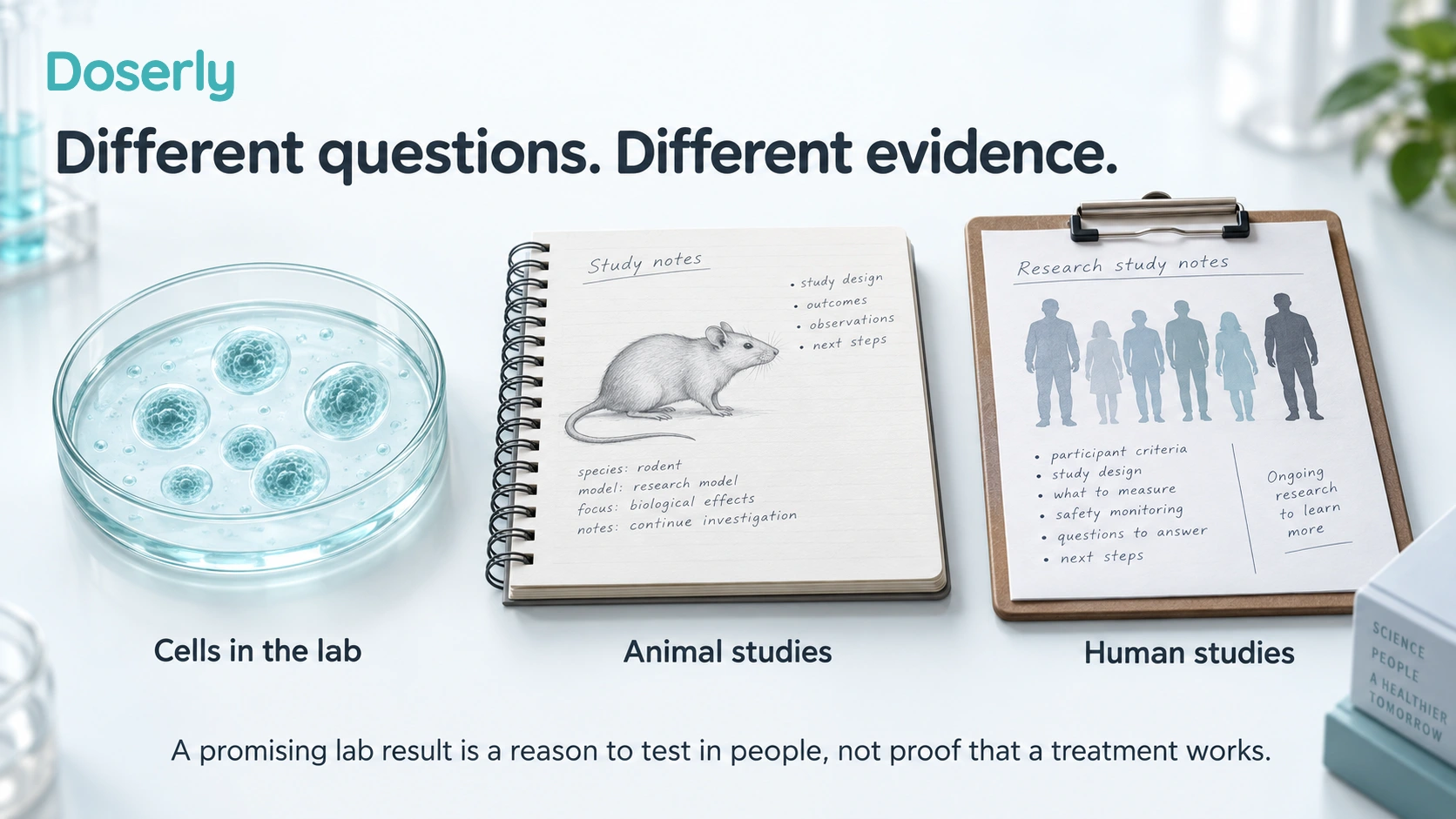
In the Spector trial, 184 osteopenic women were randomized and 136 completed 12 months. Every group received 1,000 mg calcium and 20 mcg vitamin D3 daily; active groups also received ch-OSA supplying 3, 6 or 12 mg silicon/day. Only PINP, a collagen-formation marker, was significantly higher at 6 and 12 mg versus placebo, without a clear dose response. Lumbar-spine BMD did not improve significantly. [2]
In the Geusens knee-osteoarthritis trial, 211 adults were randomized to 5 mg silicon plus 100 mg choline twice daily or placebo for 12 weeks; 166 were analyzed. The treatment did not improve outcomes in the total population. Prespecified sex-subgroup signals favored men on some secondary measures, but they require confirmation. [3]
How does silicon work?
Soluble orthosilicic acid is absorbed and excreted mainly in urine. Laboratory work links silicon with collagen synthesis and early mineralization, but the precise human requirement and clinical mechanism remain uncertain. Mechanism cannot substitute for outcome evidence.
What are the risks and interactions?
EFSA could not derive a UL because oral safety data were inadequate. Typical dietary intake was considered unlikely to cause harm, while occasional kidney-stone reports involved long-term silicate antacid use. Product form, dose and kidney function therefore matter. [1]
No established medicine interaction defines routine spacing. Review antacids containing silicates, diuretics, kidney disease and overlapping mineral products.
In the United States, dietary supplements generally lack FDA premarket approval for safety or efficacy. In Canada, natural health products require licensing and authorized labels carry an NPN or DIN-HM. [4], [5]
Which medicines interact with silicon?
No consistent clinically important drug interaction is established. Silicate-containing antacids are themselves an exposure, and impaired kidney function changes the risk discussion.
What should be monitored?
No validated test diagnoses silicon deficiency or selects responders. Research measures urinary silicon, bone-turnover markers, BMD and symptom scales for different questions. Routine users should focus on exact product exposure and clinically indicated kidney or bone evaluation.
What do public communities report?
People discuss hair growth, nail strength and joint comfort. Reports often omit elemental silicon, formulation and concurrent calcium, vitamin D or beauty products. This overhaul did not independently recrawl or quantify community posts.
How does silicon compare with nearby guides?
| Guide | Main question | Key difference |
|---|---|---|
| Calcium | Established intake requirement and bone role | Has RDA and UL; fracture evidence remains context-specific |
| Vitamin D3 | Vitamin D status and bone outcomes | Has established intake references and 25(OH)D biomarker |
| Boron | Trace-element hypotheses | Also lacks an established bone-health regimen |
| Biotin | Deficiency and laboratory interference | Different beauty claims and a major assay-interference issue |
Common questions about silicon
Is silicon essential for humans?
Not established. EFSA found that essentiality had not been demonstrated. [1]
Is there an RDA or upper limit?
No RDA, AI or UL is established. Missing values do not prove unlimited safety. [1]
Did the bone trial improve bone density?
Not clearly. One collagen-formation marker improved at 6 and 12 mg/day, but lumbar-spine BMD did not. [2]
Did the knee trial reduce pain?
Not in the total study population. Signals in men were subgroup findings. [3]
Are silica and elemental silicon the same label amount?
No. Silica or compound mass must not be read as the same number of milligrams of elemental silicon.
Is ch-OSA the same as bamboo extract?
No. They are different preparations with different evidence and active-amount reporting.
Who should be cautious?
People with kidney disease, prior stones, heavy silicate-antacid use or multiple overlapping products need a careful review.
Glossary
Plain explanations of silicon terms.
- Orthosilicic acid (OSA)
- A soluble silicon species that can be absorbed from water or supplements.
- Choline-stabilized OSA (ch-OSA)
- Orthosilicic acid stabilized with choline to limit polymerization.
- Silica
- Silicon dioxide; its mass is not the same as elemental silicon mass.
- PINP
- A blood marker related to type I collagen formation, not a fracture outcome.
- Bone mineral density (BMD)
- A measurement of mineral content in bone, usually assessed by DXA.
- Tolerable Upper Intake Level (UL)
- A population safety boundary; no UL has been established for silicon.
How this guide was researched
This draft uses EFSA’s silicon safety opinion and live NCBI-verified primary metadata/full text for the Spector and Geusens trials. Titles, authors, journals, DOI identifiers and trial schedules were checked on October 9, 2026.
How this guide was made
Research and drafting were AI-assisted. This draft awaits Doserly editorial and independent clinical review. Read the editorial policy.
Explore the sources
A safety opinion and two formulation-specific trials define separate claims.
Showing 5 sources
- 01
Opinion of the Scientific Panel on Dietetic Products, Nutrition and Allergies on a request from the Commission related to the Tolerable Upper Intake Level of Silicon ↗
Official safety opinion
Current retrieved opinion read for essentiality, typical dietary exposure, oral-safety evidence and inability to derive a UL.
Detail: Typical dietary intake 20–50 mg/day considered unlikely to cause harm; data inadequate for a UL.
- 02
Choline-stabilized orthosilicic acid supplementation as an adjunct to calcium/vitamin D3 stimulates markers of bone formation in osteopenic females: a randomized, placebo-controlled trial. ↗
Randomized placebo-controlled trial
Live NCBI metadata and full text checked for authorship, schedule, co-interventions, completion, outcomes and dropout limitations.
Detail: 184 randomized; 136 completed; 3, 6 or 12 mg silicon/day plus calcium/D3 for 12 months; PINP signal without clear dose response; no significant lumbar BMD gain.
- 03
A 12-week randomized, double-blind, placebo-controlled multicenter study of choline-stabilized orthosilicic acid in patients with symptomatic knee osteoarthritis. ↗
Randomized double-blind placebo-controlled trial
Live NCBI metadata and full text checked for authorship, capsule content, twice-daily schedule, analysis population and null total-population result.
Detail: 211 randomized; 5 mg silicon plus 100 mg choline twice daily for 12 weeks; 166 analyzed; no overall efficacy.
- 04
Questions and Answers on Dietary Supplements ↗
Regulatory overview
Current official page reviewed.
Detail: General U.S. supplement framework.
- 05
Product Licensing ↗
Regulatory overview
Current official page reviewed.
Detail: Canadian natural-health-product licensing and NPN or DIN-HM.
No matching sources
Try a different term or show the full list.