
In this guide
What does this guide compare?
Protein building blocks and separately studied signaling compounds.
This collection compares products discussed around one topic. It is not a protocol to take in full. Links to individual profiles appear after the article.
| Reference point | Context |
|---|---|
| Products compared | 27 |
| Evidence scope | Ingredient, formulation, population and measured outcome |
| Complete combination | The cited studies do not automatically validate all members together |
Which products are compared?
| Group | Examples here | Comparison to make |
|---|---|---|
| Essential amino acids | Leucine, isoleucine, valine, lysine, methionine, phenylalanine, threonine, tryptophan, histidine; BCAA/EAA blends | BCAAs are only three essential amino acids; compare the whole dietary protein intake and exact blend [1][4] |
| Exercise-related ingredients | Arginine, citrulline, beta-alanine, glutamine | Mechanisms and studied event durations differ; a precursor or “pump” claim is not a common performance effect [1] |
| Other amino acids and related compounds | Glycine, serine, ornithine, tyrosine/NALT, taurine, carnitine, D-aspartic acid | The form, indication and studied population matter; the cited BCAA trial does not test these products |
| Neuroactive products | Theanine, GABA, 5-HTP and tryptophan | Mood or sleep claims require their own evidence; 5-HTP adds serotonergic interaction concerns [5] |
| Redox-related products | NAC and glutathione | Related biochemical pathways do not make the products interchangeable or establish a general detoxification protocol |
How do their roles differ?
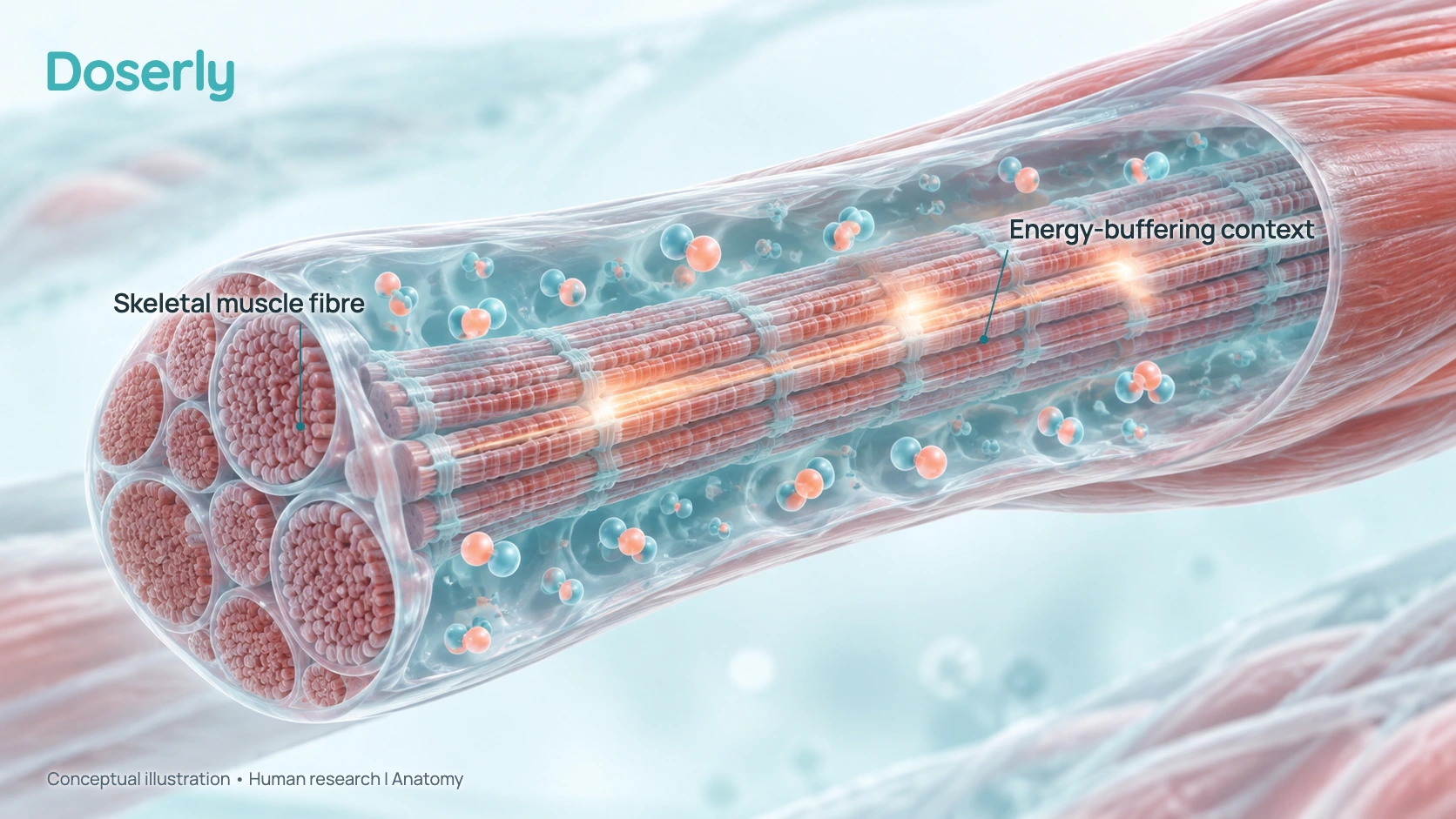
Amino acids supply protein building blocks and precursors for other molecules. Leucine contributes to muscle-protein signaling, but building protein also requires the other essential amino acids. Citrulline/arginine, beta-alanine and theanine are studied for different endpoints and should not be treated as equivalent protein supplements. [1]
What does the research show?
BCAAs: a positive short-term marker is not a muscle-gain trial
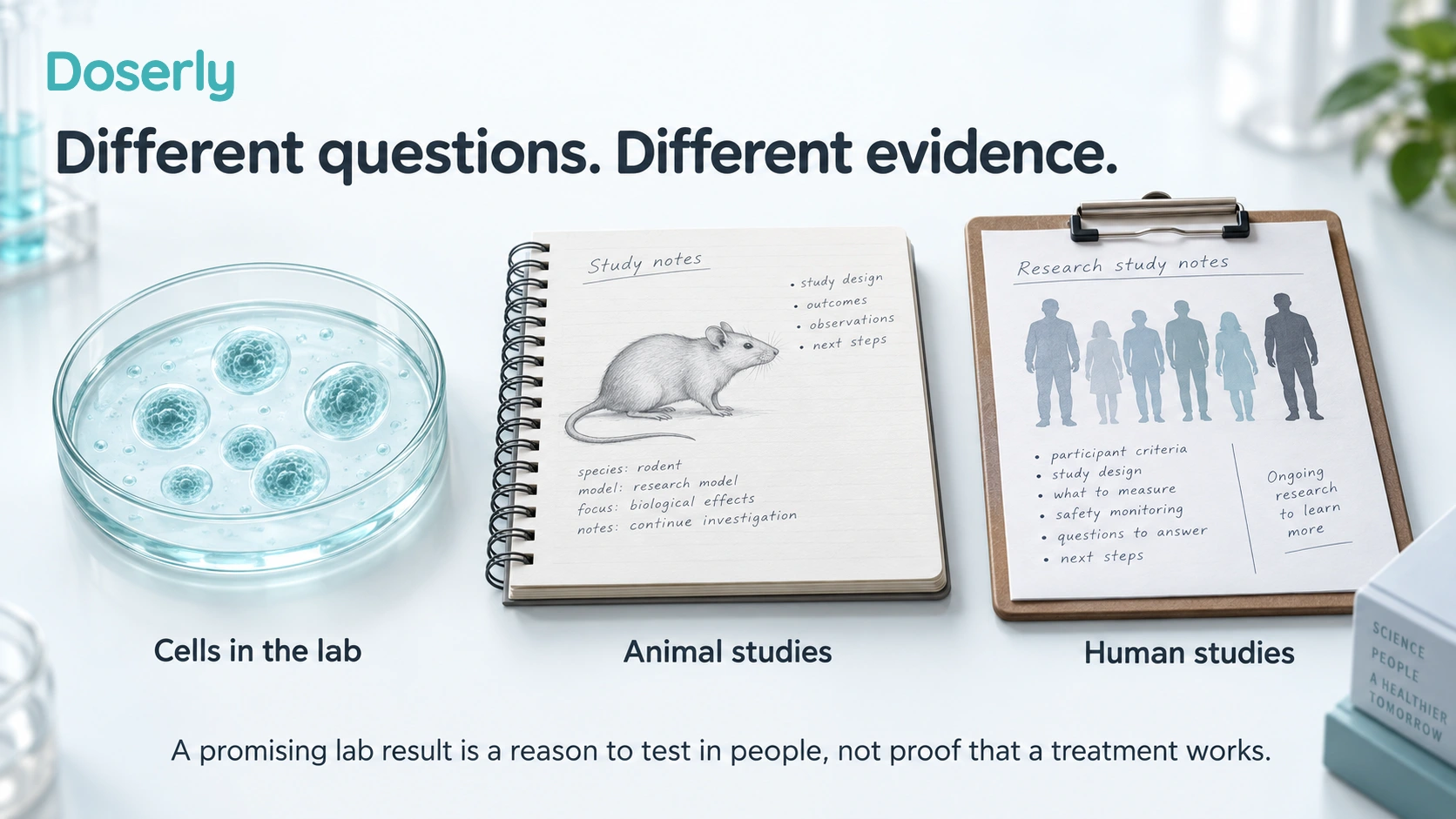
Jackman and colleagues studied ten young resistance-trained men in two conditions: 5.6 g BCAAs once immediately after resistance exercise, or placebo. Muscle biopsies measured protein synthesis over four hours. The synthesis rate was 22% higher with BCAAs than placebo, but the study did not measure months of muscle growth, test superiority over complete protein, or establish that extra BCAAs help someone already consuming adequate protein. Its result is specific to this acute comparison. [4]
Performance claims differ by ingredient and event
ODS describes conflicting or limited performance evidence for arginine and citrulline. Beta-alanine works through muscle carnosine and buffering, with inconsistent event-specific results and tingling as a dose-related adverse effect. These are different questions from BCAA protein synthesis. A training formulation that combines them does not inherit every positive result from separate studies. [1]
“Amino-acid related” does not mean one safety profile
MSK describes small, mixed 5-HTP trials and warns about concurrent serotonergic medicines. A reported linezolid interaction causing serotonin syndrome is a serious safety signal; a case report cannot establish the frequency of harm. These concerns do not apply identically to all protein amino acids, which is why a complete product and medicine list is more useful than treating the category as uniformly safe. [5]
BCAAs and postexercise soreness
Acute protein synthesis and muscle soreness are different outcomes. A 2024 meta-analysis of 18 trials and 331 people found less soreness 24–96 hours after damaging exercise, but no difference immediately afterward. Creatine kinase was lower immediately and at 72 hours, but not at the other pooled time points; LDH did not differ significantly. Heterogeneity and differences in study design, blinding, training status and sex limit interpretation. These findings do not establish lasting hypertrophy or a universal recovery protocol. [6]
Which overlaps and risks matter?
Cautions and interactions
Multi-ingredient sports products can duplicate amino acids and stimulants. Digestive effects, total intake and concurrent medicines belong in the same review. The amount reported in a study is reference information for that specific intervention, not a default target for a combination. [1]
A complete product list includes prescription medicines, nonprescription products and supplements. Combination formulas can conceal duplicate ingredients. Timing and spacing from a medicine should follow its labeling and pharmacist guidance; this collection does not supply a universal timetable.
Regulatory status
In the United States, FDA does not approve dietary supplements for safety and effectiveness before marketing. In Canada, a natural health product requires a product licence before sale; its NPN or DIN-HM must match the finished product. An ingredient name or inclusion in this collection does not establish that every product or claim is authorized. Authorization also does not validate the complete combination. [2], [3]
Arginine after a recent heart attack. In VINTAGE-MI, 153 people after a first ST-elevation myocardial infarction received arginine or placebo alongside standard care. Arginine improved neither vascular stiffness nor ejection fraction. Six deaths occurred in that group versus none with placebo, and the monitoring committee stopped enrollment. This supports avoiding self-supplementation after a recent heart attack; it does not estimate risk in healthy people. [7]
What should be recorded and how should changes be interpreted?
Doserly brings dose logs, symptoms and routine changes together. For this collection, useful observations include protein intake context, training sessions, repeatable performance measures and digestive tolerance.
- Doses and adherence: record the formulation, amount actually taken, timing and missed doses so observations have context.
- Potential benefits and tolerability: compare consistent symptoms or measurements over time alongside sleep, food and activity changes. Personal trends help evaluate the experience without proving causal efficacy.
- Product list: maintain the full product list for review with a pharmacist or clinician.
- AI monthly reports: summarize recorded doses, symptoms and trends to prepare for a discussion. Reports depend on the data entered and are not a diagnosis or an instruction to change treatment.
Explore the topic further
Common questions
Are BCAAs a complete protein replacement?
No. They contain leucine, isoleucine and valine, not the full complement of essential amino acids. Evaluate them in the context of food and total protein. [1][4]
Does 22% higher synthesis mean 22% more muscle?
No. The cited result was a four-hour synthesis measurement in ten men, not a long-term muscle-size outcome. [4]
Does beta-alanine tingling show that a workout product is effective?
No. Tingling is an adverse effect, not a measure of performance benefit. [1]
Can 5-HTP be combined casually with antidepressants?
No. Serotonergic medicines and other interacting products need review with the treating clinician. The relevant concern differs from simply counting dietary protein. [5]
Glossary
Terms for interpreting the comparisons.
- Formulation
- The exact preparation, including its ingredients, their forms and labeled amounts.
- Study population
- The people included in a study; their characteristics limit where its result applies.
- Comparator
- The placebo, treatment or condition used as the comparison.
- Measured outcome
- What the study evaluates, such as a symptom, laboratory result or clinical event.
- Overlap
- The same ingredient appearing in more than one product used together.
How was this guide researched?
Sources and limits
This AI-assisted educational guide compares the cited public references. Findings remain tied to the ingredients, preparations and populations studied. It is not a systematic review or independent medical peer review. Doserly develops a commercial tracking app. Illustrations explain concepts; app screens show example data. Report a correction with its source to Doserly support.
Explore the sources
The references below provide context for the claims and their limits.
Showing 7 sources
- 01
NIH ODS — Exercise and athletic performance ↗
Public reference
Check the reported population, preparation and limitations.
- 02
FDA — Questions and Answers on Dietary Supplements ↗
Regulatory reference
United States dietary supplement regulation.
- 03
- 04
Branched-Chain Amino Acid Ingestion Stimulates Muscle Myofibrillar Protein Synthesis following Resistance Exercise in Humans. ↗
Acute crossover trial
Ten trained men; 5.6 g once after exercise; four-hour synthesis outcome, not long-term hypertrophy.
- 05
MSK — 5-HTP ↗
Clinical reference
Limited efficacy trials and serotonergic interaction concerns, including case evidence.
- 06
Attenuating Muscle Damage Biomarkers and Muscle Soreness After an Exercise-Induced Muscle Damage with Branched-Chain Amino Acid (BCAA) Supplementation: A Systematic Review and Meta-analysis with Meta-regression ↗
Systematic review and meta-analysis
18 trials, 331 participants; time-specific soreness and creatine-kinase findings, with no significant LDH effect.
Publisher text checked October 9, 2026; literature search ended September 2022.
- 07
L-arginine therapy in acute myocardial infarction: the Vascular Interaction With Age in Myocardial Infarction (VINTAGE MI) randomized clinical trial. ↗
Randomized post-infarction trial
153 participants; no functional benefit and six deaths with arginine versus none with placebo.
Publisher methods and results checked October 9, 2026; warning specific to the post-infarction setting.
No matching sources
Try a different term or show the full list.