
In this guide
What does this guide compare?
Research on aging includes nutrients, experimental compounds and medicines.
This collection compares products discussed around one topic. It is not a protocol to take in full. Links to individual profiles appear after the article.
| Reference point | Context |
|---|---|
| Products compared | 16 |
| Evidence scope | Ingredient, formulation, population and measured outcome |
| Complete combination | The cited studies do not automatically validate all members together |
Which products are compared?
NAD+ Precursors, Resveratrol, Pterostilbene, Fisetin, CoQ10/Ubiquinol, PQQ (Pyrroloquinoline Quinone), Alpha-Lipoic Acid, SOD (Superoxide Dismutase), Spermidine, Urolithin A, C60 (Fullerene), Sulforaphane, Senolytics (Fisetin + Quercetin Stack), Rapamycin (Research-Context), Metformin (Research-Context), Exogenous Ketones.
Individual profiles describe formulation, source-reported amounts, tolerability and interactions. Those details remain ingredient-specific. An amount studied alone is not automatically appropriate in a combination.
How do their roles differ?
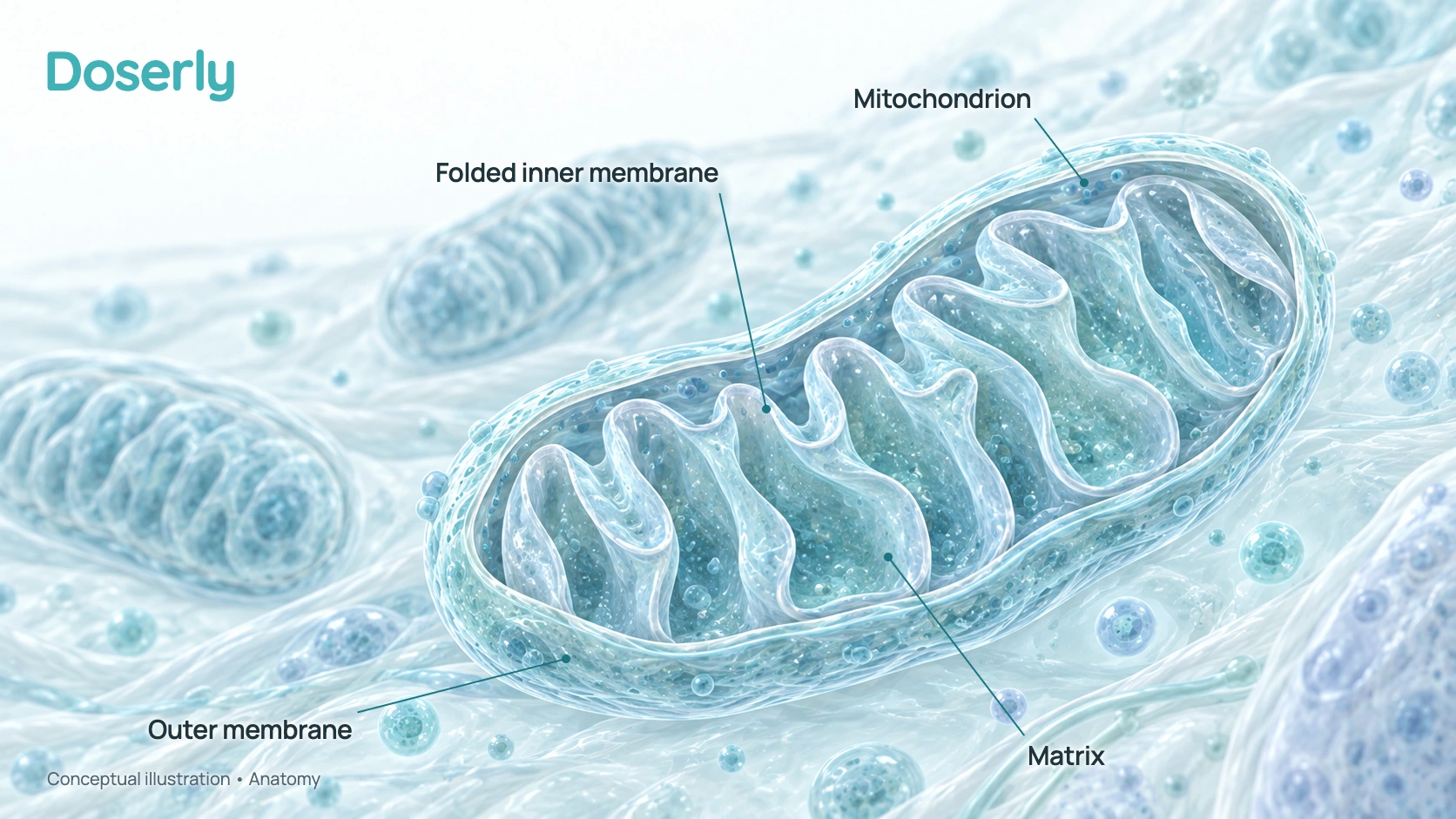
NAD metabolism, mitochondrial function, nutrient sensing and cellular senescence are different research targets. Changing a molecular pathway is not the same as improving disability-free survival. Rapamycin and metformin are medicines included here for research context, not ordinary dietary supplements. [1][2][3]
Selected human trials
These schedules describe separate research studies, not a combined protocol.
| Ingredient | Study and schedule | Finding and limitation |
|---|---|---|
| NMN | Yoshino 2021, 25 postmenopausal women with prediabetes; 250 mg daily for 10 weeks. [7] | Muscle insulin-sensitivity signal in a narrow population; no demonstration of longer life. |
| Resveratrol | Timmers 2011, 11 men with obesity; 150 mg daily for 30 days, crossover trial. [8] | Selected favorable metabolic and mitochondrial findings; very small sample. |
| Resveratrol | Poulsen 2013, 24 men with obesity; 500 mg three times daily, totaling 1,500 mg/day, for four weeks. [9] | No improvement in insulin sensitivity or several metabolic measures. Comparing two trials does not establish an inverse dose-response. |
| Pterostilbene | Riche, 80 people with elevated cholesterol; 50 or 125 mg twice daily, or 50 mg with 100 mg grape extract twice daily, for 6–8 weeks. [10] | Pooled monotherapy groups had a 17.1 mg/dL LDL increase; blood pressure decreased at 250 mg/day. Mixed findings, with no cardiovascular-event outcome. |
| Fisetin | Small seven-week trial in 37 people receiving chemotherapy for colorectal cancer. [11] | Only the IL-8 change was significant between groups among reported markers; no demonstrated survival, longevity or self-directed senolytic regimen. |
CoQ10. Q-SYMBIO studied 420 people with moderate-to-severe heart failure: 100 mg three times daily for two years, alongside standard treatment. The 16-week endpoints were negative; the two-year composite cardiovascular endpoint occurred in 15% versus 26% with placebo. This treatment context does not establish prevention in healthy people or general lifespan extension. [12]
What does the research show?
Three biomarker studies, three different questions
None measured added years of human life from this collection.
DO-HEALTH · 2025
Post hoc analysis, 777 older adults, 3 years: omega-3 treatment changed several DNA methylation clocks. These are surrogate measures.
VITAL telomeres · 2025
1,031 participants with measured samples, 4 years: vitamin D3 reduced telomere shortening; omega-3 did not significantly change it.
COSMOS clocks · 2026
958 older adults, 2 years: a specified multivitamin modestly changed two of five tested clocks. Cocoa extract did not change the clocks.
Different assays, interventions and populations cannot be combined into a lifespan estimate or a six-product regimen.
The 2025 DO-HEALTH post hoc analysis found small changes in several methylation clocks with omega-3 treatment in 777 older adults. The 2025 VITAL substudy found less telomere shortening with vitamin D but no significant telomere effect from omega-3. Different assays and populations answer different questions; neither trial demonstrated that this multi-ingredient collection extends human lifespan. A prespecified 2026 COSMOS ancillary study in 958 older adults found small differences in two of five tested methylation clocks after two years of a specific daily multivitamin; cocoa extract did not change the clocks. Clinical relevance remains uncertain, and these measurements do not represent extra years of healthy life. [1][2][3]
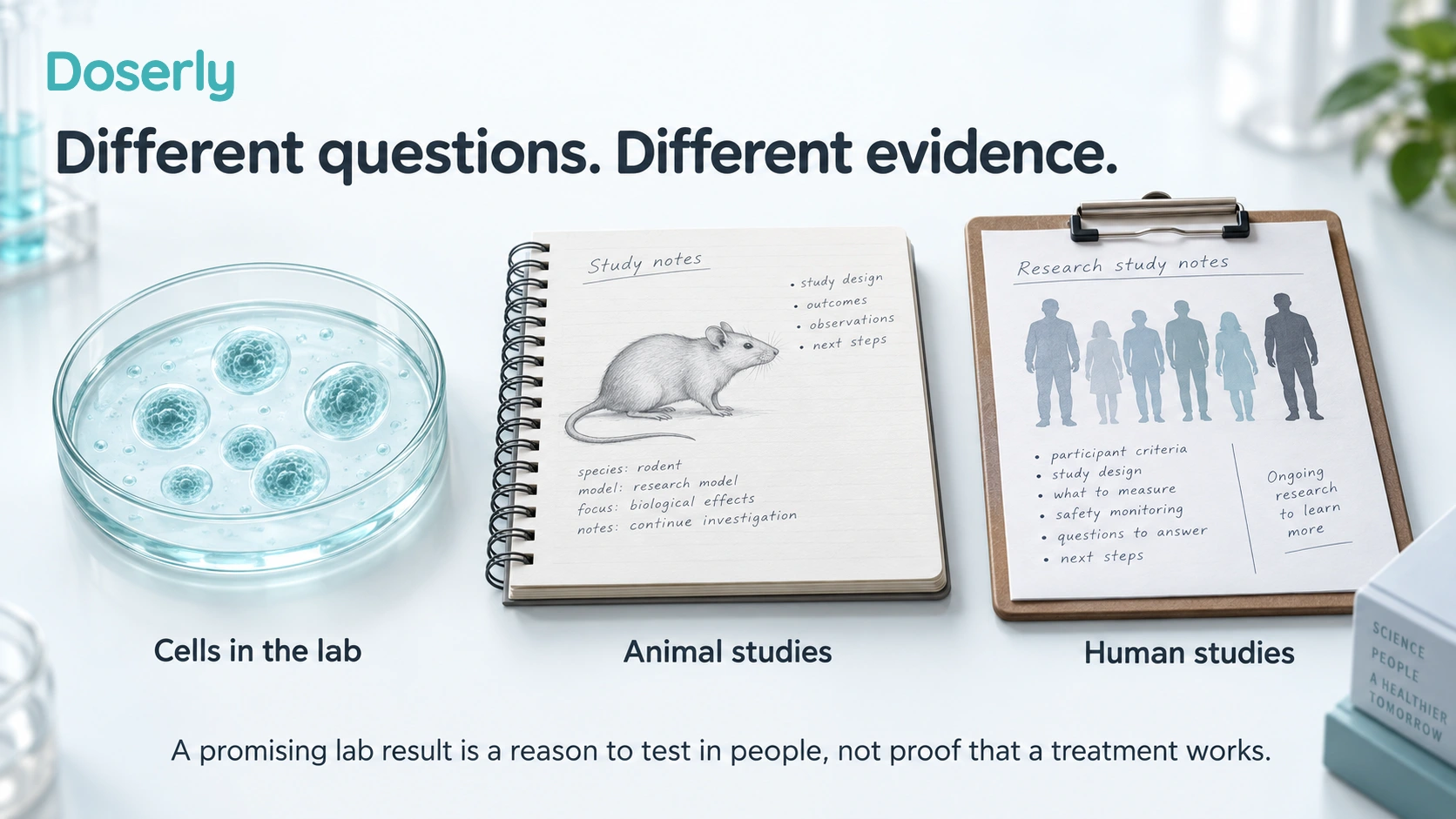
An observational association, a laboratory finding and a perceived benefit answer different questions. Randomized trials need their comparator, duration and population kept in view. An inconclusive result does not establish that an effect is impossible; it limits the claim that can be made.
Does spermidine improve memory or longevity?
In SmartAge, 100 adults aged 60–90 with subjective cognitive decline received wheat-germ extract or placebo for 12 months. Six daily 125 mg capsules provided 750 mg extract, including about 0.9 mg spermidine and other polyamines; the administration split was not reported. The primary memory outcome did not improve (between-group difference −0.03; 95% CI −0.11 to 0.05), and secondary outcomes were also null. Exploratory analyses do not overturn that result. This was neither a purified-spermidine trial nor a demonstration of longer human life. [14]
What do the urolithin A findings mean?
A Liu 2022 trial in 66 adults aged 65–90 compared 1000 mg/day with placebo for four months. The primary six-minute-walk and maximal ATP-production outcomes did not show significant between-group benefits. Some secondary muscle-endurance measures favored treatment at two months; they do not demonstrate generally slower aging. [15]
In Denk 2025, 50 middle-aged adults received 1000 mg/day or placebo for four weeks. Measures of immune-cell populations and metabolism changed. These biological findings, from a small, short trial with multiple outcomes and industry ties, do not prove fewer infections, better vaccine responses or longer survival. The reported daily total alone does not establish an administration split. [16]
Has C60 demonstrated longer life?
Animal findings do not establish a human benefit. Grohn 2021 found no significant lifespan or healthspan improvement in mice receiving C60 in olive oil compared with untreated controls. The study also found differences among commercial products and toxicity associated with light exposure of the preparation. [17]
In Shytikov 2021, treated mice survived longer than oil-vehicle controls but similarly to water controls. The comparator therefore changes the interpretation. Neither these experiments nor a short negative toxicology test defines a safe or effective oral human protocol. [18]
Which overlaps and risks matter?
Alpha-lipoic acid has a specific insulin autoimmune syndrome risk that can cause hypoglycemia. EFSA considered risk increased in genetically susceptible people and could not define a dose below which the syndrome would not be expected. Individual risk cannot be quantified precisely; the absence of a threshold does not mean every user will develop the syndrome. [13]
Cautions and interactions
Experimental compounds and prescription medicines cannot inherit the safety assumptions of nutrients. Changes in a biomarker do not establish an optimal dose, justify a senolytic schedule or support unsupervised combination treatment. Clinical outcomes and adverse effects need their own evidence. [1][2][3]
A complete product list includes prescription medicines, nonprescription products and supplements. Combination formulas can conceal duplicate ingredients. Timing and spacing from a medicine should follow its labeling and pharmacist guidance; this collection does not supply a universal timetable.
Regulatory status
In the United States, FDA does not approve dietary supplements for safety and effectiveness before marketing. In Canada, a natural health product requires a product licence before sale; its NPN or DIN-HM must match the finished product. An ingredient name or inclusion in this collection does not establish that every product or claim is authorized. Authorization also does not validate the complete combination. [4], [5]
U.S. NMN status changed in 2025
On September 29, 2025, FDA revised its earlier position and concluded that NMN is not excluded from the dietary-supplement definition under the drug-exclusion provision. It describes NMN as a dietary ingredient and a new dietary ingredient. This is neither approval of anti-aging benefits nor blanket clearance of every product: the other legal criteria, applicable notification requirements and safety basis still matter. Categorical statements based only on FDA’s 2022 position are therefore outdated. This U.S. decision does not determine a product’s Canadian status. [6]
What should be recorded and how should changes be interpreted?
Doserly brings dose logs, symptoms and routine changes together. For this collection, useful observations include functional goals, exercise, symptoms, tolerated exposure and clinician-selected laboratory measures rather than an unvalidated biological-age score.
- Doses and adherence: record the formulation, amount actually taken, timing and missed doses so observations have context.
- Potential benefits and tolerability: compare consistent symptoms or measurements over time alongside sleep, food and activity changes. Personal trends help evaluate the experience without proving causal efficacy.
- Product list: maintain the full product list for review with a pharmacist or clinician.
- AI monthly reports: summarize recorded doses, symptoms and trends to prepare for a discussion. Reports depend on the data entered and are not a diagnosis or an instruction to change treatment.
Explore the topic further
Common questions
Does a slower epigenetic clock mean a longer life?
Not by itself. A biomarker change is not a measured reduction in mortality, disability or disease. Different clocks and telomere assays are not interchangeable outcomes. [1][2][3]
Can results from several trials justify one anti-aging stack?
No. The cited interventions, populations and assays differ; their results cannot be added into a combined lifespan estimate or a validated multi-product regimen. [1][2][3]
Does the FDA’s 2025 NMN response mean every NMN product is approved?
No. The response changes the drug-exclusion interpretation, not every other requirement for a lawful and safe finished product. It is not blanket premarket approval or proof of longevity benefit. [6]
Glossary
Terms for interpreting the comparisons.
- Formulation
- The exact preparation, including its ingredients, their forms and labeled amounts.
- Study population
- The people included in a study; their characteristics limit where its result applies.
- Comparator
- The placebo, treatment or condition used as the comparison.
- Measured outcome
- What the study evaluates, such as a symptom, laboratory result or clinical event.
- Overlap
- The same ingredient appearing in more than one product used together.
How was this guide researched?
Sources and limits
This AI-assisted educational guide compares the cited public references. Findings remain tied to the ingredients, preparations and populations studied. It is not a systematic review or independent medical peer review. Doserly develops a commercial tracking app. Illustrations explain concepts; app screens show example data. Report a correction with its source to Doserly support.
Explore the sources
The references below provide context for the claims and their limits.
Showing 18 sources
- 01
2025 — DO-HEALTH methylation-clock analysis ↗
Public reference
Check the reported population, preparation and limitations.
- 02
Vitamin D3 and marine ω-3 fatty acids supplementation and leukocyte telomere length: 4-year findings from the VITamin D and OmegA-3 TriaL (VITAL) randomized controlled trial. ↗
Public reference
Check the reported population, preparation and limitations.
- 03
Li et al., 2026 — COSMOS epigenetic-clock ancillary trial ↗
Public reference
Check the reported population, preparation and limitations.
- 04
FDA — Questions and Answers on Dietary Supplements ↗
Regulatory reference
United States dietary supplement regulation.
- 05
- 06
FDA — Response to NMN citizen petition FDA-2023-P-0872 ↗
Regulatory decision
Revises the drug-exclusion determination; other dietary-supplement marketing requirements still apply.
- 07
Nicotinamide mononucleotide increases muscle insulin sensitivity in prediabetic women. ↗
Human trial
Population, preparation and outcomes specific to this trial.
- 08
Calorie restriction-like effects of 30 days of resveratrol supplementation on energy metabolism and metabolic profile in obese humans. ↗
Human trial
Population, preparation and outcomes specific to this trial.
- 09
High-dose resveratrol supplementation in obese men: an investigator-initiated, randomized, placebo-controlled clinical trial of substrate metabolism, insulin sensitivity, and body composition. ↗
Human trial
Population, preparation and outcomes specific to this trial.
- 10
Pterostilbene on metabolic parameters: a randomized, double-blind, and placebo-controlled trial. ↗
Human trial
Population, preparation and outcomes specific to this trial.
- 11
Effect of fisetin supplementation on inflammatory factors and matrix metalloproteinase enzymes in colorectal cancer patients. ↗
Randomized trial
37 people receiving chemotherapy; biomarker outcomes over seven weeks.
- 12
The effect of coenzyme Q10 on morbidity and mortality in chronic heart failure: results from Q-SYMBIO: a randomized double-blind trial. ↗
Adjunctive randomized trial
420 people with heart failure; standard therapy continued.
- 13
Scientific opinion on the relationship between intake of alpha-lipoic acid and the risk of insulin autoimmune syndrome ↗
Safety opinion
Insulin autoimmune syndrome risk; no risk-free threshold established.
- 14
Effects of Spermidine Supplementation on Cognition and Biomarkers in Older Adults With Subjective Cognitive Decline: A Randomized Clinical Trial. ↗
Randomized trial
Full text reviewed. 100 participants, 12 months; primary and secondary outcomes not significant.
- 15
Effect of Urolithin A Supplementation on Muscle Endurance and Mitochondrial Health in Older Adults: A Randomized Clinical Trial. ↗
Randomized trial
66 participants; 4 months; primary outcomes null, secondary signals.
- 16
Effect of the mitophagy inducer urolithin A on age-related immune decline: a randomized, placebo-controlled trial. ↗
Randomized trial
50 participants; 4 weeks; cellular outcomes, not demonstrated infection reduction. The 2026 correction replaces panel 3e, which accidentally duplicated panel 3b. This collection does not reproduce that figure.
- 17
C60 in olive oil causes light-dependent toxicity and does not extend lifespan in mice. ↗
Mouse study
Abstract reviewed; not human clinical evidence.
- 18
Effect of Long-Term Treatment with C60 Fullerenes on the Lifespan and Health Status of CBA/Ca Mice. ↗
Mouse study
Abstract reviewed; not human clinical evidence.
No matching sources
Try a different term or show the full list.